
SO! Reads: Marisol Negrón’s Made in NuYoRico: Fania Records, Latin Music, and Salsa’s Nuyorican Meanings


I began reading Marisol Negrón’s Made in NuYoRico: Fania Records, Latin Music, and Salsa’s Nuyorican Meanings (Duke University Press, 2024) in earnest this summer, as Bad Bunny’s “NUEVAYol” flooded New York City streets. Whole generations of people had never heard El Gran Combo’s “Un Verano en Nueva York” (1975), perhaps not-coincidentally celebrating its fiftieth anniversary this year. The song is a staple in this city, particularly in the weeks leading up to the National Puerto Rican Day Parade. Instagram and TikTok were inundated with videos of Bad Bunny fans, many of whom were millennials and Gen Z, dancing with their grandparents to “NUEVAYoL” and “BAILE INoLVIDABLE.” Bad Bunny had successfully ushered in a resurgence of interest in salsa, a genre that has remained vibrant since its founding. The archipelago’s superstar celebrated the city that was, beginning in the early 1890s, a major site of Puerto Rican migration for decades; in several of the videos for songs from DeBÍ TiRAR MáS FOToS (2025), he honored the Nuyorican community and all they had contributed to the culture.
In that vein, Negrón has written a book that is, shockingly to me, one of the very few books that center salsa in general and the role of New York in its creation specifically. In this, she joins Juan Flores, Frances Aparicio, and Christopher Washburne to produce book-length studies that examine this genre. She also depends on the magazine articles of long-gone local publications such as Latin N.Y., which ran from 1973-1985, and journalists such as Aurora Flores, Adela López, and Nayda Román, women who recorded what at times feels like an incredibly-male environment. Here, she is focusing on the record label that is synonymous with salsa, Fania Records, which, at one point had signed such singers and musicians as Tito Puente, Celia Cruz, La Lupe, Hector Lavoe, Ruben Blades, Ray Baretto, and Eddie Palmieri, whose passing this summer marked the end of an era, in many ways. Founded by Johnny Pacheco and Jerry Masucci in 1964, Fania reached its heights in the 1970s, securing a distribution center in Panama in 1974, establishing its own recording studio in 1976 – the first “Latin” label to do so – and purchasing a manufacturing plant in 1977. Yet by the end of the decade, many of the original artists had moved on, as had Masucci, who sold the catalog and created several other businesses that continued to do business using the name “Fania” (20). Nevertheless, the music that emerged from that critical historical moment in New York City continues to impact subsequent generations.

Citing Caridad de la Luz, La Bruja, a Nuyorican legend of the spoken word scene who currently serves as the executive director of Nuyorican Poets Café, Negrón defines NuYoRico as “that place somewhere between the Empire State and El Morro” (9), the latter being the fortress originally built in the sixteenth century that is recognized as a UNESCO World Heritage site. Made in NuYoRico is divided into two parts featuring three chapters each; the first part, “Anatomy of a Salsa Boom, 1964-1979” marks the cultural history of salsa for those fifteen years, while the second part, “After the Boom Is Gone, 1980s-2000s,” charts a fascinating examination of the salsa boom in various contexts, including a futile attempt by insular government officials to attract foreign investment by citing salsa as an impactful cultural artifact. In doing so, they offended a faction of the archipelago’s elites who distanced themselves due to the genre being created in the diaspora.
Negrón reviews the 1972 documentary classic Our Latin Thing (Nuestra Cosa Latina) in her first chapter. This movie served for many as the introduction to the Fania All-Stars. Featuring footage from a 1971 concert at New York’s Cheetah Lounge, it features Barretto, Larry Harlow, Willie Colón, Ismael Miranda, “Cheo” Feliciano, Pete “El Conde” Rodríguez, and LaVoe (whose name appears in this way throughout the book recalling his nickname as “La Voz”). In chapter two, “‘Los Malotes de la Salsa’: Salsa Dons and the Performance of Subjecthood,” Negrón looks at the imagery Colón and LaVoe create in their lyrics and the cover art of their albums, while the following chapter, “Salsa’s Dirty Secret: Liberated Women, Hairy Hippies, and the End of the World,” focuses on their performance, together and individually, of a virile masculinity dependent as much on the portraits of insubordinate women, unruly yearnings, and queerness. It is this chapter that speaks fleetingly of Celia Cruz and La Lupe, the two Afro-Cuban women who were the only women signed to Fania. In a study that examines how very much a masculinist world this was, I was looking for the counterpoint that both Cruz and La Lupe offered, only to be met with two pages of reference to them. A deeper discussion centering these women remains opportune.

The fourth chapter “Puerto Rico’s (Un)Freedom: The Soundscape of Nation Branding,” charts the moment in 1992 when, ahead of the celebrations within the Spanish-speaking world of Columbus’s voyage, Puerto Rican governor Rafael Hernández Colón sought to brand Puerto Rico using salsa as the premier Puerto Rican cultural export, only to be met with opposition from elites on the island. With the last two chapters, “Entre la Letra y la Nota: Becoming ‘El Cantante de los Cantantes,’” and “(Copy)Rights and Wrongs: ‘El Cantante’ and the Legislation of Creative Labor,” Negrón examines the last years of LaVoe, his improvisational contributions to what many consider to be his signature song, “El Cantante,” and the legal struggle between Rubén Blades, the writer of the song, and Masucci, for recognition of Blades as sole author of the song.
Made in NuYoRico is a fascinating book, one that encourages the reader to have their streaming service within reach. With the conversation of every album, one can pause and listen to the songs accompanying the album and the art under discussion. In this she joins countless scholars of music, but I was especially reminded of Mark Anthony Neal’s most recent book, Black Ephemera: The Crisis and Challenge of the Musical Archive (NYU, 2022), which was fundamentally dependent on the reader listen to the songs he was referencing in real time. It is a theoretical book published by an academic press, and so discussions about abjection and subjecthood may not reach the general reader; nevertheless it is a worthwhile addition to the library of any salsa aficionado, who will undoubtedly learn something new while revisiting the past.
On August 23, 1973, only two years after their sets at the Cheetah Lounge, the Fania All-Stars played Yankee Stadium. Having attained a certain level of success with the release of Our Latin Thing, the concert at the celebrated ballpark secured legendary status for these singers as they played before more than 40,000 spectators. Four months later they reprised the concert in San Juan’s newly-built Coliseo Roberto Clemente. In September 1974 they played in the Zaire 74 music festival in Kinshasa, Zaire (now Democratic Republic of the Congo) in the country’s premier stadium, the Stade du 20 Mai: the Fania All-Stars were global.
Fifty-one years later, in September 2025, the National Football League announced its selection of Bad Bunny as the performer of the Super Bowl LX halftime show, taking place in February 2026. The championship game is set to air exactly a week after the Grammy Awards, where Bad Bunny is nominated in six categories, including Best Record, Best Song, and Best Album of the Year for Debí Tirar Más Fotos. With an expected viewership of more than one hundred million people, he and his repertoire of reggaetón, dembow, Latin trap, boleros, and yes, decidedly Puerto Rican bomba, plena, and salsa, will be at the center of yet another international cultural moment. Debemos tirar más fotos.
—
Featured Image” “Jibaros Con Salsa” by Flickr User Lorenzo, Taken on July 27, 2011, CC BY-NC 2.0
—
Vanessa K. Valdés is a writer and an independent scholar whose work focuses on the literatures, visual arts, and histories of Black peoples throughout the Western hemisphere. She is the author of three books, Oshun’s Daughters: The Search for Womanhood in the Americas (SUNY Press, 2014); Diasporic Blackness: The Life and Times of Arturo Schomburg (SUNY Press, 2017); and with David Pullins, Juan de Pareja, Afro-Hispanic Painter in the Age of Velázquez (Yale UP, 2024). You can learn more about her at https://drvkv23.com/.
—

REWIND!…If you liked this post, check out:
SO! Reads: Licia Fiol-Matta’s The Great Woman Singer: Gender and Voice in Puerto Rican Music–Iván Ramos
SO! Reads: Danielle Shlomit Sofer’s Sex Sounds: Vectors of Difference in Electronic Music–Verónica Mota
As Loud As I Want To Be: Gender, Loudness, and Respectability Politics–Liana Silva
Spaces of Sounds: The Peoples of the African Diaspora and Protest in the United States–Vanessa Valdes
Share this:

SO! Reads: David Novak’s Japanoise: Music at the Edge of Circulation

 We are living in strange times. Our experiences, especially our musical experiences, have become fragmented and odd. The album has been declared dead, live concerts are now silent, listened to on headphones, and some of our favorite performers exist in a faux-holographic space between life and death. The fragmentation of our musical experiences is indicative of a larger set of changes that encourage sound studies to pay attention to fragmented, outlying, and diffuse sonic phenomenon. In his new book Japanoise: Music at the Edge of Circulation, part of Jonathan Sterne and Lisa Gitelman’s “Sign, Storage, Transmission” series at Duke University Press, David Novak pays attention to one such fragmented and outlying realm, Noise music. Novak’s contribution to sound studies is to encourage us to deal with the fragmented complexity of sonic environments and contexts, especially those where noise plays a crucial part.
The past decade has seen growing public attention to noise as pollution, as problem, and as a poison. Examples of noise as a social issue needing immediate response abound, but one letter to the editor from the Wisconsin Rapid Tribune epitomizes the way that noise is sometimes read as a problem to be overcome. Novak’s book is one a few recent books, including Eldritch Priest’s Boring Formless Nonsense, Greg Hainge’s Noise Matters, and Joseph Nechvatal’s Immersion Into Noise, that complicate the idea of noise as problem. What sets Novak’s book apart from these is how his ethnographic approach allows him to approach Noise music from both the macro-perspective of its historical context and the micro-lens of his personal relationship to it.
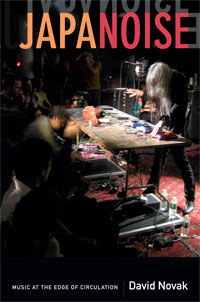 For Novak, Noise music is a trans-cultural, transnational interaction that is both material and abstract. His analysis of it works to blur the boundary between both large-scale networks of exchange and the highly individuated experience. Novak relates the story of Noise music as originating in Japan in the 1980s. Noise musicians working separately caught the ears of American fans. Some of these fans were well-known musicians themselves, who brought Noise recordings and eventually the performers themselves to a wider U.S. audience. At the time, Noise was generally understood as taking one of two binary positions. Either Noise music was understood as a uniquely Japanese cultural expression, or it was instead theorized as a product of the Western imaginary motivated by the production of Japan as the anti-subject within modernity (24). Novak wisely recognizes the limited nature of these two positions, and seeks a more sophisticated method of understanding the circulation that creates Noise music, contributing, ultimately, a theory of feedback. Here the transnational circulation of materials, ideas, and expressions constitutes a culture itself, one that is not distinct from either the Japanese or the U.S. manifestations of Noise music (17). This a welcome contribution to compositional and intersectional perspectives on cultural exhange.
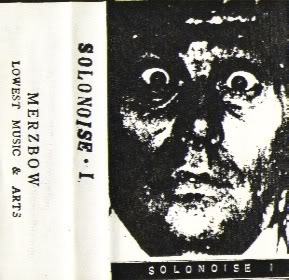
If Noise music is a circulation, a set of experiences and contexts, flows and scapes, ecologies and environments, then genre boundaries can not adequately describe the contextual and historical exchange of sound. Though genre must be considered, Japanoise does not find Novak searching particularly rigorously. He chooses two key Noise musicians, The Nihilist Spasm Band from Canada and Merzbow from Japan and describes their historical context, reception, and influence. But other than those descriptive basics, he is unsuccessful in finding anything new to say about Noise as genre. Concluding the chapter, he casually states that the existence of Noise threatens the boundaries of other musical genres. Though this fascinating statement would have been worthy of a chapter, and certainly foundational to his central idea (that Noise music is diffuse), Novak misses an opportunity to better support these connections in his chapter on genre.
Most interesting, however, is Novak’s focus on the material conditions of the production of Noise music. In describing the diffuse flows and scapes of Noise music, he addresses a plurality of experience: from the technological to the spatial to the private dimensions of listening. These concerns put him in conversation with Louise Meintjes’ Sound of Africa and Julian Henriques’ Sonic Bodies. Like these scholars, Novak refuses to locate the material conditions of production as solely economic, technological, or cultural. Instead, Noise music results from of an assemblage of conditions and possibilities. This is best exemplified by how Novak distinguishes the live music experience from the recorded. Here, Novak resists the neat distinction, long established in musicology, that hears the live experience as collective and interactive, and recorded music as individuated and passive. Instead, Novak suggests “liveness” and “deadness.” Liveness and deadness are not bounded to the dichotomy of the live performance with the recording, but rather two qualities that float through and with both experiences. “Liveness is about the connection between performance and embodiment… deadness, in turn, helps remote listeners recognize their affective experiences…” The experience of live Noise music, according to Novak, often challenges the boundaries of what is often expected when hearing live music. I have seen this in my own experiences standing in an audience surrounded by shrieking, booming, droning noises.
Truth be known, I’m as taken with Noise music as Novak. If his book confesses to being written by a critical but vehement fan, then I ought to confess the same of the music which I love so dearly. I had the chance to see Merzbow perform in Raleigh in August. He strummed obviously homemade instruments, turned fader pots, and concentrated intently on his laptop. A fan was crawling through the crowd on their hands and knees; occasionally they stood to sway, then returned to crawling. I thought that this behavior might seem odd, but in the context of Merzbow’s performance, it was as legitimate as any other. Through these odd behaviors, the fan demonstrated Novak’s conception of individuation within Noise music. The material conditions of the performance, the screeching Noise, made it impossible for me to ask the person what they were doing or feeling. I experienced the fan and the Noise in a tension from which there is no resolution. We were both uncomfortably located in a multiplicity of experiences. These experiences don’t resolve to a whole, but rather pulsate and echo and feed back into each other, intertwining with expectations of behavior, material conditions, and embodiment(s).
Japanoise raises many important questions. What social processes lead us to foreground the sonic experiences in our lives? And further, how does a critical understanding of these processes help to advance the work of understanding the power and politics of sound? But, for me, Novak’s work serves best to remind me of how much value is found in fragmented, diffuse, outlier experiences, like Noise music. Because sound occupies a crucial role in our social and political lives, Novak encourages us not to resolve tensions, rather to exist amongst them and hear them as lively and productive.
For those readers who might be unfamiliar with the music Novak describes, the book’s website has a fantastic collection of supplemental media for you to enjoy: http://www.japanoise.com/media/.
–
Seth Mulliken is a Ph.D. candidate in the Communication, Rhetoric, and Digital Media program at NC State. He does ethnographic research about the co-constitutive relationship between sound and race in public space. Concerned with ubiquitous forms of sonic control, he seeks to locate the variety of interactions, negotiations, and resistances through individual behavior, community, and technology that allow for a wide swath of racial identity productions. He is convinced ginger is an audible spice, but only above 15khz.
—
 REWIND! . . .If you liked this post, you may also dig:
Tofu, Steak, and a Smoke Alarm: The Food Network’s Chopped & the Sonic Art of Cooking–Seth Mulliken
SO! Reads: Jonathan Sterne’s MP3: The Meaning of a Format–Aaron Trammell
The Noise of SB 1070: or Do I Sound Illegal to You?–Jennifer Stoever-Ackerman
Share this:


Current Top Posts





April 2021

January 2020

November 2019

October 2019

August 2019

April 2014

November 2017

March 2015

December 2017

October 2015
 Sounding Out!
Recent Comments