
From Illegitimate to Illmatic: On Tiger Mothers, Ethnoburbs, and Playing the Violin While Dreaming of Nas
“Don’t tell me you’re still listening to that shit.”
“I told you, I like it.”
“This is why we have so much trouble with you.”
“You don’t know anything about it.”
“Listen to that cursing…it’s nothing but garbage!”
“What are you doing?”
“All of these CDs are going in the basement. No more rap until you start listening to your parents! Now, go practice your violin!”
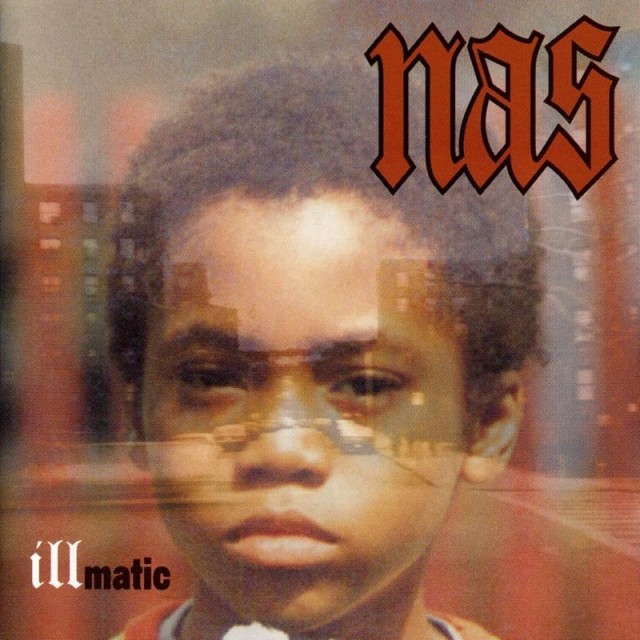
Growing up, exchanges like these were common between my Korean American mother and me—a multiracial Korean Euro-American. In her eyes, there was no such thing as enough violin practice. Rap—the vulgarity! The noise! It was turning me into a juvenile delinquent! She was convinced I had it in me to be the next Korean-American classical music virtuoso, the next Sarah Chang—if only I would practice more scales and stop trying to imitate “black men shouting.” (However “conversational” the rap world considered Nas’s flow, my mother still heard yelling.)
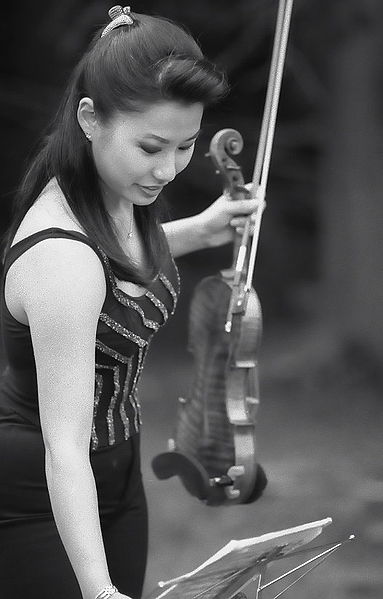
Violinist, Sarah Chang
It’s not that I didn’t like classical music—I watched Amadeus on loop until the VHS squealed—but my mother, like the mothers of most all my Asian friends, insisted on it consuming a fairly large chunk of my life. While immensely diverse in its makeup, most of the Asian population where I lived was either Korean or Chinese, and were forced by their parents to learn violin, piano or cello. Not only was it criminal to play an instrument other than one of these; but, whichever one (or two) you chose, you had better be the best at it.
Author and Yale Law Professor, Amy Chua, recently incited an online firestorm when the Wall Street Journal published an excerpt from hercontroversial new memoir, Battle Hymn of the Tiger Mother, in which she recounts calling her daughters “worthless” and “garbage” if they couldn’t perform a piece of classical music up to her exacting standards. University of Hawai’i at Manoa Professor, Mari Yoshihara’s study, Musicians from a Different Shore: Asians and Asian Americans in Classical Music(2008) describes similar instances of “tiger mothering,” such as virtuoso violinist, Midori Goto’s, mother, Setsu Goto, who (it was rumored) was so strict that it forced Midori into a mental breakdown and an eating disorder. Many would likely agree that “Tiger Mothering” such as this is morally questionable (and in some cases abusive), but I should note that instances like these are only part of a much bigger picture. Scores of students and performers would no doubt concur with Dr. O’C’s recent SO! account of the potential for classical music praxis to have ameliorative effects. Despite this, however, classical music training seems to have become a central tenet of “Tiger Mother” methodology. In all the kerfluffle over Chua’s book, no one has been asking the most foundational question: Why is it so important to Asians and Asian Americans that their children play classical music?
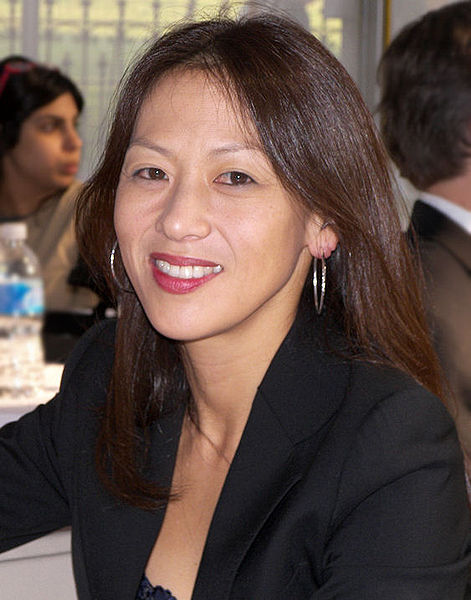
Amy Chua, (CC) Larry D. Moore
In a recent interview on why she chose classical violin and piano for her children, Chua fancifully suggests that classical music is the antidote to materialism. She says that “classical music all about depth” and calls the violin and piano “very respectable instruments.” Indicative of more than just a love of classical music, Chua’s statements imply that other forms of music lack comparable artistic value and require less cultivation to perform and enjoy. In a similar vein, the Asian-descent classical musicians interviewed in Yoshihara’s Musicians From a Different Shore divulge their belief that playing classical music anchors one to a high social stratum. Acknowledging the contradiction between classical music’s high cultural status and its mostly poor compensation, the musicians identified social factors such as educational attainment and musical taste and ability as more important determining factors of class standing than income. Yoshihara thus links the importance Asians and Asian Americans place on classical music praxis to class consciousness and the production of cultural capital.
Class consciousness no doubt accounts for some of the zealousness exhibited by Tiger Mothers with regard to their children’s classical music training, but it’s not the only thing that keeps them roaring. Chua’s Battle Hymn illustrates that, in addition to class consciousness, the pressure to study classical music stems from an intra-racial expectation to perform Asianness adequately. Chapter 5 of Chua’s memoir, titled, “On Generational Decline,” is her cut-and-dried summarization of how subsequent generations of Chinese Americans become lazier as they’re allowed to revel in the comforts of middle class life. Chua chooses classical music for her children because it is “the opposite of decline, the opposite of laziness, vulgarity, and spoiledness.” Constructed as an appeal to Chinese Americans, Chua essentially argues that classical music training is key to an Asian person’s cultural and racial legitimacy. Unwilling to relinquish “the high cultural tradition of [her] ancient ancestors,” she expects her children to uphold a racially and culturally endorsed standard of melody-making that reinforces Asian gender norms and encourages other Asian parents to do the same.
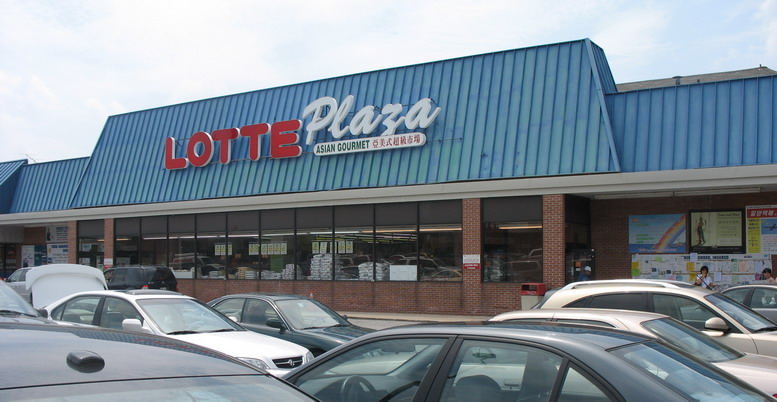
One of Ellicott City’s Korean Shopping Plazas, photo by Barbara Fisher
In Ellicott City, Maryland, the wealthy, culturally diverse “Ethnoburb” of Baltimore where I grew up, Asian American classical musicians abound and Asian American rappers are few. Here, (where the community-wide motto is “Choose Civility”) Asian youth gained a sort of “cred” for mastering the violin or piano, and this pressure to “prove” oneself along racial lines was something I always felt—particularly as a teen of mixed race. It was probably the biggest reason why I didn’t quit the violin until I graduated from high school. I hated it, but resentfully continued attending orchestra and private lessons in the fear that I would lose the meager amount of “cred” I’d built up. It hardly mattered, though. There was no chance of me getting into an Ivy League school or playing Carnegie Hall—I listened to rap and sometimes didn’t do my homework. In short, I would never be a “Super Asian” (a term coined by my Indian music stand partner and me), and as any Asian kid knows, if you’re not the best, you needn’t bother trying. None of the “Super Asians” had any interest in rap, and one even joked that I was a “chocolate-filled twinkie” for wearing a Pelle Pelle jacket to practice one week.
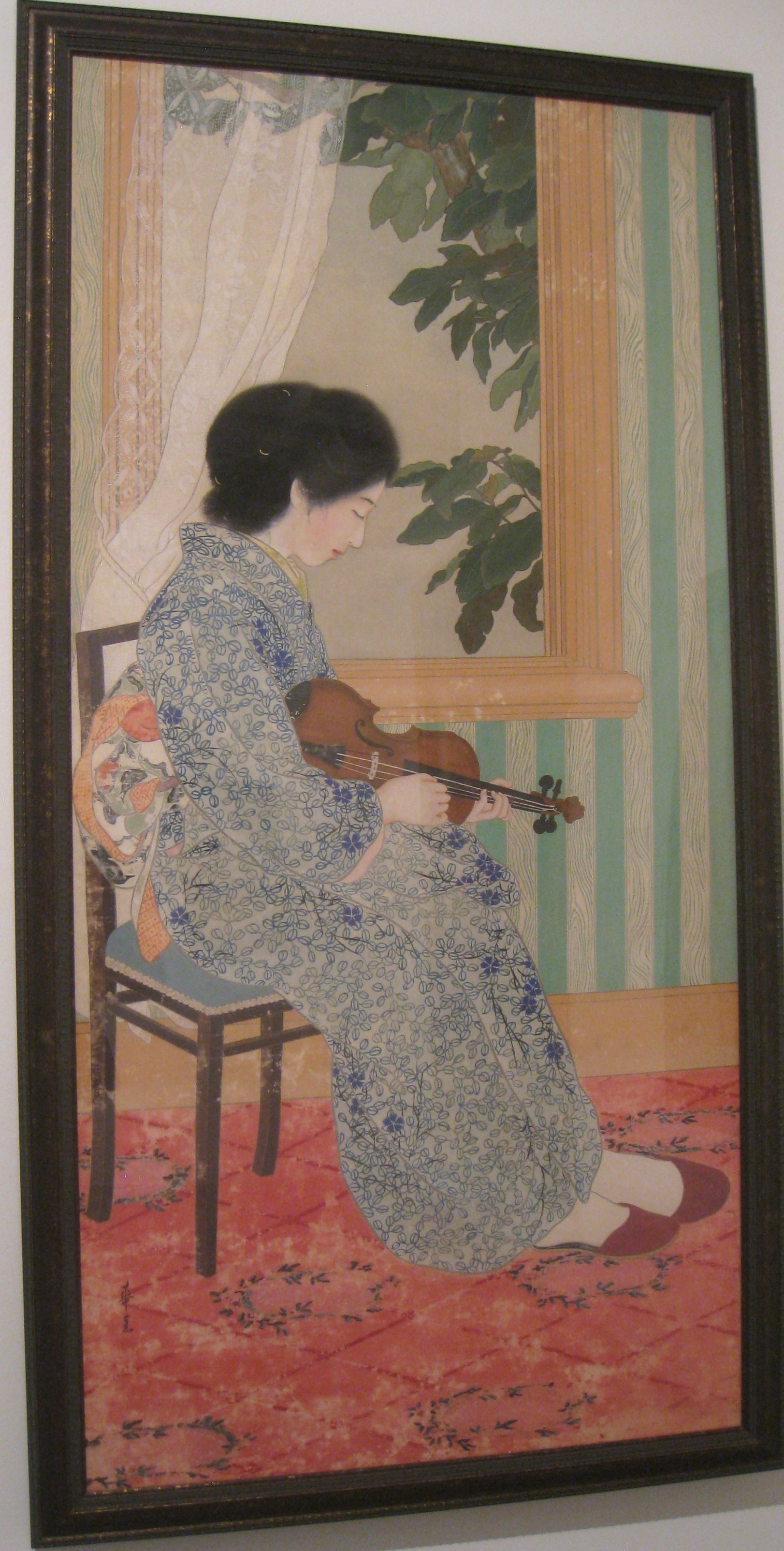
Wolfosonian Museum, Unknown Artist
People who looked like Sarah Chang were supposed to be in the business of making melodies, not rhymes. Chang performing a violin concerto is a comforting scene, a sonic image that reaffirms a familiar cultural narrative of femininity and class stature associated with Asianness in the US. A result of the gradual process of East Asian modernization (instigated by Western Imperialism), classical music was initially adopted by the people at the behest of the state, eventually becoming a integral part of middle class life in East Asia and a social marker of bourgeois womanhood that functioned to situate women vis à vis the domicile. Uncomfortable defining myself in this way (and feeling, also, that I never truly could), I gravitated towards something more “disruptive” that would allow me to show a different face to the world.
Rap became a vehicle for me to explain myself in more hybrid terms. On drives into Baltimore City, I heard it bellowing from the windows of the West Side’s crumbling row homes. The loud, curt, interjections! The spontaneity and candor! This loudness was initially what drew me in, but eventually I realized that rap had just as much profundity as anything classical you could throw at it. Listening to rap, I was finally on offense. It was a medium that spoke to me, because it made me feel capable of speaking back. And there was an entire legion of disaffected youth who seemed to feel the same way.
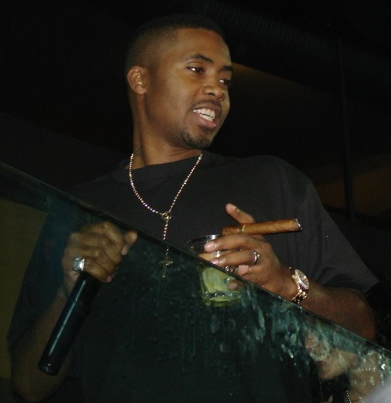
Nas performing in 2007
Despite this popularity, however, critics of rap maintain that the sounds that (predominately African American) rappers produce are nothing more than “noise.” In Black Noise, Tricia Rose observes that despite (and perhaps because of) rap’s widespread popularity and cultural relevance, it is often pitted as classical music’s polar-opposite—“unintelligible yet aggressive sound that disrupt[s the] familial domain” (63). Against charges that rap lacks “depth,” purveyors of hip hop (despite their hefty salaries) often accrue little to no widespread artistic acclaim. Evidence of what Jennifer Stoever-Ackerman terms the “sonic color-line,” this demotion and “Othering” of non-white sounds into “noise” (discussed further in her recent SO! post) has historically functioned to both generate and underwrite public attitudes about race, class and gender and to create dominant ideas about listening that she dubs “the listening ear.”
It seems that dominant modes of listening have everything figured out. If you look like this, you sound like that. But, what about people who look like me? What are we supposed to sound like? With which sonic cultural productions am I supposed to ally myself, and do I have a choice in the matter? How does “the listening ear” interpret a biracial Korean Euro-American or any person of mixed race heritage? Was there a distinction to be heard? I was sure there was, but didn’t quite know how to voice it.
For most of my life I have lived on the precipice of Asianness and something else, leaving me to feel—at times—confused, demoralized and illegitimate. As Michael Omi and Howard Winant famously note in their seminal work, Racial Formation, “Without a racial identity [in America], one is in danger of having no identity.” Acutely aware of my difference, I searched for ways of being heard as a multiracial subject in a fiercely stratified, race-conscious society. In the Introduction to The Sum of Our Parts: Mixed-Heritage Asian Americans, Michael Omi notes that within the historical and political context of the United States, (the “one-drop rule,” eugenic fears of racial intermixing, anti-miscegenation laws, etc.) multiracial identities have consistently been “contained, disregarded, [and] denied.” Disruptive to fixed notions about race, it is often a challenge for multiracial subjects to be recognized or understood by the state or the ear.
Rap assisted me in my effort to be heard as a multiracial person. While my Asian friends in All-State Orchestra were polishing their four-octave chromatic scales for the judging panel at Julliard, I was conscientiously studying Rakim’s flow and the RZA’s beats, hoping that one day it might make sense for me to show my face at a rap battle, if only as an observer. After the realization that Nas wasn’t the reason I could never be a “Super Asian,” my mom returned my copy of his masterpiece debut, Illmatic. As previously, I spent the hours before bedtime reciting the lyrics to Nasty classics like “It Ain’t Hard to Tell,” moved by every skillful turn of phrase: “Nas is like the Afrocentric Asian/half man-half amazin,” I would repeat over and over until I got the cadences just right. Whatever the hell he was talking about, I was sure it applied to me.


Share this:

Sound at SCMS 2011
“Sound is always the ingenue at the media party”–Charles Bernstein, “Sounding the Word,” in Harper’s March 2011
The Society for Cinema and Media Studies Annual Conference is especially exciting for Sound Studies peeps in that it has an official Sound Studies Special Interest Group, established in 2008, that sponsors panels and meets regularly every year. In the upcoming 2011 meeting in New Orleans, Louisiana, Co-Chairs Norma Coates and Jay Beck will convene the SSSIG confab at 8:00 a.m. on Saturday, March 12th. We are proud here at Sounding Out! to be officially sponsored by the SSSIG–you can catch yours truly‘s panel “J6: Listening and the Sounds of Belonging: Signification, Practice, and Politics” along with co-SO! Aaron Trammell (PhD. Student, Rutgers), Priscilla Peña Ovalle (Asst. Prof at UO as well as SO! guest writer: See “Aurally Other”), and Dolores Inés Casillas, (Asst. Prof at UCSB and slated to be a guest writer for SO! in March).
While sound studies has had a challenging battle for recognition in an arena so committed to the notion of “the screen” (see Norma Coates’ 2008 Cinema Journal piece, “Sound Studies: Missing the (Popular) Music for the Screens?” for a compelling story of the institutional turf wars between sound studies, media studies, and popular music study writ large), this year’s slate shows a hard-fought diffusion of sound study across different fields: some traditionally with screens–film, television, music video, youtube–and some without–radio, music, DJ culture, surveillance technology, and legal discourse. I have highlighted the SSSIG sponsored panels throughout our SCMS round-up both to big-up their work but also to show the many other sites where sound has emerged, both in full panels and in individual papers.
If I have missed you, please drop me a line at jstoever@gmail.com! We look forward to seeing you in NOLA (and Twittering you @soundingoutblog if we won’t).
3.1.11 Addendum: Due to simultaneous and unfortunate family emergencies, our SO! panel at SCMS has been canceled. We urge you to check out the many other excellent SSSIG papers this year.

Portrait of Kaiser Marshall, Art Hodes, Sandy Williams, Cecil (Xavier) Scott, and Henry (Clay) Goodwin, Times Square, New York, N.Y., ca. July 1947
THURSDAY MARCH 10, 2011

Portrait of Kaiser Marshall, Art Hodes, Sandy Williams, Cecil (Xavier) Scott, and Henry (Clay) Goodwin, Times Square, New York, N.Y., ca. July 1947
NOON – 1:45 PM
A11: Hollywood On The Air: Rehistoricizing Cinema and Radio
ROOM Salon 1A, Level Two
CHAIR Scott Balcerzak, Northern Illinois University
Sara Levavy, Stanford University, “The Newsreel and the Framing of Media”
Scott Balcerzak, Northern Illinois University, “Jack Benny’s Voice and Body: Queered Radio and the Screen Comedian”
Neil Verma, University of Chicago, Watching Eavesdroppers: Film, Radio, and Meta-Commentary in Classic American Noir”
Michael Dwyer, Arcadia University, “‘The Same Old Songs?’: The Invention of Oldies on Film and Radio”
SPONSOR: Sound Studies Scholarly Interest Group
A19: WORKSHOP: The DJ in Electronic Dance Music: Media Citizenship, Appropriation, and Cultural Hybridity
ROOM Acadia, Level Two
CHAIR Bernardo Attias, CaliforniaState University, Northridge
WORKSHOP PARTICIPANTS
Fred Church, Tangy Citrus Records
Mark Gunderson, Evolution Control Committee
Shane Martin, Middle Tennessee State University
Bernardo Attias, California State University, Northridge
Individual papers of Interest:
Bobby Simmons, University of Southern California, “We’ve Only Just Begun: Popular Music and Aging Boomers in Advertising” in A23 Media and Senior Citizenship Age and Generational Issues In Film, Television, and New Media, ROOM Mercier Terrace, Level Fourteen
2:00 PM – 3:45 PM
B2: Early Soviet Film Sound: Theory, Technology, Ideology, Practice
ROOM Algiers, Level One
CHAIR Lilya Kaganovsky, University of Illinois, Urbana-Champaign
Lilya Kaganovsky, University of Illinois, Urbana-Champaign, “Ideological State Apparatuses: Soviet Cinema’s Conversion to Sound (1928-1935)”
Joshua Malitsky, Indiana University, “The Movement of Energy”
Vincent Bohlinger, Rhode Island College, “The Transition to Sound in the Soviet Union: Technological Developments and Industry Practices”
RESPONDENT Masha Salazkina, Concordia University
Individual Papers of Interest:
Curran Nault , University of Texas, Austin, “When Punk Meets Porn: The Convergence of Music and Sex inCourtney Trouble’s Queer Punk Pornography,” in B4 Visualizing Sexuality, ROOM Esplanade, Level One
Felan Parker, York University, “Millions of Voices: Star Wars, Digital Games, Fictional Worlds and Franchise Canon,” B6 Video Game Worlds, ROOM Fountainbleu, Level One
4:00 PM – 5:45 PM
C18 Sound Studies
ROOM Evangeline, Level Two
CHAIR Jennifer Fleeger, The Catholic University of America
Andrew deWaard, University of British Columbia, “Mise-en-Synergy”
Jennifer Fleeger, The Catholic University of America, “Selling Jazz Short: Warner Bros. Makes Film Sound American”
Kevin John Bozelka, DePaul University, “The Development of the Music Cue Sheet in American Cinema”
Kelly Kessler, DePaul University, “When Evita Meets Little Mary Sunshine: Rewriting the Hero Through Visual and Narrative Adaptation in the Millennial Movie Musical”
SPONSOR Sound Studies Scholarly Interest Group

Downtown Joy Theatre, Canal St., New Orleans (Since Closed)
FRIDAY MARCH 11, 2011

Downtown Joy Theatre, Canal St., New Orleans (Since Closed)
8:00 AM – 9:45 AM
D4: Secrecy, Surveillance, and Media History
ROOM Esplanade, Level One
CHAIR Lisa Lynch, Concordia University
David Suisman, University of Delaware, “Listening Like a State: Wiretapping, Electronic Eavesdropping, and the History of American Surveillance”
Elena Razlogova, Concordia University, “‘This System of Secret Informers’: Snitching as a Key Aspect of Modern Surveillance Societies”
Lisa Lynch, Concordia University , “‘As I Photograph the Night Sky, the Other Night Sky Photographs Back’: Surveillance, Transparency, and the Frenzy of Disclosure”
RESPONDENT Alexander Russo, Catholic University of America
D18 Popular Music and Media Convergence
ROOM Evangeline, Level Two
CHAIR Norma Coates, University of Western Ontario
Benjamin Aslinger, Bentley University, “The Price is Right: Licensing Tracks and Artists for the Rock Bank, Guitar Hero, and DJ Hero Franchises”
Elissa Nelson, University of Texas, Austin, “Indie Music and Mainstream TV at a Crossroads: The Soundtrack to The O.C.”
Joseph Tompkins, University of Minnesota, “Do Anything for Dethklok: How Extreme Metal Culture Found Its Niche with Post-Network TV”
Andrew Bottomley, University of Wisconsin, Madison,“De-Convergence: The Revival of the Audio Cassette Format in the Digital Era”
SPONSOR Sound Studies Scholarly Interest Group
Individual Papers of Interest:
Justin Horton, Georgia State University , “The Limits of Vision: Sound and Subjectivity in Gus Van Sant’s Paranoid Park,” in D8 Locating Queer Subjectivity, ROOM Carrollton, Level One
Sarah Kessler, University of California, Irvine, “The Voice of Traumas Past: Ventriloquizing Victimology in Contemporary Israeli Cinema,” D21 The “Afterlife” of Media, ROOM Union Terrace C, Level Three
10:00 AM – 11:45 AM
E5 Contemporary Racial Performances
ROOM Broadmoor, Level One
CHAIR Sylvia Chong, University of Virginia
Sylvia Chong, University of Virginia, “Being, Acting, Passing, Mocking: The Many Faces of Performativity in Tropic Thunder (2008)”
Sean Metzger, Duke University, “Asian/American Mediatization and That Emcee Jin”
Eng-Beng Lim, Brown University, “Dancing with Margaret Cho”
SPONSOR Asian/Pacific American Caucus
E6 WORKSHOP New Media Futures: The Digital (the Academy)
ROOM Fountainbleu, Level One
CHAIR Nicholas Mirzoeff, New York University
WORKSHOP PARTICIPANTS
Kathleen Fitzpatrick, Pomona College
Alexandra Juhasz, Pitzer College
Wendy Chun, Brown University
Nicholas Mirzoeff, New York University
Tara McPherson, University of Southern California
E14 Silent Film Aesthetics and Audiences
ROOM Salon III, Level Two
CHAIR Richard Abel, University of Michigan
Paul Moore, Ryerson University, “Telegraphing Cinema: The Vitascope’s Advance Newspaper Publicity In April 1896”
Katherine Fusco, Vanderbilt University, “Time Made Visible: Taylorism, the Gilbreths, and the Early Cinema’s Efficiency Aesthetics”
Nicholas Baer, University of California, Berkeley , “Messianic Musclemen: Early German Cinema as Zionist Allegory”
Richard Abel, University of Michigan, “Going to the Movies in Detroit: Weekly Film News, 1916-1919”
E15 Intertitles, Talking, and Singing: The American Vernacular and Transitions in Cinematic Sound
ROOM LaSalle, Level Two
CHAIR Cynthia Lucia, Rider University
Paul Young, Vanderbilt University, “The Talking Fool: Broadcasting Intimacy in Jolson’s Vitaphone Films”
Desiree Garcia, Brown University, “There’s No Place Like Home: Modernity, Social Belonging, and the Hollywood Folk Musical”
RESPONDENT Krin Gabbard, Stony Brook University
Individual Papers of Interest:
Josh Glick, Yale University, “Filming Urban Roots: Wattstax, Black Identity, and the Cultural Geography of Los Angeles,” E10 Shooting City Spaces: Location Filmmaking During the “Urban Crisis,” ROOM St. Charles, Level Two
Christopher Natzén, National Library of Sweden, “‘All That Jazz’—Foreign Musicians in Sweden during the Conversion to Sound Film,” E23 Cinematic Mobilities, ROOM Mercier Terrace, Level Fourteen
1:15 PM – 3:00 PM
F2: Off Screen Noise: Sound and Avant-Garde Cinema
ROOM Algiers, Level One
CHAIR Michelle Puetz, University of Chicago
Andrew Ritchey, University of Iowa, “Two Turntables and an Avant-Garde Film: The Phonograph as Musical Accompaniment”
Michelle Puetz, University of Chicago, “Feedback, Graphic Scores and Improvisation in Richard Lerman’s Films and Sound Experiments”
Juan Suarez, Universidad de Murcia, “Noise, Body, Landscape: Jack Smith, Hélio Oiticica, and Terry Fox”
Melissa Ragona, Carnegie Mellon University, “Sonic Warhol: From Tape-Recorder to Film”
SPONSOR Experimental Film and Media Scholarly Interest Group
F12: The Cry of Jazz: Voicing Black Citizenship Onscreen
ROOM Salon 1B, Level Two
CHAIR Nicholas Sammond, University of Toronto
Anna McCarthy, New York University, “The Cry of Jazz and the Uses of Film”
Charles McGovern, College of William and Mary, “‘To the Ends of the Earth’: The Television World of Nat Cole”
Nicholas Sammond, University of Toronto, “Citizen Crow: The Contradictory America of Stormy Weather”
RESPONDENT Arthur Knight, College of William and Mary
SPONSOR Oscar Micheaux Society
Individual Papers of Interest:
Leah Shafer, Hobart and William Smith Colleges, “‘Tik Tock on the Clock, but the Party Don’t Stop, No’: Parodic Military Dance Videos on YouTube,” F19 Whose War is it Anyway?: Contemporary Images of Combat, ROOM Acadia, Level Two
Elena Bonomo, University of Southern California, “Living Punk: The D.C. Punk Scene, Fugazi, and Jem Cohen’s Instrument (1999),” F23: Media Consumers: Mainstream/Alternative/State, ROOM Mercier Terrace, Level
3:15 PM – 5:00 PM
G1 Generations of Media Studies
ROOM: Audubon, Level One
CHAIR Diane Negra, University College Dublin
WORKSHOP PARTICIPANTS
E. Ann Kaplan, Stony Brook University
Patrice Petro, University of Wisconsin, Milwaukee
Derek Kompare, Southern Methodist University
F. Hollis Griffin, Colby College
G6 Contested Spaces of Educational Media
ROOM Fountainbleu, Level One
CHAIR Amanda Keeler, Indiana University
Michele Hilmes, University of Wisconsin, Madison, “Radio Rockefeller: The Rockefeller Foundation’s Transnational Vision of Radio in the 1930s”
Josh Shepperd, University of Wisconsin, Madison, “Pressing On: Program Transcription and the ‘Networking’ of Educational Radio, 1935-1942”
Amanda Keeler, Indiana University, “Media in Flux: Educational Discourse from Radio to Television”
RESPONDENT Paddy Scannell, University of Michigan
SPONSOR Television and New Media Scholarly Interest Group
G16 Affective Media, Embodied Spectators
CHAIR Dana Luciano, Georgetown University
CO-CHAIR Karen Tongson, University of Southern California
Robert McRuer, George Washington University, “Live (Crip) Sex Acts: Neoliberalism, Affect, Intensity”
Dana Luciano, Georgetown University, “Uneventful Grief”
Mel Chen, University of California, Berkeley, “Masked Media”
Jasbir Puar, Rutgers University, “Lifelogging: Digital Archives of Affect, Memory, and Intimacy”
G20 Sound Design
ROOM Union Terrace A, Level Three
CHAIR Jeff Smith, University of Wisconsin, Madison
Michael Slowik, University of Iowa, “Collection or Construction? Sound Effects and Sonic Depth in the Early Sound Western”
Katherine Quanz, Wilfrid Laurier University, “Canadian Soundscapes: The Transition to Dolby Sound in the Cinema of David Cronenberg”
Amanda McQueen, University of Wisconsin, Madison, “Bring the Noise: Intensified Continuity in the Sound Design of the Works of Edgar Wright”
Jeff Smith, University of Wisconsin, Madison, “Some Tales Told By Hiccupping Monkeys: Intensified Continuity and The Soundtracks of Contemporary Hollywood Films”
SPONSOR Sound Studies Scholarly Interest Group

The Stones of Congo Square, New Orleans, LA
SATURDAY MARCH 12, 2011

The Stones of Congo Square, New Orleans, LA
8:00 AM – 9:45 AM
MEETING: Sound Studies Scholarly Interest Group
ROOM Orleans, Level Two
10:00 AM – 11:45 AM
I5 WORKSHOP: Blogging, Tweeting, and Posting: Online Media Community Building and Scholarly Promotion
ROOM Broadmoor, Level One
CHAIR Miranda Banks, Emerson College
CO-CHAIR Ryan Bowles, University of California, Santa Barbara
WORKSHOP PARTICIPANTS
Alisa Perren, Georgia State University
Anne Helen Petersen, University of Texas
Julie Russo, Stanford University
Patty Ahn, University of Southern California
Inna Arzumanova, University of Southern California
SPONSOR Women’s Caucus
I8 Building Environments: Sound Design and Auditory Ambiences in FilmROOM Carrollton, Level One
CHAIR Randolph Jordan, Concordia University
CO-CHAIR Benjamin Wright, Carleton University
Lisa Coulthard, University of British Columbia, “New and Old Worlds: The Acoustic Ecology of the Period Film”
Benjamin Wright, Carleton University, “Designing the Sound of New Orleans: Ren Klyce’s Use of Ambiences in The Curious Case of Benjamin Button”
Randolph Jordan, Concordia University, “Hearing the Guggenheim in the Cinema: Modernist Acoustic Design and the Conventions of Film Sound”
Vanessa Ament, Georgia State University, “The Wallpaper Speaks: Aural Representations of Confinement in Barton Fink”
SPONSOR Sound Studies Scholarly Interest Group
I10 The Cultural Phenomenon of Michael Jackson
ROOM St. Charles, Level Two
CHAIR Sylvia Martin, Babson College
Mark Anthony Neal, Duke University, “Sampling Michael: Rhythm, Masculinity and Intellectual Property in the ‘Body’ of Michael Jackson”
Todd Gray, California State University, Long Beach, “Caliban In The Mirror”
Dj Lynnee Denise, WildSeed Music & Exalt Youth, “The King of Pop Drag: Michael Jackson’s Performance of Heterosexuality and Hyper Masculinity”
Sylvia Martin, Babson College, “Mediating Messages: A Choreography of Contradiction”
Individual papers of Interest:
Charles Musser, Yale University, “Audio-Visual Media in The Presidential Campaigns of 1892 and 1896: Shifting the Historical Paradigm from Film Studies to Media Studies,” I2 Nonfiction Citizenship and the Margins of Documentary Form, ROOM Audubon, Level One
Susana Duarte, Universidade Nova de Lisboa, “Between Seeing and Saying: Cinematographic Readings of the Archive,” I4, Mining the Archive: Discoveries, Compositions, Disjunctions, ROOM Esplanade, Level One
Andrea Kelley, Indiana University, “Mobilizing the Mulatto: Dorothy Dandridge’s Cross-Racial Constructions in 1940s Soundies,” I20 African American Stars and Auteurs, ROOM Union Terrace A, Level Three
11:00 am – 12 noon
ROOM Boardroom, Level Two
Media Literacy and Outreach Scholarly Interest Group Meeting
12:00 NOON – 1:45 PM
J6: Listening and the Sounds of Belonging: Signification, Practice, and Politics
ROOM Fountainbleu, Level One
CHAIR Jennifer Stoever-Ackerman, State University of New York, Binghamton
CO-CHAIR Priscilla Ovalle, University of Oregon
Jennifer Stoever-Ackerman, State University of New York, Binghamton,“The Noise of SB 1070: or Do I Sound Illegal to You?”
Dolores Inés Casillas, University of California, Santa Barbara, “‘¡Puuurrrooo MÉXICO,’: Listening to Transnationalism on U.S. Spanish-Language Radio”
Aaron Trammell, Rutgers University, “‘What We Do Is Secret (For a Reason)’: Identity and Resistance in Underground Music”
3.1.11 Addendum: Due to simultaneous and unfortunate family emergencies, this panel has been canceled. We will keep you posted on the rescheduling of Aaron Trammell’s paper.
SPONSOR Sound Studies Scholarly Interest Group
MEETING: Video Games Studies Scholarly Interest Group
ROOM Boardroom, Level Two
Individual Papers of Interest:
Norma Coates, University of Western Ontario , “The Persistence of Infamy: ‘Tween and Teen Girl Taste and Narratives of the Decline of Popular Culture,” J10 Complete Control?: ‘Tween/Teen Girl Consumers, Media,and Cultural Power, ROOM St. Charles, Level Two
2:00 PM – 3:45 PM
K5 Place and Representation in HBO’s Treme
ROOM Broadmoor, Level One
CHAIR Julia Leyda, Sophia University
Joy Fuqua, Queens College, “‘In New Orleans We Might Say it Like This…’: Autochthonic Discourses and Expert Outsiders in HBO’s Treme”
Julia Leyda, Sophia University, “What a Character, Creighton and Excess in HBO’s Treme”
Courtney George, Columbus State University, “‘We’re All Goin’ Crazy Buck Jumpin’ and Havin’ Fun’: The Carnivalesque in the Music of HBO’s Treme”
Lynnell Thomas, University of Massachusetts, Boston, “Televisual Tourism: HBO’s Treme and the Racial Remapping of Post-Katrina New Orleans”
K8 Sound and Music
ROOM Carrollton, Level One
CHAIR Deane Williams, Monash University, Melbourne
Thomas Cohen, University of Tampa, “Jazz, Film, and Videotape: Shirley Clarke’s Ornette: Made in America”
Morgan Woolsey, University of California, Los Angeles, “Time Change: Oppositional Scoring and Sound Design in the Films of the L.A. School”
Amy Corbin, Muhlenberg College, “Interrogating Racial and Geographic Boundaries Through Direct Address in The Corner and Just Another Girl on the I.R.T.”
Sean Griffin, Southern Methodist University, “I’ve Grown Accustomed to Her Voice: Fetishizing the Female Voice in My Fair Lady”
2:00 PM
K10: Studies in Distinction: Authorship, Style, and Meaning
Mack Hagood, Indiana University, “Unpacking Punches: Synchresis and Schizophonia in the Combat Foley of Fight Club” It’s at 2pm on Saturday in K10. The panel is called “.”
4:00 PM – 5:45 PM
L7: Animating Blackness: Race, Citizenship, and Satire in Aaron McGruder’s The Boondocks
ROOM Gentilly, Level One
CHAIR TreaAndrea Russworm, University of Massachusetts Amherst
CO-CHAIR Michael Forbes, DePauw University
Paul Mahaffey, University of Montevallo, “The Boondocks and the Neo-Slave Narrative: The Story of Catcher Freeman”
Racquel Gates, The New School, “Caught at the Crossroads: The Ambivalent Politics of The Boondocks”
Mark James, University of West Florida, “Huey’s Awesome Hairdo: Consuming the Black Intellectual”
Sarah Florini, Indiana University, “Is this “Boondocks or ‘Coondocks’?: Interpreting ‘The Story of Jimmy Rebel’ in 140 Characters on Twitter”
SPONSORS African/African American Caucus and Oscar Micheaux Society
L20: Song and Film:Soundscapes, Landscapes, and Manscapes
ROOM Union Terrace A, Level Three
CHAIR Kathryn Kalinak, Rhode Island College
Corey Creekmur, University of Iowa, “The Cowboy Chorus: Narrative and Cultural Functions of the Western Theme Song”
Caryl Flinn, University of Arizona, “Musicals: Affect and Afterlife”
Krin Gabbard, Stony Brook University, “Isn’t It Bromantic?: Rock Music and Male Bonding”
Kathryn Kalinak, Rhode Island College, “Song and Authenticity in the Western”
L21 Cultural Logics of Replay
ROOM Union Terrace C, Level Three
CHAIR Christopher Hanson, Syracuse University
Laurel Westrup, University of California, Los Angeles, “Re-Mastering MTV: Intermedial Mastery and the Literal Video Phenomenon”
Steve Anderson, University of Southern California, “Repetition, Cultural Memory, and the Construction of History”
Robert Cavanagh, Northwestern University, “Instant Replay and the Impossibility of Decision”
Christopher Hanson, Syracuse University, “Similarity and Difference: Replay in the Digital”
Individual Papers of Interest
Cynthia Chris, College of Staten Island-CUNY, “Bleeping Policy: The FCC, the Courts and the Future of Decency Regulation” and Elizabeth Ellcessor, University of Wisconsin, Madison, “Case Closed:Closed-Captioning, US Law and Assumptions about Audience,” L2: Courtroom Drama: Media Industries and the Law, ROOM Algiers, Level One
Selmin Kara, Wayne State University, “The Sonic Summons: Meditations on Nature and Anempathetic Sound in Digital Documentaries,” L17, On the Margins of Documentary: Divergent Practices in the Digital Era, ROOM Vermilion, Level Two

Capitol Theater, New Orleans, 2005 (Since burned down)
SUNDAY MARCH 13, 2011

Capitol Theater, New Orleans, 2005 (Since burned down)
8:00 AM – 9:45 AM
M1: Do You Know What It Means to Represent New Orleans? David Simon’s Treme and Mediated Citizenship
ROOM Audubon, Level One
CHAIR Jeffrey Jones, Old Dominion University
Kristina Busse, Independent Scholar, and John Dudley, University of South Dakota, “Second Lining as Suffering and Solidarity: Absence and Authenticity in David Simon’s Post-Katrina New Orleans”
Christopher Cwynar, University of Wisconsin, Madison, “‘I Have Roamed the Whole World Over, but New Orleans is Still My Home’: Cultural Citizenship, Authenticity, and the Limits of Representation on HBO’s Treme”
Nicholas Marx, University of Wisconsin, Madison, “Branding the Band: Mediating Viewer Engagement through Music in HBO’s Treme”
RESPONDENT Vicki Mayer, Tulane University
SPONSOR Television and New Media Scholarly Interest Group
M5: Sampling Towards a New Civic Body :Music Videos and Political “Future Texts”
ROOM Broadmoor, Level One
CHAIR Rachel Raimist, University of Alabama
Virginia Kuhn, University of Southern California, “Resistant Discourse: Jay Z’s Swagger and the Rhetoric of Gesture”
Shelleen Greene, University of Wisconsin, Milwaukee, “The New ‘Material Girls’: Madonna, Millennial Pop Divas,and the Politics of Race and Gender”
Vicki Callahan, University of Wisconsin, Milwaukee, “A ‘Window Seat’ to History: Erykah Badu’s Dealey Plaza Remix”
Janina Cartier, Northwestern University, “Pimp-hop: Rethinking Blaxploitation’s Connection to Hip-hop Videos”
M20 WORKSHOP: Teaching “Media Industries”: Pedagogical Strategies for a Complex and Ever-Changing Object
ROOM Union Terrace A, Level Two
CHAIR Michael Curtin, University of California, Santa Barbara
WORKSHOP PARTICIPANTS
Denise Mann, University of California, Los Angeles
Jennifer Holt, University of California, Santa Barbara
Ross Melnick, University of California, Los Angeles
Deron Overpeck, Auburn University
Eddy Mueller, Emory University
Independent Papers of Interest
Maria Boyd, Georgia State University, “American Idol’s Containment and Unleashing of a ‘Glam Rock, Sex God,’” M9:Who Counts?: Proper Citizens/Popular Media, ROOM Carondelet, Level Two
10:00 AM – 11:45 AM
N6: WORKSHOP: Remix, Media Stylos and 21st Century Pedagogy
CHAIR Nina Cartier, Northwestern University
WORKSHOP PARTICIPANTS
Eric Faden, Bucknell University
Shelleen Greene, University of Wisconsin, Milwaukee
Rachel Raimist, University of Alabama
Vicki Callahan, University of Wisconsin, Milwaukee
Virginia Kuhn, University of Southern California
N11WORKSHOP: The Bachelor’s Ball: Videogames and the Need for Feminist Game Studies
ROOM Salon 1A, Level Two
CHAIR Mia Consalvo, Massachusetts Institute of Technology
CO-CHAIR Nina Huntemann, Suffolk University
WORKSHOP PARTICIPANTS
Shira Chess, Miami University
Nina Huntemann, Suffolk University
Hye Jin Lee, University of Iowa
Carol Stabile, University of Oregon
Staci Tucker, University of Oregon
SPONSORS Video Game Studies Scholarly Interest Group, Women’s Film History Project, and Women’s Caucus
N13 Placing Sound
ROOM Salon II, Level Two
CHAIR Kyle Barnett, Bellarmine University
Jacob Smith, Northwestern University, “Problems of Unscreened Media”
Patrick Feaster, FirstSounds.org, “He Was the Edison Phonograph: Len Spencer, an Old New Media Pioneer”
Kyle Barnett, Bellarmine University, “Souvenir Sounds: The Historical Role of Sound Recordings in Film Fandom”
Shawn VanCour, University of South Carolina, “Ambient Radio: Aural Spectacle, Secondary Listening, and Acoustic Flanerie in Early Twentieth Century American Broadcasting”
SPONSOR Sound Studies Scholarly Interest Group
Independent Papers of Interest:
Mary Beltran, University of Wisconsin, Madison, “Hip Hop Hearts Ballet: Cultural Hybridity and ‘Post-Racial’ Cultural Capital in the Step Up Dance Films,” N1 How Does It Feel To Be a Trend?: Interrogating the Politics of Racial Representation in Contemporary Hollywood Cinema, ROOM Audubon, Level One
Ian Kennedy, “Wayne State University , “High-Definition Audio and the 1990s Internet Film,” N9 Filming the Internet, ROOM Carondelet, Level Two,
Anthony Bleach, Kutztown University , “Screwing the Soundtrack: DVD Fan Commentaries as Cinephilic Practice and Citizen’s Paratext,” N18 Cinephilia and New Media Fandom, ROOM Evangeline, Level Two
Lorien Hunter, University of Southern California, “Conversations in Hip Hop: The Question of Black Identity in Post 9/11 America,” N22 Media and Identities, ROOM Crescent View, Level Twelve
12:00 NOON – 1:45 PM
O2: Unsung Laughter : Women Comics of the Silent Screen
ROOM Algiers, Level One
CHAIR Kristine Karnick, Indiana University-Purdue University Indianapolis
Margaret Hennefeld, Brown University , “Women and Slapstick in Silent Cinema: the Comedyfication of Domestic Space”
Kristen Anderson Wagner, University of Southern California, “Polly Moran, ‘The Wild, Wild Woman of the Screen’”
Joanna E. Rapf, University of Oklahoma, “‘The Girl o- the Stripes’: The Comic World of Fay Tincher”
RESPONDENT Rob King, University of Toronto
SPONSOR Women’s Film History Project
O6 Song-and-Dance Routines: Hollywood, Bollywood, and Beyond
ROOM Fountainbleu, Level One
CHAIR Fernanda Zullo-Ruiz, Hanover College
Usha Iyer, University of Pittsburgh , “Finding the Past in Pastiche: Intertextuality in Bollywood Song-and-Dance Sequences”
Jenny Oyallon-Koloski, University of Wisconsin, Madison , “Versions of “Cool”: Filming Dance in West Side Story”
Tracy Cox-Stanton, Savannah College of Art and Design , “Busby Berkeley and Primitivism: Exploring how Dance Delineates the Boundary between Savagery and Civilization”
Laura Gutierrez, University of Arizona , “Masochistic Desire and Pleasure in Alberto Gout’s Rumbera Films”
O11: Teaching Media Studies: Through Video Games
ROOM Salon 1A, Level Two
CHAIR Matthew Payne, University of Texas, Austin
WORKSHOP PARTICIPANTS
Mia Consalvo, Massachusetts Institute of Technology
Aaron Delwiche, Trinity University
Sheila Murphy, University of Michigan
Judd Ruggill, Arizona State University
Zach Whalen, University of Mary Washington
O15 Personal Space and Mediated Bodies
ROOM LaSalle, Level Two
CHAIR Dean Allbritton, Stony Brook University
Adrienne Brown, Princeton University, “No Laughing Matter: Charlie Chaplin, W.E.B. Du Bois, and the Exclusionary Space of Mass Media”
Joseph Clarke, Yale University, “Retuning the ‘Office Wife’: Mediating Acoustics and Gender in the Postwar Corporate Interior”
James Steichen, Princeton University, “From Members-Only to the City’s Ballet: Institutional Mediation and Democratized Patronage at Ballet Society and the New York City Center Ballet, 1946-63”
Dean Allbritton, Stony Brook University, “Shoes and Wheels: The Prosthetics of Citizenship in Quid Pro Quo”
Independent Papers of Interest
Peter McMurray, Harvard University , “YouTube Music—Haptic or Optic?,” O1 You Tube, ROOM Audubon, Level One


Share this:


Current Top Posts





April 2021

January 2020

November 2019

October 2019

August 2019

April 2014

November 2017

March 2015

December 2017

October 2015
 Sounding Out!
Recent Comments