
“KASPLASH! SLURPLOP… KPLUNK!” Charles Mingus’s Sound Effects and the Politics of Humor

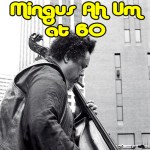 In his autobiography, Beneath the Underdog, jazz musician Charles Mingus recounts his hatred of being ignored during his bass solos. When it was finally his turn to enter the foreground, suddenly musicians and audience members alike found drinks, food, conversations, and everything else more important. However, this small, and somewhat ironic, anecdote of Mingus’s relationship with the jazz community has now become a foreshadowing of his current status in sound studies–but no longer! This series re/hears, re/sounds and re/mixes the contributions of Mingus for his ingenious approach to jazz performance and composition as well as his far-reaching theorizations of sound in relation to liberation and social equality, all in honor of the 60th anniversary of Mingus’s sublimely idiosyncratic album Mingus Ah Um this month. In the third piece of this series, Jessica Teague grapples with Mingus’s 1957 Atlantic recording of “The Clown.” Her analysis reveals one of Mingus’s most critical questions: Is the only way to escape exploitation to exploit another, or worse yet, yourself? You can catch up with the full series by clicking here. –Guest Editor Earl Brooks
When jazz bassist and composer Charles Mingus first set out to write his memoirs in the mid-1950s he told his wife Judy that he “wanted a chance to write about the true jazz scene that has made our masters millions and taken the most famed to their penniless graves as the only escape from the invisible chains on black jazz as an art” (Santoro 175). By the time Beneath the Underdog saw publication nearly two decades later in 1971, it was considerably slimmed down from the 800+ page manuscript Mingus had produced. Financially strained and evicted from his downtown loft, Mingus hoped that the book would be a best seller and offer economic freedom from the music industry.
But as many have noted, Beneath the Underdog is not your typical jazz autobiography (see Krin Gabbard, Nichole Rustin-Paschal, Gene Santoro, and Daniel Stein). Here, Mingus rejects standard notions of the self declaring in the first sentence of his book: “In other words, I am three.” By writing in a mode that wavers between the lurid world of popular pulp-heroes and psychological high-modernism, Mingus’s autobiography (like his music) treads a slender line between clowning and critique.
In one of the most infamous scenes from Beneath the Underdog, Mingus hyperbolically describes having intercourse with twenty-three prostitutes over the course of one night in Tijuana, Mexico. The incident follows the breakup of his marriage with his first wife Barbara and his affair with Nesa Morgan, the wife of a club owner. Recounting his superhuman exploits in the language of the comic book, Mingus turns what might have been a display of his sexual prowess into a clowning circus act, complete with zany sound effects and an off-kilter sense of rhythm. It’s a scene that simultaneously reinforces the stereotype of the African American male’s hypersexuality and deflates it with comedy:
KASPLASH! SLURPLOP!
“Me, señor!”
KPLUNK!
“No! Me, sir!”
SPLATT
“You like fooke?”
“Seventeen, eighteen, nineteen, twenty!”
SPASHOOSH!
“Two dollars, sir!”
(Beneath the Underdog 176-177)
There is a certain ambiguity to the poolside scene. Mingus the narrator is notably absent and the action proceeds without any visual clues—he gives the reader only fragments of dialogue that alternate between the prostitutes selling their wares and the side conversation between Mingus and his friend Hickey, who comments upon his sexual performance. What is more, the onomatopoetic sound effects employed are demonstrably silly and absurd. There are no moans or sighs of ecstasy here—each act is punctuated by a “BLAM! BLAM!” (178). Sex is transactional and performative for Mingus, but not pleasurable.
The pulpy, comic book quality of the Tijuana scene makes Mingus a superhuman like a character from The Fantastic Four, but it also makes him into a two-dimensional cartoon. This undercutting of the self and the performative body characterizes Mingus’s concept of the fractured self of the black jazz musician—a theme he takes up in his music as well as his writing (e.g. “Self-Portrait in Three Colors” from Mingus Ah Um). Interestingly, Mingus’s affinity for comics would surface again and in 1966 he collaborated with African American illustrator Gene Bilbrew to create a comic strip-style advertisement for the Charles Mingus Record Club that appeared in the Village Voice.

Cropped image from Dangerous Minds via Stupefaction. Click there for full strip.
Biographers have argued that Mingus included these likely fictionalized sex scenes as a way to sell more books and evade the exploitative economics of the music industry. However, the comic book sound effects that render Mingus’s sexuality humorously exaggerated comes at the expense of Latinx women. Despite having grown up in a multi-ethnic community in Los Angeles, his representation of the voices of the Mexican prostitutes flattens their identities and plays upon ethnic stereotypes. With each “Sí señor,” the women are presented as both sexually promiscuous and submissive. Mingus’s relationships with women were fraught, and his anxieties about his own sexuality were inevitably tied up with race. His tendency to treat women as sex-objects is similarly on display in the comic strip above, in which a suggestively-attired white female hipster acts as a narc, exposing a bootleg record dealer. “Uh, you got anything by Charlie Mingus? Uh-h, y’know, like uh… under the counter?” she asks, dripping innuendo.
And yet, these cringe-inducing scenes are often complicated by Mingus’s use of pimping and prostitution as metaphors for exploitation throughout his Beneath the Underdog. At various points he portrays himself as both prostitute and pimp, both masculine and feminine. When his friend Hickey seems to question Mingus’s extreme behavior, he responds: “In this white man’s society what else have I got” (178). Even in moments that indulge in humor, such as the Tijuana scene, Beneath the Underdog darkly implies a pimp or be pimped world.
Mingus would become known for writing music with a political edge—one might think of “Fables of Faubus” from Mingus Ah Um (1959)—but perhaps the closest musical relative to the satirical Tijuana scene is Mingus’s 1957 Atlantic recording of “The Clown.” In the liner notes for the album, penned by Nat Hentoff, Mingus describes that as he wrote the tune, he realized that it had two parts, and started to imagine it as the story of the clown. He then told the story to radio celebrity Jean Shepherd and allowed Shepherd to improvise the telling of the story during the recording. As Mingus described it to Hentoff, the story was
…about a clown, who tried to please people like most jazz musicians do, but whom nobody liked until he was dead. My version of the story ended with his blowing his brains out with the people laughing and finally being pleased because they thought it was part of the act. I liked the way Jean changed the ending; leaves more up to the listener.
Like the Tijuana story, “The Clown” also incorporates sound effects, and it opens with the hollow laughter of men and women in a nightclub. As auditory phenomena, sound effects are especially interesting because of their artificiality—they are performances of sound. In a cinematic or radio context, sound effects typically amplify an action. Even when sounded, rather than written, they seem to act onomatopoetically. Thus, the addition of the laugh track on “The Clown” is both performance and commentary.
But part of the genius of Mingus’s composition is the way he incorporates the logic of the sound effect into the music itself. The vocal quality of his bass, the wah-wahs of the horns, and the rim shots on the drums are but one piece of this totalizing sonic landscape. “The Clown” borrows stylistic elements from other recognizable genres (like, circus music) to evoke the playfully comedic and absurd, but a second, more serious and ironic story of exploitation runs concurrently and undercuts the first narrative’s simplicity. On the one hand, we hear the more jaunty, carnivalesque melody of the trombone (Jimmy Knepper) and the tenor saxophone (Shafi Hadi) that lilts in 6/8, but that melody is punctuated by moments of dissonance and free playing under the narration—stretching the space between comedy and tragedy. The question he seems to ask in both the Tijuana story from Beneath the Underdog and in “The Clown” is essentially the same: Is the only way to escape exploitation to exploit another, or worse yet, yourself?

Close up from the cover of Charles Mingus – The Black Saint and the Sinner Lady (1963)
Black musicians who pushed back were often called “angry,” even as music didn’t always sound that way. One might think of the contrast between seemingly jaunty, upbeat rhythm of Nina Simone’s “Mississippi Goddam” and its devastating lyrics. It is the sound of political and existential crisis. Both “The Clown,” and the Tijuana scene indicate Mingus’s heightened awareness that, as much as he was known for his music, he was also known for his explosive behavior at performances—the “angry man of jazz.” As Eric Porter has pointed out, Mingus’s “irrational behavior appealed to audiences at a moment when many members of American society (of whom Beat writers were emblematic) were looking to the oppositional aspects of black culture for solutions to their dissatisfaction with consumerism, conservative politics, repressed sexuality, constrictive gender roles, and other social ills” (130-131). 1957, the year Mingus recorded The Clown, was the same year that Norman Mailer published his infamous essay “The White Negro” and Jack Kerouac published On the Road. It was also the year that Governor Faubus of Arkansas attempted to halt the integration of Central High School in Little Rock.
Subtle they may be, but the use of comic sound effects in works like Beneath the Underdog and “The Clown” highlight the absurdity of the roles black jazz musicians had come to play within American culture. In worrying the line between the comic and the tragic, the explosive and the reflective, Charles Mingus refused to concede to the identity that had been shaped by the music industry, by the press, and by institutionalized racism.
—
Featured Image: Charles Mingus 1976, Courtesy of the Wikimedia Commons, Colorized by SO!
—
Jessica Teague is an Assistant Professor of English at the University Nevada, Las Vegas (UNLV) and specializes in 20th and 21st-century American Literature and Sound Studies. The intersections between literature, sound, and technology are the focus of her research, and her book, Sound Recording Technology and American Literature: from the Phonograph to the Remix, is under contract with Cambridge University Press. Her work has been published in journals such as American Quarterly and Sound Studies, and she has also been the recipient of research fellowships from the ACLS and the Harrison Institute at the University of Virginia. (PhD, MA, Columbia University; BA, UCLA)
—

REWIND! . . .If you liked this post, you may also dig:
SO! Amplifies: The Blues and Jazz Dance Book Club–Chelsea Adams
On Ventriloquism, Dummies, and Trump’s Voice–Sarah Kessler
Afrofuturism, Public Enemy, and Fear of a Black Planet at 25–André Carrington
Share this:

SO! Amplifies: The Blues and Jazz Dance Book Club

—
Breaking down the paywalls of academia can take many forms, but lifelong learning collectives centered around a shared passion may perhaps be one of the most fun. The Blues and Jazz Dance Book Club is an international group of people connected by a love of blues and jazz culture, who read books together and tune in—free of charge—via Youtube Live to lectures and Q and As from experts and scholars from around the United States. Literature scholars such as Jessica Teague have discussed jazz poetry and August Wilson’s blues influence; dancer and scholar Dr. Fenella Kennedy has offered an online mini-workshop and discussion forum; and blues musician Tad Walters has played music and discussed the Delta Blues and its origins, among other lectures. All of these lectures are available on the Book Club’s website and on YouTube for anyone to enjoy.
 An open-access scholarly project founded in 2014, The Blues and Jazz Dance Book Club (BJDBC) was the brainchild of Sara Cherny, Damon Stone, Devona Cartier, Brenda Russell, and Kelly Porter (no longer a participating member). This team envisioned a free online space where people could learn about and discuss the history of blues, jazz, and African American dances, enriching both their own knowledge and the knowledge of the blues and jazz groups in which they participated. The Book Club’s current administrator, Chelsea Adams—PhD candidate at the University of Nevada, Las Vegas with a specialty in blues and African American dances in literature—took over operations in 2016.
Since then, Adams has worked hard to create a space where all blues and jazz lovers could access new scholarship on both the music and the dances done to that music, building a website to better facilitate the growing global group. Adams even coordinates live lectures at times that work the best to connect audiences who regularly chime in or visit the BJDBC website from Australia, England, Korea, Spain, France, Canada, Brazil, Sweden, the Netherlands, Germany, China and Hong Kong, among other places.
A Blues and Jazz Book Club live lecture by Dr. Jessica Teague, UNLV English
Recently, the Book Club has expanded to include multiple offerings for both scholar and enthusiast. One addition is quarterly feature articles, interviews, and community spotlights on blues and jazz topics. International dance instructor Julie Brown recently wrote the article “A Landscape of Slow Drag,” cataloguing and exploring how scholars and dancers have described the partnered blues idiom dance. Also featured is a never-before-published interview with Joe McQueen, the Oklahoma Jazz Hall of Fame inductee and Ogden, Utah’s King of Jazz.
Other feature articles have been spotlights on community engagements, literary criticism, and even a how-to on how to dive into research on blues and jazz topics. Practicioner and dance historian Damon Stone’s “A Brief Introduction to Savoy Walk,” Dr. Caryl Loney-McFarlane’s “‘Inside Nothing’: The Silent Protest March in Tony Morrison’s Jazz“ and Dr. Licia Morrow Hendricks’s “A Dog Named Blue: Song as Patrilineal Legacy in August Wilson’s Fences“ have all been popular pieces among group members and beyond. The website will soon publish an article all about Barbara Morrison‘s work in LA for the California Blues and Jazz Museum and the charity event called Signifyin’ Blues that raises money for her museum (forthcoming June 15th, 2019). And, in September 2019, Pat Taylor will be writing our third feature for the year on her work and life as a jazz dance choreographer.

Start Jookin’ with the Blues and Jazz Book Club this Summer!
The Blues and Jazz Dance Book Club’s signature offering is of course its quarterly book readings, where groups around the globe read together. Currently, we are reading Beyond the Crossroads: The Devil and the Blues Tradition by Adam Gussow, which we will finish during the first week of July 2019 (access the schedule here). Should you want to join us to read in 2019, future offerings include Jookin’: The Rise of Social Dance Formation in African-American Culture by Katrina Hazzard-Gordon (Summer 2019; start date July 21), Moanin’ at Midnight: The Life and Times of Howlin’ Wolf by James Segrest and Mark Hoffman (Fall 2019; start date September 15), and a blues-inspired novel for December 2019, Alice Walker’s The Color Purple (December 1). For the full 2019 reading list, click here.
Furthermore, the group’s website is a hub that also offers new reading lists and watch lists, including ones on African American history (and soon to include updated lists for blues and jazz music, and African American dance) and a discussion questions archive, where readers can find past discussion questions for previous books and films that they can access for their own thought or to read and discuss these books with others. Our Facebook page not only has regular posts about not only the Book Club, but also shares other research, news and information on blues and jazz around the United States, as does our Facebook Group.

The JBDBC will be reading Moanin’ at Midnight this Fall!
“Open access groups like Book Club offer a friendly environment to learn how to approach academic literature,” Book Club Organizer Adams says, “while enjoying gaining more knowledge about their hobbies and interests. It’s a form of scholarly outreach that I think is vital if we truly believe in the idea that our research can make a difference outside of the academy.
Groups like this are important because they offer guided access to scholarship and literature to people who for one reason or another do not have the opportunity to learn in formal academic environments or other professional institutions. Scholarly literature is a specific and often intimidating genre to tackle alone, even if someone is interested in learning more about a topic.”
And the engagements the Book Club has are rich and multifaceted. “My favorite experience with a live lecture,” Adams remembers, “was with Dr. Kennedy, when they demonstrated dances out of Jean and Marshall Stearns’ diagrams from their book Jazz Dance. Watching the group actually learn how to dance some of these dances listed in the book was a joy.”
In April 2018, the Blues and Jazz Dance Book Club announced the goal to provide two yearly scholarships: a Community Learning Scholarship for blues and jazz events to bring out a scholar, musician, or practitioner to teach about blues or jazz culture and history, and another for an individual with financial need to attend an event with a blues or jazz history and culture focus or to perform research. To provide these scholarships, the Book Club relies solely on community donations. To date, they have been able to raise the money to fund one Community Learning Scholarship, which will be open for applications starting in August of 2019.
If you would like to participate in the Blues and Jazz Dance Book Club, please check out our website: bluesjazzbookclub.com. We accept abstract submissions for feature articles on a year-round basis, and have multiple volunteer positions available, from one-time positions like guest lecturer to rolling positions such as book discussion leader. If you would like to support the open-access project goals but do not have time to volunteer, we always welcome donations to the cause!
—
Featured Image from the Blues and Jazz Book Club, “A Landscape of Slow Drag,” 1925/Published 1961, Info Likely from Harlem, NY Dancers.
—
Currently a PhD candidate in English at UNLV, Chelsea Adams focuses her studies on African American literature, blues and jazz music, and African American dance. She writes about minority culture representation in literature, with a focus of representation of black musicians, dancers, and the art forms they produce. She also runs the Blues and Jazz Dance Book Club, an international online book club project, to offer the public open access information about the history of blues, jazz, and black dances. You can learn more about Chelsea and her work at cjuneadams.com.
—
REWIND!…If you liked this post, you may also dig:
SO! Amplifies: Memoir Mixtapes–Kaitlyn Liu
SO! Amplifies: Cities and Memory–Stuart Fowkes
Share this:


Current Top Posts





April 2021

January 2020

November 2019

October 2019

August 2019

April 2014

November 2017

March 2015

December 2017

October 2015
 Sounding Out!
Recent Comments