
Como Now?: Marketing “Authentic” Black Music
With all the excitement over the new release of Mavis Staples’s You Are Not Alone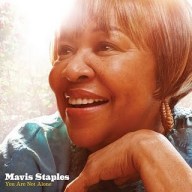 (Anti-, produced by Wilco’s Jeff Tweedy), I can’t help but be skeptical of the outpouring of Indie love for the album, even as I have been spinning (and enjoying) it myself. It isn’t the positive reaction to Staples’s talent that is surprising—at 70-plus years, Mavis has been exquisite for quite some time now—but rather the way in which critics have freighted her newest record with the “uplift” (AV Club) of a whole lot of souls that haven’t ever been to church (at least not in a good long while). Her voice is described as alternately “raw” (Paste) and full of a “depth, power, and warmth that seem increasingly rare in music today” (hear ya); Consequence of Sound, who cites Tweedy’s hand at the boards as the reason for all the current music blog attention, calls her voice “empathetic. . . powerful. . .soulful. . .touching” and “wise.” If the blogosphere is to be believed, Staples’s voice, “as authentic as it gets” (buzzine), could really save us all in these tough times. Come to think of it, the fervor of (white) faith in “authentic” black music shouldn’t be that surprising either, given the way in which race has always been entangled with popular music history in the United States.
Authenticity and the immediacy of experience it implies, have had a long history in the music industry—especially in reference to black artists—stemming back at least to the Fisk Jubilee Singers in the 1870s, an all-black acapella troupe celebrated for  powerful live performances whose breakthrough concert also happened to be for a crowd of hipsters: the wealthy congregants of Henry Ward Beecher’s Brooklyn church in 1871. Beecher gave the band his enthusiastic support, namely because he felt their sound gave listeners direct access to “the inner lives of slave hearts expressed in music” even after slavery had formally ended.
While the sound of You are Not Alone differs greatly from the Jubilee Singers, the reviews of the record belie and inflame a similar desire for unmediated access to the emotive qualities (a)historically associated with black life and sound in the U.S.: namely suffering, faith, and catharsis. And Staples’s record is indeed not alone in this. Many of the sentences from the Staples reviews could easily have been lifted from those of another recent gospel record to capture the indie imagination, Daptone Records’s 2008 release Como Now. Starkly different from the breezier, countrified sounds of You Are Not Alone, Como Now is an acapella gospel recording made in a small town in Panola County, Mississippi. The record was a risky release for Daptone, a Brooklyn-based label that has consistently produced new funk and soul records since its inception in 2002 by the likes of Sharon Jones and the Dap-Kings and The Budos Band. Although old school sound has always been a part of the label’s ethos—its engineers use primarily analog equipment, for example, a major reason Amy Winehouse recorded her throwback Back in Black album at Daptone studios in 2006—marketing stripped-down gospel to its audience of predominately white hipsters would nonetheless prove a daunting task. Treating Como Now as a labor of love and a paying of dues, Daptone attempted to spark interest in the release by relying on the familiar marketing strategies of immediacy, authenticity, and nostalgia.
 While Como Now’s tagline boldly proclaims that the music was “Recorded Live at Mt. Mariah Church on July 22, 2006”—and, thus, emphasizing the Now of the title—the cover’s vintage civil-rights era design evokes the Como of yesterday, or more accurately, encourages listeners to hear Como now and Como yesterday as one and the same through the vehicle of “raw gospel testimony.” Como Now’s depiction of the sounds of the past as echoes within the present is as ambiguous as it is uncanny, a sonic window thrown open to simpler times happening somewhere out there, “deep in the heart of Mississippi” right now.
The introductory promotional video from Como Now’s website (also uploaded on Youtube) represents the record as an aural time machine to a land and a people isolated from and largely unchanged by technology, modernity, and history.
Producer Michael Reilly’s voiceover locates rawness, emotional release, and “real religion” in the sound of black voices, in no small part because the video places his measured Yankee pacing in sonic tension with the song that accompanies it, Mary Moore singing “When the Gates Swing Open.” Over Moore’s impassioned singing, Reilly assures listeners in a muted deadpan that they will hear “no pretty piano playing or clever guitar picking, just voices. Pure soul stirring fire from the heart.” Reilly’s sentiments not only evoke the gushing Jubilee Singers’ press, but also the ethos of the infamous folklorist John Lomax, who made field recordings in Southern prisons in the 1930s because he sought “negro singers untainted by white musical conventions” (as he wrote in 1934’s “Sinful Songs of the Southern Negro”); singers in Como were actually recorded by John’s son Alan in the 1940s. Reilly’s voiceover goes on to frame the Como singers as practitioners of what the senior Lomax called “the real art of simplicity,” as stripped-down, natural singers who are artful mainly in their artlessness. While Reilly’s webcopy mentions how “children and grown folks alike have been living and breathing gospel for as long as they can remember,” for example, he fails to mention how the residents of Como have also been writing, rehearsing, and performing it.
Thus, Como Now’s marketing disavows the real artistry of the Como singers, even as it seeks to celebrate it. The simple, natural quality endowed to the singers of Como is visually accentuated by stark imagery representing the town as a down-at-the-heels, living museum of the black life of yesteryear. In the youtube clip, Moore’s soaring and spirited singing animates stills of blooming cotton fields, vintage RCA microphones, and splintering upright pianos.  Save for the album cover and one blurry still of a child, there are no shots of the people of Como in the introductory promo, effectively isolating Moore’s voice from her corporeal and historical body. This isolation allows listeners to supply their own fantastic imagery and forces them to rely on historical stereotypes about the naturally sonic qualities of black people. By choosing to disembody Como’s voices, the promotional video represents the album’s music as emanating from, and even haunting, Panola County’s lush green fields and battered strip-malls rather than showing it to be a hard-fought creation of the residents themselves. To quote Lomax again: “[The Negro’s] songs burst from him, when in his own environment, as naturally as those of a bird amid its native trees.”
Although the impulse to make the album reflects a progressive desire to respectfully pay tribute to the black gospel tradition in American popular music—and to provide quality artists like The Como Mamas with critical renown and monetary compensation—Como Now relies on well-worn racial tropes to do so. It also points to the continued presence in American culture of an essentialized “black voice” that is naturalized as more emotive, truthful, and soulful than other voices. While this phenomena is socially constructed and the sounds thought of as “black” have shifted considerably—when I play early recordings of the Jubilee Singers my students consistently tell me that they sound “white” like a “glee club”—I find it fascinating that the language used to describe them has largely remained the same. While Como Now’s producer at least acknowledges that, in Como, “no one has to pick up cotton anymore, thankfully,” the marketing trades on the possibility that, while slavery and sharecropping have ended, its sonic labors have not only endured, but are readily available for download.


Share this:

The Noise You Make Should Be Your Own
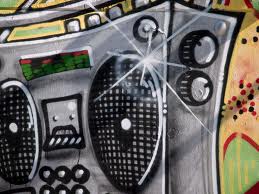 Before I suggested the name VIBE, even before the magazine was being called Volume, it was known as NOISE. I never liked that name. I mean, I knew what they were going for: “Noise” was meant to imply the loud raucousness of youth that defined the increasingly popular urban culture that would fill its pages. But the dominant strand of that youth culture was going to be represented by hip-hop, and I was quite sensitive to mainstream society’s tendency to think of hip-hop—what I liked to think of as the breakbeat concertos of inner city maestros—as not-music, as nothing but noise, something not necessarily from the street but of it, like a garbage truck or a knife fight.
I started to reminisce about the Noise name a coupla weeks ago when I walked into my university-owned apartment building and saw a note with the word “NOISE” poised at the top of it in a huge bold and italicized font, assured of getting everyone’s attention as they entered the elevator vestibule. According to the note taped to the wall, there was a noise problem in the building, and it was getting worse. Would tenants please be considerate of the other members of the apartment community and refrain from playing music loudly after certain proprietary hours?
I thought about it. I never heard music being played loudly. But maybe that was because I live on of the upper floors, away from the blaring speakers of others. The noise I was privy to was the natural noise of the many babies who lived in the building, the children of grad students, probably bored to tears (and tantrums) living in this austere monolith we all call home.
But then I thought about it some more. And I considered the musical noise I heard in this building, compared to the musical noise I’d heard in my building in Manhattan before I re-located to pristine, polite Cambridge, Massachusetts. In New York, I remember the guy on the second floor, the raging theater queen, who blasted cast albums and show tunes at top volume, usually during the day, when the only people in our small West Village building were him (a theater designer), me and the “model” who lived on the third floor—in other words, those of us who lived lives outside the traditional mainstream. The “model” cranked up the volume on her club-kid techno beats, while I was probably playing The Smiths or The Cure or R.E.M. at loud volumes, re-living my college rock days while missing a freelance deadline or two.
I remember, when I lived in New York, thinking that people had no shame when it came to making noise: people had loud  conversations about personal business on the subways; vendors shouted to (at?) delivery guys on street corners; sirens blared their way through the streets; boomboxes competed with car speakers for the ears and stares of passersby. But no one complained. If anything it was a competition of soundtracks in, on and around the streets of New York. Do the lipstick lesbians outside the bar across from my apartment mind, relish in the fact perhaps, that the iconic sound of Stevie Nicks growling out of the jukebox codifies them as queer women on the scene? That kid in the business suit and expensive Wall Street shoes on the train, bobbing his head to the rhythms of Jay-Z rapping loudly through his earbuds: does he really want those of us around him to know he was a hip-hopper? The 6’4” theatrical designer from the second floor who struts down 12th Street like a linebacker: does he simply want the world to know that Barbra’s star-making turn as Miss Marmelstein soothed his soul and that the Pippin version of “Corner of the Sky” is what gets him through the day?
And what was my noise telling the world? I was the queer black writer dude upstairs. But if someone had walked by the apartment, not knowing who was inside, and stopped to tap a toe or shed a tear at the mopey, fop-rock of Morrissey that so often cleared my door jamb, would I be what they expected? Perhaps; perhaps not.
But then I think about the times that I just had to hear Martika. And I had to hear her loud. Or I had to hear some 80s-style deep house, especially the tracks defined by the soul-shouting diva-fied orgasmic melismas that not only date me age-wise, but most definitely queer the space that was blasting the Rolling Stones’ Let It Bleed just a half hour before. I used to be self-conscious of those sonic shifts in my noise soundtrack, as if they highlighted a larger, deeper confusion about my own position, culturally-, racially-, and sexually-speaking.
But then I joined the team to start VIBE, a magazine once called NOISE. And my sensitivity over its possible name settled my own personal dilemma: We may want the world to hear our noise, because of its shorthand to who we are. But what we really want them to do is feel our noise, vibe it if you will, and hopefully feel our joy, pain, shame, love and contradictions in the process.
–SPB (Scott Poulson-Bryant)


Share this:


Current Top Posts





April 2021

January 2020

November 2019

October 2019

August 2019

April 2014

November 2017

March 2015

December 2017

October 2015
 Sounding Out!
Recent Comments