
The Amplification of Muted Voices: Notes on a Recitation of the Adhan

DOI: https://doi.org/10.59350/d8pq1-j7478
Where do we begin?
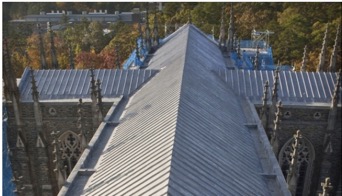
On Tuesday January 13th, 2015, my first-year students and I gathered for the second meeting of our seminar, “Soundscapes: Artistic, Social, and Biological Approaches to Acoustic Environments.” We were just a few steps away from the iconic Duke chapel, almost in its shadow.
The chapel is an example of a revivalist architectural style known as “Collegiate Gothic.” Its steps were constructed with soft stone, intended to wear down quickly and provide an accelerated impression of age and prestige. The chapel’s cruciform blueprint is an unambiguous symbol of its Methodist Christian roots, as is the university’s motto: “eruditio et religio” (“erudition and religion”). In true Gothic revivalist style, the phrase is a Latin translation of a line from an 18th-century, English-language Methodist hymn titled “Sanctified Knowledge.”
.

On Tuesday, January 13th—the second day of my Soundscapes seminar—Duke’s Office of Communications announced that the Islamic call to prayer, the adhan, would sound from a bell tower of its iconic chapel in Durham, North Carolina. According to a press release, Duke’s chapel administrators and Muslim Students Association felt the three-minute long, “moderately amplified” recitation “represents a larger commitment to religious pluralism” on campus and that the sound of the adhan “connects the university to national trends in religious accommodation.”
The story was picked up by WRAL, the television news outlet based in nearby Raleigh. The web-based stories included a photo of the student slated to be the muezzin, the person appointed to recite the call to prayer. In the photo, the student was shown rehearsing from the bell tower. I read the announcement just before walking to class and thought the event would be a historic opportunity for my students and I to make field recordings of their university soundscape.
Where do we begin?
The adhan was scheduled to take place on the afternoon of Friday, January 16th. On Wednesday, January 7th—a week before the announcement of the adhan at Duke—twelve people were murdered during an attack on the Paris offices of the satirical newspaper Charlie Hebdo. Ostensibly, the murders were committed on behalf of Al-Qaeda in the Arabian Peninsula as a retaliation for the newspaper’s cartoon depiction of the prophet Mohammed.

Where do we begin?
Islamic theology posits that the adhan is not music. It is recited, not sung. Likewise, the text of the Qu’ran is not poetry. These sacred texts are certainly musical and poetic, but they are neither music nor poetry. These theoretical distinctions have complex and profound implications: more than soundscapes or sound art or acoustemology, the Islamic premise underlying recitations of the adhan and Qu’ran provoked my students to reconsider entire constellations of historical, cultural, linguistic, political, and—indeed—spiritual phenomena.
My students and I conducted a survey in which they asked classmates to identify a recording of the adhan. Only 2 out of 48 students recognized it as a recitation of the Islamic call to prayer; most guessed it was “Arab” or “Middle Eastern” music, but it seemed universally familiar as a “soundtrack” for a film sequence. One student who had lived in Morocco recognized the adhan immediately; another recognized it as the sound of his Lebanese grandmother’s alarm clock, automated to remind her to pray. We became acquainted with Cairo in One Breath, a documentary film project about post-revolutionary Egypt’s 2010 Adhan Unification Project, an effort to “replace individual muezzins with a single voice, broadcast to Cairo’s [thousands of] mosques from a radio station.”

We also became familiar with the mythology of the first muezzin: Bilal, who was born in Mecca to Abyssinian slaves—in other words, a black man who was freed from slavery.
Where do we begin?
On Wednesday January 14th, the Reverend Franklin Graham posted a reaction to Duke’s announcement on his Facebook account. Franklin is the son of evangelical Baptist preacher Billy Graham, close friend and advisor to American presidents from Dwight D. Eisenhower to George W. Bush and known as “America’s pastor.” Franklin Graham is a resident of High Point, North Carolina (an hour’s drive from Duke) whose salary from tax-exempt, non-profit religious organizations is reported to be $880,000 per year.

Graham’s post “went viral,” and his threat of financial sanctions—aimed squarely at donors and alumni—seemed to land on its mark. Within hours, Duke’s proposed adhan recitation became the subject of a flood of media coverage, and the university received “credible threats” of violence; public relations and financial concerns were quickly compounded by “safety concerns.” My students and I—whose safety was being threatened—wondered whether the phrase “safety concerns” was a euphemism for terrorism, or vice versa.
On Thursday January 15, the university’s administration announced that they were canceling the planned recitation from the chapel bell tower. Instead, the adhan would be recited just outside the chapel, at the top of the steps leading to the chapel’s front doors. Franklin Graham celebrated the decision—again, on Facebook.

Later in the day, Richard Hays, the dean of the Duke Divinity School, released a letter outlining his objections to the proposed recitation. Hays’ letter revealed a somewhat obscure but significant division between the Divinity School and the chapel administration, each of which see themselves—in their own ways—as custodians of Duke’s Christian image. For the Divinity School administration, the chapel is a symbol of the university’s Christian identity. For the chapel administration, its Christian heritage is an aspect of a fundamentally pluralistic identity.
It is worth pausing here to emphasize that the controversy—now national in scope—was provoked by the mere prospect of sound. More specifically, a sound amplified at “moderate volume.”
By this point, the student muezzin and his family requested that his photo and name be removed; like the university, the young man and his family expressed “safety concerns.” Duke removed his image and name from the official online version of the announcement immediately. WRAL, the Raleigh television station, have still not removed the student’s image or name from their website.

Where do we begin?
On the morning of Friday, January 16th?
The adhan was scheduled to take place at 1PM. At 12:30, I met two of my students—Tanner Waters and Jee Yoon—near the chapel. A large crowd was already gathering. Tanner, Jee, and I equipped ourselves with identical digital audio recorders so we could make a trio of stereo recordings, each from a distinct position; later, we would synchronize the recordings, mixing them in different ways to experiment with sonic “versions” of the event.
A half-dozen news vans were parked around the circular driveway leading to the chapel, their satellite antennas projecting into the clear blue sky. This was news. The news’ cameras were arranged on tripods in a straight line at the rear of the crowd; university security were maintaining a perimeter around the chapel that kept broadcast media at a distance. As I approached with my headphones on and my audio recorder in my hand, a chapel staff member asked mildly, “Excuse me, sir. Are you with the media?” I smiled and shook my head. No.
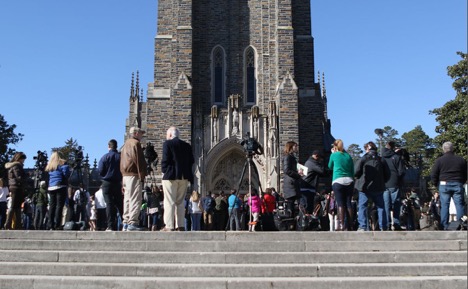
A small PA sat at the top of the steps. Very small. There were no cables attached to it, and a small radio antenna extended from the top. It took me a few minutes to realize that this was the amplification, the moderate “loudspeaker” for the adhan. It took me another moment to realize the student muezzin would not appear: instead, he would transmit his recitation remotely. I was told later that he was just behind the closed doors of the chapel. Like so many recitations of the adhan, the transmission, amplification, and conceptual layers of it seemed uncannily like a sound art installation.
We all faced the loudspeaker, waiting for sounds to happen. The crowd went from murmurs to whispers, then silent. After a few seconds, the voices of members of the Muslim Students Association began to broadcast from the loudspeaker.
A young man’s voice introduced the adhan—a brief, prosaic context for what we would hear. Then a woman’s voice (also young) offered a literal English translation of the the adhan’s Arabic text. She spoke plainly, without the melodic contours of a recitation.
Now, before sharing recording of the Duke student muezzin’s recitation, I offer a bit of context—not an explanation or translation, but a comparative musical example. First, let’s listen to an iconic recitation style—albeit with a bit of YouTube-style hyperbole—recorded in Medina, Saudi Arabia. This recitation lasts four minutes—a fairly typical length of time for a complete recitation.
Now, let’s listen to the entire recitation of the adhan at the Duke chapel.
.
The prevailing quality of the Duke recitation is extraordinarily subdued. It is a vocal expression of the “moderate” sound and Muslim identity at the center of the controversy. At one minute and thirty seconds, it is less than half as long as most recitations.
Where do we begin?
Perhaps we might analyze this adhan as a peculiar instance of acousmatic sound: the student muezzin, like Pythagoras or the Wizard of Oz behind a curtain, was separated or dissociated from a discernible source by a curious bit of technology. When I asked Omid Safi, the director of Duke’s Islamic Studies Center, about this aspect of the story—the unseen and moderate voice of the student—he responded that for Muslims at Duke, the entire episode was about “safety and inclusion.”

Safi is a Duke alum. He studied there as undergraduate, co-founding the Muslim Students Association as a freshman, and went on to earn his Masters and PhD degrees at Duke. Since returning as director of the Islamic Studies Center two and a half years ago, he has been vocal and visible in the mass media. Safi himself has been labeled a “radical Muslim professor” by white conservatives and subjected to online “takedown articles,” particularly surrounding this event. Safi told me,
Part of the reason why … there was amplification but no person in sight [was] that people were scared. And it sounds hysterical … In retrospect, knowing what took place in Chapel Hill a few weeks later, [it was] not so unreasonable.
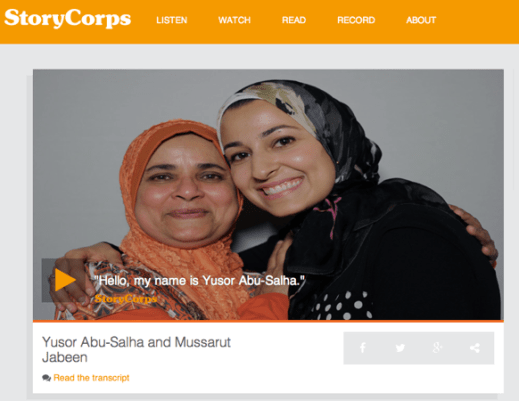
On Tuesday February 10, 2015, three Muslim college students—Deah Barakat, Yusor Abu-Salha, and Razan Abu-Salah—were murdered in their Chapel Hill home, just a twenty-minute drive from Duke. Less than a year earlier, Yusor Abu-Salha had been interviewed by her third-grade teacher for the StoryCorps oral history project.
.
At horrifying moments like these, I think to myself, “This is why people pray.”
I was deeply ambivalent about discussing the murders with my students. After speaking to a handful of students individually and discreetly, I found most of them were completely unaware of the murders. I wondered—mostly silently, to myself—what impact the news might have on them, then decided to share the story obliquely: I discussed StoryCorps (“listening is an act of love”) in class, an important resource for those of us interested in oral history and I concluded by mentioning the recording of Yusor Abu-Salha. I never asked if they listened to Yusor’s voice, and I cannot know how they might have been affected. I simply did not know what to ask, nor what to say.
Less than one year later, in September, I surveyed my next cohort of incoming freshman. Less than half of them knew anything about the adhan controversy. Among the few who had heard something about it, the event had already acquired dubious mythological qualities: in one account, Muslim students were forced to move their call to prayer from the chapel tower to the nearby Sara Duke Gardens.
Analyses of the event varied considerably. In an op-ed for Duke’s student newspaper titled “Deconstructing the National Fear of Duke’s Adhan,” freshman Eidan Jacob—an Israeli Jew—offered a brilliant context and synthesis, expressing “surprise and disappointment” that the adhan was “so poorly received.” He observed that in his hometown of Haifa, “recitations of the adhan are simply part of the soundscape.”
A broad cultural and political context reveals that xenophobia and—more specifically—Islamophobia, remain cultural common sense in the post-9/11 United States. Both supporters and opponents of the adhan at Duke were disappointed by the controversy, and I do not discern a tidy moral to the story.
The sounds and discourse of the adhan at Duke suggest a narrative preoccupied with “decibels and debate,” but the subtle dynamics and textures of thoughtful, moderate conversation suggest an audible alternative to the loudness and noise of mass media discourse. The diverse qualities of the voices in this story—musical and otherwise—are more than poetic metaphors: the “voices of moderates” and “moderate-sounding voices” deserve close attention; regardless of the causes or motives underlying their subdued tones, their very quietness demands nuanced, high-fidelity listening. The literal and metaphorical amplification of voices might be a distraction from more important matters of range and intimacy.
Where do we begin?
—
In May 2015, the Duke chapel was closed for restoration. It is scheduled to reopen in May 2016.
Plans for a weekly adhan recitation elsewhere on the Duke campus are under consideration.
—
Featured Image by Elysia Su, The Duke Chronicle
—
David Font-Navarrete is an artist, musician, and ethnomusicologist. He is currently a Lecturing Fellow at Duke University’s Thompson Writing Program.

—
REWIND!…If you liked this post, check out:
“Beat-ification: British Muslim Hip Hop and Ethical Listening Practices” –Jeanette Jouili
“Rallying Cries as Suffering Sounds: “Allah-O-Akbar” and the Aurality of Feminized Iranian Suffering–Roshanak Kheshti
“An Ear-splitting Cry: Gender, Performance, and Representations of Zaghareet in the U.S.“-Meghan Drury
—
Share this:

SO! Amplifies: Sounding Board Curated by Leonardo Cardoso
DOI: https://doi.org/10.59350/0thrb-wyd33
—

SO! Amplifies. . .a highly-curated, rolling mini-post series by which we editors hip you to cultural makers and organizations doing work we really really dig. You’re welcome!
—
The first annual Sounding Board sound exhibit was held at The Companion Gallery in Austin, Texas on December 3 – 6, 2015, as part of the 60th anniversary meeting of the Society of Ethnomusicology (SEM). In the promotional literature for the show, the curator, Leonardo Cardoso (Texas A&M), described its objective: to give students, ethnographers, ethnomusicologists, and any “sound-minded” people an opportunity to share research and contemplate fieldwork from different perspectives. Cardoso hoped that SEM Sounding Board would “stimulate dialogue between ethnomusicology and other fields, especially sound studies, sound art, ecomusicology, anthropology, and media studies.” He also sought to facilitate interaction between the local community in Austin and SEM scholars who traveled to attend the conference.
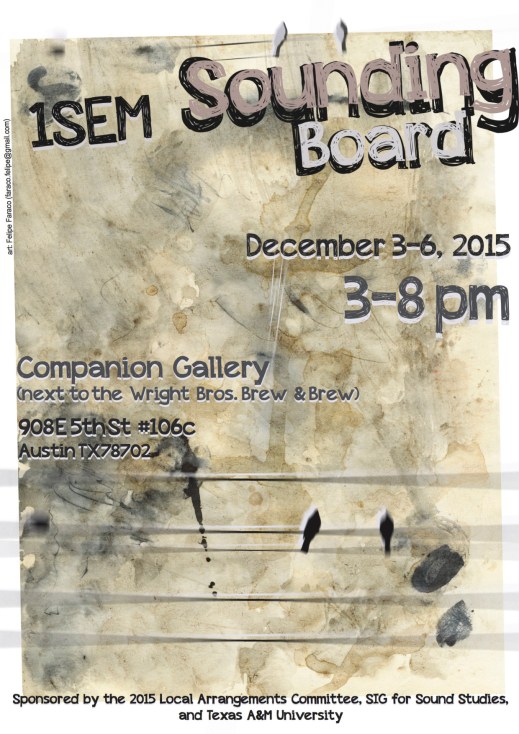
I spoke with Cardoso about this exhibit on several occasions. When I asked him why name the exhibit “Sounding Board”?, he told me that Veit Erlmann (University of Texas Austin), described once described his role as a mentor as someone to bounce ideas off of, like a sounding board. In a similar way, Cardoso’s vision for the first annual SEM sound art exhibit was to create opportunities for scholars and local people to meet and discuss sound, ethnography, art, and fieldwork in an open context, and learn from each other while interacting in that space. He designed Sounding Board as a place where “ideas are amplified” and scholars and community members can make fruitful connections because they have an opportunity to reflect and discuss research with people from different backgrounds.
In his invitation to SEM attendees, Cardoso described Sounding Board as
[eight] sound works that probe into sonic in-placements (water and wind), sonic displacements (the telephone, the radio, and the microphone), sonic emplacements (the acoustic territories of urban Taiwan, the Brazilian hinterlands, and West Texas), and sonic mix-placements (in Mexico City).
This collective sound exhibit showcases the creative work of scholars attentive to the spatial, acoustemological, and ethnographic potential of sound. SEM SOUNDING BOARD challenges distinctions between sound-as-episteme and sound-as-performance, sound-as-ethnography and sound-as-art.
Interactive, Immersive, Ethnographic Sound Art
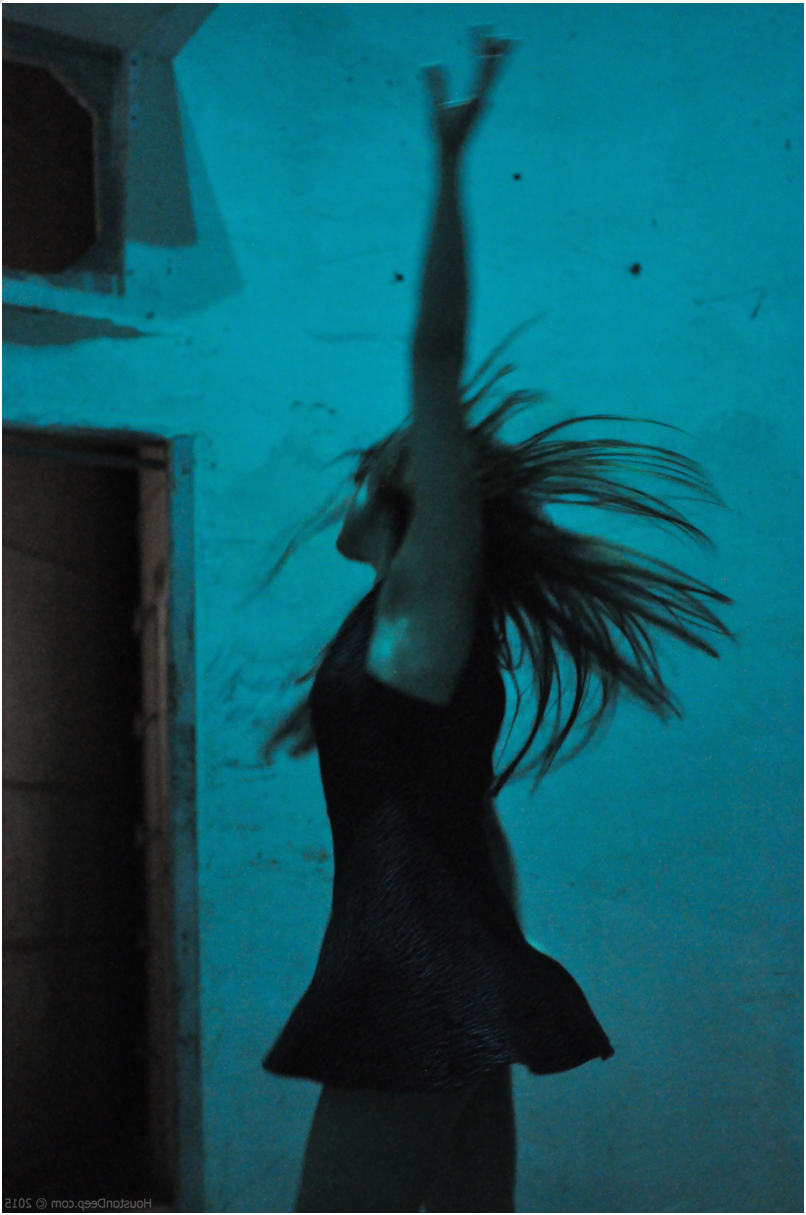
The playfully engaging work, Pool of Sound, welcomed me to the interactive SEM Sounding Board exhibit. As soon as I walked into The Companion Gallery, I noticed the eye catching 1st Annual SEM Sounding Board poster near a studio monitor on a stand, facing another monitor, placed directly across from it, about 20 feet away. A large illuminated circular area gleamed in between the silent speakers. When I moved into the light, I suddenly heard the clear sounds of gently rushing water, but only for an instant, then there was silence again, as soon as I stood still. As I turned and stepped towards one of the speakers I heard the rushing water return. The gurgling sound mirrored my movement and when I stopped, the sound of the water stopped.
Lina Dib (Rice University) created the piece, with an
enchanted zone [that] literally becomes a pool of sound where sound becomes substance, something to be physically and playfully encountered. In other words, sound with this installation becomes palpable, sound is made (in)to matter. The larger the visitors’ gestures, the louder and stronger the sound of water becomes.
Dib cites Jean-Luc Nancy in her work’s description, understanding her piece as an embodiment of Nancy’s observation in Listening that sound envelops the listener: “Sound has no hidden face; it is all in front, in back, and outside inside, inside-out.”
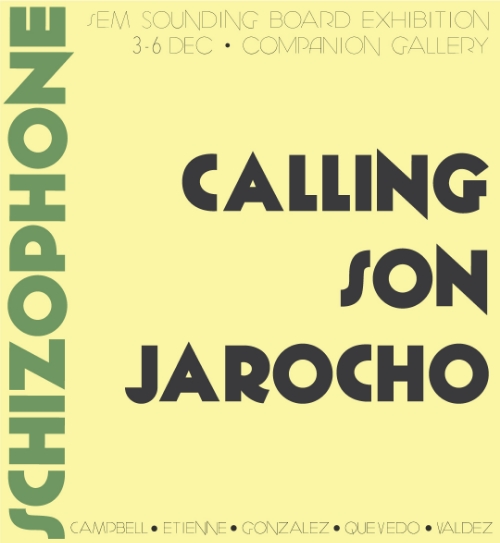
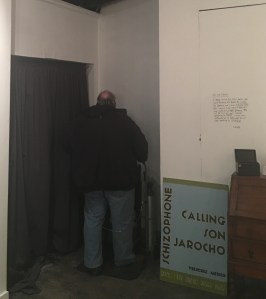
While experimenting with the intersections of sound and gesture in Dib’s Pool of Sound, I noticed someone sit down at an antique-looking wooden desk across the gallery, pick up an old school, land line telephone, dial a number, and start writing on a notecard. The person at the desk was experiencing Schizophone, Calling Son Jarocho, a installation by Craig Campbell (University of Texas Austin) and collaborators, Julian Etienne, Juan-Pablo Gonzalez, and Cameron Quevedo. When the person hung up and left, I sat down, braced the phone between my ear and shoulder and listened to a dial tone.

I dialed a few numbers and started to hear a conversation through the receiver: musicians were speaking in Spanish, discussing certain subtleties of a Son Jarocho performance. I felt like I was eavesdropping. I dialed another number and the sounds of Son Jarocho music flooded my ear. This installation provides numerous sound bytes of field recordings related to Son Jarocho music of Mexico. Each recording is described on a notecard that gives ethnographic descriptions of the situation. Campbell also asks the listener to participate in the piece by filling out a card to leave a record of their experience. The artist says that his “work builds on R. Murray Schafer’s ‘schizophonia’ to signal the profound but also banal experience of listening to recorded sound. The schizophone recruits the telephone–a mundane, though now largely residual technology–to frame and structure an encounter with archival recordings.”
A few feet away from the Schizophone desk, a poster stand held a flyer for the piece Wind Noise by Marina Peterson (Ohio University). A pair of headphones clung to the stand.
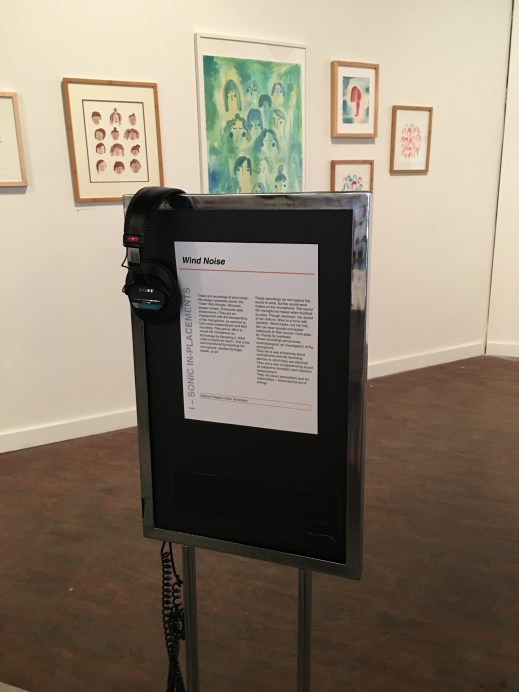
When I put the headphones on I expected to hear some cinematic blowing, or the soft sound of a summer breeze. Instead, I heard a familiar, dreaded, thumping noise. Peterson’s work indulges in a recording taboo: the clipping, dull thud of wind hitting an unprotected microphone.
As I listened, I thought about noise and how to define it. Usually, this thudding sound would bother me and I would cut out chunks of recordings to get rid of it. But in the context of a sound art exhibit, I found myself examining this noise, and listening to it as art. This reinterpretation of sound in relation to space reminded me of David Novak’s discussion of “Noise” as a genre in the context of Japanese music coffeehouses in his article, “2.5 meters of space: Japanese music coffeehouses and experimental practices of listening.” Peterson discusses her work as an exploration of technology, mediation, and the microphone. She describes these recordings as
an effort to reveal the microphone as technology by disrupting it. Wind noise is sound as touch – this is the sound produced by touching the microphone, whether by finger, breath, or air. These recordings do not capture the sound of wind, but the sound wind makes on the microphone. The sound the microphone makes when touched by wind.
In a recessed corner of the gallery I saw a music stand with a piece of paper on it. I didn’t know if it was part of the Sounding Board installation, or just a piece of equipment, set aside. As I stepped up to the stand to read the paper, I unexpectedly stepped into a chamber of sound. A Holosonics AudioSpotlight AS-24i directional speaker, mounted on the ceiling, beamed a column of music into that area, which a listener can hear only when directly below the speaker.
The piece is called Resting Place, by Michael Austin (Howard University). In the description of this work Austin states:
Resting Place is based on the old cowboy song ‘Bury Me Not on the Lone Prairie.’ Not only does this work confront listeners with thoughts of mortality and final resting places, it embodies the wide open spaces of my childhood home and serves as a place of peace and relief for the here and now.
Austin grew up in the countryside of the Texas Panhandle, and his work intends to bring a piece of that Texan soundscape to a corner of the gallery. I could hear the sounds of birds, wind, and water combined with chant and meditative, drone music; they were all sounds that would usually communicate rest and peace. Unfortunately, I had a difficult time entering that relaxed frame of mind because the recording of the Texan soundscape often clipped, which disrupted my concentration on the calming aspects of the field recording. Composers such as Annea Lockwood and Janet Cardiff use binaural microphones to capture nature sounds up close and create an intimate surround sound experience for the listener; although I am fascinated by the concept of creating a “soundscape chamber” by using a hyper directional speaker, I would love to hear the details of Austin’s field recordings through a nice pair of headphones.
Resting Place and Wind Noise invite contemplation as the listener receives sound. In contrast, the broadcasting sound piece by Tom Miller (Berkeley College) is intensely interactive. In Radio Texas International, a Micro Radio Station in the Austin Wavescape, Miller creates an experience where it is possible to broadcast sound and listen to recordings.
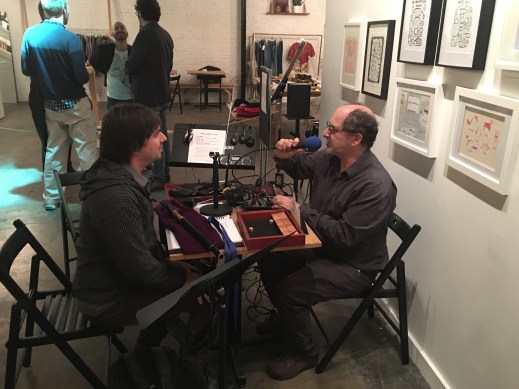
Resting Place and Wind Noise invite contemplation as the listener passively receives sound. In contrast, the broadcasting sound piece by Tom Miller (Berkeley College) is intensely interactive. In Radio Texas International, a Micro Radio Station in the Austin Wavescape, Miller creates an experience where it is possible to broadcast sound and listen to recordings. Miller explains that for this piece he
operate[s] a low power Mini FM Micro Radio station in the gallery… Tuning to open frequencies, a legal micro power transmitter broadcast[s] to receivers distributed within a 200-foot radius as a hyperlocal, pop-up intervention into the FM band. Using headsets, listeners will tune the radio dials seeking to locate the signal interspersed with the music, religious broadcasts, news, foreign language programming and static of the local radio wavescape.
In the video of his work you can hear several different ethnographic recordings that are broadcasted by Miller in the gallery, and at the same time intertwine with the sounds of local radio stations in Austin. Besides broadcasting field recordings, Miller also aired live interviews and music throughout the three-day exhibit. I was delighted to have the chance to play some traditional Irish music on the air for Radio Texas International.
雜 (dza) is a piece by Yun Emily Wang (University of Toronto) and Wendy Hsu (Dept. of Cultural Affairs, City of Los Angeles), who created a work that inhabits a cardboard box. The artist Zimoun often uses percussive elements to explore acoustics and cardboard, but in 雜 (dza), Wang and Hsu employ the box as a resonator to amplify and combine sounds emitted from headphones playing loops. The listener is asked to put their head in the box to hear a cacophony of intermingled field recordings that create a decontextualized soundscape of Taiwan.
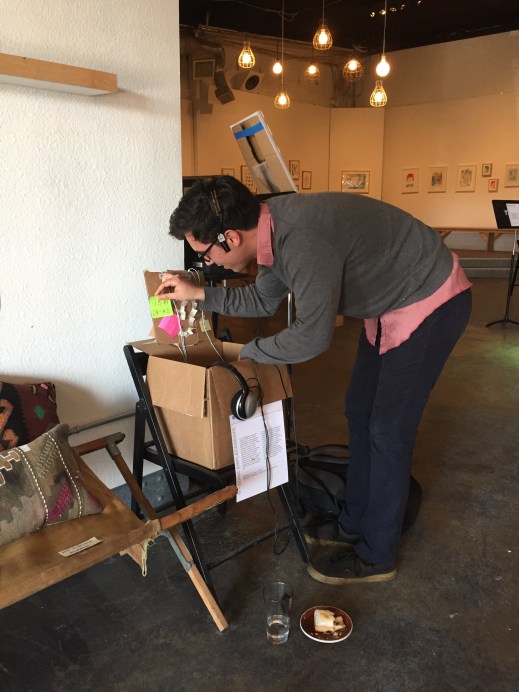
The artists explain that “These composed loops recontextualize the sonic materiality of the informal economy and quotidian life exemplified at a Taiwanese night market, and interact with the spatial and sonic elements of the venue and its role within the emerging art-as-enterprise share economy.
There were two pieces of interactive, ethnographic sound art that integrated both audio and visual elements of fieldwork in Mexico City, and Brazil. Dry Signals by Michael Silvers (University of Illinois Urbana – Champaign) invites the auditor to “touch the screen” and listen to field recordings. The touchscreen of the laptop displays an image of a painting of a small town surrounded by mountains, near water.

I put the headphones on and touched a part of the image of the town that caught my attention: a traditional forró trio standing on the porch of small pink house (no.8). In the headphones I immediately heard the rhythmic music produced by the musicians playing the drum, the accordion, and a triangle.
Silvers describes the inspiration for Dry Signals as an exploration of
the sounds of drought in northeastern Brazil. From trickling reservoir spillways… to the music and shuffling feet of dance parties in dusty fields, these sounds tell stories of labor, birds, politics, agriculture, plants, mass media, corruption, water, and the quotidian experience of life in the semi-arid Brazilian hinterlands.
The artists take advantage of touchscreen technology to give the viewer a chance to curate their own soundtrack of their experience of the painting. There is no lag in the experience of touching, listening and viewing the village and surrounding landscape. Even though the field recordings are not uniform in sound quality, I enjoyed the experience of hearing an ethnographic audio record of a small town in northeastern Brazil, by touching an image of it.
Anthony Rasmussen (UC Riverside) provides an opportunity to peek in on urban street scenes filmed throughout Mexico City in his work, El Caracol: A Stroll through Space and Time in Mexico City.
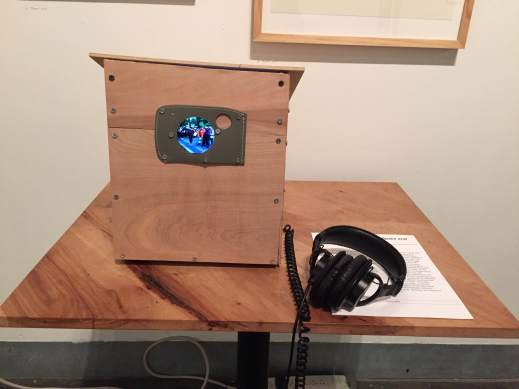
Some of the most compelling scenes in the 20 minute loop of video and audio depict street protests in Mexico City which are accompanied by ambient sounds from the field recording, combined with subtle music, and seemingly unconnected background conversation.
The artist explains that
the video element consists of footage captured while walking through various sites in Mexico City and represents the phenomenological ‘present’. The audio element provides a counterpoint to the visual; as the loop begins the audio corresponds to the action on screen, but with increasing frequency (based on the ‘Fibonacci Spiral’) the contemporary sounds will be ‘ruptured’ by historical recordings of Mexico City that drift further back in time.
I particularly enjoyed the sections where the connection between the audio and the video was unclear. Toby Butler’s article “A walk of art: the potential of the sound walk,” traces the efforts of different artists and their uses of the sound walk in their work, but he does not describe any endeavors like Rasmussen’s, where ethnographic footage is the prime source of the walk. I wondered about the position of peering through the hole to watch Rasmussen’s field recording of Mexico City, and I realized that at times, gazing through the hole gave me the sense that I was the ethnographer gathering footage.
“always more sound to experience”
I visited the Sounding Board exhibit several times while attending the SEM conference. Every time I left I felt like there was always more sound to experience. I wanted to hear all of the numerous field recording of Son Jarocho material presented by Campbell’s Schizophone; Miller’s Radio Texas International changed every time I listened and I wondered what ethnographic material I might encounter the next time I tuned in. I never tired of Lina Dib’s Pool of Sound because it gave me the chance to perform the gurgling of water, using gesture. Apart from the evocative expressions of ethnology as art, Sounding Board converted The Companion Gallery into an interactive playground of sound.

The live performances in the gallery on Friday night brought the ethnographic sound art to life. When I listened to at least twenty members of the Comunidad Fandango of Austin perform and dance Son Jarocho music in the gallery on Friday evening, I began to make connections to the field recordings that I heard in Schizophone. When Bruno Vinezof and Forró de Quintal took the stage to play forró music from northeastern Brazil, I could feel the groove of the drum that was merely suggested in the field recording that I had listened to in Dry Signals. It was a unique pleasure to observe and participate in these musical traditions with my body, after having encountered them earlier through headphones as sound art.
When I spoke with Cardoso he was especially grateful to the Son Jarocho community of Austin, who volunteered to participate in the show by gathering in The Companion Gallery for a Fandango. He emphasized the grassroots aspect of this community music making event which came about because Cardoso knows the group and their passion for Son Jarocho music.
Cardoso plans to expand the variety of works and disciplines involved in next year’s Sounding Board to include media studies, literature, film, and the visual arts. As SEM 2016 will be meeting in Washington DC and co-hosted by Smithsonian Folkways Recordings (and George Washington University), this should not only be possible, but especially exciting.
—
Featured image: Lina Dib’s “Pool of Sound” by Matt Morris
—
Jay Loomis is a composer, a performer, and a graduate student in ethnomusicology at Stony Brook University with a particular interest in transnationalism, soundscapes, improvisation, wind instruments, and electronic music. He hosts a radio show called “Face the Music,” and recently curated a sound installation called “SOUNDREAMS” at Stony Brook University, which used geo-located sounds and music strategically placed around the university campus which people heard by using a smart phone app called Recho. Jay hand crafts Native American and other kinds of flutes, and leads flute making workshops in local libraries and schools. He plays a variety of wind instruments from around the world. He recently led workshops in a contemporary music festival in Cuenca, Ecuador (FIMAC: Festival Internacional de Musica Academica Contemporanea). Participants in Jay’s workshops arranged music and created flutes as a practical way to examine how indigenous music making practices and pre colonial instruments can contribute to the world of contemporary academic music.
—
REWIND!…If you liked this post, you may also dig:
Sound and Curation; or, Cruisin’ through the galleries, posing as an audiophiliac–reina alejandra prado
SO! Amplifies: Shizu Saldamando’s OUROBOROS–J.L. Stoever
SO! Amplifies: Mendi+Keith Obadike and Sounding Race in America–Mendi + Keith Obadike
—
Share this:




Current Top Posts





April 2021

January 2020

November 2019

October 2019

August 2019

April 2014

November 2017

March 2015

December 2017

October 2015


Recent Comments