
Sonic Brownface: Representations of Mexicanness in an Era of Discontent

Image by Flickr User Thomas Hawk
In the current anti-immigrant climate, the visual, sonic, and textual modes of representation are becoming battlegrounds we must consider. Arizona, Georgia, and Alabama’s takes on immigration policy and eliminations of ethnic study course offerings from college and high school curricula, are signs of a climate fraught with discontent. However, these fights are not limited solely to the political sphere; in fact, the arena of cultural production—music, literature, theater, and film—facilitates a generalized outlook on Latinidad in the United States by representing Dreamers (the generations of children who were raised in the U.S. from a young age but are not citizens), and/or the thousands of undocumented immigrants who sustain an infrastructure of cheap labor. Within these often stereotypical representations, it is frequently sound that produces the strongest sense of social, cultural, and political difference for Latino subjects.
In this post, I analyze the 2006 film Nacho Libre, a comedy starring Jack Black as a friar who becomes a Lucha Libre fighter, as symptomatic of what I term “sonic brownface,” an aural performativity of Mexicanness. My interest on Nacho Libre is to elucidate how sonic brownface manifests on the big screen, and what is at stake through these seemingly innocent (re)presentations of Mexicanness. I characterize “sonic brownface” as a “speedification” of a Mexican accent, named after Speedy Gonzalez’ infamous call “¡Ándale! ¡Ándale! ¡Arriba! ¡Arriba! ¡Epa! ¡Epa! ¡Epa!” Although comedian Jack Black intends to present a respectful portrayal of a Mexican, his speech enables my analysis of “sonic brownface” within popular culture, a sound that reproduces ideologies about an invisible majority that is also perceived as non-American: Latinos, undocumented immigrants, and dreamers.

The May 1, 2006 protest in Los Angeles, Image by Flickr user The Korean Resource Center 민족학교
Voicing the Other…

Popular silent-era leading man Ramon Novarro (née José Ramón Gil Samaniego) as photographed by Carl Van Vechten in 1935
The last scene of the Academy Award winning film The Artist (2011), presents why the silent film Artist was against the industry’s move toward the “talkie.” His voice collided with the visual representation of the suave debonair cosmopolitan man—and audience expectations of what such privilege sounds like. Though French actor Jean Dujardin plays the lead character in the film The Artist, it must be noted that several Mexican and Latin American actors did quite well in those early years of Hollywood cinema. Their exotic looks made them desirable and allowed audiences to fantasize about the man or woman on the screen because they could not hear them speak. Moreover, their physicality allowed some actors to “pass” as white. When talkies became the norm, Latino actors began performing now familiar stereotypical characters because in the U.S., their voices were indelibly associated with their “foreignness.”
In the realm of popular culture, both Disney and Warner Brothers created their own “Mexican” characters. In 1944, Disney introduced a Mexican and a Brazilian in the animated film Three Caballeros. Joaquin Garay was a Mexican voice actor featured in the voice of Panchito Pistoles in the Three Caballeros.
.
His accent and his singing sounded like someone who is Mexican speaking English, as oppose to an exaggerated Mexican accent heard later in the cartoon character of Speedy Gonzalez. Panchito Pistolas showcases a pride in being Mexican as heard in the singing of a ranchera and wearing his gun like the Mexican Revolutionaries of the 1910s. In the 1950s, Warner Brothers introduced Speedy Gonzales to their pantheon of animated characters, coinciding with the next wave of anti-Mexican sentiment during the campaign of Operation Wetback.
In his essay “Autopsy of a Rat,” William Nericcio posits that viewers come to recognize a series of stereotypes about Mexicans through the animated character of Speedy Gonzales. Nericcio incorporates historical references that influenced the design and creation of Gonzalez. He stipulates that this animation creates visual cues which American audiences connect as qualities of Mexicanness, “how this popular animated star comes to function in a way that reinforces politically charged, visions/versions of the ‘Mexican’ on ‘American’ soil” (212). Nericcio emphasizes the “visuo-ethnic clues” to deconstruct the Speedy Gonzales cartoon, and his definition of the stereotype helps corroborates my interest in how “sonic brownface” manifests as a “Speedification” of a Mexican accent. “Strapped for existential input as to the dynamic of Mexican subjects, we turn to stereotypes to provide us with visuo-ethnic ‘clues’ that fill in for empirical data and satisfy the lazy desire of our collective curiosity (219). Whereas Nericcio emphasizes the visual, however, I argue that sound has also held a strong purchase on the American racial imaginary in the case of Latinos. When audiences see and hear Jack Black as Nacho Libre, for example, they already recognize the accent.
Nacho Libre, sonic brownface personified
I propose the concept of “sonic brownface,” which pairs auditory with visual signs of Mexicanness as mediated in popular culture, to characterize the Mexican as a perpetual foreigner within the national imaginary. My interest in a film like Nacho Libre is to elucidate how audiences already recognize “Speedification,” a voicing of Mexicanness that manifests as a performance of “sonic brownface.” This conceptualization of “sonic brownface” is informed by Jennifer Stoever-Ackerman’s work on the “sonic color-line.” In “Splicing the Sonic Color-Line: Tony Schwartz Remixes Postwar Nueva York,” she posits that “sound is not merely a scientific phenomenon—vibrations passing through matter at particular frequencies—it is also a set of social relations … the “sonic color-line” begins to theorize the mutually constitutive relationship between sound, listening, and race.” She elaborates how “aural signifiers of race are thoroughly enmeshed with the visuality of race [because] they never really lose their ultimate referent to different types of bodies” (65). In the case of “sonic brownface,” Jack Black does not need to be a Mexican actor, he just needs to sound “Mexican” to conjure a physical referent.
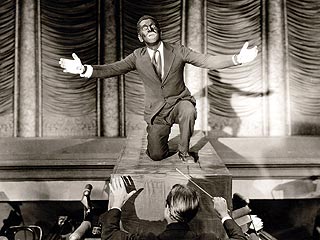
Still from The Jazz Singer
In utilizing the term “brownface,” I also reference minstrel entertainment in which blackness fetishized and simultaneously disavowed African American entertainers consequently framing racial codes onto a spectrum of racialized bodies. In his analysis of the first talkie The Jazz Singer (1927) “Blackface, White Noise,” Michael Rogin proposes that the “protagonist adopts a black mask and ventriloquiz[es]the black, sings through his mouth” (419). Through this masking, the Jazz Singer becomes Americanized through “appropriat[ing] an imaginary blackness” (421). Even as our contemporary sensibility would call out any form of contemporary blackface performance, we have yet to identify a similar masking when it occurs with Mexican or Latino characters. I contend that the models seen in blackface entertainment have already placed familiar scenarios of seeing White or Jewish actors performing an ethnic Other. When American audiences see Jack Black as “Nacho Libre,” they do not need to see him brown his skin; it is enough to hear a “speedification” of Spanish to have us entertain his believability. When “sonic brownface” occurs, it does not Americanize the performer, rather it perpetuates the Mexican and by extension Chicanos and Latinos as always already foreigners.
In order to recognize how “sonic brownface” is performed in the comedy Nacho Libre, it is also necessary to understand how its sound echoes a political climate that conflates “Mexican” with “Immigrant,” thereby representing Mexicans as undocumented people who have no right to be on this side of the U.S./Mexico border, and lumps all Latinos together as “Mexican.” The film was released a month after the nation’s largest immigrant rallies on May 1, 2006, occurring throughout many cities. The timing of the film also coincided with the first series of policy measures on immigration reform proposed by Congress. Whereas before the May Day marches, some members of congress discussed immigrants as criminals, after the big turnout Congress changed their tune, beginning to consider amnesty or easier paths to citizenship for undocumented immigrants, including generation Dreamers, already raised and finishing their schooling in the States. Cue Jack Black.

Image by Flickr User Thommy Browne
Speedification del Celluloid: “sonic brownface” in Nacho Libre
Nacho Libre, directed by Jared Hess (of Napoleon Dynamite fame) presents a comedic fictionalization of the story of Fray Tormenta, a career Lucha Libre fighter who was actually Reverend Sergio Gutiérrez Benitez. The film highlights Black’s strengths as a singer and presents him in a character that is the classic underdog trying to achieve his wrestling dream. As Nacho, the cook for the orphanage, he also wishes to provide the children a better meal, at least once in a while. I will highlight a few scenes in which Black’s sonic brownface performance stands in contrast to the other Mexican cinema actors who speak English. I will conclude with a proposition as to why sonic brownface is already so familiar to us.
From the opening sequence, we see the quaint orphanage located in a small Mexican pueblo. “Sonic brownface” is introduced in the film from Black’s first words “Be grateful Juan Pablo today is especially delicious.” In the next sequence, Hess films the Father saying mass in Spanish with no translation, or subtitles. I point this out because it sets up a type of authenticity with the Mexican orphanage, and that the film brings together both American actors speaking “Es-Pan-ish” and Mexican actors speaking in English. Ana de la Reguera, “Sister Encarnación,”–a nun who arrives to teach the children–also does not perform sonic brownface. She sounds like a Mexican actress speaking English, very much like other Mexican actors preceding her in Hollywood, adding a third later of sonic representation that actually works to heighten sonic brownface’s effects.
However, the sequence that most prominently presents the visual and auditory cues of sonic brownface appear in a twenty-minute segment when Nacho recruits his partner, Esquelito, and they transform into luchadores. In the midst of Nacho’s transformation, he must also contend with his carnal feelings for Sister Encarnación and to instruct the boys that wrestling is not good. Black goes from Italian in “taste of glory” (19:114-16); to Cuban “take it easy” (24:03); to urban Mexican American “my life is good, really good. It’s fantastic” (35:50). The sequence ends as Nacho cannot defend Sister Encarnación and blames Esqueleto for the mishap. Here sonic blackface culminates this performativity of Other with “get that corn outta my face. I looked like a fool last night. What took you so long?!” (39:54-40:29).
One could read this performativity of Otherness in the remix of accents as Black’s self-awareness that he is voicing something not of his experience. However, that he is Jewish and a comedian implies a privileged position already granted to him through blackface performances: the permission to co-opt ethnic and racial identities. When he inflects a Cubanesque accent, audiences can recall Al Pacino in Scarface, an earlier articulation of “sonic brownface.” Or the urban Chicano accent as seen in Born in East L.A. when Cheech Marin teaches the Mexicans waiting to cross the border how to blend in with Chicanos. By the time Black performs sonic blackface, as audiences we have been cued to these auditory references, thus we do not need him to alter his physicality to match the accent. It is enough to hear it to understand the referent. The sequence reaffirms Nacho as the luchador, since we also see his persona of the fighter come to life.
Rogin’s analysis can help us understand these slippages, as well as the role of “sonic brownface” in representations of Latinos by white actors. Rogin posits how Jolson’s performance in the first talkie simultaneously killed Vaudeville entertainment and reintroduced blackface into popular media (429). It is Rogin’s conclusion that it is with the appearance of “Jack Robin” in blackface, that the Jewish individual “Jakie Robinowitz” becomes white and thereby successful, mediating this success through visual codes of blackness. Similarly, in Nacho Libre, sonic brownface operates as both the visual and sonic cues of Mexicanness that enable Jack Black to become the luchador who doesn’t need to live behind a mask. As the film ends, Nacho is content, becoming a hero to the orphans who no longer bemoans his lot in life. This ending is contrary to the plight of immigrants from Latin America who must leave their home in search of better economic opportunities.
By identifying sonic brownface, we can see how American audiences fetishize the sounds of the Mexican/Latin Other yet simultaneously disavow their presence by placing non-Latino actors in these roles. Through the performativity of sonic brownface, popular media and film reify codes of Mexicanness as always foreign, silencing their accents because español is still an unwelcomed sound. Sonic brownface can also be a useful tool by which to investigate similar auditory articulations of Latino sounds. I’m thinking here of Rita Moreno in West Side Story (1961)—see Priscilla Peña Ovalle‘s Sounding Out! post “Aurally Other: Rita Moreno and the Articulation of ‘Latina-ness’” (January 2011)–George Lopez in Beverly Hills Chihuahua (2008), Wilmer Valderrama “Fez” in the television series That 70s Show, and the panoply of Latino actors in Machete (2010) by Richard Rodriguez. Given that media tends to recycle tropes and stereotypes, as audience members we have developed a keen awareness of these sonic markings of Otherness.
Most importantly, my intent in identifying sonic brownface concerns its re-appearance during another surge of anti-immigrant rhetoric. The rallies that occurred on May Day 2006 became synomous with immigrant rights. The release of Nacho Libre shortly after these rallies unknowingly silenced immigrant Spanish speaking voices in the popular imaginary until the film A Better Life (2011) staring Demián Bichir, connected undocumented immigrants with an empathetic experience. The strongest counteractions, however, have not been channeled through Hollywood. With the 2012 election, another surge of immigrant rallies happened at the Democratic National Convention with UndocuBus riders arriving in time to call attention to immigrant rights (start at 8:10-11:24).
As seen in this video clip, undocumented immigrants, Dreamers, Latina/s, and Chicana/os committed acts of civil disobedience because their voices will not be silenced.
—
reina alejandra prado saldivar is an art historian, curator, and an adjunct lecturer in the Social Science Division of Glendale Community College in Glendale, California.As a cultural activist, she focused her earlier research on Chicano cultural production and the visual arts. Prado is also a poet and performance artist known for her interactive durational work Take a Piece of my Heart as the character Santa Perversa (www.santaperversa.com) and is currently working on her first solo performance entitled Whipped!
—
 REWIND! . . .If you liked this post, you may also dig:
Sound and Curation; or, Cruisin’ through the galleries, posing as an audiophiliac-–reina alejandra prado saldivar
Chicana Radio Activists and the Sounds of Chicana Feminisms–Monica De La Torre
Listening to Modern Family’s Accent–Juan Sebastian Ferrada and Dolores Inés Casillas
Share this:

Queer Timbres, Queered Elegy: Diamanda Galás’s The Plague Mass and the First Wave of the AIDS Crisis
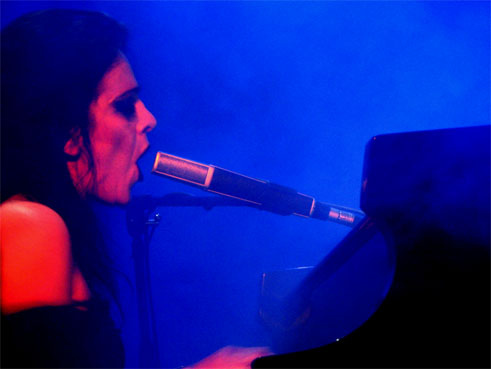
 Welcome to the final week of our February Forum on “Sonic Borders,” a collaboration with the IASPM-US blog in connection with this year’s IASPM-US conference on Liminality and Borderlands, held in Austin, Texas from February 28 to March 3, 2013. The “Sonic Borders” forum is a Virtual Roundtable cross-blog entity that will feature six Sounding Out! writers posting on Mondays through February 25, and four writers from IASPM-US, posting on Wednesdays starting February 6th and ending February 27th. For an encore of weeks one through four of the forum, click here. And now, while we regret to inform you that Art Jones’s dispatch from Pakistan must be re-booked at a later date, the show must go on . . .and I am thrilled that writer and Ph.D. student Airek Beauchamp is stepping in as our closing act. Make no mistake, he brings the pain! Once again, Sounding Out! gives you something you can feel. –JSA, Editor-in-Chief
—
At dinner a few days later in the Village Jarrod tells me that he cries whenever anyone says that they really ‘get’ his work. Because his work is so horrifying. It hurts him to know that he has inflicted it upon someone, someone able to understand it.–A.W. Strouse, in reference to the recent performance of Jarrod Kentrell at Ps1‘s “The Meeting”
I first heard Diamanda Galás’s The Plague Mass (1991) around 1994, when I would have been about 20 years old. Equal parts mass and babble, The Plague Mass is an elegiac tribute to Galás’s brother and other victims of the HIV/AIDS epidemic, a sonic rage against the silence surrounding the disease that redefines “the elegy” in the process. I suppose that I should make a confession here and say that contracting HIV was one of my biggest fears at the time. I was fresh out of the closet and ready to experiment, yet the media coverage of the crisis had pretty much told me that, as a gay man, an active sex life was a death sentence, a message I had been receiving since I was in fourth grade. There was something in Galás’s record to which I automatically, deeply connected. Although this brand of desire was new to me, there was also something deeply familiar about it–ancient even–and this feeling was produced by the horror of her work, not in spite of it.
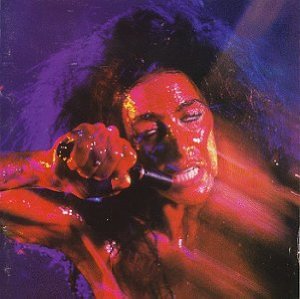
Cover of The Plague Mass (1991)
Recorded live in 1990 at Cathedral of St. John the Divine in New York City, The Plague Mass was conceived as a performance piece, enabling Galás to use sound to move in a messy, unstructured, and often terrifying way across multi-dimensional space. Her sonic trajectories seemed to take my global, abstract fears and make them intimate and concrete. In “Diamanda Galás: Defining the Space In-between,” Julia Meier describes Galás’s soundscape as composed of “chants, shrieks, gurgles, hisses often at extreme volumes, frequently distorted electronically and accompanied by a torrent of words” which defy description (2). In the space created by this cacophony, Galás mourns her brother, responding to the silence surrounding AIDS by making use of what composer and sound theorist Yvon Bonenfant refers to as “queer timbres” in “Queer Listening to Queer Vocal Timbres,” the unique, dynamic sounds of desire and self in the voice that also operate as a kind of touch, a reaching out to other desired and desiring bodies. In homage to Antonin Artaud’s theory of the theater of cruelty–in which audiences are exposed through multisensory domains to truths they often do not wish to see–Galás uses queer timbres to form an outsized means of aural communication in The Plague Mass that fills more affective space than standard musical productions or theater productions. The shrieks and howls suggest Galas as depicted on the album’s cover: flayed, raw, and radically open to the passage of every vibration. By erasing semantic and syntactical codes, these sounds deeply engage the entire body in the process of making sound.
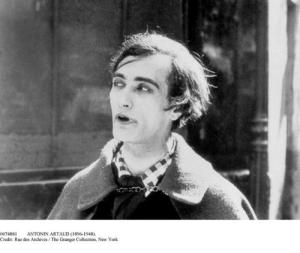
Artaud
Queering the traditional theater, Artaud argued for new intersensuality that would occupy space in a three-dimensional manner. In The Theater and Its Double, Artaud describes how the “intensities of colors, lights, or sounds, which utilize vibration, tremors, repetition, whether of a musical rhythm or a spoken phrase, special tones or a general diffusion of light, can obtain their full effect only by dissonances. But instead of limiting these dissonances to a single sense, we shall cause them to overlap from one sense to the other” (125). Texturing sound, or working with dissonance and disruption to create a more forceful product, offered Artaud a unique play between the senses, allowing it a more direct and apparent physical impact upon the bodies of both performers and the audience.
The plague and how it inhabits and destroys bodies is a central metaphor for sound and language in the work of both Artaud and Galás. Artaud focused much of his theory on the plague as an example not only of an affective space but also as a transformative event in human history and in individual lives. Artaud’s writing on the plague, however, also garnered him harsh criticism. By suggesting a theater in which language became subordinate to the shriek, the grunt or other non-semantic orality, he decried all of traditional French theater and its lofty legacy. Nonetheless, he was invited to speak about his essay “The Theater and the Plague” at the Sorbonne. Deciding to actually incorporate his ideas about ‘liquefying boundaries,” he began speaking in a standard oratorical mode but slowly devolved into a theatrical performance of the plague, eventually ending in shrieks of physical pain. In Watchfiends & Rack Screams, Clayton Eshleman describes how, by the end of his speech, the only people left in the lecture hall were a minor contingent of his close friends, including Anais Nin, who recounted the tale (12). The shrieks, the howls are all a further way to engage the whole body in the process of making sound, while also erasing semantic and syntactical code. In Gilles Deleuze’s estimation of Artaud’s work in The Logic of Sense, it reached the depths of language: “The word no longer expresses an attribute of the state of affairs; its fragments merge with unbearable sonorous qualities, invade the body where they form a mixture and a new state of affairs… In this passion, a pure language-affect is substituted for the effect of language” (89).
Jaap Blonk performs Artaud’s “To Have Done with the Judgement of God”
Reflecting and refracting Artaud, Galás uses the space of The Plague Mass to re-consider and re-theorize the ailing body. In her work the body represents not just Galás herself, but also the bodies of all the afflicted, the bodies issuing negation of suffering, and finally, the collective body of the spectacle of the AIDS crisis. Like Artaud, Galás sees the plague of AIDS as transformative, but without the safe buffer provided by the critical space of history. This plague is instead an immediate issue made all the more volatile due to the refusal to help the victims by the conservative Reagan administration as well as the rigidity of the Catholic Church’s encoded dogma that characterizes homosexuality as sinful depravity and refuses to acknowledge the need for AIDS education and condom distribution. Galás evidences this in the opening track “There Are No More Tickets to the Funeral” which incorporates traditional Christian hymns, liturgical representations of condemnation, and the voices of the afflicted.
These appropriated sounds circulate in constant tension, queering the ominous, authoritative patriarchal drones by contrasting them to the timbres of desire and pain embodied by the shrieks. In “Confessional (Give Me Sodomy or Give Me Death),” the narrator’s voice bleeds into the frantic voice of the defiant dying, blending in with the conjured voices of angels of death that hover over the bed. This commentary places the listener in a very immediate and uncomfortable multidimensional space encompassing several terrifying aspects of death. Here Galás exemplefies Bonenfant’s queer timbres through the tactile effect of layered sound that is felt with the skin, in the bones, as well as with the ears, communicating a palpable experience that lies beyond the barely-nuanced music it is seductively easy to grow accustomed to.
It is Galás’s use of sound’s affective properties that makes The Plague Mass most effective as queered communication. In “This is the Law of the Plague” she incorporates elements of glossolalia, colloquially known in religious communities as “speaking in tongues,” a speech act that embodies voice by implying a physical loss of control of the body as well as the casting off of concrete linguistic structure. Galás’s use of glossolalia deliberately blurs the border between spiritual possession and the madness inherent to AIDS as the virus passed through the blood/brain barrier of its human host.
Aided by electronics, Galás’s vocals begin as the chant of orator. Punctuated by a throbbing, sparse single drum-beat, her sickened, keening crawl of words enumerates in detail what it is that defines a person as unclean. The language is precisely enunciated, each word sharply edged and cornered—a practice that would no doubt double Artaud over in pain, given his struggle with schizophrenia that left him vulnerable to crisp sounds. Slowly, Galás’s voice rises to the shriek of a pious, avenging angel, a shrill, wail shimmering with vibrato communicating the sound of a raptured body, rent in chaotic ecstasy. Eventually her ululations are submerged in a bath of primordial babble, a place where language moves in every direction through a body somehow more permeable, a sonic space that Deleuze would describe as topographic, that is, possessing heights and depths. Enacting and inviting the babble of the mad and the afflicted maintains a red line on the tolerance of the listener’s psyche before returning, without ceremony, to the sparse and cold incantations of the church. Here queer(ed) timbres push the audience to limits well past the reaches of patriarchal or accepted sound; Galas plays along the edge of tolerance before dropping the audience abruptly back into the decidedly colder and less humane sonic tropes of an unforgiving religion.
Galás’s sonic practices encourage in me a listening that reaches out into space to connect with these sounds, whose physicality communicates fears and apprehensions that are old enough to feel genetically encoded in my psyche. Bonenfant describes this reaching as “queer listening,” an extrinsic process based on desire in which “we listen ‘out’ for (reaching towards) voices that we think will gratify us” (77). Bonenfant queers the body in the process of sound; it becomes abstracted, absorbed into a process and functioning on many layers that include—but also subsume—the subjective Cartesian body of agency we are comfortable with. The body becomes bodies, and it becomes present in spaces that go beyond the immediate space it occupies in space/time. Galas traverses time and space in The Plague Mass, from the ancient litanies of hymns and spirituals to the anguish of those afflicted with AIDS, and layers voice on voice until they are inextricable, a huge din telling more than just a story, or The Story but the stories of many.
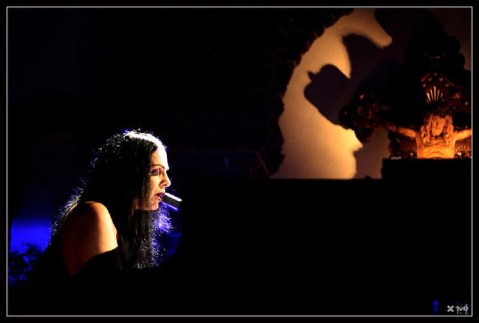
Image by Flickr User 1v0
In a personal e-mail exchange, Bonenfant clarified his relation to both Artaud and Galás. When asked if he was influenced by Artaud he explained:
Not directly, but certainly indirectly, and his ideas affect extended voice practice generally. I think the idea of the ‘theatre of cruelty’ is often deeply misunderstood and it was a product of its time. I understand Artaud to have been crying out for an anti-bourgeois theatre that actually stirred people up. But stirring people up is only part of the story. What stirs some, attracts others. Now, my argument is more that: these voices we might call ‘queer’ stir SOME people up but actually they ATTRACT others – others who might be seeking queered bodies to contact.
Bonenfant went on to explain that artists such as Galás can thus make contact with people who desire the kind of disruption or ‘stirring’ that they provide. He went on to relate a story that Galás shared in an interview, in which she described a performance in which she looked out at the audience and noticed a very young boy listening to her perform. For the rest of the concert, Galás said she felt guilty for the damage she was undoubtedly inflicting on the young boy’s ears and psyche. However, after the concert the boy approached her and thanked her profusely. It turns out that he had suffered from a terminal and painful illness and felt unable to express the physical and emotional distress that he lived with. Here, though, was an artist onstage articulating it, broadcasting it to him and others, for him and others. This is what Bonenfant refers to as “an affective, somatic bond” created through shared sonic experience, and this is what Galas constructs. By standard definitions The Plague Mass is almost unlistenable, but yet it has connected audiences remote in space and time (a nod here to Karen Tongson’s “remote intimacy”). A sonic reaching out attracting listeners similarly reaching, its indelicate music draws the suffering near, providing a form of collective comfort by exploring and embodying the suffering, grief, and rage located beyond the permeable membrane of conscious thought and feeling.
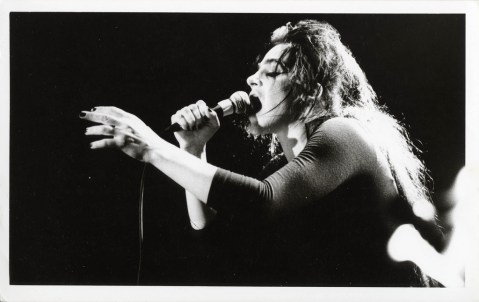
Diamanda Galas performing in the 1980s, Image Courtesy of Flickr User Carl Guderian
It is this kind of connection through a tonal richness that is uncoded but yet full of information that is radically important. Galás’s groans, growls, and chants create an intersubjective circuit of communication that moves active listening outside of the body and draws visceral connections in a three-dimensional psychic space. This is what Galás immediately stirred in me back in 1994, and what I have been determined to recover and communicate since that first listening cut me to the quick. Queer listening does not just entail an affirmation of the soundtracks of queer lives–a kind of perpetual disco, 12” remix project–but rather it also demands a critical–and visceral–vulnerability to the jarring, violent world arranged against queer agency. Galas’s work hijacks the elegy and queers it, extending it to us as an offering against the true horror: the official silence in the face of so much death.
—
Featured Image of Diamanda Galás courtesy of Flickr user digital_freak
—
A Taurus who enjoys the ocean, Airek Beauchamp is currently at SUNY Binghamton pursuing his PhD in Creative Writing. He also studies composition pedagogy and queer theory, although he is becoming more and more seduced by sound studies. He can rock a disco all night or just stay in and maybe catch up on some 30 Rock. Some call him fancy, some call him a bitch, but really he is both. He is a multiplicity of multiplicities, all in one mortal shell.
Share this:


Current Top Posts





April 2021

January 2020

November 2019

October 2019

August 2019

April 2014

November 2017

March 2015

December 2017

October 2015
 Sounding Out!
Recent Comments