
Sound as Art as Anti-environment

When I performed at the 2012 Computers and Writing Conference in Raleigh, North Carolina, I looked around during my fairly abstract 10-minute long improvisation featuring feedback loops, glitches, silences, and circuit-bent instruments, and I noticed the audience’s sometimes visible restlessness, discomfort, and even anxiety. This is a fairly common occurrence when I perform experimental sound art, particularly in contexts in which audiences expect “music” (you can hear my work at 38:30 in the video below). However, for an experimental sound artist to take offense to such reactions is, in my estimation, missing the point of the exercise. That sound art disrupts, agitates, and even offends is a powerfully reaffirming reminder that sound art transcends music and sound; it is a method of revelation, an act that surpasses logical communication, instead challenging the very nature of sound and perception.
.
As an artist, scholar, and fan, I am drawn toward sound and music that lures me into a new world, an unfamiliar way of being and knowing. Like Lewis Carroll’s Alice, I learn that the rules of my world no longer apply. This happened when I heard J Dilla’s Donuts album, and when I heard Madlib’s Medicine Show #3: Beat Konducta in Africa, when I heard Miles Davis’ Bitches Brew. An artist that continually draws me down the rabbit hole is Walter Gross, an experimental sound/beat artist out of Los Angeles. His work changes the way I usually interact with sonic art, both in terms of his sound and in his approach to physical collage and handcrafted cassette packaging, Gross departs from the comfortable and familiar listening imparted by polished hi-fi 3-minute tracks with definitive beginnings and ends and discernible melodies. Gross instead propels listeners into very unusual (and pleasantly discomforting) soundscapes that demand attention. Almost counter-intuitively, Gross’s visual representations of his work intensify that experience. Consider his 2010 work, Dopamine:
Dopamine is likely a challenging piece for audiences, at least in terms of violating the dominant structures of music. The piece opens with disorienting use of panning, deliberately obscuring degraded audio, largely indiscernible movements and patterns, and so on. His video work likewise presents a fitting yet relatively unusual juxtaposition of youth and destruction, celebration and danger. In terms of both sound and sight, Gross’ work disrupts dominant musical sensibilities, challenging the very patterns and structures within which we can express ideas. He violates tradition, shakes off the canonical baggage carried by prevailing paradigms of Art and Music, and plunges audiences into unfamiliar sensory experiences that require metacognition, reflection, and examination of what sonic art is, and more importantly, what sonic art can be. Gross, in other words, seems to transcend the musician moniker and reach something else entirely. In what follows, I’d like to explore a (very brief) history of such artists, and begin to think about how to frame sonic art as immersion in what Marshall McLuhan called anti-environments: the unconscious environment as raised to conscious attention.
Sound as Art
There exists a strong tradition of experimental noise and sound art, particularly in 20th-century Western avant-garde movements. Futurists were arguably the first to consider noise as music in the European tradition, and were certainly influential in asking artists and audiences to become more aware of the changing social and sonic surroundings . In his 1913 manifesto-of-sorts titled “The Art of Noises,” Italian Futurist Luigi Russolo proposed an orchestral configuration that more aptly represented the range of sounds available to contemporary listeners, namely those sounds that accompanied industrialization and urbanization. The sounds of the Futurist orchestra would include “rumbles, roars, explosions, and crashes.” Russolo built devices called intonarumori to mechanically achieve and manipulate these sounds. His brother, Antonio Russolo, also enacted this new philosophy of modern found sound and composed Corale and Serenata.

Luigi Russolo and Ugo Piatti with the Intonarumori, 1913
Any inquiry of art as anti-environment would be incomplete without a discussion of the great anti-art movement, Dada. Like the Futurists before them, Dadaists used found sound and technology-as-art to violently disrupt conventions of art, beauty, and authorship within the white avant-garde community. Marcel Duchamp’s famous work, “Fountain,” is likely the most familiar Dadaist artifact to contemporary readers, yet the sound poetry of Kurt Schwitters and other Dadaist and Dada-inspired sound pieces such as Erwin Schulhoff’s 1922 work In Futurum (the middle movement of which contains only a rest and the notation “with feeling,” an undoubtable precursor to John Cage’s 4’33”, written 30 years later) created sonic spaces of innovation and strangeness that changed the way audiences listened to both voices and silences. The Russian Cubo-Futurists, especially zaumniks such as Alexei Kruchenykh, made similar ventures into anti-environments. Kruchenykh developed the sound art zaum, which he understood as a transrational language that undercut existing language systems in which the “word [had] been shackled…by its subordination to rational thought” (70). Zaum was a sort of linguistic anti-environment, one rooted in the notion that meaning resided first and foremost in the sound of a word rather than the denotative symbol system that emerged alongside the proliferation of print/visual culture. One could also not underemphasize the work of John Cage, from his prepared piano to his work with organic instruments.

John Cage and His “Prepared Piano,” Image courtesy of Flickr User William Cromar
The list of artists, genres, and movements engaged to some extent in the enterprise of anti-environment architecture could go on and be debated indefinitely: Free Jazz, Turntablism/Nu Jazz, Experimental Hip-Hop,Fluxus, Circuit Bending, Prepared Guitar, ProtoPunk, Punk, Post-Punk, New Wave, No Wave. . . in all of these diverse movements, the sonic artists share the tendency to create strange new worlds via sound; worlds that reveal social and technological environments that most people seem unaware of in the moment. This is why media theorist Marshall McLuhan called the artist “indispensible,” because the artist can tell us something about ourselves that we cannot know via ordinary means of perception. Sonic artists expose audiences to auditory phenomena, structures, juxtapositions, etc. that are to various extents hidden, obscured, or ignored as “noise.” The sonic artist is more than just a clever selector and (re)arranger of sound; s/he is a revelatory agent, exposing what is inaudible.
Art as Anti-environment
Anti-environments, however we might define and classify them, are vital not only to artistic communities themselves, but they are also vital to a society of fish in water. In his 1968 text, War and Peace in the Global Village, McLuhan asserts (among other things) that humans remain largely unaware of their new environments, likening them to fish in water: “one thing about which fish know exactly nothing is water, since they have no anti-environment which would enable them to perceive the element they live in” (175). In other words, humans seldom possess or practice a sense of awareness regarding their surroundings because there’s nothing against which surroundings may be contrasted. The “water” to McLuhan represented the various environments (physical, psychological, cultural) shaped by technological innovation, but we can—and should—extend the water metaphor to a range of hegemonic frameworks: constructions of gender, race, ability, and so on.
This essay is certainly not an attempt to generate some sort of evaluative rubric by which to judge artistic or sonic expression objectively. Rather, we might use the concept of anti-environments as a way to frame our subjective experiences and encounters with all sound, and begin listening to unfamiliar sounds as psychedelic (from Greek psyche- “mind” + deloun “reveal”) keys to illuminate the patterns and structures in which listeners exist. We must work to understand our environments and our place in them; if we are to engage critically with our culture, we must first understand existing (yet invisible) patterns and structures that surround us. And we are aided in this effort, in great part, by humanity’s great seekers of pattern recognition, the sonic-psychonautical messengers: the sonic artists.

Sound Artist Performing at Circuit Bending Workshop in Dayton, Ohio in 2009, Image Courtesy of Flickr User Vistavision
To return to the sound that inspired this meditation, Walter Gross (among others) is in many ways participating in and propelling the discourse of Leary and McLuhan, Schwitters and Schulhoff, Kruchenykh and Cage,Davis and Sun Ra, Madlib and J Dilla. Gross performs the sonic anti-environment, enacts the revelation of obscured sonic paradigms. For me, Gross can act as a sort of lens through which ordinary sonic patterns and structures become visible. I hear Flying Lotus, Bob Dylan, and The Minutemen differently after Gross. I hear my office, my home, my family’s voices differently after Gross. I hear patterns that weren’t audible before. After Gross, I become aware of how I am continuously trained to expect certain things from the sonic world: compartmentalized units of meaning, clearly stated origins of utterances, linear narratives, repeated/repeatable melodies, and so on.
Likewise, my own sonic art/scholarship approaches the use of sound to reveal the inaudible assumptions present in Western frameworks surrounding sonic production. I will conclude with an illustration of my own work and why sonic anti-environments are so central to my philosophy and method. One of my sonic works, “Toward an Object-Oriented Sonic Phenomenology,” was recently part of an exhibition titled Not For Human Consumption, curated by Julian Weaver of CRISAP in London. I recorded the sounds of a high mast lighting pole using contact microphones. Contact microphones do not “hear” like humans typically hear. Typical (dominant) notions of human hearing (and therefore of sound itself) involve the reception and interpretation of vibrations present in air. Contact microphones instead only interpret the vibrations in solid objects.
By listening through an object–through alien “ears,” so to speak– we can begin to critique the ways that we privilege listening via air, a listening that places humans at the center of the universe. We can consider the ways that sound has very real effects on humans with atypical hearing abilities and nonhuman objects. It is difficult to have such conversations if we never explore sonic anti-environments, if we never break through dominant epistemological models, if we never expose the limits of our own environments.
—
Featured Image: Beatrix*JAR in Dayton, Ohio, September 9, 2009, by Flickr User Vista Vision
—
Steven Hammer is a Ph.D. candidate in Rhetoric, Writing, and Culture at North Dakota State University in Fargo, ND, USA. His research deals with various aspects of sonic art, from exploring glitch and proto-glitch practices and theories (e.g., circuit bending), to understanding and producing sound from an object-oriented ontology (e.g., contact microphones). He also researches and facilitates trans-Atlantic translation collaborations between American, European, and African universities. He has multimedia publications with Enculturation, Sensory Studies, as well as forthcoming book chapters with Wiley/IEEE press, and IGI Global Publishing, and has performed creative and academic work at several conferences across North America, including the national Computers and Writing Conference and the Council for Programs in Technical and Scientific Communication. He performs experimental circuit-bent and sampler-based music under the moniker “patchbaydoor,” and has constructed and documented a number of hardware modification projects for his own artistic projects and for other artists in the upper Midwest United States. You can read/hear more atstevenrhammer.com
Share this:

Sound at AMS/SEM/SMT 2012

This week brings us #musicon12, the megaconference of the American Musicological Society (AMS), the Society for Ethnomusicology (SEM), and the Society for Music Theory (SMT). This will be the third joint conference of these societies, after Oakland in 1990 and Toronto in 2000. These roughly decennial gatherings of the three principal scholarly societies of music scholarship provide increased opportunities for cross-disciplinary conversations and amazing live performances. A fact augmented even more by the selection of New Orleans, a city known for its music, for this year’s meeting.
The conference takes place in the Sheraton and Astor Crowne Plaza hotels from this Wednesday, October 31st through Sunday, November 4th. It will be preceded by two events. The first, occurring Monday, October 29th and Tuesday, October 30th, at Tulane University’s Rogers Memorial Chapel, is Ecomusicologies2012, a pre-conference organized by the AMS Ecocriticism Study Group and the SEM Ecomusicology Special Interest Group. The second, all day Wednesday, October 31st, is the Preconference Symposium on Crisis and Creativity, held at the Lavin-Bernick Center for University Life at Tulane University.
The disciplines of musicology, ethnomusicology, and music theory have focused on sound for centuries. They are the disciplines that Michael Bull argues Sound Studies “goes beyond” in the upcoming anthology Sound Studies. While such a description could lead to the categorization of these disciplines as theoretically or methodologically antiquated, #musicon12 is too large and significant for Sound Studies to ignore, with over 600 individual presentations that all deal with sound or music somehow. The first eleven papers, in chronological order, should give some idea of the overall scope:
• Dorcinda Knauth (State University of New York, Dutchess), “Composing the Future by Listening to the Musical Past: Islamic Exegesis in Javanese Folksongs”
• Ruth Davis (University of Cambridge), “The Pilgrimage to ‘El-Ghriba’ and the Musical Aesthetics of a Muslim-Jewish Past”
• Abigail Wood (University of Haifa, Israel), “Sound, Aesthetics, and the Narration of Religious Space in Jerusalem’s Old City”
• Jonathan Dueck (Duke University), “Musical Lives and Aesthetics in the Worship Wars”
• Kim Carter Muñoz (University of Washington), “‘¡Todos somos huastecos! ‘We are all Huastecan!’: Performance of the Democratization of Son Huasteco at El Festival de la huasteca (The Festival of the Huasteca)”
• Raquel Paraíso (University of Wisconsin-Madison), “Festival Son Raíz: Building Community and Signifying Identity and Culture Ownership across Mexican Regions”
• Ian Middleton (University of Illinois, Urbana-Champaign), “Identity, Peace, and Learning at Rural Music Festivals in Colombia’s Caribbean Coast”
• Brenda M. Romero (University of Colorado, Boulder), “‘El Carnaval de Río Sucio No Es Festival’ / ‘The Carnival of Río Sucio is Not a Festival’”
• Michael O’Toole (University of Chicago), “Rehearsing Publics in a ‘Turkish Art Music’ Ensemble in Berlin”
• Suzanne Wint (University of Chicago), “Rehearsing the Social: Becoming a Performer in Kampala’s Classical Music Scene”
• Gregory Weinstein (University of Chicago), “Recording Rehearsing: The Hidden ‘Process of the Classical Studio Session’”
But for the sake of argument, if Sound Studies is something more than simply the application of long-standing disciplinary approaches to sonic works and events, if, as Jonathan Sterne proposed this year in his introduction to The Sound Studies Reader, “the difference between sound studies and… other fields is that they don’t require engagement with alternative epistemologies, methods, or approaches” (4), then we are inclined to pay attention to that work that reaches beyond the limits of conventional music scholarship, namely the sort which strives for some sort of critical self-reflection or interdisciplinary ambition.
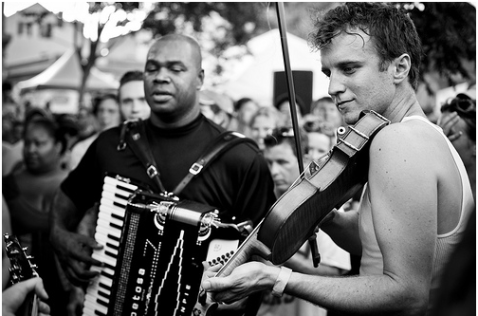
Lost Bayou Ramblers. Borrowed from phillipleroyer on Flickr.
This is not an easy task given the vast number of papers and performances at such a large conference and the scarcity of information found in brief titles and abstracts. We can assume that every presentation challenges these conventions to some extent, but for the sake of this preview, here are a few items that venture beyond the traditional limits of music scholarship. You can find the full #musicon12 program here.
—
Featured Image: Mardi Gras 2005, By Robert Garcia, The City Project
—
Bill Bahng Boyer is an adjunct professor of music, writing and rhetoric at Dartmouth College. He is also a doctoral candidate in music at New York University, completing a dissertation on public listening in the New York City subway system.
Jump to MONDAY, October 29
Jump to TUESDAY, October 30
Jump to WEDNESDAY, October 31
Jump to THURSDAY, November 1
Jump to FRIDAY, November 2
Jump to SATURDAY, November 3
Jump to SUNDAY, November 4

New Orleans Jazz National Historical Park, 2005, Borrowed From Robert Garcia, The City Project
Ecomusicologies2012
All events at Rogers Memorial Chapel, Tulane University
5-6pm Soundwalk
Tyler Kinnear (University of British Columbia), “Environmental Listening and the Tulane Soundscape” (meeting place outside the entrance of the Rogers Memorial Chapel, Tulane University)
7-9pm Paper Jam
Chair: Aaron S. Allen (University of North Carolina, Greensboro)
Joe Browning (School of Oriental and African Studies, University of London) (virtual presentation), “Crane Calls and Shakuhachi Sounds: Interconnections, Disjunctures and New Directions in the Tsuru no Sugomori Pieces”
Travis Stimeling (Millikin University) (virtual presentation), “Music, Television Advertising, and the Green Positioning of the Global Energy Industry in the United States”
Olga Sánchez-Kisielewska (Northwestern University) (virtual presentation), “Theorizing the Musical Landscapes of John Luther Adams”
Andrew Mark (York University) (virtual presentation), “Consciousness, Solidarity, and Musicking: Ecoethnographic Justice”
Leah G. Weinberg (University of Michigan), “Orchestrating Nature: Music, Manipulation, and 1950s America in Disney’s True- Life Adventure Films”
Settimio Fiorenzo Palermo (Middlesex University), “Sounds Heard: the Environmental Ethics & Aesthetics of Hugh Davies’s Music”
Sabine Feisst (Arizona State University), “Negotiating Nature & Music Through Technology: Ecological Reflections in the Works of Maggi Payne & Laurie Spiegel”

The Canal Street Line. Borrowed from Hmeriomx on Flickr.
Ecomusicologies2012 (cont.)
All events at Rogers Memorial Chapel, Tulane University
8:30-10:30am Panel: Beyond Metaphor
Mark Pedelty (University of Minnesota), Chair
Marc Perlman (Brown University), “Instrument Builders As Environmental Activists: A Tale of Two Tonewoods”
Kevin Dawe (University of Leeds), “Small is Beautiful: Guitar Making, Sustainability and Community Building in Britain and Africa”
Jeff Todd Titon (Brown University), “Why Thoreau?”
Jennifer C. Post (New Zealand School of Music, Victoria University, Wellington), “Beyond Birds: (Ethno)musicologists, Environmental Scientists & the Evolution of Soundscape Ecology”
11am-1pm Panel: 20th & 21st-century Composers
Denise Von Glahn (Florida State University), Chair
Eric Drott (University of Texas at Austin), “The Peasant’s Voice and the Tourist’s Gaze: Listening to Landscape in Luc Ferrari’sPetite symphonie intuitive pour un paysage de printemps”
You Nakai (New York University), “An Electronic Ecology: The Natures of David Tudor’s Electronic Music”
Jacob A. Cohen (The Graduate Center, CUNY), “Carl Ruggles, Walt Whitman, and the Gendered Place of Men and Mountains”
Joseph Finkel (Arizona State University), “Searching for a Sonic Ecology: John Luther Adams’s Dark Waves”
2-3:30pm, Panel: Contemporary Issues
Sabine Feisst (Arizona State University), Chair
Melissa J. de Graaf (University of Miami), “‘The Music of Nature Makes Me Dream and Sleep’: Intersections of Nature, Gender, and Ultramodernism”
Alexandra Hui (Mississippi State University), “Agency and Aural Rights: Negotiating the Soundscape, 1948 to the Present”
Tyler Kinnear (University of British Columbia), “Emergent Soundscapes: Uses of Nature and Technology in Two Electroacoustic Compositions”
4-6pm, Panel: Ethnographic Approaches
William Bares (University of North Carolina, Asheville), Chair
Dan Bendrups (Queensland Conservatorium Resarch Centre, Griffith University), “Mapping Outdoor Music Festival Engagement with Ecological and Environmental Issues in Australia”
Robin Ryan (Western Australian Academy of Performing Arts, Edith Cowan University), “Eucalyptus as Musical Resource: Some Ecological Considerations”
Michael Silvers (University of California, Los Angeles), “Birdsong, Popular Music, &Predicting Rain in Northeastern Brazil”
Charlotte D’Evelyn (University of Hawaii), “Sounds of the Grasslands: An Ecomusicological Crisis of Romanticism, Loss, & Inheritance in Inner Mongolia, China”
6:30-8pm, Panel: Canadian Perspectives
Ellen Waterman (Memorial University of Newfoundland), Chair
Kate Galloway (Memorial University of Newfoundland), “Sounding the Environmental Past and Present: Repurposing and Representing Soundscape in Contemporary Canadian Compositions”
Erin Scheffer (University of Toronto), “The Mis-imagined Native: Musically Constructing Nativeness in 1940s Canadian Radio and Film Docudramas”
Jeremy Strachan (University of Toronto), “Sounding Empire: Coloniality and Environment in Canadian Art Music”
8-9pm, Reception & Concert
James Harley (University of Guelph), computer, and Ellen Waterman (Memorial University of Newfoundland), amplified flutes, “Birding,” an eco-improvisational performance by ~spin~

Borrowed from mattbyrne on Flickr.
SEM Pre-conference Symposium, Crisis and Creativity
All events at Lavin-Bernick Center for University Life, Tulane University
9:00-10:30am, Hurricane Katrina and New Orleans
Matt Sakakeeny (Tulane University), Chair
Nick Spitzer, Professor of Anthropology (Tulane University), Holly Hobbs, Director of the NOLA Hip-Hop Archive (Tulane University), Bennie Pete, leader of Hot 8 Brass Band
10:45-12:15pm New Realities: Haitian Performing Arts and the Built Environment
Joyce Jackson (Louisiana State University), Chair
Gage Averill, Dean of Arts (University of British Columbia)
Michael Largey, Professor of Ethnomusicology (Michigan State University)
Jean Montes, Director of Orchestral Studies (Loyola University New Orleans)
1:15-2:45pm, Environmental Crises in South Louisiana: Scientific, Sociological, and Ethnomusicological Perspectives
Mark DeWitt (University of Louisiana at Lafayette), Chair
Tommy Michot, Research Scientist (UL Lafayette), and member of Les Frères Michot
Robert Gramling, Professor of Sociology (UL Lafayette)
Mark DeWitt, Professor of Music (UL Lafayette)
3:00-5:00pm, Field Trip by Bus to Musician’s Village, New Orleans Area Habitat for Humanity (Upper Ninth Ward), House of Dance and Feathers (Lower Ninth Ward)

Milterngerger House. Borrowed from DavidPaulOhmer on Flickr.
8:30-10:30am, The Beautiful, The Good, and The Story: Aesthetics and Narrative in Religious Music
Session 1-1 (SEM) A: Astor Ballroom 1
Jonathan Dueck (Duke University), Chair
Dorcinda Knauth (State University of New York, Dutchess), “Composing the Future by Listening to the Musical Past: Islamic Exegesis in Javanese Folksongs”
Ruth Davis (University of Cambridge), “The Pilgrimage to ‘El-Ghriba’ and the Musical Aesthetics of a Muslim-Jewish Past”
Abigail Wood (University of Haifa, Israel), “Sound, Aesthetics, and the Narration of Religious Space in Jerusalem’s Old City”
Jonathan Dueck (Duke University), “Musical Lives and Aesthetics in the Worship Wars”
12:30-1:30pm, SEM Sound Studies Special Interest Group Meeting
S: Oakley
3:30-5:00pm, On Bells, Bugs, and Disintegrating Tape: Listening for Metaphysics in Ambient Sound
Session 1-44 AMS/SEM S. Edgewood
Mitchell Morris (University of California, Los Angeles), Chair
Paul Chaikin (University of Southern California), “Clattering Bells as a Field of Experience and Cognition”
James Edwards (University of California, Los Angeles), “Nature and the Metaphysics of Voice in Edo Period Aesthetics”
Joanna Demers (University of Southern California), “The Ethics of Apocalypse”
4:00-5:30pm, Musically Meaningful Soundscapes
Session 1-52 SEM S: Maurepas
Tom Porcello (Vassar College), Chair
Alison Furlong (Ohio State University), “Sound, Space, and Social Practice in the Zionskirche”
Kate Galloway (Memorial University of Newfoundland), “Sounding and Composing the Harbour: Performing Landscape and Re-contextualizing the Soundscape of Place in the Harbour Symphony (St. John’s, Newfoundland)”
Jessamyn Doan (University of Pennsylvania), “‘Bringin’ Back the Roots’: Rearticulating a Creole Sound in Southern Louisiana”
5:30–6:30pm, SEM First-Time Attendees and New Members
Reception S: Sheraton Grand B
5:30–6:30pm, AMS Ecocriticism SG* and SEM Ecomusicology SIG Joint Business Meeting
S: Oak Alley
7:30–midnight, Zydeco Dance Lesson and Evening at Rock’n’Bowl
Organized by the SEM 2012 Local Arrangements Committee and the SEM Dance, Movement, and Gesture Section
Dance Lesson at Sheraton Grand E (no ticket required), 7:30–8:30 p.m.
Evening at Rock’n’Bowl. Bus Departs Sheraton: 8:45 p.m. Bus Departs Rock’n’Bowl for Sheraton: 12:00 midnight
8:00–11:00 AMS Music and Philosophy SG Session
A: Astor Ballroom III
8:00-11:00pm, Fantasy, Cinema, Sound, and Music
Session 1-58 AMS S: Oak Alley
Mark Brill (University of Texas at San Antonio)
James Deaville (Carleton University)
J. Drew Stephen (University of Texas at San Antonio)
Jamie Lynn Webster (Portland, Ore.)
8:00-11:00pm, Music and Nature: Relations, Awareness, Knowledge
Session 1-64 AMS S: Borgne
Sponsored by the AMS Ecocriticism SG
Aaron Allen (University of North Carolina, Greensboro), Chair
Kevin Dawe (University of Leeds), “RELATIONS—A Social and Environmental History of Small Guitar Workshops in England”
Sabine Feisst (Arizona State University), “AWARENESS—‘Hello, the Earth is Speaking’: Four Case Studies of Ecological Composition, Performance, and Listening”
David E. Cohen (Columbia University), “KNOWLEDGE—Nature, Culture, and the First Principle(s) of Music: Two Myths of Theoretical Revelation”

Borrowed from prayitno on Flickr.
7:00–8:00am, SEM SIG for Voice Studies
S: Estherwood
7:00–8:30am, SMT Committee on the Status of Women
S: Roux Bistro Private
9:00-noon, The Ecomusicology Listening Room
Session 2-17 AMS/SEM S: Gallier
Co-Sponsored by the SEM Sound Studies Interest Group and the AMS Popular Music Study Group
Mark Pedelty (University of Minnesota), Chair
Robert Fallon (Carnegie Mellon University), Ellen Waterman (Memorial University of Newfoundland), Tyler Kinnear (University of British Columbia), Aaron Allen (University of North Carolina, Greensboro), Denise Von Glahn (Florida State University), Kate Galloway (Memorial University of Newfoundland), Naomi Perley (CUNY), William Bares (Harvard University), Rachel Mundy (Columbia University), Jeremy Woodruff (University of Pittsburgh), Justin D. Burton (Rider University), Michael Austin (University of Texas at Dallas), Michael B. Silvers (University of California, Los Angeles), Miki Kaneda (Museum of Modern Art), Zeynep Bulut (Berlin Institute for Cultural Inquiry)
10:30-noon, Beyond Hearing: Soundscapes and Ideoscape in Early Nineteenth-Century America
Session 2-25 AMS/SEM A: Iberville
Deane Root (University of Pittsburgh), Chair
Sarah Gerk (University of Michigan), “Love, Loyalty, and Fear: American Reception of Thomas Moore’s Irish Melodies”
Bonnie Gordon (University of Virginia), “Mr. Jefferson’s Ears”
12:00–2:00pm, AMS/SMT Music and Philosophy SG/IG
S: Sheraton Grand A
12:30–1:30pm, SEM Medical Ethnomusicology SIG
A: Astor Grand A
12:30–1:30pm, SEM Section on the Status of Women
S: Bayside C
2:00-5:00pm, Embodiment and Gesture
Session 2-38 AMS/SMT S: Oak Alley
Arnie Cox (Oberlin College), Chair
Margaret Britton (University of Texas at Austin), “Four Gestural Types in Chopin’s Mazurka in C-sharp Minor, Op. 50, no. 3”
Drew Massey (Binghamton University), “Thomas Adès’s Glossary”
Meghan Goodchild (CIRMMT / McGill University), “Towards a PerceptuallyBased Theory of Orchestral Gestures”
Zachary Wallmark, Marco Iacoboni (University of California, Los Angeles), “Embodied Listening and Musical Empathy: Perspectives from Mirror Neuron Research”
4:00-5:30pm, SEM Charles Seeger Lecture
Session 2-49 SEM S: Sheraton Grand C
Portia Maultsby (Indiana University), “‘Everybody Wanna Sing my Blues . . . Nobody Wanna Live My Blues’: Deconstructing Narratives of Race, Culture and Power in African American Music Scholarship”
Cheryl L. Keyes (University of California, Los Angeles), Introduction
6:00pm, Sound Studies Special Interest Group Soundwalk
Meet in front of the Sheraton Hotel on Canal Street
Matt Sakakeeny (Tulane University), organizer
8:00-11:00pm, Music and Video Games: History, Theory, Ethnography
Session 2-55 AMS S: Gallier
William Cheng (Harvard University), Moderator
Mark Katz (University of North Carolina, Chapel Hill), Respondent
Neil Lerner (Davidson College), “Musicological Contributions to Early Video Game Studies”
Roger Moseley (Cornell University), “Digital Analogies”
William Gibbons (Texas Christian University), “Framing Devices for Gaming Devices: Applying Film Music Theory to Video Games”
Elizabeth Medina-Gray (Yale University), “Modularity and Dynamic Play: Video Game Music and Its Avant-garde Antecedents”
Kiri Miller (Brown University), “Dance Central and the Listening Body”
Borrowed from squared2x on Flickr.
7:00–8:30am, SMT Music and Disability IG
S: Salon 828
7:00–8:45am, AMS Committee on Women and Gender
S: Salon 825
8:30-10:30am, Emergent Forms of Music Tourism, I: Music Tourism in the Aftermath of Rupture in New Orleans, Berlin, Bali
Session 3-2 SEM S: Bayside B
Daniel Sharp (Tulane University), Chair
Elizabeth Macy (University of California, Los Angeles), “Music and Cultural Tourism in Post-Disaster Economies”
Luis-Manuel Garcia (Tulane University), “Consuming Atmospheres and Social Worlds: ‘Techno-Tourismus’ and Post-Tourist Tourism in Berlin’s Electronic Dance Music Scenes”
Daniel Sharp (Tulane University), “Dithyrambalina: A Shantytown Sound Installation in Post-Katrina New Orleans”
SherriLynn Colby-Bottel (University of Virginia), “Authenticity Seekers: Music Post-Tourists and the Shifting Sound-Scapes of New Orleans”
8:30-10:30am, Online Musical Communities
Session 3-7 AMS/SEM A: Astor Ballroom 1
Marc Gidal (Ramapo College of New Jersey), Chair
Tara Browner (University of California, Los Angeles), “Bach Culture: Performers, Scholars, and Bachfreunde in the Twenty-First Century”
Olga Panteleeva (University of California, Berkeley), “Für Kenner und Liebhaber 2.0: Modes of Expertise in Online File-Sharing Communities”
Tom Artiss (University of Cambridge), “Solitary Socialities: Music Surf-Sharing in Nain, Labrador”
Charles Hiroshi Garrett (University of Michigan), “Joking Matters: Music, Humor, and the Digital Revolution”
9:00-10:30am, Language and the Senses
Session 3-10 AMS/SMT S: Edgewood
Donald Boomgaarden (Loyola University New Orleans), Chair
Charles Dill (University of Wisconsin-Madison), “Le Cerf’s Epistemology of Music”
Amy M. Cimini (University of Pennsylvania), “René Descartes’ Unfinished Compendium of Music: Rethinking Music and the Politics of Sensation after the Thirty Years’ War
9:00-10:30am, Music and Gaming
Session 3-12 AMS A: Iberville
Kiri Miller (Brown University), Chair
Christopher Tonelli (Memorial University of Newfoundland), “The Chiptuning of the World”
Neil Lerner (Davidson College), “Investigating the Origins of Video Game Music Style, 1977–1983: The Early Cinema Hypothesis”
9:00-noon, Performing Music, Performing Disability
Session 3-19 AMS/SEM/SMT S: Bayside A
Joseph Straus (Graduate Center, CUNY), Chair
Michael Bakan (Florida State University), Michael Beckerman (New York University), Stefan Honisch (University of British Columbia), Blake Howe (Louisiana State University), Stephanie Jensen-Moulton (Brooklyn College, CUNY), Bruce Quaglia (University of Utah)
9:00-noon, Sound, Language, and Mysticism from Vienna to L.A.
Session 3-22 AMS S:Borgne
Brian Kane (Yale University), Chair
Clara Latham (New York University), “The Impact of Sound and Voice on the Invention of Psychoanalysis”
Sherry Lee (University of Toronto), “‘Still, o schweige’: Music, Language, OpernKrise (Schoenberg’s Die glückliche Hand )”
Nicholas Attfield (Edinburgh University), “A Medieval Model for the 1920s: Anton Bruckner as Mystic”
J. Daniel Jenkins (University of South Carolina), “I Care If You Listen: Schoenberg’s ‘School of Criticism’ and the Role of the Amateur”
10:30-noon, Twentieth-Century Music and Advertising
Session 3-28 AMS A: Iberville
Jason Hanley (Rock and Roll Hall of Fame and Museum), Chair
Paul Christiansen (University of Southern Maine), “‘It’s Morning Again in America’: How the Tuesday Team Revolutionized the Use of Music in Political Ads”
Jonathan Waxman (New York University), “I Went to the New York Philharmonic and Came Home with a Cadillac: The Alliance Between Business and the Arts in the Early Twentieth Century
12:00–2:00pm, SMT Committee on the Status of Women Brown Bag Open Lunch
S: Salon 828
12:30–1:30pm SEM Gender and Sexualities Taskforce
S: Bayside C
1:45-3:45pm, Acoustics and Experiences of the Limit
Session 3-39 SEM S: Maurepas
Louise Meintjes (Duke University), Chair
Louise Meintjes (Duke University), “Pushing at the Edge of the Social”
Jairo Moreno (University of Pennsylvania), “Signatures of the Audible”
Ana Maria Ochoa (Columbia University), “South American Acoustics: Amerindian Perspectivism and Non-Linear Musical Histories”
Gary Tomlinson (Yale University), “Singing at the Limit of the Human”
1:45-3:45pm, Emergent Forms of Music Tourism, II: Multimedia, Spectacles and Memorials
Session 3-43 SEM S: Grand Chenier
Sponsored by the Popular Music Section (PMSSEM)
Lynda Paul (Yale University), Chair
Elizabeth Whittenburg Ozment (University of Georgia), “Elvis Presley and the Reanimation of Robert E. Lee”
Lynda Paul (Yale University), “Las Vegas and Virtual Tourism: Sonic Shaping of Simulated Worlds”
Michael Heller (Harvard University), “Deployments of Deadness at the Louis Armstrong House Museum”
Nicol Hammond (New York University), “‘The History Is in the Music’? Music, Museums, and the Politics of Presence in Post-Apartheid Cultural Tourism”
8:00-11:00pm, Music and Disability: Works in Progress Seminar
AMS/SMT S: Bayside A
Sponsored by the AMS Disability SG and SMT Disability IG
Michael Bakan (Florida State University), James Deaville (Carleton University), Stefan Honisch (University of British Columbia), Jeanette Jones (Boston University), Anabel Maler (University of Chicago), Julie Saiki (Stanford University), Joseph Straus (Graduate Center, CUNY)
9:00pm, KNOCKABOUT: wandering beats from across urban America.
Handsome Willy’s at 218 South Robertson St. No cover. 21+
5 DJs converge on Handsome Willy’s for KNOCKABOUT, a dance party featuring every genre you’ve ever loved and fly beats that you neva eva heard before.
DJ Yamin (NOLA): Hip-hop, funk, reggae, Afrobeat www.nolamix.com
DJ Super Squirrel (Boston): Dancehall, global mashup www.djsupersquirrel.com
The Attic Bat (L.A.): Hip-hop and dubstep www.derricomusic.com
LMGM (Chicago, Berlin): House and disco www.thelusisgarcia.com
Shilo Bourne (L.A.) UK bass
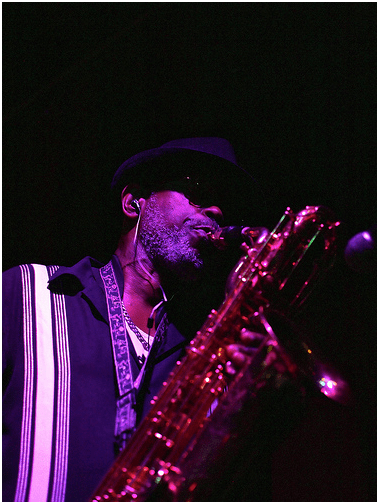
Roger Lewis. Borrowed from fantailmedia at Fiickr.
8:30-10:30am, Music and YouTube: Sound, Media, and Sociality
Session 4-5 SEM A: Astor Grand A
Sponsored by the Popular Music Section (PMSSEM)
Monique M. Ingalls (University of Cambridge), Chair
Fabian Holt (Roskilde University, Denmark), “Social Media Video and the Festivalization of Electronic Dance Music in Europe”
Monique M. Ingalls (University of Cambridge), “Worship on the Web: Building Online Religious Community through Christian Devotional Music Videos”
Patricia G. Lange (California College of the Arts), “In Synch with Lip-Synching: A Riff on Teen Sociality”
Trevor S. Harvey (University of Iowa), “Dulcimerica: Mediating a Musical Community through Video Podcasts”
8:30-10:30am, Musical Propertization in the Digital Age:
Session 4-7 SEM A: Astor Ballroom 1
From “Piracy” to Ontological Politics
Andrew Eisenberg (University of Oxford), Chair
Andrew Eisenberg (University of Oxford), “M-Commerce and the (Re)making of the Music Industry in Kenya”
Aditi Deo (University of Oxford), “Folk Music in the Digital Realm: Public Commons or Cultural Property?”
Alexandrine Boudreault-Fournier (University of Victoria), “Pirates of the Caribbean: Music Circulation in Late Socialist Cuba”
Henry Stobart (Royal Holloway, University of London), “Shifting Properties: Ownership, Informality, and the Digital Music Video in Bolivia”
9:00-noon, The City is a Medium
Session 4-16 AMS/SEM/SMT S: Edgewood
Alexander Rehding (Harvard University), Chair
Veit Erlmann (University of Texas at Austin), Respondent
Benjamin Tausig (New York University), “The City is Burning: Informal Musical Commerce at Urban Protest Movements”
Tiffany Ng (University of California, Berkeley), “An Instrument of Urban Planning: Bells and the Sonic Remediation of Community Space in the Southeastern United States”
John Melillo (University of Arizona), “Phatic Emphatic: Listening to New York City in Downtown Poetry and Punk”
Peter McMurray (Harvard University), “Heterophony of a Metropolis: Rites of Passage and Contestation Turkish Berlin”
10:45-12:15pm, Feminist Approaches to Music and Sound Technologies: History, Theory, and Practice
Session 4-29 SEM A: Astor Ballroom 1
Sponsored by the Section on the Status of Women (SSW)
Tara Rodgers (University of Maryland), Chair
Tara Rodgers (University of Maryland), “Feminist Approaches to Electronic Music and Sound Historiography”
Charity Marsh (University of Regina), “Reluctant Hip Hop Warriors”: Feminist Approaches to Hop Hop Community Projects”
10:45-12:15pm, Intersections of Ethnomusicology with Other Fields
Session 4-31 SEM S: Bayside B
Theresa Allison (University of California, San Francisco), Chair
Francesca R. Sborgi Lawson (Brigham Young University), “Has Ethnomusicology Met Its Calling? An Ethnomusicologist’s Response to Biomusicology”
Monique McGrath (University of Toronto), “What Does Ethnomusicology Have to Say to Music Therapy?”
Jeremy Day-O’Connell (Knox College), “‘Motherese’ and Universals of Musical Pitch
10:45-12:15pm, Sounds and Space in New Orleans
Session 4-35 SEM S: Maurepas
Marié Abe (Boston University), Chair
Danielle Adomaitis (Florida State University), “Sonic Fixtures and Drifting Buskers: Soundmarks of New Orleans and the Street Musicians Who Construct Them”
Zarah Ersoff (University of California, Los Angeles), “Treme’s Aural Verisimilitude”
Julie Raimondi (Tufts University), “Music, SEO Agency, and the Social Construction of Space in New Orleans
2:00–6:00pm, AMS Ecocriticism SG and SEM Ecomusicology SIG Outing:
Barataria Preserve Hike
Share this:


Current Top Posts





April 2021

January 2020

November 2019

October 2019

August 2019

April 2014

November 2017

March 2015

December 2017

October 2015
 Sounding Out!

Recent Comments