
Listening to the City of Light: An interview with Sound Recordist Des Coulam

How should we take account of, question, describe what happens every day and recurs every day: the banal, the quotidian, the obvious, the common, the ordinary, the infra-ordinaire, the background noise, the habitual?
I’m meeting with the British sound recordist Des Coulam at the brasserie La Coupole on the Boulevard de Montparnasse in Paris. “Just imagine…this place opened in 1927. If you installed a microphone in the middle of this room in 1927 and if it was still there today, how many interesting things could you have recorded in this place? It just begs belief, doesn’t it? François Mitterrand, Picasso, Ford Maddox Ford, Beauvoir, Man Ray, they were all here. They all echo in these walls.”
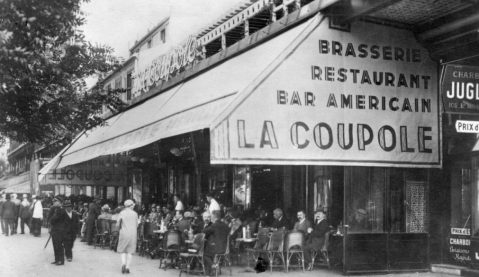
Early photo of La Coupole, date unknown
The sound inside La Coupole by Des Coulam
Des Coulam has been capturing the urban soundscape of Paris for almost ten years. Paris is a city full of mirrors, replicating itself through various mediums. A great archive of the city and its streets, boulevards, arcades and cafés has been written, painted, filmed and photographed throughout the 19th and 20th centuries. However, its aural history is less documented.
“All the archival sounds you find of Paris are adjunct to pictures, so you’ve got television pictures, you’ve got film, you’ve got very few actual recordings of Paris, and I wanted to capture the contemporary soundscape of the city and archive it for future generations to explore, study and enjoy,” explains Coulam. “It’s only on the last few seconds on our historical clock that we’ve been able to capture and archive sounds, so most of our sonic heritage is passed by completely unrecorded. We can get an idea of what nineteenth, eighteenth, and seventeenth century sounds were like from literature and from art in some cases. But the fact is we can’t actually listen to them. All the sounds we hear came from somebody’s imagination.”
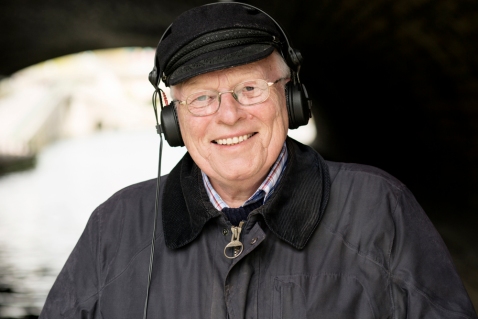
Des Coulam, Image courtesy of interviewee.
Coulam’s methodical approach and commitment to the task of recording the sounds of Paris, almost on a daily basis, is helping to create the first comprehensive sound archive of the city. These sounds constitute the Paris Soundscapes Collection and are being archived in the British Library of London.
“Memorable recordings are not limited by your equipment, only by your imagination”
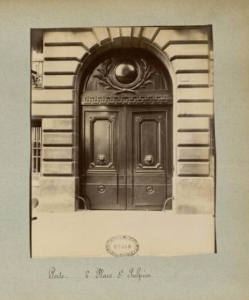
Porte 6, Saint Surplice, Courtesy of Interviewer
“And people forget that,” laments Coulam. “I mean, listening is an art and it’s an art that must be learned. You have to practice, practice, practice to listen. But once you master the art it opens up an all-new world. Because for me, if you give sounds the opportunity to breathe and to speak, they all have a story to tell. We walk along the street and hear a sound and you think: what is that? And you can create a story the sound is telling you. You might hear one of these big Parisian doors bang. What’s behind that door? How many interesting people have walked through that door? And you start to see or experience the place differently.”
Sounds inside l’Eglise Saint-Gervais-Saint-Protais (w/creaking wooden door) by Des Coulam
Des Coulam is of the opinion that the ability to tune into sounds with an inquisitive and imaginative mind can provide better recordings than the most expensive equipment. It’s a skill that he has been developing for over 50 years. “I can tell you the exact day. It was the 25th of December, 1958 when I woke up on Christmas morning and found a tape recorder. And if you had asked me to write a list of 100 things I wanted for Christmas, the tape recorder would not have featured in it. But there it was and I fell in love with it instantly and stayed in love with it ever since. It turned something on in my head that stayed with me all my life. I was 10 years old and now I’m almost 70 years old…I don’t know what I would do without it. I would probably just curl up and die or something…Because now it consumes all of my life. I work seven days a week, but it never feels like work. It’s just fun.”
An aural flâneur in a changing city
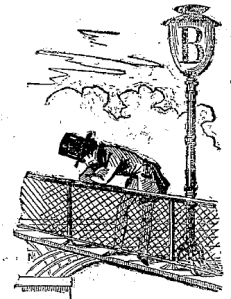
Image from Louis Huart, Physiologie du flâneur (1841)
“Some of my best recordings have come serendipitously when they are not planned.” Most of the time Coulam doesn’t adhere to a strict pathway through the streets of Paris. He follows the background city sounds as someone who follows a river stream. He describes himself as an aural flâneur. The term flâneur (stroller, idler, walker) dates back to the 16th century and was made popular by Walter Benjamin in his 1935 essay “Paris, Capital of the Nineteenth Century” in The Arcades Project. “I’m doing exactly what the 19th century flâneurs did. Observing, that’s all I do. But I observe through sound rather than visually,” says Coulam. “The one thing the flâneur had was time. They had the time to stroll around the streets and observe the everyday life. But in my case I observe listening.” According to Aimée Boutin, the author of City of Noise: Sound and Nineteenth-Century Paris, it is in the writings of Balzac, Louis Huart and Victor Fournel that the flâneur emerges as an attentive listener, an eavesdropper and collector of stories who views the city as a musical score and as a cacophonous/harmonious concert.
19th century images of the flâneur predominately evoke a white male figure of means and privilege who observes and listens to the city from a position of detachment towards the crowd. He is invested in his own anonymity and imagines himself cultivating a sense of neutrality and “objectivity.” Coulam’s active listening practices depart from this perspective by challenging his perspectives and owning the subjectivity of the recording and archiving process. “The way you hear sound changes depending on the circumstances and also the way you interpret sound is different. You and I could walk down the same street and hear it differently. I can walk down the same street twice and hear it differently. There are lots of sounds that I will hear and there are lots of sounds that I won’t hear.” In a recent blog entry Coulam writes that while being “aware that sounds don’t exist in a vacuum, I am always thinking about the social, cultural and historical context of the sounds I find and that has taught me how to explore and appreciate the rich history, complexity and diversity that is Paris.”
Besides his own recordings of the Parisian soundscapes, Coulam has been adding new aural narratives of the city in the series “Paris – A Personal View” inviting guests who live in Paris to visit a place in the city that has a special meaning for them. In this series, Coulam often features the city of the contemporary flâneuse, a radically different form of flâneurie through the steps of the walking woman. In the audio bellow, Monique Wells, an expert on African Diaspora in Paris and founder of the non-profit association Les Amis de Beauford Delaney, explores her favorite place in the city – the Jardin du Luxembourg.
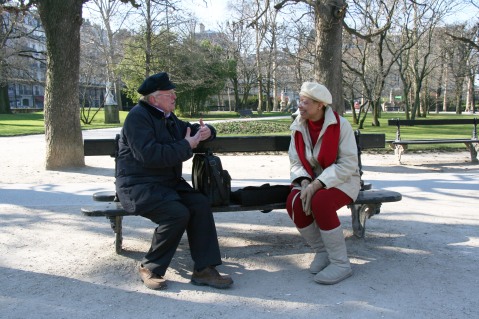
Des Coulam and Dr. Monique Wells, image courtesy of interviewee
Monique Wells, Jardin du Luxembourg, “Paris – A Personal View” Series by Des Coulam
This is a particular time to be listening to the city as a new plan to expand the metropolis of Paris is on its way. “Paris is on the cusp of a huge change. If we look at the history of Paris, it is a history of circles. So you get start with the Romans who invaded and camped out on the Île de la Cité. What did they do? They built a wall around it. And over the years as Paris expanded more walls have been built around the city until today. Now, you’ve got this wall of traffic – the périphérique – and everything within that is Paris and everything without is the suburbs. Nicolas Sarkozy decided, when he was president, that he was going to demolish this invisible wall between Paris and the suburbs. So he gave birth to the Greater Paris Project which is now going ahead. So over the next 10, 20 or 30 years the visual landscape of the city will change and also its sound landscape. And this is a perfect time to capture that change. I won’t live long enough to see it all but I’m already seeing some of it. And what you have right now is that some sounds of Paris are actually disappearing, some are about to disappear, some have stayed remarkably the same and new sounds have appeared.”
Sounds around the Pont National (near Boulevard Périphérique) by Des Coulam
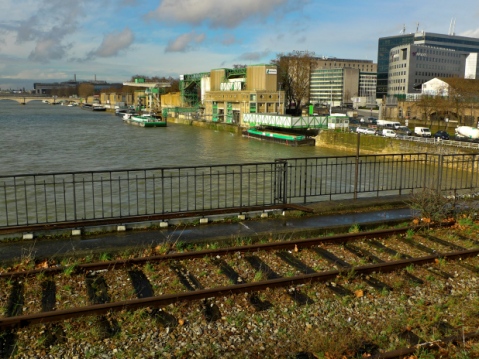
Pont National by Des Coulam
The Vanishing Sounds of Paris
The changes in the visual landscape of Paris and the modernization of its infrastructures will cause a significant change in its soundscape. For instance, Coulam dedicates a lot of his time to recording the changes of the subterranean and aerial soundscape of the Parisian metro lines. “The sounds of the Metro are changing dramatically. If you imagine the sounds of the Paris Metro, you immediately get this picture of the sort of 1950s black and white film, you can hear the sounds of the train rattling over the lines. It’s gone, it’s all completely gone. The last of those trains disappeared in 2012. And I knew this was happening so I recorded a lot of metro line 5 where the old trains were. So I’ve got a stack of recordings of those because nobody else was doing it.”
Sounds of Line 5 at Quai de la Rapée by Des Coulam
“That lovely rattle, these clanking rattling sounds. Just what you imagine it to be!” The old trains on line 5 are now being replaced by modern models with a quieter sound. Also, the trams that covered the city in the 1930s were later substituted by motorized buses. “There are no trams in the center of the city but you’ve got them on the periphery now. There are 8 tram lines. On a lot of the routes they actually go through lot of pains to reduce the amount of noise the tram makes by putting grass down between the tram lines to absorb the sound. So that’s a completely different soundscape than you would have had in this case in the 1930s.”
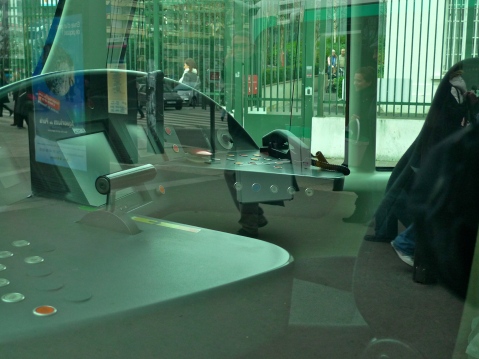
Tram by Des Coulam
Inside a tram on Line T2 from the station Henri Farman to Porte de Versailles by Des Coulam
Coulam has been recording the sounds of the Gare du Nord, one of the six main railway stations in Paris, that is going through some transformations right now. A sign outside the station in the construction zone promises “a brighter and more practically designed hall for enlightened travelling”. The distinctive soundscape of the Gare will certainly change. A new type of pavement is enough to alter the echoing sounds made by footsteps and rolling suitcases.
Inside the Gare du Nord; October 2016
“But on a more human level,” says Coulam, “the street criers, the vagabond man, the knife grinders, people like that who used to come around shouting in the street are completing gone. The only thing you find now are the market traders in the market stores, but you don’t find any of these tradesmen in the streets of Paris.”
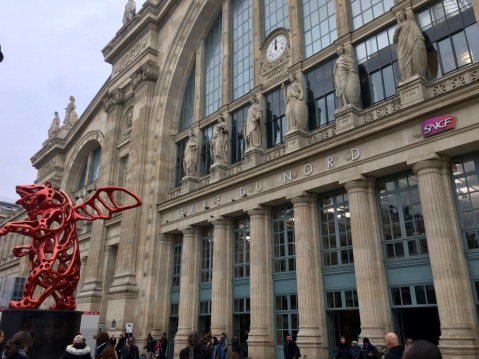
Gare du Nord by Des Coulam
“An attempt to exhaust a place in Paris” in sound
“The only time you really notice the urban soundscape is when isn’t there,” remarks Coulam. On the day we meet, Montparnasse is eerily quiet. There is little traffic and only a few pedestrians are strolling along the Boulevard. “The soundscape you hear is not the normal Montparnasse because this is August and everybody is away on holiday, so you are immediately struck by the relative quiet around here.” It might be difficult to find places of quiet in a city like Paris during the other eleven months of the year.
But even the noise, the chatter and the rumble are important parts of the urban soundscape. “The biggest challenge I face recording the soundscape of Paris is the sound of traffic, and I long ago decided that you couldn’t ignore it. And in a sense, why should you? Because it’s an integral part of the soundscape, so to ignore it is a sort of cheating, really. So, I decided to embrace it and I started to deliberately record traffic and it was absolutely fascinating!”
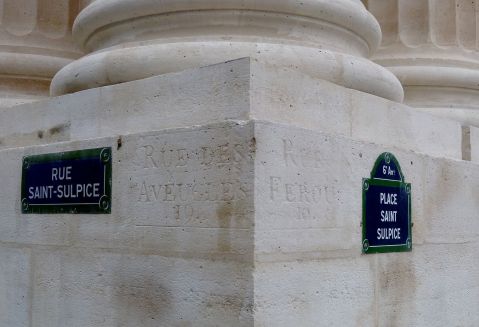
Place Saint Sulpice, courtesy of Wikicommons
The author and filmmaker George Perec once sat down for three days in Saint-Sulpice Square to write down all the non-events around him. “What happens, when nothing happens other than the weather, people, cars, and clouds?” asked Perec. In the same vein, Coulam continues recording the sounds that constitute the backdrop to everyday life and through attentive listening, he weaves the sound tapestry of the city of Paris. “You sit on a Parisian green bench in a busy narrow pavé street and just let the street walk past you. You will hear fabulous sounds.”
“An attempt to exhaust a place in Paris” in sound (Café de la Mairie, Place Saint-Sulpice) by Des Coulam
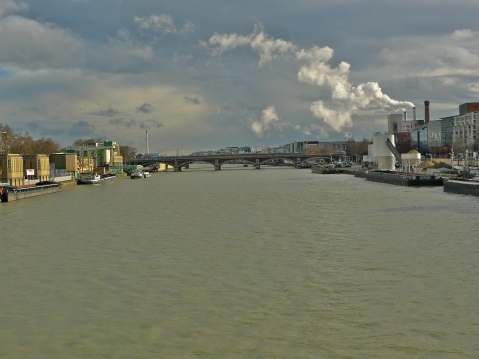
Pont National from the Pont de Tolbiac by Des Coulam
You can hear Des Coulam’s collection of Parisian soundscapes at Soundlandscape or follow him on twitter.
—
Featured Image: Line 5 at Quai de la Rapacca, Image by Des Coulam
—
Carlo Patrão is a Portuguese radio artist and producer of the show Zepelim. His radio work began as a member of the Portuguese freeform station Radio Universidade de Coimbra (RUC). In his pieces, he aims to explore the diverse possibilities of radiophonic space through the medium of sound collage. He has participated in projects like Basic.fm, Radio Boredcast, and his work has been featured in several international sound festivals and has also been commissioned by Radio Arts (UK). He is currently working on a radio show for the Portuguese national public radio station RTP. In addition to his work in radio, he has a master’s in clinical psychology
—
 REWIND! . . .If you liked this post, you may also dig:
Playing with Bits, Pieces, and Lightning Bolts: An Interview with Sound Artist Andrea Parkins — Maile Colbert
(Sound)Walking Through Smithfield Square in Dublin— Linda O’Keeffe
Sounding Our Utopia: An Interview With Mileece— Maile Colbert
Share this:

Spaces of Sounds: The Peoples of the African Diaspora and Protest in the United States

The slaves who were ourselves had known terror intimately, confused sunrise with pain, & accepted indifference as kindness. – Ntozake Shange, Sassafrass, Cypress & Indigo
Sanford. Baltimore. Chicago. Staten Island. Charlotte. Cleveland. Oakland. Austin. Los Angeles. The Bronx.
Despair in the United States is nothing new. It is neither an emotion confined to the neatly-drawn borders of this land nor is it experienced more acutely by any one group of people. The vast discrepancy between the results of the popular vote and the electoral college’s selection of Donald Trump as forty-fifth president of the United States amply reveals despair to be an sentiment viscerally experienced by a wide swath of people in this country, irrespective of race, ethnicity, gender, class, or sexuality.
Such despair has been ignored, however, by those who have caused and who continue causing the suffering of peoples of both indigenous and, later, African descent. We are taught that men from what we now recognize as Europe arrived in this hemisphere in the late fifteenth century, settling initially on a strip of earth in the Caribbean Sea that would become the first site of massacre and genocide, acts which unleashed, if one lends credence to the narrator of Junot Díaz’s The Brief Wondrous Life of Oscar Wao, the fukú, the “Curse and the Doom of the New World.” The narrating voice himself characterizes the curse not in the actions of death, but in the “screams of the enslaved, [..] the death bane of the Tainos, uttered just as one world perished and another began […]” (1). The fukú resonated through the sounds that these human beings made.

Image of the People’s History of Telegraph Avenue mural, designed by Osha Neumann, painted in 1976, restored and enlarged in 1999, at the corner of Haste and Telegraph in Berkeley. Image by Flickr user nursenicole329 (CC BY-NC-ND 2.0).
.
Not a house in the country ain’t packed to its rafters with some dead Negro’s grief. – Toni Morrison, Beloved
The State’s unwillingness to hold George Zimmerman responsible for the murder of Trayvon Martin–and its subsequent refusal to hold any police officer accountable for the hundreds of deaths they have caused–has galvanized the United States in the last four years. Hundreds of thousands of men, women, and children alike have taken to the streets, as #BlackLivesMatter, a true and succinct sentence, has roused ghosts of the past who have never left us, who have always been present, accompanying us on this journey.
This post is not a reflection of the music that has served as a soundtrack to these protests, though there are articles that have done so, such as this one, this one, and this one. These pieces do not include the extensive list of articles that address perhaps the most widely-viewed piece of protest music thus far, Beyoncé’s “Formation” video, a scarce offering of which can be found here, here, and here. Instead, it is an essay inspired by the sounds of the protesters themselves, the noises made by the minds, bodies, and spirits of the men, women and children who have taken to public spaces and sometimes commercial zones in order to confront and object to the protections applied to those who kill men, women, and children, often of African descent.
Listen to Los Angeles in 2013. . .
. . .to Houston in 2014. . .
. . .to New York City in 2014. . .
. . .and to Charleston in 2015. . .
. . .
 In his pivotal Cities of the Dead: Circum-Atlantic Performance (1996), Joseph Roach characterized New Orleans and London as urban centers marked by two simultaneous, consistent acts: appropriation by white people and white power structures of the cultures of the peoples they have violently marginalized, and then, at the same time, a clear distancing from those very cultures and peoples. Although now in its twentieth year of publication, Roach’s theorization of the circum-Atlantic world remains vastly underutilized in scholarly circles—particularly in sound studies, where it should have special resonance– and has become increasingly critical to our understanding of this historical moment, as it “insists on the centrality of the diasporic and genocidal histories of Africa and the Americas, North and South, in the creation of the culture of modernity” (4). With this configuration, Roach accomplishes two feats simultaneously: first, he decentralizes the United States as the focal point of studies about the so-called New World, instead, placing on equal footing all of the histories and cultures of the Americas. For this scholar of the literatures of the Americas, particularly those written by men and women of African descent, Roach’s is a critical gesture that facilitates comparative work across national boundaries.
Second, and most importantly, Roach emphasizes the role of murder, rape and the destruction of whole cultures indigenous to the American and African continents in the foundation of the nations of this hemisphere. Ta-Nehisi Coates is perhaps the most recent writer to remind us that the most potent legacy of such modernity, racism, “is a visceral experience, that is dislodges brains, blocks airways, rips muscle, extracts organs, cracks bones, breaks teeth” (Between the World and Me, 10). That which we know as “modernity,” itself a deeply flawed construct that remains in need of serious revision, was born of broken backs, mutilated limbs, hushed middle-of-the-night tears of indigenous and African peoples. Moans and sighs, whispers and wails, cries and screams, they are the musical score of this hemisphere’s American experiment.
The slaves who were ourselves aided Indigo’s mission, connecting soul & song, experience & unremembered rhythms –Ntozake Shange

Harriet Tubman Memorial Monument, Harlem, Image by Flickr User John Mannion (CC BY-NC-ND 2.0).
In the face of a populace accustomed to ignoring the wailing of mothers who have buried their children, who have disregarded their dignity and the weight and shape and taste of their loss, men, women, and children have mobilized. They have made manifest that which communities of peoples of African descent have spoken of and have documented since the founding of this nation. As Roach has utilized the term performance, the literal rituals of mourning by communities of African heritage not only commemorate those who have recently passed but they also invoke the spirits of those who have long borne witness to such violence. Throughout his study, Roach distinguishes between a European heritage that begins to segregate the living from the dead during the Enlightenment (50), and more traditional cultures, particularly African ones, where spirits mingle with their human counterparts. While written texts may not, and often do not, adequately commemorate the loss of lives deemed marginal to the larger society, performance itself – chants, wails, songs – serve not only to memorialize but also as gestures of restoration.
Protesters and activists are no longer satisfied with the well-established decree that we should wait for a distant moment for a more perfect realization of the United States’s many promises. No, instead, they have identified this as the historical moment in which those oaths are to be fulfilled. They have walked, marched, and stomped through streets, on sidewalks, parks, churches, filling malls and transportation hubs with their bodies as testimony. They have repossessed and redefined spaces once thought of as simply neutral, transparent space as Katherine McKittrick refers to it in Demonic Grounds, revealing the fault-lines of difference based on class, race, gender, and sexuality in this society (xv). They have done so manipulating sound, both recycling chants used through the decades to protest injustice and, at times, simply occupying space, without a word uttered.
The silence waged in the 2014 protest in Grand Central Terminal after the non-indictment of Daniel Pantaleo in the murder of Eric Garner does not represent erasure, but rather a purposeful demonstration of the willful humanity of those unwilling to forget.
They quiet themselves. They replace the sounds of unfettered pain and grief with its absence, until all that you hear is the mechanized announcement of train schedules. The contrast is stark: the moment highlights what Claudia Rankine has identified as the condition of black life in Citizen, that of mourning (145), against a backdrop of technological advancement, that which has been built on the backs of and through the physical, emotional, and intellectual labor of black life. Here, the members of this community enact what has been called a “die-in”: simulating the physical positioning of bodies in caskets, they force onlookers to confront an uncomfortable truth about the history of this country and of the nations of this hemisphere.
All of us walk on land soaked in the blood of those who have made our lives easier and more convenient. The men and women at Grand Central make manifest what Roach terms surrogation: in the chasm left by death, they offer a replacement, one that both evokes those who have died and disturbs the complacency of survivors themselves (2). The performance serves to confront those who dare say that the violence of genocide and enslavement of past generations should remain in the past; no, these men and women and the spirits they invoke respond. Time is not linear, as we have been taught. For past, present, and future are temporal constructs used to service oppression and domination; this will no longer do.

From Kara Walker’s 2014 exhibit, “A Subtlety,” at the Domino Sugar Factory in Brooklyn (CC BY-NC 2.0)
Here, in this here place, we flesh; flesh that weeps, laughs; flesh that dances on bare feet in grass. Love it. Love it hard. – Toni Morrison
We bear witness to the reclamation of grief, of lives cut short at the hand of a government charged with protecting those human beings who inhabit its borders, at least theoretically. While, as Roach surmises, “memory [may be] a process that depends crucially on forgetting” (2), we hold space to those dedicated to not forget, to instead excavate the silences, breathe life into those histories, remembering that the stories we have heard, the pages we have read, were once human beings. We create “counter-memories” as challenge and testimony, as a sacred pledge to those who are no longer present physically in this realm (Roach 26). We recall the cultures and practices of those who lived before the written form was a tool of exclusion, when remembrance was a practice of community.
American culture, in the hemispheric sense, incorporates all such rituals, across generations; as Roach notes, it is performance that “works on behalf of living memory, by bringing the parties together as often as necessary” (138). No longer consigned to the past, the spirits of those killed by the state are revived, their existences in the human plain celebrated. They are not defined by how they died but instead by how they lived. While literacy of the written form can separate, sound and gesture more effectively bypass the fictions of difference based on race, ethnicity, gender, class, and sexuality. Cities of the Dead amplifies how “performance can articulate what otherwise may not be properly communicated” (161).
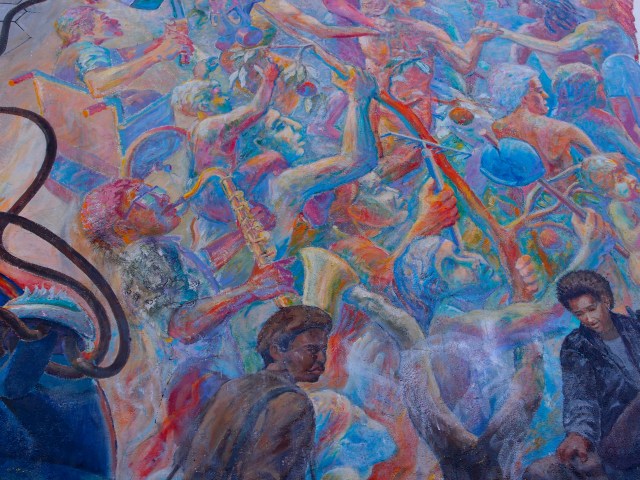
Image of the People’s History of Telegraph Avenue mural, designed by Osha Neumann, painted in 1976, restored and enlarged in 1999, at the corner of Haste and Telegraph in Berkeley. Image by Flickr user nursenicole329 (CC BY-NC-ND 2.0).
It’s so magic folks feel their own ancestors coming up out of the earth to be in the realms of their descendants – Ntozake Shange
We say their names. We say their names: Eleanor Bumpers. Anthony Báez. Sean Bell. Aiyana Stanley-Jones. Tyisha Miller. Oscar Grant. Rekia Boyd. Trayvon Martin. Tanisha Anderson. Renisha McBride. Eric Garner. Yvette Smith. Tamir Rice. Sandra Bland. Freddie Gray. Korryn Gaines. Akia Gurley. Alton Sterling. Philando Castile. Micah Jester. Deborah Danner. Walter Scott. Michelle Lee Shirley.
The list, tragically, grows, and still we say their names. We do so as an act of remembrance. As an offering. As peoples of African descent around the world do in times of ceremony, in the name of ritual. We remember those who have come before us, who have birthed this current historical moment of awakening here in the United States. We say their names.
And, as the sounds of their names said aloud echoes, we pray. Ashé.
—
Vanessa K. Valdés is associate professor of Spanish and Portuguese at The City College of New York; she is the editor of Let Spirit Speak! Cultural Journeys through the African Diaspora (2012) and The Future Is Now: A New Look at African Diaspora Studies (2012) and the book review editor of sx salon. She is the author of Oshun’s Daughters: The Search for Womanhood in the Americas (2014). The title of this essay is inspired by Josh Kun’s Audiotopia: Music, Race, and America, where he writes that his book is “focusing on the spaces of music, the spaces of songs, and the spaces of sounds” (25).
—
Featured Image “Freedom Marchers” by Flickr User Keoni Cabral, Photoshop processed digital image from the Martin Luther King Center in Atlanta, Georgia (CC BY 2.0).
—
REWIND! . . .If you liked this post, you may also dig:
SO! Reads: Shana Redmond’s Anthem: Social Movements and the Sound of Solidarity in the African Diaspora—Ashon Crawley
Music Meant to Make You Move: Considering the Aural Kinesthetic–Imani Kai Johnson
Black Mourning, Black Movement(s): Savion Glover’s Dance for Amiri Baraka–Kristin Moriah
Something’s Got a Hold on Me: ‘Lingering Whispers’ of the Atlantic Slave Trade in Ghana–Sionne Neely
Share this:




Current Top Posts





April 2021

January 2020

November 2019

October 2019

August 2019

April 2014

November 2017

March 2015

December 2017

October 2015
 Sounding Out!
Recent Comments