
“I didn’t say look; I said listen”: The People’s Microphone, #OWS, and Beyond
DOI: https://doi.org/10.59350/ks1pf-z7v73
On a Tuesday right after Valentine’s Day in 2011 thousands of people marched on the Wisconsin capitol and good-naturedly, but firmly, took over the building. They came for a hearing scheduled by the state government’s Joint Finance Committee, and as crowds swelled out on the snow-covered lawn a long line of citizens formed indoors, waiting their turn to address the Committee and give brief remarks about proposed changes to the state budget.
Up for discussion was the Governor’s proposal to cut public employees’ benefits and eliminate their collective bargaining rights, and having gotten word of widespread outcry, the co-chairs of the Committee had released this statement:
We welcome public participation in our representative democracy. Unlike two years ago when Democrats did not hold a public hearing for the last budget repair bill, we want to listen to individuals’ concerns. Due to the large number of participants, each person will be given up to 2 minutes to address the committee. This will ensure that everyone has their voice heard.
Late that night, the Committee cut off public testimonies in spite of a line still stretched down the hall. One group refused to leave and staged an occupation of the capitol building in protest of both the bill and the foreclosure of public input.

Over the next few weeks, people slept overnight on the marble floor while bigger groups assembled there each day, reportedly in numbers reaching between 70,000 and 100,000. Many carried signs backing public sector workers, but the overall majority showed their solidarity with the protest simply by wearing bright “Badger red” hats, coats, sweaters, and shirts, University of Wisconsin memorabilia now transformed into signs of political support for all of the state’s public institutions. The view from upper levels of the capitol rotunda struck a dramatic portrait as people ringed the center of the room facing inward. One person who spent a lot of time there told me he liked to call it the “eye of the storm.”
Domed spaces tend to be noisy. Sound bounces off of the curvature of the ceiling at so many different angles that what’s audible on the floor quickly takes on so many threads of reverberation that a single voice gets easily obscured. In the Wisconsin capitol, handheld electric bullhorns became instrumental for leading chants and making announcements, but people found they didn’t always do the trick. In one reported instance, a megaphone still wasn’t enough for one woman’s voice to be heard across the rotunda, and so she broke her announcement into fragments and waited in between them as people standing near her repeated each one in loud unison. “State Senator Dale Schultz [repeated]…has withdrawn his vote for the bill [repeated].”
Today that variation of call and response is widely regarded as an iconic feature of the Occupy Wall Street campaign, where it has been likened to liturgy, to brainwashing, to a game of “telephone,” to Garrett Morris’s “News for the Hard of Hearing” bit from Saturday Night Live, and to Monty Python’s Life of Brian.
.Yet also, as the practice was manifest at lower Manhattan’s Zuccotti Park, it has attracted great interest and variety of comment regarding how it might reflect the values and objectives of those gathering in downtown New York City. It was purported to unite a crowd; it helps ensure that “no one is left to feel isolated and alone;” it accelerates the exchange of information because it “forces everyone to edit group public speech down to the essentials;” it slows the campaign and gives it valuable time to develop; it is “a lesson in the obstinacy required for intentional, durable citizenship.”

Although one need only consider the depth of history stretching out prior to the invention of electric amplification to be certain that the method of communication isn’t new to this year nor even to this century, the question of its recent emergence remains important for identifying possible affinities across boundaries that might otherwise divide protest actions. Last winter in Wisconsin, after transmitting the message about Senator Schultz, the demonstrators apparently didn’t carry on with it the way people did in lower Manhattan, but one need not stop at noting that this proves the technique wasn’t invented this fall in New York. In the capitol building, members of the Wisconsin public instituted a different audio innovation that reflects a shared sense of purpose between the two protest actions. And if one follows a similar connection recently posited in Rolling Stone Magazine between Occupy Wall Street and factory takeovers in Argentina, one might bring into focus a call and response operating across even broader stretches of time and space.
In Wisconsin, the civil disobedience broke out immediately after lawmakers ended the budget hearing with citizens still waiting to speak, and in the following days an alternative system of public testimony took shape on the floor of the capitol rotunda. According to one member of the collective who facilitated its operation, the forum emerged in conjunction with a circle of drummers, who, during pauses in their playing, invited individuals to sequentially address all those gathered using megaphones carried in by the public. Soon after moving up to a single-speaker amplifier that had been provided on friendly loan, some of the drummers pooled their money and purchased a 70-watt (RMS) portable public address system, an additional extension speaker, and a Shure SM58 for, according to one, “whomever wanted to speak, ensuring their voices were heard, never cutting anyone off or denying anyone the right to speak.” With what I submit as telling coincidence, they called the apparatus “The People’s Mic.”
Here is a clip that came up when I used Google to search with the terms “people’s microphone Wisconsin video.”
.
.
There are important contrasts between this platform for testament and the call and response technique that has garnered recent notoriety under the same name. In its Zuccotti Park incarnation, the people’s microphone is often celebrated as a clever workaround designed in response to the prohibition against using electric sound amplifiers in public without a permit. However, its key feature is the reciprocity it demands between the person speaking “into” the microphone and others gathered in the space. In this way it not only attenuates the hierarchy usually exerted by one amplified person over the soundscape, but it also fosters the pursuit of accord within the group overall, because the method’s very functioning relies so heavily on the crowd’s ongoing willingness to participate:
.
.
In Wisconsin, the People’s Mic did provide citizens a platform otherwise reserved for government and union officials (and the celebrities of their choosing), but individual testimonies were still unidirectional and the system proceeded without the same means of direct and immediate exchange, at least in the realm of sound. As we see in these clips, in Wisconsin, the People’s Mic required the largest number of people to keep quiet for the longest amount of time. Sometimes people had to keep especially quiet because the sound of chanting from outside was bleeding into the space.
.
.
However, while much of the discussion of the people’s microphone constructed in Zuccotti Park centers on its horizontal, consensus-oriented nature, why reduce the method’s oppositional potential to a matter of challenging government’s increasing control over the audible city? Fortunately, as though taking a more direct cue from the People’s Mic as it was instigated in Wisconsin, people have recently begun pushing the call and response version adopted in New York past the confines of community building, realizing its practical potential to channel a message and grab the attention of leaders far too often unavailable, unwilling, or uninterested in taking time to—as the Wisconsin Joint Finance Committee had grandly promised—“welcome public participation in our representative democracy.”
The following clips show how the people’s microphone in its new iteration has been used to satisfy the goal more explicitly associated with its Wisconsin variation—that of getting heard. The first comes from an October 25,2011 meeting of the New York City Panel for Education Policy, where a crowd packing a public forum forced board members to relinquish control of the proceedings and allow a statement conveyed on behalf of parents and teachers.
.
.
And here in a clip from a November 3, 2011 breakfast meeting at the upscale Union League Club in Chicago, people used the technique as it is now most widely associated with the New York City campaign and directly reconnected it to the efforts in Wisconsin, not only in the sense that they focused their amplifying echo at a particular intended audience, but also by virtue of whom they chose to address:
.While some might take exception to these two examples as uses of the people’s microphone without enough reciprocity in mind, I have some confidence that viewers will look upon the second clip, especially, as an overdue carriage bearing a bit of just that. But more importantly to the issue of how the different iterations fit together—Madison, New York City, and beyond—both of these scenes are peaceful, attention-grabbing, and they appear to stem from no more seditious an effort than to urge democratically elected leaders to entertain the voices of their constituents even, and especially, if they aren’t using a “corporate microphone” to speak. Now, with New York police having cleared Zuccotti Park and thrown the Wall Street campaign into yet another bout with uncertainty, it will be especially interesting to find out where, how, and by whom, the people’s microphone is picked up and repurposed again. In Wisconsin, a drive to recall Governor Scott Walker just got underway, and if demonstrations break out again at the capitol, I expect the portable PA will be back up and running. How will people use the people’s mic this time? How will they speak to those recently evicted from Zuccotti Park?
—
Ted Sammons is completing a doctorate in anthropology at the Graduate Center, CUNY.
—
Share this:

How Svengali Lost His Jewish Accent
DOI: https://doi.org/10.59350/r6tnh-y4792
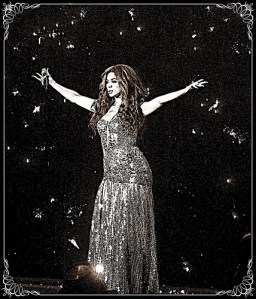
The pop juggernaut Beyoncé recently made headlines when she confessed her plans for world pop domination to an AP reporter. She said:
“I am starting my company, my label. I want to create a boy band. I want to continue to produce and do documentaries and music videos. I eventually want to start directing for other artists.”
While Beyoncé’s business ambitions are hardly newsworthy—like many a multitasking pop idol, she helms several successful ventures, including a line of perfumes and a ready-to-wear fashion line—the announcement that she wants to be a musical impresario puts Beyoncé in more relatively selective company, especially as a woman. “Beyoncé as music industry boy band Svengali?” asked Amy Sciaretto, a tad incredulously, on PopCrush, “Yes, it’s true.”
In pop music writing, the idea of the Svengali pops up with regularity, usually to describe a man obsessively managing the careers of his younger, often vulnerable, charges. Classic examples include Phil Spector and the Ronettes. Berry Gordy and Diana Ross. Malcolm McLaren and the Sex Pistols. Lou Pearlman and the Backstreet Boys. To call Beyoncé a Svengali is both to insert her into this overwhelmingly male trajectory and to associate her, rather unflatteringly, with a long tradition of the producer-control freak, officiously meddling while passing himself off as his protégé’s protective sponsor.
Both associations, in fact, take us back to the origin of the term Svengali, from Trilby, an 1894 bestseller by the English writer and illustrator George Du Maurier. In that work, Trilby, a young Englishwoman of great likability but dubious honor (she is the daughter of a barmaid, and occasionally works as an artist’s model), is living la vie bohème in Paris, where she encounters Svengali, a sinister but charismatic musical genius who uses his mesmeric powers to turn her into the singing sensation of the European concert stage. Trilby can only sing, however, under Svengali’s spell—she must literally look at him while she performs—and so when one day he expires, mid-performance, of a weak heart, she loses her own vocal powers and later dies. The cause of her death is partly shock, but partly unrequited love. For although Svengali, a rather hideous Jew, had vainly sought Trilby’s affections, which she could only return when in hypnotic thrall to him, Trilby has long been in love with Little Billie, the handsome scion of a wealthy English family, who cannot marry her because she is tragically beneath him in rank.
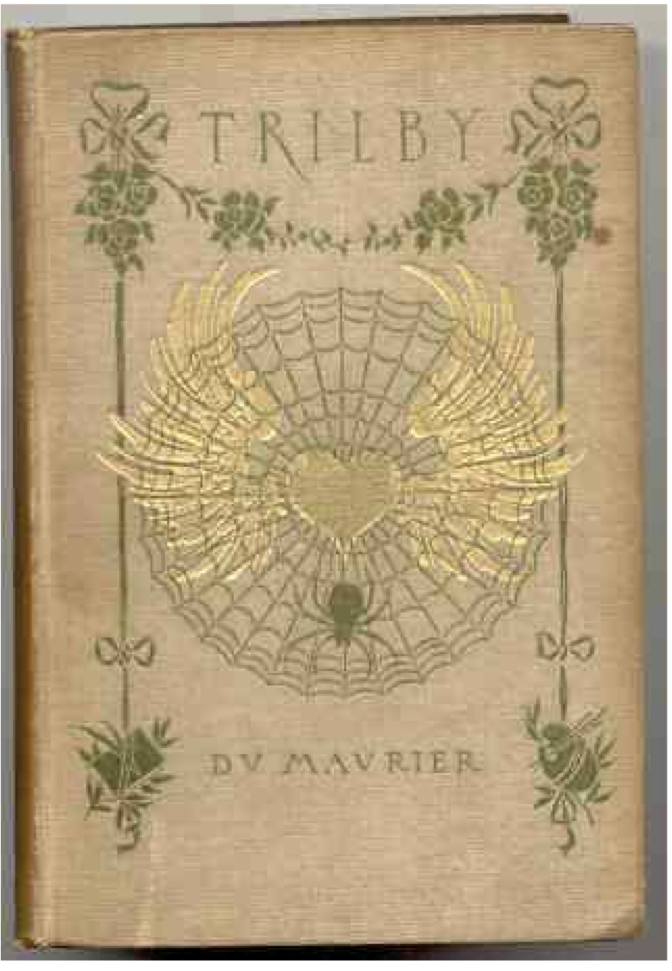
First serialized in Harper’s, Trilby was a transatlantic sensation, igniting what the press at the time, neatly anticipating Beatlemania, dubbed “Trilbymania.” Trilby’s success—and Svengali’s emergence into our cultural lingua franca—is attributable to its canny marriage of late 19th-century sentimentalism (the plot of a heroine who desires the unattainable good man but succumbs to the ogling bad man) with contemporary anti-Semitism, particularly the Wagnerian stereotype of the cultured Jew as musical parasite. In Das Judenthum in der Musik (Judaism in Music), an 1850 pamphlet, Wagner infamously excoriated Jewish musicians, claiming their inherent artistic inferiority relative to Gentiles.
It is important here that although Wagner was partly responding to the influx of Polish and other Eastern European Jewish peasants in 19th-century Germany, his attack was primarily aimed at the assimilated German-Jewish bourgeoisie. It was those Jews, as Wagner’s contemporary, the German music critic and journalist Franz Brendel put it, who “have fallen into a hopeless contradiction, i.e., of possessing our culture and yet remaining Jews, of wishing to be Jewish and Christian in one person.” Wagner’s Jew makes music in a tainted vernacular. Jews “can only imitate the speech of any European nation,” he wrote, “and because song is an extension of speech, … can never be great singers.”
Du Maurier’s Svengali, Polish-born but culturally German, enters late 19th-century Anglophone culture bearing the marks of the Wagnerian stereotype. In the novel he is introduced as a tall bony individual of any age between thirty and forty-five, of Jewish aspect, well-featured but sinister.
“He was very shabby and dirty… His thick, heavy, languid, lusterless black hair fell down behind his ears on to his shoulders, in that musician-like way that is so offensive to the normal Englishman. He had bold, brilliant black eyes, with long heavy lids, a thin, sallow face, and a beard of burnt-up black, which grew almost from under his eyelids; and over it his moustache, a shade lighter, fell in two long spiral twists. He went by the name of Svengali, and spoke fluent French with a German accent and humorous German twists and idiom, and his voice was very thin and mean and harsh, and often broke into a disagreeable falsetto.”
In short, Svengali is a prototypical Jew of late 19th-century anti-Semitic fantasy: Jewish in “aspect” and Jewish in nature: Jewish in his effeminacy and his indeterminate age and nationality; Jewish despite his ennobling Germanness and cultural accomplishment; Jewish even in his mysterious one-word appellation, Svengali, a name that renders his character both cosmopolitan and menacingly foreign, like the villain of a Donizetti opera. Like all embodiments of stereotype, Svengali exudes an embarrassing surfeit of Jewishness; at one point, Du Maurier’s narrator refers to him as “a dark black Hebrew sweep”; at another, as “an Oriental Israelite Hebrew Jew.” He is a bottom-feeder even in the 19th-century hierarchy of European and English Jews: dark, accented, coarse in his mannerisms and customs, a repellent mixture of East and West.

Although it was not the case in the late 19th century, when parents took to naming their daughters Trilby, ultimately Svengali would prove more culturally durable than Du Maurier’s heroine. Today, the term, if not the memory of its origins in a forgettable 19th-century fiction, persists as a prototype of the charismatic, driven, and authoritative male starmaker. Like Du Maurier’s Svengali, the Svengali of contemporary usage craves money, but is driven by something greater than wealth. Like the fictional character, he is often himself a gifted artist, and yet he can never be the frontman, only the guy behind the scenes. Above all, he excels at playing other performers, especially feminized ones, as his “instruments.” Like the Svengali who mesmerizes Trilby with his eyes, he is creepily alluring, exerting a mysterious power over his musical charges—at least until the spell wears off (which it inevitably does).
Svengali is one of three Jewish characters—the others are Shylock and Fagin—whose names have become archetypes in English. Yet whereas Shakespeare’s and Dickens’s characters name Jewish stereotypes—and one would think before calling, say, Lou Pearlman, impresario of the Backstreet Boys and ‘NSync, now serving a jail sentence at a federal penitentiary in Texarkana for his involvement in a Ponzi scheme, a “Shylock”—Svengali carries little trace of its specifically anti-Semitic provenance.
This isn’t a post-Holocaust occurrence. In the course of a few decades after the serialization of Trilby the figure of Svengali had been almost entirely stripped of his ethnic accent. Whereas an 1897 Viennese stage production of Trilby provoked anti-Semitic agitation—forebodingly, given what was to come, forcing the producers to recode Svengali as a Hungarian Gypsy—by 1902, the Kansas City, Kansas American Citizen records the usage of “Svengali” to name a man who mesmerizes respectable women. Caught up in the late Victorian vogue for hypnosis, early 20th-century Americans attributed to “real-life” Svengalis a range of moral infractions that could not be credited to the women who committed them. No reason save hypnotic enticement could be found to explain the 1905 case of a Michigan woman, the wife of a veterinarian, who ran away with a balding, middle-aged white man, before returning to him when the “hypnotic effect began to wear off.”

In the 1931 film Svengali, starring John Barrymore, which follows the novel very closely, Svengali is Semiticized (the actor speaks with an accent and wears a nose prosthesis) and yet, quite assiduously, not named as a Jew, although he is associated with the Orient. By the time of the 1983 made-for-TV movie Svengali, starring Jodi Foster as the pop star Zoe Alexander, not only is the anti-Semitism excised, but also the character Svengali is missing. In this post-Helen Reddy world, moreover, Foster’s character eventually outgrows the need for her old teacher-manager (Peter O’Toole), who in the film’s end must go hunting for new students.
.
It’s not particularly remarkable that we still use the term Svengali despite its reprehensible heritage. We still recite the schoolyard rhyme “eenie meenie miney moe,” with its roots in antebellum racial stereotype, and know well the minstrel stage song repertoire.
On the other hand, the fact that “svengali” has shed its associations with Jewish masculinity, all the while retaining something of the ambivalence of anti-Semitic stereotype, is noteworthy. Svengalis are useful in crafting modern pop mythologies. Where money is concerned, they deflect agency away from pop stars—who, notwithstanding the degree of commercialism of their music or the loudness of their boasts, are still not supposed to want wealth more than making art or pleasing their fans. More generally, the Svengali figure intercedes to “manage” the excess of their desire, otherwise so often unbound in their musical performances and their excessive real-life behavior. In his delightful romp of a book Starmakers and Svengalis, the British music journalist Johnny Rogan recounts how Tam Paton, the manager of the Bay City Rollers, was ultimately unable to contend with the bad-boy shenanigans of the “tartan teen sensations” whose squeaky clean image he had carefully cultivated. It’s perhaps not incidental here that Paton was gay, inhabiting a public sexual identity associated with otherness and indeterminacy, and thus hearkening back to the archetype’s Jewish origins.
Du Maurier’s character drew from the notion of Jewish men as perversely sexually powerful, combining attractiveness and repulsiveness in one body. Sexual titillation in Trilbyis never far from the surface. Ultimately, the figure of the Svengali is a means of containing and deflecting expressions of desire in pop music. Through him, we can personify the larger predations of the music industry, its constant hunger for product and profit. By vilifying the powerful headmaster of the Motown “charm school” or the evil father figure behind the Jackson 5, for example, we can turn our attention away from our own complicity in the objectifying dynamic.
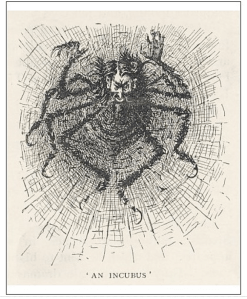
Here Svengali’s power of hypnosis—the quality that attached itself to the Svengali-figure in the early 20th century—is a potent metaphor for what pop music does to us, in making us listen despite (sometimes) our intellectual rejection of it. In Du Maurier’s original illustration for his novel, Svengali is a spider who entraps Trilby in his web. Pop music is often like that spider and that web: supremely sticky and, once we are hooked, indifferent to our resistance.
—
Gayle Wald is Professor of English at George Washington University. She is author of Shout, Sister, Shout!: The Untold Story of Rock-and-Roll Trailblazer Sister Rosetta Tharpe (Beacon, 2007) and working on a book about the TV show Soul!, which brought a black power sensibility to PBS circa 1968-73. Wald’s post is adapted from a “Keyword” talk she gave at the Experience Music Project POP Music Conference in Los Angeles in March 2011, where it caused quite a stir. Peep these links to read some initial responses from music critic Bob Cristgau and Flavorwire.
—
Share this:




Current Top Posts





April 2021

January 2020

November 2019

October 2019

August 2019

April 2014

November 2017

March 2015

December 2017

October 2015


Recent Comments