
Hearing “Media-Capitalism” in Egypt

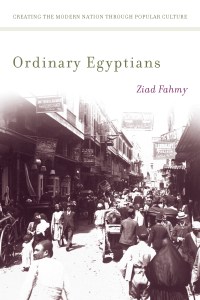
As I began researching my first book Ordinary Egyptians, a study of Egyptian culture from the 1870s until the eve of the 1919 revolution, sounds and early sound media were the last thing on my mind. However, When I dug more deeply into the historical sources, I realized the importance of music and the comedic theater in the urban culture of turn of the century Egypt. This made me expand the scope of my research to incorporate the vernacular culture of Egypt as an entire media-system, which as I showed in my book, was instrumental in constructing a modern Egyptian national identity. Music, songs, plays, chants, speeches, conversations and chatter, were very influential in forming an Egyptian national culture at the end of the nineteenth century, especially in a society with low literacy rates. By incorporating performance and sound media–especially the rising record industry–my book strives to expand the historical study of this period beyond just the visual and the printed to include sound, and aural/oral expressions of culture.
“Muski Street, Cairo, 1903.” Source: William Herman Rau. From Library of Congress Prints and Photograph Division.
Ordinary Egyptians also engages with some of the theories of nationalism and tests their applicability to Egypt and the Arab world. It introduces the concept of “media-capitalism,” which expands the historical analysis of Egyptian nationalism beyond just print and silent reading, through the incorporation of audiovisual, sound, and performance media. By integrating these new media, especially the burgeoning record industry, my book attempts to make room for both the “ear” and the “eye”—for the aural and oral alongside the visual—and in the process provides a more comprehensive explanation for how individuals and communities digest and embody cultural information. As this excerpt explains, cultural productions, in any form, are not socially relevant unless they are communally and socially activated; they must be discussed, breathed, and animated in the routine of everyday life.
The following is an excerpt from Ordinary Egyptians, with thanks to Stanford University Press. Notes have been included in the text to conform to Sounding Out!‘s style sheet.
—
Mundane Nationalism
Egypt’s new mass media reflected on relevant everyday political, economic, and cultural concerns, and amplified them on the national stage in a comprehensible, locally pertinent and entertaining form. The repeated themes of many of these media included: bemoaning the lack of economic opportunities for native Egyptians, portraying the economic exploitation of Egyptians by foreigners, warning of perceived declines in national “morality,” satirizing and at times insulting British and native officials, and rousing patriotism and a sense of collective national solidarity.
However, the most effective way that national identity and a sense of nationhood was ‘absorbed’ was not only through these overstated themes and methods, but through the mundane media portrayals and representations of everyday “national” life and the internalization of these modes in actual practice. As Michael Billig describes in Banal Nationalism, nationalist ideology “might appear banal, routine, almost invisible,” however, these “subconscious” matter-of-fact representations create a common sense “naturalness of belonging to a nation” (15-16). Billig explains that often there is “continual ‘flagging’, or reminding, of nationhood,” as on a daily basis, citizens are reminded of their national identity. This reminding however, is “so familiar, so continual, that it is not consciously registered as reminding” (8). Mundane and unstated representations of Egyptian-ness abounded in most forms of mass culture, where “Egyptians” distinctively spoke and acted and were clearly, though tacitly, differentiated from non-Egyptians. Most of the media examined in this study implicitly addressed their listeners, viewers and readers as members of an Egyptian “nation.” To be sure, the most influential aspect of vaudeville and the satirical press were not necessarily the outwardly nationalistic messages of many of their articles, cartoons, and dialogues, but the recurring and mundane representations of colloquial Cairene as the de-facto dialect of all Egyptians, and the implicit understanding that flawlessly speaking and understanding it was the basic marker of a “modern” Egyptian national identity. Only an “authentic” ibn or bint al-balad (son or daughter of the country) would employ Egyptian Arabic and grasp its multiple meanings and nuances and hence participate in this new mass-produced colloquial culture. In fact, many of the comedic dialogues depicted in political cartoons and vaudeville repeatedly contrasted the mispronunciations of foreigners—who often played unsympathetic or villainous roles—with the “correct” pronunciation of affable Egyptian characters. This repeated portrayal of Cairene as the only “authentic” Egyptian accent reified it as an unofficial dialect of all Egyptians, even if back in the villages and towns of the Sa‛id more localized modes of expression were employed. By way of media-capitalism, Cairo’s dialect and culture was overwhelming—colonizing, if you will— the multitude of other localized dialects and cultures in Egypt. Thus, paradoxically, Cairene Arabic was the primary tool for nationalist, anti-imperialist discourse, and simultaneously, through internal-colonialism, it imposed its own culture on the “nation” [Note: This is very similar to what was happening in France during roughly the same time period. See Eugen Weber’s Peasants Into Frenchmen: The Modernization of Rural France, 1870-1914, 486-88].

“Egyptian crowds with Italian flag during 1919 Revolution.” Source: From L’Illustration (Paris), May 3, 1919.
The Sensorium and the Public Sphere
The efficacy of the new mass media and its potential for mass mobilization was best demonstrated during times of national crisis. The 1906 Dinshaway Incident and the 1919 Revolution in particular reveal how all forms of mass media functioned together to effectively document, memorialize, celebrate, and mobilize on a national scale. The growth of popular Egyptian mass culture, articulated almost exclusively in colloquial Egyptian, was the pivotal factor in the popularization and dissemination of an Egyptian national identity. The evolution and universalization of a colloquial Egyptian middle culture, made possible especially through the utilization of sound and audiovisual media, allowed for a shared and “uniquely” Egyptian cultural landscape. It is primarily within this non-official web of colloquial Egyptian mass culture, driven in large part by media-capitalism, that Egyptian national identity was widely disseminated and popularized.
One crucial aspect of this study was the critical role coffee shops played as cultural hubs, where differing mass media from newspapers to recorded music were publicly merged, negotiated, and digested. Many of the songs initially written for musical and comedic plays were recorded and played, or performed by street musicians at coffee shops and even in the streets and sidewalks. The role of the thousands of urban cafés and other public meeting areas in the broadcasting and reception of these new cultural productions is central to understanding the potency and effectiveness of this developing nationwide culture. Indeed, coffeehouses, as Peter Burke has remarked in A Social History of the Media, “inspired the creation of imagined communities of oral communication” (30).

“Egyptian newspaper boy yelling out the latest headlines, Cairo, 1907.” Source: From Douglas Sladen, Oriental Cairo (London: 1911), 64.
However, as discussed in previous chapters, this was never a one way conversation, as writers of these vernacular media were plugged into the streets and public squares through these very same cafés. As we have observed in this study, it can be said that the entire vaudeville theater industry arose out of the cafés on ‘Imad al-Din Street, where most of the vaudeville theaters were housed [Note: See Ibrahim Ramzi, Masrahuna ’Ayyam Zaman wa Tarikh al-Fananin al-Qudama’ (Cairo: Matba‘at al-Salam (1984), 25. There were at least three major cafés in Imad al-Din Street that were frequented by actors, singers, writers, and musicians— Qahwat al-Fan (The Arts Café), Qahwat Barun (The Baron Cafés), and Qahwat Misr (The Egypt Café)]. It was through these dialogical “physical” interactions with the people in the streets, market places, and cafés that the writers, musicians and performers of these media (re)calibrated with the subtleties, textures, and flavors of everyday Egyptian life. As Mikhail Bakhtin cautions in The Dialogic Imagination, we must not ignore the “social life of discourse outside the artist’s study, discourse in the open spaces of public squares, streets, cities and villages;” for it is in these public spheres that Egyptian mass culture is embodied into everyday life, acquiring its socio-economic, political relevance, and more importantly perhaps, its perceived authenticity, and contemporaneity (259). Indeed, access to any form of knowledge— be it visual, aural, tactile, gustatory or olfactory—is corporally mediated and is acquired through a living dialogical engagement. Or as Bakhtin elaborates in Problems of Dostoevsky’s Poetics, “the single adequate form to verbally expressing authentic human life is the open ended dialogue . . . In this dialogue a person participates wholly and throughout his whole life, with his eyes, lips, hands, soul, spirit, within his whole body and deeds” (293). In other words texts alone are meaningless when viewed in isolation of the socially embodied realities of their production, and more importantly perhaps, their reception on the street. It is in their interrelationship with social life that texts become meaningfully activated and authenticated as genuinely reflecting popular concerns and realities. As we have seen throughout this book, colloquial Egyptian culture is better equipped in engaging in this dialogue with the everyday, and hence guaranteeing its circulation and popularity.
(Ordinary Egyptians, p. 170-172)
—
Featured Image: View 042: Egypt – Street in Native Quarter, Cairo., n.d., T. H. McAllister, Manufacturing Optician. 49 Nassau Street, New York. Brooklyn Museum Archives (S10|08 General Views_People, image 9785).
—
Ziad Fahmy is an Assistant Professor of Modern Middle East History at the department of Near Eastern Studies. Professor Fahmy received his History Ph.D. in 2007 from the University of Arizona, where his dissertation “Popularizing Egyptian Nationalism” was awarded the Malcolm H. Kerr Dissertation Award (2008) from the Middle East Studies Association. His first book, Ordinary Egyptians: Creating the Modern Nation through Popular Culture (Stanford University Press, 2011), examines how, from the 1870s until the eve of the 1919 revolution, popular media and culture provided ordinary Egyptians with a framework to construct and negotiate a modern national identity. His articles have appeared in the International Journal of Middle East Studies and in Comparative Studies of South Asia, Africa and the Middle East. Professor Fahmy is currently beginning another book project tentatively titled, Listening to the Nation: Sounds, Soundscapes, and Mass Culture in Interwar Egypt. In 2011-2012, he was a Faculty Fellow at the Society for the Humanities at Cornell University, where the focal theme was “Sound: Culture, Theory, Practice, and Politics.”
Share this:

Sound as Art as Anti-environment

When I performed at the 2012 Computers and Writing Conference in Raleigh, North Carolina, I looked around during my fairly abstract 10-minute long improvisation featuring feedback loops, glitches, silences, and circuit-bent instruments, and I noticed the audience’s sometimes visible restlessness, discomfort, and even anxiety. This is a fairly common occurrence when I perform experimental sound art, particularly in contexts in which audiences expect “music” (you can hear my work at 38:30 in the video below). However, for an experimental sound artist to take offense to such reactions is, in my estimation, missing the point of the exercise. That sound art disrupts, agitates, and even offends is a powerfully reaffirming reminder that sound art transcends music and sound; it is a method of revelation, an act that surpasses logical communication, instead challenging the very nature of sound and perception.
.
As an artist, scholar, and fan, I am drawn toward sound and music that lures me into a new world, an unfamiliar way of being and knowing. Like Lewis Carroll’s Alice, I learn that the rules of my world no longer apply. This happened when I heard J Dilla’s Donuts album, and when I heard Madlib’s Medicine Show #3: Beat Konducta in Africa, when I heard Miles Davis’ Bitches Brew. An artist that continually draws me down the rabbit hole is Walter Gross, an experimental sound/beat artist out of Los Angeles. His work changes the way I usually interact with sonic art, both in terms of his sound and in his approach to physical collage and handcrafted cassette packaging, Gross departs from the comfortable and familiar listening imparted by polished hi-fi 3-minute tracks with definitive beginnings and ends and discernible melodies. Gross instead propels listeners into very unusual (and pleasantly discomforting) soundscapes that demand attention. Almost counter-intuitively, Gross’s visual representations of his work intensify that experience. Consider his 2010 work, Dopamine:
Dopamine is likely a challenging piece for audiences, at least in terms of violating the dominant structures of music. The piece opens with disorienting use of panning, deliberately obscuring degraded audio, largely indiscernible movements and patterns, and so on. His video work likewise presents a fitting yet relatively unusual juxtaposition of youth and destruction, celebration and danger. In terms of both sound and sight, Gross’ work disrupts dominant musical sensibilities, challenging the very patterns and structures within which we can express ideas. He violates tradition, shakes off the canonical baggage carried by prevailing paradigms of Art and Music, and plunges audiences into unfamiliar sensory experiences that require metacognition, reflection, and examination of what sonic art is, and more importantly, what sonic art can be. Gross, in other words, seems to transcend the musician moniker and reach something else entirely. In what follows, I’d like to explore a (very brief) history of such artists, and begin to think about how to frame sonic art as immersion in what Marshall McLuhan called anti-environments: the unconscious environment as raised to conscious attention.
Sound as Art
There exists a strong tradition of experimental noise and sound art, particularly in 20th-century Western avant-garde movements. Futurists were arguably the first to consider noise as music in the European tradition, and were certainly influential in asking artists and audiences to become more aware of the changing social and sonic surroundings . In his 1913 manifesto-of-sorts titled “The Art of Noises,” Italian Futurist Luigi Russolo proposed an orchestral configuration that more aptly represented the range of sounds available to contemporary listeners, namely those sounds that accompanied industrialization and urbanization. The sounds of the Futurist orchestra would include “rumbles, roars, explosions, and crashes.” Russolo built devices called intonarumori to mechanically achieve and manipulate these sounds. His brother, Antonio Russolo, also enacted this new philosophy of modern found sound and composed Corale and Serenata.

Luigi Russolo and Ugo Piatti with the Intonarumori, 1913
Any inquiry of art as anti-environment would be incomplete without a discussion of the great anti-art movement, Dada. Like the Futurists before them, Dadaists used found sound and technology-as-art to violently disrupt conventions of art, beauty, and authorship within the white avant-garde community. Marcel Duchamp’s famous work, “Fountain,” is likely the most familiar Dadaist artifact to contemporary readers, yet the sound poetry of Kurt Schwitters and other Dadaist and Dada-inspired sound pieces such as Erwin Schulhoff’s 1922 work In Futurum (the middle movement of which contains only a rest and the notation “with feeling,” an undoubtable precursor to John Cage’s 4’33”, written 30 years later) created sonic spaces of innovation and strangeness that changed the way audiences listened to both voices and silences. The Russian Cubo-Futurists, especially zaumniks such as Alexei Kruchenykh, made similar ventures into anti-environments. Kruchenykh developed the sound art zaum, which he understood as a transrational language that undercut existing language systems in which the “word [had] been shackled…by its subordination to rational thought” (70). Zaum was a sort of linguistic anti-environment, one rooted in the notion that meaning resided first and foremost in the sound of a word rather than the denotative symbol system that emerged alongside the proliferation of print/visual culture. One could also not underemphasize the work of John Cage, from his prepared piano to his work with organic instruments.

John Cage and His “Prepared Piano,” Image courtesy of Flickr User William Cromar
The list of artists, genres, and movements engaged to some extent in the enterprise of anti-environment architecture could go on and be debated indefinitely: Free Jazz, Turntablism/Nu Jazz, Experimental Hip-Hop,Fluxus, Circuit Bending, Prepared Guitar, ProtoPunk, Punk, Post-Punk, New Wave, No Wave. . . in all of these diverse movements, the sonic artists share the tendency to create strange new worlds via sound; worlds that reveal social and technological environments that most people seem unaware of in the moment. This is why media theorist Marshall McLuhan called the artist “indispensible,” because the artist can tell us something about ourselves that we cannot know via ordinary means of perception. Sonic artists expose audiences to auditory phenomena, structures, juxtapositions, etc. that are to various extents hidden, obscured, or ignored as “noise.” The sonic artist is more than just a clever selector and (re)arranger of sound; s/he is a revelatory agent, exposing what is inaudible.
Art as Anti-environment
Anti-environments, however we might define and classify them, are vital not only to artistic communities themselves, but they are also vital to a society of fish in water. In his 1968 text, War and Peace in the Global Village, McLuhan asserts (among other things) that humans remain largely unaware of their new environments, likening them to fish in water: “one thing about which fish know exactly nothing is water, since they have no anti-environment which would enable them to perceive the element they live in” (175). In other words, humans seldom possess or practice a sense of awareness regarding their surroundings because there’s nothing against which surroundings may be contrasted. The “water” to McLuhan represented the various environments (physical, psychological, cultural) shaped by technological innovation, but we can—and should—extend the water metaphor to a range of hegemonic frameworks: constructions of gender, race, ability, and so on.
This essay is certainly not an attempt to generate some sort of evaluative rubric by which to judge artistic or sonic expression objectively. Rather, we might use the concept of anti-environments as a way to frame our subjective experiences and encounters with all sound, and begin listening to unfamiliar sounds as psychedelic (from Greek psyche- “mind” + deloun “reveal”) keys to illuminate the patterns and structures in which listeners exist. We must work to understand our environments and our place in them; if we are to engage critically with our culture, we must first understand existing (yet invisible) patterns and structures that surround us. And we are aided in this effort, in great part, by humanity’s great seekers of pattern recognition, the sonic-psychonautical messengers: the sonic artists.

Sound Artist Performing at Circuit Bending Workshop in Dayton, Ohio in 2009, Image Courtesy of Flickr User Vistavision
To return to the sound that inspired this meditation, Walter Gross (among others) is in many ways participating in and propelling the discourse of Leary and McLuhan, Schwitters and Schulhoff, Kruchenykh and Cage,Davis and Sun Ra, Madlib and J Dilla. Gross performs the sonic anti-environment, enacts the revelation of obscured sonic paradigms. For me, Gross can act as a sort of lens through which ordinary sonic patterns and structures become visible. I hear Flying Lotus, Bob Dylan, and The Minutemen differently after Gross. I hear my office, my home, my family’s voices differently after Gross. I hear patterns that weren’t audible before. After Gross, I become aware of how I am continuously trained to expect certain things from the sonic world: compartmentalized units of meaning, clearly stated origins of utterances, linear narratives, repeated/repeatable melodies, and so on.
Likewise, my own sonic art/scholarship approaches the use of sound to reveal the inaudible assumptions present in Western frameworks surrounding sonic production. I will conclude with an illustration of my own work and why sonic anti-environments are so central to my philosophy and method. One of my sonic works, “Toward an Object-Oriented Sonic Phenomenology,” was recently part of an exhibition titled Not For Human Consumption, curated by Julian Weaver of CRISAP in London. I recorded the sounds of a high mast lighting pole using contact microphones. Contact microphones do not “hear” like humans typically hear. Typical (dominant) notions of human hearing (and therefore of sound itself) involve the reception and interpretation of vibrations present in air. Contact microphones instead only interpret the vibrations in solid objects.
By listening through an object–through alien “ears,” so to speak– we can begin to critique the ways that we privilege listening via air, a listening that places humans at the center of the universe. We can consider the ways that sound has very real effects on humans with atypical hearing abilities and nonhuman objects. It is difficult to have such conversations if we never explore sonic anti-environments, if we never break through dominant epistemological models, if we never expose the limits of our own environments.
—
Featured Image: Beatrix*JAR in Dayton, Ohio, September 9, 2009, by Flickr User Vista Vision
—
Steven Hammer is a Ph.D. candidate in Rhetoric, Writing, and Culture at North Dakota State University in Fargo, ND, USA. His research deals with various aspects of sonic art, from exploring glitch and proto-glitch practices and theories (e.g., circuit bending), to understanding and producing sound from an object-oriented ontology (e.g., contact microphones). He also researches and facilitates trans-Atlantic translation collaborations between American, European, and African universities. He has multimedia publications with Enculturation, Sensory Studies, as well as forthcoming book chapters with Wiley/IEEE press, and IGI Global Publishing, and has performed creative and academic work at several conferences across North America, including the national Computers and Writing Conference and the Council for Programs in Technical and Scientific Communication. He performs experimental circuit-bent and sampler-based music under the moniker “patchbaydoor,” and has constructed and documented a number of hardware modification projects for his own artistic projects and for other artists in the upper Midwest United States. You can read/hear more atstevenrhammer.com
Share this:


Current Top Posts





April 2021

January 2020

November 2019

October 2019

August 2019

April 2014

November 2017

March 2015

December 2017

October 2015
 Sounding Out!

Recent Comments