
Aural Guidings: The Scores of Ana Carvalho and Live Video’s Relation to Sound
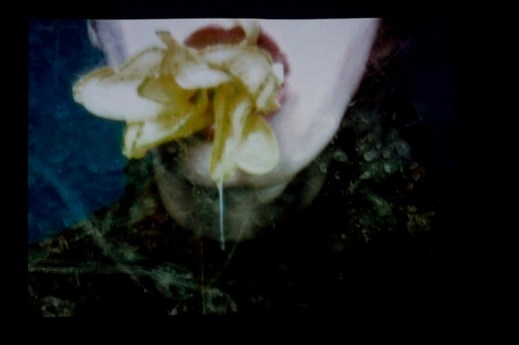
If you were to choose to watch live video composer and performer Ana Carvalho’s work silent, your brain would be easily guided into a synesthetic experience, assigning sounds to each rhythmic change in color, pace, frame. Her images oscillate…they dance, they breathe. As you experience this, there might be a sense that you have lost your ability to hear the outside world, as these images are clearly attached to, woven with, a part of sound.
There is a history of composers such as Iannis Xenaxis and Cornelius Cardew using graphic scores and notation in place of traditional methods and symbols, as a way to reach a deeper expression through allowing greater interpretation, chance, and improvisation with their musicians. They concentrate more on conveying information on how a work is played, rather then what notes to play when. Carvalho uses the graphic score much in the same way, but also as a method of communication between live audio and live video performances, instructing a dialog between two disciplines that are often side-by-side or leaning on each other, but rarely woven together in the manner I have experienced both as audience, and as an audio composer, with her work.
The following interview has been edited for style.
Maile Colbert: Hi Ana, how are you today? And what are you working on currently?
Ana Carvalho: I am good. I’m working on a performance to present at the solstice, with Neil Leonard, and a text about the possibility of expansion of the mind through performing and fruition of being in an audiovisual performance.
At the moment the performance is still involved into misty possibilities of what we know of each other’s work, and what we have been developing individually and talking about. There will be saxophone, electronics, and visuals made of strange landscapes.
MC: At this stage in the process, when working with a sound maker such as Leonard, how do you think about the images’ relationship with the sound?
AC: Images come to be as they appear on the screen in two ways: first there is the introspection about what have I learned from the previous performances, what I want to explore further and what I don’t want to repeat. Secondly, there is the encounter with the other person and his or her work and how do I translate their sound into moving image. At some point my ideas change through the exchange and becomes something else, a visual performance that could only be presented with that sound, with that person, at that place and time.
Regarding the sound in particular, sometimes I propose a structure, or a score, to be followed by sound and image. Other times it is improvised. As I enjoy very much the process, I tend to like to make structures for the performances, which develop along drawings and texts.
MC:  Your scores of text and image are quite beautiful, and of course I am personally lucky to both have some of the published ones, and have had a chance to work with them as well.
As a sound maker, I find they have a flow and almost narrative that feels both intentional and intuitive, no matter how abstract. When you make these, how much of a clear idea of how the audio would sound in relation to the images is in your mind? Do your images always or often follow the same score? Do the results surprise you?
AC: My state of arriving at the point of starting to make a composition is very much the same I described about working with a sound artist towards the presentation of a performance, that is, what do I want to develop further and what I want to leave behind? Then, what is particular to this new situation/performance/collaboration? The composition is a sort of a vehicle that connects process and performance, and that connects sound and image.
The composition is for the two mediums, sound and image, and they are considered in terms of composition as a unity made of two parts. They have to work in a conversational way. Imagine two close friends and how they would be talking to each other. I have in my imagination how it would be ideally two people in that position. That is how sound and image relate on the composition. I think in the most generic terms, more of intensity and flow rather than sonic results. For this reason any musician, with any possible (or invented) instrument, with whichever image or sound database, is able to play a score. It’s required though that the performers take time to reflect, that the composition is understood and incorporated in the way each one plays their instrument. The results are always a surprise.
MC: What inspired you to start working in this way with the scores, and when?
AC: My interest in making compositional scores, and from them documents related to my performance, has been inspired by conceptual and process based art and by my research on documentation of the ephemeral. The focus on the process highlights the need for other representations that are not the finished art object per se. These other ways of representation use available media to describe the making and the reflection while making. Mary Kelly’s Post-Partum Document (1973-79) is a very interesting example of what I am describing. She is expressing her feelings, the growing process of a child and an external perspective through visual objects displayed both as an exhibition and in book formats. Within audiovisual practice, I have been researching for the past five years on creative ways to make documents of the process. My attention was directed to composition in music. The influence of the composer Cornelius Cardew has been great, especially his work Treatise and his idea of directed improvisation. John Cage was also very important for his structures (in talks, texts and music), the use of the I Ching, and for bringing chance into composition.
Simultaneously, while studying and reflecting on these and other subjects, I realized that intuitively I make drawings, texts, and take photographs as a way to detach from the everyday and immerge into a creative process which eventually will lead to the concept and content of a performance.
 Systematic Illusion – The Subtle Technique in an Earthquake Detector Construction has been so far the most complex project to include a score, as well as a series of photographs and the performance. It was presented in its complete form just once in the curatorial project Decalcomania. Organizing these elements as composition, creating a score, and from all this to make little books has been a way of putting into practice my research interests.
A result from the construction of the score has been that the process doesn’t stop with one performance, as I then use the same scores to perform with different artists. For example with the score from this project I created the Earthquake Detector performance series within which we presented the performance together in São Paulo in 2013 at the event Arranjos Experimentais.
MC: As you speak about your work, I keep thinking about Robert Bresson’s Notes on Sound and how most of his notes refer to variations of not letting sound or image take over each other, but to weave them together within the composition. In his Notes on the Cinematographer, he also wrote number “10. not to use two violins when one is enough”. What might this mean to you in relation to your collaborations?
AC: One very inspiring event in the attempts I make to construct a formal grammar and way for me to address collaborations has been to see the film Passage Through: A Ritual by Stan Brakhage. The film was screened at Serralves Museum, here in Porto, Portugal, in June 2011. The event addressed the collaboration and improvisation of music in relationship with cinema from the work of the composers Malcolm Goldstein and Philip Corner and their music in the film work of Daïchi Saïto and Stan Brakhage.
The most amazing thing in Passage Through: A Ritual was to watch such a beautiful film made of an abundance of black screen, that is, an absence of visual form, of light and movement. Each appearance of image was a precious moment. What I learned is that the visual emptiness, and sonic as well, contains information when stimulated through glimpses of image, making the experience of seeing and listening very deep. (In his Notes), Bresson sums up this appropriateness of means and complex connections in a simple and clear sentence.
On the scores I make most of the information can be used for both sound and image. On the Refractive Composition, the scale of greys is for image. That was its purpose when the score was performed the first time. But if someone decides to play from the score without knowing anything about it beforehand, and lacking this intention (which was relevant when it was made, but afterwards there was the decision to not leave it as a declared instruction), that person can also interpret the same information as sound.
MC: Alchemy has been described as: “…the chemistry of the subtlest kind which allows one to observe extraordinary chemical operations at a more rapid pace; ones that require a long time for nature to produce” (Paul-Jacques Malouin, Alchimie). Looking from a history of cinema, there is a tradition and pattern of picture coming before sound, a hierarchy that is both in process and production. You often feel this as an audience. Your work and collaboration have a quality of sound and image having been born together. Having worked with you using your scores, I was likening it to being given a recipe where you have before you ingredients and suggestions, but there is room for your own improvisations and reading. Perhaps that is where that feeling of both disciplines coming together in a manner that feels like they are one part of a whole, rather then separate but leaning on each other, comes from.
Is there an alchemical element to this work, or are you seeking one out? And in that regard, are your scores like a recipe?
AC: What I am seeking with my work can relate to alchemy as experiments and attempts in the quest for depth in all things at the point where differences and frontiers become undefined and irrelevant (in communication between beings, in areas of knowledge, between matter and energy). This quest for depth is based on stubborn curiosity towards evolution as a person, and as part of the world. Perhaps there isn’t an alchemical element to the work, but rather a connection with alchemy, in the ways scores relate to the experiments as recipes to be shared with others in construction and change. This takes me to another aspect of composition. It is difficult for me to understand live image as just accompaniment to a music performance, and vice versa. This is perhaps central to my composition, and the reason why I am doing it for sound and image, to be able to perform that intertwined.
If we look at compositions as recipes, it aim will be to set the performers in tune with each other in the construction of a performance, to set sound and image in dialogue, and to permit a multisensory experience. I have been trying to get other artists interested in performing my scores. To perform from another artist’s score may be very common in music but is unheard of in live visuals. I have as an objective to make a change in that, but for now I perform the scores with sound artists. With the Earthquake Detector series I asked sound artists to read from the score and perform with me. So far, I have presented this as performance with Jeremy Slater, Ben Owen, and with you. Because each artist has a very different approach to the score and reads it in its own way, the processes have been very different. For example, Ben Owen made visual reinterpretations of the structure, and you experimented with and without voice (reading of the text in the score), the results are therefore equally different.
MC: Aside from your scores, you could speak about your relationship to the sound you work with, and sound makers you work with, in the live moment of performance?
AC: Looking for a sound artist to work together on a specific piece or to interpret with me a composition comes from a need to transcend my individual perception of the world and to perceive it with others. It is, again, the curiosity to know the world. The only time I made a complete sound piece on my own was for the performance Vista II – Montanha presented last May (as part of Semana Andrómeda, in Maus Hábitos, Porto). Aside from this really interesting experience, each collaboration is different, every process is different, because each musician is a different person with different skills and sees the relationship between sound and image in different ways.
I am very thankful for everything I have learned with each collaboration and all the intensity with each performance but, as always, it’s the curiosity and the need to explore new frontiers that makes me move from previous project to next project. It is also the possibilities that intuitively present themselves as challenges and the “what if…” in variations.
—
Ana Carvalho is a live video composer and performer, and writes on subjects related to live audiovisual performance. She is a doctor of Communication and Digital Platforms from FLUP (Faculdade de Letras da Universidade do Porto). Her thesis is “Materiality and the Ephemeral: Identity and Performative Audiovisual Arts, its Documentation and Memory Construction.” Currently, she holds a position as invited lecturer at the ISMAI (Instituto Universitário da Maia). For more on her work, visit: http://cargocollective.com/visual-agency/About.
—
Maile Colbert is a multi-media artist with a concentration on sound and video who relocated from Los Angeles, US to Lisbon, Portugal. She is a regular writer for Sounding Out!
—
All images courtesy of the author.
—
 REWIND! . . .If you liked this post, you may also dig:
Playing with Bits, Pieces, and Lightning Bolts: An Interview with Sound Artist Andrea Parkins — Maile Colbert
Sound as Art as Anti-environment — Steven Hammer
Live Electronic Performance: Theory and Practice — Primus Luta
Share this:

Resounding Silence and Soundless Surveillance, From TMZ Elevator to Beyoncé and Back Again
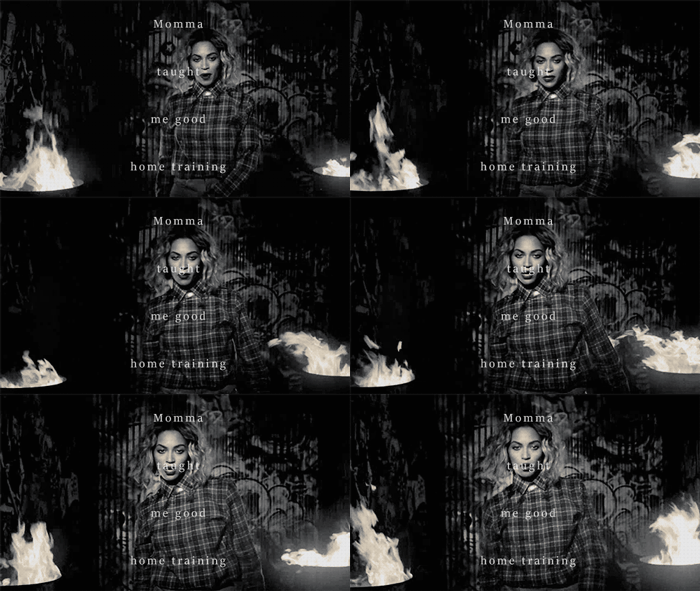
 This September, Sounding Out! challenged a #flawless group of scholars and critics to give Beyoncé Knowles-Carter a close listen, re-examining the complex relationship between her audio and visuals and amplifying what goes unheard, even as her every move–whether on MTV or in that damn elevator–faces intense scrutiny. Last Monday, you heard from Kevin Allred (Women and Gender Studies, Rutgers) who read Beyoncé’s track “No Angel” against the New York Times’ reference to Michael Brown as #noangel. You will also hear from Liana Silva (Editor, Women in Higher Education, Managing Editor, Sounding Out!), Regina Bradley (writer, scholar, and freelance researcher of African American Life and Culture), and Madison Moore (Research Associate in the Department of English at King’s College, University of London and author of How to Be Beyoncé). Today, Priscilla Peña Ovalle (English, University of Oregon) gives us full Beyoncé realness, from TMZ Elevator to Beyoncé and Back Again,–Editor-in-Chief Jennifer Stoever
—
Less than six months after Beyoncé released Beyoncé, she was momentarily silenced on the small screen when the gossip site TMZ released silent elevator security footage of a fight between her famous husband and sister. Doubly framed by the black and white of a surveillance video screen surreptitiously captured on a security guard’s camera-phone, the video’s silence left plenty of room for speculation. But the footage also revealed a woman conscious that her life is on record: Beyoncé’s body seemed to elude the camera’s full view and she emerged from the elevator with a camera-ready smile.
Like Kevin Allred in his powerful reading of “No Angel,” I could not help but rethink Beyoncé in the wake of Michael Brown’s murder. I already read Beyoncé as a sophisticated response to the visual and aural policing of black female bodies, but the closed-circuit images of Beyoncé on TMZ (and in Beyoncé) made me reconsider silence as a damning convention of video surveillance; like Aaron Trammell in “Video Gaming and the Sonic Feedback of Surveillance,” I questioned (the lack of) sound as a technique of control. When the camera-phone recording of Kajieme Powell’s murder, photographed and narrated by a community member in real-time, was released with silent surveillance footage of the alleged theft, my appreciation of Beyoncé—as a response to those silent damnations—took a new turn.

“Resounding Silence and Surveillance” argues that Beyoncé returns the media’s visual-aural gaze. Because of its pop package, the album’s artistic composition and socio-cultural merit are often underestimated. Like the silence of surveillance footage, omitting any one sensory element from Beyoncé distorts the holistic meaning. To untangle this critically complex interplay of audio and video, I analyze the visualized song “Haunted” and briefly address the single “***Flawless” to show how the artist’s triple consciousness anchors Beyoncé. She is on to us: Beyoncé is the culmination of an artist who has spent her career watching us watch her. Temporarily silenced by footage that she could not control, Beyoncé resounds that “elevator incident”—and our sonic/optic perceptions of her feminism—with a flawless remix.
“I see music. It’s more than just what I hear,” declares Beyoncé. Her voiceover runs over the black screen that opens the promotional video “Self-Titled.” Released the same day Beyoncé premiered on iTunes, “Self-Titled” directs audiences to “see the whole vision of the album.” By design, Beyoncé is an immersive experience—like watching Michael Jackson’s “Thriller” as a television event on MTV.
Because Beyoncé was born the same year the cable music channel MTV premiered, she has never known a world without the ability to “see music.” In many ways, her visual album reinvigorates the early spirit of MTV: after Beyoncé, we will “never look at music the same way again.” Though music videos exacerbate the pop single obsession that Beyoncé explicitly resists with Beyoncé, they also produce a unique kinetic connection with the listener-viewer, whose experience of sound is visually registered by the body as it processes shots and edits. This is especially true when strong imagery, rhythmic editing, and dance movements are expertly employed, as in Beyoncé.
Beyoncé deftly critiques the beauty and music/media industries that have been central to her pop success. If taken piecemeal, these critiques can be easily dismissed: the sustained gloss of her image works all too well. There is much to say on a video-by-video basis, but I focus here on the specific aural elements of “Haunted” that articulate Beyoncé’s refusal of the music industry’s status quo. This visualized rejection reveals the layers of racism and sexism that nonwhite female artists (even Beyoncé, even today) must negotiate.
Because of my personal and professional interest in music videos, I consumed Beyoncé as she intended: a sequence of MPEG-4 videos rather than AAC audio files. But it was not until I solely listened to the album that I could discern Beyoncé’s maturation as a black female multimedia pop/culture artist. One refrain from “Haunted” was especially effective:
I know if I’m onto you, I’m onto you/ Onto you, you must be on to me
The song’s ethereal quality is amplified by Boots (Jordy Asher), one of Beyoncé’s (then-unknown) collaborators with whom she shares “Haunted”’s writing and producing credit. The track builds slowly, supporting Beyoncé’s “stream of consciousness” delivery with layers of reverberation and waves of synth sounds like “Soundtrack” or the Roland TR-808 kick drum. Punches of bass accelerate the beat until Beyoncé riffs her explicit desire to create something more than a product:
The music winds to a halt, but the song is not over. Breathy, reverberating vocals transition the track and a piano is delicately introduced:
It’s what you do, it’s what you see
I know if I’m haunting you, you must be haunting me
It’s where we go, it’s where we’ll be
I know if I’m onto you, I’m onto you
Onto you, you must be on to me
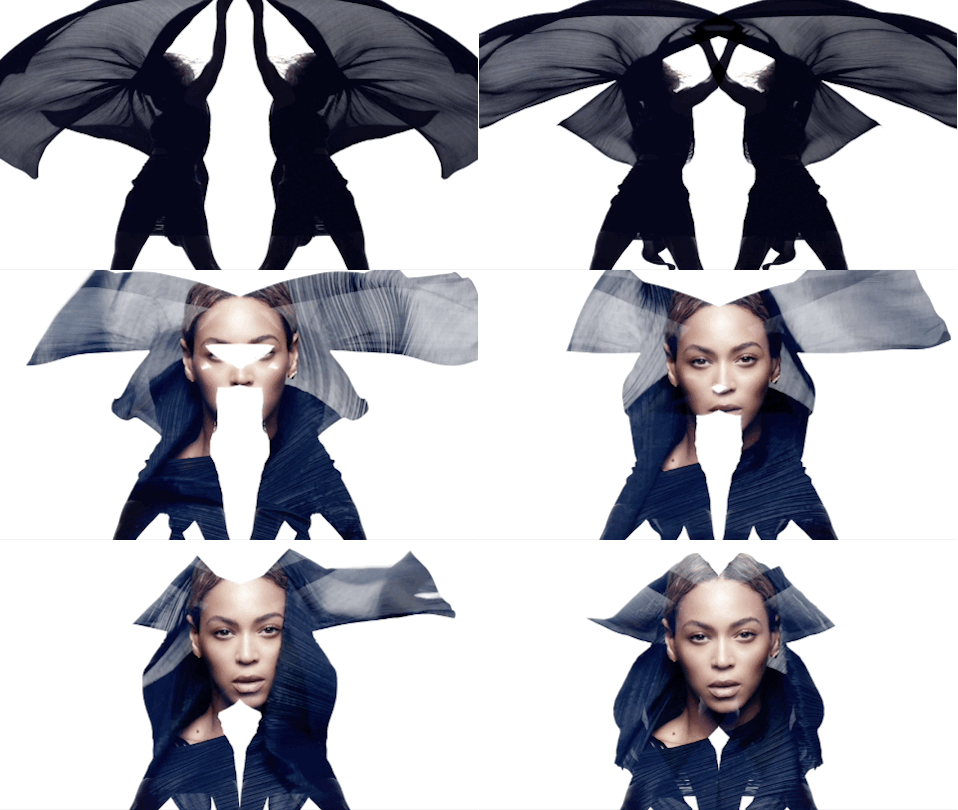
 At this point, the song “Haunted” is split into two videos: “Ghost” (directed by Pierre Debusschere) and “Haunted” (directed by Jonas Åkerlund). The videos’ visual differences exemplify the various points of view—from active subject to object of desire and back again—employed across Beyoncé. “Ghost”’s hypnotic visuals underscore the song’s sentiments: close-ups of Beyoncé’s immaculately lit visage soberly mouthing lyrics are intercut with medium shots of her still body swathed in floating fabric and wide shots of her athletic movements against sparse backgrounds. The ar/rhythmic cuts of “Ghost” enunciate an artistic dissatisfaction with the industry: visuals build against/with the synthetic beat, mixing Beyoncé’s kinetically intense movements with her deadpan delivery.
 The fiery agency of “Ghost” sets up the chill of “Haunted,” a voyeuristic tour in which Beyoncé watches and is watched. The “knowing-ness” of her breathy refrain (“I know if I’m haunting you”) is heightened when the tempo accelerates in the song’s second half. There is much to say about “Haunted”—from the interracial family of atomic bomb mannequins to Beyoncé’s writhing boudoir choreography. Most significantly, she is the video’s voyeur and object of surveillance: her face appears on multiple television screens and her voyeur-character is regularly captured on closed-circuit footage. The “Haunted” video soundtrack features the foley and stinger sounds of a horror film, but these surveillance shots feature the low whirr of a film projector rather than silence. The silence of a moving image is so jarring that it compels us to watch differently, so much so that “silent” film scenes utilize a recorded sound of “nothing” (“room tone”) to focus the audience.
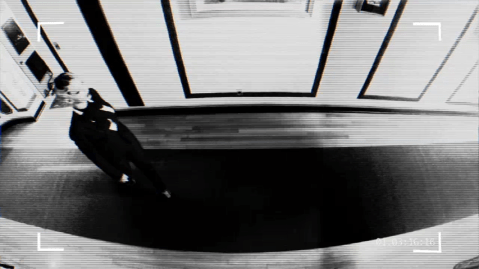
When Beyoncé finally resounded the silence of the “elevator incident,” she chose to do it through “***Flawless,” her explicit response to anti-feminist accusations. While the multifaceted anthem gained attention because of Chimamanda Ngozi Adichie’s audio, the song is uniquely infused with a kind of docu-visuality thanks to Ed McMahon’s well-known voice and the Star Search jingle. These bookends cite a young Beyoncé losing to an all-male rock band, the kind heavily programmed during MTV’s early days. The clips reinforce the album’s critique of racial and gender hierarchies while questioning the double-edged “work ethic” required to surpass them. Of course, Beyoncé pre-emptively frames this discussion for us in “Self-Titled,” a necessary step that helps audiences appreciate the many moving parts of her tour de force, including her creative business mind.So when Beyoncé swapped the audio of Adichie and McMahon for Nicki Minaj, it was no less of a feminist move. Instead, Beyoncé silences TMZ gawkers:
Of course sometimes shit go down/
When it’s a billion dollars on an elevator
She then offers herself as a medium of empowerment. Beyoncé may be part of a billion-dollar empire, but she willingly shares that pleasure with us:
I wake up looking this good
And I wouldn’t change it if I could
(If I could, if I, if I, could)
And you can say what you want, I’m the shit
(What you want I’m the shit, I’m the shit)
(I’m the shit, I’m the shit, I’m the shit)
I want everyone to feel like this tonight
God damn, God damn, God damn!
Beyoncé’s last word is an image. She and her creative team remixed the visuals of the “elevator incident”: the remix single website features black and white photos of Beyoncé and Minaj, simultaneously evoking surveillance footage and the photo booth images of a girls’ night out. Beyoncé is the work of an artist who has spent her career watching us watch her: this minor moment exemplifies Beyoncé’s multimedia resonance as an artist whose power is visible and audible across iTunes and TMZ screens alike.

Beyoncé and Nicki Minaj mugging for the camera
Thanks to Elizabeth Peterson, Charise Cheney, Loren Kajikawa, André Sirois and Jennifer Stoever for providing research and intellectual support for this essay
Priscilla Peña Ovalle is the Associate Director of the Cinema Studies Program at the University of Oregon. After studying film and interactive media production at Emerson College, she received her PhD from the University of Southern California School of Cinema-Television while collaborating with the Labyrinth Project at the Annenberg Center for Communication. She has written on MTV, Jennifer Lopez, and Beyoncé. Her book, Dance and the Hollywood Latina: Race, Sex, and Stardom (Rutgers University Press, 2011), addresses the symbolic connection between dance and the racialized sexuality of Latinas in popular culture. Her next research project explores the historical, industrial, and cultural function of hair in mainstream film and television. You can find her work in American Quarterly, Theatre Journal, and Women & Performance.
—
 REWIND!…If you liked this post, check out:
Aurally Other: Rita Moreno and the Articulation of “Latina-ness”-Priscilla Peña Ovalle
Music Meant to Make You Move: Considering the Aural Kinesthetic–Imani Kai Johnson
Karaoke and Ventriloquism: Echoes and Divergences–Sarah Kessler and Karen Tongson
Share this:


Current Top Posts





April 2021

January 2020

November 2019

October 2019

August 2019

April 2014

November 2017

March 2015

December 2017

October 2015
 Sounding Out!
Recent Comments