
SO! Reads: Licia Fiol-Matta’s The Great Woman Singer: Gender and Voice in Puerto Rican Music
 In her recent biography of Roland Barthes, Tiphaine Samoyault describes the quality of his speech through what Barthes had called the “grain of the voice,” a quality that “bears witness to a past able to act in the present, a continued memory, a recollecting forwards” (13). The voice, and perhaps most importantly, its potentialities, has been theorized in the realms of critical theory, philosophy, psychoanalysis, and more recently sound studies, as a property that although commonly enacted remains mysterious, beyond the realm of simple intelligibility. Licia Fiol-Matta’s The Great Woman Singer: Gender and Voice in Puerto Rican Music (Duke University Press: 2016). brilliantly engages many of these theoretical genealogies yet takes an analysis of the voice in surprising new directions. Her focus, as the title indicates, is the career of four “great” Puerto Rican women singers whose careers encompassed a great part of the Twentieth Century. In addition to the theoretical trajectories Fiol-Matta engages, the book is also a welcome addition to the growing field of Latina/o sound studies. Indeed, Latina/o studies’ intersection with sound studies has produced a range of provocative and essential new work that that aim to re-situate how we understand the sonic in Latina/o America.
Once a field dominated by musicologists and historians, sound studies has opened for interdisciplinary scholars new avenues to study the ways in which music and sound intersect with the formation of transnational Latinidad. In particular, many of these studies tend to be anti-canonical, reframing established histories of Latina/o American sounds through expanded forms of listening offered by sound studies. Similarly, listening in new ways to the historical record has allowed scholars in these fields to investigate lesser studied sites or to reframe well established archives. In recent years, we have seen a wealth of exciting (sound) studies that turn our attention and our ears to apprehend how the sonic creates, and often exceeds, forms of knowledge central to these fields. Books such as Deborah R. Vargas’ Dissonant Divas in Chicana Music: The Limits of la Onda [check the SO! Reads review by Wanda Alarcón], Alexandra T. Vazquez’s Listening in Detail: Performances of Cuban Music, Ana Maria Ochoa-Gauthier’s Aurality: Listening and Knowledge in Nineteenth-Century Colombia, and Dolores Inés Casilla’s Sounds of Belonging: U.S. Spanish Language Radio and Public Advocacy [check the SO! Reads review by Monica De la Torre] to name a few, have re-centered Latina/o and Latin American studies along the lines of the sonic. Departing from (although indebted to) earlier studies of Latina/o American musical forms, this body of work invites us, borrowing Vazquez’s term, to listen in detail not only to the official record, but to the sonic keys and codes hidden beyond official canons of the continental soundscape. In these projects, as in Fiol-Matta’s work, sound is engaged not only in relation to those who produce it but also those of us who must engage in an expansive project of listening.
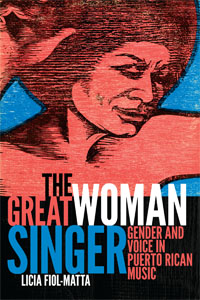 The “great” woman singer of the title carries multiple valences for the author. It refers of course to the greatness of these singers but also to the ideological strictures that have dictated the very way these singers were received, written about, and interpreted in a larger public sphere that in the book encompasses the continental landscape. Fiol-Matta argues that to conceive of a singer as both great and a woman creates a central divide that forces our listening of female singers into roles dictated by the nation, record companies, fans, and others. In order to challenge this ideological strait-jacked The Great Woman Singer proposes that these great female singers deployed what she calls the “thinking voice,” a form and theory of vocality that turns to a range of theories, primarily psychoanalysis and philosophy, to read the very cultural history of Puerto Rican music during the greater part of the last century.
Fiol-Matta listens in detail to the careers of four singers, Myrta Silva, Ruth Fernández, Ernestina Reyes, and Lucecita Benitez, who throughout their prolific careers were forced to balance their preternaturally gifted voices and defiant public personas against a sexist and homophobic industry and culture that sought to discipline them. In some ways, the histories and careers of each of these singers might seem at first glance to cast them as probable tragic protagonists in a Douglas Sirk melodrama, female figures who are pitted against but ultimately succumb to larger societal forces. A gifted storyteller, Fiol-Matta does provide the reader vivid portrayals of the many challenges that each of these singers faced, yet she pairs these biographical sketches with keen theoretical insight to illuminate how their thinking voice stood against their time. Thus, what emerges throughout The Great Woman Singer is not only a loving portrait of these women, but also a theoretical model that grasps how their extraordinary voices, as well as their performative command of the stage, were able to exist in relation to the weight of the state, culture, and history. Among the book’s most exciting strengths is the encounter between the historico-biographical and a series of deeply theoretical arguments that build throughout. Fiol-Matta deftly combines (to name a few) archival research, cultural history, psychoanalytic theory, queer and feminist theories, close reading, and interviews the author conducted in the course of writing the book.
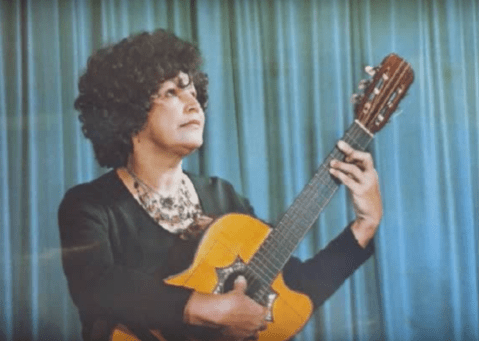
Ernestina Reyes aka La Calandria, Screen capture by SO!
Although her stated goal is to develop a theory of the thinking voice, Fiol-Matta does so by mining the complex interactions between music’s deployment in the service of state projects, audiences both local and transnational, record companies, the cultural and social history of particular sounds, and the personal and professional lives of the singers themselves. At times such a comprehensive approach feels overwhelming, digressing often from a chapter’s main points to small details of a singer’s oeuvre for example, but this move results necessary to fully illustrate the enormously complex terrains these singers had to navigate. Indeed, the contextual elements of the book provide neophytes to the Puerto Rican and Caribbean sonic landscape the tools to grasp how the voice emerges often against the demands of institutional and cultural forces. However, the driving force of these chapters is an invitation to listen along, so as I read through Fiol-Matta’s chapters I listened along to these voices, enveloping my reading and my listening.
The Great Woman Singer begins with an emblematic moment in the history of Puerto Rican music that helped establish the island’s sonic relation to the rest of Latin America: Lucecita Benítez’s winning performance of “Génesis” at the First Festival of Latin Song in the World. Previous to this moment Puerto Rico, and Lucecita, had occupied a marginal space in the Latina/o American imaginary, but in her performance of composer Guillermo Veneers Lloveras’ song, Benítez reset the script for both.
As Fiol-Matta writes, “no scripts were available to subordinate her and tame her eruption. She was not feminine. She did not sing softly or croon about heterosexual love. She claimed the masculine prerogatives of expressing social and political ideas outside of marriage and motherhood, eschewing the roles that her managers sought to implant in her earliest persona” (3). These opening moments will serve as a refrain through different voices, keys, timbres, and moments throughout the book. The Great Woman Singer, however, is not only a feminist retelling of history, or as Fiol-Matta writes, “It is not a survey of women in music or a tracing of resistance by women to the strictures of music making. My interest in the female pop music star is about querying instances where singularity erupts despite heterosexism and misogyny, through the vehicle of voice” (4). To listen to women seriously, she indicates, is to move away from facile narratives of gender and onto an investigation of what their voice did against the weight of history itself. Like the grain of the voice that began this review, the vocal performances that the book delves into appear to scramble the temporal markers that would contain it.
A central concept in the book is the notion that the voice itself must be understood as a form of thought. As Fiol-Matta writes, to examine the thinking voice of the great woman singer in its historical specificity is a way of thinking gender itself, “a critical theorization of voice and gender, with an anchor in psychoanalytic thought without being exclusively psychoanalytic.” (8). Her approach to the voice functions as the methodology that guides the reader, proposing forms of listening that often escape normative listening practices. Central to the book’s argument is the relationship between music and the state. Indeed, Fiol-Matta refers to the state’s investment in music as a form of “mandated enjoyment” but as she writes, “I unpack enjoyment’s dependency on the performing, female body and detail when, how, and why various forms of control short -circuit, despite their certainty of managing women” (10).

Myrta Silva, Screen Capture by SO!
The first chapter examines the career of Myrta Silva, who enjoyed a long and fruitful career partly because of her mastery of a number of genres, the guaracha and the bolero primary among them. Fiol-Matta puts forward a notion of “cynical ethics” that we can find in Silva’s voice, “a virtuosity that José Esteban Muñoz has linked to queer artistry: the brilliant, conceptual staging of negativity and failure” (19). The height of Silva’s prominence came during the 1940s, her most prolific and successful period. She was an extraordinary figure who interjected herself into traditionally masculine realms, “her positioning was simply unheard of” (21). In the 1950s Silva returned to Puerto Rico from New York, becoming a major figure across media. Fiol-Matta lingers in particular on the excesses of Silva’s body, who in the arc of her career went from a youthful singer to a “sexual bombshell,” eventually to be known as “nuestra gordita,” a figure who had lost the sexual appeal of her youth but who remained iconic in spite of these sexist castings of her body. The chapter listens to Silva’s signature song “Nada.”
The song’s lyrics are self-referential; Silva refers to herself as “nada,” a way of expressing that she does “not want to be looked at/I don’t want to be told what to do, to be touched, spoken to, or be invited to sing/Nothing, I will no longer be called Myrta.” When listening to the song, Silva’s virtuosity becomes immediately apparent as the furious velocity of her voice charges the lyrics in equal amounts with sensuality and negation. As an ostensibly queer artist, this performance of “Nada” signals Silva’s refusal to be coopted by the desires of her male onlookers. As Fiol-Matta makes clear, this positioning is essential to understand the very career of Silva’s body as she morphed from the sensuous “Myrta” to the nearly desexualized “Chencha” later in her career. But her voice “[breached] the distance between signifier and signified and between her persona and person” (33).
The following chapter focuses on Ruth Fernández, one of Puerto Rico’s most prominent black singers. She “entered the star orbit of the music establishment as an exception: the first female lead of any orchestra in Puerto Rico, and also the first black star body in Puerto Rican culture” (67). Blackness, in this chapter, becomes entangled with the question of being itself, with Fernández’s voice a rejoinder that comes into existence against a racist and sexist cultural landscape. Throughout the chapter we hear how Fernández was from her childhood relegated to the sidelines because of her blackness, sometimes quietly, often through the loud marker of “ugliness.” But as with the rest of her case studies, Fiol-Matta shows that Fernández’s trajectory defies any simple narrative that would see her career as a personal triumph against this racism.
Her vocal performance leaps beyond the racist narratives assigned to her blackness although she always had to negotiate them. As the author states, “while Fernández was a pop music singer, she possessed a voice of great volume and color, was naturally virtuosic, and, although not trained, reflected a preference for classically inflected singing that she probably learned or was steered into in school” (68). This education, however, was in itself the result of colonial programs that sought to “civilize” Puerto Rican bodies, but “in this colonial context, her voice opened a gap in the available symbolics of music” (68). The virtuosic register of Fernández’s voice pushed against the racial logics imposed upon Puerto Ricans of African descent, even when descriptions of it understood her blackness as the provenance of her mighty instrument. The chapter is especially attentive to how Fernández’s aural and visual presentation collided and colluded to create a racial sensorium. What emerges in the chapter is a set of difficult negotiations that tether between the official reception of blackness embodied by Fernández’s career and the ways in which the voice, through its signifiers, evades and expands upon those official programs of racial legibility. To approach the black sensorium of Fernández’s career, Fiol-Matta intimates, we must listen past the stories of triumph, hearing as well the wounds that her voice could never quite heal.
The book turns next to Ernestina Reyes, “La Calandria,” Puerto Rico’s foremost interpreter of the jíbaro genre, or music from the countryside. Her fame was unparalleled, “over the course of two decades, she recorded an uncommonly large number of tracks for a woman, a feat made all the more remarkable because she routinely received sole or main billing, collaborated with the very best vocalists of the country music genre, and was as a matter of course backed by master country music cuatro players, certifying her revered standing” (121). But Reyes’s career serves as a gateway to investigate Puerto Rico’s difficult relationship to the figure of the jíbaro, a symbol of the nation’s countryside, a figure equally admired and derided.
As Fiol-Matta explains, “the Puerto Rican genres of plane, bomba, and jíbaro music became explicitly aligned with the national-popular visions that rewrote music history as a racialized narrative of predominantly Hispanophile origins [that] exalted the peasant figure and relegated Afro-Puerto Ricans to a heritage role” (125). Fiol-Matta posits these distinctions as zoe or “bare life.” But, “compared to the Afro-Puerto Rican subject, the symbolic country dweller lived on, however spectrally, while the descendant of slaves faded away as a relic of the past” (125). Calandria was difficult to classify within the racial spectrum of the jíbaro genre, she is consistently described as “dark-skinned” against the figure’s supposed whiteness as she “astutely navigated this extimacy and understood the contradictory affordances of the nothing” (133). Fiol-Matta sees Calandria’s career as an encounter with the “nonplace” in her performance of a figure, the female jíbaro, that did not readily exist in the cultural imaginary. She “learned to convey the ‘rustic’ via well-traveled techniques of rasp and nasality; she also recurred to the shrill tone, which sounded uneducated to the middle classes, a fact that she must have been well aware of” (135). Indeed, Calandria managed a successful career because of the ways in which she disguised her virtuosity through improvisation, playing both in order to create her figure as a singer. Fiol-Matta is attentive to the genre’s own ambivalent place in the Puerto Rican sonic imaginary, teetering between the folksy and the popular, providing readers with a rich history of the demands of iconicity.
 The final chapter returns to Lucecita Benítez and most fully develops the concept of the thinking voice. Listening to Benítez’s powerful performance of “Génesis,” the performance that begins the book and serves as its concluding guide, feels overpowering even with decades standing between its moment and the present. It embodies the thinking voice, “an event that can be apprehended through but is not restricted to music performance. It exceeds notation, musicianship, and fandom, although it partakes of them all. No artist owns the thinking voice; it cannot be marshaled at will or silenced when inconvenient. Its aim is not to dazzle or enthrall, although it may do so” (173).Benítez alongside the other singers in the preceding chapters, doesn’t so much possess this voice as much as she wields it, an encounter between prodigious talent and deep technicality. In the case of Lucecita, perhaps the greatest champion of the Puerto Rican sonic imaginary, the expansiveness of the thinking voice took her from her beginnings as a teen superstar to embrace the seismic political calls toward liberation in the 1960s and 70s, and even sustained her as she became a popular balladeer in the dusk of her career. Fiol-Matta explains, “her deep register was truly wondrous and unique in the constellation of all Latin American and Spanish-speaking singers, not just women” (177). Lucecita did not emerge unscathed, however. As her recordings and performances took on an increasingly defiant tone, aligning herself with the Cuban revolution and Black liberation, she was blacklisted, her career momentarily suspended. As an older figure, her final career incarnation was as a diva never declared such in part because of her butchness. She never turned her back on her political leanings, but adapted to the necessities to continue her career. The chapter’s conclusion is particularly evocative as Fiol-Matta discloses her own disillusionment at this final phase, attending concerts “waiting for the real Lucecita to come back” (224).
But it is this final desire, unfulfilled, that perhaps provides the impetus for a book invested often in reconciliation. Throughout their careers, all four singers performed songs in which they were the explicit protagonists, calling out (and to) their publics, who often chose to ignore these calls in spite of their fascination with the singers. It’s a position familiar to those of us who have declared ourselves fans only to feel like we have been let down by the object of our fascination. And yet what Fiol-Matta proposes with the thinking voice is not simply a mode of reparative reading that restores her (and our own) fandom, but a serious analytic that blurs the distinction between the listening to and the thinking with. Fiol-Matta knows that this is an especially important move when it comes to female singers, whose careers and personas are used to obscure the difficulty they demand from the listener. The Great Woman Singer then provides us with a guide to listen anew and in new ways.
—
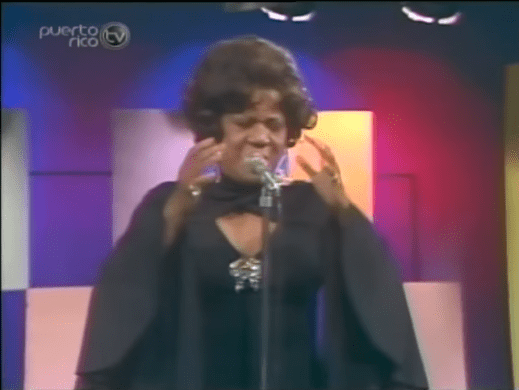
Featured Image: Screen Capture of Ruth Fernández by SO!
—
Iván Ramos is assistant professor of LGBTQ studies in the department of Women’s Studies at the University of Maryland. He was previously a University of California President’s Postdoctoral Fellow in the Department of Ethnic Studies at UC Riverside.He received his PhD in Performance Studies with a Designated Emphasis in Women, Gender, and Sexuality from UC Berkeley. His first book, Sonic Negations: Unbelonging Subjects, Inauthentic Objects, and Sound between Mexico and the United States, examines how Mexican and U.S. Latino/a artists and publics utilized sound to articulate negation in the wake of NAFTA. Iván’s broader research investigates the links and slippages between transnational Latino/a American aesthetics in relationship to the everydayness of contemporary and historical violence. In Fall 2016, he was a member of the “Queer Hemisphere: América Queer” Residential Research group at the University of California Humanities Research Institute at UC Irvine. His writing has appeared in several journals including Women & Performance: A Journal of Feminist Theory, Studies in Gender and Sexuality, and ASAP/Journal. He has articles forthcoming in the catalog for the exhibition Axis Mundo: Queer Networks in Chicano L.A., sponsored by the Getty Foundation, and the anthology Turning Archival from Duke University Press.
—
 REWIND!…If you liked this post, you may also dig:
SO! Reads: Dolores Inés Casillas’s ¡Sounds of Belonging!–Monica De La Torre
SO! Reads: Roshanak Khesti’s Modernity’s Ear–Shayna Silverstein
As Loud As I Want To Be: Gender, Loudness, and Respectability Politics–Liana Silva
Share this:

Hardcore as “Home”: An Etymology of CORE through Chicana Punk Sound

 For the full intro to the forum by Michelle Habell-Pallan, click here. For the first installment by Yessica Garcia Hernandez click here.
The forum’s inspiring research by scholars/practioners Wanda Alarcón, Yessica Garcia Hernandez, Marlen Rios-Hernandez, Susana Sepulveda, and Iris C. Viveros Avendaño, understands music in its local, translocal and transnational context; and insists upon open new scholarly imaginaries. . .
Current times require us to bridge intersectional, decolonial, and gender analysis. Music, and our relationship to it, has much to reveal about how power operates within a context of inequality. And it will teach us how to get through this moment. –MHP
—
Chicana punk is a Chicana feminist punk rock subculture within a subculture and a countercultural formation. Although ‘Chicana’ identity is typically thought of as a politicized Mexican-American woman shaped by Chicana/o politics, I recognize that there are varying participants that constitute this subculture, its scenes, and/or communities. Punk is in constant movement and formation, especially as its participants come in and out of the scene, contributing to and reshaping the subculture. The same can be said about Chicana punk.

ATRAKO live @ The Smell–by Susana Sepulveda
Chicana/o and Latina/o studies cultural theorist Michelle Habell-Pallán notes in Loca Motion: The Travels of Chicana and Latina Popular Culture that punk is a “site of possibility” (150), a mode in which Chicanas and Latinas challenge the status quo and “disrupt fixed notions of Chicana identity framed by the dominant culture” (153). Thus, Chicana punk is constituted through different subjectivities, experiences, and imaginings (specifically Chicanisma, or Chicana feminist ideologies and consciousness formations rooted in the Chicana Feminist Movement) that continue to be pertinent for young women in punk today.
In this post, I explore an etymology of “core” and the relationship of this term to Chicanas and Latinas immersed in hardcore punk. I ask: How is “core” theorized as a conception of “home” within Chicana punk? Drawing from Chicana feminist theorist Gloria Anzaldúa’s notion of “making face, making soul” and the sound and performance practice of Los Angeles based Latina/o hardcore punk band ATRAKO, I frame core as home, while considering how a Chicana punk listening practice of hardcore emerges.
ATRAKO is Samahara (Vocals), Irvin (Guitar/vocals), Suzy (Bass), and Cindee (Drums). Although ATRAKO was made up of both Chicanas and non-Chicana Latina/os in 2012, their participation in Chicana punk spaces, events, and adoption of Chicana feminist ideologies help to constitute Chicana punk subcultures more broadly. ATRAKO illustrates this through their performance on Feburary 27, 2015 at Xicana Punk Night. This was to be one of their last shows before their split on July 5, 2015 at the Riot Grrrl Carnival annual musical fundraiser event held at The Smell, an all-ages-volunteers-run, do-it-yourself art and music space. Xicana punk night was a community fundraiser event for Nalgona Positivity Pride, “a Xicana-Brown [and] Indigenous project that focuses on intersectional body positivity, eating disorders awareness and cultural affirmation.” ATRAKO’s lyrics also address issues of gender, racial, and environmental violence; and resonate with Chicana feminist critiques. Moreover, they exemplify how Chicana subjectivities are reconfigured and ‘sounded out’ through hardcore.
Hardcore is a style of punk music and aesthetics that arose in the early 1980s in varying urban geographies including Southern and Northern California, Washington D.C. and New York City, with intensified musical characteristics that differ from the 1970s punk movement. Hardcore is characterized by its aggressive aesthetics typically depicted by its fast sonic tempos, short song lengths, and gritty confrontational vocals. Despite the queer Chicana/o influences on the sound of hardcore by punk artists such as Alice Bag and Kid Congo Powers, it has remained predominantly represented by white, heterosexual, masculine figures of middle class suburbia, epitomized by Keith Morris, Henry Rollins, and Ian MacKaye. But what happens when Chicanas and Latinas engage hardcore? By focusing on the relationships Chicanas and Latinas forge through hardcore, especially in relation to Chicana punk subcultural formations, I argue we can reconfigure hardcore narratives. It is also important to note that not all participants that engage Chicana punk necessarily identify as Chicanas. Yet non-Chicana/o identified Latina/os are entangled and implicated within Chicana punk subculture through their participation and co-production of Chicana punk spaces.
To theorize Chicanas’ and Latinas’ participation in hardcore, I consider an etymology of core–specifically its articulation as ‘heart’ and as ‘coring,’ that is, “the act of removing a core or of cutting from a central part.” These meanings help me to conceptualize core, and by extension, hardcore as home. As early hardcore punks began to distinguish themselves from 1970s punk, they formed new punk scenes, subjectivities, and sound. These new social formations offered new generations of punks another mode, or set of tools, to contest the status quo and articulate new social conditions, like for instance, Reaganism in the 1980s. But more than anything else, hardcore was the result of a new generation of punks creating a niche for themselves, that is, a “home,” within the broader punk movement. Thus, the formation of hardcore was an act of “coring” that produced a new site of belonging. I view these articulations of “core” further, alongside Anzaldúa’s framework and metaphor “making face, making soul” (i.e. making heart). This framework enables me to theorize hardcore as home in Chicana punk.
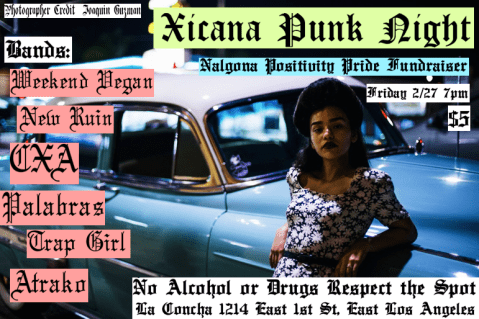
Xicana Punk Night Flyer– by Gloria Lucas, NPP
Making ‘core’
In Making Face/Making Soul, Anzaldúa writes, “‘making faces’ is my metaphor for constructing one’s identity” (xvi). In Light in the Dark/Luz en lo Oscuro, she extends this idea stating “The heart es un corazón con razón, with intelligence, passion, and purpose, a ‘mind-full’ heart with ears for listening, eyes for seeing, a mouth with tongue narrowing to a pen tip for speaking/writing” (153). Within Anzaldúa’s theorizations, “heart” is rendered a part of one’s conocimiento, a self-reflective awareness of how one is cultivating an identity and generating consciousness formations. But through this self-reflective process, one is also creating notions of home and belonging.
Through the notion of coring, self-reflective processes become about de-hearting, decentering and/or disrupting what is presumed to be foundational (i.e. what is central/core), in order to refashion. In other words, coring is a process of making anew. Hardcore demonstrates “coring” in its formation, as it emerged from the early punk movement yet reconfigured its notion of punk sound, style, and identity. In a way, punk ripped out its heart to start anew as hardcore. Similarly, Chicana punk has cored and reconfigured notions of punk and hardcore sound, style, and identity. For instance, ATRAKO offers a queer Chicana feminist representation that disavows dominant hardcore punk portrayals. They spit out lyrics in Spanish only, and use metaphorical language and visuals in their lyrics and album covers addressing gendered violence in relation to environmental abuse. Furthermore, while embodying hardcore’s “traditional” characteristics, ATRAKO dramatizes hardcore sound by performing a more melodic dissonance. The music compliments the lyrical narrations and arguably enacts a call-and-response to the sung lyrics posing its own sonic narration.
The song “Madre” (2014), which translates as “mother,” exemplfies this as the guitarist begins with a lamenting introductory verse, followed by thumping drums and a grito reminicent of a battle cry. In the first chorus Samahra blurts out:
ya es tiempo de entender
quien te dio la vida
es la muxer la encarnación
la esencia de la tierra
ya es tiempo de entender
quien te dio la vida
es la muxer quien tiene el poder. (Madre, 2014)
As Samahra is singing, the drums, guitar, and bass sound out a response to the chorus’s statements. This sonic accompaniment articulates a “coring” of hardcore music through the queer brown bodies animating this sonic experience, the exclusively Spanish lyrics and narrative, which centralize women and their relations to the natural world through the figure of mother, as well as a spiritual activism–what Anzaldúa called “a spirituality for social change” (323). In other words, the song presents all things that are not typically represented in American hardcore. ATRAKO tears up hardcore to make it anew and to speak to their experiences, politics, and identities, creating a “home” for themselves in hardcore.
In addition, Chicana punk reconfigures Chicana feminist politics, experiences, and subjectivities. Punk artists and bands such as ATRAKO articulate, or rather (re)articulate, Chicana feminist discourses through the platform of punk, and more specifically, hardcore. ATRAKO demonstrates a reconfiguration of Chicana feminisim through their sonic expression which shapes a listening practice of Chicana feminist theory and praxis through a “coring” of hardcore. As ATRAKO presents Chicana feminist discourse through non-traditional avenues and hardcore style, they bring visibility to Chicana feminist experiences and subjectivites within punk subcultures. Moreover, given the ethnic heterogeneity of the band, ATRAKO demonstrates how Chicana feminist politics is engaged by non-Chicana Latinas, particulatly punks, who help shape these politics just as much as they are impacted by them. ATRAKO’s hardcore sound reveals how Chicana and Latina punks engage and reconfigure Chicana feminist discourses, positing the political potentiality punk offers Chicana feminism. In considering the conceptual framework of making heart, or rather making ‘core,’ Chicana punk, as exemplified by ATRAKO, sounds out a process of deconstruction and reconstruction.
Additionally, these continuous processes of reconstruction in punk and more specifically Chicana punk, are made possible though the cultivation of practices and cultural productions of its active participants. For instance, ATRAKO’s sound stems from a variety of musical influences that might not necessarily be typically associated to or rendered Chicana or Chicana affiliated (such as metal, punk, and hardcore). Yet, their coring practices reconstruct hardcore as a Chicana genre. In addition, events such as Xicana Punk Night illustrate how Chicana punk subculture is constituted by varying participants who enact and identify with Chicana feminist politics in one way or another. ATRAKO’s participation at this show, as well as other non-Chicana Latina attendees, highlights how a Chicana punk space and genre is generated through a structure of feeling that extends across ethno-national identities. It might be suggested that the term “Latino punk” may best describe this structure of feeling; however, the fact that participants continue to specify the genre and spaces as “Chicana” or “Xicana” punk complicates such general descriptions.
Future Developments
The theoretical basis I have presented here is a stepping-stone for thinking about Chicana punk listening practices and what can be imagined through Chicana punk sound. Considering the etymology of “core” through the context of hardcore, I have argued that one way of imagining Chicana punk sound is through a reconfiguration and articulation of home. ATRAKO offers a new way to conceptualize how Chicana punk subculture and sound is constituted through varying Latina/o identities and non-Chicana subjectivities, and how it is also a site of home, belonging, and community for such participants, culminated through the act of listening. Listening is performative here, in the sense that it is a part of the “coring” process of hardcore, as Chicana feminist praxis is enacted through hardcore sound. The connection between “core” and listening practices in Chicana punk echoes a structure of feeling and political potentiality that emanates from the scene, music, and sound, exceeding their subcultural formations. Participants engage this structure of feeling, shaped by processes of making anew, that functions as a site of belonging that speaks to new Chicana subjectivities, politics, and experiences in hardcore.
—
Featured Image: ATRAKO live–via https://atrakopunx.bandcamp.com
—
Susana Sepulveda is a PhD Student in the Department of Gender and Women’s Studies at the University of Arizona. Her developing dissertation project engages Chicana feminist studies, cultural studies, subcultural studies, and sound studies. She focuses on consciousness and subject formations in Chicana punk subcultures, emphasizing the importance of punk for understanding Chicana identities, subjectivities, consciousness, politics, and representations. Susana’s research has received support from the Barnard Library, the American Association of University Women (AAUW) of Arizona, the Women Studies Advisory Council (WOSAC), as well as numerous conference associations including the American Studies Association, the Cultural Studies Association, the National Women’s Studies Association, and Feminisms & Rhetorics. She earned her M.A. in Gender and Women’s Studies at UA, and her B.A. in Feminist Studies and Latin American and Latino Studies at the University of California, Santa Cruz. In addition to her scholarship, Susana is the founder and organizer of the annual music fundraiser event Riot Grrrl Carnival, a punk musician in the Los Angeles based punk band Las Sangronas y El Cabron, zinester, and creator of the zine series “La Sangrona.”
—
 REWIND! . . .If you liked this post, you may also dig:
G.L.O.S.S., Hardcore, and the Righteous White Voice – Chris Chien
If La Llorona Was a Punk Rocker: Detonguing The Off-Key Caos and Screams of Alice Bag – Marlen Ríos-Hernández
Riot-Grrrl, Punk and the Tyranny of Technique – Tamra Lucid
An Evening with Three Legendary Rebel Women at Le Poisson Rouge, January 27, 2017: Margot Olavarria, Bibbe Hansen, and Alice Bag –Elizabeth K. Keenan
Share this:


Current Top Posts





April 2021

January 2020

November 2019

October 2019

August 2019

April 2014

November 2017

March 2015

December 2017

October 2015
 Sounding Out!
Recent Comments