
Yellow Rain and The Sound of the Matter: Kalia Yang’s Sonorous Objection to Radiolab
The critically acclaimed WNYC program Radiolab found itself embroiled in a controversy for its recent broadcast segment “Yellow Rain.” Released on September 24, 2012 as part of the episode entitled “The Fact of the Matter,” the 20 minute segment “Yellow Rain” recounted the slaughter of hundreds of thousands of the Hmong by the Viet Cong and the Pathet Lao after the United States left Vietnam and the subsequent debates surrounding the chemical weapon called “yellow rain. The episode pitted the witnessing of Eng Yang, a survivor and documenter of the genocide—whom producer Pat Walters describes as the “Hmong guy” at one point—and his niece, award-winning writer Kao Kalia Yang—referred to only as “Kalia” by hosts Robert Krulwich and Jad Abumrad—against the research of university scientists and the relentless questioning of Krulwich.
Following the episode’s broadcast, many listeners and critics argued that Radiolab’s treatment of their the Yangs was Orientalist and unethical. Jea, writing on Radiolab’s “Yellow Rain” comment page suggested “Ms. Yang and her uncle were dismissed and even reduced to pawns in the larger scheme of RadioLab’s agenda.” Others, such as Bob Collins, writing for Minnesota Public Radio worried that “the story appeared […]to invalidate the Hmong loss and suffering in Laos.” Aaron, a commentor on Current Magazine’s coverage of the controversy called Radiolab’s coverage “inexcusable science, nothing close to journalism, and if only ‘a story,’ one that cements erroneous ideas in the minds of its listeners.” Kirti Kamboj, writing for Hyphen, a magazine dedicated to Asian American arts, culture, and politics, described the episode as “heartbreaking,” “utterly infuriating,” and an exemplar of “Orientalist, ethnocentric framing” designed to privilege Western knowledge.
From my perspective as a scholar of rhetoric, communication, and debate, to call Radiolab’s game rigged would be an understatement. The interview was not conducted on an even playing field and it smacks of a white Western privilege that the writers and producers failed to fully acknowledge even in their on-air discussion following the interview. Radiolab determined the questions, edited the exchange, and retained the capacity to both frame and amend the discussion (there is a debate concerning whether or not the Yangs knew the questions prior to the interview—this discussion can be found here, Radiolab’s response here , and answer to Radiolab’s claims here.).
In addition to the whether or not Radiolab misrepresented the Yangs and downplayed the mass murder of the Hmong in their pursuit of “truth,” I find that this episode is important for the insights it contains into argumentative invention, journalism, and new media ethics, all sparked by the grain of Kalia Yang’s voice in response to Krulwich’s questions. I argue that Kalia’s sounded distress functioned as what I call a “sonorous objection,” instigating the critique of Radiolab’s tactics. Borrowing from argumentation theory, an objection describes an argument that draws the context of an argumentative exchange into view. Research on objections has most often examined the use of visual images, such as the controversy sparked by the photographs coming from of Abu Ghraib. In this short piece, I will wed prior research on objections with theories about sound to argue that Kalia used the grain of her voice to call out—and call into question—the opaque assumptions that governed the interview and its reception.
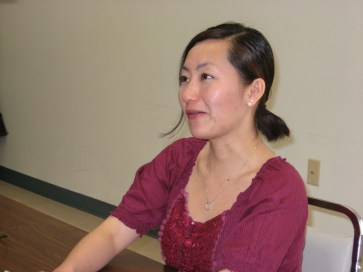
Kao Kalia Yang, Image courtesy of the Fox Cities Book Festival
“Yellow Rain” recalls the Hmong genocide following the Vietnam War. The Hmong were recruited by the CIA to help disrupt supply lines to Ho Chi Minh City (or Saigon). After American troops withdrew, the Viet Cong and the Pathet Lao persecuted the Hmong for aiding the US. The communists attacked the Hmong, eradicating villages and blanketing populations with a sticky, yellow substance. Attempting to escape systemic annihilation, the Hmong receded into the jungle, where many still reside today. Some of the Hmong that were able to escape brought with them leaves covered in the yellow stuff, which they gave to local aid workers. These workers then shipped the samples back to the United States where labs diagnosed it as a chemical agent known as “yellow rain.” A concerned Reagan administration reasoned that only the Soviet Union had the technical capacity to produce such a weapon. As a result, Reagan restarted the Unites States’ then-dormant Chemical and Biological Weapons (CBW) program. Radiolab’s hosts, Abumrad and Krulwich take issue with this narrative; troubling the assertion that yellow rain was in fact a chemical weapon and insinuating that Reagan used the Hmong incident as an excuse to start producing CBWs.
“Yellow Rain” progressed like many other segments of Radiolab. Abumrad and Krulwich began by recounting the story of the Hmong from the perspective of retired CIA agent Merle Prebbenow and the Yangs. Next, they interview Harvard professor Matthew Meselson and Cornell professor Thomas Seeley, using their testimony to suggest that “yellow rain” was actually bees releasing their bowels en masse after hibernation. Then Abumrad and Krulwich brought this provocative hypothesis to the Yangs. Here, the show intensifies, the music fades, and Krulwich begins to question the Yangs, “as if he were a cross-examining attorney” according to Bob Collins, blogger for Minnesota Public Radio. As the interview goes on, Krulwich’s tone increasingly stiffens as he repeats a similar line of questioning: “But, as far as I can tell,” Krulwich asserts, “your uncle didn’t see the bee pollen fall, your uncle didn’t see a plane, all of this is hearsay.”
Kalia’s voice beings to fray:
My uncle says for the last twenty years he didn’t know that anyone was interested in the deaths of the Hmong people. He agreed to do this interview because you were interested. What happened to the Hmong happened, and the world has been uninterested for the last twenty years. He agreed because you were interested. That the story would be heard and the Hmong deaths would be documented and recognized. That’s why he agreed to the interview, that the Hmong heart is broken and our leaders have been silenced, and what we know has been questioned again and again is not a surprise to him, or to me. I agreed to the interview for the same reason, that Radiolab was interested in the Hmong story, that they were interested in documenting the deaths that happened. There was so much that was not told. Everybody knows that chemical warfare was being used. How do you create bombs if not with chemicals? We can play the semantics game, we can, but I’m not interested, my uncle is not interested. We have lost too much heart, and too many people in the process. I, I think the interview is done [This is Kalia’s transcription of her statements, from Hyphen].
Kalia reflects on her experience with Radiolab in a post for Hyphen, characterizing the interview as more of an interrogation. I add an additional layer: that of the deliberative exchange. While it is certainly true that there was a great discrepancy between the interlocutors, both parties adduced reasons for their respective positions producing an argumentative encounter that challenged the norms that govern discourse and language.
In the above quotation, Kalia claims that Radiolab ambushed her and their meeting occurred under a pretense of telling the Hmong story. She then rhetorically situates her interlocutor within a broader history of silencing the Hmong. While it may be tempting to look at the Radiolab interview as an isolated event, Kalia’s arguments cast it as another iteration of the Hmong being discounted. We cannot, in other words, cleave “Yellow Rain” from a history of oppression.

August 2004, Image by Flickr User Awning
Additionally, Kalia chides Radiolab’s concerns, calling them a “semantics game.” Here, both the use of semantics and game is instructive. Semantics speaks to the trivial nature of Krulwich’s questions. His focus on yellow rain and its dubious status as a chemical weapon obfuscates the fact that weapons were used against the Hmong. Or, to reformulate Kalia’s argument, Radiolab is trading purely in language and ignoring the material reality of her people. The invocation of game is also important because it suggests that Krulwich does not understand the historical gravity of his actions. And, perhaps more importantly, that Radiolab is not taking the incident seriously. These arguments coalesce to trouble the assumption that the interview –and the inclusion of the Yang’s voices–was fair, equal, and inclusive. This culminates in Kalia wresting her agency from this context by ending the interview.
However, an exclusive focus on language ignores the intersecting effects of histories–personal, interpersonal and social–sounds, cultures, moods, and affects. Indeed, the grain of Kalia’s voice operates as an affective vector. Teresa Brenna, in The Transmission of Affect, explains, vocal rhythm “is a tool in the expression of agency, just as words are. It can literally convey the tone of an utterance, and in this sense, it does unite word and affect”(70). Different vocal inflictions invoke both biographic and cultural histories, as the body attempts to discern meaning. Political theorist William Connolly, in Neuropolitics, calls this space between sound and meaning the virtual register of memory. Virtual memory describes a background below conscious recollection that discerns sensory data, like sound, and renders it intelligible (24). We often see this register at work when we watch a movie, as different scenes are stored below the level of reflection and are called up to interpret a scene. Virtual memory is recursive, folding in present experiences to help guide future encounters and using previous encounters to make sense of the present. Thus the rhythm of Kalia’s voice guides the entrainment of affect by drawing on listeners’ previous encounters with similar sounds. This process infuses listeners’ perceptions and resulted in what commentators called “painful” and “emotional.”
While Kalia’s words claim Radiolab ambushed her and her uncle, the grain of her voice draws the unequal distribution of power into sharp relief. Her vocal cracks resonated with listeners, imparting an intense, visceral experience and provoking an outcry. One listener, Mathew Salesses sums up the response: “Every time I listen to this, I start to cry. Every time. About ten times now.” It demonstrates that Kalia was through reasoning with Krulwich; his use of Western science to discredit indigenous knowledge made sincere argumentation impossible. Her cry was not only an act of resistance, but also an objection that troubled Radiolab’s claims of journalistic excellence, highlighting vexing issues with editing and story construction.
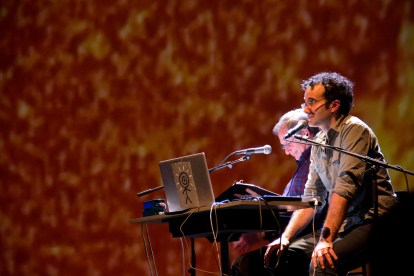
Robert Krulwich and Jad Abumrad, Image by Flickr User Carlos Gomez
In argumentation parlance, Kalia’s voice operated as an “objection.” In “Entanglements of Consumption,” argumentation scholars Kathryn M. Olson and G. Thomas Goodnight (1994) explain how an objection functions within an argumentative encounter: “absent a common agreement as to the means of reaching consensus, debate over the ‘truth’ of an asserted claim is set aside, in whole or in part, and challenges are raised as to the acceptability of the communicative context within which the argument is offered as secured”(251). That is, when deliberation occurs within a shared context—agreed upon values, goals, rules, and facts—the argument progresses smoothly. However, when there is a disjunction between interlocutors, such as in “Yellow Rain” where both parties disagree on basic facts, hegemonic beliefs take precedence. Objections function to evidence this differential, making both parties (and often an audience) aware of this gap. As such, objections are not concerned with refuting previous claims—the way that Kalia states neither she nor her uncle are interested in having a semantic debate—but questions the very context—and the conditions–of the debate itself.
Despite Radiolab’s attempts to fetishize her voice to evidence the “fact of the matter” and the “complicated nature of truth,” Kalia’s voice retained her agency. Through the invocation of the sonorous objection, she eluded capture and demonstrated the unequal terrain of the interview. Her pain enveloped the listener, leaving a resonance that Radiolab listener Cecilia Yang called “painful to listen to” in her personal blog. As Olson and Goodnight remind us, objections arise in a repressive context, when people are denied a voice. For Kalia, histories of racism and colonialism infused the argumentative encounter, making it impossible for her to “reason,” a framework she exposes as a stacked game. As such, her sonorous objection functioned to evidence this disparity, while directing the listener’s attention to her cause. Just as the pictures of prisoners coming out of Abu Ghraib incited outrage about U.S. imperialism and violence, Kalia’s sonorous objection provoked a conversation about the Hmong, Radiolab, and the ethics of journalism in the new media age.
—
Justin Eckstein is a doctoral candidate and former director of debate at the University of Denver. His work explores the intersection of listening, affect, and argumentation. Justin’s writing has appeared in Argumentation & Advocacy,Relevant Rhetoric, and Argumentation in Context. Currently, he is writing his dissertation on the micropolitics of podcasting in the post-deliberative moment.
Share this:

Sound at AMS/SEM/SMT 2012

This week brings us #musicon12, the megaconference of the American Musicological Society (AMS), the Society for Ethnomusicology (SEM), and the Society for Music Theory (SMT). This will be the third joint conference of these societies, after Oakland in 1990 and Toronto in 2000. These roughly decennial gatherings of the three principal scholarly societies of music scholarship provide increased opportunities for cross-disciplinary conversations and amazing live performances. A fact augmented even more by the selection of New Orleans, a city known for its music, for this year’s meeting.
The conference takes place in the Sheraton and Astor Crowne Plaza hotels from this Wednesday, October 31st through Sunday, November 4th. It will be preceded by two events. The first, occurring Monday, October 29th and Tuesday, October 30th, at Tulane University’s Rogers Memorial Chapel, is Ecomusicologies2012, a pre-conference organized by the AMS Ecocriticism Study Group and the SEM Ecomusicology Special Interest Group. The second, all day Wednesday, October 31st, is the Preconference Symposium on Crisis and Creativity, held at the Lavin-Bernick Center for University Life at Tulane University.
The disciplines of musicology, ethnomusicology, and music theory have focused on sound for centuries. They are the disciplines that Michael Bull argues Sound Studies “goes beyond” in the upcoming anthology Sound Studies. While such a description could lead to the categorization of these disciplines as theoretically or methodologically antiquated, #musicon12 is too large and significant for Sound Studies to ignore, with over 600 individual presentations that all deal with sound or music somehow. The first eleven papers, in chronological order, should give some idea of the overall scope:
• Dorcinda Knauth (State University of New York, Dutchess), “Composing the Future by Listening to the Musical Past: Islamic Exegesis in Javanese Folksongs”
• Ruth Davis (University of Cambridge), “The Pilgrimage to ‘El-Ghriba’ and the Musical Aesthetics of a Muslim-Jewish Past”
• Abigail Wood (University of Haifa, Israel), “Sound, Aesthetics, and the Narration of Religious Space in Jerusalem’s Old City”
• Jonathan Dueck (Duke University), “Musical Lives and Aesthetics in the Worship Wars”
• Kim Carter Muñoz (University of Washington), “‘¡Todos somos huastecos! ‘We are all Huastecan!’: Performance of the Democratization of Son Huasteco at El Festival de la huasteca (The Festival of the Huasteca)”
• Raquel Paraíso (University of Wisconsin-Madison), “Festival Son Raíz: Building Community and Signifying Identity and Culture Ownership across Mexican Regions”
• Ian Middleton (University of Illinois, Urbana-Champaign), “Identity, Peace, and Learning at Rural Music Festivals in Colombia’s Caribbean Coast”
• Brenda M. Romero (University of Colorado, Boulder), “‘El Carnaval de Río Sucio No Es Festival’ / ‘The Carnival of Río Sucio is Not a Festival’”
• Michael O’Toole (University of Chicago), “Rehearsing Publics in a ‘Turkish Art Music’ Ensemble in Berlin”
• Suzanne Wint (University of Chicago), “Rehearsing the Social: Becoming a Performer in Kampala’s Classical Music Scene”
• Gregory Weinstein (University of Chicago), “Recording Rehearsing: The Hidden ‘Process of the Classical Studio Session’”
But for the sake of argument, if Sound Studies is something more than simply the application of long-standing disciplinary approaches to sonic works and events, if, as Jonathan Sterne proposed this year in his introduction to The Sound Studies Reader, “the difference between sound studies and… other fields is that they don’t require engagement with alternative epistemologies, methods, or approaches” (4), then we are inclined to pay attention to that work that reaches beyond the limits of conventional music scholarship, namely the sort which strives for some sort of critical self-reflection or interdisciplinary ambition.
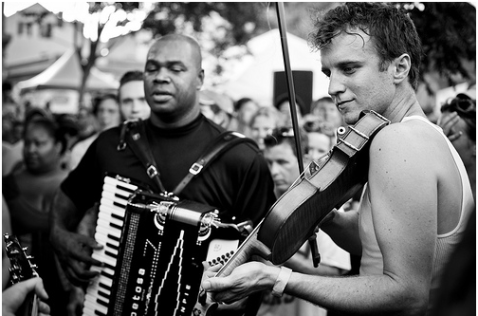
Lost Bayou Ramblers. Borrowed from phillipleroyer on Flickr.
This is not an easy task given the vast number of papers and performances at such a large conference and the scarcity of information found in brief titles and abstracts. We can assume that every presentation challenges these conventions to some extent, but for the sake of this preview, here are a few items that venture beyond the traditional limits of music scholarship. You can find the full #musicon12 program here.
—
Featured Image: Mardi Gras 2005, By Robert Garcia, The City Project
—
Bill Bahng Boyer is an adjunct professor of music, writing and rhetoric at Dartmouth College. He is also a doctoral candidate in music at New York University, completing a dissertation on public listening in the New York City subway system.
Jump to MONDAY, October 29
Jump to TUESDAY, October 30
Jump to WEDNESDAY, October 31
Jump to THURSDAY, November 1
Jump to FRIDAY, November 2
Jump to SATURDAY, November 3
Jump to SUNDAY, November 4

New Orleans Jazz National Historical Park, 2005, Borrowed From Robert Garcia, The City Project
Ecomusicologies2012
All events at Rogers Memorial Chapel, Tulane University
5-6pm Soundwalk
Tyler Kinnear (University of British Columbia), “Environmental Listening and the Tulane Soundscape” (meeting place outside the entrance of the Rogers Memorial Chapel, Tulane University)
7-9pm Paper Jam
Chair: Aaron S. Allen (University of North Carolina, Greensboro)
Joe Browning (School of Oriental and African Studies, University of London) (virtual presentation), “Crane Calls and Shakuhachi Sounds: Interconnections, Disjunctures and New Directions in the Tsuru no Sugomori Pieces”
Travis Stimeling (Millikin University) (virtual presentation), “Music, Television Advertising, and the Green Positioning of the Global Energy Industry in the United States”
Olga Sánchez-Kisielewska (Northwestern University) (virtual presentation), “Theorizing the Musical Landscapes of John Luther Adams”
Andrew Mark (York University) (virtual presentation), “Consciousness, Solidarity, and Musicking: Ecoethnographic Justice”
Leah G. Weinberg (University of Michigan), “Orchestrating Nature: Music, Manipulation, and 1950s America in Disney’s True- Life Adventure Films”
Settimio Fiorenzo Palermo (Middlesex University), “Sounds Heard: the Environmental Ethics & Aesthetics of Hugh Davies’s Music”
Sabine Feisst (Arizona State University), “Negotiating Nature & Music Through Technology: Ecological Reflections in the Works of Maggi Payne & Laurie Spiegel”

The Canal Street Line. Borrowed from Hmeriomx on Flickr.
Ecomusicologies2012 (cont.)
All events at Rogers Memorial Chapel, Tulane University
8:30-10:30am Panel: Beyond Metaphor
Mark Pedelty (University of Minnesota), Chair
Marc Perlman (Brown University), “Instrument Builders As Environmental Activists: A Tale of Two Tonewoods”
Kevin Dawe (University of Leeds), “Small is Beautiful: Guitar Making, Sustainability and Community Building in Britain and Africa”
Jeff Todd Titon (Brown University), “Why Thoreau?”
Jennifer C. Post (New Zealand School of Music, Victoria University, Wellington), “Beyond Birds: (Ethno)musicologists, Environmental Scientists & the Evolution of Soundscape Ecology”
11am-1pm Panel: 20th & 21st-century Composers
Denise Von Glahn (Florida State University), Chair
Eric Drott (University of Texas at Austin), “The Peasant’s Voice and the Tourist’s Gaze: Listening to Landscape in Luc Ferrari’sPetite symphonie intuitive pour un paysage de printemps”
You Nakai (New York University), “An Electronic Ecology: The Natures of David Tudor’s Electronic Music”
Jacob A. Cohen (The Graduate Center, CUNY), “Carl Ruggles, Walt Whitman, and the Gendered Place of Men and Mountains”
Joseph Finkel (Arizona State University), “Searching for a Sonic Ecology: John Luther Adams’s Dark Waves”
2-3:30pm, Panel: Contemporary Issues
Sabine Feisst (Arizona State University), Chair
Melissa J. de Graaf (University of Miami), “‘The Music of Nature Makes Me Dream and Sleep’: Intersections of Nature, Gender, and Ultramodernism”
Alexandra Hui (Mississippi State University), “Agency and Aural Rights: Negotiating the Soundscape, 1948 to the Present”
Tyler Kinnear (University of British Columbia), “Emergent Soundscapes: Uses of Nature and Technology in Two Electroacoustic Compositions”
4-6pm, Panel: Ethnographic Approaches
William Bares (University of North Carolina, Asheville), Chair
Dan Bendrups (Queensland Conservatorium Resarch Centre, Griffith University), “Mapping Outdoor Music Festival Engagement with Ecological and Environmental Issues in Australia”
Robin Ryan (Western Australian Academy of Performing Arts, Edith Cowan University), “Eucalyptus as Musical Resource: Some Ecological Considerations”
Michael Silvers (University of California, Los Angeles), “Birdsong, Popular Music, &Predicting Rain in Northeastern Brazil”
Charlotte D’Evelyn (University of Hawaii), “Sounds of the Grasslands: An Ecomusicological Crisis of Romanticism, Loss, & Inheritance in Inner Mongolia, China”
6:30-8pm, Panel: Canadian Perspectives
Ellen Waterman (Memorial University of Newfoundland), Chair
Kate Galloway (Memorial University of Newfoundland), “Sounding the Environmental Past and Present: Repurposing and Representing Soundscape in Contemporary Canadian Compositions”
Erin Scheffer (University of Toronto), “The Mis-imagined Native: Musically Constructing Nativeness in 1940s Canadian Radio and Film Docudramas”
Jeremy Strachan (University of Toronto), “Sounding Empire: Coloniality and Environment in Canadian Art Music”
8-9pm, Reception & Concert
James Harley (University of Guelph), computer, and Ellen Waterman (Memorial University of Newfoundland), amplified flutes, “Birding,” an eco-improvisational performance by ~spin~

Borrowed from mattbyrne on Flickr.
SEM Pre-conference Symposium, Crisis and Creativity
All events at Lavin-Bernick Center for University Life, Tulane University
9:00-10:30am, Hurricane Katrina and New Orleans
Matt Sakakeeny (Tulane University), Chair
Nick Spitzer, Professor of Anthropology (Tulane University), Holly Hobbs, Director of the NOLA Hip-Hop Archive (Tulane University), Bennie Pete, leader of Hot 8 Brass Band
10:45-12:15pm New Realities: Haitian Performing Arts and the Built Environment
Joyce Jackson (Louisiana State University), Chair
Gage Averill, Dean of Arts (University of British Columbia)
Michael Largey, Professor of Ethnomusicology (Michigan State University)
Jean Montes, Director of Orchestral Studies (Loyola University New Orleans)
1:15-2:45pm, Environmental Crises in South Louisiana: Scientific, Sociological, and Ethnomusicological Perspectives
Mark DeWitt (University of Louisiana at Lafayette), Chair
Tommy Michot, Research Scientist (UL Lafayette), and member of Les Frères Michot
Robert Gramling, Professor of Sociology (UL Lafayette)
Mark DeWitt, Professor of Music (UL Lafayette)
3:00-5:00pm, Field Trip by Bus to Musician’s Village, New Orleans Area Habitat for Humanity (Upper Ninth Ward), House of Dance and Feathers (Lower Ninth Ward)

Milterngerger House. Borrowed from DavidPaulOhmer on Flickr.
8:30-10:30am, The Beautiful, The Good, and The Story: Aesthetics and Narrative in Religious Music
Session 1-1 (SEM) A: Astor Ballroom 1
Jonathan Dueck (Duke University), Chair
Dorcinda Knauth (State University of New York, Dutchess), “Composing the Future by Listening to the Musical Past: Islamic Exegesis in Javanese Folksongs”
Ruth Davis (University of Cambridge), “The Pilgrimage to ‘El-Ghriba’ and the Musical Aesthetics of a Muslim-Jewish Past”
Abigail Wood (University of Haifa, Israel), “Sound, Aesthetics, and the Narration of Religious Space in Jerusalem’s Old City”
Jonathan Dueck (Duke University), “Musical Lives and Aesthetics in the Worship Wars”
12:30-1:30pm, SEM Sound Studies Special Interest Group Meeting
S: Oakley
3:30-5:00pm, On Bells, Bugs, and Disintegrating Tape: Listening for Metaphysics in Ambient Sound
Session 1-44 AMS/SEM S. Edgewood
Mitchell Morris (University of California, Los Angeles), Chair
Paul Chaikin (University of Southern California), “Clattering Bells as a Field of Experience and Cognition”
James Edwards (University of California, Los Angeles), “Nature and the Metaphysics of Voice in Edo Period Aesthetics”
Joanna Demers (University of Southern California), “The Ethics of Apocalypse”
4:00-5:30pm, Musically Meaningful Soundscapes
Session 1-52 SEM S: Maurepas
Tom Porcello (Vassar College), Chair
Alison Furlong (Ohio State University), “Sound, Space, and Social Practice in the Zionskirche”
Kate Galloway (Memorial University of Newfoundland), “Sounding and Composing the Harbour: Performing Landscape and Re-contextualizing the Soundscape of Place in the Harbour Symphony (St. John’s, Newfoundland)”
Jessamyn Doan (University of Pennsylvania), “‘Bringin’ Back the Roots’: Rearticulating a Creole Sound in Southern Louisiana”
5:30–6:30pm, SEM First-Time Attendees and New Members
Reception S: Sheraton Grand B
5:30–6:30pm, AMS Ecocriticism SG* and SEM Ecomusicology SIG Joint Business Meeting
S: Oak Alley
7:30–midnight, Zydeco Dance Lesson and Evening at Rock’n’Bowl
Organized by the SEM 2012 Local Arrangements Committee and the SEM Dance, Movement, and Gesture Section
Dance Lesson at Sheraton Grand E (no ticket required), 7:30–8:30 p.m.
Evening at Rock’n’Bowl. Bus Departs Sheraton: 8:45 p.m. Bus Departs Rock’n’Bowl for Sheraton: 12:00 midnight
8:00–11:00 AMS Music and Philosophy SG Session
A: Astor Ballroom III
8:00-11:00pm, Fantasy, Cinema, Sound, and Music
Session 1-58 AMS S: Oak Alley
Mark Brill (University of Texas at San Antonio)
James Deaville (Carleton University)
J. Drew Stephen (University of Texas at San Antonio)
Jamie Lynn Webster (Portland, Ore.)
8:00-11:00pm, Music and Nature: Relations, Awareness, Knowledge
Session 1-64 AMS S: Borgne
Sponsored by the AMS Ecocriticism SG
Aaron Allen (University of North Carolina, Greensboro), Chair
Kevin Dawe (University of Leeds), “RELATIONS—A Social and Environmental History of Small Guitar Workshops in England”
Sabine Feisst (Arizona State University), “AWARENESS—‘Hello, the Earth is Speaking’: Four Case Studies of Ecological Composition, Performance, and Listening”
David E. Cohen (Columbia University), “KNOWLEDGE—Nature, Culture, and the First Principle(s) of Music: Two Myths of Theoretical Revelation”

Borrowed from prayitno on Flickr.
7:00–8:00am, SEM SIG for Voice Studies
S: Estherwood
7:00–8:30am, SMT Committee on the Status of Women
S: Roux Bistro Private
9:00-noon, The Ecomusicology Listening Room
Session 2-17 AMS/SEM S: Gallier
Co-Sponsored by the SEM Sound Studies Interest Group and the AMS Popular Music Study Group
Mark Pedelty (University of Minnesota), Chair
Robert Fallon (Carnegie Mellon University), Ellen Waterman (Memorial University of Newfoundland), Tyler Kinnear (University of British Columbia), Aaron Allen (University of North Carolina, Greensboro), Denise Von Glahn (Florida State University), Kate Galloway (Memorial University of Newfoundland), Naomi Perley (CUNY), William Bares (Harvard University), Rachel Mundy (Columbia University), Jeremy Woodruff (University of Pittsburgh), Justin D. Burton (Rider University), Michael Austin (University of Texas at Dallas), Michael B. Silvers (University of California, Los Angeles), Miki Kaneda (Museum of Modern Art), Zeynep Bulut (Berlin Institute for Cultural Inquiry)
10:30-noon, Beyond Hearing: Soundscapes and Ideoscape in Early Nineteenth-Century America
Session 2-25 AMS/SEM A: Iberville
Deane Root (University of Pittsburgh), Chair
Sarah Gerk (University of Michigan), “Love, Loyalty, and Fear: American Reception of Thomas Moore’s Irish Melodies”
Bonnie Gordon (University of Virginia), “Mr. Jefferson’s Ears”
12:00–2:00pm, AMS/SMT Music and Philosophy SG/IG
S: Sheraton Grand A
12:30–1:30pm, SEM Medical Ethnomusicology SIG
A: Astor Grand A
12:30–1:30pm, SEM Section on the Status of Women
S: Bayside C
2:00-5:00pm, Embodiment and Gesture
Session 2-38 AMS/SMT S: Oak Alley
Arnie Cox (Oberlin College), Chair
Margaret Britton (University of Texas at Austin), “Four Gestural Types in Chopin’s Mazurka in C-sharp Minor, Op. 50, no. 3”
Drew Massey (Binghamton University), “Thomas Adès’s Glossary”
Meghan Goodchild (CIRMMT / McGill University), “Towards a PerceptuallyBased Theory of Orchestral Gestures”
Zachary Wallmark, Marco Iacoboni (University of California, Los Angeles), “Embodied Listening and Musical Empathy: Perspectives from Mirror Neuron Research”
4:00-5:30pm, SEM Charles Seeger Lecture
Session 2-49 SEM S: Sheraton Grand C
Portia Maultsby (Indiana University), “‘Everybody Wanna Sing my Blues . . . Nobody Wanna Live My Blues’: Deconstructing Narratives of Race, Culture and Power in African American Music Scholarship”
Cheryl L. Keyes (University of California, Los Angeles), Introduction
6:00pm, Sound Studies Special Interest Group Soundwalk
Meet in front of the Sheraton Hotel on Canal Street
Matt Sakakeeny (Tulane University), organizer
8:00-11:00pm, Music and Video Games: History, Theory, Ethnography
Session 2-55 AMS S: Gallier
William Cheng (Harvard University), Moderator
Mark Katz (University of North Carolina, Chapel Hill), Respondent
Neil Lerner (Davidson College), “Musicological Contributions to Early Video Game Studies”
Roger Moseley (Cornell University), “Digital Analogies”
William Gibbons (Texas Christian University), “Framing Devices for Gaming Devices: Applying Film Music Theory to Video Games”
Elizabeth Medina-Gray (Yale University), “Modularity and Dynamic Play: Video Game Music and Its Avant-garde Antecedents”
Kiri Miller (Brown University), “Dance Central and the Listening Body”

Borrowed from squared2x on Flickr.
7:00–8:30am, SMT Music and Disability IG
S: Salon 828
7:00–8:45am, AMS Committee on Women and Gender
S: Salon 825
8:30-10:30am, Emergent Forms of Music Tourism, I: Music Tourism in the Aftermath of Rupture in New Orleans, Berlin, Bali
Session 3-2 SEM S: Bayside B
Daniel Sharp (Tulane University), Chair
Elizabeth Macy (University of California, Los Angeles), “Music and Cultural Tourism in Post-Disaster Economies”
Luis-Manuel Garcia (Tulane University), “Consuming Atmospheres and Social Worlds: ‘Techno-Tourismus’ and Post-Tourist Tourism in Berlin’s Electronic Dance Music Scenes”
Daniel Sharp (Tulane University), “Dithyrambalina: A Shantytown Sound Installation in Post-Katrina New Orleans”
SherriLynn Colby-Bottel (University of Virginia), “Authenticity Seekers: Music Post-Tourists and the Shifting Sound-Scapes of New Orleans”
8:30-10:30am, Online Musical Communities
Session 3-7 AMS/SEM A: Astor Ballroom 1
Marc Gidal (Ramapo College of New Jersey), Chair
Tara Browner (University of California, Los Angeles), “Bach Culture: Performers, Scholars, and Bachfreunde in the Twenty-First Century”
Olga Panteleeva (University of California, Berkeley), “Für Kenner und Liebhaber 2.0: Modes of Expertise in Online File-Sharing Communities”
Tom Artiss (University of Cambridge), “Solitary Socialities: Music Surf-Sharing in Nain, Labrador”
Charles Hiroshi Garrett (University of Michigan), “Joking Matters: Music, Humor, and the Digital Revolution”
9:00-10:30am, Language and the Senses
Session 3-10 AMS/SMT S: Edgewood
Donald Boomgaarden (Loyola University New Orleans), Chair
Charles Dill (University of Wisconsin-Madison), “Le Cerf’s Epistemology of Music”
Amy M. Cimini (University of Pennsylvania), “René Descartes’ Unfinished Compendium of Music: Rethinking Music and the Politics of Sensation after the Thirty Years’ War
9:00-10:30am, Music and Gaming
Session 3-12 AMS A: Iberville
Kiri Miller (Brown University), Chair
Christopher Tonelli (Memorial University of Newfoundland), “The Chiptuning of the World”
Neil Lerner (Davidson College), “Investigating the Origins of Video Game Music Style, 1977–1983: The Early Cinema Hypothesis”
9:00-noon, Performing Music, Performing Disability
Session 3-19 AMS/SEM/SMT S: Bayside A
Joseph Straus (Graduate Center, CUNY), Chair
Michael Bakan (Florida State University), Michael Beckerman (New York University), Stefan Honisch (University of British Columbia), Blake Howe (Louisiana State University), Stephanie Jensen-Moulton (Brooklyn College, CUNY), Bruce Quaglia (University of Utah)
9:00-noon, Sound, Language, and Mysticism from Vienna to L.A.
Session 3-22 AMS S:Borgne
Brian Kane (Yale University), Chair
Clara Latham (New York University), “The Impact of Sound and Voice on the Invention of Psychoanalysis”
Sherry Lee (University of Toronto), “‘Still, o schweige’: Music, Language, OpernKrise (Schoenberg’s Die glückliche Hand )”
Nicholas Attfield (Edinburgh University), “A Medieval Model for the 1920s: Anton Bruckner as Mystic”
J. Daniel Jenkins (University of South Carolina), “I Care If You Listen: Schoenberg’s ‘School of Criticism’ and the Role of the Amateur”
10:30-noon, Twentieth-Century Music and Advertising
Session 3-28 AMS A: Iberville
Jason Hanley (Rock and Roll Hall of Fame and Museum), Chair
Paul Christiansen (University of Southern Maine), “‘It’s Morning Again in America’: How the Tuesday Team Revolutionized the Use of Music in Political Ads”
Jonathan Waxman (New York University), “I Went to the New York Philharmonic and Came Home with a Cadillac: The Alliance Between Business and the Arts in the Early Twentieth Century
12:00–2:00pm, SMT Committee on the Status of Women Brown Bag Open Lunch
S: Salon 828
12:30–1:30pm SEM Gender and Sexualities Taskforce
S: Bayside C
1:45-3:45pm, Acoustics and Experiences of the Limit
Session 3-39 SEM S: Maurepas
Louise Meintjes (Duke University), Chair
Louise Meintjes (Duke University), “Pushing at the Edge of the Social”
Jairo Moreno (University of Pennsylvania), “Signatures of the Audible”
Ana Maria Ochoa (Columbia University), “South American Acoustics: Amerindian Perspectivism and Non-Linear Musical Histories”
Gary Tomlinson (Yale University), “Singing at the Limit of the Human”
1:45-3:45pm, Emergent Forms of Music Tourism, II: Multimedia, Spectacles and Memorials
Session 3-43 SEM S: Grand Chenier
Sponsored by the Popular Music Section (PMSSEM)
Lynda Paul (Yale University), Chair
Elizabeth Whittenburg Ozment (University of Georgia), “Elvis Presley and the Reanimation of Robert E. Lee”
Lynda Paul (Yale University), “Las Vegas and Virtual Tourism: Sonic Shaping of Simulated Worlds”
Michael Heller (Harvard University), “Deployments of Deadness at the Louis Armstrong House Museum”
Nicol Hammond (New York University), “‘The History Is in the Music’? Music, Museums, and the Politics of Presence in Post-Apartheid Cultural Tourism”
8:00-11:00pm, Music and Disability: Works in Progress Seminar
AMS/SMT S: Bayside A
Sponsored by the AMS Disability SG and SMT Disability IG
Michael Bakan (Florida State University), James Deaville (Carleton University), Stefan Honisch (University of British Columbia), Jeanette Jones (Boston University), Anabel Maler (University of Chicago), Julie Saiki (Stanford University), Joseph Straus (Graduate Center, CUNY)
9:00pm, KNOCKABOUT: wandering beats from across urban America.
Handsome Willy’s at 218 South Robertson St. No cover. 21+
5 DJs converge on Handsome Willy’s for KNOCKABOUT, a dance party featuring every genre you’ve ever loved and fly beats that you neva eva heard before.
DJ Yamin (NOLA): Hip-hop, funk, reggae, Afrobeat www.nolamix.com
DJ Super Squirrel (Boston): Dancehall, global mashup www.djsupersquirrel.com
The Attic Bat (L.A.): Hip-hop and dubstep www.derricomusic.com
LMGM (Chicago, Berlin): House and disco www.thelusisgarcia.com
Shilo Bourne (L.A.) UK bass
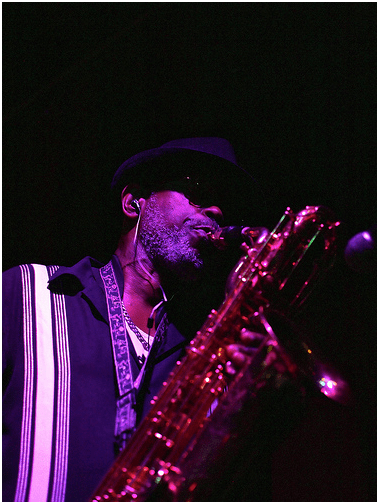
Roger Lewis. Borrowed from fantailmedia at Fiickr.
8:30-10:30am, Music and YouTube: Sound, Media, and Sociality
Session 4-5 SEM A: Astor Grand A
Sponsored by the Popular Music Section (PMSSEM)
Monique M. Ingalls (University of Cambridge), Chair
Fabian Holt (Roskilde University, Denmark), “Social Media Video and the Festivalization of Electronic Dance Music in Europe”
Monique M. Ingalls (University of Cambridge), “Worship on the Web: Building Online Religious Community through Christian Devotional Music Videos”
Patricia G. Lange (California College of the Arts), “In Synch with Lip-Synching: A Riff on Teen Sociality”
Trevor S. Harvey (University of Iowa), “Dulcimerica: Mediating a Musical Community through Video Podcasts”
8:30-10:30am, Musical Propertization in the Digital Age:
Session 4-7 SEM A: Astor Ballroom 1
From “Piracy” to Ontological Politics
Andrew Eisenberg (University of Oxford), Chair
Andrew Eisenberg (University of Oxford), “M-Commerce and the (Re)making of the Music Industry in Kenya”
Aditi Deo (University of Oxford), “Folk Music in the Digital Realm: Public Commons or Cultural Property?”
Alexandrine Boudreault-Fournier (University of Victoria), “Pirates of the Caribbean: Music Circulation in Late Socialist Cuba”
Henry Stobart (Royal Holloway, University of London), “Shifting Properties: Ownership, Informality, and the Digital Music Video in Bolivia”
9:00-noon, The City is a Medium
Session 4-16 AMS/SEM/SMT S: Edgewood
Alexander Rehding (Harvard University), Chair
Veit Erlmann (University of Texas at Austin), Respondent
Benjamin Tausig (New York University), “The City is Burning: Informal Musical Commerce at Urban Protest Movements”
Tiffany Ng (University of California, Berkeley), “An Instrument of Urban Planning: Bells and the Sonic Remediation of Community Space in the Southeastern United States”
John Melillo (University of Arizona), “Phatic Emphatic: Listening to New York City in Downtown Poetry and Punk”
Peter McMurray (Harvard University), “Heterophony of a Metropolis: Rites of Passage and Contestation Turkish Berlin”
10:45-12:15pm, Feminist Approaches to Music and Sound Technologies: History, Theory, and Practice
Session 4-29 SEM A: Astor Ballroom 1
Sponsored by the Section on the Status of Women (SSW)
Tara Rodgers (University of Maryland), Chair
Tara Rodgers (University of Maryland), “Feminist Approaches to Electronic Music and Sound Historiography”
Charity Marsh (University of Regina), “Reluctant Hip Hop Warriors”: Feminist Approaches to Hop Hop Community Projects”
10:45-12:15pm, Intersections of Ethnomusicology with Other Fields
Session 4-31 SEM S: Bayside B
Theresa Allison (University of California, San Francisco), Chair
Francesca R. Sborgi Lawson (Brigham Young University), “Has Ethnomusicology Met Its Calling? An Ethnomusicologist’s Response to Biomusicology”
Monique McGrath (University of Toronto), “What Does Ethnomusicology Have to Say to Music Therapy?”
Jeremy Day-O’Connell (Knox College), “‘Motherese’ and Universals of Musical Pitch
10:45-12:15pm, Sounds and Space in New Orleans
Session 4-35 SEM S: Maurepas
Marié Abe (Boston University), Chair
Danielle Adomaitis (Florida State University), “Sonic Fixtures and Drifting Buskers: Soundmarks of New Orleans and the Street Musicians Who Construct Them”
Zarah Ersoff (University of California, Los Angeles), “Treme’s Aural Verisimilitude”
Julie Raimondi (Tufts University), “Music, SEO Agency, and the Social Construction of Space in New Orleans
2:00–6:00pm, AMS Ecocriticism SG and SEM Ecomusicology SIG Outing:
Barataria Preserve Hike
Share this:


Current Top Posts





April 2021

January 2020

November 2019

October 2019

August 2019

April 2014

November 2017

March 2015

December 2017

October 2015
 Sounding Out!
Recent Comments