
Video Gaming and the Sonic Feedback of Surveillance: Bastion and The Stanley Parable

The world of Bastion is beautifully illustrated and affectively evocative. Image borrowed from darkzabimaru @DeviantArt.
As the practice of sound design becomes ever more refined as a key factor in the immersive aspects of gameplay, it is essential to develop a conceptual vocabulary of the ways that sound is implemented as a cultural facet. In particular, it is important to recognize the power relations at stake within the implementation of the human voice as an interactive narrative trope. And, while I’ve already discussed the ways in which the voice of GLaDOS in Portal invites players to reflect on how they internalize a set of mediated perspectives about how their body ought to be, it is equally important to consider the other ways that a narrator’s voice invites players to reconsider the intersection of agency and surveillance.
This post compares the use of narration in Bastion and The Stanley Parable in an effort to understand how the voice is used as what Karen Collins would refer to as an “interactive non-diagetic sound,” or, in other words, a sound that is triggered by player actions, but not experienced by the character in the game. Specifically, I argue that the voice in these examples is an essential point in the feedback loop between player and game. And, as part of the cybernetics of gameplay, it produces a dispositif of surveillance, akin to Bentham’s panopticon, which lets the player know their actions are constantly being monitored, calculated, and considered by the game’s algorithms. But, while the original panopticon produced the effect of surveillance through the clever use of light, these games use sound to effect surveillance.
Bastion, was developed by the small indie game company Supergiant Games, but was distributed and released by Warner Bros. Interactive Entertainment, first through Microsoft’s distribution service, XBOX Live Arcade, but has since been released more broadly after receiving much critical acclaim. In Bastion, players take the role of a young boy, referred to only as “The Kid,” and adventure around gradually rebuilding a world that has fallen apart since a cataclysmic sundering referred to only as “the Calamity.” Although the world of Bastion is beautiful and visually stimulating, it is the game’s sound design that has earned it much critical acclaim. The game is narrated by a character named “Rucks,” who speaks in a deep weathered voice, with somewhat of a western twang. And, even though The Kid eventually encounters and is able to interact with Rucks within the game, Rucks still relays dialogue in the third-person.
When The Kid and Rucks meet, Rucks evinces with trademark grit, “Sure enough, he finds another. He finds me.” And, while that is a scripted plot point within the game, at other points Rucks’ narration modulates to best reflect the player’s actions. A player who begins the game slowly, exploring nooks and crannies, might hear “The kid walks slowly down the path, checking everything,” while a player who runs straight ahead could hear, “The kid barrels forward, not looking once behind him.” These quotes force the player to recognize that the game is watching, and actively staging narrative commentary about their in-game decisions. This commentary unfolds in aural space, through narration, discrete from the old text (and controller) triggers of “look” and “examine” which used to prompt text-box commentary about the environment of the game. In short, Bastion’s sound design succeeds because it is balanced in such a precise way: players are being constantly engaged with a narration which confirms that they are, in fact, properly interacting within the game world and story.

Games used to use text boxes to interrupt gameplay with narrative elements. Image borrowed from ultrapublications.com
The Stanley Parable, on the other hand, works deliberately to turn the paradigm of narration on its head. Where Rucks, in Bastion, frequently alluded to how many secrets he was yet to reveal about himself and the game-world, his character ultimately plays a supportive role, helping The Kid to understand the chaotic environment of the game. The narrator in The Stanley Parable, however, plays the antagonist in many ways, attempting to foreshadow and predetermine the actions of the player, or “Stanley.” On the game’s website, a short sentence contextualizes the endeavor, “The Stanley Parable is a Half Life 2 mod about video games.” The game itself is a mod of the “Source engine,” which runs both Half-Life 2, and Portal, was developed by the very small development team of Davey Wreden and William Pugh, and released for free. It is meta-fiction that stages a critique of the context of narrative within interactive games and fiction. Specifically, the game questions the idea of narrative itself by showcasing the ways that players are able to undermine the scripted plots and spaces of a videogame by exploring and experimenting with exploits and bugs in the game’s code and narrative.
Although the narrator in The Stanley Parable will prescribe several decisions to the player over the course of the game, the player is given the agency to contest the story as told by the narrator, and, therefore, to experiment with the plot. As the player reaches a set of two open doors on the way to the employee lounge the narrator reads, “When Stanley came to a set of two open doors, he entered the door on his left.” If the player chooses to travel through the door on the right instead, the narrator will attempt to steer the player back to the main plot tree by saying, “This was not the correct way to the employee lounge, and Stanley knew it perfectly well.” And, then as an open door is revealed, “So he turned left at the first open door, and walked back in the right direction.” If the player continues to ignore the narrator’s advice, he comes to somewhat of a dead end and the narrator reads, “Stanley was so bad at following directions, it’s incredible that he wasn’t fired years ago. Maybe this was why everyone left. No one wanted to be around someone as bad at listening as him.” The player is given several other opportunities to make decisions and lead the story to completion in achieving one of seven endings; each based the decisions the player has made when interacting with the narrator’s dialogue.
The Stanley Parable allows players the agency to see the limitations of linear storytelling where Bastion does not. Where some paths in The Stanley Parable will lead the player into direct conflict with the narrator, other paths do not. There is never a point where the narrator ceases to comment on the player’s actions and activities. Because the sonic feedback of surveillance remains a constant in both games the player remains engaged, in both cases, with the logic of the game-system. In other words, no matter how many times the player defies the narrator in The Stanley Parable, it never seems like the game is breaking. The game world remains constant because the motif of surveillance holds; players know the game still works because the narrator continues to stage commentary – even if it is commentary about the player’s failure to keep to the plot.
For Marc Andrejevic, author of iSpy (2007)—who has written extensively about the abundance of surveillance techniques implemented in digital spaces–the danger of surveillance lies in the production of an asymmetrical power relationship between media producer and media consumer. And, while this is certainly best argued about instances of dataveillance–how companies like Amazon, for example, track customer clicks on and off their website via web cookies in order to better produce exploitable (and in some cases saleable) consumer profiles–it is important to also consider the ways that the implementation of sound also functions as a technique of control.
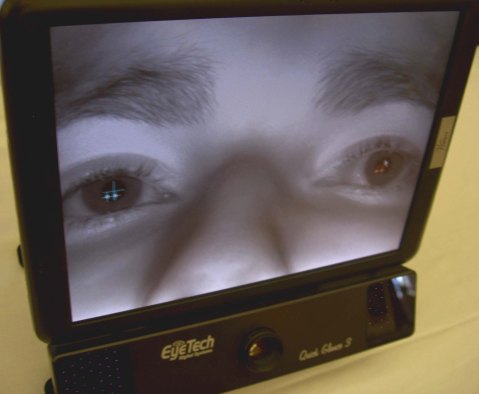
Paradigms of surveillance have changed a lot in the past 30 years. Image borrowed from cobalt123 @Flickr.
At its most positive, the sonic panopticism of Bastion and The Stanley Parable offer players a sense of comfort in knowing that the game is operating properly, and not glitching out. Further, players are invited into a more immersive game, which leverages both visual and audio interactivity to lull players into an environment of almost trancelike feedback and play. Clearly, this is the promise of good sound design; it gently alerts players to the presence of a tightly designed and well-implemented game, and produces affects of brand loyalty and trust within a game’s player contingent.
But, while there are clearly aesthetic and market benefits to the implementation of narration in both games, one cannot help but wonder, in the context of post-feminism and self-surveillance, what implications there are in the implementation of the male voice as surveil-er in both games. Just as it was curious in Portal 2 how GLaDOS acted as a critical female voice constantly judging the player’s body image and intelligence, it is curious how much authority is given to the voice of Rucks in Bastion. And while several good critiques have already been written about how the game features only one (somewhat silent, and certainly helpless) female character, and how the game’s villain is portrayed, concretely, as the racially exotic other, it is sadly fitting that the most comforting and well-acclaimed aspects of the game come from the interactivity produced by the voice of its distinctively white male narrator.
The sound design in The Stanley Parable, of course, is more cutting in the ways it stages a commentary about how the voice of the narrator (this time distinctively British), exacts a form of social coercion through techniques of surveillance, and how these techniques serve, namely, to hamper player agency. But, even its own narrative of resistance fails to compel; in fact, it is the uneasy ending of compliance and conformity that is, perhaps, the happiest. This, ironically, reveals one of the key cultural problems of our era: the reciprocal aspects of surveillance and interactivity. If affective resonances of trust, knowledge, and comfort come bundled with the male voice, is it in the vested economic interests of sound design communities to leverage these to make profit? Even though both games have earned critical praise, it is only Bastion that has won awards for sound design. In other words, are we caught in our own feedback loop of comfort, industry, and design?
–
Aaron Trammell is co-founder and Multimedia Editor of Sounding Out! He is also a Media Studies PhD candidate at Rutgers University. His dissertation explores the fanzines and politics of underground wargame communities in Cold War America. You can learn more about his work at aarontrammell.com.
—
 REWIND! . . .If you liked this post, you may also dig:
DIANE… The Personal Voice Recorder in Twin Peaks— Tom McEnaney
The Role of Sound in Video Games: Pong, Limbo, and Interactivity— Aaron Trammell
Orality and Cybernetics in Battleship— Aaron Trammell
Share this:

SO! Reads: Jonathan Sterne’s MP3: The Meaning of a Format

The promiscuity of the mp3. Borrowed from NYCArthur on Flickr.
 The point that had lingered with me after first reading Jonathan Sterne’s essay “The mp3 as Cultural Artifact,” was the idea that the mp3 was a promiscuous technology. “In a media-saturated environment,” Sterne writes, “portability and ease of acquisition trumps monomaniacle attention . . . at the psychoacoustic level as well as the industrial level, the mp3 is designed for promiscuity. This has been a long-term goal in the design of sound reproduction technologies” (836). A technology, promiscuous? I did not have to look far to find support. Like germs, I could find copies of mp3s that I had downloaded from Napster in 2000 scattered across generations of my old hard drives. Often they were redundant, too – iTunes having archived a copy separate from my original download.
But, for Sterne, mp3s are also socially promiscuous. They accumulate in the hard drives of the working class and are shared, almost anywhere, through the branching left/right wires of iPod earbuds. Since the popularization of the mp3, there have been new opportunities to share how we listen with others. This is promise of the mp3, and the reason it forms such a key point of scholarly meditation.
 MP3: The Meaning of a Format (Duke University Press, 2012) finds Sterne revisiting many of these key themes, with a larger focus on the genealogical beginnings of the mp3 technology. While many of the book’s chapters are extrapolations of prior work Sterne has done regarding the genealogy of listening practices, this work concerns itself less with the 19th century, and more with the 20th century. Perhaps this is related to some of the methodological decisions Sterne has made in planning the book – in seeking out the genealogical origins of the mp3, Sterne worked from archives and manuals described in interviews by engineers who were fundamental to the technology’s production. As such it finds much in common with Trevor Pinch and Frank Trocco’s Analog Days and Dave Tompkins’ How to Wreck a Nice Beach but incorporates the genealogical methods regarding sonic technology present in Sterne’s earlier work The Audible Past and Emily Thompson’s The Soundscape of Modernity. In MP3 Sterne positions himself as a critical cultural studies scholar working between the humanities and sciences, focusing specifically on the mp3 due to its social and technological relevance today. The critical is key here as MP3 is truly a work devised to underscore the economic connections between the construction of our selves as “hearing subjects” and the media industries.
Certainly, the mp3 can still be considered a promiscuous technology, but it is corporate capitalism that had failed to recognize the extent to which it relies on technological promiscuity to support its infrastructure. This focus, ironically, displaces the mp3 as the main object of Sterne’s analysis. It highlights instead the pathological logic of corporate capitalism, and the ways that this rationality has mutated, now, in the wake of mass replicable, malleable, and iterative digital culture. In other words, the mp3 is endemic to a much larger plot, wherein the culture industries adapt to their own deus ex-machina. The naive development of the mp3 by the motion picture industry is a large part of the story here, but it is only a small bit of a much larger whole. The real story involves understanding how a handful of vested corporate interests have shaped the ways that we interpret and understand what listening is. In MP3 Sterne addresses one of the great questions of sound studies: What are the politics of listening? Or, which individuals and institutions have a vested economic interest in questions of how we hear?
Sterne recalls this drama in three parts, each unfolding in a somewhat autonomous fashion, but unified in so far as they explore the economic interests behind the scientific construction of “hearing subjects.” In the first part, Sterne is at his best exploring AT&T’s (and the affiliated Bell Laboratories’) role in funding psychological, physiological, and cybernetic research on hearing. In the second, Sterne explains how this early research has been applied to the visual and technical abstraction of sound in the 1970s. And, in the third part of this genealogy, he explains how these analogs were made digital, specifically the corporate politics which went into the construction of the mp3 standard. Throughout this surprising and detailed trajectory, Sterne makes the invisibility of corporate interests apparent and explicit.

AT&T and Infrastructure. Borrowed from djbones on Flickr.
Sterne also hints toward several powerful economic rationalities that have guided the construction of the mp3. Key among these insights is the monetization of cybernetic discourse, or the incorporation of the human body within a scientific understanding of technical systems. In order to engineer an efficient technical system, the capacities and limits of how we interact with (or serve as parts of) these systems must be taken into account. Sterne refers to this mode of engineering as “perceptual technics,” and he goes to great lengths to explain it.
Basically, at the turn of the 20th century, AT&T had taken a keen interest in the science of how people listen because they wanted to maximize the amount of simultaneous conversations broadcast through a single telephone wire. More conversations meant the purchase of fewer wires, and therefore greater profits. Eventually, drawing on the research of the oft-cited Claude Shannon and Warren Weaver (within SO!: What Mixtapes Can Teach Us About Nois and Pushing Record; and soundBox: Mapping Noise), AT&T recognized an economic problem of technical efficiency within their wires – there was too much ambient noise. Because of this, AT&T sought to limit the audible signal transmitted from one phone to another. This would allow for more signals (and therefore conversations) to be transmitted through the same wire. Physiological research provided clues that some frequencies were more audible than others, so engineers worked to compress audio signals to reflect this scientific abstraction of hearing.

The scientific capture of listening. Borrowed from img.informer.com .
The reduction of listening–as an embodied practice–to the quantification and control of the audible spectrum, is, in other words, the history of compression. Which, according to Sterne, should be understood as the true meaning of the mp3. While the mp3 format, like the CD or cassette, may become obsolete, technologies of compression will not. Sterne argues convincingly that most advances in compression technologies have been guided by the invisible logic of corporate capitalism. It is this exact tendency of compression–to make things smaller and more efficient–that threatened to undo the entire project of corporate and branded music distribution in the year 2000, via platforms like Napster. Sterne is well aware of this irony throughout MP3, and uses the final chapter to discuss, briefly, the moment of cultural transformation that is defined by file-sharing and mass distribution.
Bringing things full circle with a somewhat stoic conclusion about the democratic potentials of this moment, he remarks: “The end of the artificial scarcity of recording is a moment of great potential. Its political outcome is still very much in question, but its political meaning should not be” (224). Sterne points to the globalization and ubiquity of mediated listening as a sign that things may not have changed much even though mass networked society at one point promised freedom from a commodity form which privileged things like “liberal notions of property, alienated labor, and ownership” (224). He argues that even the music industries shall persevere, mostly because people have a sublime attraction to listening and music. In other words: Meet the new boss, same as the old boss. There are few moments of liberation to be found within MP3; it is instead a drama of the status quo where the conspirators of corporate capitalism succeed in spite of themselves.

The ubiquity of listening. Borrowed from κεηι on Flickr.
The disparity in Sterne’s tone, when juxtaposing the nefarious and efficient dispositifs of capitalism with an untroubled and authentic construction of music is striking to say the least. And although Sterne is clear to explain that he locates his scholarship as work on a container technology (the mp3) and not its content (the music), this is a somewhat unsatisfying distinction as an embodied practice, such as listening, must take both into account. And while I agree that the mp3 reflects the promiscuity of corporate capitalism, is this challenged by the plethora of ideological nuance coded into song lyrics and arrangements? Do the corporate ideologies of the music industries flow beyond the container of the mp3 into the music itself? Is there any crosstalk, or overlap between these historical constructions? In other words, what are the limits to theorizing a container technology, and how much does the discursive path of the mp3 sculpt the content of what we listen to?
Despite, or perhaps, because of the rather dystopic scene that Sterne alludes to at the end of MP3, it falls nicely in the space between Sound Studies and Critical Information Studies. It bridges humanistic scholarship on embodied listening practices with a critique of the economic interests that have funded much of the scientific research relating to the phenomenology of sound. To that end, MP3 reveals much about the social construction of hearing and the ways that the familiar mythology of audio fidelity has been produced, discussed and exploited by several communication industries. Even though the mp3 may have been eclipsed by industry as the main object of inquiry in the eponomously titled MP3, Sterne succeeds admirably in detailing the promiscuity of corporate capitalism in the listening practices of our everyday lives.
–
Aaron Trammell is co-founder and Multimedia Editor of Sounding Out! He is also a Media Studies PhD candidate at Rutgers University.
Share this:


Current Top Posts





April 2021

January 2020

November 2019

October 2019

August 2019

April 2014

November 2017

March 2015

December 2017

October 2015
 Sounding Out!
Recent Comments