
“Heavy Airplay, All Day with No Chorus”: Classroom Sonic Consciousness in the Playlist Project
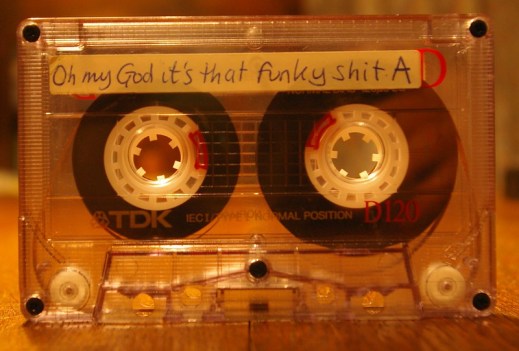
For a number of semesters, I invited composition students to explore the idea of using the mixtape as a lens for envisioning a writing assignment about themselves. Initially called “The Mixtape Project,” this auto-ethnographical assignment employed philosophies from various scholars, but focused on Jared Ball and his concept of the mixtape as “emancipatory journalism.” In I Mix What I Like!: A Mixtape Manifesto, Ball pushed readers to imagine the mixtape as a counter-systematic soundbombing, circumventing elements of traditional record industry copyright practices (2011).
Essentially, a DJ could use a myriad of songs from different artists and labels to curate a mixtape with a desired theme and overarching message, then distribute the mixtape as a “for promotional use only” artifact. Throughout the 1980s, but predominantly in the 1990s and early 2000s, many DJs used mixtapes as the medium to promote their DJ brands and generate income. It wasn’t long before labels began to give hip-hop DJs record deals to release “album-style” mixtapes where the DJs record original content from artists made specifically for the DJ album (see DJ Clue, Funkmaster Flex, Tony Touch). This idea evolved into producer-based compilation albums, best depicted today by global icon DJ Khalid. Rappers also hopped on the mixtape wave, using the medium to jump-start their careers, create a “street buzz” around their music, and ultimately gauge the success of certain songs to craft and promote upcoming albums.
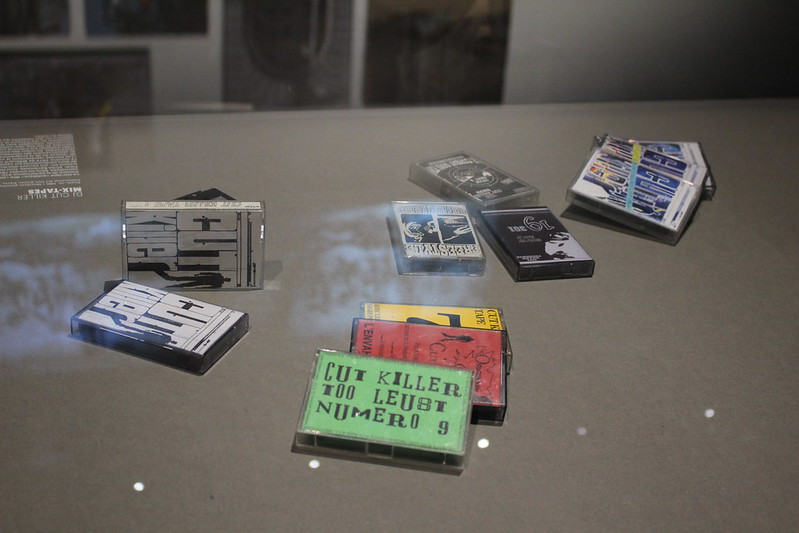
Image by Flickr User Backpackerz: “K7 mixtape – Exposition Hip Hop, du Bronx aux rues arabes (Institut du monde arabe)” (CC BY-SA 2.0)
The assignment revolved around mixtape framework in the earlier portion of my teaching career. Most recently, I began to realize as my students evolve (and I simultaneously age), that the “mixtape” – a sonic artifact distributed on cassette tape or CD – is becoming more remote to students. This thinking led to revising the assignment with a more contemporary twist. Thus, “The Playlist Project” was born: the first in a set of four major writing projects in a first-year writing classroom. The ultimate goal of the assignment was to immediately disrupt students’ relationships with academic writing, and to help them (re)envision the ways they embrace some of the cultural capital they value in college classrooms. Be clear, this was a particular type of mental break for students, a shift that was welcomed yet also uncomfortable for them.
“I Get It How I Live It”: Framing and Foregrounding the Assignment Set-Up
The course started with readings on plagiarism, intertextuality, and the hip-hop DJ’s use of sampling, curating, and storytelling. Next were readings by hip-hop artists describing their creative process and detailing their artistic choices sonically. These early readings helped pivot students from their stereotypical notions of what college writing courses – and writing assignments – looked like, and how they could enter scholarly discourse around composing. This conversation was foregrounded in students’ knowledge that they bring with them into the new academic space in the college classroom. My goal was to really focus on student-centered learning and culturally relevant pedagogy; ideally, if you are immersed in hip-hop music and culture, I want you to share that knowledge with the class. This sharing begins to create a community of thinking peers instead of a classroom with an English professor and a bunch of students who have to take the course “cuz it’s required in the Gen Ed, so I can’t take anything else ‘til I pass this!”
My research is entrenched in both hip-hop pedagogy and culture, specifically looking at the DJ as 21st century new media reader and writer. I liken my role as instructor to that of the DJ: a tastemaker and curator for the ways we understand sonic sources we know, and couple them with new and necessary soundbites that become critical to the cutting edge of the learning we need. I’ve engaged in the craft of DJing for more than half of my life, and use DJ practices as pedagogical strategies in my classroom environments.

DJ Rupture, Image by Flickr User JD A (CC BY-NC-ND 2.0)
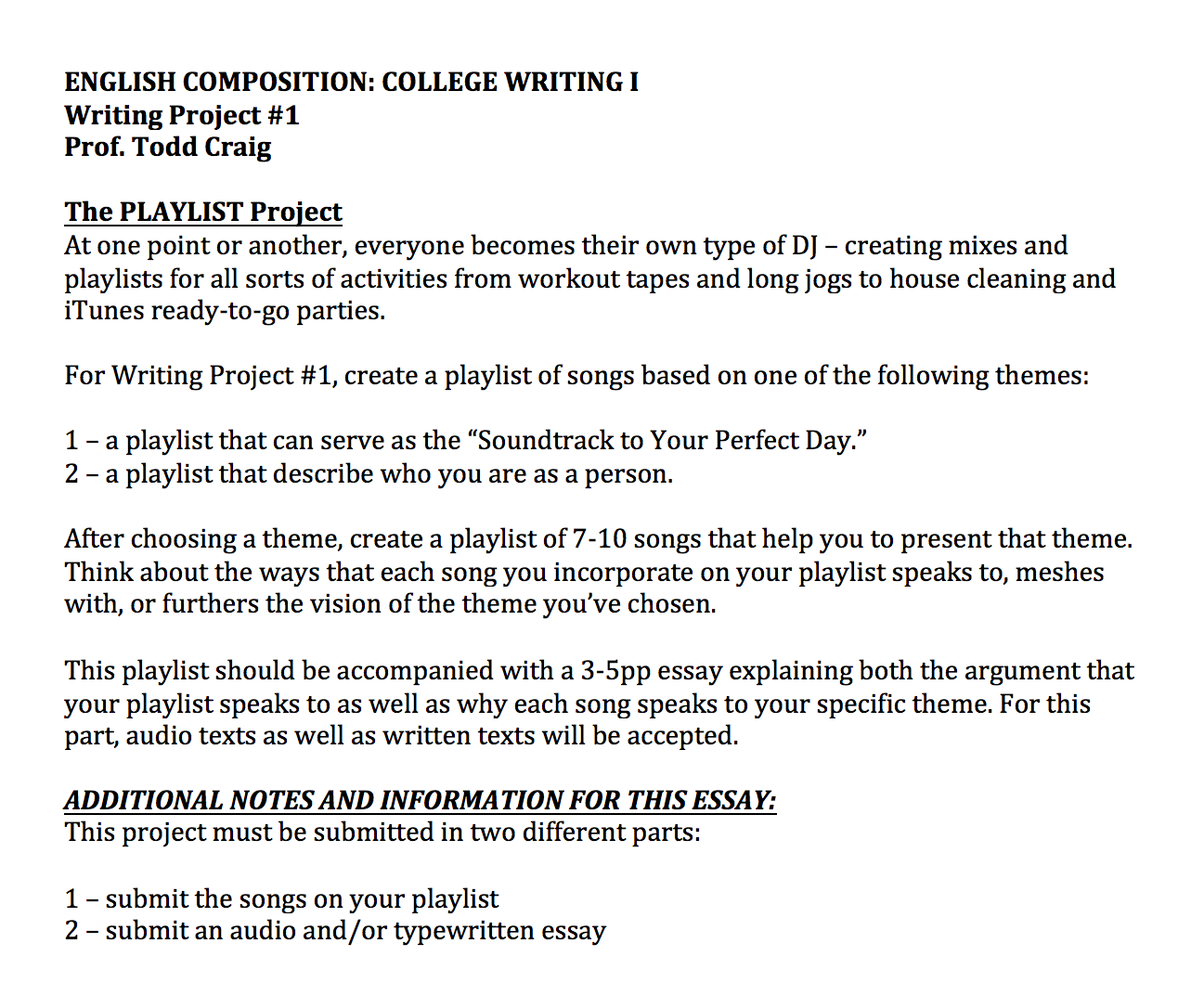
The outcome of this curatorial moment was “the Playlist Project.” Students were asked to create their own playlists, which served as mixtapes that either “described the writer as a person” or “depicted the soundtrack to the writer’s perfect day.” This assignment was due during Week 6 of a 16-week semester, and was the first major writing assignment within the course. The assignment called for two specific parts: an actual playlist of the songs and an essay which served as a meta-text, describing not only the songs, but also the reasons why the songs were chosen and sequenced in a specific order. As an example, the guiding text we used was a DJ mixtape I created called “Heavy Airplay, All Day.”
“Heavy Airplay, All Day with No Chorus”: DJ Mixtape by Todd Craig
My playlist was a DJ-crafted tribute to a family friend who passed away in the summer of 2017: Albert “Prodigy” Johnson, Jr. Hearing the news of his untimely death reverberated through my psyche on that warm June afternoon; I remember meeting Prodigy when I was 15 years old. Many avid hip-hop listeners not only know Prodigy as one of the signature vocalists of the 1990s New York hip-hop sound, but also as one of the premier lyricists responsible for a shift in sonic content from emcees in New York and globally. His voice is one of the most sampled in hip-hop music.
One of the most anticipated moments of the mid 1990’s was the release of Prodigy’s first solo album, H.N.I.C. P was already shaking the industry with his lethal and bone-chilling visuals in his verses. But everyone knew he was on his way to dominance upon hearing the single “Keep it Thoro.” On this Alchemist-produced record, P basically broke industry rules in regards to typical hip-hop song construction; his verses were longer than the traditional 16-bar count, and the song had no chorus.
He returned to hip-hop basics: hard-hitting rhymes with undeniable visuals served atop a sonic landscape that kept everyone’s head nodding. P ends the song with the classic line “and I don’t care about what you sold/ that shit is trash/ bang this – cuz I guarantee that you bought it/ heavy airplay all day with no chorus/ I keep it thoro” (Prodigy 2000).
It was only right for me to create a tribute mixtape for Prodigy. And it felt right to start the Fall 2017 semester with the Playlist Project that used a shared text that celebrated and honored his memory. It highlighted the soundtrack to my perfect day: having my friend back to rewind all the memories that come with every song.
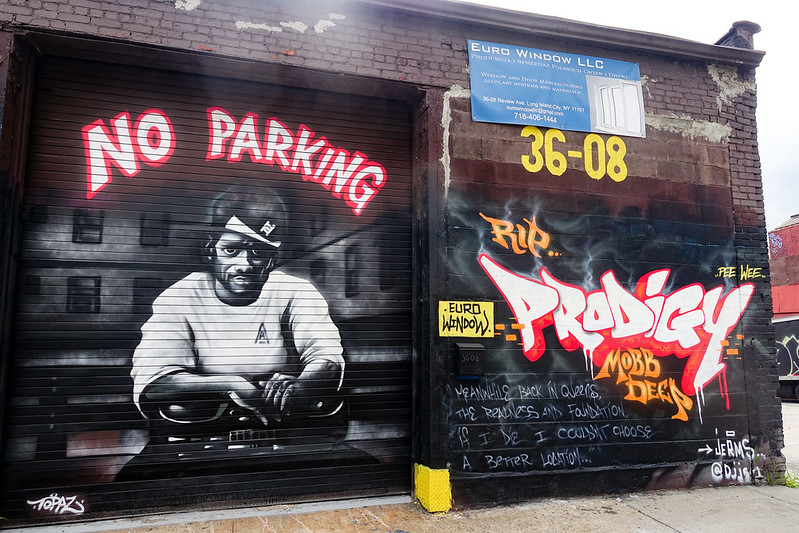
Fan Memorial to Prodigy, Image by Flickr User Nick Normal (CC BY-NC-ND 2.0)
“I Got a New Flex and I Think I Like It”: (Re)inventing Mixtape Sensibilities in the Comp Classroom
The Playlist Project was aimed at achieving three different outcomes. The first goal was to invite students to use audio sources to envision a soundscape that explains a thread of logic. These sonic sources would hold as much value in our academic space as text-based sources, and would allow them to (re)envision what “evidence-based academic writing” looks like. Thus, students could utilize their own cultural capital to negotiate sound sources of their choosing.
 The second was to get students to use DJ framework to think about sorting, sequencing and organization in writing. In our class discussions, one of the critical objectives was to get students to understand the sequencing of divergent sound sources could drastically alter the story one is trying to tell. Overall aspects of mood, tone, and pacing all become critical components of how a message is expressed in writing, but it becomes even more evident when thinking about the sonic sources used by a DJ. Each song – a source in and of itself – is a piece of a puzzle that constructs a picture and tells a story. Starting with one source can create a completely different effect if it is reconfigured to sit in the middle or the end. Explaining these sonic choices in text-based writing would be the second step in the assignment.
Finally, students would engage in editing by joining both sound and text based on a theme they have selected. Again, sequencing becomes a critical DJ tool translated into the comp classroom. Using this pedagogical strategy echoes the ideas of using DJ techniques such as “blends” and “drops” as viable teaching tools (see Jennings and Petchauer 2017). Students would need to critically think through an important question: in creating the playlist, how does one manipulate and (re)configure sound to create a sonic landscape that “writes” its own unique story?
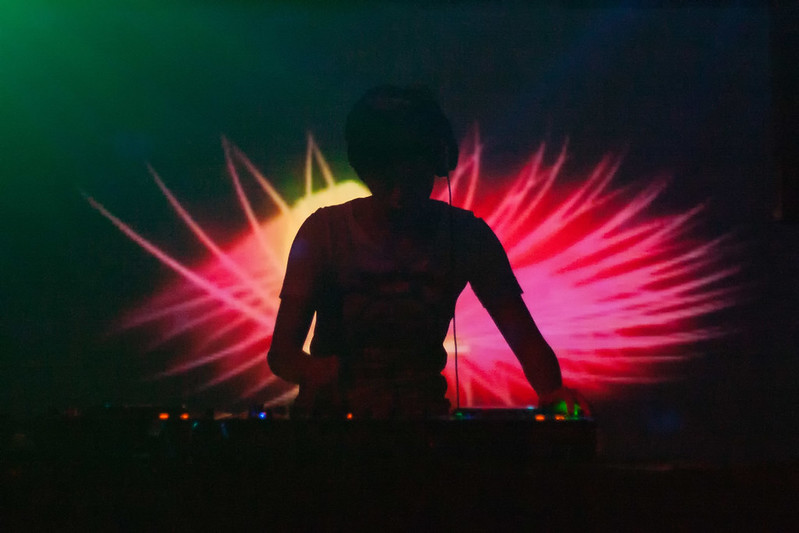
DJ Sai by Flickr User Mixtribe (CC BY 2.0)
“But Does It Go In the Club?”: Outcomes and Initial Findings of The Playlist Project
The first iteration of the Playlist Project bore mixed results. Students found it difficult to think of this project as one whole assignment consisting of three different parts. Instead, they envisioned each of the three different pieces as isolated assignments. So the playlist was one part of the assignment. They picked the songs they liked, however ordering and sequencing to convey a logical theme or argument fell from the forefront of their composing. The essay then became its own piece divorced from the organic creation of the playlist. Thus, students weren’t “engaged in telling the story of the playlist.” Instead, students were making a playlist, then summarizing why their playlists contained certain songs.
For students who were more successful integrating the elements of the assignment, we were able to have rich and fruitful classroom conversations about both selection and sequencing. For example, one student chose the theme of “the Soundtrack to the Perfect Day.” Within that theme, the student chose the song “XO TOUR Llif3” by Lil Uzi Vert.
In the song’s hook, he croons “push me to the edge/ all my friends are dead/ push me to the edge/ all my friends are dead” (Vert 2017). When this song came up in class discussion, we were able to have a formative conversation around the idea that a perfect day entailed all of someone’s friends being “dead.” This also sparked a conversation about the double meaning of the quote; it didn’t stem from traditional print-based sources, but instead arose from a student-generated idea based in the cultural capital of the classroom community. In this moment, I was able to learn more from students about the meteoric rise in relevance of both the artist and the song which seemed to depict an extreme darkness.
“Big Big Tings a Gwaan”: Future Tweaks and Goals for The Playlist Project
Moving forward with this assignment, I have considered breaking the assignment up into three pieces for more introductory composition courses: constructing the playlist, sequencing the playlist, and writing the meta-text. In this configuration, the meta-text would truly become the afterthought (instead of the forethought) of the sonic creation. As well, more in-depth soundwriting could emanate from the playlist construction, manipulation, (re)sequencing and editing. I also plan to use the assignment with a more advanced-level composition course to gauge if the assignment unfolds differently. Using an upper-level course to attain the trajectory of the assignment may be helpful in walking backwards to calibrate the assignment for students in introductory-level classes.
Another objective will be to move away from just a “playlist” and back into a “digital mixtape” format, where the playlist songs and sequencing become the fodder for a one-track, “one-take” DJ-inspired mixtape. While students don’t have to be DJs, creating a singular sonic moment digitally may imbed students in marrying the idea of soundwriting to depicting that sonic work in a meta-text. This work may also engage students in constructing sonic meta-texts, thereby submersing themselves in soundwriting practices. This work can be done in Audacity, GarageBand and any other software students are familiar with and comfortable using.
—
Featured Image: By Flickr User Gemma Zoey (CC BY-NC-ND 2.0)
—
Dr. Todd Craig is a native of Queens, New York: a product of Ravenswood and Queensbridge Houses in Long Island City. He is a writer, educator and DJ whose career meshes his love of writing, teaching and music. Craig’s research examines the hip-hop DJ as twenty-first century new media reader and writer, and investigates the modes and practices of the DJ as creating the discursive elements of DJ rhetoric and literacy. Craig’s publications include the multimodal novel tor’cha, a short story in Staten Island Noir and essays in textbooks and scholarly journals including Across Cultures: A Reader for Writers, Fiction International, Radical Teacher and Modern Language Studies. He was guest editor of Changing English: Studies in Culture and Education for the special issue “Straight Outta English” (2017). Craig is currently working on his full-length manuscript entitled “K for the Way”: DJ Literacy and Rhetoric for Comp 2.0 and Beyond. Dr. Craig has taught English Composition within the City University of New York for over fifteen years. Presently, Craig is an Associate Professor of English at Medgar Evers College, where he serves as the Composition Coordinator and City University of New York Writing Discipline Council co-chair. He also teaches in the African American Studies Department at New York City College of Technology (CUNY).
—
 REWIND!…If you liked this post, you may also dig:
The Sounds of Anti-Anti-Essentialism: Listening to Black Consciousness in the Classroom- Carter Mathes
Making His Story Their Story: Teaching Hamilton at a Minority-serving Institution–Erika Gisela Abad
Deejaying her Listening: Learning through Life Stories of Human Rights Violations– Emmanuelle Sonntag and Bronwen Low
Audio Culture Studies: Scaffolding a Sequence of Assignments– Jentery Sayers
Deep Listening as Philogynoir: Playlists, Black Girl Idiom, and Love–Shakira Holt
Share this:

Sonic Contact Zones: An Interview with DJs MALT and Eat Paint in Koreatown, Los Angeles

On Sunday, February 21, Atlanta-based hip-hop photographer Gunner Stahl will be DJing at a raw space being built at 4317 Beverly Boulevard in Los Angeles’ Koreatown as part of the Red Bull Music Festival. Red Bull suggests that many of the photographer’s artistic subjects, such as Tyler the Creator, Playboi Carti, Lil Uzi Vert, Gucci Mane, and/or The Weeknd might make guest appearances during his set. This star-studded stage with financial backing from the drink that gives you wings will stand across the street from Vilma’s Thrift Store, DolEx Dollar Express, Gina’s Beauty Salon, and Botanica Y Joyeria El Milagro. Tickets are a modest $15. At first glance, the location choice might seem odd; why not the legendary Wiltern Theater just down the street on Western? Or why not set up a stage inside MacArthur Park? Those are definitely options, and many performers do grace the stage of The Wiltern for fans in Koreatown and the greater Los Angeles area. However, for those who know Los Angeles’ Koreatown gets down, discounted snacks and pedicures a stone skip away from millionaires sounds just about right.
Figuring out these connections between sound, capital, culture, ethnicity, and art in LA’s Koreatown has been a popular pursuit in recent years. The year was 2014. The place was The Park Plaza Hotel on the outskirts of Los Angeles’ Koreatown. The people performing were TOKiMONSTA (Jennifer Lee), Far East Movement (Kevin Nishimura, James Roh, Jae Choung, and Virman Coquia), Dumbfoundead (Jonathan Park), and others. The reporter was Erik Kristman for Vice Media’s Thump. In the article titled “SPAM N EGGS Festival Was a Window to LA’s Multiculturalist Underground Movement,” Kristman proclaims: “Koreatown’s spectrum of sound, a culture hidden beneath its mid-Wilshire scenery, is no doubt one of the few remaining jewels of the LA underground.”
In Club Cultures: Music, Media, and Subcultural Capital (1996), Sarah Thornton writes that DJs “play a key role in the enculturation of records for dancing, sometimes as an artist but always as a representative and respondent to the crowd. By orchestrating the event and anchoring the music in a particular place, the DJ became a guarantor of subcultural authenticity” (60). Asian American DJs performed in Koreatown, so the electronic music and hip hop they mixed was enculturated not only with a Los Angeles neighborhood flair but also with an ethnic twist.

Park Plaza Hotel, Taken by Flickr User Cathy Cole (CC BY-NC-SA 2.0)
The Park Plaza Hotel, now The MacArthur, has its own important history as a venue as well. Built in the 1920s by prominent Los Angeles-based architect Claud Beelman, the building has hosted the racially exclusive Benevolent and Protective Order of Elks, night clubs such as Power Tools with attendees such as Andy Warhol, and has been a site of numerous films and music videos such as Kendrick Lamar’s “Humble” (2017). It survived the demolishing of similar Art Deco buildings during the 1980s. It survived the 1992 Los Angeles riots following the acquittal of four police officers who beat Rodney King and the killing of 15-year-old Latasha Harlins by Soon Ja Du, the Korean-born convenience store owner of Empire Liquor on 91st Street and Figueroa Avenue. It survived, if not flourished, in the subsequent gentrification of the Wilshire Center area with eager real estate agents and endowed buyers who are made nostalgic by the building’s Art Deco façade. The right DJs playing in a prime spot such as The MacArthur could definitely guarantee a level of Los Angeles subcultural authenticity for attendees. But what kind of authentic? And was that something anyone was trying to go for?
Kristman’s caricaturization of Koreatown certainly reveals how this visage of authenticity affected him. In his words, Koreatown is a diamond waiting to be mined. Koreatown is hidden. Koreatown’s “spectrum of sound” takes the singular verb “is,” meaning it functions as a unified, indistinguishable whole. Kristman has “no doubt” about his analysis of his authentic trip to Koreatown.
The openers of Spam N Eggs that night were two techno DJs and producers named MALT (Andrew Seo) and Eat Paint (Vince Fierro). Together, they run the Los Angeles-based Leisure Sports Records. We met at the Seoul-based coffeehouse Caffé Bene in Los Angeles to share misugaru lattes and talk about Kristman’s statement.
“I definitely wouldn’t call ‘Koreatown’ very underground,” says Vince. “It’s certainly become a new social center to LA’s night life, and there was a time when there was a feeling of great potential for a solid underground movement. But sadly, there have not been any significantly artistic home-grown breakthroughs coming from K-Town.”
Vince continues: “Rather, it serves as a new landing pad for the very commercialized Korean hip-hop and EDM cultures in Los Angeles. These genres dominate the K-Town club landscape. Unfortunately [pause] to me, anyway [pause] it’s success not won with any kind of daring artistry or underground legitimacy but rather with familiar aesthetics and neon lights.”
“[Los Angeles] helps them, too,” adds Andrew. “They’ll close off streets and bring in vendors because it gets people out spending money. A lot of the Korean stars come out for these events, but the thing is [pause] what kinds of people are these events attracting? Obviously, Koreans, or people that are fans of Korean music. I think Korean people here have a lot of pride, and they see that there is a rise in the culture and the area’s popularity and they’re jumping on that. They’re trying to make it bigger and better. If you walk around Koreatown, you’ll see gentrification happening everywhere.” He references the Wilshire Grand Center, the Hanjin Group-owned skyscraper that stands taller than any other west of the Mississippi, and its surroundings as evidence.
Urban studies carried out by Kyonghwan Park and Youngmin Lee, Kyeyoung Park and Jessica Kim, and others on Koreatown’s fraught relationship with surges of capital have made similar acknowledgments in wonderful detail. These surges are not evenly distributed among clubs; there are many more “secret” dimly-lit rave spots that pop up throughout the district than there are widely advertised above-ground clubs in Koreatown. Even relatively established clubs such as Union at 4067 West Pico Boulevard or Feria at 682 Irolo Street were not glamorous (and both have closed since the time this recent interview was conducted); they are surrounded by predatory lending offices and abandoned shops. Andrew gave me the address of an upcoming rave spot in Koreatown; it was basically under an apartment complex.
“I think they just want to bring what they build in Korea over here because that’s how they do it over there,” adds Andrew. “They just have apartments and then clubs and restaurants underneath or underground. It’s kind of like how Tokyo is.”
If this “hidden, underground” Koreatown culture does exist, as Kristman suggests, then finding it requires ignoring the flashing lights of Spam N Eggs and seeking out the darker warehouse raves. It also requires a level of suspended disbelief that Koreatown is untouched by hipster gentrification and instead an embracing of a subcultural essence that goes beyond city architecture and real estate. The physical space of sections of Koreatown might not be as important as the potential for the production of space in terms of creating sonic contact zones.
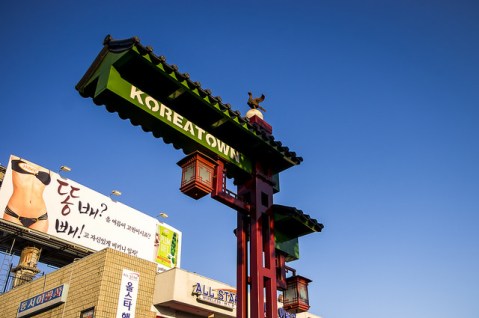
sign in Koreatown, Los Angeles by Flickr User vince Lammin (CC BY-NC-ND 2.0)
The zones created by artists such as Malt and Eat Paint are mobile and fleeting as they pop up whenever and wherever these DJs perform. Like Josh Kun famously put forward in his book Audiotopia: Music, Race, and America (2005), the music these musicians produce and mix has the ability to create audiotopias “of cultural counter that may not be physical places but nevertheless exist in their own auditory some-where” (2-3). Electronic music, and perhaps similarly this “jewel-like” spectrum of Koreatown sound, has the ability to implant identity into the buildings and surrounding neighborhoods. What once was a Mexican restaurant and is now abandoned becomes a pulsating techno club attracting those Angelenos who shy away from the more commercial scenes.
Perhaps Kristman was focusing more on the Asian American DJs themselves than the types of music they were spinning or The Park Plaza Hotel and its situation in Koreatown. As Asian Americans, these DJs represent and are representative of an authentic subculture to which Kristman bears witness. However, many artists shy away from or sometimes outright deny any racial or ethnic connections being made between their art and their identities. Andrew and Vince shared personal and well-known examples of ambivalent attitudes toward such labeling. Jason Chung, also known as Nosaj Thing, is one of the best-booked electronic performers today, flying around the world sponsored by Adidas or playing huge shows with Flying Lotus. Vince, who worked very closely with Jason just as his career was taking off, reflects on Nosaj’s rise: “Everyone here in K-Town thinks Nosaj Thing is a god. But if you ask him about his pride in being Korean, he won’t say anything.”
Andrew adds: “It’s just like how Qbert is for the Filipino community – that’s who Nosaj Thing is for Koreans today. When I went to South Korea to perform, they would ask me how I was affiliated with him, although I’m not really. South Koreans are amazed to see a Korean guy make it in the music industry in America with a sense of originality, not having to sell out.”
Both Andrew and Vince shift the conversation suddenly to Keith Ape and his debut as a trap music artist. Keith Ape’s success was due in part to spectacle (as the genre demands), to the power of hallyu promotion, but more so to simple respect from established artists such as Gucci Mane and Waka Flocka Flame. In a Noisey documentary about his first U.S. performance at South by Southwest (SXSW) in 2015, Keith Ape is translated as saying: “You know, I’m Asian. And I heard stories of how Asians are still looked at as outsiders in the States. And I heard it’s even worse when it comes down to hip-hop.”
While his successful Atlanta trap-style set at SXSW ultimately assuaged those fears of acceptance, for many beginning and working Asian American DJs and performers, this perceived and sometimes enforced musical barrier is daunting. While Andrew seemed to have his criticisms about how Korean promoters of Korean artists seem to be strictly focused on the commercial payoff of such events, he did not condemn their tapping into the United States market. Furthermore, he never mentioned that performing in the electronic music genre was either assisted or hindered by his ethnicity. Rather, much like Nosaj Thing, Malt lets the music do its work and create an audiotopia in which race and ethnicity are not under the spotlight. Literally, most of the shows Malt performs at do not feature the performer; the DJ is often in the dark, putting the focus almost exclusively on the music.

MALT, courtesy of Leisure Sports Records
Vince adds: “Korean American artists like Nosaj Thing and TOKiMONSTA and David Choe – all these people are doing their own thing. They’ve got these ‘don’t see me as Asian’ mottos, these ‘just think I’m dope’ vibes.”
Instead of searching for authenticity in the racial or ethnic identities of performers, Andrew is more interested in breaking stereotypes about the dangers associated with techno music, raves, and drug use. Andrew concludes: “I think first impressions are very, very important to Korean people. Looks are everything. South Korea is like the biggest plastic surgery country in the world. I went to Korea to visit my grandma, who I hadn’t seen in a long time, and all she would ask me was like, ‘Are you eating well? Look at your hair!’ Just purely about my looks. I was telling her, ‘Grandma! I run a label back in LA! I’m trying to be a musician!’ At our events, random Korean people walk by, they’ll come in for five seconds, listen to the music, and label it as ‘drug music,’ like something you listen to when you’re messed up. The same thing could be said about trap or EDM, right? But they don’t associate it with that. Hopefully, if the right timing comes, we can change that somehow.”
—
Featured Image: TOKiMONSTA by Twitter User Henry Faber, 2011 (CC BY-NC 2.0)
—
Shawn Higgins is the Academic Coordinator of the Undergraduate Bridge Program at Temple University’s Japan campus. His latest publication is “Orientalist Soundscapes, Barred Zones, and Irving Berlin’s China,” coming out in the 2018 volume of Chinese America: History and Perspectives.
—
REWIND!…If you liked this post, you may also dig:
 “How Many Latinos are in this Motherfucking House?”: DJ Irene, Sonic Interpellations of Dissent and Queer Latinidad in ’90s Los Angeles—Eddy Francisco Alvarez Jr.
Contra La Pared: Reggaetón and Dissonance in Naarm, Melbourne–Lucreccia Quintanilla
SO! Amplifies: The Women in L.A. Punk Archive— Alice Bag
Share this:


Current Top Posts





April 2021

January 2020

November 2019

October 2019

August 2019

April 2014

November 2017

March 2015

December 2017

October 2015
 Sounding Out!
Recent Comments