
I Can’t Hear You Now, I’m Too Busy Listening: Social Conventions and Isolated Listening

 Editor’s Note: I hate to interrupt our busy readers, but I just wanted to mention that today’s post by Osvaldo Oyola marks our last entry in SO!‘s July Forum on Listening. For the full introduction to the World Listening Month! series click here. To peep the previous posts, click here. Also, look for our #Blog-O-Versary 3.0 post coming up on July 27th, a multimedia celebration of three years of Sounding Out! awesomeness (complete with a free, downloadable soundtrack compiled by our editors and writers for your listening pleasure). Now for some pure, uninterrupted reading (we hope!).–JSA
—-
In calling attention to listening as an activity, July 18th’s World Listening Day made me think about our social conventions around listening. While it is not uncommon for folks to pay lip service to listening’s value, this ignores the variety of ways that listening is actually socially prioritized (and the multiple meanings housed in the term “listening”). Case in point, the officiant at my recent wedding exhorted my about-to-be-wife and me to listen to each other: “listen for what is consistent and familiar, but also for what is new, emergent, even sweetly radical in your partner.” When used in this sense, listening refers to a focused attention to the meaning of sound, particularly language. His words suggest that our relationship would be strengthened by listening’s ability to convey interpersonal knowledge.
While listening is certainly crucial to social bonds, my own experience as a careful and engaged listener of music suggests that some of the most crucial listening we do happens as an isolated–and isolating experience–especially when listening involves recorded sound. However, its importance to our individual well being often seems directly inverse to the (lack of) seriousness other people seem to give it. Not my now-wife, of course, but uninterrupted musical listening was not an official part of our vows, either. There is an inherent tension between social and isolated forms of listening.
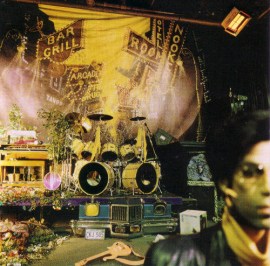
Sign o’ the Times, still my fave 25 years later.
As a teenager, for example, whatever my arguments with my mom might have really been about, a frequent instigator of a blow-up was her reaction to my annoyance when she’d interrupt my listening at her whim. I’d be sitting in my room listening in anticipation for what I have often called my favorite recorded human sound–that moment in Prince’s “Adore” on Sign o’ the Times around 2:55 (music nerd correction: on the album version it is actually at 2:48) when Prince makes a little moan before the second time he sings “crucial”–and mom would burst into the room to ask me a question, giving no heed to the stereo. I often responded to this in the same way: “If I were reading or watching TV, you’d say ‘excuse me,’ to get my attention, just like you always taught me a polite person should do. But when it is music you just go ahead and interrupt as if I weren’t doing anything, but I am doing something. I’m listening to music. It’s an activity.” (Of course, you have to imagine that response laden with all the snottiness only a teenager could muster). You would’ve thought she’d understand, since my obsessive love of music was influenced in no small part by her huge collection of salsa records, but my mom’s listening is mostly predicated on embodying the music through dance. This kind of listening is not so much about close attention to the details of the sound, but rather on a visceral reception of its physicality. Again, like listening to speech, the form of listening given to dance commonly reinforces social bonds—between dance partners, among dancers in a crowd, between dancers and DJ or band.
The kind of listening I am describing cuts us off from the immediate social world. It requires that people who want your attention must rudely interrupt your listening pleasure or ask forgiveness for the interruption. Theoretically, they could wait patiently, but this rarely happens, so the listener often feels forced to downplay the annoyance that comes along with interruption, lest they break a social bond and/or belie how important this kind of listening really is to them.
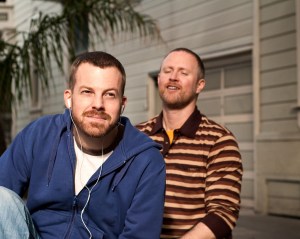
“Tuning Out” by Flickr User CarbonNYC
Of course, the ubiquity of headphones suggests that there are many people who want to be focused enough on their listening as to avoid interruption. (Though, that may be a chicken-and-the-egg situation, as I can’t help but wonder to what degree the headphones become an excuse for social disengagement.) Either way, it is noteworthy that the wearing of headphones become a visual clue for a desire to be isolated in the listening practice, even when in an otherwise public environment. If you are going to ask a stranger on subway for directions, you are less likely to choose the person with headphones on, and if you do choose to ask them, the headphones direct the form of social action required to get their attention and ask. It calls for a visual signal, like a gesture to remove the headphones, or even polite physical contact, like a tap on the shoulder—but you certainly would not pull the headphones off their ears and just start talking at them, as you might talk at someone listening to music through speakers if you happen to walk into the room. The invention of things like the Doffing Headphone handle, which allows headphone listeners to greet others by “doffing” their headphones like one used to do with a hat, arises from the need for isolated listeners to interact with the social world even while enmeshed in their portable bubble of personal space. However, be that as it may, the handles have not exactly caught on.
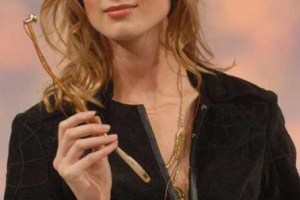
Doffing Headphones
Perhaps headphones are the just the logical evolution of crafting a listening space. They are certainly much more feasible than the ‘Yogi Enclosure’ Kier Keightley discusses in his article “’Turn It down!’ She Shrieked: Gender, Domestic Space, and High Fidelity, 1948-59.” The “Yogi enclosure” was High Fidelity magazine’s tongue-in-cheek (and highly gendered) 1954 solution to a man’s inability to enjoy his hi-fi in a space where he is likely, the article suggests, to be harangued by his wife and annoyed by his children. This masculinizing of listening speaks to the social contours of what is ostensibly an individual practice. In the case of my teenaged self and my mother, I wanted my 1000th listen to Dark Side of the Moon to dictate her behavior in the way that other individual activities in a shared space dictate behavior through social conventions. Looking back, I was also trying to claim space in her home. I never considered how as a mom she was expected to always be available, never free from interruption no matter what she was doing. Keightley’s article demonstrates this through explaining the construction of listening technologies as a domain of men that requires women and children to be quiet in order to allow him the pleasure of his equipment. I could imagine my right to be uninterrupted, for my listening to be taken seriously, considered a productive activity, by virtue of my gender and my youth. While, now that I think of it, even the majority of my mom’s record-listening and salsa dancing accompanied household chores that fierce adherence to gender roles demanded time she might have preferred to dedicate to listening alone.
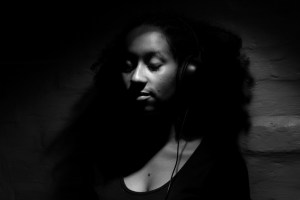
Listening by Flickr User Alessandra Luvisotto
While gender politics have changed significantly since 1954, careful music listeners of any gender still seek to define the use of space through the use of sound, intentionally or unintentionally. There is a satisfaction that comes with filling a space with sound that I feel cannot be matched by even the highest quality noise-canceling headphones. Sound emerging from speakers and moving through the air creates a presence. It demands attention. It dictates behavior. It is a kind of power.
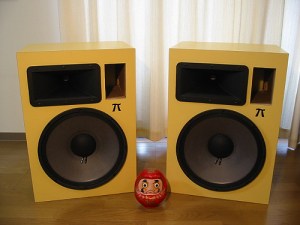
Image by Flickr user Ken Schwatz
Another case in point: I can remember my college roommate and I (the same fellow who’d end up being the officiant at my wedding, coincidentally enough) traveling from store to store to try out different stereo speakers, carrying a CD copy of This Mortal Coil’s Filigree & Shadow and getting salesmen to play the soft sounds on tracks like “Thias (II),” as a test. These were the days before online comparison shopping, so in order to achieve this idealized listening experience–which for us meant the loudest and softest sounds were equally clear–we had to annoy salesmen with our self-important discussion of miniscule differences in sound quality and failure to actually purchase the costly speakers we were trying.
.
What I am trying to convey with this anecdote is that, while the idealized listening experience we imagined was an isolated one (probably something involving staring at the glow-in-the-dark star stickers on the ceiling of our darkened dorm room), it was born of the sociality and power I mentioned above. We were exercising a form of privilege (or at least practicing for an imagined future masculine power over the domestic sphere). This imagined idealized listening not only required a developed understanding of what we were listening for, but a shared sense of the ideal circumstances for those focused, uninterrupted, close listening sessions. And those ideal circumstances required a freedom from the responsibilities of social bonds, that we, as young men, never doubted we could access. There is no part of listening (as opposed to merely hearing) that isn’t social, and both isolated and more explicitly interpersonal forms of listening feed each other, but only when both are valued, nurtured, and made possible.
I thought by exploring these isolated listening experiences that I might come closer to understanding the primacy of the visual in the social etiquette of interruption, but I am no closer. Instead, I am left to consider the dynamics of power that (dis)allow that space for close listening. All I have learned about the matter since those teenaged arguments with my mom is that, if I plan to do some real listening, I either need to be alone in the house or that the onus is on me, the listener, to make an announcement: “I will be listening to music now.” Still, more often than not, I put on my headphones. The fact remains that without the visual signals that let others know that listening is occurring–headphones, dancing–listening as a solo activity is so often devalued and interrupted. Sound alone is not enough.
Now if you’ll excuse me, I just got Jonathan Lethem’s book on Fear of Music, and I plan on closely listening to each track of the Talking Heads’ record before and after the associated chapter in Lethem’s book. Let’s hope I won’t be interrupted.
—
Osvaldo Oyola is a regular contributor to Sounding Out! and ABD in English at Binghamton University.
Share this:

“Everyone I listen to, fake patois. . .”

It may seem a little crazy to take Das Racist seriously. Their songs are deep in the realm of the ridiculous, but I can’t help but feel that “Combination Pizza Hut/Taco Bell” is a commentary on how the compression of urban space is shaped by our relationship to consumption. Close-reading of their songs provide repeated evidence for the underlying tenor of seriousness in that absurdity—even if they’re being playful about it. As one of my favorite Das Racist songs says, “we’re not joking / just joking / we are joking / just joking / we’re not joking.” (For those who need help parsing, no, they are in fact, not joking). Take for instance Das Racist’s “Fake Patois” off of their free downloadable “mixtape” Shut Up, Dude! (2010). This satirical and intelligent exploration of the sounds of authenticity and their relationship to the reggae-hip hop dyad uses fake patois itself, working off an ironic tension that is as troubling as it is funny—and it’s also a banging song.
The “patois” used in American hip hop is clearly meant to be Jamaican-sounding, mixing elements of Jamaican creole language with a generous sprinkling of terms specific to Rastafarian English. The sounds of “fake patios” are a stylistic choice, reinforced through a dancehall reggae cadence of rapid-fire clipped words, rapped melodically. “Fake Patois” recalls the role of reggae in identifying an authentic origin for hip-hop. And certainly the connection cannot be denied. That Kool Herc brought Jamaican DJ culture with him to the Bronx is originary, and Run D.M.C brought it up in 1984’s “Roots, Rap, Reggae” (featuring Yellowman). If you want a more detailed mapping of a particular reggae meme’s journey through hip hop, check out Wayne Marshall’s fantastic essay on the subject, which demonstrates that even when contemporary artists think they are paying homage by imitating their rap fore-bearers they are also unknowingly paying homage to the influence of Jamaican music on American rap.
.
Das Racist’s “Fake Patois” speaks with a deep awareness of this tradition in rapping, but what may on the surface seem like an indictment of the “fake” nature of the adopted style is actually an example of what George Lipsitz called “strategic anti-essentialism” in Dangerous Crossroads. While critical of reckless appropriation of various ethnic musics by western whites, Lipstiz nevertheless sees this music as a way for individuals to express their identity through solidarity, sharing a respect for that music’s history as it is embedded in a framework of power. The song shows this respect through its knowledge, but also immediately calling out artists that have used the “fake patois,”—respected ones like KRS-One, b ut also “My man Snow,” a white Canadian performer of dancehall reggae. Snow is probably the quintessential example of the “fake patois,” as his 1993 break-out hit, “Informer” was for much of white America the first exposure to the sounds of dancehall reggae. Snow withstood attacks on his authenticity throughout his career and tried to shore it up through his incarceration narratives and associations with blacks of Caribbean descent.
Das Racist doesn’t limit their list to musicians, and their choices highlight the different ways patois is put to work. For example, they mention Miss Cleo of psychic phoneline fame, who claimed to be from Jamaica, but is an actress and playwright from Seattle. Through her patois the Miss Cleo character sold the authentic origins of her mystic powers. Das Racist seems to be suggesting that the use of the patois sound in songs is selling something as well, even as they use it to sell their own song.
.
Similarly, the lyric, “Even Jim Carrey fuck with the patois,” makes reference to the actor’s parody of Snow’s “Informer.” While “Imposter,” is clearly meant to call out Snow’s lack of ‘blackness,’ Carrey’s mocking “Day-O” and his characterization of dancehall lyrics as “gibberish” also underlines a disdain for the music form itself. While potentially problematic, Snow’s performance is clearly born of an earnest appreciation of dancehall reggae. The parody, on the other hand, despite its comedic intent, does not have the performer’s genuine affect to mitigate its buffoonish mimicry.

"Even Jay-Z did a fake patois" by Flickr User NRK P3
Das Racist’s song also reveals a degree of comedic intent. The use of autotune highlights the artificiality of the sung patois. Their straight delivery of ridiculous references (“Crunch like Nestle. . .Snipe like Wesley”) and their use of repetition to re-emphasize the absurdity of their performance is funny. They revel in the dumb fun of referencing Half-Baked—when Dave Chappelle, posing as a Jamaican, is asked what part of Jamaica he is from and he replies “right near the beach.” Das Racist’s demonstrated mix of absurdity and awareness destabilizes their position as a means to open up a field of possibilities. It does not set limits by associating authenticity with a singular origin, but rather to establish it as a connection with an ongoing tradition.
The song continues to question the stability of the authentic by calling out two singers with a “real” patois, Shabba Ranks and Cutty Ranks, for their past homophobic songs and comments. Das Racist sings, “Your M.O. Is ‘mo / Me say no thanks.” That “’mo” is short for “homo,” and that “no thanks”serves to distance them from the popular examples of male Jamaican artists whose homophobia has been linked with a hypermasculine ideal played out through violent fantasy—whether it’s Shabba’s defense of Buju Banton’s “Boom Bye Bye” or Cutty’s “Limb By Limb.” Their apologies attempted to connect their bias with their “culture,” trying to excuse their ideas in terms of how they authentically inform their problematic songs. In this lyric, Das Racist is implicitly rejecting homophobia as a litmus for authenticity, while playing with a homophobic term. In other words, for artists like Shabba and Cutty to defend homophobia in reference to a “realness” in their music is suggesting that bias against gays is a precondition for making “real” music.
For me, the broader question that emerges from this interrogation of “fake patois” is: to what degree can a variety of popular music sound choices (singing style, melodic influence, etc that are associated with a particular culture or nationality) be similarly destabilized or revealed as “fake”? The Beatles sang like fake Americans, imitating their favorite (mostly black) artists, and Green Day have sounded like fake Brits, identifying with some authenticating element found in the sound of English punks. What ground does this destabilization open up? What possibilities for connection does it provide and what framework can we use to discuss it when the results seem problematic?
Lipsitz writes, “In its most utopian moments, popular culture offers a promise of reconciliation to groups divided by power, opportunity and experience,” and Das Racist certainly seems to be doing their best to critically fulfill that promise. Their self-conscious undermining of their position and their willingness to simultaneously suggest that there may be something problematic with mimicking patois–while highlighting that so-called authentic identities are sutured together into a particular kind of sounded performance–articulates a bond through an identification, not a singular origin. In doing so, Das Racist suggest a network of identities bound by points of solidarity, making room for South Asia in the Black Atlantic by way of the Caribbean.
—
Osvaldo Oyola is a regular contributor to Sounding Out! and ABD in English at Binghamton University.
Share this:


Current Top Posts





April 2021

January 2020

November 2019

October 2019

August 2019

April 2014

November 2017

March 2015

December 2017

October 2015
 Sounding Out!
Recent Comments