
On the Poetics of Balloon Music: Sound Artist Judy Dunaway (Part Two)

Last week, Carlo Patrão published “On the Poetics of Balloon Music: Sounding Air, Body, and Latex (Part One),” which examined the history of the association between balloon travel and experimentation and the idea of silence, along with a round up of conceptual artists who have used balloons in their work. Today’s post continues this exploration with an in-depth conversation between the author, producer Marina Koslock and sound artist Judy Dunaway.
We look at alien grace,
unfettered
by any determined form,
and we say: balloon, flower,
heart, condom, opera,
lampshade, parasol, ballet.
Hear how the mouth,
so full
of longing for the world,
changes its shape?
Excerpt from Difference, by Mark Doty
PLAY //
Against Levity: Experimental Music and the Latex Balloon
The term balloon music gained some virality in 2011 after Finn, the protagonist of the animated series Adventure Time, rubbed a toy balloon and improvised a rap over its squeaky sounds. “Balloon music is the future,” says the character. This few second-long scene became an instant meme, inspiring many to share their own versions of the “futuristic sound of balloon music.”
Balloons themselves are viral objects. Designed to infect our moods, they are part of social rituals ranging from the deeply personal to collective (political) euphoria. They are cheap, amusing and awe-inducing. As resonant chambers, balloon membranes are sonically responsive to touch while, at the same time, highly tuned to the vibrations of the environment. To start playing a balloon, no prior experience is required. In this sense, the balloon is a democratic instrument whose sonic textures circumvent expensive music equipment.
The Jazz composer Anthony Braxton was once asked why he used balloons in his Composition 25 (1972). Braxton replied: “I didn’t have enough money for the electronic equipment that could make those kinds of sounds. I’m interested in the expanded reality of sound opened up by the post-Webern continuum, but I’m restricted to using cheap materials. So, you know, I was walking down the street one night and I thought, Hey! I gotta have balloons!”
Anthony Braxton, B-Xo/N-0-1-47a or Composition 6G, w/ Leroy Jenkins, Leo Smith and Steve McCall, with balloon sounds, 1969
“For me, that piece (Composition 25) really best demonstrates the full symbolic meaning of the balloon in the early avant-garde,” says balloon music composer Judy Dunaway. “I’ve discussed this with Braxton himself – the balloon replicated electronic equipment that he couldn’t afford at the time, but he also saw it as a way to open up the minds of the performers to get them to think differently about how they were improvising and how they were interacting in the piece.” Braxton’s Composition 25 is scored for 250 balloons and musicians are required to produce sound by squeezing, rubbing and popping balloons. “I like the idea that he breaks down the hierarchy,” adds Dunaway, “black musicians were discriminated against and they didn’t have the financial means that the white musicians had… and he was using this as a way to get beyond that and say: Here, I’m going to do electronic sounds without any electronics, I don’t need to go buy a Buchla or be associated with an academic institution that can give me access to equipment, right?”

Judy Dunaway, Mother of Balloon Music, Innova Recordings, 2006
Producer Marina Koslock and I met Judy Dunaway at MassArt in Boston to talk about her balloon-based sculptural sonic performances and the ready-made latex balloon as a sound producing instrument. For the past 25 years, Dunaway has been developing a singular specialization in the balloon as a medium for sound and music. You can keep just broadening out and do more things with a concept; or you can work in a particular parameter as an artist and keep digging deeper and deeper and deeper, and that for me as been more interesting, is to pursue that line”, explains Dunaway.
As a consequence, her balloon work has spanned out through several records (e.g. Balloon Music and Mother of Balloon Music), scores, sound sculptures, solo performances, ensembles, and numerous installations. The poetics of the latex balloon as a sound producing instrument contrast with the atmospheric balloon explored in part one of this article. The balloon, no longer buoyant, stays in close proximity to the body of the performer. The surface of the balloon is vibrated through rubbing, stroking, squeezing, pulling, popping and through the control of air releases. These sonic tactile acts bring forth dialogues between the performer’s body and the latex body of the balloon. “I limited my playing techniques to the balloons and my body,” says Judy Dunaway, “it was essential to be able to feel everything that was happening with the balloon in order to be able to fully explore all the sonic possibilities.”
The Balloon Music, DF#, by Tina Touli, 2013-2015
The balloon functions as an external sensory organ, like a skin, that vibrates when sound passes through. In Deaf culture, balloons have a long history of being used as resonating chambers that amplify vibration and facilitate hearing. Deaf people use them at concerts, musicals, clubs and raves to hear the music through the vibration of the balloon’s membrane. David Toop writes about Alexander Bell in the 1870s encouraging students from a Boston school for deaf children to hold balloons in their hands while walking on the street as a safety measure in order to hear the vibrations from the cobblestones as fast horse-drawn wagons passed by. Vibrational information is processed in the same way as sound information. As the scholar Steph Ceraso proposes, the common definition of listening needs to be expanded to include the sensory, contextual, and material aspects of a sonic event. Dunaway’s sound installation Manual Eardrums invites participants to a different mode of listening through the vibration of the balloon. “You are given earplugs at the door and an inflated balloon, and you hold it between your hands as you walk around the space. There’s a low tone playing that sweeps between 100Hz and 150Hz and it causes different vibrational patterns in the room that you can feel and map them out,” explains Dunaway. “Your eardrum is the balloon that you’re holding.”
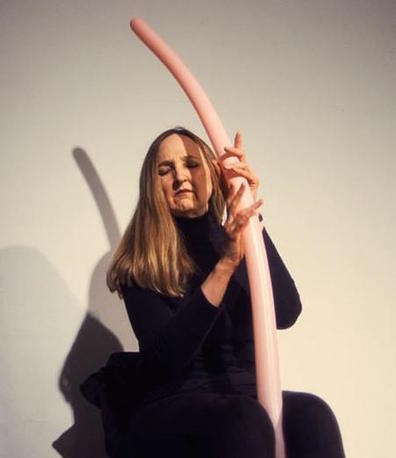
Judy Dunaway performing Amplified Twister Balloon, Photo by Mizuki Nakeshu
Judy Dunaway started to play balloon music in the late 1980s, first as a preparation for guitar string and soon after as a solo instrument. It was in the midst of the AIDS Crisis and Dunaway was part of the downtown improv scene in NYC. “Many of my friends were dying,” she recalls. “Everybody was saying what caused this? Nobody knew how the disease was being spread,” adds Dunaway. “Then, of course, there was this discovery that it was sexually transmitted and you could prevent transmission with latex condoms. Suddenly, they had this power,” she says, “latex had this power to save people’s lives, and I say that that is when balloons really began to speak to me. They were something beyond a mere mechanism to make sound.” Within the envelope of the balloon Dunaway found space for memory, life, and sensuality.
From the beginning, her balloon work has articulated tensions between explicit and implicit meaning around issues relating to social activism, environmentalism, and feminism. “In an era, which continues to be that a woman’s control of her own body is restricted or attempts are being made to restrict our bodies, I coupled myself to this instrument that expresses sensuality, sexuality, and humanity,” says Dunaway. The balloon, as a resonating chamber, bypasses western musical traditions that mechanize the body and gender stereotype musical expression. For Dunaway, the balloon generates a “non-judgmental somatic relationship.”
“Seeing my connection to the body of the balloon, that to me served as an unspoken rebellion against the patriarchy, against the power structures that have oppressed women and, ultimately, all humankind by severing the psyche and the body,” says Dunaway. Following the scholar Robin James, the patriarchy is not just a “relation among people” but is also a “relation among sounds” that are coded in a gender system of masculine absolute/feminine other. “The way I approach the balloon is not nailed or fixed or part of this history,” clarifies Dunaway. The balloon as an instrument has allowed Dunaway to develop a musical lexicon outside of a male-dominated classical heritage.
Judy Dunaway performing Piece for Tenor Balloon, written notation with improvisational passages, 2002
For example, this is her description of the round balloon as a sounding instrument:
Imagine a string, a string on a violin or guitar, and this string is held taut on either end by a the tuning pegs and the bridge now imagine that string suddenly melted and spun out into an orb and it’s all held tight by a column of air. . .this is the palette that I have to access when I play the Tenor Balloon, I have all these harmonics on this curved shape, and I control it partially with my knees.
The Tenor Balloon is placed between both knees and Dunaway applies and releases pressure on the balloon producing microtonal changes on its surface. “And I also use water,” she adds, “copious amounts of water, warm water on the balloon and on my hands because that’s the way I get this stick and slip mechanism to work.” The hands gliding on the balloon’s surface act similar to a bow on a string reaching different nodes and moving through harmonic series.
Judy Dunaway performing “Hommage à Kenneth Noland”, for amplified giant balloon, vibrators, synthesized tones, and projected video, with Max/MSP/Jitter interface, 2017
Each balloon requires its own specific touch or sounding technique. On the piece Amplified Giant Balloon, vibrators are used to resonate the surface of a giant balloon creating a low drone sound. “It’s like vibrating a giant bass string”, says Dunaway, ”I tune my vibrators, I go to the sex shop and I listen to vibrators, and I tune the vibrators to each other so there’s a little beating pattern between them that I can control.”
Around 2015, Dunaway added a new balloon to her solo performances, the Amplified Twister Balloon. The twister balloon is equivalent to the long balloons used to make balloon-animals. Due to its string-like shape, the sounds produced through rubbing or gliding differ from the sounds of a round balloon. “The harmonic series isn’t so predictable,” she continues, “the tension is highest close to the navel of the balloon and that makes it microtonal different from one end to the other like an out-of-tune bugle.” Visually, the Amplified Twister Balloon performance delivers a feminist affirming statement. Defying the tradition of the male guitarist stroking the female form of the guitar, Dunaway finds musical material in a phallic-shaped balloon. “I sort of invert this”, she says, “now I have the penis form that I’m stroking and caressing and I’m taking this phallic power for myself in the Amplified Twister Balloon.”
“My work doesn’t come out of a void,” states Dunaway. In the article My Beautiful Balloon, Dunaway maps out a detailed history of the balloon in experimental and avant-garde music. Many Fluxus artists used the balloon in events, concerts and instructional scores. The sounds of the balloon embodied Fluxus’ humorous/satirical attitude towards art and the collapse of hierarchies of experience by reframing everyday life objects. Balloons are used by DIY artists that re-invent, hack and create new music instruments (Jean Francois Laporte, Thierry Madiot, Aaron Wendell, Tom Nunn, Javier Bustos). Balloon sounds are explored by many artists with backgrounds ranging from improvised music, rock, electronic or electro-acoustic and sound installation (Ricardo Arias, David Bedford, Mauricio Kagel, Alvin Lucier, Terry Day, Tod Dockstader, Christine Sun Kim, Davide Tidoni, Sharon Gal, Eugene Chadbourne, Matmos, EVOL, Alan Nakagawa, to name a few).
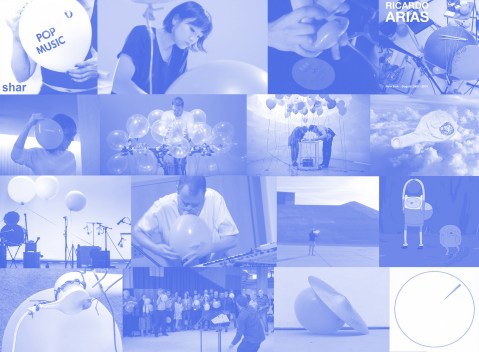
Balloon Music Compilation
To develop a practice around the accessibility of latex is to engage with politics of mass-production and exploitation of resources and labor. Dunaway mentions the connection between the air and breath that fills the balloon and the mass-extraction of latex from the lungs of the Earth. “[Balloons] are literally the blood from a tree in the Amazon,” says Dunaway, “and there’s a whole history of how the indigenous people there were and still are persecuted. Now, they are mostly farmed in Malaysia,” she adds.

Latex being collected from a tapped rubber tree, Wikimedia Commons
Between 1890 and 1920, a rubber fever led to a boom of extraction and exploitation of rubber-bearing plants in the Amazonian countries and to the forced displacement, slavery and mass killing of its indigenous people. The same happened in many African countries. As John Tully writes in his book The Devil’s Milk, “it is still true that where there is rubber there is often human suffering.” Ricardo Arias, a Columbian composer working with balloons (balloon kit) since 1987, has acknowledged this suffering through his balloon work. In Musica Global, Arias composed a series of 20 short balloon pieces called Caouchu: The Weeping Tree/El Árbol Que Llora in memory of the native Americans tortured and killed by the North American and European hunger for natural rubber latex.
These ontological relations between the balloon’s materiality and the environment inform Dunaway’s work. “I’m writing a piece for a large 30 to 35 person balloon ensemble. This piece is called Wind Ensemble and is all about the air going out of the balloon, and the sound of the mouthpiece being vibrated as the air comes out.” Dunaway shares a video recording of this work and the room is filled with high pitched sounds changing at different speeds. The experience is immersive; a meditation on air and vibration. “It’s rather minimal in the concept because I really want you to notice the small changes and nuances over time.” The performative element of the piece has balloon players squeezing the balloon’s mouthpiece and bending over large balloons to make them vibrate until the balloon’s last breath. “Ideally, I would like 60 balloon players, that would be great!” she exclaims. The embodied relationship that Dunaway has developed with the balloon over the past decades resulted in an artistic practice extremely tuned to the sonic proprieties of every inch of the latex balloon.

Still from Le Ballon Rouge by Albert Lamorisse, 1956
The poetics of balloon music bring forth alternative narratives that challenge dominant hierarchies of music production, bypassing expensive technology and expectations of gendered musical expression. The balloon as an object of childhood and of playfulness is charged with emotional resonance and invites the construction of meaning while offering an opportunity to build upon subversive themes. In this two-part article, the balloon was analyzed as an object that is able to generate a vertical dimension of self and the construction of a sense of Place within the silence of the upper air regions that informed the “listening ear” to perceive difference. As a Probe, the balloon navigates the irreversibly altered constitution of the airspace, sonifying masses of air and weather data. Filled with breath or air, in Play, the latex balloon is an extra ear attached to our bodies that vibrate in sympathy with the terrestrial agitations of the Earth. Maybe Finn from Adventure Time is on to something. “Balloon music is the future.”
—
Thanks to Judy Dunaway for the interview and records; Marina Koslock for co-producing the interview with Judy Dunaway; and Jennifer Stoever for your help and excellent editing.
—
Featured Image: Judy Dunaway, photo by Alice Bellati
—
Carlo Patrão is a Portuguese radio producer and independent researcher based in New York city.
—
 REWIND! . . .If you liked this post, you may also dig:
Queer Timbres, Queered Elegy: Diamanda Galás’s The Plague Mass and the First Wave of the AIDS Crisis– Airek Beauchamp
Botanical Rhythms: A Field Guide to Plant Music -Carlo Patrão
Sounding Our Utopia: An Interview With Mileece–Maile Colbert
Share this:

“Most pleasant to the ear”: W. E. B. Du Bois’s Itinerant Intellectual Soundscapes
Inspired by the recent Black Perspectives “W.E.B. Du Bois @ 150” Online Forum, SO!’s “W.E.B. Du Bois at 150” amplifies the commemoration of the occasion of the 150th anniversary of Du Bois’s birth in 2018 by examining his all-too-often and all-too-long unacknowledged role in developing, furthering, challenging, and shaping what we now know as “sound studies.”
It has been an abundant decade-plus (!!!) since Alexander Weheliye’s Phonographies “link[ed] the formal structure of W.E.B. Du Bois’s The Souls of Black Folk to the contemporary mixing practices of DJs” (13) and we want to know how folks have thought about and listened with Du Bois in their work in the intervening years. How does Du Bois as DJ remix both the historiography and the contemporary praxis of sound studies? How does attention to Du Bois’s theories of race and sound encourage us to challenge the ways in which white supremacy has historically shaped American institutions, sensory orientations, and fields of study? What new futures emerge when we listen to Du Bois as a thinker and agent of sound?
Over the next two months, we will be sharing work that reimagines sound studies with Du Bois at the center. Pieces by Phillip Luke Sinitiere, Kristin Moriah, Aaron Carter, Austin Richey, Julie Beth Napolin, and Vanessa Valdés, move us toward a decolonized understanding and history of sound studies, showing us how has Du Bois been urging us to attune ourselves to it.
Readers, today’s post by Phillip Luke Sinitere offers a wonderful introduction to W.E.B. Du Bois’s life’s work if he is new to you, and a finely-wrought analysis of what the sound of Du Bois’s voice–through first hand accounts and recordings–offers folks already well-acquainted.
–Jennifer Lynn Stoever and Liana Silva, Eds.
In her 1971 book His Day is Marching On: A Memoir of W. E. B. Du Bois, Shirley Graham Du Bois recalled about her late spouse’s public lectures that “everyone in that hall followed his words with close attention. Though he read from a manuscript replete with statistics and sociological measurements, he reached the hearts as well as the minds of his listeners.” Shirley’s memory about W. E. B.’s lectures invites reflection on the social and political significance of what I call his “itinerant intellectual soundscapes”—the spaces in which he spoke as an itinerant intellectual, a scholar who traveled annually on lecture tours to speak on the historical substance of contemporary events, including presentations annually during Negro History Week.
Yet Du Bois’s lectures took place within and across a soundscape he shared with an audience. In what follows, I center the sound of Du Bois’s voice literally and figuratively to 1) document his itinerant intellectual labor, 2) analyze how listeners responded to the soundscapes in which his speeches resided, and 3) explore what it means to listen to Du Bois in the present historical moment.
***
Upon completing a Ph.D. in history at Harvard in 1895, and thereafter working as a professor, author, and activist for the duration of his career until his death in 1963, Du Bois spent several months each year on lecture trips across the United States. As biographers and Du Bois scholars such as Nahum Chandler, David Levering Lewis, and Shawn Leigh Alexander document, international excursions to Japan in the 1930s included public speeches. Du Bois also lectured in China during a global tour he took in the late 1950s.
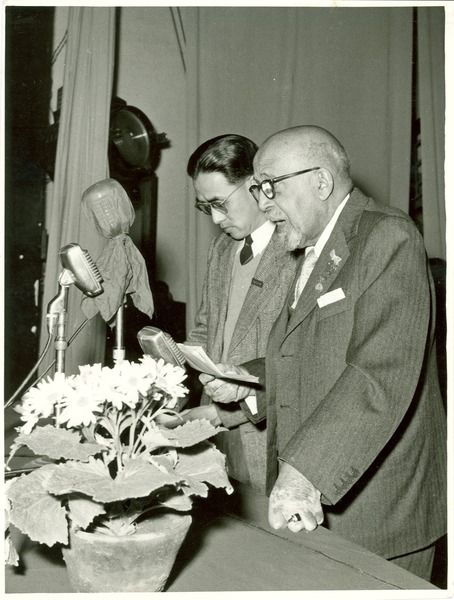
W. E. B. Du Bois delivering a speech in front of a microphone during trip to China, circa 1959, Courtesy of the Massachusetts Digital Commonwealth, physical image located in Special Collections and University Archives, University of Massachusetts Amherst Libraries
In his biographical writings, Lewis describes the “clipped tones” of Du Bois’s voice and the “clipped diction” in which he communicated, references to the accent acquired from his New England upbringing in Great Barrington, Massachusetts. Reporter Cedric Belfrage, editor of the National Guardian for which Du Bois wrote between the 1940s and 1960s, listened to the black scholar speak at numerous Guardian fundraisers. “On each occasion he said just what needed saying, without equivocation and with extraordinary eloquence,” Belfrage described. “The timbre of his public-address voice was as thrilling in its way as that of Robeson’s singing voice. He wrote and spoke like an Old Testament prophet.” George B. Murphy heard Du Bois speak when he was a high school student and later as a reporter in the 1950s; he recalled the “crisp, precise English of [Du Bois’s] finely modulated voice.”
One benefit of Du Bois’s long life was its intersection with technological advances in audio recording and amplification, the dynamics of which literary historian Jennifer Lynn Stoever insightfully narrates in The Sonic Color Line. This means that in 2018 we can literally listen to Du Bois’s voice; we can experience sonic dimensions of his intellect and sit with the verbal articulation of his ideas. For example, Smithsonian Folkways released two audio recordings of Du Bois: an April 1960 speech, “Socialism and the American Negro” he delivered in Wisconsin, and a 1961 oral history interview, including a full transcript. Furthermore, in his digitized UMass archive we can read the text of another 1960 speech, “Whither Now and Why” and listen to the audio of that March lecture.
The intersection of these historical artifacts texture understanding of the textual and aural facets of Du Bois’s work as an itinerant intellectual. They give voice to specific dimensions of his late career commitments to socialism and communism and unveil the language he used to communicate his ideas about economic democracy and political equality.
The act of hearing Du Bois took place within and across his itinerant intellectual soundscape was rarely a passive activity, an experience toward which Shirley’s comments above gesture. Those who attended Du Bois’s lectures often commented on listening to his presentations by connecting visual memories with auditory recollections and affective responses.
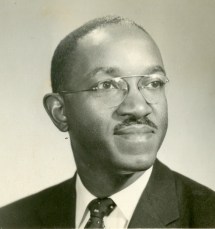
John Hope Franklin, 1950s, while Chair of Department of History at Brooklyn College, Courtesy of Duke University
For example, the late black historian John Hope Franklin penned an autobiographical reflection about his first encounter with Du Bois in Oklahoma in the 1920s at 11 years old. At an education convention with his mother, Franklin commented on Du Bois’s physical appearance: “I recall quite vividly . . . his coming to the stage, dressed in white tie and tails with a ribbon draped across his chest . . . the kind I later learned was presented by governments to persons who had made some outstanding contribution to the government or even humankind.” He then referenced a sonic memory. “I can also remember that voice, resonant and well modulated,” Franklin wrote, “speaking the lines he had written on note cards with a precision and cadence that was most pleasant to the ear . . . the impression he made on me was tremendous, and I would make every effort to hear him in the future wherever and whenever our paths crossed.” While Franklin did not remember the speech’s content, his auditory memories deliver a unique historical impression of the sound of Du Bois’s intellectual labor—a “resonant and well modulated” inspirational voice to which Franklin attributed his own career as an intellectual and historian.
A few years after the Oklahoma lecture, Du Bois gave a February 1927 presentation on interracial political solidarity in Denver during Negro History Week. Two audience members penned letters to him in response to his speech. A minister, A. A. Heist, told Du Bois that his encouragement for interracial work across the color line was bearing fruit through community race relation meetings. Attorney Thomas Campbell’s letter, like Heist’s, confirmed the speech’s positive reception; but it also revealed captivating details about the soundscape. Campbell described the lecture as a “great speech” and a “remarkable address.” “I have never heard you deliver such an eloquent, forceful and impressive speech,” he gushed, to an “appreciative and responsive audience.” Although the speech’s text does not survive, from correspondence we learn about its subject matter and receive details about the soundscape and positive listener responses to his spoken words.

NAACP Pres W.E.B. DuBois speaks Third Baptist Church 1958, San Francisco
The observations of Franklin, Heist, and Campbell collectively disclose pertinent historical, gendered, and racialized dimensions of listening to Du Bois. These historical documents convey what rhetoric scholar Justin Eckstein terms “sound ontology,” the multifaceted relationship between speakers, words, listeners, and the intellectual, cultural, and affective responses generated within such sonic settings. In other words, within the context of each speech’s delivery listeners heard Du Bois speak and felt his words which generated embodied responses. At the intersection of Franklin’s visual and aural memories is a well-dressed regal Du Bois, a male black leader whose presence in Tulsa a handful of years after a destructive race riot perhaps represented recovery and resurrection, whose words and voice commanded authority. Similarly, recollections of a leading lawyer in Denver’s early twentieth-century black community lauded Du Bois’s role in fostering interracial possibility. Campbell’s admission was important; it documents how a male race leader and key figure in one of the nation’s most important interracial organizations, the NAACP, inspired through an impactful, moving, and persuasive lecture collaborative conversations across the color line. Given Du Bois’s stature as a national and international scholar and intellectual leader, Franklin, Heist, and Campbell perhaps expected him to dispense wisdom from travel and study. Nevertheless, the historical record documents an interactive soundscape that emanated from Du Bois’s presence, his words, and the listening audience.
Ethel Ray Nance, a black educator and activist from Minnesota, first met Du Bois during the Harlem Renaissance. After she moved to Seattle in the 1940s, Nance helped to organize his west coast lecture tours and assisted with his United Nations work in 1945. Nance also assembled a memoir of her work with Du Bois, titled “A Man Most Himself.” Her reflections provide a unique personal perspective on Du Bois. She recalled meeting him at a reception held in his honor after a lecture in Minneapolis in the early 1920s. She described the larger soundscape of Du Bois’s lecture, especially how listeners responded to him. “The audience gave him complete attention,” she wrote, “they seemed to want him to go on and on. You could feel a certain strength being transmitted from speaker to listeners.”
Also in Minnesota, around the same time a young black college student named Anna Arnold Hedgeman heard Du Bois lecture at Hamline University. As she listened to a lecture on Pan-Africanism with “rapt attention,” Hedgeman wrote in her 1964 memoir The Trumpet Sounds, she noticed that Du Bois wore “a full dress suit as though he had been born in it” and commented that “his command of the English language was superb.” Hedgeman located her inspiration for a career in education and activism to hearing Du Bois speak. “This slim, elegant, thoughtful brown man had sent me scurrying to the library and I discovered his Souls of Black Folk,” she said.
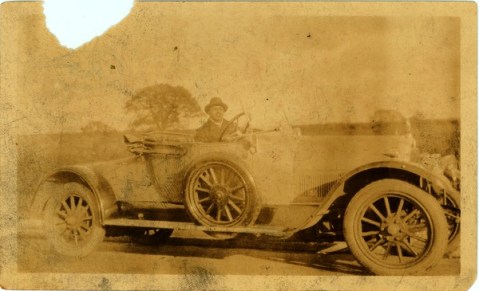
W.E.B. Du Bois on a country road in his own car, 1925, Courtesy of the Massachusetts Digital Commonwealth, physical image located in Special Collections and University Archives, University of Massachusetts Amherst Libraries
Broadly speaking, the listener responses mentioned above capture dimensions of Du Bois’s public reception at arguably the mid-life pinnacle of his career. He was in his 50s during the 1920s, an established scholar, author, and black leader. Yet due to shifting national and international conditions related to capital, labor, and civil rights during the Great Depression and World War II, his politics moved further left. He settled more concretely on socialist solutions to capitalism’s failures. This position became increasingly unpopular as the Cold War dawned. People still listened to Du Bois, but with far more critical and dismissive dispositions.

Page from W.E.B. Du Bois’s voluminous FBI file
Peering further into the historical record, part of Du Bois’s verbal archive and audible history resides in his FBI file. Concerned about his leftist political leanings, the Bureau had surveilled Du Bois starting in the 1940s by reading his publications, and dispatching agents or informants to attend his lectures and speeches. As the Cold War commenced, scrutiny increased. Redacted reports communicated his movements throughout the world in 1960, including a speech at the Russian Embassy in Washington, D. C. when he received the Lenin Peace Prize, and an address he gave in Ghana at a dinner celebrating that nation’s recent independence in 1957. The FBI file states that he received “an ovation as he rose to make a statement” about world peace and a more equitable distribution of resources. Similarly, the report from Ghana relayed that in his address he outlined two divergent world systems, “the socialism of Karl Marx leading to communism, and private capitalism as developed by North America and Western Europe.”
The bureaucratic construction of FBI reports reveals less about the audibility of Du Bois’s voice. However, unlike the listener reports presented above, the technical nature of bureaucratic communications offer a great deal more about the content of his speeches and thus documents another sense in which people—presumably FBI agents or informants—heard or listened to Du Bois as part of their sonic surveillance.
Du Bois’s audible history invests new meaning into his work as a scholar and public intellectual. Through John Hope Franklin, Shirley Graham Du Bois, and Anna Arnold Hedgeman we “see” Du Bois lecturing and speaking, in effect the public presence of a scholar we tend to know more readily through the printed words of his publications. With Thomas Campbell and Ethel Ray Nance—and from a different vantage point his FBI files—we “feel” the power of Du Bois’s words and the affective experience of his verbal constructions. Whether found in historical documents or narrated through vivid descriptions of the “clipped” aspects of his voice’s literal sound, investigating Du Bois’s audible history innovatively humanizes a towering scholar mostly readily known through his published words.
Attending to the audible and archival records of his life and times, we not only encounter the sonic dimensions of his literal voice, we observe how ordinary people listened to him and responded to his ideas. Some embraced his perspectives while others, especially during the Cold War, denounced his socialist vision of the world. Yet this is where the redactions in the FBI files ironically speak loudest: Du Bois’s ideas persisted, and survived. Scholars and activists amplified his words and retooled his ideas in service of black liberation, social justice, and economic equality.
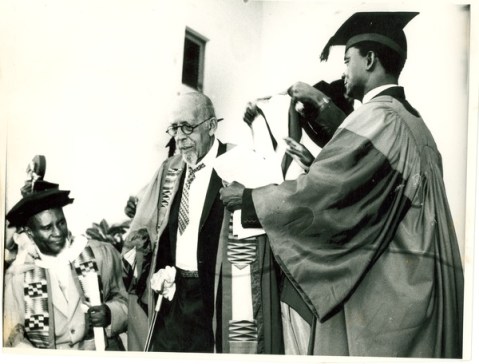
W.E.B. Du Bois receiving honorary degree on his 95th birthday, University of Ghana, Accra, 1963, February 23, 1963,Courtesy of the Massachusetts Digital Commonwealth, physical image located in Special Collections and University Archives, University of Massachusetts Amherst Libraries
By literally listening to and sitting with an audible Du Bois today there’s an opportunity to mobilize affect into action, a version of what Casey Boyle, James J. Brown, Jr. and Steph Ceraso call “transduction.” Du Bois’s voice digitized delivers rhetoric within yet beyond the computer screen. It (re)enters the world in a contemporary soundscape. Hearing his voice produces affect and thought; and thought provokes action or inspires creativity. Such a “mediation of meaning” shows that contemporary listeners inhabit a soundscape with Du Bois. Whether a scholar listens to Du Bois in an archive, students and teachers engage his voice in the classroom, or anyone privately at home leisurely tunes into his speeches, time, space, and place collectively determine how wide and expansive the Du Bois soundscape is. Advancements in communication, digital and sonic technologies mean that across whatever modality his voice moves there’s a sense in which Du Bois remains an itinerant intellectual.
—
Phillip Luke Sinitiere is a W. E. B. Du Bois Visiting Scholar at the University of Massachusetts Amherst in 2018-19. He is also Professor of History at the College of Biblical Studies, a predominately African American school located in Houston’s Mahatma Gandhi District. A scholar of American religious history and African American Studies, his books include Christians and the Color Line: Race and Religion after Divided by Faith (Oxford University Press, 2013); Protest and Propaganda: W. E. B. Du Bois, The Crisis, and American History (University of Missouri Press, 2014) and Salvation with a Smile: Joel Osteen, Lakewood Church, and American Christianity (New York University Press, 2015). Currently, he is at work on projects about W. E. B. Du Bois’s political and intellectual history, as well as a biography of twentieth-century writer James Baldwin. In 2019, Northwestern University Press will publish his next book, Citizen of the World: The Late Career and Legacy of W. E. B. Du Bois.
—
REWIND! . . .If you liked this post, you may also dig:
Black Mourning, Black Movement(s): Savion Glover’s Dance for Amiri Baraka –Kristin Moriah
Saving Sound, Sounding Black, Voicing America: John Lomax and the Creation of the “American Voice”–Toniesha Taylor
The Sounds of Anti-Anti-Essentialism: Listening to Black Consciousness in the Classroom–Carter Mathes
“I Love to Praise His Name”: Shouting as Feminine Disruption, Public Ecstasy, and Audio-Visual Pleasure–Shakira Holt
Share this:




Current Top Posts





April 2021

January 2020

November 2019

October 2019

August 2019

April 2014

November 2017

March 2015

December 2017

October 2015
 Sounding Out!
Recent Comments