
The Braids, The Bars, and the Blackness: Ruminations on Hip Hop’s World War III – Drake versus Kendrick (Part One)
A Conversation by Todd Craig and LeBrandon Smith

By now, it’s safe to say very few people have not caught wind of the biggest Hip-Hop battle of the 21st century: the clash between Kendrick Lamar and Drake. Whether you’ve seen the videos, the memes or even smacked a bunch of owls around playing the video game, this battle grew beyond Hip Hop, with various facets of global popular culture tapped in, counting down minutes for responses and getting whiplash with the speed of song drops. There are multiple ways to approach this event. We’ve seen inciteful arguments about how these two young Black males at the pinnacle of success are tearing one another down. We also acknowledge Hip Hop’s long legacy of battling; the culture has always been a “competitive sport” that includes “lyrical sparring.”
This three-part article for Sounding Out!’s Hip Hop History Month edition stems from a longer conversation with two co-authors and friends, Hip Hop listeners and aficionados, trying to make sense of all the songs and various aspects of the visuals. This intergenerational conversation involving two different sets of Hip Hop listening ears, both heavily steeped in Hip Hop’s sonic culture, is important. Our goal here is to think through this battle by highlighting quotes from songs that resonated with us as we chronicled this moment. We hope this article serves as a responsible sonic assessment of this monumental Hip Hop episode.
First things first: what’s so intergenerational about our viewpoints? This information provides some perspective on how this most recent battle resonated with two avid Hip Hop listeners and cultural participants.
LeBrandon is a 33 year old Black male raised in Brooklyn and Queens, New York. He is an innovative curator and social impact leader. When asked about the first Hip Hop beef that impacted him, LeBrandon said:
The first Hip-Hop battle I remember is Jay x Nas and mainly because Jay was my favorite rapper at the time. I was young but mature enough to feel the burn of “Ether.” It’s embarrassing to say now, but truthfully I was hurt—as if “Ether” had been pointed at me. “Ether” is a masterclass in Hip Hop disrespect but the stanza that I remember feeling terrible about was “I’ll still whip your ass/ you 36 in a karate class?/ you Tae-bo hoe/ tryna work it out/ you tryna get brolic/ Ask me if I’m tryna kick knowledge/ Nah I’m tryna kick the shit you need to learn though/ that ether, that shit that make your soul burn slow.” MAN. I remember thinking, is Jay old?! Is 36 old?! Is my favorite rapper old?! Why did Nas say that about him? I should reiterate I am older now and don’t think 36 is old, related or unrelated to Hip Hop. Nas’s gloves off approach shocked me and genuinely concerned me. But I’m thankful for the exposure “Ether” gave me to the understanding that anything goes in a Hip-Hop battle.
Todd is a Black male who grew up in Ravenswood and Queensbridge Houses in Long Island City, New York. Todd is about 15 years older than LeBrandon, and is an associate professor of African American Studies and English. Todd stated:
The first battle that engaged my Hip Hop senses was the BDP vs. Juice Crew battle –specifically “The Bridge” and “The Bridge is Over.” The stakes were high, the messages were clear-cut, and the battle lines were drawn. I lived in Ravenswood but I had family and friends in QB. And “The Bridge” was like a borough anthem. Even though MC Shan was repping the Bridge, that song motivated and galvanized our whole area in Long Island City. This was the first time in Hip Hop that I recall needing to choose a side. And because I had seen Shan and Marley and Shante in real life in QB, the choice was a no-brainer. That battle led me to start recording Mr. Magic and Marley Marl’s show on 107.5 WBLS, before even checking out what Chuck Chillout or Red Alert was doing. As I got older, it would sting when I heard “The Bridge is Over” at a club or a party. And when I would DJ, I’d always play “The Bridge is Over” first, and follow it up with either “The Bridge” or another QB anthem, like a “Shook Ones Pt. 2” or something.
We both enter this conversation agreeing this battle has been brewing for about ten years, however it really came to a head in the Drake and J. Cole song, “First Person Shooter.” Evident in the song is J. Cole’s consistent references to the “Big Three” (meaning Kendrick Lamar, Drake and J. Cole atop Hip-Hop’s food chain), while Drake was very much focused on himself and Cole. It is rumored that Kendrick was asked to be on the song; his absence without some lyrical revision by Cole and Drake, seems to have led to Kendrick feeling snubbed or slighted in some way. This song gets Hip Hop listeners to Kendrick’s verse on the Future and Metro Boomin’ song “Like That” where Kendrick sets Hip Hop ablaze with the simple response: “Muthafuck the Big Three, nigguh, it’s just Big Me” – a moment where he “takes flight” and avoids the “sneak dissing” that he asserts Drake has consistently done.
We both agreed that Drake’s initial full-length entry into this battle, “Push Ups,” was the typical diss record we’d expect from him. Whether in his battle with Meek Mill or Pusha T, Drake’s entry follows the typical guidelines for diss records: it comes with a series of jabs at an opponent, which starts the war of words. The goal in a battle is always to disrespect your opponent to the fullest extent, so we find Drake aiming to do just that. We both noticed those jabs, most memorably is “how you big steppin’ with some size 7 men’s on.” We also noticed Drake’s misstep by citing the wrong label for Kendrick when he says “you’re in the scope right now” – alluding to Kendrick Lamar being signed to Interscope – even though neither Top Dog Entertainment (TDE) nor PGLang are signed to Interscope Records. Drake’s lack of focus on just Kendrick would prove a mistake: he disses Metro Boomin, The Weeknd, Rick Ross, and basketball player Ja Morant in “Push Ups.”
While we agree that in a rap battle, the goal is to disrespect your opponent at the highest level, we had differing perspectives on Drake’s second diss track “Taylor Made Freestyle.” LeBrandon felt this song landed because it took a “no fucks” approach to the battle. Regardless of how one may feel about Drake’s method of disrespect (by using AI), the message was loud and inescapable. LeBrandon highlighted the moment when AI Tupac says “Kendrick we need ya!”; outside of how hilarious this line is, Drake dissing Kendrick by using Tupac’s voice – a person with a legacy that Kendrick holds in the highest esteem – further established that this would be no friendly sparring match. Not only did Drake disrespect a Hip Hop legend with this line and its delivery, but an entire coast. The track invokes the spirit of a deceased rapper, specifically one whose murder was so closely connected to Hip Hop and authentic street beef. This moment was a step too far for Todd, who lived through the moment when both 2Pac and Biggie were murdered over fabricated beef.
Furthermore, LeBrandon pointed to the ever controversial usage of AI in Hip Hop, something Drake’s boss, Sir Lucian Grainge, recently condemned (especially when Drake, himself, condemns the AI usage of his own voice). By blatantly ignoring the issues and respectability codes the Hip Hop community should and does have with these ideas, Drake’s method of poking fun at his opponent was glorious. It was uncomfortable, condescending and straight-up gangsta. It also showcased Drake’s everlasting creative ability and willingness to take a risk. Todd acknowledged a generationally tinged viewpoint: this might also be a misstep for Drake because he used Snoop Dogg’s voice as well. Not only is Snoop alive, but Snoop was instrumental in passing the West Coast torch and crown to Kendrick. So when Drake uses an AI Snoop voice to spit “right now it’s looking like you writin’ out the game plan on how to lose/ how to bark up the wrong tree and then get your head popped in a crowded room,” it strikes at the heart of the AI controversy in music. This was not Snoop’s commentary at all. We both agree, however, that the “bark up the wrong tree” and “Kendrick we need ya” lines came back to haunt Drake. We also agree that dropping “Push Ups” and “Taylor Made Freestyle” is Drake’s battle format, hoping that he can overwhelm an opponent with multiple songs in rapid fire.
Todd and LeBrandon’s Hip Hop History Month play-by-play continues on November 11th with the release of Part 2! Return for “Euphoria” and stay until “6:16 in LA.”
—
Our Icon for this series is a mash up of “Kendrick Lamar (Sziget Festival 2018)” taken by Flickr User Peter Ohnacker (CC BY-NC-SA 2.0) and “Drake, Telenor Arena 2017” taken by Flickr User Kim Erlandsen, NRK P3 (CC BY-NC-SA 2.0)
—
Todd Craig (he/him) is a writer, educator and DJ whose career meshes his love of writing, teaching and music. His research inhabits the intersection of writing and rhetoric, sound studies and Hip Hop studies. He is the author of “K for the Way”: DJ Rhetoric and Literacy for 21st Century Writing Studies (Utah State University Press) which examines the Hip Hop DJ as twenty-first century new media reader, writer, and creator of the discursive elements of DJ rhetoric and literacy. Craig’s publications include the multimodal novel tor’cha (pronounced “torture”), and essays in various edited collections and scholarly journals including The Bloomsbury Handbook of Hip Hop Pedagogy, Amplifying Soundwriting, Methods and Methodologies for Research in Digital Writing and Rhetoric, Fiction International, Radical Teacher, Modern Language Studies, Changing English, Kairos, Composition Studies and Sounding Out! Dr. Craig teaches courses on writing, rhetoric, African American and Hip Hop Studies, and is the co-host of the podcast Stuck off the Realness with multi-platinum recording artist Havoc of Mobb Deep. Presently, Craig is an Associate Professor of African American Studies at New York City College of Technology and English at the CUNY Graduate Center.
LeBrandon Smith (he/him) is a cultural curator and social impact leader born and raised in Brooklyn and Queens, respectively. Coming from New York City, his efforts to bridge gaps, and build community have been central to his work, but most notably his passion for music has fueled his career. His programming has been seen throughout the Metropolitan area, including historical venues like Carnegie Hall, The Museum of the City of NY (MCNY) and Brooklyn Public Library.
—

REWIND!…If you liked this post, you may also dig:
“Heavy Airplay, All Day with No Chorus”: Classroom Sonic Consciousness in the Playlist Project—Todd Craig
SO! Reads: “K for the Way”: DJ Rhetoric and Literacy for 21st Century Writing Studies—DeVaughn (Dev) Harris
Caterpillars and Concrete Roses in a Mad City: Kendrick Lamar’s “Mortal Man” Interview with Tupac Shakur–Regina Bradley
Share this:

“Heavy Airplay, All Day with No Chorus”: Classroom Sonic Consciousness in the Playlist Project
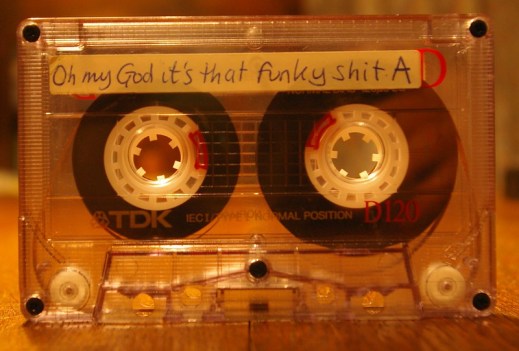
For a number of semesters, I invited composition students to explore the idea of using the mixtape as a lens for envisioning a writing assignment about themselves. Initially called “The Mixtape Project,” this auto-ethnographical assignment employed philosophies from various scholars, but focused on Jared Ball and his concept of the mixtape as “emancipatory journalism.” In I Mix What I Like!: A Mixtape Manifesto, Ball pushed readers to imagine the mixtape as a counter-systematic soundbombing, circumventing elements of traditional record industry copyright practices (2011).
Essentially, a DJ could use a myriad of songs from different artists and labels to curate a mixtape with a desired theme and overarching message, then distribute the mixtape as a “for promotional use only” artifact. Throughout the 1980s, but predominantly in the 1990s and early 2000s, many DJs used mixtapes as the medium to promote their DJ brands and generate income. It wasn’t long before labels began to give hip-hop DJs record deals to release “album-style” mixtapes where the DJs record original content from artists made specifically for the DJ album (see DJ Clue, Funkmaster Flex, Tony Touch). This idea evolved into producer-based compilation albums, best depicted today by global icon DJ Khalid. Rappers also hopped on the mixtape wave, using the medium to jump-start their careers, create a “street buzz” around their music, and ultimately gauge the success of certain songs to craft and promote upcoming albums.
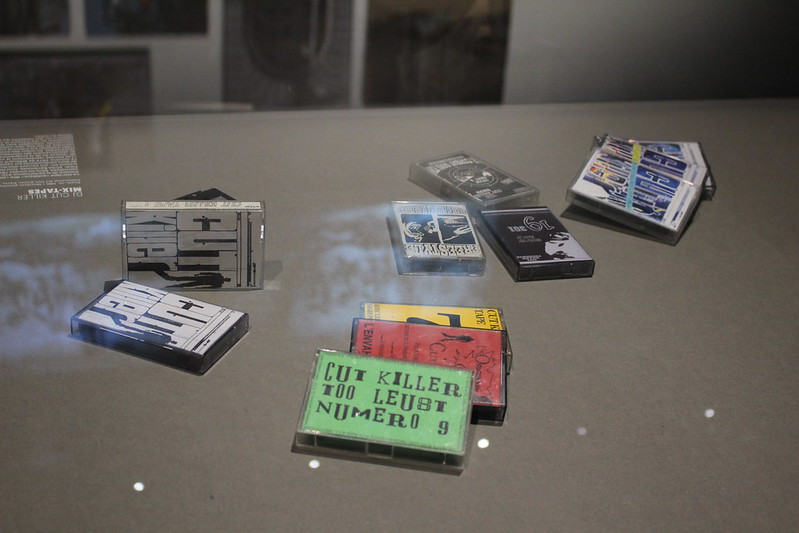
Image by Flickr User Backpackerz: “K7 mixtape – Exposition Hip Hop, du Bronx aux rues arabes (Institut du monde arabe)” (CC BY-SA 2.0)
The assignment revolved around mixtape framework in the earlier portion of my teaching career. Most recently, I began to realize as my students evolve (and I simultaneously age), that the “mixtape” – a sonic artifact distributed on cassette tape or CD – is becoming more remote to students. This thinking led to revising the assignment with a more contemporary twist. Thus, “The Playlist Project” was born: the first in a set of four major writing projects in a first-year writing classroom. The ultimate goal of the assignment was to immediately disrupt students’ relationships with academic writing, and to help them (re)envision the ways they embrace some of the cultural capital they value in college classrooms. Be clear, this was a particular type of mental break for students, a shift that was welcomed yet also uncomfortable for them.
“I Get It How I Live It”: Framing and Foregrounding the Assignment Set-Up
The course started with readings on plagiarism, intertextuality, and the hip-hop DJ’s use of sampling, curating, and storytelling. Next were readings by hip-hop artists describing their creative process and detailing their artistic choices sonically. These early readings helped pivot students from their stereotypical notions of what college writing courses – and writing assignments – looked like, and how they could enter scholarly discourse around composing. This conversation was foregrounded in students’ knowledge that they bring with them into the new academic space in the college classroom. My goal was to really focus on student-centered learning and culturally relevant pedagogy; ideally, if you are immersed in hip-hop music and culture, I want you to share that knowledge with the class. This sharing begins to create a community of thinking peers instead of a classroom with an English professor and a bunch of students who have to take the course “cuz it’s required in the Gen Ed, so I can’t take anything else ‘til I pass this!”
My research is entrenched in both hip-hop pedagogy and culture, specifically looking at the DJ as 21st century new media reader and writer. I liken my role as instructor to that of the DJ: a tastemaker and curator for the ways we understand sonic sources we know, and couple them with new and necessary soundbites that become critical to the cutting edge of the learning we need. I’ve engaged in the craft of DJing for more than half of my life, and use DJ practices as pedagogical strategies in my classroom environments.

DJ Rupture, Image by Flickr User JD A (CC BY-NC-ND 2.0)
The outcome of this curatorial moment was “the Playlist Project.” Students were asked to create their own playlists, which served as mixtapes that either “described the writer as a person” or “depicted the soundtrack to the writer’s perfect day.” This assignment was due during Week 6 of a 16-week semester, and was the first major writing assignment within the course. The assignment called for two specific parts: an actual playlist of the songs and an essay which served as a meta-text, describing not only the songs, but also the reasons why the songs were chosen and sequenced in a specific order. As an example, the guiding text we used was a DJ mixtape I created called “Heavy Airplay, All Day.”
“Heavy Airplay, All Day with No Chorus”: DJ Mixtape by Todd Craig
My playlist was a DJ-crafted tribute to a family friend who passed away in the summer of 2017: Albert “Prodigy” Johnson, Jr. Hearing the news of his untimely death reverberated through my psyche on that warm June afternoon; I remember meeting Prodigy when I was 15 years old. Many avid hip-hop listeners not only know Prodigy as one of the signature vocalists of the 1990s New York hip-hop sound, but also as one of the premier lyricists responsible for a shift in sonic content from emcees in New York and globally. His voice is one of the most sampled in hip-hop music.
One of the most anticipated moments of the mid 1990’s was the release of Prodigy’s first solo album, H.N.I.C. P was already shaking the industry with his lethal and bone-chilling visuals in his verses. But everyone knew he was on his way to dominance upon hearing the single “Keep it Thoro.” On this Alchemist-produced record, P basically broke industry rules in regards to typical hip-hop song construction; his verses were longer than the traditional 16-bar count, and the song had no chorus.
He returned to hip-hop basics: hard-hitting rhymes with undeniable visuals served atop a sonic landscape that kept everyone’s head nodding. P ends the song with the classic line “and I don’t care about what you sold/ that shit is trash/ bang this – cuz I guarantee that you bought it/ heavy airplay all day with no chorus/ I keep it thoro” (Prodigy 2000).
It was only right for me to create a tribute mixtape for Prodigy. And it felt right to start the Fall 2017 semester with the Playlist Project that used a shared text that celebrated and honored his memory. It highlighted the soundtrack to my perfect day: having my friend back to rewind all the memories that come with every song.
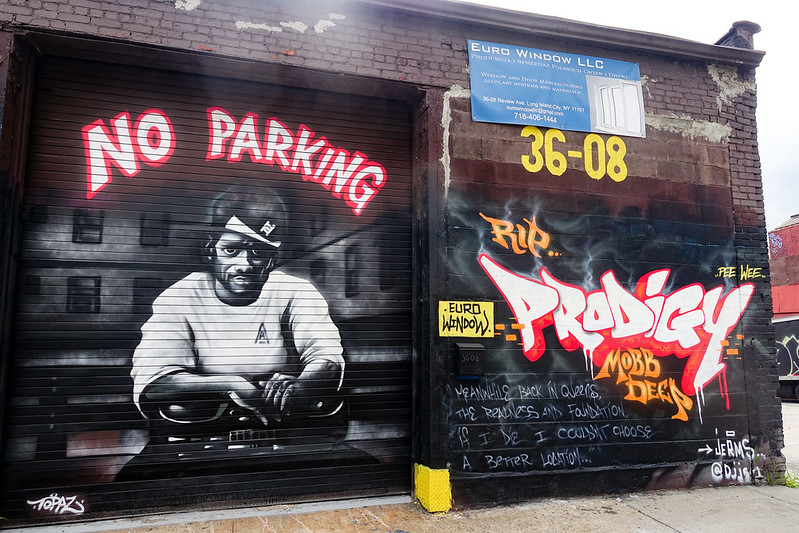
Fan Memorial to Prodigy, Image by Flickr User Nick Normal (CC BY-NC-ND 2.0)
“I Got a New Flex and I Think I Like It”: (Re)inventing Mixtape Sensibilities in the Comp Classroom
The Playlist Project was aimed at achieving three different outcomes. The first goal was to invite students to use audio sources to envision a soundscape that explains a thread of logic. These sonic sources would hold as much value in our academic space as text-based sources, and would allow them to (re)envision what “evidence-based academic writing” looks like. Thus, students could utilize their own cultural capital to negotiate sound sources of their choosing.
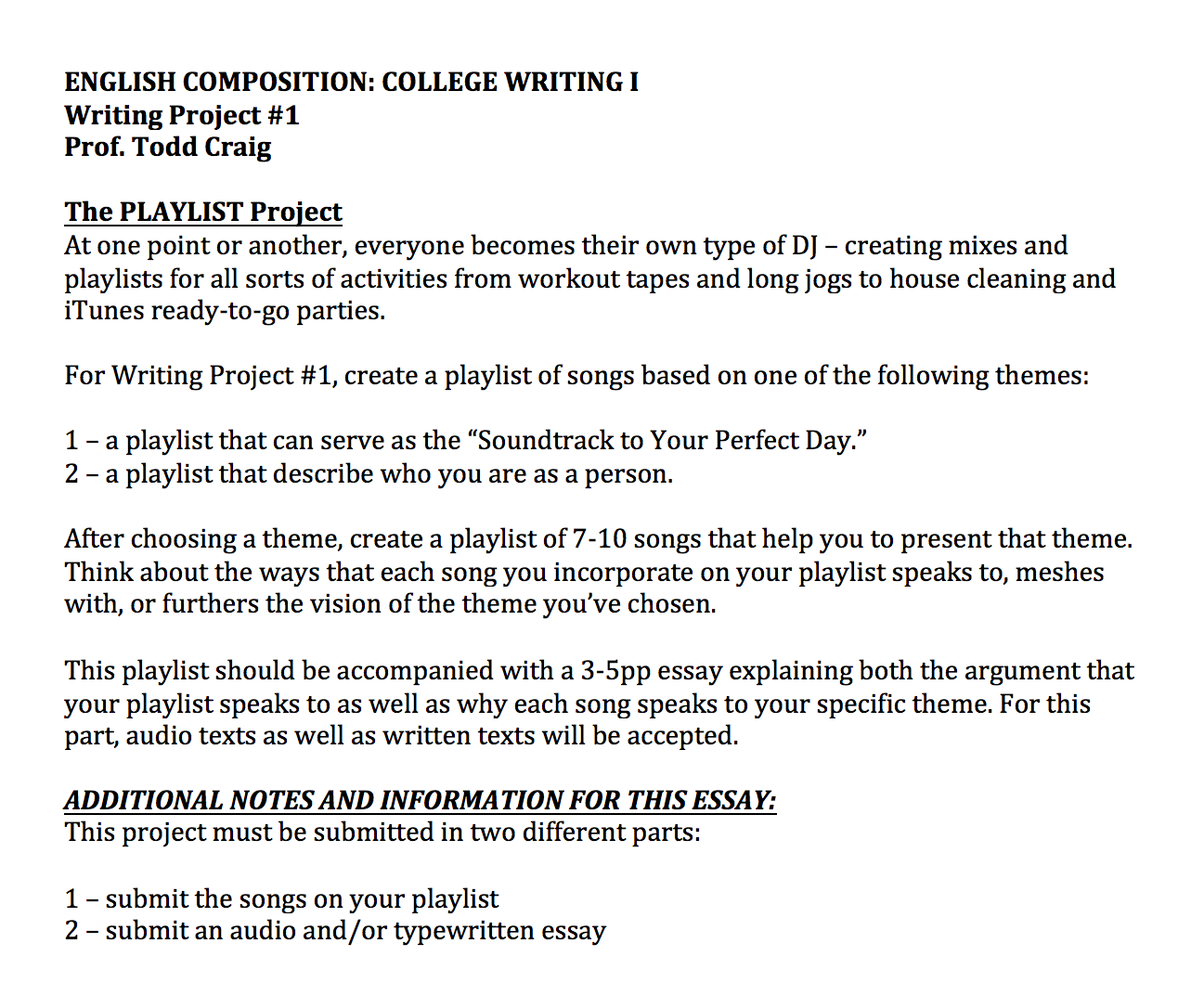 The second was to get students to use DJ framework to think about sorting, sequencing and organization in writing. In our class discussions, one of the critical objectives was to get students to understand the sequencing of divergent sound sources could drastically alter the story one is trying to tell. Overall aspects of mood, tone, and pacing all become critical components of how a message is expressed in writing, but it becomes even more evident when thinking about the sonic sources used by a DJ. Each song – a source in and of itself – is a piece of a puzzle that constructs a picture and tells a story. Starting with one source can create a completely different effect if it is reconfigured to sit in the middle or the end. Explaining these sonic choices in text-based writing would be the second step in the assignment.
Finally, students would engage in editing by joining both sound and text based on a theme they have selected. Again, sequencing becomes a critical DJ tool translated into the comp classroom. Using this pedagogical strategy echoes the ideas of using DJ techniques such as “blends” and “drops” as viable teaching tools (see Jennings and Petchauer 2017). Students would need to critically think through an important question: in creating the playlist, how does one manipulate and (re)configure sound to create a sonic landscape that “writes” its own unique story?
DJ Sai by Flickr User Mixtribe (CC BY 2.0)
“But Does It Go In the Club?”: Outcomes and Initial Findings of The Playlist Project
The first iteration of the Playlist Project bore mixed results. Students found it difficult to think of this project as one whole assignment consisting of three different parts. Instead, they envisioned each of the three different pieces as isolated assignments. So the playlist was one part of the assignment. They picked the songs they liked, however ordering and sequencing to convey a logical theme or argument fell from the forefront of their composing. The essay then became its own piece divorced from the organic creation of the playlist. Thus, students weren’t “engaged in telling the story of the playlist.” Instead, students were making a playlist, then summarizing why their playlists contained certain songs.
For students who were more successful integrating the elements of the assignment, we were able to have rich and fruitful classroom conversations about both selection and sequencing. For example, one student chose the theme of “the Soundtrack to the Perfect Day.” Within that theme, the student chose the song “XO TOUR Llif3” by Lil Uzi Vert.
In the song’s hook, he croons “push me to the edge/ all my friends are dead/ push me to the edge/ all my friends are dead” (Vert 2017). When this song came up in class discussion, we were able to have a formative conversation around the idea that a perfect day entailed all of someone’s friends being “dead.” This also sparked a conversation about the double meaning of the quote; it didn’t stem from traditional print-based sources, but instead arose from a student-generated idea based in the cultural capital of the classroom community. In this moment, I was able to learn more from students about the meteoric rise in relevance of both the artist and the song which seemed to depict an extreme darkness.
“Big Big Tings a Gwaan”: Future Tweaks and Goals for The Playlist Project
Moving forward with this assignment, I have considered breaking the assignment up into three pieces for more introductory composition courses: constructing the playlist, sequencing the playlist, and writing the meta-text. In this configuration, the meta-text would truly become the afterthought (instead of the forethought) of the sonic creation. As well, more in-depth soundwriting could emanate from the playlist construction, manipulation, (re)sequencing and editing. I also plan to use the assignment with a more advanced-level composition course to gauge if the assignment unfolds differently. Using an upper-level course to attain the trajectory of the assignment may be helpful in walking backwards to calibrate the assignment for students in introductory-level classes.
Another objective will be to move away from just a “playlist” and back into a “digital mixtape” format, where the playlist songs and sequencing become the fodder for a one-track, “one-take” DJ-inspired mixtape. While students don’t have to be DJs, creating a singular sonic moment digitally may imbed students in marrying the idea of soundwriting to depicting that sonic work in a meta-text. This work may also engage students in constructing sonic meta-texts, thereby submersing themselves in soundwriting practices. This work can be done in Audacity, GarageBand and any other software students are familiar with and comfortable using.
—
Featured Image: By Flickr User Gemma Zoey (CC BY-NC-ND 2.0)
—
Dr. Todd Craig is a native of Queens, New York: a product of Ravenswood and Queensbridge Houses in Long Island City. He is a writer, educator and DJ whose career meshes his love of writing, teaching and music. Craig’s research examines the hip-hop DJ as twenty-first century new media reader and writer, and investigates the modes and practices of the DJ as creating the discursive elements of DJ rhetoric and literacy. Craig’s publications include the multimodal novel tor’cha, a short story in Staten Island Noir and essays in textbooks and scholarly journals including Across Cultures: A Reader for Writers, Fiction International, Radical Teacher and Modern Language Studies. He was guest editor of Changing English: Studies in Culture and Education for the special issue “Straight Outta English” (2017). Craig is currently working on his full-length manuscript entitled “K for the Way”: DJ Literacy and Rhetoric for Comp 2.0 and Beyond. Dr. Craig has taught English Composition within the City University of New York for over fifteen years. Presently, Craig is an Associate Professor of English at Medgar Evers College, where he serves as the Composition Coordinator and City University of New York Writing Discipline Council co-chair. He also teaches in the African American Studies Department at New York City College of Technology (CUNY).
—
REWIND!…If you liked this post, you may also dig:
The Sounds of Anti-Anti-Essentialism: Listening to Black Consciousness in the Classroom- Carter Mathes
Making His Story Their Story: Teaching Hamilton at a Minority-serving Institution–Erika Gisela Abad
Deejaying her Listening: Learning through Life Stories of Human Rights Violations– Emmanuelle Sonntag and Bronwen Low
Audio Culture Studies: Scaffolding a Sequence of Assignments– Jentery Sayers
Deep Listening as Philogynoir: Playlists, Black Girl Idiom, and Love–Shakira Holt
Share this:


Current Top Posts





April 2021

January 2020

November 2019

October 2019

August 2019

April 2014

November 2017

March 2015

December 2017

October 2015
 Sounding Out!
Recent Comments