
From Illegitimate to Illmatic: On Tiger Mothers, Ethnoburbs, and Playing the Violin While Dreaming of Nas
“Don’t tell me you’re still listening to that shit.”
“I told you, I like it.”
“This is why we have so much trouble with you.”
“You don’t know anything about it.”
“Listen to that cursing…it’s nothing but garbage!”
“What are you doing?”
“All of these CDs are going in the basement. No more rap until you start listening to your parents! Now, go practice your violin!”
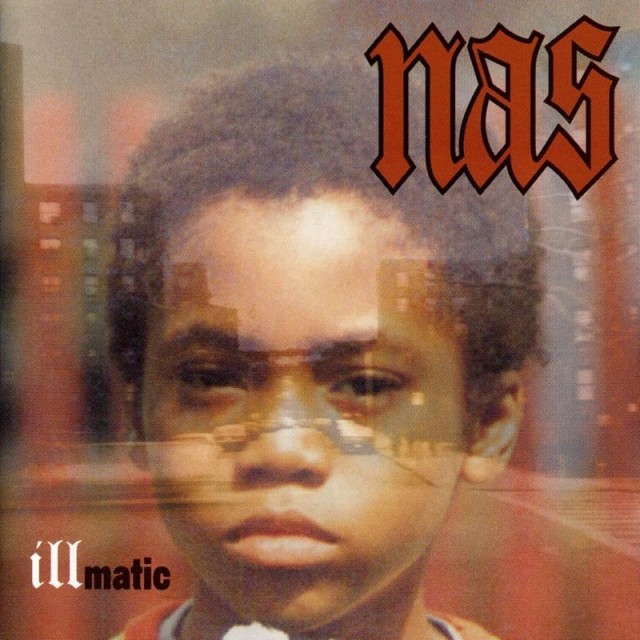
Growing up, exchanges like these were common between my Korean American mother and me—a multiracial Korean Euro-American. In her eyes, there was no such thing as enough violin practice. Rap—the vulgarity! The noise! It was turning me into a juvenile delinquent! She was convinced I had it in me to be the next Korean-American classical music virtuoso, the next Sarah Chang—if only I would practice more scales and stop trying to imitate “black men shouting.” (However “conversational” the rap world considered Nas’s flow, my mother still heard yelling.)
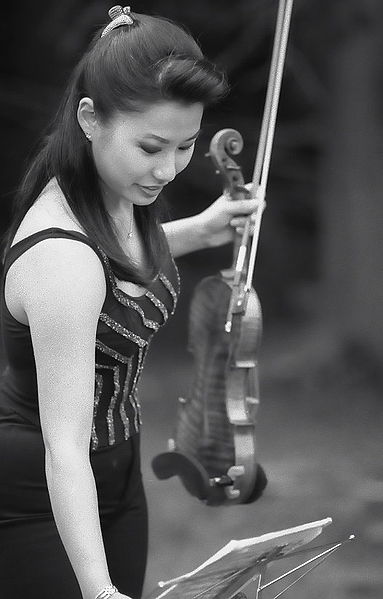
Violinist, Sarah Chang
It’s not that I didn’t like classical music—I watched Amadeus on loop until the VHS squealed—but my mother, like the mothers of most all my Asian friends, insisted on it consuming a fairly large chunk of my life. While immensely diverse in its makeup, most of the Asian population where I lived was either Korean or Chinese, and were forced by their parents to learn violin, piano or cello. Not only was it criminal to play an instrument other than one of these; but, whichever one (or two) you chose, you had better be the best at it.
Author and Yale Law Professor, Amy Chua, recently incited an online firestorm when the Wall Street Journal published an excerpt from hercontroversial new memoir, Battle Hymn of the Tiger Mother, in which she recounts calling her daughters “worthless” and “garbage” if they couldn’t perform a piece of classical music up to her exacting standards. University of Hawai’i at Manoa Professor, Mari Yoshihara’s study, Musicians from a Different Shore: Asians and Asian Americans in Classical Music(2008) describes similar instances of “tiger mothering,” such as virtuoso violinist, Midori Goto’s, mother, Setsu Goto, who (it was rumored) was so strict that it forced Midori into a mental breakdown and an eating disorder. Many would likely agree that “Tiger Mothering” such as this is morally questionable (and in some cases abusive), but I should note that instances like these are only part of a much bigger picture. Scores of students and performers would no doubt concur with Dr. O’C’s recent SO! account of the potential for classical music praxis to have ameliorative effects. Despite this, however, classical music training seems to have become a central tenet of “Tiger Mother” methodology. In all the kerfluffle over Chua’s book, no one has been asking the most foundational question: Why is it so important to Asians and Asian Americans that their children play classical music?

Amy Chua, (CC) Larry D. Moore
In a recent interview on why she chose classical violin and piano for her children, Chua fancifully suggests that classical music is the antidote to materialism. She says that “classical music all about depth” and calls the violin and piano “very respectable instruments.” Indicative of more than just a love of classical music, Chua’s statements imply that other forms of music lack comparable artistic value and require less cultivation to perform and enjoy. In a similar vein, the Asian-descent classical musicians interviewed in Yoshihara’s Musicians From a Different Shore divulge their belief that playing classical music anchors one to a high social stratum. Acknowledging the contradiction between classical music’s high cultural status and its mostly poor compensation, the musicians identified social factors such as educational attainment and musical taste and ability as more important determining factors of class standing than income. Yoshihara thus links the importance Asians and Asian Americans place on classical music praxis to class consciousness and the production of cultural capital.
Class consciousness no doubt accounts for some of the zealousness exhibited by Tiger Mothers with regard to their children’s classical music training, but it’s not the only thing that keeps them roaring. Chua’s Battle Hymn illustrates that, in addition to class consciousness, the pressure to study classical music stems from an intra-racial expectation to perform Asianness adequately. Chapter 5 of Chua’s memoir, titled, “On Generational Decline,” is her cut-and-dried summarization of how subsequent generations of Chinese Americans become lazier as they’re allowed to revel in the comforts of middle class life. Chua chooses classical music for her children because it is “the opposite of decline, the opposite of laziness, vulgarity, and spoiledness.” Constructed as an appeal to Chinese Americans, Chua essentially argues that classical music training is key to an Asian person’s cultural and racial legitimacy. Unwilling to relinquish “the high cultural tradition of [her] ancient ancestors,” she expects her children to uphold a racially and culturally endorsed standard of melody-making that reinforces Asian gender norms and encourages other Asian parents to do the same.

One of Ellicott City’s Korean Shopping Plazas, photo by Barbara Fisher
In Ellicott City, Maryland, the wealthy, culturally diverse “Ethnoburb” of Baltimore where I grew up, Asian American classical musicians abound and Asian American rappers are few. Here, (where the community-wide motto is “Choose Civility”) Asian youth gained a sort of “cred” for mastering the violin or piano, and this pressure to “prove” oneself along racial lines was something I always felt—particularly as a teen of mixed race. It was probably the biggest reason why I didn’t quit the violin until I graduated from high school. I hated it, but resentfully continued attending orchestra and private lessons in the fear that I would lose the meager amount of “cred” I’d built up. It hardly mattered, though. There was no chance of me getting into an Ivy League school or playing Carnegie Hall—I listened to rap and sometimes didn’t do my homework. In short, I would never be a “Super Asian” (a term coined by my Indian music stand partner and me), and as any Asian kid knows, if you’re not the best, you needn’t bother trying. None of the “Super Asians” had any interest in rap, and one even joked that I was a “chocolate-filled twinkie” for wearing a Pelle Pelle jacket to practice one week.
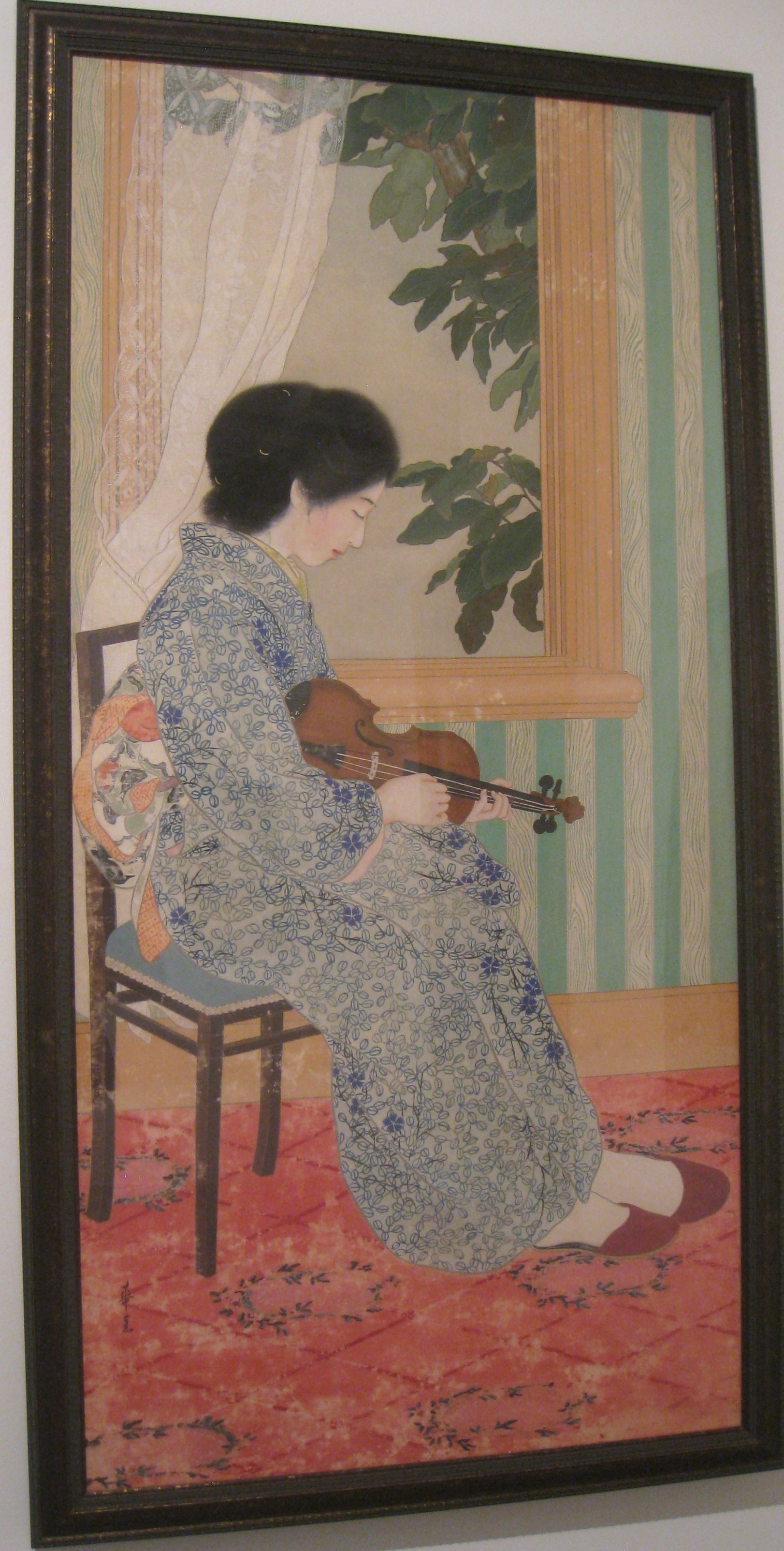
Wolfosonian Museum, Unknown Artist
People who looked like Sarah Chang were supposed to be in the business of making melodies, not rhymes. Chang performing a violin concerto is a comforting scene, a sonic image that reaffirms a familiar cultural narrative of femininity and class stature associated with Asianness in the US. A result of the gradual process of East Asian modernization (instigated by Western Imperialism), classical music was initially adopted by the people at the behest of the state, eventually becoming a integral part of middle class life in East Asia and a social marker of bourgeois womanhood that functioned to situate women vis à vis the domicile. Uncomfortable defining myself in this way (and feeling, also, that I never truly could), I gravitated towards something more “disruptive” that would allow me to show a different face to the world.
Rap became a vehicle for me to explain myself in more hybrid terms. On drives into Baltimore City, I heard it bellowing from the windows of the West Side’s crumbling row homes. The loud, curt, interjections! The spontaneity and candor! This loudness was initially what drew me in, but eventually I realized that rap had just as much profundity as anything classical you could throw at it. Listening to rap, I was finally on offense. It was a medium that spoke to me, because it made me feel capable of speaking back. And there was an entire legion of disaffected youth who seemed to feel the same way.
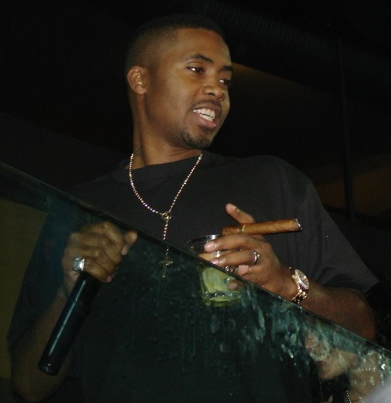
Nas performing in 2007
Despite this popularity, however, critics of rap maintain that the sounds that (predominately African American) rappers produce are nothing more than “noise.” In Black Noise, Tricia Rose observes that despite (and perhaps because of) rap’s widespread popularity and cultural relevance, it is often pitted as classical music’s polar-opposite—“unintelligible yet aggressive sound that disrupt[s the] familial domain” (63). Against charges that rap lacks “depth,” purveyors of hip hop (despite their hefty salaries) often accrue little to no widespread artistic acclaim. Evidence of what Jennifer Stoever-Ackerman terms the “sonic color-line,” this demotion and “Othering” of non-white sounds into “noise” (discussed further in her recent SO! post) has historically functioned to both generate and underwrite public attitudes about race, class and gender and to create dominant ideas about listening that she dubs “the listening ear.”
It seems that dominant modes of listening have everything figured out. If you look like this, you sound like that. But, what about people who look like me? What are we supposed to sound like? With which sonic cultural productions am I supposed to ally myself, and do I have a choice in the matter? How does “the listening ear” interpret a biracial Korean Euro-American or any person of mixed race heritage? Was there a distinction to be heard? I was sure there was, but didn’t quite know how to voice it.
For most of my life I have lived on the precipice of Asianness and something else, leaving me to feel—at times—confused, demoralized and illegitimate. As Michael Omi and Howard Winant famously note in their seminal work, Racial Formation, “Without a racial identity [in America], one is in danger of having no identity.” Acutely aware of my difference, I searched for ways of being heard as a multiracial subject in a fiercely stratified, race-conscious society. In the Introduction to The Sum of Our Parts: Mixed-Heritage Asian Americans, Michael Omi notes that within the historical and political context of the United States, (the “one-drop rule,” eugenic fears of racial intermixing, anti-miscegenation laws, etc.) multiracial identities have consistently been “contained, disregarded, [and] denied.” Disruptive to fixed notions about race, it is often a challenge for multiracial subjects to be recognized or understood by the state or the ear.
Rap assisted me in my effort to be heard as a multiracial person. While my Asian friends in All-State Orchestra were polishing their four-octave chromatic scales for the judging panel at Julliard, I was conscientiously studying Rakim’s flow and the RZA’s beats, hoping that one day it might make sense for me to show my face at a rap battle, if only as an observer. After the realization that Nas wasn’t the reason I could never be a “Super Asian,” my mom returned my copy of his masterpiece debut, Illmatic. As previously, I spent the hours before bedtime reciting the lyrics to Nasty classics like “It Ain’t Hard to Tell,” moved by every skillful turn of phrase: “Nas is like the Afrocentric Asian/half man-half amazin,” I would repeat over and over until I got the cadences just right. Whatever the hell he was talking about, I was sure it applied to me.


Share this:

President Obama: All Over But the Shouting?
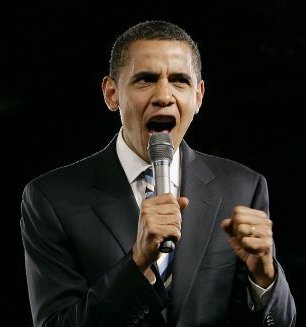
Ishmael Reed’s 12/12/2010 op-ed for the New York Times, “What Progressives Don’t Understand About Obama,” certainly struck a nerve amongst the Left. In the piece, Reed calls out far-Lefters for their misplaced–and dangerous–desire for President Obama to essentially “bust a can of whup ass” out on the Republicans over the tax cut debacle. Citing a lifetime of being labeled rhetorically “rowdy” by white teachers and peers, Reed calls attention to a deeply embedded and racialized double standard for the public expression of anger in the United States. Beyond turning a deaf ear their own pleas for a “sane” national debate back in October–see Mark Brantner‘s Sounding Out! analysis of the rhetorical logic of John Stewart’s Rally to Restore Sanity here–Reed argues that white liberals are also disregarding the racialized difference between white perceptions of their own anger (represented as righteous and authoritative) and their characterizarions of black anger (as a loud, dangerous “whup ass”–or as Reed phrases it “paranoid,” “bitter,” “rowdy,” “angry,” [and] “bull[ying]”). In other words, behind the cries in Reed’s comments for Obama to regain his “drama and passion” and to “stand up and tell these idiots to stuff it” lies a flirtation with and fear of “black anger,” which has a long history in the United States. As Reed mentions, black intellectuals have “been accused of tirades and diatribes for more than 100 years.”
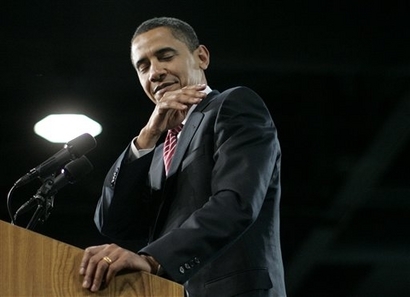
As someone who researches the racialization of sound and listening, I have been tracking Obama’s struggle with sonic stereotypes for quite some time now, and I think it is important to connect Reed’s recent thoughts with the utterance of another man named Reid almost a year ago. Woven into comments supposedly intended as praise of President Obama’s political prowess, Former Senate Majority Leader Harry Reid (D-Nevada) told two political journalists that he had known Obama would be elected president in 2008 because he was “light skinned” and had “no Negro dialect, unless he wanted to have one.” In this brief sound bite, the other Reid acknowledged the increased role that vocal grain and diction would play in a “post-racial” or “colorblind” world, linking the racialization of skin pigmentation with its less acknowledged yet perhaps more insidious counterpart, the racialization of sounds, voices and speech. Unfortunately, incendiary media coverage focused bluntly on Reid’s alleged racism for using the antiquated term “Negro” rather than sparking a more nuanced conversation about the role that race plays in perception and the multifaceted ways in which this racialized perception affects American politics and culture, down to the very level of the senses.
What was most disturbing about Reid’s comments (and the least talked about) was how they showed aural markers of race aligning with—and even superseding—visual codes of race, exposing the seeming comfort Americans have developed with this “sonic color-line,” as I have termed it. Inspired by and indebted to W. E. B. Du Bois’s concept of the visual color-line in The Souls of Black Folk (1903) and his later reimagining of that color-line as a suffocating plate-glass enclosure in Dusk of Dawn (1940), my notion of the sonic color-line posits listening as an interpretive site where racial difference is coded, produced, and policed. In short, we hear race in addition to (and sometimes even before) seeing it. As I have argued elsewhere, the socially constructed division between “sound/noise” marks one border of the sonic color-line; the hierarchies pointed out by Reed (quiet/loud) and exacerbated by Reid (proper/improper) mark still others. The sonic markers of whiteness (“sound”/”quiet”/”proper”) are culturally associated with both intellect and full citizenship privileges; the sonic markers representing blackness (“noise”/”loud”/”improper”) are repeatedly trotted out as signs of deviance, danger, and deserved abjection.
Though I very rarely find myself agreeing with Conservative linguist John McWhorter, I couldn’t help concede to the sentiment expressed in his January 9, 2010, blog for the The New Republic, “Reid’s Three Little Words; The Log in Our Own Eye”: “And who among us—including black people—thinks someone with what I call a ‘black-cent’ who occasionally popped up with double negatives and things like aks could be elected President, whether it’s fair or not?” Both Reid’s statement and McWhorter’s embellishment imply an unspoken sonic color-line, a racial “common sense” that African Americans are not only identifiable by a particular type of sound—the so-called “Negro dialect” or “black-cent” and its attendant loudness—but are aberrant and unelectable because of it, a sonic standard that does not appear to apply to white people. After all, the preceding two white presidents were known for their distinctive dialects and the ways in which they used them to mobilize their respective electorates; Bill Clinton’s soft-spoken Southern drawl was often read as smooth, intimate, and reassuring during the 1990s and George Bush’s folksy Texas-by-way-of-Andover twang attempted to sonically bridge the gaping class divides in the Republican coalition. But even before the recent debates that have pitted Obama’s “coolness”–itself a racialized jazz form of “quiet revolution” a la Miles Davis–against the imagined explosive heat of his anger, contemporary pundits heard the sound of Obama’s crisp, cosmopolitan voice with anxious and divisive ears, leading some to question his “blackness” and his political commitment to black people (Salon,“Colorblind,” 1.22.07)while still others called his baritone “magic” and immediately connected its resonant qualities with Martin Luther King Jr.’s, despite clear differences of tone, cadence, and regional inflection (Salon,“Does Obama’s Baritone Give Him an Edge?”2.28.2008).
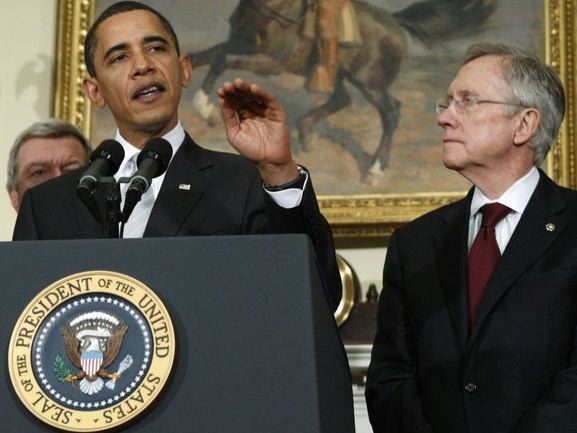
Senator Harry Reid (D-Nevada) Listens to Obama Speak
In other words, Americans continue to hear Obama’s voice through the historical filter of “loudness” and the so-called “Negro dialect” whether or not Obama wants them to and whether or not he “wanted to have one.” While Reid’s prompt and profuse apologies to Obama may have pulled the story from the news cycle—the President called the remarks “unfortunate”—the phenomenon Reid’s clumsy words exposed remains an invisible yet palpable cultural force in the U.S., one whose longer historical genealogy has yet to be reckoned with. Sure to be labeled “rowdy” for beginning to do so, Reed’s recent commentary suggests that Obama’s social and historical knowledge has led him to an astute awareness of “when not to shout” that white Liberals need to recognize. I offer a perhaps less consoling conclusion, that we need to concentrate less on the sound of Obama’s voice and more on the racialized listening practices that can radically distort public discourse in this country. Unless we understand (and eventually dismantle) the relationship between the dominant American “listening ear” and the sonic color-line that shapes it for many (white) liberals and conservatives alike, we will continue to shout into the wind.


Share this:


Current Top Posts





April 2021

January 2020

November 2019

October 2019

August 2019

April 2014

November 2017

March 2015

December 2017

October 2015
 Sounding Out!
Recent Comments