
Deejaying her Listening: Learning through Life Stories of Human Rights Violations

 **Co-authored by Emmanuelle Sonntag and Bronwen Low
Are you listening?
Because sound specialist Julian Treasure argues, “We are losing our listening” due to the invention of multiple methods of recording and with the world being “so noisy . . . with this cacophony going on visually and auditorily, it’s just hard to listen, it’s tiring to listen.” In response, Treasure claims that we need to improve our conscious listening skills; he suggests teaching the skill of listening in school.
As co-directors of the “Education and Life Stories” working group of a large oral history project, we have been thinking a good deal about listening and pedagogy. The project is entitled “Life Stories of Montrealers Displaced by War, Genocide, and other Human Rights Violations,” shortened here as “Montreal Life Stories project.” From 2007 to 2012, a team of university and community-based researchers in the frame of the Canadian Community-University Research Alliances (CURA) Program recorded life story interviews with approximately 500 Montrealers who experienced mass violence and displacement. Members of the survivor communities (Tutsi, Haitian, Cambodian, and Holocaust) were key partners in both the research and the diffusion of the project, fundamentally shaping the project’s philosophy, activities and outcomes.
One of the Education Working Group’s principle accomplishments was developing an educational package called We Are Here, containing five Learning and Evaluation Situations (LES), the curricular units in the Quebec Education Program. The units are designed for “cycle two” secondary school, where the students are generally 14 to 16 years old. As of yet, these have not yet been piloted, but we plan to do so.
 Our goal while designing “We Are Here” was to have teachers and students engage with the life stories of human rights violations, in order to foster a more inclusive cultural memory that would develop “le vivre-ensemble,” our capacity to live well together. Featuring the stories of immigrants and refugees to the province, the curriculum offers students a more complex understanding of human rights violations. First-person accounts bring world history and politics to life, helping us to understand the processes and human costs of violence and war, and expand our awareness of our fellow residents and citizens. At the same time, we recognized that the difficult stories of human rights violations make particular demands upon their listeners. We needed to consider how to ethically support students and teachers in engaging with the stories of people who have survived traumatic experience—while, importantly, respecting the interviewees themselves.
We sensed from the beginning that these goals and commitments would require us to develop our own “pedagogy of listening” to support teaching and learning from the life stories, and we foregrounded listening in all of the materials. For instance, each unit begins with the students listening to one or more project interviews, in the form of digital stories edited collaboratively by the interviewees and the editor. These digital stories tend to be under 10 minutes and bring together video, images, sound, and text (see for example, Bracha Rosenblum’s digital story). They are much more accessible than the original video interviews, which can be many hours long.
There is an irony in building a case for listening in schools. Students are commanded daily to “be quiet and listen to the teacher.” Despite the long history in educational theory of critiquing this model, the student-who-listens-in-silence versus the teacher-who-speaks-loudly is still regularly invoked in practice as an ideal relation. The demand for silence is in part a pragmatic response to the inherent noisiness of schools filled with people. At the same time, the listening imperative is also a key tool in the establishment of teacher authority and power.

Image by Flickr User I Am Rudy
We wanted to rethink the process of listening in our curricular design beyond these traditional power dynamics. Our pedagogy of listening draws on concepts of testimony, communities of memory, dialogue, and the principle of shared authority in oral history, which we describe in detail elsewhere (forthcoming in the Journal of Curriculum Studies). In this blog post, we explore our pedagogy’s indebtedness to philosopher and musicologist Peter Szendy’s work on listening and its potential in the public school classroom.
Listening begins with the desire to be signed and addressed
The address is a central notion in Peter Szendy’s Listen: A History of Our Ears. The early 2000s, as Szendy explains, saw the birth of the peer-to-peer file sharing service Napster (created by Shawn Fanning in 1999), where listeners exchanged and circulated music. Through the lens of file sharing, Szendy began reflecting on the rights of listeners and the nature of musical listening more generally. He argues that sharing shapes the listening act: while listening can be passive–I am listening to you, receiving what you are saying–we also offer up what we are listening to. Rather than envisioning listening as a two-way engagement, Szendy triangulates it, structuring listening around a listening subject, the sonorous object the subject is listening to, and the addressee (le destinataire) of the subject’s listening. In Szendy’s theory of address, as we listen to somebody or something, we also address our listening to an “other” (who might be another beside me, or in myself).
That students would address and engage with “an other” through their listening appeased, in part, our concerns about having students listen to difficult stories of mass violence. If listening is akin to a peer-to-peer sharing system, students were somehow not “alone” anymore in the experience; listening is a building of relation.
Closely related to the concept of listening as address is Szendy’s idea of signature, especially through the digitalization of sound where “listeners become authors” (136) naming, tagging, and classifying the files that they share with others. Szendy describes this process in terms of the singularity of listening:
It is more simply as a listener that I want to sign my listening: I would like to point out, to identify, and to share such-and-such sonorous event that no one besides me, I am certain of it, has ever heard as I have (3).
While all listening necessarily involves an appropriation of what has been listened to, we wanted to amplify the process of students “signing” or marking their listening, and so making it their own. We would deepen students’ engagement with the video interview and the “other” by having them actively edit, rework, even remix, and so adapt the original. We gave students the right to enter into the difficult stories from the survivors interviewed in the Montreal Life Stories project, responding as individuals and as members of a classroom community. While the dynamic of students listening to and making something in response to the life stories takes many forms in our curricular units (including timelines, maps, and audio-tours), we here share the unit which most explicitly embodies the remixing in Szendy’s notion of listening.
What a Story!
What a story!: Life stories and digital storytelling, is designed for senior students in the English Language Arts, and asks students to work in groups to create their own digital story version of a segment from one of the life story interviews.
In the preparation phase, the students listen to a 5 minute digital story of a Holocaust survivor living in Montreal that enables them to discover the multimedia elements and narrative structure of a digital story.

In the production phase, students approach their main task: producing a 5 minute digital story from a 34 minute life story interview with another Holocaust survivor. The phase begins with “deep listening” exercises where students work in groups to summarize the story and decide which parts of the larger interview they would like to keep in their edited versions. In doing this, they reflect on their experience as “listener“ vs. ”reader” and their responsibilities as listeners of difficult stories.
While the expression “deep listening” recalls the work of the composer Pauline Oliveros, in the Montreal Life Stories project the concept stems more directly from the notion of “shared authority,” a phrase coined by oral historian Michael Frisch (1990) to describe the process of co-creating an interview. The community-university model was collaborative at all levels, and researchers and the researched were partners in dialogue. In turn, we frequently used “deep listening” (as in the profound listening between interviewers and interviewees) as an expression during our working sessions. The concept also draws on the work of oral historian Martha Norkunas on interview techniques and deep listening exercices; her visit to the project shaped our curriculum design process, and students are encouraged to engage in dialogue and sharing, and to “Listen with close attention and deeply, in an empathetic and respectful manner.“(13). These appeared, to our eyes, to be consistent with Szendy’s notion of listening as address and signature.

The production phase continues with the creation of the digital story, the editing and the montage. Students then reflect on the ethics of the process of cutting and reworking another’s story, exploring the way narratives can be modified, the meaning built into the digital story vs. the meaning of the interview, and the question of narrative form.
Peter Szendy chooses the deejay, or of the musical arranger, as a figure for the contemporary listener. Indeed, we imagined the students in groups, headphones on, in front of computers, slowing down the cadence, augmenting the sound, rewinding or fast-forwarding, cutting, pasting, annotating. We thought of them as highly skilled listeners, intervening in what they were listening to and interpreting their listening for the “other” ( in the manner of composition theory in which students are asked to write for real audiences for real purposes). As deejays of their listening!
Having students edit the life stories of others, especially stories of violence and war, brings with it risks of misinterpretation and manipulation. However, the unit asks students to think carefully about these risks, and unlike projects which use testimonies in the service of someone else’s argument, this editing assignment has students select from the larger interview in order to craft a narrative that respects the original. As Norkunas says, “When Michael Frisch coined his now famous phrase, “a shared authority,” he wrote of the shared responsibility of listener and narrator for creating the interview document, for interpreting it and for sharing the knowledge created.”(2) If editing and interpreting are critical to the process, adds Norkunas, “the first moment of creation takes place in the interview, in the act of listening.” Hence, the ethical issues raised by the editing assignment–and more generally by having students and teachers engage with personal stories of human rights violation–are addressed by considerable attention to the act of listening (13), and by the cultivation of trust, dialogue and sharing. In short, an attention to the “other.”
Rather than deciding that this content is too challenging for students or reproducing a passive listening dynamic in which students listen to the interviews in reverential silence, we work to support student engagement — as both an attention and response — with these stories as part of a community of listeners. And while listening to these stories can be difficult work, we hope that through our pedagogy of listening, students will gain a greater awareness of the lives of those Quebecois who are not often part of the national narrative, and grapple with some of the difficult knowledge of human pain and survival.
—
Bronwen Low is an Associate Professor in the Department of Integrated Studies in Education at McGill University. She researches the implications of popular culture for education, curriculum theory, and adolescent (multi)literacy practices. Areas of interest include hip-hop and spoken word culture; informal, arts-based and participatory education with youth; and community media and participatory video programs.
Emmanuelle Sonntag defines herself as a “knowledge organizer.” She offers consultancy services in communication, education, curriculum design, information management and knowledge mobilization while pursuing her PhD in Sociology on… Listening at Université du Québec à Montréal. She tweets on listening, sounds, stories and other noises @lvrdg.
—
 REWIND! . . .If you liked this post, you may also dig:
Audio Culture Studies: Scaffolding a Sequence of Assignments–Jentery Sayers
The Sounds of Writing and Learning— Liana Silva
Listening to #Occupy in the Classroom–– Travers Scott
Share this:

Video Gaming and the Sonic Feedback of Surveillance: Bastion and The Stanley Parable

The world of Bastion is beautifully illustrated and affectively evocative. Image borrowed from darkzabimaru @DeviantArt.
As the practice of sound design becomes ever more refined as a key factor in the immersive aspects of gameplay, it is essential to develop a conceptual vocabulary of the ways that sound is implemented as a cultural facet. In particular, it is important to recognize the power relations at stake within the implementation of the human voice as an interactive narrative trope. And, while I’ve already discussed the ways in which the voice of GLaDOS in Portal invites players to reflect on how they internalize a set of mediated perspectives about how their body ought to be, it is equally important to consider the other ways that a narrator’s voice invites players to reconsider the intersection of agency and surveillance.
This post compares the use of narration in Bastion and The Stanley Parable in an effort to understand how the voice is used as what Karen Collins would refer to as an “interactive non-diagetic sound,” or, in other words, a sound that is triggered by player actions, but not experienced by the character in the game. Specifically, I argue that the voice in these examples is an essential point in the feedback loop between player and game. And, as part of the cybernetics of gameplay, it produces a dispositif of surveillance, akin to Bentham’s panopticon, which lets the player know their actions are constantly being monitored, calculated, and considered by the game’s algorithms. But, while the original panopticon produced the effect of surveillance through the clever use of light, these games use sound to effect surveillance.
Bastion, was developed by the small indie game company Supergiant Games, but was distributed and released by Warner Bros. Interactive Entertainment, first through Microsoft’s distribution service, XBOX Live Arcade, but has since been released more broadly after receiving much critical acclaim. In Bastion, players take the role of a young boy, referred to only as “The Kid,” and adventure around gradually rebuilding a world that has fallen apart since a cataclysmic sundering referred to only as “the Calamity.” Although the world of Bastion is beautiful and visually stimulating, it is the game’s sound design that has earned it much critical acclaim. The game is narrated by a character named “Rucks,” who speaks in a deep weathered voice, with somewhat of a western twang. And, even though The Kid eventually encounters and is able to interact with Rucks within the game, Rucks still relays dialogue in the third-person.
When The Kid and Rucks meet, Rucks evinces with trademark grit, “Sure enough, he finds another. He finds me.” And, while that is a scripted plot point within the game, at other points Rucks’ narration modulates to best reflect the player’s actions. A player who begins the game slowly, exploring nooks and crannies, might hear “The kid walks slowly down the path, checking everything,” while a player who runs straight ahead could hear, “The kid barrels forward, not looking once behind him.” These quotes force the player to recognize that the game is watching, and actively staging narrative commentary about their in-game decisions. This commentary unfolds in aural space, through narration, discrete from the old text (and controller) triggers of “look” and “examine” which used to prompt text-box commentary about the environment of the game. In short, Bastion’s sound design succeeds because it is balanced in such a precise way: players are being constantly engaged with a narration which confirms that they are, in fact, properly interacting within the game world and story.

Games used to use text boxes to interrupt gameplay with narrative elements. Image borrowed from ultrapublications.com
The Stanley Parable, on the other hand, works deliberately to turn the paradigm of narration on its head. Where Rucks, in Bastion, frequently alluded to how many secrets he was yet to reveal about himself and the game-world, his character ultimately plays a supportive role, helping The Kid to understand the chaotic environment of the game. The narrator in The Stanley Parable, however, plays the antagonist in many ways, attempting to foreshadow and predetermine the actions of the player, or “Stanley.” On the game’s website, a short sentence contextualizes the endeavor, “The Stanley Parable is a Half Life 2 mod about video games.” The game itself is a mod of the “Source engine,” which runs both Half-Life 2, and Portal, was developed by the very small development team of Davey Wreden and William Pugh, and released for free. It is meta-fiction that stages a critique of the context of narrative within interactive games and fiction. Specifically, the game questions the idea of narrative itself by showcasing the ways that players are able to undermine the scripted plots and spaces of a videogame by exploring and experimenting with exploits and bugs in the game’s code and narrative.
Although the narrator in The Stanley Parable will prescribe several decisions to the player over the course of the game, the player is given the agency to contest the story as told by the narrator, and, therefore, to experiment with the plot. As the player reaches a set of two open doors on the way to the employee lounge the narrator reads, “When Stanley came to a set of two open doors, he entered the door on his left.” If the player chooses to travel through the door on the right instead, the narrator will attempt to steer the player back to the main plot tree by saying, “This was not the correct way to the employee lounge, and Stanley knew it perfectly well.” And, then as an open door is revealed, “So he turned left at the first open door, and walked back in the right direction.” If the player continues to ignore the narrator’s advice, he comes to somewhat of a dead end and the narrator reads, “Stanley was so bad at following directions, it’s incredible that he wasn’t fired years ago. Maybe this was why everyone left. No one wanted to be around someone as bad at listening as him.” The player is given several other opportunities to make decisions and lead the story to completion in achieving one of seven endings; each based the decisions the player has made when interacting with the narrator’s dialogue.
The Stanley Parable allows players the agency to see the limitations of linear storytelling where Bastion does not. Where some paths in The Stanley Parable will lead the player into direct conflict with the narrator, other paths do not. There is never a point where the narrator ceases to comment on the player’s actions and activities. Because the sonic feedback of surveillance remains a constant in both games the player remains engaged, in both cases, with the logic of the game-system. In other words, no matter how many times the player defies the narrator in The Stanley Parable, it never seems like the game is breaking. The game world remains constant because the motif of surveillance holds; players know the game still works because the narrator continues to stage commentary – even if it is commentary about the player’s failure to keep to the plot.
For Marc Andrejevic, author of iSpy (2007)—who has written extensively about the abundance of surveillance techniques implemented in digital spaces–the danger of surveillance lies in the production of an asymmetrical power relationship between media producer and media consumer. And, while this is certainly best argued about instances of dataveillance–how companies like Amazon, for example, track customer clicks on and off their website via web cookies in order to better produce exploitable (and in some cases saleable) consumer profiles–it is important to also consider the ways that the implementation of sound also functions as a technique of control.
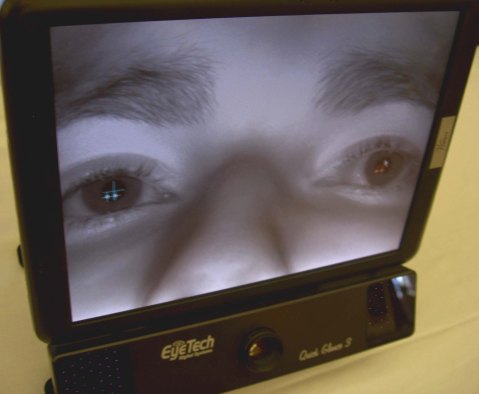
Paradigms of surveillance have changed a lot in the past 30 years. Image borrowed from cobalt123 @Flickr.
At its most positive, the sonic panopticism of Bastion and The Stanley Parable offer players a sense of comfort in knowing that the game is operating properly, and not glitching out. Further, players are invited into a more immersive game, which leverages both visual and audio interactivity to lull players into an environment of almost trancelike feedback and play. Clearly, this is the promise of good sound design; it gently alerts players to the presence of a tightly designed and well-implemented game, and produces affects of brand loyalty and trust within a game’s player contingent.
But, while there are clearly aesthetic and market benefits to the implementation of narration in both games, one cannot help but wonder, in the context of post-feminism and self-surveillance, what implications there are in the implementation of the male voice as surveil-er in both games. Just as it was curious in Portal 2 how GLaDOS acted as a critical female voice constantly judging the player’s body image and intelligence, it is curious how much authority is given to the voice of Rucks in Bastion. And while several good critiques have already been written about how the game features only one (somewhat silent, and certainly helpless) female character, and how the game’s villain is portrayed, concretely, as the racially exotic other, it is sadly fitting that the most comforting and well-acclaimed aspects of the game come from the interactivity produced by the voice of its distinctively white male narrator.
The sound design in The Stanley Parable, of course, is more cutting in the ways it stages a commentary about how the voice of the narrator (this time distinctively British), exacts a form of social coercion through techniques of surveillance, and how these techniques serve, namely, to hamper player agency. But, even its own narrative of resistance fails to compel; in fact, it is the uneasy ending of compliance and conformity that is, perhaps, the happiest. This, ironically, reveals one of the key cultural problems of our era: the reciprocal aspects of surveillance and interactivity. If affective resonances of trust, knowledge, and comfort come bundled with the male voice, is it in the vested economic interests of sound design communities to leverage these to make profit? Even though both games have earned critical praise, it is only Bastion that has won awards for sound design. In other words, are we caught in our own feedback loop of comfort, industry, and design?
–
Aaron Trammell is co-founder and Multimedia Editor of Sounding Out! He is also a Media Studies PhD candidate at Rutgers University. His dissertation explores the fanzines and politics of underground wargame communities in Cold War America. You can learn more about his work at aarontrammell.com.
—
REWIND! . . .If you liked this post, you may also dig:
DIANE… The Personal Voice Recorder in Twin Peaks— Tom McEnaney
The Role of Sound in Video Games: Pong, Limbo, and Interactivity— Aaron Trammell
Orality and Cybernetics in Battleship— Aaron Trammell
Share this:


Current Top Posts





April 2021

January 2020

November 2019

October 2019

August 2019

April 2014

November 2017

March 2015

December 2017

October 2015
 Sounding Out!
Recent Comments