
SO! Amplifies: Mendi+Keith Obadike and Sounding Race in America
DOI: https://doi.org/10.59350/vn3dp-9ck28
SO! Amplifies. . .a highly-curated, rolling mini-post series by which we editors hip you to cultural makers and organizations doing work we really really dig. You’re welcome!
—
Several years ago—after working on media art, myths, songs about invisible networks and imaginary places—we started a series of sound art projects about America. In making these public sound artworks about our country we ask ourselves questions about funk, austerity, debt and responsibility, aesthetics, and inheritance. We also attempt to reckon with data, that which orders so much of our lives with its presence or absence.
We are interested in how data might be understood differently once sonified or made musical. We want to explore what kinds of codes are embedded in the architecture of American culture.
Big House/Disclosure

The first sound art project in this vein that we completed in 2007 was entitled Big House / Disclosure. Northwestern University commissioned Big House / Disclosure to commemorate the 200th anniversary of the abolition of the British slave trade. We began researching Chicago’s recently (2002) issued Slavery Era Disclosure Ordinance, which states that any business seeking a city contract must publicly disclose (without penalty) its historical relationship, if any, to the slave trade. In that project we interviewed 200 citizens in the Chicago area about that city ordinance, how they (or their ancestors) arrived in this country, the origins of house music, and imaginary plantations, as well as their opinions about the legacy of slavery in their lives. Their answers were woven into a 200 hour house song & public sound installation on the Northwestern campus.
We used custom built software to trigger changes in the sound (drums, bass lines, chords, etc.) of that installation as the stock prices of companies like Lehman Brothers and Wachovia Bank (listed by this city ordinance as having profited from slave trade) rose and fell in 2007. In addition to the sound installation there were a number of performance scores and graphic scores to be performed in the project. The graphic scores were performed at the Stone (John Zorn’s music venue) by bassist Melvin Gibbs, turntablist Val Inc, percussionist Satoshi Takeshi, and pianist Shoko Nagai in New York. The book and album for this project (recorded with percussionist Guillermo Brown, cornetist Taylor Ho Bynum, cellist Okkyung Lee and percussionist Tim Feeney) were released by 1913 Press.
American Cypher
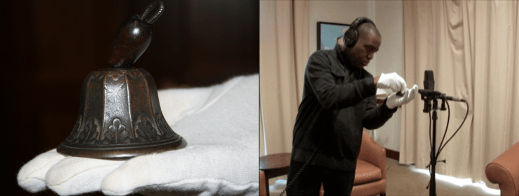
In 2012-13 we created American Cypher. This project looked at American stories about race and DNA. The stories included narratives about Barack Obama, geneticist James Watson, Oprah Winfrey, and two men in the criminal justice system. At the center of the project was a multi-channel sound installation made from a small 18th century bell that belonged to Sally Hemings (a woman enslaved by Thomas Jefferson and, as indicated by DNA testing, mother to his children). The bell was recorded and altered. It was tuned using DNA information (microsatellite STR analysis) from the Jefferson and Hemings families. That analysis gave us a pitch set that was used to compose the piece. The project was commissioned by Bucknell University’s Samek Gallery and Griot Institute. The exhibition was mounted at the Studio Museum in Harlem and later traveled to the Institute of Visual Art at the University of Milwaukee Wisconsin.
<p><a href=”http://vimeo.com/81574324″>Mendi + Keith Obadike: American Cypher – Samek Gallery and The Studio Museum in Harlem</a> from <a href=”http://vimeo.com/user12307441″>Keith Obadike</a> on <a href=”https://vimeo.com”>Vimeo</a>.</p>Free/Phase
Free/Phase is our latest project for 2014-15. This work uses the archives of Columbia College’s Center for Black Music Research (Chicago, Illinois) as its foundation. With this work we are doing conceptual remixes of African-American freedom songs found in the archives. We are thinking about how this music has been used over the past couple of centuries and all that is encoded in these songs musically, politically, and spiritually. There are three nodes to this project. These nodes will be presented and produced in several venues throughout the city of Chicago and will include audience participation.
1) Beacon
“Beacon” is made up of a distributed site-specific sound installation that “rings” morning, noon, and evening, playing a short melodic phrase from specific spirituals found in the CBMR archives. Each spiritual chosen contains musical & lyrical messages that could have been used for pre-emancipation navigation on the underground railroad or inspiration.
2) Overcome
“Overcome” is a video work that is inspired by ways that music was used during the American Civil Rights Movement.
3) Dialogue
“Dialogue” is comprised of “listening posts” throughout Chicago. A number of DJs engage audiences in a discussion about the canon of African-American freedom songs.
***
Across this series, we hope to invite new ways of thinking about the archives that hold information about our existence—the records of profit during the era of American slavery, the relationships marked in our genetic information, and the strategies for survival encoded in our music. Our work in this area reflects on the information that sometimes vanishes from view, whether because it is ephemeral or because it has been buried. We hope our sounding the archives invite new ways of listening to the past and the future at the same time.
—
Mendi + Keith Obadike make music, art and literature. Their works include The Sour Thunder, an Internet opera (Bridge Records), Crosstalk: American Speech Music (Bridge Records), Black.Net.Art Actions, a suite of new media artworks (published in re:skin on M.I.T Press), Big House / Disclosure, a 200 hour public sound installation (Northwestern University), Phonotype, a book & CD of media artworks, and a poetry collection, Armor and Flesh (Lotus Press). They have contributed sounds/music to projects by wide range of artists including loops for soul singer D’Angelo’s first album and a score for playwright Anna Deavere Smith at the Lincoln Center Institute. You can find out more about them at http://obadike.com.
—
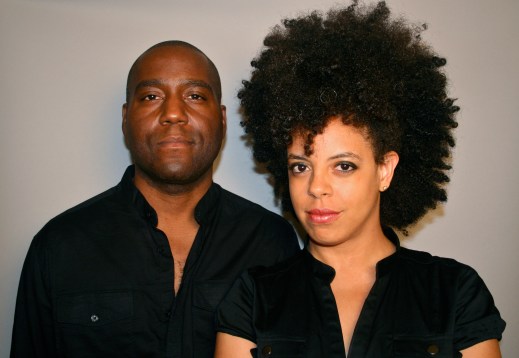
Featured image from authors’ website.
—

REWIND!…If you liked this post, you may also dig:
Wayback Sound Machine: Sound Through Time, Space, and Place-Maile Colbert
SO! Amplifies: Regina Bradley’s Outkasted Conversations-Regina Bradley
Or Does it Explode?: Sounding Out the U.S. Metropolis in Hansberry’s A Raisin in the Sun-Liana Silva
—
Share this:

I Been On: BaddieBey and Beyoncé’s Sonic Masculinity

DOI: https://doi.org/10.59350/9z14x-2tp14

This September, Sounding Out! challenged a #flawless group of scholars and critics to give Beyoncé Knowles-Carter a close listen, re-examining the complex relationship between her audio and visuals and amplifying what goes unheard, even as her every move–whether on MTV or in that damn elevator–faces intense scrutiny. Last Thursday, you heard our Beyoncé roundtable podcast featuring our first two writers, Priscilla Peña Ovalle (English, University of Oregon) and Kevin Allred (Women and Gender Studies, Rutgers)–as well as Courtney Marshall (English, University of New Hampshire) and Liana Silva (Editor, Women in Higher Education, Managing Editor, Sounding Out!). In the remaining weeks of the series, we will hear from Liana and Madison Moore (Research Associate in the Department of English at King’s College, University of London and author of How to Be Beyoncé). Today, Regina Bradley (writer, scholar, and freelance researcher of African American Life and Culture) introduces us to the sonic ratchetness of Baddie Bey.–Editor-in-Chief Jennifer Stoever
—
My husband is low key in love with Beyoncé. While he has yet to admit to any type of commitment to Mrs. Knowles-Carter – I’ve interrogated him thoroughly after each “I can appreciate her craft, babe” commentary – he holds her latest album hostage in his car. Beyoncé played in my car only once, but I enjoyed our brief encounter. I listened to the album as a testament of Beyoncé on her grown woman shit: a smorgasbord of vulnerability, independence, and [good] sex. “***Flawless” is my favorite track, a testament to the complexities of performing (black) womanhood in popular spaces.

However, I’m more so interested in the sampled track that didn’t make the final cut, “Bow Down.” “Bow Down/I Been On.,” released in March 2013, shows Beyoncé’s responses to idealistic black womanhood (i.e. quiet lady-hood that is not assertive), deeply rooted in her southern upbringing. The sonic tensions between Beyoncé’s ‘normal’ performance voice and the introduction of performance identities such as BaddieBey point to Beyoncé’s increasing unwillingness to cater to a type of sonic respectability that parallels the conservatism of the black middle class. As I write in a previous essay, BaddieBey is a sonic invocation of ratchetness – a performance of black women’s contemporary (dis)respectability politics – in which Beyoncé distances herself via sound from the established ideas of womanhood that she visually satisfies.
Thus, in “Bow Down/I Been On” Beyoncé builds a layered sonic narrative to destabilize the concrete sexual politics she grapples with in her music. While “***Flawless” shows Beyoncé’s evolution of self-consciousness and ultimately women’s empowerment, in “Bow Down” I hear her conduct the grittier and more controversial work of questioning gender norms in popular culture. “Bow Down/I Been On” presents and blurs useful tensions of gender and consciousness in an ever-present conversation of what and who dictates respectable womanhood in popular culture.
“Bow Down/I Been On” features the production work of hip hop producers Hit Boy and Timbaland. The first half of the track, titled “Bow Down” and produced by Hit Boy, sounds like a bass heavy Nintendo video game. The aggressiveness of the track – hard-hitting snare drums and synthesizers in addition to the video game sonic aesthetic – complements a high-pitched, autotuned voice introducing Beyoncé. Beyoncé introduces BaddieBey as her hip hop masculine bravado persona on the second half of the song “I Been On” produced by Timbaland. (Beyoncé’s “BaddieBey” persona stems from a YouTube video by Atlanta, Georgia Girl group The OMGirlz talking about why Beyoncé is bad.) The second half is a stark departure from the first half: a slower tempo that accompanies a deeper voice. Unlike Sasha Fierce, a visual characterization of the hypersexual and hyperindependent aspect of Beyoncé’s performances, BaddieBey is unequivocally southern, sonic, and ratchet.
The auto tune in the first half distorts immediately recognizable touchstones of Beyoncé’s femininity. The voice’s ambiguity points to Beyoncé’s nickname of “King Bey,” an intentional collapse of gender performance as the foundation of her influence and power as an entertainer. The “Bow Down” announcer doubly signifies the arrival of Beyoncé’s verse on the track and the destabilization of available cues of respectability. It is from this perspective that I ground Beyoncé’s emphatic use of bitch in her demand for those around her to “bow down bitches!” Rather than remaining attached to the definition of bitch as directed at women, Beyoncé uses the sonic tropes at play to decentralize gender norms.
.
BaddieBey also forces the (mis)understanding of what it means to think about Beyoncé as “sounding like a good girl.” Her vocalization, reminiscent of Houston’s chopped and screwed production style – the extreme slowing down of a track and the resulting slurring and distortion of voice – dismounts Beyoncé from international recognition and makes room to (re)claim space to experiment with the boundaries of her womanhood and its recognizable aspects. The deepness of her voice does not fit within the more recognizable and established feminine context of Beyoncé as an R&B diva. Criticism of the track denounced her use of the word “bitch” and those unfamiliar with chopped and screwed denounced it and in the most extreme comments called it “demonic.” The (hyper)masculinization of Beyoncé’s voice in this track signifies her attempt to situate herself not only in hip hop’s masculine discourse but southern hip hop and its renderings of the south as a similarly masculine space.
BaddieBey gestures towards what I suggest is a type of sonic drag – using sound to bend markers of gender performance in order to blur characteristics of black masculinity and womanhood. The sonic intonations of chopped and screwed give Beyoncé a pass to dabble in ‘ratchet-speak,’ sonically alluding to images of “gold fangs” and “smacking tricks.” In the track she sonically blends hip hop bravado and misogynistic representations of black womanhood, and in that way stretches what is considered respectable. In other words, BaddieBey signifies Beyoncé’s awareness of hip hop as a space of (exaggerated) gender performance.
This awareness is also rooted in a specific place: her hometown of Houston, Texas. As I previously stated, BaddieBey centralizes Houston as a departure point for Beyoncé’s hip hop sensibility and as a space for excavating the complexity of her gendered identity. Conceptualizing place as an element of southern black women’s respectability helps situate it as a cultural aesthetic. In this instance, respectability as a tangible discourse is situated within [southern] hip hop. Beyoncé’s remembrance of Houston’s “cultural essentials” – i.e. Frenchy’s Restaurant, Boudin sausages, dookie braids, and “candy paint” – signify a simultaneous existence with her usual declaration of finer, higher classed possessions like high priced labels, global jet setting, and jewelry.

Beyoncé’s declaration of returning to “H-town” and its cultural “essentials” within a sonic space re-situate her within not only Houston but a larger southern hip hop narrative that overlaps with her higher-classed — and therefore more respectable – celebrity status. Thus, “Bow Down/I Been On” becomes a sonic space that enables the listener to become aware of Beyoncé’s complicated performance narrative in ways simple lyricism does not allow. Building upon Guthrie Ramsey’s observation of music as a working space where the ‘invisible function’ of ethnic performance is panned out, “Bow Down/I Been On” challenges the listener to reconsider how Beyoncé’s (sonic) identity politics and performances intersect with racial performance. Hip hop, especially in its commodified form, speaks best to these tensions between gender performance and lived experience.
In the tension between gender performance and lived experience lies BaddieBey. Her alter ego is a kind of sonic female masculinity. With Kai Azania Small’s “genderqueer” reading of Beyoncé in mind, BaddieBey is a possible extension of Small’s hypothetical question of if Beyoncé had a penis. (Small presented a paper entitled “The Specter of Sasha Fierce and the Scopic: Freighting of Beyoncé’s Trans/Genderqueer Body” at the 2012 Queerness of Hip Hop Conference at Harvard University.) Because sound is capable of working as a gray performative space, Beyoncé ruptures conservative gender roles that are frequently treaded in popular spaces like hip hop by establishing her (dis)respectability.
BaddieBey manifests within the interstitial spaces of sexual performance and gender norms seen in hip hop. She is the sonic manifestation of Beyoncé’s hip hop sensibility that allows her to permeate if not penetrate hip hop as a hypermasculine space. BaddieBey is most demonstrative of Beyoncé’s ability to navigate “Bow Down” as her rendition of a hip hop ‘diss track,’ dismissing her haters and those overly criticizing her position as a pop singer. Beyoncé’s performance of hip hop female masculinity allots her room to present herself not as a braggart but as a dominant force.
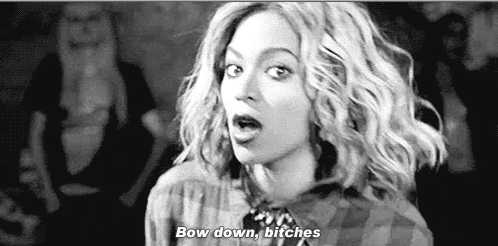
In this context then, the use of “bitch” in the chorus and later “trick” is doubly bound by hip hop’s gender specific misogynistic outlook on women of color and the gender-neutral use of bitch as an adjective to describe lack of talent or weakness (i.e. “bitch made”). BaddieBey forcefully treads the line of respectability through those words. For example, she sonically parallels her pimping of “the game” to the pimping of women heard in Texas rap. This occurs in her rendition of lines from Texas rap duo UGK’s track “Something Good.” BaddieBey raps: “Didn’t do your girl but your sister was alright, damn/In ya homeboy’s Caddy last night man, ha ha/Hold up, Texas trill.” The UGK version, much more explicit, is toned down in BaddieBey’s rendition. Still, in quoting UGK BaddieBey establishes herself as an entity separate from Beyoncé and even Sasha Fierce. She is an Othered representation of Beyoncé’s otherwise conservative sexuality. Yet the “tone down” of the lyrics can be read as Beyoncé’s awareness of (hip hop) masculinity as a misogynistic performance of black sexuality. BaddieBey’s laugh at the end of the verse marks the blurring of performance and reality.
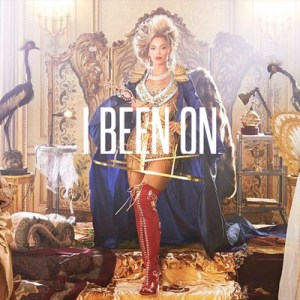
“Bow Down/I Been On” provides insight into the clever ways Beyoncé uses instrumentation and sound production to fragment her persona limited by investments in her visual image. It blurs clean-cut negotiations of black women’s identity and respectability as literal discourse by introducing the concept of sound as an agitator of black women’s expression and its analysis. The fluidity of sounding gender makes room to confront the static and heteronormative discourses through which the performances of these aesthetics manifest. Reliance on sonic narratives complements visuality in ways that usefully problematize how we negotiate contemporary race and gender politics in hip hop and ultimately popular culture.
–
Regina Bradley recently completed her PhD at Florida State University in African American Literature. Her dissertation is titled “Race to Post: White Hegemonic Capitalism and Black Empowerment in 21st Century Black Popular Culture and Literature.” She is a regular writer for Sounding Out!
–
REWIND!…If you liked this post, check out:
Thrills, Chills, and Safe Sexuality: The Sounds of Michael Jackson’s “Thriller” – Osvaldo Oyola
– Yvon Bonefant
“Fade to Black, Old Sport: How Hip-Hop Amplifies Baz Luhrmann’s The Great Gatsby“ –Regina Bradley
—
Share this:




Current Top Posts





April 2021

January 2020

November 2019

October 2019

August 2019

April 2014

November 2017

March 2015

December 2017

October 2015


Recent Comments