
Introduction: Medieval Sound

DOI: https://doi.org/10.59350/0fkf4-6hr71
A text arrives and the buzz of a cell phone jolts you from your idle thoughts. The sound–like an alarm, another kind of bell to mark out the day–shifts you from one audition to another. The spatiality of competing sounds fills our consciousness and shapes our attitudes towards music and noise, privacy and pollution. These themes surround the issue of sound and articulate a variety of questions and problems. How does one delineate between noise and sound? How does sound individualize us within the community? How does sound create space? Why is the scopic the privileged sense?
Sound studies is the name for an interdisciplinary field encompassing the study of noise, music, vibrations, and what T.S. Eliot called “auditory imagination” in The Use of Poetry and The Use of Criticism (111). It is a capacious field, encompassing examinations of the individual sonic space of iPod use and the historical sound of rural and urban life. Sound (or the lack thereof) immerses a subject in worlds that may not be, or can distance the listener from the world that is. To put on headphones, to lose oneself in chant, to be awakened by an alarm, to lose the sound of voices in the crashing waves, transfers us, immerses us, and connects us in a variety of sonic worlds.

Each of the essays in this month’s “Medieval Sound” forum focuses on sound as it, according to Steve Goodman’s essay “The Ontology of Vibrational Force,” in The Sound Studies Reader, “comes to the rescue of thought rather than the inverse, forcing it to vibrate, loosening up its organized or petrified body (70). These investigations into medieval sound lend themselves to a variety of presentation methods loosening up the “petrified body” of academic presentation. Each essay challenges concepts of how to hear the Middle Ages and how the sounds of the Middle Ages continue to echo in our own soundscapes.
The posts in this series begins an ongoing conversation about medieval sound in Sounding Out!. Our opening gambit in April 2016, “Multimodality and Lyric Sound,” reframes how we consider the lyric from England to Spain, from the twelfth through the sixteenth centuries, pushing ideas of openness, flexibility, and productive creativity. We will post several follow-ups throughout the rest of 2016 focusing on “Remediating Medieval Sound.” And, HEAR YE!, in April 2017, look for a second series on Aural Ecologies of noise!
Multimodality and Lyric Sound
The essays clustered in the group “Lyric Sound” re-center lyric soundscapes—onomatopoeia, mashups, music box, witnesses to queer temporalities—in order to reorient the critical terrain of our understanding of the medieval lyric. Recent criticism on digital rhetoric has defined multimodality as the process of creating, rather than the product. In Daniel Anderson et al’s “Integrating Multimodality into Composition Curricula: Survey Methodolgy and Results from a CCCC Research Grant” (2006), multimodality, “acknowledges the practices of human sign-makers, who select from a number of modalities for expression (including sound, image, and animation, for example), depending on the rhetorical and material contexts within which the communication is being designed and distributed.” In this body of criticism, the term “multimedia” becomes condensed to the “integration of multiple forms of media” (59-84).

This interest in semiotics is, however, not a new one; rather, it is one that has deep roots in medieval rhetoric, especially with regard to music. The two medieval writers most important to the discussion of rhetoric and music in the thirteenth century are John of Salisbury, particularly his twelfth-century work Metalogicon, and Gilbert of Crispin’s well-known debate Disputatio Iudei et Christiani from the late eleventh century. John of Salisbury’s Metalogicon, lays out the relation between symbols, sounds, and notation, writing:
Letters, that is, written symbols, in the first place represent sounds (voce). And secondly they stand for things, which they conduct into the mind through the windows of the eyes. Frequently, they even communicate, without emitting a sound, the utterances of those who are absent (Book 1, Chapter 3, 59).
John of Salisbury also links the notation of music with the notation of writing under the rubric of grammar, noting:
That such great import has existed in such tiny notations should not seem strange, for singers of music likewise indicate by a few graphic symbols numerous variations in the acuteness and gravity of tones. For which reason such characters are appropriately known as “the keys of music” (Book 1, Chapter 13, 59).
Gilbert of Crispin also considers the semiotics of visual notes. In the Disputatio Iudei et Christiani, he writes:
Just as letters stand in one way as images and notations of words, so also pictures exist as likenesses and notation of things written (qtd. in Michael Clanchy’s From Memory to Written Record 290).
Therefore what Isaiah saw, said and wrote, what Ezechiel saw, said and wrote, may after them be said and written and signified by some pictorial notation (290).
Both of these writers rework material from Isidore of Seville, and both describe correlations between reading “nota” in relation to music and images in post-Conquest Britain.
The elision between writing down letters and writing down musical notes is furthered by the slippery quality of the Latin from which the term “note” is derived. The Latin word “notare” means “to record writing,” while the second most common meaning of the noun “nota” [noter] means “to sing, to interpret musically.” The resulting duality of the term “note” survives today in both English and French, as Ardis Butterfield has pointed out in a November 2009 conference paper “A Note on a Note,” writing that “a note is both a sound and a sign.” The ambiguity of the term in Latin also indicates that the distinctions between the two meanings—“to record in writing” and “to interpret musically”—are constantly in flux.
The issues of the development of musical notation—a recording technology of sound—and the interface issues at stake in medieval manuscripts mean that our view of the medieval lyric comes primarily through the eyes. In other words, the medium—the manuscript page—in which the medieval lyric is recorded explains how our interpretations are deeply ocularcentric. However, we believe that we can think of the medieval manuscript as a flexible recording medium that allows for a “mise-en-système,” what Joanna Drucker describes as “an environment for action” in Graphesis: Visual Forms of Knowledge Production (139). A digital mise-en-système is a digital ecology in which the main question posed is how the interface can create the subject/user/reader. Interface then becomes a “border zone between cultural systems and human subjects;” it is the co-dependent space where “speaker and spoken are created. (148, 158-59).

Drucker tackles the theoretical stakes of digital visuality by explaining that “all images are encoded by their technologies of production and embody the qualities of the media in which they exist. These qualities are part of an image’s informations” whether this be illuminated manuscript, daguerreotype, painting, photograph, or digital image (21). The issues of layout, marginalia, paratext, columns, table of contents, indexes, chapter headings, are as Malcolm Parkes discusses in Scribes, Scripts, and Readers, a development of the medieval scholarly book (121-142). These experimental page structures became standard in printed books and eventually in digital texts.
In this series, we push back a bit on Drucker’s idea that the manuscript page is actually just a static mise-en-page. If the codex (as it developed in the Middle Ages) is one of the earlier kinds of informational “interfaces” then we should consider it as a mediating apparatus: one in which the mise-en-page and material features, its myriad graphic cues explain how to read, use, navigate, and access information in the codex book. We argue today with the example of the medieval English lyric as it emerges, that manuscripts are functionally an interactive media ecosystem, a mise-en-système where subject/user/reader can pull different threads and create and recreate meaning.
Over the next six weeks, the writers featured in our forum on Lyric Sound–Christopher Roman, Dorothy Kim, David Hadbawnik, Marla Pagán-Mattos, Katherine Jager--examine the different forms that medieval lyrics take and how the lyric is ensounded in terms of the mouth, recording medium, as well as the performance. Historical sound is always about negotiating the past through the present. Silence in the Middle Ages would not be our silence, just as music or noise today may not be defined as such then. These essays ask us to listen, create, make noise, open our senses in multimodal and multitudinous ways. We close with Andrew Albin‘s meditation on what it means to remediate medieval sounds in our contemporary moment, an intellectual call to the present as well as the future, as we will return with more on “Remediating Medieval Sounds” in April 2017. –Forum Guest Co-Editors Dorothy Kim and Christopher Roman
—
Dorothy Kim is an Assistant Professor of English at Vassar College. She is a medievalist, digital humanist, and feminist. She has been a Fulbright Fellow, a Ford Foundation Fellow, a Frankel Fellow at the University of Michigan. She has been awarded grants from the National Endowment for the Humanities, Social Science and Humanities Research Council of Canada, and the Mellon Foundation. She is a Korean American who grew up in Los Angeles in and around Koreatown.
Christopher Roman is Associate Professor of English at Kent State University His first book Domestic Mysticism in Julian of Norwich and Margery Kempe deals with the creation of queer families within mystical theology. His forthcoming book Queering Richard Rolle deals with the intersection of queer theory and theology in the work of the hermit, Richard Rolle. His research also deal with quantum theory and Bede, ecocritical theory, and medieval soundscapes. He has published on medieval anchorites, ethics in Games of Thrones, and death and the animal in the works of Geoffrey Chaucer.
—

REWIND! . . .If you liked this post, you may also dig:
Musical Encounters and Acts of Audiencing: Listening Cultures in the American Antebellum–Daniel Cavicchi
Sounds Difficult: James Joyce and Modernism’s Recorded Legacy–Damien Keane
The Amplification of Muted Voices: Notes on a Recitation of the Adhan––David Font-Navarrete
—
Share this:

SO! Reads: Dolores Inés Casillas’s ¡Sounds of Belonging!

DOI: https://doi.org/10.59350/4rycf-nvm43
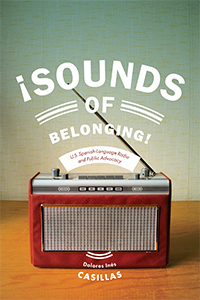
In Sounds of Belonging: U.S. Spanish-Language Radio and Public Advocacy (NYU Press, 2014), Dolores Inés Casillas turns up the volume on the sonic and the political dynamics of the Latino immigrant experience in the United States. A theoretically rich yet accessible book, Sounds of Belonging jump-starts Spanish-language radio studies, proving that the broader field of radio and sound studies can no longer continue to ignore or silence the importance of Spanish-language radio—from its historical significance for Spanish speaking Latinos to its lucrative place in radio markets today. Spanish-language radio reveals the power of sound in shaping the lived experiences of Latina/o communities, including immigrants and those with deep roots in the United States. Casillas shows how sound acts as a platform through which Latin Americans insert themselves in the U.S. imaginary, despite the nation’s attempts to erase their presence.
Sounds of Belonging provides keen insight into the constant buzz of immigration on the airwaves. Some questions that propel this book: What sonically constitutes the Latina/o experience in the United States? Also, what immigration-related sounds are found on Spanish-language radio airways? Casillas’s emphases shows how little we know of how the Latina/o sounds.
Sounds of Belonging deftly navigates the historical and contemporary domains of Spanish-language radio, theorizing them as a dynamic sonic terrain where we can listen to struggles for and against power, as well as to modalities of difference. Beginning with the traces of Spanish-language radio that emerged early in American radio’s so-called “Golden Age” in the 1930s-1940s, moving through the activist-driven bilingual Chicano community radio of the 1960s and 1970s, and then laying out the landscape of the highly profitable world of Spanish-language broadcasting today, Casillas guides readers through a historical trajectory of Spanish-language radio. She draws from Spanish-language radio broadcasting in its commercial and non-commercial iterations, while keeping tuned to the transnational connections transmitted through these frequencies.

Casillas engages with critical cultural studies, Chicana/Latina studies, and radio/media studies to explore the production of masculinity on El Cucuy’s morning radio program. Casillas studies El Cucuy as both an on-air personality and a political figure advocating for immigrants’ rights, illustrating the “complex interplay of gender, labor, and globalization” (104). While El Cucuy’s “shock-jock” style–imbued with sexual humor–often garners him comparison to Howard Stern or Rush Limbaugh, El Cucuy does more than shock and entertain his listeners. Casillas argues that sound and immigrant listening practices are integral to El Cucuy’s discursive aural constructions of a transnational working-class male audience, one that is not shamed for speaking Spanish, enjoying ranchera music, or laboring in “women’s work.” However, by highlighting how El Cucuy and his listeners reinscribe traditional gender roles that silence and marginalize Latinas, Casillas reveals the complexity of El Cucuy’s political advocacy for male workers on the one hand, and the program’s misogynistic message on the other.
Sounds of Belonging pushes scholars to think more thoroughly about the role format and genre play in the characterization of radio stations, as well as the audience constructed through these programming choices. She characterizes Spanish-language radio as both on-air dialogues and conversations between callers and radio hosts. This approach provides an intersectional analysis comparing radio listeners to those working in production. Casillas opens a line of inquiry into non-normative or non-hegemonic radio practices by positing that Latino radio listening is public and communal and not a solitary practice. Casillas shows how research that frames listeners as a market—simply audiences or consumers—polarizes our understanding of radio practices, particularly within research on Spanish-language radio.
One of Casillas’s most important interventions is her granular analysis of the role of radio in Latino communities, particularly within migrant and working class groups who may have easier access to and familiarity with radio, as opposed to other media such as the Internet. For these communities, radio becomes as an anchor, grounding the cultural ties Latinos have to the communities they migrated from—through stations’ language and music—but it also functions as a way to aurally migrate between borders, specifically when listeners-turned-callers locate themselves bi-nationally.

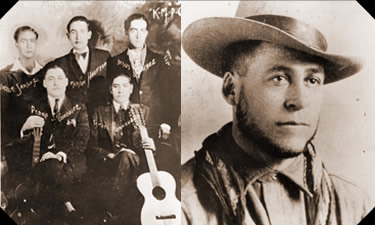
Casillas also argues that Spanish-language radio is an alternative site of congregation and dialogues amongst communities that are marginalized and made hyper visible by mainstream English-language media. Anti-immigrant policy and legislation—heard and seen in popular media as a narrative of “illegal aliens” invading America—is the backdrop against which Casillas explores the role of Spanish-language radio as an “acoustic ally,” a concept she explores in the chapters “Acoustic Allies: Early Latin-Themed and Spanish-Language Radio Broadcasts, 1920s-1940s,” and “Sounds of Surveillance: U.S. Spanish-Language Radio Patrols La Migra.” She explains that Texas and California were home to the debut of U.S. Spanish-language radio in the 1920s, crafted specifically for Mexican listeners. Radio announcers such as Pedro J. Gonzalez brokered airtime, typically broadcasting during the unfavorable times of late night or early morning. As a method of resistance, radio provided Spanish-language audiences with the capability of listening to “home.”
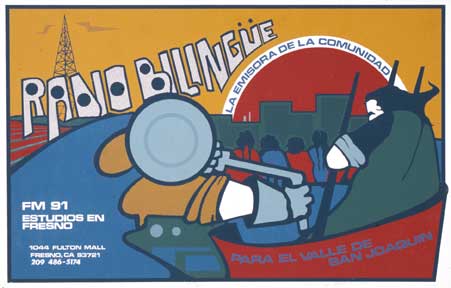
In the chapter “Mixed Signals: Developing Bilingual Chicano Radio, 1960s-1980s,” Casillas uncovers a major gap in research on the aurality of the Chicano Media Movement. She pivots the analytical lens of Chicano movement activism from urban to rural areas and traces the emergence of bilingual community in conjunction with farm worker activism in California and Washington. Bilingual community radio stations such as Radio KDNA in Granger, Washington, KBBF-FM in Santa Rosa, California, and Radio Bilingüe in Fresno, California—places that rely heavily on low-wage farmworker labor—showcase how the political activism of this movement era took place on emergent community airwaves. Listener-focused Chicano community radio stations “sought to broadcast independent of commercial influence, produce local programming, and, perhaps most significant, operate under the full control of Mexicans and Chicanos themselves” (52-53). While under the control of Chicano/a community radio producers, Casillas demonstrates how the funding model for community radio stations—namely, a heavy reliance on grants from the Corporation for Public Broadcasting—underscores the bureaucratic limitations for public broadcasts.
Sounds of Belonging opens the path for a new line of inquiry regarding Spanish-language radio while revealing that there is much work to do in the area of Spanish-language radio studies. Despite the chapter “Mixed Signals”’s focus on the community radio format, Casillas’s dedication to commercial radio highlights an urgent need for scholarship on non-commercial radio. Studying non-commercial stations will advance necessary conversations around content and innovation rather than economic success and failure.
Overall, Sounds of Belonging is an exciting and foundational text for scholars and readers interested in Latina/o media studies, sound, radio, cultural production, immigration and the Latina/o experiences in the United States as experienced and lived through sound and listening. Casillas’s agility in drawing from various theoretical and methodological perspectives provides a rich analysis of Spanish-language radio situated in a transnational context that reflects not just the listenership, but also the continued importance of radio for Latina/o communities living throughout the U.S. borderlands.
—
Monica De La Torre is a doctoral student in the Department of Gender, Women and Sexuality Studies at the University of Washington. Her scholarship bridges New Media and Sound Studies by analyzing the development of Chicana feminist epistemologies in radio and digital media production. A member of Soul Rebel Radio, a community radio collective based in Los Angeles, Monica is specifically interested in the ways in which radio and digital media production function as tools for community engagement. She is an active member of the UW Women of Color Collective and the Women Who Rock Collective. Monica earned a B.A. in Psychology and Chicana/o Studies from University of California, Davis and an M.A.in Chicana/o Studies from California State University, Northridge; her master’s thesis was entitled “Emerging Feminisms: El Teatro de las Chicanas and Chicana Feminist Identity Development.” Monica received a 2012 Ford Foundation Predoctoral Fellowship, which recognizes superior academic achievement, sustained engagement with communities that are underrepresented in the academy, and the potential to enhance the educational opportunities for diverse students.
—
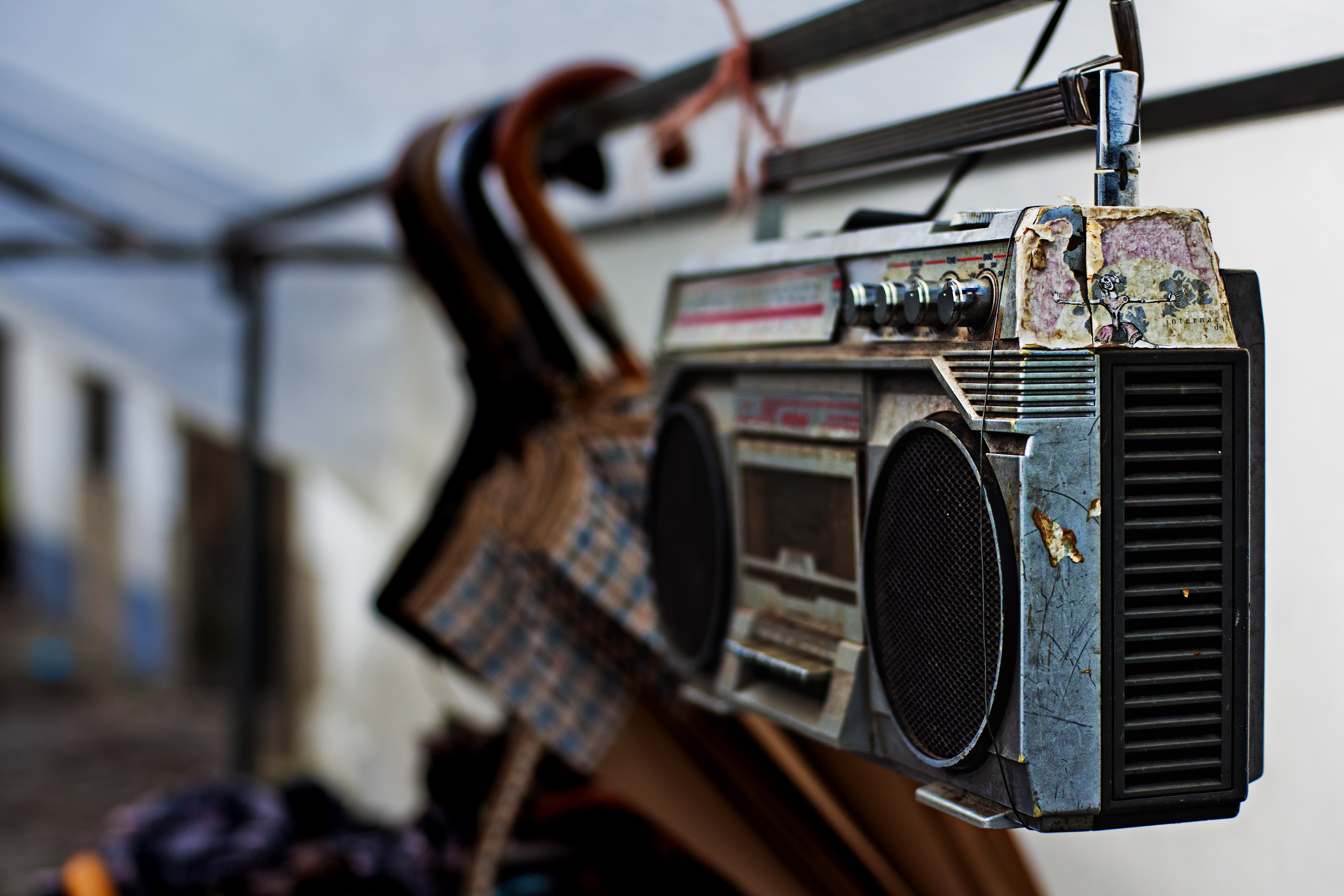
Featured image: “Hi-Fi” by Flickr user Feans CC BY 2.0
—

REWIND! . . .If you liked this post, you may also dig:
SO! Reads: Daniela Cascella’s F.M.R.L. (Finding Materials for Remembering and Listening) — Kyle D. Stedman
The Sonic Roots of Surveillance: Intimacy, Mobility, and Radio — Kathleen Battles
Sounding Out Podcast #24: The Raitt Street Chronicles: A Survivor’s History — Sharon Sekhon and Manuel “Manny” Escamilla
—
Share this:




Current Top Posts





April 2021

January 2020

November 2019

October 2019

August 2019

April 2014

November 2017

March 2015

December 2017

October 2015


Recent Comments