
LMGM’s “Lost: Choirboy” & El Jefe’s “Muñoz & La Mission: A Sermon. . .” (in memoriam José Esteban Muñoz)


DOI: https://doi.org/10.59350/dqrez-csp62
Come, let us sing of great men. Well, just one man, not men—and masculine gender is not essential for our purposes. Come to think of it, his greatness isn’t nearly as important as his fierceness, his queer significance, his brown sensibility. But we’re still committed to singing—or at least to music—well, to sound and noise, in any case. José Esteban Muñoz often wrote about queer scenes where music and sound were central to participants’ world-making activities. His archives buzzed with the sounds of West Coast punk, vogue-ball house, cruisy toilets, genderqueer burlesque, and salsa echoing down the barrio streets. And so, for this Round Circle of Resonance, we at La Mission are here to make some noise about a badass thinker who deeply impacted the way we dance/sing/talk/write/sweat about dance music, identity, and politics.
And this is just the beginning of our cacophonous, four-part response to Muñoz’s intellectual holler. The first installment, written by La Mission’s resident essayist / deranged propagandist LMGM (Luis-Manuel Garcia) provides a brief introduction to our collective, some reflections on Muñoz’s relevance to our activities, and a frame for the next three missives from our fellow cultists. It is backed with a rousing sermon-cum-manifesto from our charismatic cult-leader/prophet, El Jefe (Pablo Roman-Alcalá). In the coming weeks, our Naked Mennonite/randy dramaturge (Mandie O’Connell) will prepare and film a urinary performance piece; and our saucy Choir Boy/Linguist (Johannes Brandis) will compose a dirge to our dearly departed José (August 9, 1967- December, 4, 2013).
LMGM a.k.a. Luis-Manuel Garcia
—

Lost: Choirboy (in memoriam José Esteban Muñoz)
La Mission
Named after San Francisco’s Latino barrio, La Mission is a satirical utopian doomsday cult, a music label, a queer situationist art-gang, a magazine, and a group of dancers with a very dirty sense of humor. We release music on vinyl, publish DIY ‘zines, and make performance art, aiming to re-politicize genres of dance music that have been important to queer people of color. La Mission’s identity is perhaps best summed up by cult-leader El Jefe’s manifesto-sermon, “The Sermon for the Steps of the Ziggurat in our Hearts,” published in our first La Mission magazine:
La Mission is a Community. La Mission is a Collective. La Mission is a Cult. La Mission is a Situationist Art Gang. La Mission is a Anarcho-Syndicalist terror cell. La Mission is a Family. La Mission is You. La Mission is Us. La Mission is gonna strip you butt nekkid, gonna check all your body cavities, gonna give you a shower, gonna give you a goodie bag, gonna give you a clean sheet and a towel. You at home with us now children, you understand me? You home with us now.

La Mission was first formed in 2012, in a small café in the Neukölln district of Berlin. The collective initially began with just three of us—Pablo Roman-Alcalá, Mandie O’Connell and Luis-Manuel Garcia—but like any good charismatic doomsday cult, it quickly expanded to include a broad network of lovers and collaborators, led by a core of four instigators (Johannes Brandis joined us later in the year). After a fundraising run in the fall of 2012 (witness our surrealist fundraising video here), we held our first two performances in the winter and spring of 2013, which involved experimental performance art pieces held in unusual spaces. The performances incorporated music and text from our vinyl EPs and their corresponding ‘zines, which were released at around the same time. These multi-channel productions were also conceptually coherent, with (kunst/WORK)001 introducing La Mission’s “mission” and (kunst/WORK)002 focusing on the relevance of utopianism to dance music. After a “quiet spell” where we released an out-of-series vinyl record of “lost remixes,” 2014 has been dedicated to preparing the next volume in the series (due in February 2015), which examines the depredations of capitalism, forced austerity, and false scarcity on music.
Hearing José
La Mission has no idols, but we do have influences—and José Esteban Muñoz is foremost among them. We share with Muñoz a focus on queer nightlife-worlds, a non-classical take on utopianism, a commitment to intellectual interventions outside of academic channels, and a certain brassy tone of voice. His revival of Ernst Bloch’s notion of a utopia based in real-life struggles was crucial in helping us reconcile revolutionary politics with dancefloor utopianism; or, put differently, Muñoz helped us find the critical politics latent in the queer, brown, sweaty gatherings that form the core of our scene of commitment. As “EDM” continues to blow up into a primarily white, hetero, cis, mainstream phenomenon, his insights have helped us maintain clarity and critical focus.
From the outset, we have also been profoundly influenced by Muñoz’s lifelong theorizations of brownness, affect, and (dis)identification. Since three of our four core members are Latina/os in varying states of stripped identity, we have been especially interested in Muñoz’s notion of the “brown commons,” as he was developing the concept in the last years of his life. In promotional texts that circulated ahead of his speaking engagements on the topic, he described brownness as “an expansive sense of the world, a feeling and being in common that surpasses the limits of the individual and the subject.” Notably, he understands brownness and the brown commons as being shaped not only by suffering and struggle, but also by thriving, providing a pool of resources for a better, more vibrant kind of life.
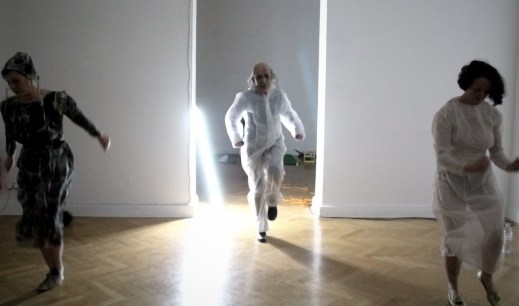
The significance for La Mission’s project in dance music culture should be clear already, but we also take great inspiration in how Muñoz developed an expansive view of brownness and the brown commons, using Latina/o experience as an entry-point for “a vaster consideration of the ways in which people and things suffer and experience harm under the duress of local and global forces that attempt to diminish their vitality and degrade their value.” We here at La Mission are committed to exploring brownness for its potentials for lateral solidarities among people of color, who may have diverse cultural backgrounds but nonetheless share post-migrant experiences of struggle, devaluation, displacement, and inauthenticity. In fact, Muñoz’s work was a direct inspiration for the “Brown Corner” in our La Mission ‘zine (a parody of the “ladies’ corner” and “kid’s corner” of American mid-century lifestyle magazines). Published bilingually and featuring post-migrant authors, the Brown Corner reflects on aspects of brownness, as both specific to their contexts and generalizable to a wider “commons” of brown experience. In the process, we hope to highlight shared feelings, narratives, and resources for brown survival in a world of white supremacy.
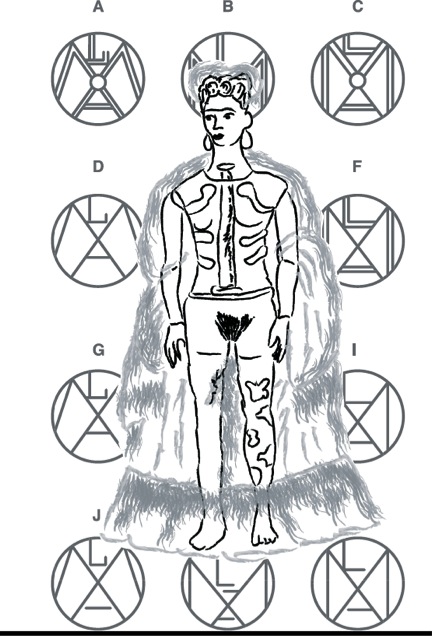
Singing into the Horizon
Brother Muñoz, what are we supposed to do with the vinyl records, the zines, the performance videos we had been accumulating for you? We’re trying to sing our way into a queer utopian horizon, and we had been counting on your voice. We know you’re not coming back. As a radical lefty utopian doomsday cult, we’re not so invested in the afterlife, anyway. But it still sucks for us and everyone else you left behind, left in the “here and now” that we struggle to turn into something less suffocating. The party was just getting started, dammit. Besides, we had such a kickass choirboy outfit picked out for you.
—
LUIS-MANUEL GARCIA aka “LMGM”: LMGM/Luis-ManuelLMGM/Luis-Manuel is a Canadian of Peruvian-Colombian origins, currently an Assistant Professor in Popular Music at the University of Groningen (NL), after migrating between Toronto, Berlin, Chicago, and Paris. He has managed to turn his love of electronic dance music into a PhD in Ethnomusicology at the University of Chicago, and into post-doctoral fellowships at the Max Planck Institute for Human Development and the Freie Universität Berlin. On the side, he writes about food and dances every chance he gets.
—
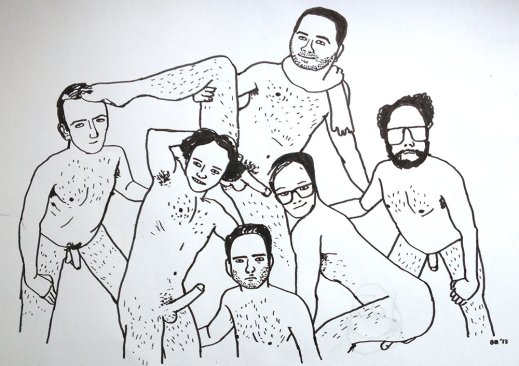
Muñoz & La Mission: A Sermon for the Imagined Sanctuary We Built Together
Welcome. La Mission is a family. A family of chosen comrades, chosen brethren, chosen hermanos, chosen сестры, chosen lovers, chosen students, chosen teachers, and chosen arms. Arms, linked and brandished through common thought, common feeling, common goals. It is with a heavy heart that we find ourselves here, remembering one of our family who (though never officially an acolyte or collaborator) was one who contributed to the ecstasy that we have felt and will feel for many years. José Esteban Muñoz was said to be a believer. Ernst Bloch and the New Revolutionary Epoch. Our utopias were described and imagined and realized and experienced. Rise up, my brown brethren, and let us celebrate Brother Muñoz’s legacy!
The words and deeds of this fellow freedom-fighter, who infiltrated the bourgeois güero academy and infected it with a polylateral program for de- and reprogramming, has been our parallel and our inspiration. Colleague and comrade. A representative of our struggle. Not quite a patron saint—that honor we’ve reserved for communarde Louise Michel—but no less a visionary. As queers, as minorities stripped of identity, as angry and happy children in revolt for something better, we must all learn from each other as equals.
Brother Muñoz made utopia political again and located that utopianism in performance. La Mission’s performances bring forth utopias from our queer future through fleeting mindfuck happenings in the present. Through the work of Sister O’Connell and her band of terrorizing miscreants, we present a non-narrative and non-paternalistic path towards redemption, one of our own making. Can I get a “Fuck, yeah!”?
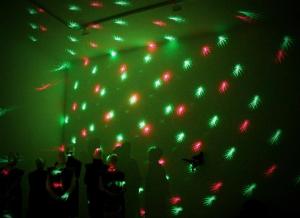
Brother Muñoz loved music and dancing and life-worlds connected by the beat and said, “Take Ecstasy with Me.” He revealed to us the connections between collective dancing and feeling utopian. In his spirit, La Mission’s music strives to bring forth utopia through that ever-lasting beat. Through disassociation and reassociation, through transcendental repetition, and through getting the fuck down! Can I get a “Fuck, yeah!”?
Brother Muñoz believed in learning and critical thinking. Analysis and the great revolutionary trek through the jungle of our critically thinking minds. La Mission’s tracts enact utopia through a constant vomiting out of our recently digested learnings into the baby-bird mouths of those who read them. The brother was also a hilarious motherfucker, and from this we realize that it is not through the shrill screams of egoism disguised as activism that we will prevail. It is through the joy of laughter combined with thought that we will win our bread. Can I get a “Fuck, yeah!”?
Brother Muñoz loved fucking. La Mission’s fucking creates utopias through the ecstatic act in and of itself. If you aint fucking to make yourself a Temporary Autonomous Zone of happiness, then you aint doing it right. Can I get a copulatory “Fuck, yeah!”?
It is not all loss, though. The ideas live on. Caminamos juntos. On the dancefloor. In the reclaimed Torre David skyscraper and the Taller Tupac Amaru collective; in the informal classrooms and the sweaty bedrooms. Our hearts must burst after sagging, our heads must fill after hanging low, and our linked arms will raise! Oh honey, please don’t give your heart to a world system based on exploitation of the luckless, give your heart to US!
—

—
All images courtesy of La Mission
—
PABLO ROMAN-ALCALA: Yo. I am Pablo aka “Beaner” aka “Skirtchaser” aka “El Frijolero” etc. I am an internationally working musician and dj who has enjoyed a modicum of success, but who doesn’t like what has happened to the musical landscape vis-a-vis “conservatism” in respect to both Money and Art. I mean the relationship of the two, okay? It sucks. And I want to change it.
—

REWIND!…If you liked this post, check out:
Karaoke and Ventriloquism: Echoes and Divergences–Karen Tongson and Sarah Kessler
Freedom Back: Sounding Black Feminist History, Courtesy the Artists– Tavia Nyong’o
“New Wave Saved My Life*”-Wanda Alarcon
—
Share this:

On Sound and Pleasure: Meditations on the Human Voice


After a rockin’ (and seriously informative) series of podcasts from Leonard J. Paul–a three part “Inside the Game Sound Designer’s Studio”– and a post on sound and black women’s sexual freedom from SO! Regular Regina Bradley, our summer Sound and Pleasure series keeps doin’ it and doin’ it and doin’ it well, this week with a beautiful set of meditations from scholar, artist, performer, and voice activist, Yvon Bonenfant. EVERYBODY SCREAM!!!–-JS, Editor-in-Chief
—
DOI: https://doi.org/10.59350/29wsv-zgd60
1
What I have to say about sound and pleasure can mostly be summed up this way: everyone deserves to take profound pleasure in their body’s sound.
Not only this, everyone deserves to both engage passionately with social sound and negotiate the exchange of social sound on pleasurable terms.
Like other expressive systems, however, these inalienable sonic human rights are mostly ignored, curtailed, or otherwise ‘disciplined and punished’ in the Foucauldian sense by our social systems. So, we are mostly neurotic, or otherwise hung up on, what kinds of sounds we make, where and when. We fetishise sound, particularly virtuosically framed sound, because it is part of a series of sublimated impulses, or we repress it because we think we aren’t supposed to emit it, or we ignore it.
2

In any given human relationship within which all parties can vocalize, the voice is an evident, key relational tool. It is full of gesture and meaning and text and sends rapid-fire, complex, layered, even self-contradictory or oxymoronic messages. It is a truly tangled web, and of course, for those who can use speech, transmits language.
However, I’d like to disentangle our sound from our language for a moment. Indeed, sound is not necessary in order to develop and transmit linguistically carried ideas, information and impulses. It has long been accepted that sign languages are fully developed languages, with intricate grammatical systems, vocabularies, and all of the other features of spoken languages. It is thus not necessary to use sound as a carrier of language. Yet if we have a voice, we almost always use sound to carry our language. And we force deaf people to try to fake having a voice and to fake listening to voices through lip reading and gesturing.
The last twenty years has seen a real boom in speculation and even scientific experiments that theorise why human bodily sound – the most evident aspect of which is our vocal sound – is so important to us. Musicology, biomusicology, evolutionary psychology, neuropsychology, and cultural studies of many kinds have tried to account for this. I have my own favorite reason, one I’ve tried to describe in a number of scholarly articles. This is that sound is much like touch. Like, yet unalike. It reaches and vibrates bodies, but at distance. It voyages through space in other ways, but it evokes haptic responses.
3
Sound isn’t solid, but it takes up space. This is expressed by Stephen Connor within his concept of the vocalic body. When we sound, there is a resonant field of vibration that moves through matter, which behaves according to the laws of physics – it vibrates molecules. This vibratory field leaves us, but is of us, and it voyages through space. Other people hear it. Other people feel it.

I’ve said that sound is like touch. However, one key way that it is not like touch is that it can do this thing. It can leave our bodies and travel away from us. We don’t need to grip it. We don’t need to hold on. And once emanated, it is out of our control.
More than one emanation can co-exist within matter. Their vibrations interact with one another, waves colliding and travelling in similar or different directions, and the vocalic bodies that they represent are morphed, hybridized: they intersect and invent composite bodies.
We hear the resulting harmonies. Historically policed into ‘consonances’ and ‘dissonances’, we have the power to let the negativizing connotations of either of these words go and simply hear the results of the collisions. Voices sounding simultaneously create choreographies of gesture that can be jubilant, depressing, assertive, aggressive, delightful, morose… or many of these simultaneously and in rapid alternation.
The fields of human sound in which we bathe are a continually self-knitting web of sensation. They are full of gestures pregnant with intention, filled with improvisatory spontaneity, success, failure and experimentation. They are filled with a desire to act upon matter, and to reach and engage one another.
4
My Ukrainian-origin mother was ‘loud’, I guess, at least by Anglo-Saxon standards, and her voice was timbrally very rich. And my father was a radio announcer (he disliked being called a DJ immensely, even though he worked in commercial radio and worked on shows that spun discs – he preferred being associated with talking). His voice was also very rich, as well as extremely crafted. It could be pointed and severe: a weapon. He had professional command of its qualities. We were not a quiet family; none of us were vocal wallflowers. But were our soundings pleasure-filled? Certainly, we were allowed to make lots of sound in some circumstances. However, just being allowed to be loud – though it might sometimes be a pleasure – does not necessarily lead to a pleasure-filled dynamic. Weightlifting makes us stronger, but it doesn’t necessarily feel good.
The amount of sound and whether ‘lots’ of it, or heightenings of its qualities – lots of amplitude, or lots of other kinds of distinctness, let’s say things like pitch or emotional timbre – are key variable features of family life in our cultures. Sound takes us directly into the meatiest of interpersonal dynamics – the dynamics of space and gesture, the dynamics of who takes up space with their sound and when. Families are, of course, microcosms of this sonic dynamic, but any group within which we generate relationships and encounters is subject to this dynamic, too. Our very own bodies end up developing what Thomas Csordas might call a ‘somatic mode’ that embodies our experience of these dynamics.

Whether we start from psychodynamic, neuropsychiatric, or even habitus-based models, it’s clear that repressing the expression of bodily sound regulates breathing impulses and other metabolic processes in ways that might become, well, habits.
Let’s put this in other ways.
The classic, Freudian, psychodynamic model of neurosis – as disputed as it is, and with all of its colonial, sexist, homophobic, racist and even abuse-denying overtones – did at least one thing for our understanding of what repressed emotion does. Repressed emotion affects the body.
Today, a popular understanding of this kind of emotional repression from a biophysical perspective might be: the use of the conscious mind to hold back emotional flow, and along with it, the emotional qualities of certain associations, memories, or even the content of the memories themselves.
Repressing this thing we might call emotional flow represses the voice. The literal, physical voice. Now, this kind of repression of the voice can become what Freudians would call unconscious. To allow it out isn’t any longer a choice that can be made, because we’re so used to holding back, that we don’t realize we’re doing it any more.
Somatics have taught us, through the contended practices of the body psychotherapies descended from Wilhelm Reich’s work, or Bonnie Bainbridge Cohen’s Body-Mind Centering, or any numerous other somatic practices – from certain styles of yoga through to Zen meditation and beyond – that emotional flow is at least partly dependent on how we breathe. And neuropsychology and physiology bear this out.

Whatever might ‘cause’ an emotion – and the roots of the causes of emotion are a source of debate – once it gets going, it isn’t just a thought process. Emotion is meaty and full of pumping hormones and breath pattern alterations and gestures and rushes of fluid. Chemicals get released. Chemicals get washed away. Heart rates speed up and slow down. Our breath rises and falls and its patterns change. Digestion patterns speed up or slow down or get interrupted. What happens in the body affects the body. What happens in the body affects the voice. Ever heard that kind of voice that seems hardened against the world? Or that media voice – the voice that is carefully shaped to invoke reason? Maybe these vocalisers can never let go of that sound: maybe it’s the only sound they can do, now. It’s just too habitual to let it change.
So, these habits can become so habitual that we don’t notice them anymore. We might change our breathing in some way to modify our expressive states. Because the exact nature of the sound our voices make is exquisitely dependent on how we breathe, and on everything else we do with our bodies, it then changes as well. Our choices to not let impulses flow – and the breath is only one bodily impulse among many – get caught up in this web. What were once choices can become embedded, difficult, and stubborn. To go far beyond the psychoanalytic and neurophysiological models, we can end up embodying a culture of these choices, and invent together a cultural body that regulates vocal sound based on groups of people making similar choices or playing by similar rules of sonic exchange.
This can end up perpetuating itself within our very tissues, and it can be an incredibly subtle dynamic to identify and shift. The way we embody the complexities of how we structure our physical and psychological engagement with the world – the ways we breathe, look, move, gesture… the ensemble of these is how Bourdieu defined the habitus. Where these complexities start and end is perhaps an infinite loop, a continual cycle of turning and exchange and influence flowing from ourselves to our culture and back again. Our bodies are cultural, counter-cultural, infra-cultural, extra-cultural bodies: we react to culture; we interact with it: we take positions.
Sound – who gets to do it, and when and how – is negotiated, with others, but also, within our own bodies. The traces that others leave there, the things we might call sonic and vocal inhibitions, tensions, these held-back-nesses, eventually become ours to carry, live with, and/or dissolve. They are gifted to us by our culture…. by our environment… by our experience … and by our bodies themselves.
We negotiate sounding.
Pleasure is negotiated, too.
5

We do this to our children: we shut them up. Oh, of course, we also facilitate their sound, and some do this more than others. But even if we give them sonic liberty at home, someone will shut them up, somewhere. We all know and we all remember being silenced as children by somebody, or at least, made to raise our hands in a classroom to ensure one speaker at a time, chosen by the authority in question. Later, teenagers, more often girls than boys, are called mouthy. The mouth: implicitly loud, and if too active, implicitly offensive. The term has been used against feminists, every identity we might include within LGBTI+, African-Americans, and the list goes on.
The wet, open, loud, loud mouth, just ready to mouth off, just ready to make trouble with its irritating, nasty, and above all, bothersome noise – bothersome because it makes us have to react – to have to consider the existence, the needs, the demands of those we might otherwise ignore – that moist orifice can be a source of great pleasure.
6
And on the score of that poor mouthy mouth, let’s consider some other colloquial terms, like ‘sucker’. Sucking is bad, apparently. It expresses need. Thumb out of the mouth! Stop wanting intimacy, reassurance, warmth, contact, and above all stop wanting to satisfy your hard-wired, biological need to suck for comfort and food (my little child). And you there, you sexually active adult! You fucking cocksucker. You ass-licker. That gaping mouth should shut itself up: its gooey pleasures are disgusting. These pleasures involve direct skin-to-skin contact.
Perhaps there is a revolution to be had, in the simple facilitation of gape-mouthed drool.
The vocal tract – that long tunnel surrounded by tongue and palates and teeth and various bits of throat, with at its bottom, the resonant buzz of elastic membranes, through which air is squeezed – also grips the world with direct contact. It’s not just a resonating and sound-shaping cave.
7

I’m making some artworks for children and families right now, and I group them together under the project moniker “Your Vivacious Voice” [See SO! Amplifies post from 6/19/14 to learn more about the free Voice Bubbles App aspect of YB’s project—ed]. I’m collaborating with some scientists and clinician-scientists on this project. They all work with the voice – in psycholinguistics, in understanding infant language acquisition, in voice medicine, and even in laryngeal surgery. We interview these scientists, and use inspiration from our conversations as sources of metaphors for art-making.
One of these is the head Speech and Language Therapist at the Royal National Ear, Nose and Throat Hospital in London, Dr Ruth Epstein. She sees and/or oversees some of the most difficult cases of vocal problems in the whole of the UK. When we asked her what concerns she’d most like us to address in artworks for children and families, she responded along the lines of: please, find a way to get through to them that voice is contact, human contact. She has begun using communication skills, such as eye contact and turn-taking exercises, in addition to vocal skills, in families with children who have injured voices – because she realized at some point that in many of these families, the near exclusive modality of contact was yelling: yelling without contact – without relationship.
The contactless yell is the thrashing arm that somehow remains alone in a void. It’s a yell that might strike if it lands on other flesh, but somehow doesn’t grip, and can’t convert to a caress. It can’t hold… it only punches.
This reminds me of a rockish tune by Carole Pope and Rough Trade from the Canadiana of my childhood – the refrain went:
It hit me like, it hit me like, it hit me like a slap, oh-oh-oh, all touch…
All touch and all touch and no contact…..
8
Back to our children, and to us.
Bodily sound can be a pointed weapon. It can be violent, in that it can frighten, dominate, attack, evoke deep fear, and engage other mechanisms of terror and control and subjugation, and that it can attempt to annihilate our ability to recognize the existence of others. We can drown out others’ sounds. We can drown out their gesture. We can drown their vocalic bodies in our own through amplitude and clashes of timbral spectra. We can shut them up.
Let us consider, here, the desire for amplification and how amplified sound represents an exaggeration of this power, a cybernetic enhancement of the ability to dominate with our emanating waves. We can drown out the social ability for whole groups to hear anyone but ourselves.
However, if, in our cultural environments, everyone is allowed to sound – if, indeed, we facilitate social environments in which everyone’s sound is welcome, then those who are subjected to vocal and sonic violence have an incredible counter-power to this power: they have the power to make sound too.
Although making sound back to violent sound, back to annihilating sound, is not always easy, possible or permitted, it is a power that can’t be easily erased. And we can almost always feel, if not cognitively hear, our own sound vibrate within our own skulls and through our own bones, no matter what is coming from the outside, no matter what waves of vocalic body are streaming toward us. Our sound waves continue to exist, even if transformed.

We can give voice to ourselves. We can change our habits. We can expand away from them.
It isn’t even necessary to fight back. It’s only necessary to vibrate.
And we can take it further.
We can actively encourage each other’s sound. We can actively encourage our children’s sound. We can actively encourage social sound. We can actively encourage a dance with others’ voices. We can facilitate, make space for, enjoy being touched by, the uniqueness of other voices. We can play with how our voices collide and create children with the vocalic bodies of others. After all, our composite vocal bodies are the products of our intensive exchange. We can jublilate in the massages we receive by making our own sound, by vibrating our own skulls, flesh, blood, lymph, interstitial fluid, and the air near us, and we can make it so that we can engage in passionate exchange with the vibrations of others.
This might be something like music. Or other kinds of art. Or it might be simple conversation. Or it might be cooing with a baby. Or it might be making comforting sounds while a toddler cries. Or it might be screaming with rage together.
What it always is, though, is focusing on, opening up to, enjoying the dynamics of the dance of individual, idiosyncratic, messy, fleshly, bodily, sonic emanations reacting with one another.
In the end, the policing of our sound is under our control. We can find ways to unpolice, and enjoy the unbridledness of our sound.
Our bodily sound is a means of engaging passionately with relationship and of glorying in its results.
—
Featured image: “Faces 529” by Flickr user Greg Peverill-Conti, CC BY-NC-ND 2.0
—
Yvon Bonenfant is Reader in Performing Arts at the University of Winchester. He likes voices that do what voices don’t usually do, and he likes bodies that don’t do what bodies usually do. He makes art starting from these sounds and movements. These unusual, intermedia works have been produced in 10 countries in the last 10 years, and his writing published in journals such as Performance Research, Choreographic Practices, and Studies in Theatre and Performance. He currently holds a Large Arts Award from the Wellcome Trust and funding from Arts Council England to collaborate with speech scientists on the development of a series of participatory, extra-normal voice artworks for children and families; see www.yourvivaciousvoice.com. Despite his air of Lenin, he does frighteningly accurate vocal imitations of both Axl Rose and Jon Bon Jovi. www.yvonbonenfant.com.
—
REWIND! . . .If you liked this post, you may also dig:
Experiments in Aural Resistance: Nordic Role-Playing, Community, and Sound— Aaron Trammell
This Is Your Body on the Velvet Underground— Jacob Smith
Sound Designing Motherhood: Irene Lusztig & Maile Colbert Open The Motherhood Archives— Maile Colbert
Share this:




Current Top Posts





April 2021

January 2020

November 2019

October 2019

August 2019

April 2014

November 2017

March 2015

December 2017

October 2015


Recent Comments