
SO! Reads: Steph Ceraso’s Sounding Composition: Multimodal Pedagogies for Embodied Listening

 Pedagogy at the convergence of sound studies and rhetoric/composition seems to exist in a quantum state—both everywhere and nowhere at the same time. This realization simultaneously enlightens and frustrates. The first page of Google results for “sound studies” and “writing instruction” turns up tons of pedagogy; almost all of it is aimed at instructors, pedagogues, and theorists, or contextualized in the form of specific syllabi. The same is true for similar searches—such as “sound studies” + “rhetoric and composition”—but one thing that remains constant is that Steph Ceraso, and her new book Sounding Composition (University of Pittsburgh Press: 2018) are always the first responses. This is because Ceraso’s book is largely the first to look directly into the deep territorial expanses of both sound studies and rhet/comp, which in themselves are more of a set of lenses for ever-expanding knowledges than deeply codified practices, and she dares to bring them together, rather than just talking about it. This alone is an act of academic bravery, and it works well.
Ceraso established her name early in the academic discourse surrounding digital and multimodal literacy and composition, and her work has been nothing short of groundbreaking. Because of her scholarly endeavors and her absolute passion for the subject, it is no surprise that some of us have waited for her first book with anticipation. Sounding Composition is a multivalent, ambitious work informs the discipline on many fronts. It is an act of ongoing scholarship that summarizes the state of the fields of digital composition and sonic rhetorics, as well as a pedagogical guide for teachers and students alike.
 Through rigorous scholarship and carefully considered writing, Ceraso manages to take many of the often-nervewracking buzzwords in the fields of digital composition and sonic rhetorics and breathe poetic life into them. Ceraso engages in the scholarship of her field by demystifying the its jargon, making accessible to a wide variety of audiences the scholar-specific language and concepts she sets forth and expands from previous scholarship (though it does occasionally feel trapped in the traditional alphabetic prison of academic communication).. Her passion as an educator and scholar infuses her work, and Ceraso’s ontology re-centers all experience–and thus the rhetoric and praxis of communicating that experience–back into the whole body. Furthermore, Ceraso’s writing makes the artificial distinctions between theory and practice dissolve into a mode of thought that is simultaneously conscious and affective, a difficult feat given her genre and medium of publication. Academic writing, especially in the form of a university press book, demands a sense of linearity and fixity that lacks the affordances of some digital formats in terms of envisioning a more organic flow between ideas. However, while the structure of her book broadly follows a standard academic structure, within that structure lies a carefully considered and deftly-organized substructure.
Sounding Composition begins with a theory-based introduction in which Ceraso lays the book’s framework in terms of theory and structure. Then proceeds the chapter on the affective relationship between sound and the whole body. The next chapter investigates the relation of sonic environments and the body, followed by a chapter on our affective relationship with consumer products, in particular the automobile, perhaps the most American of factory-engineered soundscapes. Nested in these chapters is a rhetorical structure that portrays a sense of movement, but rather than moving from the personal out into spatial and consumer rhetorics, Sounding Composition’s chapter structure moves from an illustrative example that clearly explains the point Ceraso makes, into the theories she espouses, into a “reverberation” or a pedagogical discussion of an assignment that helps students better grasp and respond to the concepts providing the basis for her theory. This practice affords Ceraso meditation on her own practices as well as her students’ responses to them, perfectly demonstrating the metacognitive reflection that so thoroughly informs rhet/comp theory and praxis.

Steph Ceraso and students share a “sonic meal.” Photo by Marlayna Demond, UMBC.
Chapter one, “Sounding Bodies, Sounding Experience: (Re)Educating the Senses,” decenters the ears as the sole site of bodily interaction with sound. Ceraso focuses on Dame Evelyn Glennie, a deaf percussionist, who Ceraso claims can “provide a valuable model for understanding listening as a multimodal event” (29) because these practices expand listening to faculties that many, especially the auditorially able, often ignore. Dame Glennie theorizes, and lives, sound from the tactile ways its vibrations work on the whole body. From the new, more comprehensive understanding of sound Dame Glennie’s deafness affords, we can then do the work of “unlearning” our ableist auditory and listening practices, allowing all a more thorough reckoning with the way sound enables us to understand our environments.
The ability to transmit, disrupt, and alter the vibrational aspects of sound are key to understanding how we interact with sound in the world, the focus of the second chapter in Sounding Composition. In “Sounding Space, Composing Experience: The Ecological Practice of Sound Composition,” Ceraso situates her discussion in the interior of the building where she actually composed the chapter. The Common Room in the Cathedral of Learning, on the University of Pittsburgh’s main campus, is vast, ornate, and possessed of a sense of quiet which “seems odd for a bustling university space”(69). As Ceraso discovered, the room itself was designed to be both vast and quiet, as the goal was to produce a space that both aesthetically and physically represented the solemnity of education.

Cathedral of Learning Ceiling and Columns, University of Pittsburgh, Pittsburgh, Pennsylvania, Image by Flickr User Matthew Paulson (CC BY-NC-ND 2.0)
To ensure a taciturn sense of stillness, the building was constructed with acoustic tiles disguised as stones. These tiles serve to not only hearken back to solemn architecture but also to absorb sound and lend a reverent air of stillness, despite the commotion. The deeply intertwined ways in which we interact with sound in our environment is crucial to further developing Ceraso’s affective sonic philosophy. This lens enables Ceraso to draw together the multisensory ways sound is part of an ecology of the material aspects of the environment with the affective ways we interact with these characteristics. Ceraso focuses on the practices of acoustic designers to illustrate that sound can be manipulated and revised, that sound itself is a composition, a key to the pedagogy she later develops.
Framing the discussion of sound as designable—a media manipulated for a desired impact and to a desired audience–serves well in introducing the fourth chapter, which examines products designed to enhance consumer experience. “Sounding Cars, Selling Experience: Sound Design in Consumer Products,” moves on to discuss the in-car experience as a technologically designed site of multisensory listening. Ceraso chose the automobile as the subject of this chapter because of the expansive popularity of the automobile, but also because the ecology of sound inside the car is the product of intensive engineering that is then open to further manipulation by the consumer. Whereas environmental sonic ecologies can be designed for a desired effect, car audio is subject to a range of intentional manipulations on the listener. Investigating and theorizing the consumer realm not only opens the possibilities for further theorization, but also enhances the possibility that we might be more informed in our consumer interactions. Understanding the material aspects of multimodal sound also further informs and shapes disciplinary knowledge at the academic level, framing the rhetorical aspect of sonic design as product design so that it focuses on, and caters to, particular audiences for desired effects.

Heading Up the Mountain, Image by Flickr User Macfarland Maclean,(CC BY-NC-ND 2.0)
Sounding Composition is a useful and important book because it describes a new rhetoric and because of how it frames all sound as part of an affective ontology. Ceraso is not the first to envision this ontology, but she is the first to provide carefully considered composition pedagogy that addresses what this ontology looks like in the classroom, which are expressed in the sections in Sounding Composition marked as “Reverberations.” To underscore the body as the site of lived experience following chapter two, Ceraso’s “reverberation” ask students to think of an experience in which sound had a noticeable effect on their bodies and to design a multimodal composition that translates this experience to an audience of varying abledness. Along with the assignment, students must write an artist statement describing the project, reflecting on the composition process, and explaining each composer’s choices.
To encourage students to think of sound and space and the affective relationship between the two following chapter three, Ceraso developed a digital soundmap on soundcities.com and had students upload sounds to it, while also producing an artist statement similar to the assignment in the preceding chapter. Finally, in considering the consumer-ready object in composition after the automobile chapter, students worked in groups to play with and analyze a sound object, and to report back on the object’s influence on them physically and emotionally. After they performed this analysis, students are then tasked with thinking of a particular audience and creating a new sonic object or making an existing sonic object better, and to prototype the product and present it to the class. Ceraso follows each of these assignment descriptions with careful metacognitive reflection and revision.
Steph Ceraso interviewed by Eric Detweiler in April 2016, host of Rhetoricity podcast. They talked sound, pedagogy, accessibility, food, senses, design, space, earbuds, and more. You can also read a transcript of this episode.
While Sounding Composition contributes to scholarship on many levels, it’s praxis feels the most compelling to me. Ceraso’s love for the theory and pedagogy is clear–and contagious—but when she describes the growth and evolution of her assignments in practice, we are able to see the care that she has for students and their individual growth via sound rhetoric. To Ceraso, the sonic realm is not easily separated from any of the other sensory realms, and it is an overlooked though vitally important part of the way we experience, navigate, and make sense of the world. Ceraso’s aim to decenter the primacy of alphabetic text in creating, presenting, and formulating knowledge might initially appear somewhat contradictory, but the old guard will not die without a fight. It could be argued that this work and the knowledge it uncovers might be better represented outside of an academic text, but that might actually be the point. Multimodal composition is not the rule of the day and though the digital is our current realm, text is still the lingua franca. Though it may seem like it will never arrive, Ceraso is preparing us for the many different attunements the future will require.
—
Featured Image: Dame Evelyn Glennie Performing in London in 2011, image by Flickr User PowderPhotography (CC BY-NC-ND 2.0)
—
Airek Beauchampis an Assistant Professor of English at Arkansas State University and Editor-at Large for Sounding Out! His research interests include sound and the AIDS crisis, as well as swift and brutal punishment for any of the ghouls responsible for the escalation of the crisis in favor of political or financial profit. He fell in love in Arkansas, which he feels lends undue credence to a certain Rhianna song.
—
 REWIND! . . .If you liked this post, you may also dig:
Queer Timbres, Queered Elegy: Diamanda Galás’s The Plague Mass and the First Wave of the AIDS Crisis– Airek Beauchamp
Botanical Rhythms: A Field Guide to Plant Music -Carlo Patrão
Sounding Our Utopia: An Interview With Mileece–Maile Colbert
Share this:

Saving Sound, Sounding Black, Voicing America: John Lomax and the Creation of the “American Voice”

DOI: https://doi.org/10.59350/mkmjb-zn183
Today, SO! finishes its series reconsidering the life and work of Alan Lomax in his centenary year, edited by Tanya Clement of The University of Texas at Austin. We started out with Mark Davidson‘s reflections on what it means to raise questions about the politics behind Lomax’s efforts to record and collect folk music, and continued a few weeks later with Parker Fishel‘s consideration of Lomax’s famous “Southern Journey” and how it has been appropriated by musicians more recently. The third piece in this series was Clement’s own, which challenged us to consider the politics behind efforts to search, retrieve and analyze audio, something that the case of Lomax throws into stark relief.
We conclude with a piece by Toneisha Taylor, who urges us to think about the influence of John Lomax’s curatorial practice on Alan’s own, particularly the monumental Works Progress Administration project of recording interviews with elderly former slaves in the 1930s. At once a critique and a counternarrative, Taylor’s work urges us to think of the interviewees as co-creators of the “American voice” so important to both Lomaxes.
— Special Editor Neil Verma
—
I recently found myself in a discussion with white friends and fellow scholars about the Lomax recordings of the 1930’s where I, as the lone Black woman in the conversation, heard myself tell an inner truth that most Black folk know, but won’t speak on. I admitted to my small audience of friends and colleagues, in the vein of Black folklore scholar John B. Cade, a truth about the past: if you were a Black person living in Waller County Texas in the 1930s and white men came to your door with notebooks, questions and a voice recording device, you weren’t thinking to yourself, “let me be my most honest and authentic self.” Even if you knew the men to be John Lomax and Alan Lomax—those men collecting those songs from Black folks around and through these parts—you still didn’t trust them. Not really. Your whole life experience up until that point taught you better. It was still your life. And you knew that.
Although we scholars have not often been willing to admit it, those Black folks had an agency when it came to the myth creation and historical preservation associated with the Lomax archive. They knew what they were doing. They knew that they were telling their stories in a ways that served them best as John Lomax contemporary John Cade notes in his work “Out of the Mouths of Ex-Slaves.”
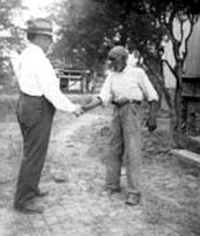
In our modern day readings of the Lomax collections, it is not at all fair to take agency away from Black folk brave enough to share their stories, and to place the creative power in the hands of the Lomaxes and the white oral history and folk music collectors they worked with in the Federal Writers Project. To do that negates the work of Zora Neale Hurston, Cade, and other Black folklore and folk life collectors and scholars; it also negates the power of the narrators that shared their lives with John and Alan Lomax. By focusing on the sound recordings of former slaves, we can investigate the ways in which Black people who participated in the Works Progress Administration interviews coded their agency in their narratives. Moreover, we have an opportunity to investigate the ways in which the Lomaxes facilitated the agency of Black interview participants and Black folklorists.
The systematic collection of slave narratives as recorded by the writers and scholars participating in the John Lomax-directed Federal Writers Project always had multiple goals. The Works Progress Administration conceived of the project as a way to employ out of work authors and underemployed scholars during the Depression. The Library of Congress and John Lomax saw the project as a method to collect first hand accounts of a dying history. The participants likely saw the opportunity as a way to be a witness to their own truths. During the 1930’s and 1940’s when the bulk of the collection was taking place other scholars such as Cade were working to collect narratives using similar techniques and research designs. Many scholars, at the time and afterward–famously John Blassingame and Henry Louis Gates–would question the authenticity of the transcribed narratives, there was always a sense that the WPA collected narrative left more questions than they answered. When the Library of Congress, with funding from Citigroup Foundation, put the narratives, transcripts, WPA collection reports, photographs and other documents up on the internets they opened the collection up to scholars to ask new questions. The digital representation of the WPA collection allowed for new options in research with the ability to hear the recordings the controversy over authenticity of transcripts seemed dated and immaterial. Now the questions can focus on embodied narrative, with access to the reports and memos written by WPA staff questions of intent and purpose can be asked. With a focus on sound studies we can ask about the ways in with interpersonal discourse in racialized moments are navigated between people with sociocultural difference.
This post focuses on the early collection work of John Lomax (Alan Lomax’s father and teacher), asking some critical questions about how the Lomaxes archived Black voices into the “American Voice.” In his piece, as part of this series, Parker Fishel discusses the purposefulness of Alan Lomax’s Southern Journey recordings notes. As Fishel notes one of the elements Alan offers in his notes are methods for critical listening. By focusing on both the recordings in the WPA Slave Narratives and letters and memos written by John and Alan Lomax directing the collection, transcription, and preservation of the narratives I focus on how taking the totality of the collection into consideration can change the view of the WPA Slave narratives. How was it possible that the Lomaxes preserved stories of Black American life while at the same time, silencing their subjects in other ways? How can we rediscover, conserve, and integrate the sounds of Black folk life into a more holistic understanding of the American past?
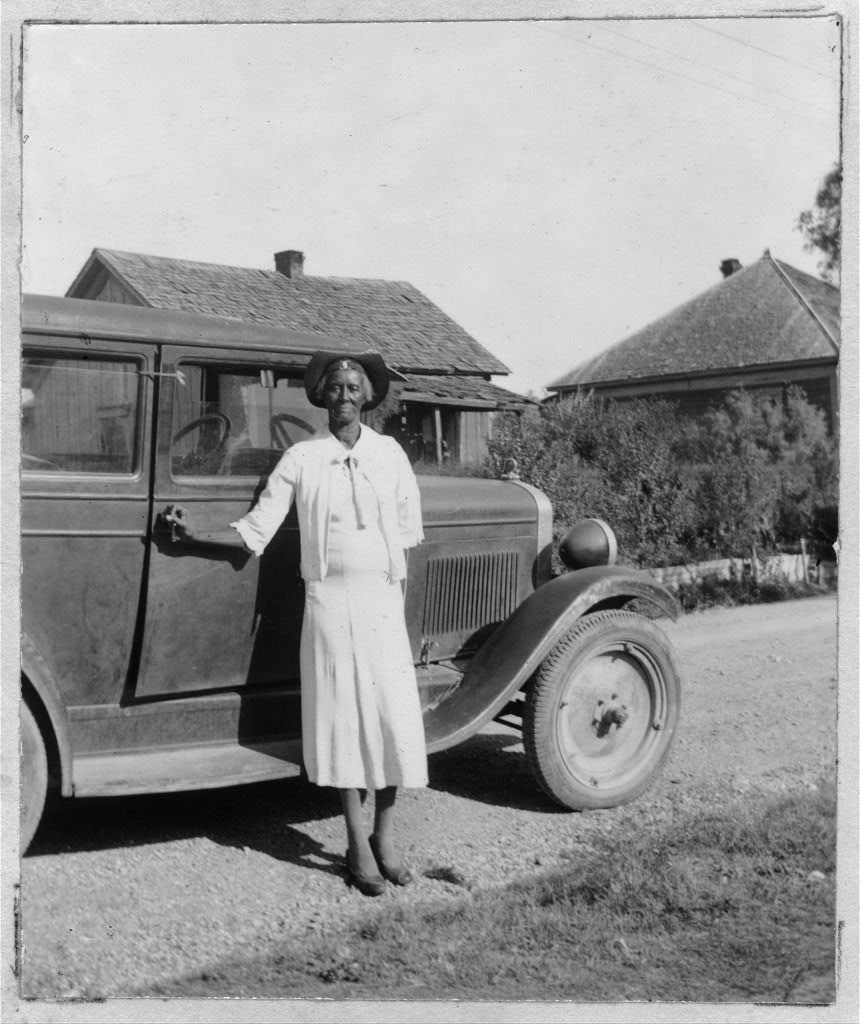
A Funny Thing Happened on the Way to Research
I discovered the work of the WPA Slave Narratives when I was in college. I was assigned a paper and went to the library to do some research. With the help of the research librarian I found the website (layout unchanged since the late-1990’s) for the WPA Slave Narratives. I wrote my paper, did well, and, like most undergraduates, moved forward with my life.
However, the voices of those Black folks continued to echo in the back of my mind. As I advanced in my academic study, I would “check up” on the website, you know, lurk. I would go in to see if there were updates or new information placed online. When I found information, I engaged the text. When the Library of Congress made the digital recordings available online, the collection included WPA recordings as well as other interviews recorded and collected with former slaves. The crackle of the recordings, coupled with the rhythm of voices of those women and men bold enough to share their stories, drew me in once more. In particular, I tended to return to recording of Aunt Harriet Smith. Her memory of her work, life, and religious experiences during slavery still interest me.
“Ex-slave Narratives – Interview with Aunt Harriet Smith”. Released: 2003.
Mrs. Smith, like all participants in the Ex-Slave Narrative Project, shares her personal narrative in such a ways as to engage the listener in the shared creation of a “memorable message.” Memorable messages are stories that we get from family, friends, co-workers, neighbors and even strangers that transmit an experience so salient we bookmark the message and use it as a guide for future interaction, behavior—performance.Communication scholars have worked with memorable messages for decades (Knapp, Stohl & Reardon 1981; Camara & Orbe, 2010). In tandem with the narrative paradigm, memorable messages function within rhetoric to give rise to the central importance of the retelling of human experience as part of the collective human story (Fisher, 1984). The value of listening to the recording of Mrs. Smith, therefore, is in the way hearing her voice completes the accuracy of the narrative.For example, take a listen [about 5:31 in the recording] to the way she answers the interviewer’s question:
Well did you ever hear of any slaves being mistreated? Were there any tails going around?
Mrs. Smith answers:
Yes, I know of times when, mistreated people they did. I hear our folks talk ‘bout whopping, you know, cus they had to grease the back. To get the clothes from their back.
The tone in her voice and the engagement in her memory is so clear and certain that her insistence that the family she belonged to didn’t “mistreat their colored people” was honestly presented. Notably, even the short transcription I provided differs from the transcribed section of the same interview printed at the time of the collection.
As I discuss elsewhere, memorable messages as theory relies on the verbal and embodied telling of a story. Different from the womanist theorizing of re-memory, memorable messages are based on the lived experience of others not ourselves. Re-memory is the work done by the womanist who imparts the memorable message. In constructing the narrative I, as the womanist narrator, re-member my narrative as part of the life lesson I seek to impart to my reader.
John Lomax, Alan Lomax and the Power to Decide
The process of generating the WPA narratives was far more complicated than many realize. It is not tangential to the creation of the WPA Slave narratives that one way of entering the project was through the former slavemaster. In other words, Black participants were often identified by their former owners or the relatives of those owners to participate in the collection. Additionally, some of the interviewers were themselves know to be related to large slaveholding families. The combination of these facts likely impacted the creation of the narratives on the part of the Black participants. In her essay “Ex-Slave Narratives: The WPA Federal Writers’ Project Reappraised” Lynda M. Hill focuses on the language and questions of Alan Lomax outlined in a number of his reports to his father and other directors of the WPA Ex-Slave Narrative collection. In their papers and notes, as well as their directives to those collecting the narratives—a list including Alan Lomax, Dr. Charles S. Johnson, John Lomax, Zora Neale Hurston, John Henry Faulk, Dr. Lorenzo Dow Turner, Ruby Lomax and others—it is clear that both father and son wish for a greater humanity in the interviews.
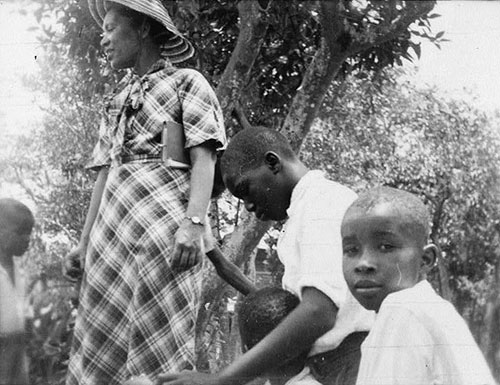
Where Alan and John seemed to disagree was on the content. John Lomax wanted a narrative concentrated on the participant’s life during slavery, where Alan also wanted to know about their life since. Alan seemed more interested in race relations, as well as the economic, political and social engagement of the participants. Both father and son seem quick to place the blame for lightness of the interviews on the interviewers they used and their inability or reluctance to ask probative follow-up questions.
The Lomaxes, Texans who spent much time in the Southern states collecting narratives, songs, and oral histories from African American community members, speak from a place of experience. When Alan Lomax suggests that interviewers need to “spend time” and “become friends” with individuals, he knows of what he speaks. While certain that members of the “ex-slave community” can be reluctant to share their stories and the truths of their inner lives with white outsiders, he is much less clear on how one might “become friends” with them. To modern ethnographers, Alan Lomax’s call to his contemporary white colleagues can read as harsh (or perhaps not harsh enough). For 21st century ethnographers, folklorists, and musicologists, it is common to “become friends” to engage in participant observation research where the scholar and his or her interlocutors have fewer social distances.
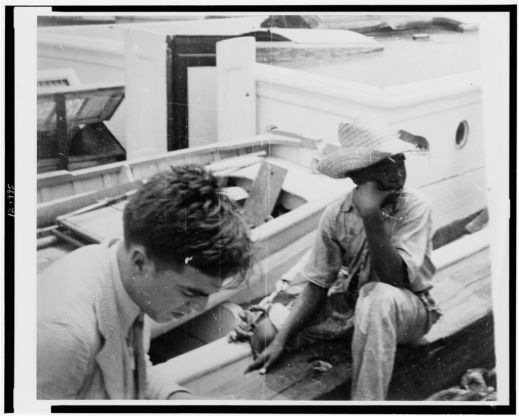
Alan Lomax also may not have always been aware of his own process of “becoming friends” and how much it was guided by his social and cultural capital. It is probable that Alan’s social relationships with his father, mother, friends, colleagues and business associates all made access to certain people much easier, and their willingness to share aspects of their lives with him more palpable. Where Alan saw “lightness” in other’s collections of ex-slave narratives, there was likely greater reserve on the part of both the interviewer and the speakers, given the vast social distances of the 1930s.
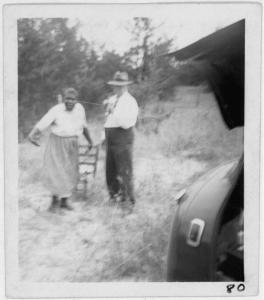
In April 1937, John Lomax himself seemed to recognize that the directives he sent to local field directors were not yielding the responses he thought they should, prompting a revision of the interview questions as and instructions. While both John Lomax and Alan Lomax pushed on local directors to hire African American interviewers, there was no formal incentive to follow through (65-66). Some local directors did hire African American interviewers, but would fire or replace them within a few short months. The field notes and interview transcripts collected by African Americans were often included in larger reports with notations suggesting the local director found the work inferior or suspect (66-67).
Critique and Understanding : Questions With and Without Answers
I continue to lurk about the WPA website to this day, wondering if the site’s peach background and sepia photograph header and text-only links create a statement of recording silence. As an early career faculty member with a keener sense of funding and project completion maps, I see the unchanged digital interface of the Slave Narratives from the Federal Writers Project, 1936-1938 as a type of visual internet nostalgia, a way of placing Black voices in the record and then silencing or muting the power of voices by not attending to their narratives or, ironically, making those narratives easily accessible. Every time I check back, I question how the visual presentation of information is as critical to scholarly engagement as the recording itself.
Albeit in a new technical format, my critique is not novel, but rather one encoded in the report Slave Narratives from the Federal Writers Project, 1936-1938 Administrative Files compiled in 1941. Slave narratives tell us much of the daily interactions and histories of all parts of American life. John Lomax believed that their preservation in the moment was necessary. His sense of coding the narratives in more standardized, easy-to-read 1930s language did, however, point to the limits of his willingness to allow the narrative to stand in full voice. To John Lomax, it mattered that there was uniformity in the way that the written text of ex-slave narratives appeared. He knew part of the long project was a book length manuscript. The collection of narratives needed to present visually in a way that eased the reader, some of whom may have been reluctant to see Black lives as having authenticity. It is in this moment of graphic depiction that language becomes contested as some (perhaps rightfully,) argue the slave narratives are inaccurate reflections of slave life.
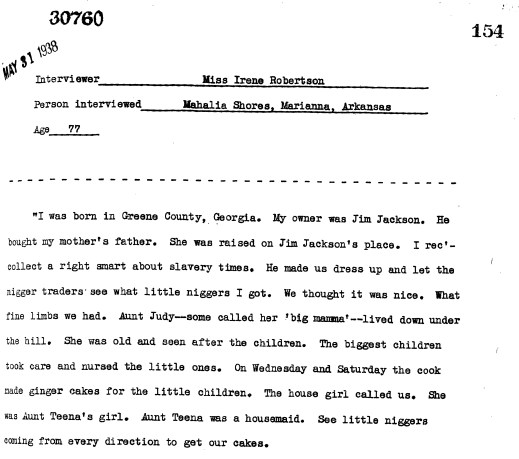
Does it matter that the few sound recordings remaining from the WPA project are not coupled with the transcribed narratives and photographs of speakers listed on the Slave Narratives site? Yes. Through sound, listeners have a truer sense of the active creation of Black bodies by Black folks involved in their own documentation. Think back to Mrs. Smith and her description of the neighborhood girl that leaves with the union soldiers. Mrs. Smith activates a sense of freedom and sadness in those few sentences that is understood through the combination of her tone and words. Access to sound records in a digital format allows contemporary scholars the opportunity to compare the narrator’s voice and embodiment to the written document where possible. The Library of Congress and The American Folk Life Center actively document and curate the list of sound recordings and their origins. However, the preset format forces interested people into a game of lurker hide and seek on the LOC site to access them. It is this “work” that keeps the sound recordings, texts, and photographs far too distant from one other, allowing the narratives to be only minimally present and appear not to be valued. In their current format, the WPA recordings seem appropriated as a way of suggesting inclusion in American life, but not prioritized as valued American experience.
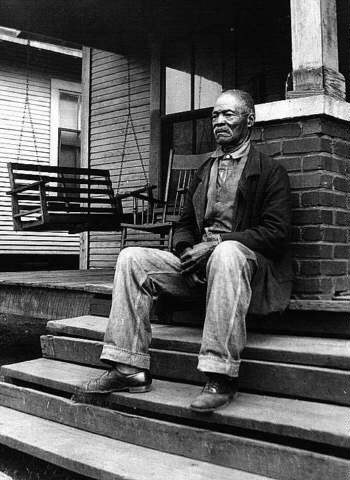
One could argue that the reading of Black bodies as American bodies isn’t possible without the inclusion of Black voices in Lomax’s collection of Americana and folk music.The narratives of daily life during slavery and after shape our understanding of the bodies of Blackness and the human toll of bondage. When John Lomax, and by extension Alan Lomax, collected American folk music and actively sought the music and voices of Black southern musicians and story-tellers, they authenticated belongingness of Black peoples in the creation of the American voice. Lomax centralized Black life in American life. However, the Lomax team accomplished this archiving only with with the cooperation of Black narrators whose lives were central to the telling of American life. —what we need now are more questions that center on the documents, sounds and voices of the past—centralizing memorable message sound is the key. In a contemporary context,the WPA narratives provide a space to investigate memorable message creation and the embodiment of Blackness in the project of American life.
—
Featured Image: Gabriel Brown playing guitar as Rochelle French and Zora Neale Hurston listen- Eatonville, Florida, June 1935. Courtesy of State Archives of Florida, Florida Memory, http://floridamemory.com/items/show/107444
—
Toniesha L. Taylor is an Assistant Professor of Communication and Interim Department Head in the Department Languages and Communication at Prairie View A & M University. She earned her B. A. with a double major in 1999 from California State University, San Marcos in Communication and Liberal Studies with a minor in History. She immediately began her graduate work at San Jose State University in Speech Communication completing an M. A. in 2002. Her research foci in African American, Religion, Intercultural, Gender and Popular Culture communication started during her undergraduate studies. She has cultivated those interest throughout her doctoral work at Bowling Green State University were she completed her Ph.D. in Communication Studies with a focus on Rhetoric. Her dissertation developed womanist rhetorical theory and analysis of African American women’s sermons in the contemporary Black Church.
Toniesha’s research, conference presentations and publications speak to her diverse interest. Her recent research and conference presentations include discussions on womanist rhetoric as method and theory; practical social justice pedagogy for faculty and students; critical engagement in popular cultural critique; digital humanities methods implications for activist recovery projects; African American women’s sermons and conversion discourses both historic and contemporary. Her recent publications include “Transformative Womanist Rhetorical Strategies: Contextualizing Discourse and the Performance of Black Bodies of Desire” in Crémieux, Lemoine & Rocchi (Eds.) Black Being, Black Embodying; Contemporary Arts & The Performance Of Identities and “Black Women, Thou Art Produced! Tyler Perry’s Gosperella Productions: A Womanist Critique” in Bell & Jackson (Eds.) Tyler Perry Reader.
—

REWIND! . . .If you liked this post, you may also dig:
Como Now? Marketing “Authentic” Black Music— Jennifer Stoever
Prison Music: Containment, Escape, and the Sound of America — Jeb Middlebrook
Tuning Into the “Happy Am I” Preacher: Researching the Radio Career of Elder Lightfoot Solomon Michaux
— Suzanne E. Smith
—
Share this:




Current Top Posts





April 2021

January 2020

November 2019

October 2019

August 2019

April 2014

November 2017

March 2015

December 2017

October 2015


Recent Comments