
The Absurdity and Authoritarianism of Now: My Chemical Romance’s The Black Parade Resonates Queerly, Anew
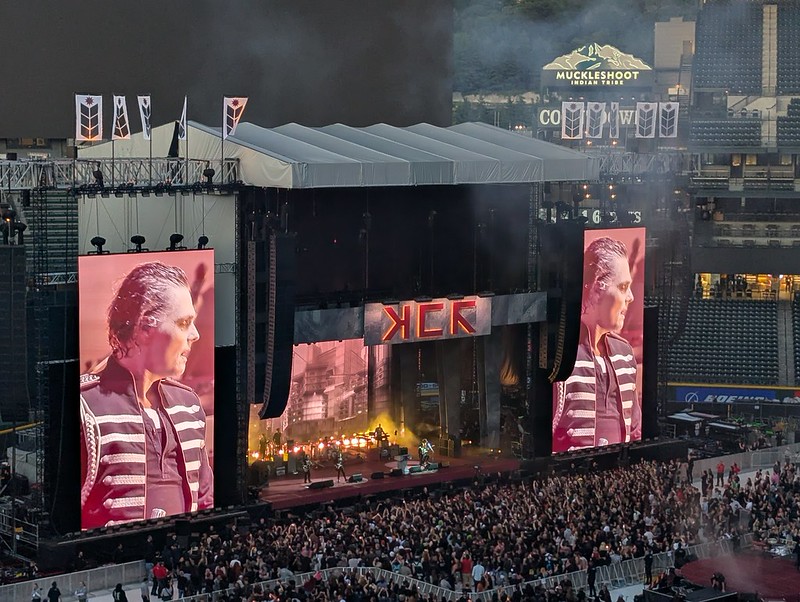
My Chemical Romance fans are speculating about new music after the band wiped their X account clean and wrapped up the Latin America leg of their tour this month. Whether another album is on the way or not, MCR’s magnum opus – The Black Parade – continues to endure two decades later. The sound now resonates through MCR’s commentary on fascism, critiquing the nation while holding the crowd accountable for our participation or passivity.
As the band tours The Black Parade for its 20th anniversary, the members have rejected nostalgia in favor of a new storyline, playing alter-ego characters who have been conditioned to perform for a dictator. The plot, slightly shifting night to night, encourages fans to follow along.
In the first run of the tour, each concert paused midway for an “election.” Four hooded figures walked out to the center stage. Nearby, an army official watched. Singer Gerard Way asked the audience to vote: Support these candidates or reject them? Each person in the crowd had a sign. One side: YEA. The other side: NAY.
“Now we need to hear you,” Way says. The audience roars, jeering and cheering.
No matter the spectators’ will, the result is the same: execution.
The warped election – and the sound of The Black Parade – reflects the absurdism of authoritarianism. Here is a democracy that ends in death, regardless of how you vote. Viewers log into livestreams to watch the fanfare repeat.
MCR’s commentary echoes the ramping authoritarianism and upheaval in the United States:
- The Supreme Court cleared the way for immigration agents to use race as a reason to stop and check someone’s citizenship documents. Daily ICE arrests reached a decade high last year. 2025 also marked the deadliest year for people in ICE custody in two decades.
- Protests have swept the nation, with outrage further increasing after federal agents killed two Minneapolis demonstrators this January.
- Cuts and changes to Medicaid and SNAP are on their way. The longest government shutdown also ended without extending subsidies for health care.
- The Epstein files were released, showing ties between powerful leaders and sex offender Jeffrey Epstein.
- The Department of Governmental Efficiency, named after an outdated Internet meme (DOGE), has resulted in the elimination of at least 290,000 jobs.
- The U.S. withdrew from the Paris Agreement and World Health Organization. The country also pulled out of 66 international organizations.
- Trump continues to enact steep tariffs after a Supreme Court ruling against his policy.
- Layoffs soared past 1.1 million job cuts in 2025, the highest since 2020’s COVID-19 shutdown.
This list represents a fraction of stories and executive orders in 2025; a “flood the zone” strategy overwhelmed the news cycle. Despite censorship efforts – such as the federal defunding of NPR and PBS – much of this information is available to us at the click of a button. State-sanctioned propaganda even encourages the spectacle. Just take a look at footage of ICE raids on the WhiteHouse’s TikTok account, set to songs and images of pop stars:
Yet fatigue and fearmongering keep many complacent; looming economic crises also draw our attention and time. I do not mean to diminish people’s efforts of resistance. But I am interested in the way technology has expanded our potential to witness violence, without ever requiring us to act – as well as the power of entertainment to distract.
So I turn back to MCR’s spectacle, which twists and mirrors this descent into fascism. Up against the tour’s faux-executions, the boos and the cheers of the crowd collapse into a cacophony. I locate the sound of our times within these screams, where dissent seems to go unheard and melds into the chorus of support.
The Black Parade is full of these bombastic wails, but the most intense of them are in “Mama,” a song that balloons into an extended eight-minute performance in the Long Live the Black Parade Tour. Within “Mama,” I try to make some sense of these screams, finding queer resonance with the present moment.
With my analysis, I ask: How might we hold fascist figures to account without squirming out of our own role in the daily exchange of authoritarianism? I argue My Chemical Romance’s 2025-2026 performance of “Mama” highlights structures of violence but also criticizes our participation within them.
In “Mama,” the indulgence of sin is contagious. It’s loud. It’s repeated: “Mama, we all go to hell.” This refrain, set to a polka beat, creates an abject intimacy around our shared fate. Queer listeners have interpreted this song as an angry anthem against the rejection we face from our families and dogmatic religion. For those of us who have heard, “You’re going to hell,” the response, “We all go to hell,” serves as a relief. Verses like “You should’ve raised a baby girl, I should’ve been a better son” have been reclaimed by transgender fans.
Other fans have taken issue with these interpretations, arguing queer attachments distract from the “true” meaning of the song. Indeed, “Mama” tells the story of a soldier writing from the trenches of war, while his mother judges him from afar. But I argue that by placing a queer reading in tandem with the canonical narrative, generative meanings emerge. Queer theory provides tools to understand the role of the mother here. Mama is the title of the song. Mama is pervasive. Mama is mean. Mama is on his mind. But she is also almost entirely absent, avoiding accountability for her son’s violence and instead blaming him: “She said, ‘You ain’t no son of mine.’”
The soldier finds that the trenches are not just his domain, but also his mama’s: “Mama, we’re all full of lies…And right now, they’re building a coffin your size.” His plea to his mother helps us wonder: What about the culture that birthed this violence? In this metaphor, critiquing the mother extends to critiquing the nation.
At the climax of the song, these sentiments come through screams: 30 seconds of an extended, “AHHHHHH” and a crying out of, “Mama, Mama, Mama.” In these wails, I find a soldier begging to share responsibility with his motherland, even as he contends with his own role in the violence. The cries puncture the polka, demonstrating “Mama” is not a celebration, after all.
Mama only sings one line back, through the voice of theater icon Liza Minnelli: “And if you would call me a sweetheart/I’d maybe then sing you a song.” Minnelli’s voice connects the song’s sound to her role in Cabaret, a musical which mixes together queer aesthetics and indulgent decadence with a foreboding rise of fascism. This allusion to Cabaret, as well as the tour performance, serve as a reminder: pleasure and entertainment does not always equal resistance.
In the extended version of “Mama” on tour, these lines are sung by an opera singer, whose voice, too, serves the dictator. Preceding her performance, the song briefly opens up a space for resistance. A new section of the song, debuted on the tour, includes the lyrics:
A dagger, a dagger
Please fetch me a dagger
A tool for our treasonous needs…
With tears in our eyes we collapse on the crosses
And said death be the son of us all
This war is the son of us all.
Even as Gerard Way’s character plots treason against the dictator, these new lyrics make clear: this “death” and “war” is “the son of us all.” Though we might want to pin fascism on one figure, many Americans have participated in the creation of this “death/war.” There are fatal consequences for our collective actions – or our passivity.
Ultimately, the dramatics of this song, delivered like a sinister weapon, critique violence, while ironically trapping us in its pleasures. If prayer is crying out to our father who art in heaven, “Mama” is yelling back at our mother to bring her to where she belongs: the hell in which we both exist. Given the stakes of our political moment, I argue we need to scream louder, with purpose and strategy, against our motherland.
—
Featured Image: “My Chemical Romance Live at T-Mobile Park 6/11/25,” Image by Flickr User Laura Smith CC BY-ND 4.0
—
Max Lubbers (he/she) is a first-year PhD student in the American Studies and Ethnicity department at the University of Southern California. His research centers on transgender affects and sounds. Max earned a bachelor’s degree in Journalism and Gender and Sexuality Studies from Northwestern University, with a senior thesis on butch affect. She previously worked as a journalist, with pieces in Chicago’s NPR station, Colorado Public Radio, and Windy City Times.
—

REWIND!…If you liked this post, check out:
The Sounds of Equality: Reciting Resilience, Singing Revolutions–Mukesh Kulriya
Vocal Anguish, Disinformation, and the Politics of Eurovision 2016–Maria Sonevytsky
“To Unprotect and Subserve:” King Britt Samples the Sonic Archive of Police Violence —Alex Werth
Share this:

SO! Reads: Alexis McGee’s From Blues To Beyoncé: A Century of Black Women’s Generational Sonic Rhetorics
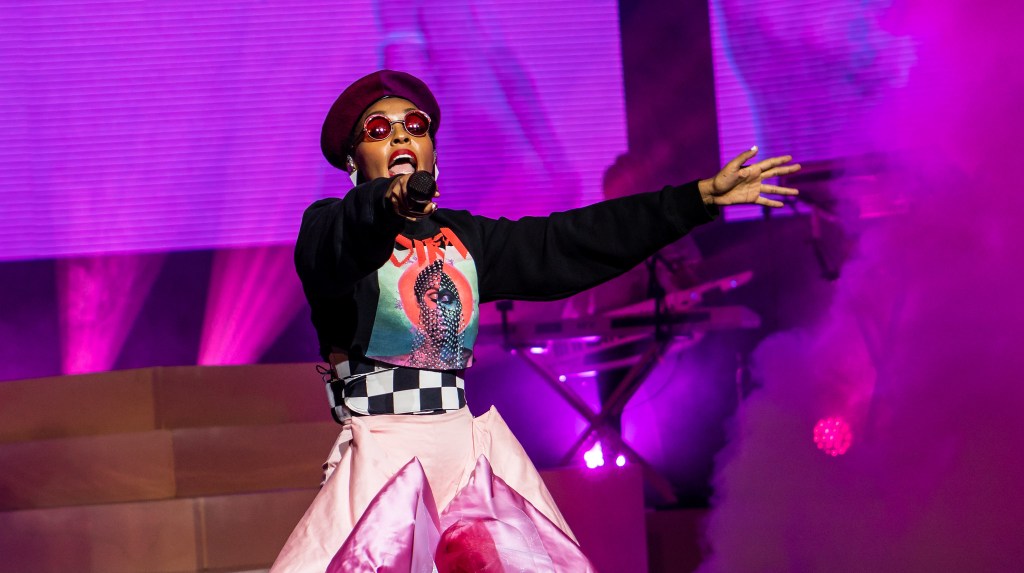

From Blues To Beyoncé: A Century of Black Women’s Generational Sonic Rhetorics (SUNY Press, 2024) by Alexis McGee explores Black women’s creative labor and cultural production. The book offers a searing critique of both record industry exploitation and sound studies’ white gaze. By focusing on quotidian engagement with sound, McGee speaks simultaneously to linguists, rhetoricians, and ethnomusicologists, demonstrating how each discipline has overlooked Black women’s fundamental contributions to our understanding of language and cultural expression. This is not merely an additive project seeking inclusion within existing frameworks, but rather a fundamental reconceptualization of how we study Black women’s sounds.
McGee, currently Associate Professor at the University of British Columbia’s School of Journalism, Writing, and Media, mobilizes her training in linguistics, rhetoric, and composition to analyze everyday communicative practices and generational knowledge systems passed down between Black women. McGee joins other recent texts such as Earl Brooks’s On Rhetoric and Black Music (2024) in critical conversations around “sonic rhetoric.” In From Blues to Beyoncé, McGee theorizes sonic rhetoric as a collection of cultural technologies for storytelling that “act as methods of communicating knowledge that can be used to persuade or inform (younger) generations about topics like survival, liberation, and care” (6). Examining artists from the 19th, 20th, and 21st centuries through personal experience, archival material, biographies, interviews, and popular media, McGee demonstrates the critical necessity of taking seriously the generational cultural knowledge embedded in Black women’s creative practices within an anti-Black and misogynist world.
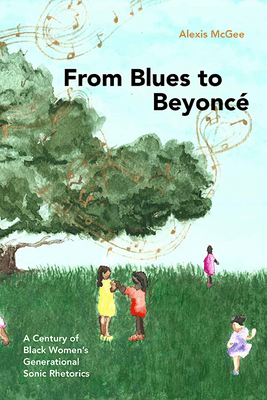
At its core, the book introduces “sonic sharecropping” as a term that illuminates the lopsided relationship between Black women creatives (tenants), their sonic and musical creations (crops), and wealthier, more powerful recording industry players (landlords, music labels, copyright holders). The sharecropping metaphor reveals how the music industry extracts value from Black women’s cultural labor while denying them ownership and fair compensation. McGee further develops the concept of “audibility of advice” to name the intergenerational mentorship and fugitive pedagogy that Black women practice as they navigate this exploitative system—showing how even the transmission of survival knowledge between generations becomes entangled in the same structures designed to profit from Black women’s creative work.
The book’s chapters traverse an impressive range of cultural moments. Opening with Cardi B’s attempted trademark of “okurrr,” McGee demonstrates how legal and social structures systematically prevent Black women from securing intellectual property rights over cultural innovations that white industry executives appropriate without restriction.
This contemporary case illuminates sonic sharecropping: Black women are expected to create cultural property that record labels then own and sell back to them. McGee then traces these dynamics historically, analyzing business practices of major labels like Atlantic Records. By drawing parallels between sharecropping contracts and recording agreements, the analysis reveals how the music industry has historically relied on discretionary ethical conduct by executives rather than equitable contractual structures, perpetuating exploitative relationships reminiscent of post-Reconstruction economic arrangements.
In what is perhaps the book’s most compelling chapter, McGee examines successive performances of “Strange Fruit,” tracing how Nina Simone and later artists like Missy Elliott and Janelle Monáe have reinterpreted Billie Holiday’s haunting meditation on lynching.
McGee builds on Amiri Baraka’s concept of the “changing same”, to show that antiblackness persists throughout time though it changes form. McGee demonstrates how Black women performers resist being treated as interchangeable vessels for Black cultural expression. Rather than presenting generic renditions, each artist asserts her distinctive voice and perspective that reiterates the enduring violence perpetuated against Black bodies.
Each performance carries its own rhetorical power while participating in “sankofarration,” a neologism from artist, writer, and media studies professor John Jennings that combines “sankofa” (a West African concept symbolizing learning from the past to move forward) with “narration” to describe a rhetorical worldview premised on understanding time as cyclical rather than linear. Sankofarration positions past and future as interconnected forces that actively shape the present. Crucially, McGee connects Lawrence Beitler’s commercial sale of lynching photographs (depicting the hanged bodies of Thomas Shipp and Abram Smith) to the visual and sonic rhetorical devices in these musical works. Through this framework, Black women artists transform historical trauma into ongoing political commentary and visions for future liberation. Black women’s creative work, she argues, consistently foregrounds documented histories of racial violence alongside the willful ignorance that upholds white supremacy and patriarchy. By listening critically to Black women’s sonic rhetorics, we can access pathways toward collective liberation.
Despite the book’s title, McGee’s engagement with Beyoncé focuses narrowly on the lemon-to-lemonade metaphor in the album, Lemonade. Her analysis of other Black women artists, however, anticipated critiques later directed at Cowboy Carter, highlighting a double standard: as a Black woman, Beyoncé faces moral scrutiny for engaging with country music—positioned as both capitalist enterprise and white cultural property—while white and male artists have participated in the same commercial structures for centuries without comparable ethical condemnation.
This defense raises the book’s most provocative question, one McGee gestures toward but leaves unresolved: if the inequitable standards applied to Black women artists are symptoms of a fundamentally exploitative system, what would liberation from that system actually entail? Does it require dismantling existing structures of cultural ownership and profit, or can it be achieved through expanded access and recognition within them?
While McGee does not directly engage Matthew Morrison’s recent work Blacksound: Making Race and Popular Music in the United States, her analysis clearly converses with his examination of how Black cultural products have been reproduced for white consumption, particularly through the ongoing afterlives of blackface minstrelsy. McGee’s focus on Black women specifically adds crucial gender analysis to ongoing scholarly conversations about racial capitalism and cultural appropriation.
McGee acknowledges that capitalism itself, rather than Black women’s participation in it, constitutes the fundamental problem. However, the analysis stops short of fully theorizing alternatives to existing structures of Western sound production and commodification. Readers familiar with Sylvia Wynter’s insistence on distinguishing the map from the territory, or Audre Lorde’s warning that “the master’s tools will never dismantle the master’s house,” may desire more sustained engagement with radical alternatives and additional tool building necessary for Black liberation from existing antiblack social and political structures. What might Black women’s sonic practices look like in anticapitalist frameworks of collective ownership and exchange? How might Black femme and queer performances expand or complicate these intergenerational transmissions of knowledge? How might Black women’s intergenerational knowledge systems point toward alternative epistemologies that refuse the terms of racial capitalism altogether?
This theoretical restraint appears strategic rather than accidental. From Blues to Beyoncé navigates carefully between colleagues unfamiliar with Black feminist and womanist theory, who require accessible entry points, and specialists seeking new takes on traversing multiple disciplines at once. In threading this needle, McGee prioritizes disciplinary bridge-building before radical dismantling of capitalist structures and academic knowledge production systems.
These limitations notwithstanding, the book represents an essential contribution to multiple fields. It insists that scholars of sound studies, rhetoric, and Black feminist thought must engage one another—that these conversations can no longer proceed in isolation. Methodologically, it offers both theoretical sophistication and practical analytical tools, making it intellectually substantive for non-specialists while providing specialists a compelling model for interdisciplinary synthesis. Most importantly, McGee demonstrates that we cannot understand American culture, sound, or rhetoric without recognizing Black women’s voices as foundational rather than supplementary.
This book transforms its disciplines by interrogating their foundational assumptions, asking us not simply to include Black women in sound studies, but to recognize how their systematic exclusion has rendered the entire field epistemologically incomplete. In raising these questions, even without fully resolving them, McGee provides both rigorous foundation and invitation to continue the work.
—
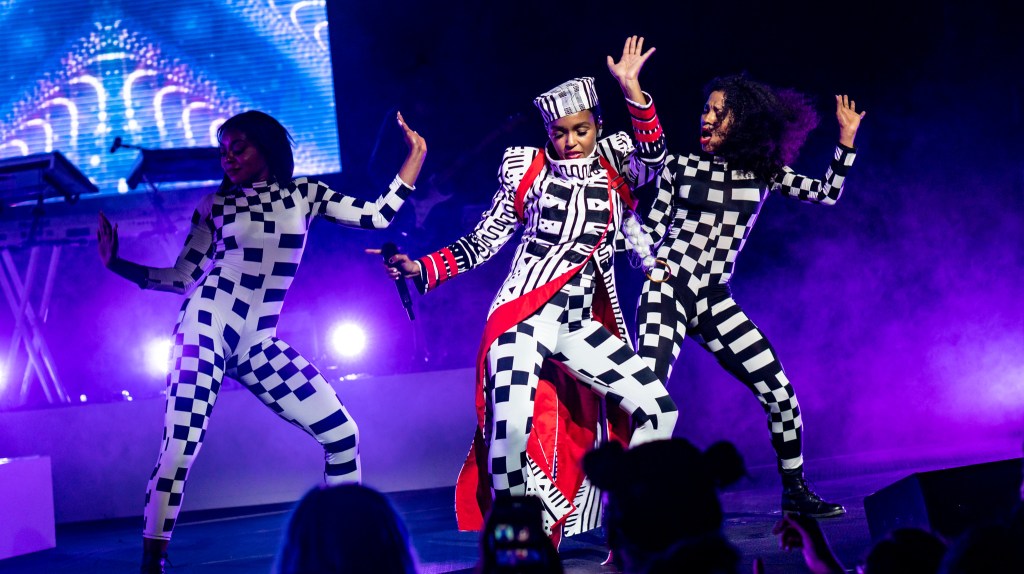
Featured Image: Janelle Monae on the Dirty Computer Tour at Madison Square Garden in 2018 by Flickr User Raph_PH. License: CC BY 2.0
—
Joe Zavaan Johnson (he/they) is a multi-instrumentalist, arts educator, and Black music researcher. Currently an Ethnomusicology Ph.D. Candidate at Indiana University-Bloomington, he examines the Black banjo renaissance through Black studies, human geography, folklore, and ethnomusicology. Johnson frequently collaborates with grassroots organizations focused on coalition building, community healing, and cultural reparations, bridging scholarship with community-engaged practice. His forthcoming dissertation, Black Banjo Bodylands: Recovering an African American Instrument, explores the relationship between Black people, lands, and banjos as ancestral technology.
—
REWIND!…If you liked this post, check out:
SO! Reads: Marisol Negrón’s Made in NuYoRico: Fania Records, Latin Music, and Salsa’s Nuyorican Meanings –Vanessa Valdés
SO! Reads: Justin Eckstein’s Sound Tactics: Auditory Power in Political Protests––Jonathan Stone
“I’m on my New York s**t”: Jean Grae’s Sonic Claims on the City--Liana Silva
Love and Hip Hop: (Re)Gendering The Debate Over Hip Hop Studies--Travis Gosa
My Music and My Message is Powerful: It Shouldn’t Be Florence Price or “Nothing”-Samantha Ege
I Been On: BaddieBey and Beyoncé’s Sonic Masculinity — Regina Bradley
Cardi B: Bringing the Cold and Sexy to Hip Hop–Ashley Luthers
Share this:


Current Top Posts





April 2021

January 2020

November 2019

October 2019

August 2019

April 2014

November 2017

March 2015

December 2017

October 2015
 Sounding Out!
Recent Comments