
SO! Reads: Alexis McGee’s From Blues To Beyoncé: A Century of Black Women’s Generational Sonic Rhetorics
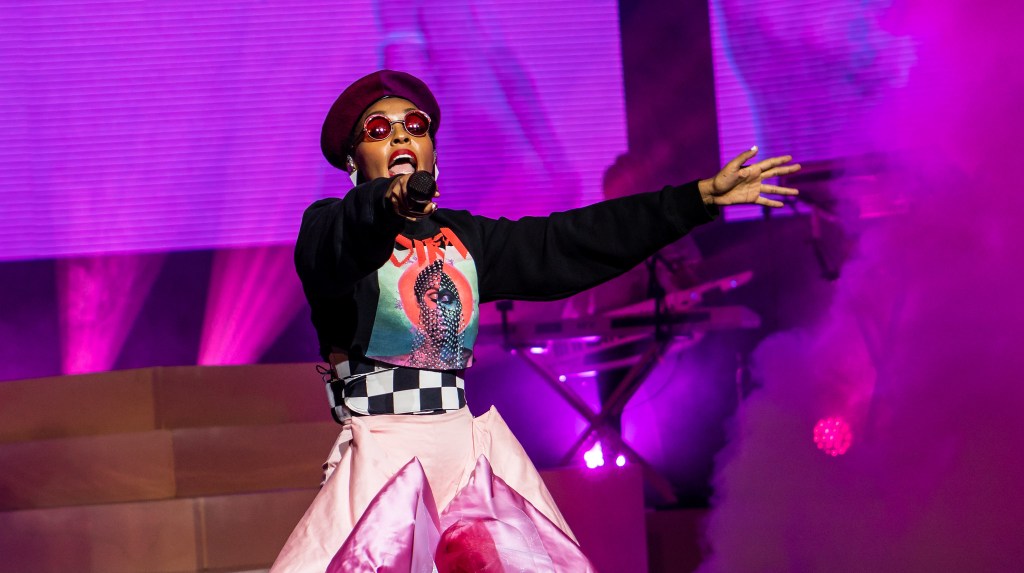

From Blues To Beyoncé: A Century of Black Women’s Generational Sonic Rhetorics (SUNY Press, 2024) by Alexis McGee explores Black women’s creative labor and cultural production. The book offers a searing critique of both record industry exploitation and sound studies’ white gaze. By focusing on quotidian engagement with sound, McGee speaks simultaneously to linguists, rhetoricians, and ethnomusicologists, demonstrating how each discipline has overlooked Black women’s fundamental contributions to our understanding of language and cultural expression. This is not merely an additive project seeking inclusion within existing frameworks, but rather a fundamental reconceptualization of how we study Black women’s sounds.
McGee, currently Associate Professor at the University of British Columbia’s School of Journalism, Writing, and Media, mobilizes her training in linguistics, rhetoric, and composition to analyze everyday communicative practices and generational knowledge systems passed down between Black women. McGee joins other recent texts such as Earl Brooks’s On Rhetoric and Black Music (2024) in critical conversations around “sonic rhetoric.” In From Blues to Beyoncé, McGee theorizes sonic rhetoric as a collection of cultural technologies for storytelling that “act as methods of communicating knowledge that can be used to persuade or inform (younger) generations about topics like survival, liberation, and care” (6). Examining artists from the 19th, 20th, and 21st centuries through personal experience, archival material, biographies, interviews, and popular media, McGee demonstrates the critical necessity of taking seriously the generational cultural knowledge embedded in Black women’s creative practices within an anti-Black and misogynist world.
At its core, the book introduces “sonic sharecropping” as a term that illuminates the lopsided relationship between Black women creatives (tenants), their sonic and musical creations (crops), and wealthier, more powerful recording industry players (landlords, music labels, copyright holders). The sharecropping metaphor reveals how the music industry extracts value from Black women’s cultural labor while denying them ownership and fair compensation. McGee further develops the concept of “audibility of advice” to name the intergenerational mentorship and fugitive pedagogy that Black women practice as they navigate this exploitative system—showing how even the transmission of survival knowledge between generations becomes entangled in the same structures designed to profit from Black women’s creative work.
The book’s chapters traverse an impressive range of cultural moments. Opening with Cardi B’s attempted trademark of “okurrr,” McGee demonstrates how legal and social structures systematically prevent Black women from securing intellectual property rights over cultural innovations that white industry executives appropriate without restriction.
This contemporary case illuminates sonic sharecropping: Black women are expected to create cultural property that record labels then own and sell back to them. McGee then traces these dynamics historically, analyzing business practices of major labels like Atlantic Records. By drawing parallels between sharecropping contracts and recording agreements, the analysis reveals how the music industry has historically relied on discretionary ethical conduct by executives rather than equitable contractual structures, perpetuating exploitative relationships reminiscent of post-Reconstruction economic arrangements.
In what is perhaps the book’s most compelling chapter, McGee examines successive performances of “Strange Fruit,” tracing how Nina Simone and later artists like Missy Elliott and Janelle Monáe have reinterpreted Billie Holiday’s haunting meditation on lynching.
McGee builds on Amiri Baraka’s concept of the “changing same”, to show that antiblackness persists throughout time though it changes form. McGee demonstrates how Black women performers resist being treated as interchangeable vessels for Black cultural expression. Rather than presenting generic renditions, each artist asserts her distinctive voice and perspective that reiterates the enduring violence perpetuated against Black bodies.
Each performance carries its own rhetorical power while participating in “sankofarration,” a neologism from artist, writer, and media studies professor John Jennings that combines “sankofa” (a West African concept symbolizing learning from the past to move forward) with “narration” to describe a rhetorical worldview premised on understanding time as cyclical rather than linear. Sankofarration positions past and future as interconnected forces that actively shape the present. Crucially, McGee connects Lawrence Beitler’s commercial sale of lynching photographs (depicting the hanged bodies of Thomas Shipp and Abram Smith) to the visual and sonic rhetorical devices in these musical works. Through this framework, Black women artists transform historical trauma into ongoing political commentary and visions for future liberation. Black women’s creative work, she argues, consistently foregrounds documented histories of racial violence alongside the willful ignorance that upholds white supremacy and patriarchy. By listening critically to Black women’s sonic rhetorics, we can access pathways toward collective liberation.
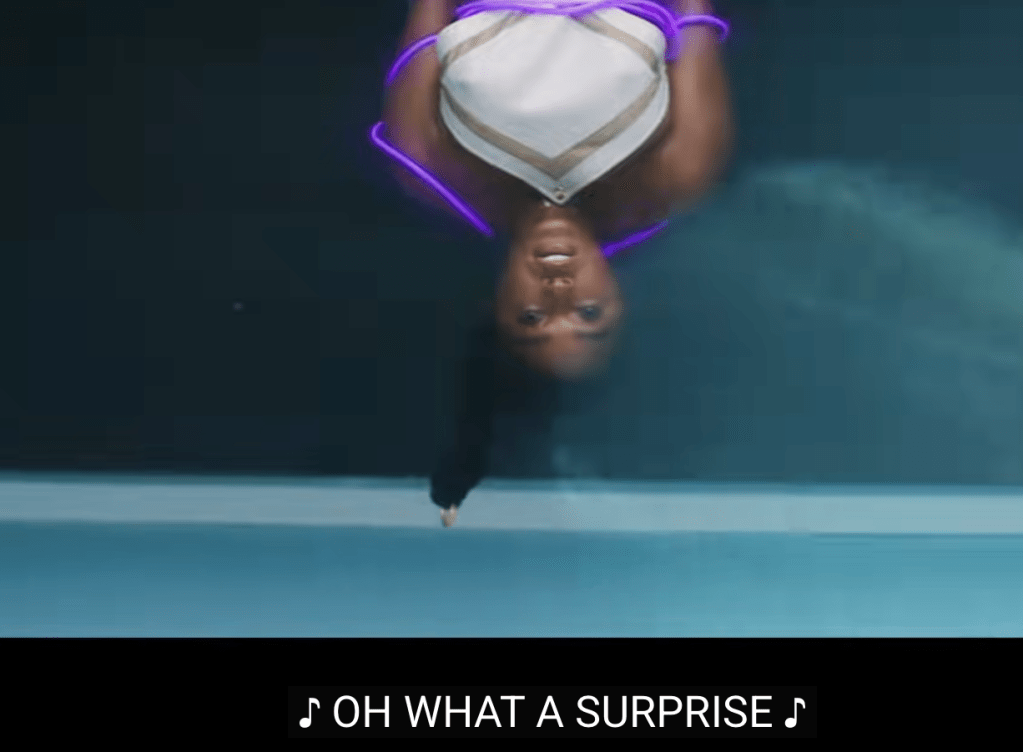
Despite the book’s title, McGee’s engagement with Beyoncé focuses narrowly on the lemon-to-lemonade metaphor in the album, Lemonade. Her analysis of other Black women artists, however, anticipated critiques later directed at Cowboy Carter, highlighting a double standard: as a Black woman, Beyoncé faces moral scrutiny for engaging with country music—positioned as both capitalist enterprise and white cultural property—while white and male artists have participated in the same commercial structures for centuries without comparable ethical condemnation.
This defense raises the book’s most provocative question, one McGee gestures toward but leaves unresolved: if the inequitable standards applied to Black women artists are symptoms of a fundamentally exploitative system, what would liberation from that system actually entail? Does it require dismantling existing structures of cultural ownership and profit, or can it be achieved through expanded access and recognition within them?
While McGee does not directly engage Matthew Morrison’s recent work Blacksound: Making Race and Popular Music in the United States, her analysis clearly converses with his examination of how Black cultural products have been reproduced for white consumption, particularly through the ongoing afterlives of blackface minstrelsy. McGee’s focus on Black women specifically adds crucial gender analysis to ongoing scholarly conversations about racial capitalism and cultural appropriation.
McGee acknowledges that capitalism itself, rather than Black women’s participation in it, constitutes the fundamental problem. However, the analysis stops short of fully theorizing alternatives to existing structures of Western sound production and commodification. Readers familiar with Sylvia Wynter’s insistence on distinguishing the map from the territory, or Audre Lorde’s warning that “the master’s tools will never dismantle the master’s house,” may desire more sustained engagement with radical alternatives and additional tool building necessary for Black liberation from existing antiblack social and political structures. What might Black women’s sonic practices look like in anticapitalist frameworks of collective ownership and exchange? How might Black femme and queer performances expand or complicate these intergenerational transmissions of knowledge? How might Black women’s intergenerational knowledge systems point toward alternative epistemologies that refuse the terms of racial capitalism altogether?
This theoretical restraint appears strategic rather than accidental. From Blues to Beyoncé navigates carefully between colleagues unfamiliar with Black feminist and womanist theory, who require accessible entry points, and specialists seeking new takes on traversing multiple disciplines at once. In threading this needle, McGee prioritizes disciplinary bridge-building before radical dismantling of capitalist structures and academic knowledge production systems.
These limitations notwithstanding, the book represents an essential contribution to multiple fields. It insists that scholars of sound studies, rhetoric, and Black feminist thought must engage one another—that these conversations can no longer proceed in isolation. Methodologically, it offers both theoretical sophistication and practical analytical tools, making it intellectually substantive for non-specialists while providing specialists a compelling model for interdisciplinary synthesis. Most importantly, McGee demonstrates that we cannot understand American culture, sound, or rhetoric without recognizing Black women’s voices as foundational rather than supplementary.
This book transforms its disciplines by interrogating their foundational assumptions, asking us not simply to include Black women in sound studies, but to recognize how their systematic exclusion has rendered the entire field epistemologically incomplete. In raising these questions, even without fully resolving them, McGee provides both rigorous foundation and invitation to continue the work.
—
Featured Image: Janelle Monae on the Dirty Computer Tour at Madison Square Garden in 2018 by Flickr User Raph_PH. License: CC BY 2.0
—
Joe Zavaan Johnson (he/they) is a multi-instrumentalist, arts educator, and Black music researcher. Currently an Ethnomusicology Ph.D. Candidate at Indiana University-Bloomington, he examines the Black banjo renaissance through Black studies, human geography, folklore, and ethnomusicology. Johnson frequently collaborates with grassroots organizations focused on coalition building, community healing, and cultural reparations, bridging scholarship with community-engaged practice. His forthcoming dissertation, Black Banjo Bodylands: Recovering an African American Instrument, explores the relationship between Black people, lands, and banjos as ancestral technology.
—

REWIND!…If you liked this post, check out:
SO! Reads: Marisol Negrón’s Made in NuYoRico: Fania Records, Latin Music, and Salsa’s Nuyorican Meanings –Vanessa Valdés
SO! Reads: Justin Eckstein’s Sound Tactics: Auditory Power in Political Protests––Jonathan Stone
“I’m on my New York s**t”: Jean Grae’s Sonic Claims on the City--Liana Silva
Love and Hip Hop: (Re)Gendering The Debate Over Hip Hop Studies--Travis Gosa
My Music and My Message is Powerful: It Shouldn’t Be Florence Price or “Nothing”-Samantha Ege
I Been On: BaddieBey and Beyoncé’s Sonic Masculinity — Regina Bradley
Cardi B: Bringing the Cold and Sexy to Hip Hop–Ashley Luthers
Share this:

“Just for a Few Hours, We Was Free”: The Blues and Mapping Freedom in Sinners (2025)

In the 2025 blockbuster Sinners, Ryan Coogler has a vampire story to tell. But before he can begin, he needs to tell another story—a blues one. Sinners opens with a voiceover thesis statement performed by Wunmi Mosaku (who plays Annie in the film—more on her below) about the work the blues can do, then rambles the narrative through and around 1932 Clarksdale, eventually settling into a juke joint outside of town. Here, the blues story builds to a frenzied climax, ultimately conjuring the vampires propelling the film’s second half. It’s those vampires that most immediately register as cinematic spectacle, but Coogler’s impetus to film in IMAX and leverage all of his professional relationships for the movie wasn’t the monsters—it was to showcase the blues at a scale the music deserves. In Sinners, the blues takes center stage as a generative sonic practice, sound that creates space to be and to know in the crevices of the material world, providing passage between oppression and freedom, life and death, past and future, and good and evil.
I’m not exaggerating in calling the opening voiceover a thesis. In a movie where Coogler trusts his audience with a great deal of interpretation, he puts an incredibly fine point on the role that blues performs here. We’re told that some musicians—be they Irish, West African, Native American, or southern US Black—are so skilled that they can pierce the veil separating the living from the dead, and while this piercing can help heal a community, it can also attract a certain evil that wants to exploit this rupture. The narrator doesn’t say “It’s the blues!” but the next visual information we get is that it’s Clarksdale, MS, in 1932, and an injured, blood-soaked Sammie (Miles Caton) is stumbling into his father’s church, clutching what’s left of the neck of a guitar. No one in Sinners says the word “crossroads,” but here we are, at the place where the blues meets the devil—where the end meets the beginning–and our young hero has a choice about which way he’s going to go.

If Coogler doesn’t fully trust his audience to know what to do with the blues without being told, it’s likely due to decades of commercialized attempts to defang the genre that have filtered out 21st century listeners’ ability to hear most of what makes the blues potent. Drawing on what Clyde Woods in Development Arrested (1998) has termed the “blues epistemology,” a blues way of knowing, B Brian Foster speaks with contemporary Black Clarksdalians in I Don’t Like the Blues (2020) to chart much of the current state of the blues. Pulling on one particular thread of Foster’s ethnography can help clarify what’s happening in Sinners, as he unpacks the many reasons why the blues don’t resonate quite like they used to.
In Woods’s framework, the blues is more than a musical genre; it’s a way of understanding and, crucially, reshaping one’s world. The blues, a genre arising in the late 19th century and reverberating through the 20th, functioned as epistemology in order to explore a way out from under plantation power after Reconstruction and through Jim Crow. Woods chronicles centuries of “plantation power” in the Delta and how that power reconfigures itself over and again through different eras of US history, always with the goal of extracting labor and life from Black Mississippians. The blues pushed against the edge of what was considered possible and sought to imagine and create a world that was free—not just from plantation power but from all the logics that support it or would circumscribe Black self-determination and autonomy. In I Don’t Like the Blues, Foster encapsulates the heart of blues epistemology with a flourish: “While many people hear the blues as performance and play, Black residents of Clarksdale knew it to be flesh and bone, a spirit in the dirt. Their blues was a conduit. A map. A method” (15-16). Throughout his book, Foster demonstrates that what the blues was is no longer what the blues is. One of those reasons is that resistance to plantation power (whether in the Delta or beyond) simply sounds different now, having worked its way through jazz and funk and soul and hip hop and trap.

In Sinners, Coogler starts by telling us what the blues could do, then he shows us that power in a climactic scene midway through the film, reminding his audience that a blues epistemology might not always sound the same, but it can still do the work of mapping out freedom. After the camera cuts away from Sammie at the crossroads in his church, we loop a bit back in time to meet Sammie’s cousins, the SmokeStack brothers (twins played by Michael B Jordan), who purchase the juke joint’s eventual location. The first half of the movie follows the brothers as they split up and get the band—and hospitality crew—together to open the venue that night. Sammie is new to this life, but a deeply gifted bluesman, and he receives counsel along the way about what the music is and how it works. Once the juke is packed, the booze is flowing, and the dancefloor is sweating, Delta Slim (Delroy Lindo) invites Sammie to take the stage and tell the people who he is and where he’s from. What follows is an ambitious narrative and technical feat that pays off the opening voiceover.
Sammie, also known as Preacher Boy, launches into a song called “I Lied to You,” addressed to his minister father (played by Saul Williams). It’s a confession that he’ll take the blues over the church any day. His singing pierces the veil, and we witness a litany of musicians joining the space from the past, present, and future: an Afrofuturist rock guitarist, hip hop DJs, breakers, twerkers, a ballerina, a Zaouli dancer, and Beijing opera performers, among others. Weaving in and out of Sammie’s blues, the sounds of each of these musicians layer and feed back into the mix to create a densely ecstatic sequence. This is the community healing piece of the voiceover thesis. The performers joining from far-flung places and times connect to an ancestral lineage of creative self-determination that runs through the patrons of the juke joint (Bo and Grace—played by Yao and Li Jun Li, respectively—are Chinese shop owners helping out at the juke joint and the presumed source of the Beijing opera performers).
Sinners’s musical conjuring isn’t an academic article, but it does have some musicological points to make. Audiences encounter musical styles uprooted from specific times and places, all mingling around this blues moment in 1932 Clarksdale. Coogler structures the scene by stacking out-of-time sound and movement, emphasizing the potency of a blues epistemology while also acknowledging that the blues’s power is situational. In its time—post-Reconstruction and Jim Crow—the blues could call in and draw on the fullness of diasporic music-making and world-mapping. But at other times, and in other places—say, a 2025 music venue—the blues is less likely to ignite such a moment as it is to show up as a participant, arriving as one of many in the musical ancestry to support the veil-piercers of the day. This phenomenon is the “changing same” of Black music, as Amiri Baraka put it in Blues People: “consistent attitudes with changed contexts” that explain why the sound changes over time (153). In Sinners, the immediate context is a community of Mississippi sharecroppers who seek healing, and the blues widens the frame so that the juke joint revelers can connect to and draw strength from a broader, deeper community beyond the edges of their material world.
As “I Lied to You” mingles with sounds past and future, the camera moves through the juke in a counterclockwise motion, grounding the scene further in diasporic ancestral practices. In Slave Culture (1987), Sterling Stuckey traces elements of Bakongo burial ceremonies throughout the New World, focusing especially on the ring shout, a sacred ceremony practiced by enslaved people in the United States involving a shuffling circular dance accompanied by song. Consistent across these traditions is counterclockwise movement:
Wherever in Africa the counterclockwise dance ceremony was performed—it is called the ring shout in North America—the dancing and singing were directed to the ancestors and gods, the tempo of the circle quickening during the course of movement. The ring in which the Africans danced and sang is the key to understanding the means by which they achieved oneness in America (12).
The counterclockwise circulation rehearses the life cycle, with the sun rising in the east (birth) and setting in the west (death), only to rise again (gesturing toward the connected nature of all life).
Stuckey draws on Robert Farris Thompson to note that special emphasis on counterclockwise motion would happen in Bakongo rituals that superimposed a cross on the circular movement, where the horizontal line represented the division between the living (above) and the dead (below). Here is the dividing line of Sinners, then: an ancestral ceremony with a crossroads superimposed on it, a blues invocation where the audience is propelled counterclockwise through the circle of juke joint dancers, where the dead and not yet alive join in the festivities.
The theme of lineage and ancestry courses through Coogler’s work. On the personal level, this may play out as a boxer sparring with his late father’s legacy. On a larger scale, Coogler often traverses the land of the Great Migration and the sea of the Middle Passage, tying back together the threads left dangling by the terrorisms of the transatlantic slave trade and Jim Crow. For a people whose lineage was savagely untethered by their ancestors’ enslavers, the power of a blues epistemology comes from its ability to tap into traditions and rituals that couldn’t be fully severed, restoring the “oneness” of those engaged in the dance and fueling their ability to imagine and create a path to freedom.
There is the other part of the voiceover’s thesis statement, though. When you pierce the veil, evil seeks to charge through. As the “I Lied to You” sequence hits peak intensity, Coogler treats movie audiences to another visual effect that the blues performers cannot see but feel; the juke joint appears to spontaneously combust and its roof is on fire (the roof, the roof. . .). Coogler metaphorically lets the motherfucker burn, down to the concrete foundation supporting the people as they continue to dance. At the edge of the dusty parking lot, the movie’s villain—an Irish vampire named Remmick—watches lustily while flanked by his latest converts. He wants Sammie; particularly what Sammie knows how to do.
Because Remmick hive-minds with whomever he turns into a vampire, taking on their memories and abilities, if he can get at Sammie, he’ll be able to pierce the veil, too, and commune once again with his long lost ancestors. We could read Remmick’s drive as an allegory about cultural appropriation, a white man who wants to steal the blues, and certainly there’s an element of that at play. But the “Killmonger was right” corollary of Coogler films suggests that villains are often more complex than they may at first seem. In Sinners, there’s a mob of Klansmen that function as the more straightforward baddies, but Coogler isn’t interested in giving them much screen time. Yet he lingers with Remmick just as he did with Killmonger and Namor in his two Black Panther installments. In each of these cases, Coogler explores different experiences of what it’s like when the boot of Empire is on your neck. Remmick, coming from Britain’s first colony, speaks of his home being taken and of religion being forced on him. He seems to hold genuine disdain for the Klan and notes that he’s happy to turn them all to prey, not because he wants what they have but because they deserve a gruesome death. He plays and dances to the music of his ancestors with care and devotion. And he argues that what he has to offer—community with his coven, the power to overtake the plantation class, eternal life—is better than what Smoke, Stack, Sammie, and the rest of the juke joint patrons currently have.

No one living trusts Remmick—in fact, Annie (Mosaku), the heart, brain, and wisdom of the movie, specifically distrusts him even before he reveals his true vampiric nature. And Coogler doesn’t position Remmick to be perceived as “good” in any sense of the word, except at playing that banjo. But, like Killmonger and Namor, Remmick gets to be right about some things. It appears in flickers of concession on characters’ faces when Remmick tells them they live in a place where they’ll always have to fight to even try to be truly free. It appears again when the juke joint protectors melt a bit during Remmick & Co’s performance of “Pick Poor Robin Clean,” a glimmer of a thought of “wait, should we let them come inside and play this absolute bop??” (for detailed historical context for this song see Daphne Brooks’s “See My Face on the Other Side” [2017]). Coogler’s villains ultimately suffer defeat, but before they do, he makes sure audiences glimpse how they’ve suffered under Empire, offering an understanding of their destructive actions as born of unhealed generational trauma.
Piercing the veil is tricky work. Dangerous work. In The Long Emancipation (2021), Rinaldo Walcott notes that “much of what we have come to call Black culture is a mode of living life within, against, and beyond plantation logics” (20), not only a rejection of logics of oppression but also a practice of creating and nurturing something else. To set about finding knowledge and being, as Sylvia Wynter puts it, “completely outside our present conception of what it is to be human” is to set off into the not-fully-known, where one may encounter a variety of ideas and beings who won’t ultimately lead you to freedom but who may offer you something a little better than what you’ve got (Wynter, 2000 interview with David Scott, 136). Walcott calls this the difference between emancipation and actual freedom. While emancipation is often mistaken for freedom, Walcott argues that “postemancipation acts of Black life have been consistently interdicted, thereby preempting and often violently preventing Black life from authorizing its own desires for bodily autonomy” (105), preventing Black life from being free.
In Sinners, Coogler shows us the way the blues could clear space for finding freedom, but none of the characters in the movie make it all the way there. It’s a movie situated in the long emancipation, where an imposed religion calls the blues the devil’s music, where plantation sharecropping and the Klan violently forestall Black freedom (but sometimes get what’s coming to them), and where various vampires carrying their own intergenerational trauma try to seduce Black people into accepting a different flavor of emancipation in place of the freedom the blues leads them toward. The map to freedom may not sound like the blues anymore, but Sinners reminds us the work isn’t done.
—
Featured images: Screen Capture by SO!: Sammie’s right hand clutching broken guitar neck, black cross in the background against white wall [2:10]
—
Justin Burton is a Professor of Music at Rider University, teaching primarily in the Music Production degree as well as in the Gender & Sexuality Studies program, and author of Posthuman Rap (Oxford, 2017) and co-editor of the Oxford Handbook of Hip Hop Music (Oxford, 2018).
—

REWIND! . . .If you liked this post, you may also dig:
They Can Hear Us: Surveillance and Race in “A Quiet Place”–Justin Burton
Can’t Nobody Tell Me Nothin: Respectability and The Produced Voice in Lil Nas X’s “Old Town Road”–Justin Burton
SO! Amplifies: The Blues and Jazz Dance Book Club–Chelsea Adams
“Music More Ancient than Words”: W.E.B. Du Bois’s Theories on Africana Aurality — Aaron Carter-Ényì
Music Meant to Make You Move: Considering the Aural Kinesthetic–Imani Kai Johnson
Share this:


Current Top Posts





April 2021

January 2020

November 2019

October 2019

August 2019

April 2014

November 2017

March 2015

December 2017

October 2015
 Sounding Out!
Recent Comments