
SO! Reads: Todd Craig’s “K for the Way”: DJ Rhetoric and Literacy for 21st Century Writing Studies

or, Last Summer a DJ Saved My Life
“Hip Hop does work that a lot of other things don’t do” Young Guru (viii).
The way that we imagine English Studies, specifically Composition and Rhetoric (Comp/Rhet), today needs a radical shift. Specifically, we need new techniques for Writing Studies pedagogy to reach students in a more meaningful and contemporary fashion. Todd Craig’s “K for the Way:” DJ Rhetoric and Literacy for 21st Century Writing Studies (Utah State University Press, 2023) both documents the need for this shift and enacts it. Craig’s work enables us to recognize the pedagogical impact on writing that Hip Hop has had over the last 50 years—specifically how the DJ/deejay as twenty-first century new media reader and writer teaches students not just to think about sound, but to compose with it, too.
An Associate Professor of English at CUNY Graduate Center, Craig has little desire to shake the foundations of English Studies, but instead do what Hip Hop has always done—make a way where there is none. The point is to (re)imagine new ways of doing old things; in this case, of teaching and reaching students who arrive in First-Year Writing courses. “K for the Way” does more than demonstrate the ways in which the DJ is a twenty-first century pedagogical savant; it also teaches readers, using DJ Rhetoric and DJ Literacy, about the culture that makes them possible.
This summer, a DJ really did save my life: as someone who feels consistently overwhelmed by the vast nature of scholarly discourse, “K for the Way” gave me a chance to breathe, to identify with something that has been a part of me for the better part of my life, and to see myself in a conversation about a topic I am more than passionate about. For Craig, community, history, and culture are the core of his mission as a scholar, educator, and DJ.
Craig defines several new terms that bridge the worlds of Hip Hop and Composition and Rhetoric. First, we have DJ Rhetoric, which can be understood as the modes, methodologies, and discursive elements of the DJ. For Craig, it “encompasses the quality of oral, written, and sonic language that displays and expresses sociocultural, historical, and musical meanings, attitudes, and sentiments” (23). Next, there is DJ Literacy, which is the “sonic and auditory practices of reading, writing, critically thinking, speaking, and communicating through and with the rhetoric of Hip Hop DJ culture” (23). These two definitions, operating in conjunction, situate the DJ as a kind of griot, a figure that Adam Banks invokes as a carrier of tradition, stories, and histories in Digital Griots: African American Rhetoric in a Multimedia Age (Studies in Writing and Rhetoric) (2011). The mission of the griot is to carry stories and translate them to various audiences while adhering to the rhetorical conventions and modes of whichever audience they find themselves before; similarly, the DJ is responsible for “communicating the pulse and the evolution of a culture that once sat as ‘underground’ but now has dramatically evolved to ‘mainstream’” (25). These definitions serve as guides for the reader as they are tethered to all of the concepts and (re)imagining happening throughout the book.
Craig is intimately close to the work he is doing. He lives and breathes Hip Hop; and what should a book about the Hip Hop DJ be if not written by someone who embodies the role, culture, and practice of DJing? Craig uses a a research methodology known as hiphopography in which Hip Hop ways of being are central to studying it. Coined by James G. Spady, this term is defined as “a shared discourse with equanimity, not the usual hierarchical distancing techniques usually found in published and non-published (visual-TV) interviewers with rappers” (27). Craig states that hiphopography “allowed me to engage a variety of Hip Hop DJs while also maintaining my own shared values and sentiments around my love of Hip Hop culture and DJ practices” (28). Hiphopography constructs a conversational, intimate space—touched by history, culture, and music—wherein the interviewer and interviewee can engage and produce meaningful data. This methodology—and Craig’s many interviews with DJs about their craft—becomes part of the text’s core as we begin to see how Craig’s two-pronged argument connects DJ Rhetoric and DJ Literacy to bring both life throughout the book.
If one understands the DJ as a twenty-first century rhetorician and compositionist and considers the ways in which the DJ is a cultural meaning-maker, sponsor, and master sampler, then one can clearly see the connections between the DJ, DJ culture, and Writing Studies in the contemporary moment. In the first part of his argument supporting the significance of DJ Rhetoric and Literacy in writing pedagogy Craig asserts that, “it is essential that the academy at large works to strengthen students’ undergraduate experiences by reinforcing their racial, ethnic, and cultural ties” (14). This perspective provides the foundation for the second part of his argument that “the DJ (and thus, Hip Hop DJ culture) is the epicenter of Hip Hop culture’s creation” (23). Taken together, these dynamic arguments make the claim that the DJ offers a powerful model of a new media reader, writer, and critic. Today, our students come to writing classrooms with a “vast array of cultural capital. . .in their philosophical and cultural backpacks” (107). If we, as writing teachers, want to honor that cultural capital and build with it, we should follow Craig’s lead and look toward the DJ for some pointers on how to expand students’ access to a language that represents them.
Readers will also see a developing research agenda in “K for the Way” that thinks toward changing the culture beyond the present, while acknowledging the groundwork laid for the current moment and building genealogically upon that foundation, just as DJs do with sampling. Craig best exemplifies this when he writes, “in order to fully engage in a conversation—whether intellectual, pedestrian or otherwise—that discusses what DJ Rhetoric might look like, one has to think about the cultural and textual lineage of sponsors and mentors” (51). This notion of textual lineage is borrowed from Alfred W. Tatum who explains the term as “Similar to lineages in genealogical studies” and continues to note that textual lineage is “made up of texts (both literary and nonliterary) that are instrumental in one’s human development because of the meaning and significance one has garnered from them” (Tatum, qtd. in Craig, 51). Craig builds upon Tatum’s idea by introducing sonic lineage, which follows the same logic as Tatum’s term, but through sound (51). What becomes apparent, is that the DJ, as a cultural sponsor, can deploy sonic lineage as a way of communicating history and culture to members within and outside of the Hip Hop community and, more specifically, DJ culture.
Chapter three, especially, works at the interdisciplinary junction of Sound Studies, Writing Studies, and Hip Hop studies to convey a clear critique of the dominant discourse surrounding plagiarism. Craig is unsatisfied with the black-and-white conception of plagiarism as it presents itself in the academy. As a result, he moves to inquire “how we as practitioners [of teaching composition] approach citation methods and strategies within a twenty-first century landscape” (75). Craig promptly turns us toward the DJ’s conceptualization of sampling as a citation practice. Sampling in Hip Hop, as defined by Andrew Bartlett, “is not collaboration in any familiar sense of the term. It is a high-tech and highly selective archiving, bringing into dialogue by virtue of even the most slight representation” (77). The highly selective archiving, a.k.a crate diggin’, builds upon the idea of sonic lineage.
For the DJ, the process of diggin’ through crates to find that right sound, that one joint that going to get the party jumpin’, is a key element in the practice of “text constructing” (79). The Hip Hop sample functions alongside an understanding, offered by Alasdair Pennycook, of “transgressive-versus-nontransgressive intertextuality,” which, for an academic audience, complicates the idea of plagiarism.. The DJ becomes a figure through which we can understand intertextuality, sampling becomes the practice through which we can see parallels to citation through text construction, and the mix is where we begin, with the help of Pennycook, to complicate notions of plagiarism. In this chapter, readers are able to understand through sound.
Subsequently, Craig explores the concept of revision as it relates to the DJ’s ability to engage with an emcee on the point of “remix as revision” (107). Building from on Nancy Sommers’ article, “Revision Strategies of Student Writers and Experienced Adult Writers,” Craig lifts and examines four strategies of revision through the lens of the Hip Hop DJ: deletion, substitution, addition, and reordering (Sommers, qtd. in Craig, 107). These practices not only identify the Hip Hop DJ as a master of revision but also center the DJ, in the context of the writing classroom, as a key figure for understanding editorial practice. As teachers of writing—and especially for those of us who are deeply connected to Hip Hop culture—we have traditional scholars, such as Sommers, but we also have the DJ as cultural scholar, which offer new models with communicating and practicing the craft of writing in the twenty-first century.

Chapter Five, which is co-written by Craig and Carmen Kynard, centers on six women DJs: DJs Spinderella, Pam the Funkstress, Kuttin Kandi, Shorty Wop, Reborn, and Natasha Diggs to work toward developing a “Hip Hop Feminist Deejay Methodology” that positions women in Hip Hop culture as a key source of key knowledge production–as meaning-makers, theoreticians, storytellers–and as tastemakers in twenty-first century discourse about education, technologies, race, and gender. This chapter is also apt representation of hiphopography at work, as both Craig and Kynard ground their position in the interviews of these six women deejays, “deliberately situating their stories first… as opposed to the usual academic expectation that a tedious delineation of methods and an extant literature review come before a discussion of the actual subjects” (123).
In part, this chapter focuses on the affordances and limitations—political, social, and economic—present in DJ culture, and the effects it has on these women DJs to make it do what it does. For example, the introduction of the digital software Serato has simultaneously made access to music easier, and complicated access to the cultural archive that made the music possible in the first place. Natasha Diggs, states, “While she values the ability to access mp3 files so readily, she argues a deejay’s research and craft suffer, because many times the mp3 files do not include information about an artist’s name, history, or band” (129). Pam the Funkstress ties this sentiment up nicely when she argues, “There’s nothing like vinyl” (129).
The final chapter is fashioned like a Hip-Hop outro, with Craig leaving with a few parting ideas. Most important among them is his vision of “Comp 3.0,” a version of Comp/Rhet wherein “we have to push the scope of writing and rhetoric—with or without the field’s permission or acknowledgement” (171). For scholars of composition and rhetoric and writing teachers who ground part of their understanding of the field in Black Studies, Hip Hop, and the DJ, we gotta make it do what it do, regardless of who says what! Comp 3.0 does not seek approval or recognition from the powers that be; instead, it focuses on the new ways of thinking and writing, and of teaching, that we are able to conjure—with history, culture, and practice propelling us—when we invoke that which got us to the academy in the first place.
What is at stake, for those of us who engage Black Studies, Sonic Studies, Comp/Rhet, and Hip Hop Studies as critical points of departure for the teaching of writing, is that our presence—our being, methods, and our teaching—is crucial for developing a genealogy of scholars and world citizens who are aware of the myriad possibilities present in the twenty-first century.
—
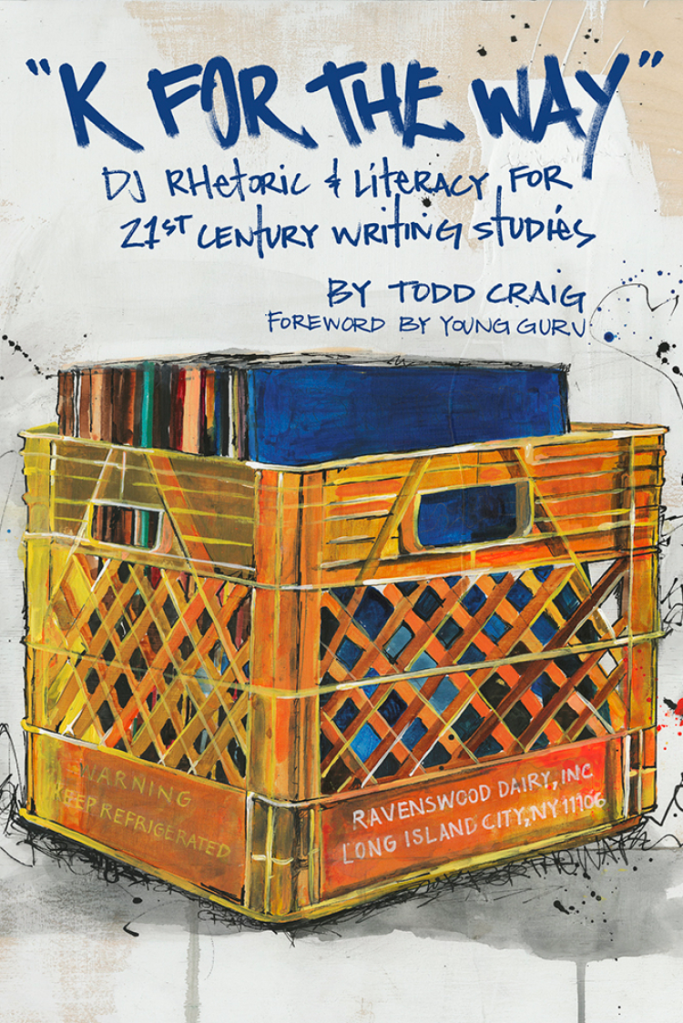
Featured Image: Cover Art for “K for the Way”: DJ Rhetoric and Literacy for 21st Century Writing Studies by Cathey White
—
DeVaughn (Dev) Harris is a PhD student studying composition and rhetoric in NYC. His academic interests are mainly in writing studies and pedagogy, but those are often supported by other sub-interests in music, creative writing, African American studies, and philosophy. When not reading or writing, Dev enjoys making music wherever and however possible. He has published music before under the collective AbstraktFlowz.
—

REWIND! . . .If you liked this post, you may also dig:
“Heavy Airplay, All Day with No Chorus”: Classroom Sonic Consciousness in the Playlist Project—Todd Craig
Deep Listening as Philogynoir: Playlists, Black Girl Idiom, and Love–Shakira Holt
SO! Reads: Steph Ceraso’s Sounding Composition: Multimodal Pedagogies for Embodied Listening--Airek Beauchamp
The Sounds of Anti-Anti-Essentialism: Listening to Black Consciousness in the Classroom- Carter Mathes
Contra La Pared: Reggaetón and Dissonance in Naarm, Melbourne–Lucreccia Quintanilla
Ill Communication: Hip Hop and Sound Studies–Jennifer Stoever
SO! Amplifies: Regina Bradley’s Outkasted Conversations
A Listening Mind: Sound Learning in a Literature Classroom–Nicole Brittingham Furlonge
Share this:

Tuning In to the Desi Valley: Getting to Know a Community via Radio

Sound has a peculiar relationship to mindfulness; zoning in and out, active and passive forms of listening while we situate our listening practices alongside other daily activities. Especially when it comes to driving, listening to something or someone or just singing aloud by myself, I have realized, helps me drown out other noises of alertness. Over the years I have come to value background music or chatter and especially radio programming that takes the burden of curation and scheduling off my back, in all sorts of tasks that require deep concentration. Enough and more has been said about the visual-bias in various forms of ethnographic inquiry (see Andrew C. Sparkes’s “Ethnography and the senses” for a good example). Without belaboring these arguments, I also find that knowing through listening and listening as a mode of non-haptic yet immersive and intimate engagement can also prove to be a fruitful method of inquiry, especially in our post-pandemic worlds, where it feels a lot harder to establish intimacy. The United Nations noted that radio, in particular, “provided solace” during that period of physical distancing and social isolation.
For me, radio sparked my accidental realization and foregrounding of sonic methods as an itinerant means of getting to know new things, people and surroundings in life and research when I moved from New York to the San Francisco Bay Area in mid-2022 to start a new position as a postdoctoral researcher. Knowing that I would continue living in California for the near future, after eight long years of having deferred driving in America, I decided to learn driving and buy a car. I was also especially excited to be moving to Sunnyvale, a city in the Southern Peninsula, located between more known places like Palo Alto and San Jose. Sunnyvale is often jokingly called the desi capital, perhaps the most Indian of any ‘Little India’ you could find in America. As shorthand, desi, a Hindi word,refers to anyone and everything with ties to the South Asian subcontinent. In more recent years, the term has gained currency especially among South Asian diasporic communities to self-refer to culture, music, food, often to signify the presence and strength of transnational ties (between India and their countries of settlement).
What I hadn’t anticipated was that driving brought about a new connection to the medium of radio, as I started tuning in to take my mind off the jitters that come with the new sounds of an automobile-dependent region: fast moving rubber hitting the freeway tarmac and the lane changes and the scalar adjustments that demand driving tens of miles to ensure you still have a social life stitched together across the vastness of California. I began to find the act of tuning in and out of stations fascinating, especially how the radio as a device holds the parallel realities of so many people with different interests, languages and politics together but separate. Scholarship and even casual listening shows that non-English radio stations catering to various immigrant and other communities have existed for a long time in the US and elsewhere (I wish pondering the sonic geographies of Radio Garden, a web-based map interface that allows listeners to access any free-to-air radio stations across the world, wasn’t beyond the scope of this post!). Both as an ethnographer and as an insider-outsider within the larger Indian immigrant and diaspora community (but a newcomer to the Bay Area), tuning into the local desi radio station while driving offered me a good way to enter the desi community of the Bay Area, to know what it means to be desi and perform Indianness in 2022, in a place where I regularly see so many Indians and South Asians every single day.
As a friend who recently visited me in Sunnyvale remarked as we waited for our table at the always-busy Madras Cafe, Sunnyvale feels so much like India! And I felt it too; what she was referring to was not only the very visible presence of Indian people all around town or the abundance of restaurants catering to various sub-regional cuisines from India. What felt different to me here was how relaxed everyone looked in grocery stores, restaurants and elsewhere, how utterly remade Sunnyvale is as a pan-Asian but mostly Indian space that even the smallest performances of fitting in feel unnecessary. In fact, shopping her reminded me of a point Purnima Mankekar’s Indian narrators made in her iconic essay on Indian grocery shopping in the San Francisco Bay Area (2010), that Indian stores in Sunnyvale and Milpitas as places where “white people look out of place” as compared to the ones in Berkeley.
The juxtaposition of the non-performances and the weight of being comfortably in place in a community like Sunnyvale only settles on the mind and body very slowly, like a faint but familiar smell from home. Words and demands often stumble out of my mouth at the grocery store, as if I am allowed and I will be completely understood. Immigrant life in America is steeped in language acrobatics, balancing being understood with becoming deliberately opaquely incomprehensible, using one accent for the ones from home, one for those who make you feel at home, and then the American accent for the Americans outside. The contrast of places like Sunnyvale, Fremont, Milpitas and other similar Northern California cities that have been transformed by immigrant presence is not just one of tangible and observable things, but sonic markers too, like Bolly 92.3FM.

Bolly 92.3FM is the default desiradio station that services the entire San Francisco Bay Area. As the name suggests, for the most part the station plays popular Bollywood songs from recently released movies and albums, but just as other stations do in India, Bolly92.3FM leverages its listener demographics at different times of the day to also play classics and hits from older Hindi films during late night slots. Interestingly, as the presenters repeat the station name and jingle time and again, they also remind you that you are listening to Bay Area’s Bollywood station owned by the Silicon Valley Asian media network. The name Bolly92.3FM is a play on the broad familiarity with Bollywood in the US even as Indian audiences globally have moved away from the older connotations of Bollywood as North Indian cinema with song, dance and people dressed in flashy clothes. Much like the hyper-authentic Indian restaurants that serve regional cuisines such as Andhra, Tamil, Gujarati, Rajasthani and Marathi food to their loyal and affording immigrant patrons, Bolly92.3FM has also configured its programming to cater to different regional and linguistic communities from India in the Bay Area. For instance, Saturday morning and afternoon slots are dedicated to Telugu programs—everything is in Telugu (language) from the hosts discussions to the songs being played as well as the actual topics being discussed—as if the station turns into a different station with the implicit acknowledgement of the substantial cultural presence and possibly the sonic and financial power of Telugu listeners among the wider Indian community here. There are similar slots dedicated to Gujarati language programming.
In addition to language and topical interests, listening to Bolly92.3FM has been instructive in getting a feel for communal desires, aspirations and anxieties through its advertisement. There are fellow desi real estate agents, tax planners, dentists, travel agencies and coaching centers, each signaling to why they are trustworthy. Some remind their audiences of their shared cultural background as key to them being able to understand their customers’ needs, others also indicate their familiarity with America: one realtor is the only Indian-origin person to feature in a top realtor list, another tax planner’s family has been in the US for three generations and thus he is well aware of the nitty-gritties of transnational estate planning. A known Indian-origin realtor in the area even sponsors his own radio show on the weekends where he takes questions from prospective home buyers and sellers. Before and beyond giving them financial advice, he often explains how fellow Indian immigrants think about financial opportunities, investments, how they might seek social validation from fellow Indians who might see their home and so on. He weaves in such exposition before talking dry financial facts about mortgages. The same tax planner and his co-host occasionally offer historical accounts of changing real estate trends, how certain places used to be affordable for Indian immigrant buyers and how new places are becoming of interest as vacation homes for more affluent Indian immigrants.

Hearing the tax planners and real estate agents plot these dynamic and speculative maps of South Asian financial, cultural and political futures week-after-week felt like witnessing what many historical texts on migration within the Bay Area have described as waves in the past. As I mentioned earlier, Sunnyvale is not the only ‘Little India’ in the Bay Area, let alone in California, but rather, is a more recent iconic place in the Indian and South Asian diaspora map where the younger and newer immigrants are finding homes. Fremont, Milpitas, and Hayward in the East Bay closer to Oakland, and San Jose in the South Bay, saw similar waves of Indian immigrant settlements in the past, many of whom now far more affluent than their younger counterparts. In my short time since moving here, I learned both from conversations with friends who grew up in the area as well as from communication scholar Anne Marie Todd’s work on the past and present of Santa Clara Valley, this region has not only seen waves of migration from settlers across the world but with each incoming wave and turn in occupational trends from farming to railroads to IT work. Multiple communities have remade cities in the Bay Area over the decades.
I also find advertisements as well as talk shows interesting because they offer a more proximate and concentrated triangulation of otherwise scattered, overheard communal talk – I’ve heard things about Indian immigrants and real estate, their aspirations for their children to get into Ivy league colleges. I have also been asked at the grocery store if I know people looking to get married; I’ve overheard aunties at the grocery store consulting each other about dealing with death, financial loss, planetary alignments and more. But it is through the radio that these private interests, anxieties and futures take more collective and articulate forms.
To speak, to be heard, and to be understood as intended are as important as visual representation to allow for feeling in place in the world and for feeling at home in the United States. Very simply put, in the American context, while Black and Brown vocal expression and volume or the stereotype of loudness have been historically stigmatized as a part of the larger racist depiction of ‘unruly’ bodies, various forms of Asian speech, languages and expression including loudness but also silence and the absence of vocality, have also been racialized against the backdrop of white socio-linguistic normativity. Specifically, Indian and South Asian immigrants have been repeatedly represented in popular American culture as muted characters whose interiority is either irrelevant to the plot or cannot be accessed. Think of Raj Koothrappali from the show The Big Bang Theory, an accomplished scientist at the prestigious Caltech university who loses his voice around women. In accounts of Indian tech workers in the US from the Y2K era, one finds multiple articles casting them as the back-office worker – good at laborious and boring work but not presentation material. Some of these stereotypes have changed and splintered as more South Asians technologists have gone on to become successful executives and leaders in US companies, but vocality as a form of publicity can be crucial to sonic forms of belonging.
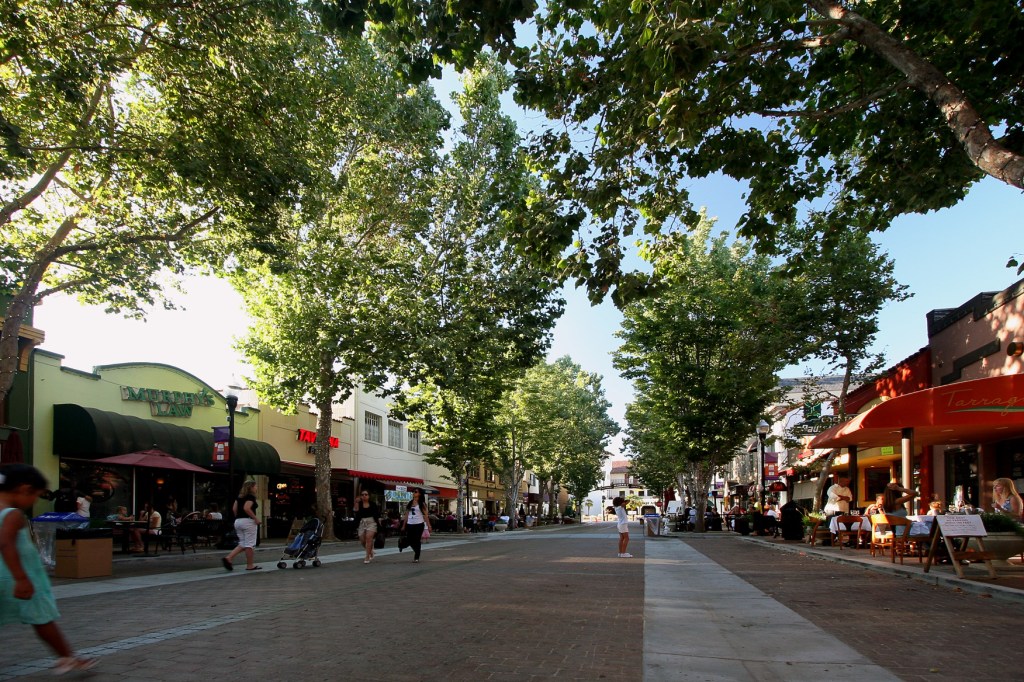
When I arrived in the Bay Area, I was still trying to figure out how to form a community and how to immerse myself in the desi community here, somewhat selfishly to get a glimpse of how Indian presence is remaking the Valley, not only through IT work but also through cultural and political performances. But I also wanted to get to know people, be known by people around. Olakhita means “people known to us” in Gujarati, my mother tongue; in Hindi jaan-pehchaan means to be in each other’s knowing that gives you some claim and affiliation over others without deep intimacy, not quite acquaintances or neighbors like in the American context. Apart from the numerous Whatsapp and Facebook groups aimed at desifolks living in the same neighborhood or city, Bolly92.3FM acts as a beacon for Indians and South Asians spread across San Francisco, the East Bay and the South Bay areas, offering a medium for the various Indian associations and event organizers to reach out to thousands and invite them to Diwali, Dussehra and other festival celebrations as well as any major concerts by visiting Indian artists in the area.
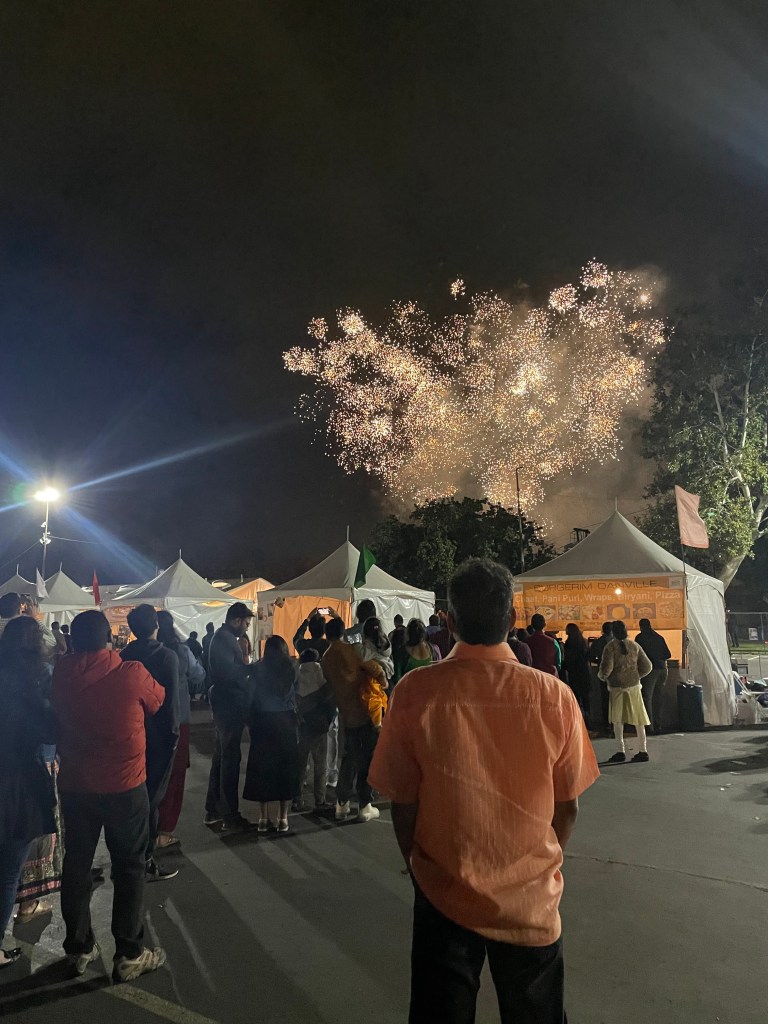
This is the far from the first or only time that a radio station has facilitated the forging of affective ties and social and material connections in diaspora. Rather this post recounts how active and passive listening to and through the station revealed over time how much South Asian presence has transformed the Bay Area. I attended the massive Diwali and Dussehra events advertised on 92.3, and once there, I could recognize so many of the organizers and sponsors’ names – some of them were the same tax planners and realtors that also run ads and sponsored segments on the station. One week in late September, an ad played on the radio, announcing that a famous hotel in downtown San Jose was now able to accommodate more than a thousand guests and offer a special entryway for the baraat procession (when the groom’s party of a few hundred comes dancing up to the wedding venue). The ad ended with the contact details of a South Asian representative of the hotel who could handle all queries related to Indian wedding arrangements! Bolly92.3FM mediates and shapes the collective desi identity through its programming and advertising, in turn also stitching, materializing and rendering visible a map of the Indian community spread across dozens of non-contiguous cities and neighborhoods in the Bay Area.

It bears noting, however, that the idea of Indianness or desi-ness (an imagined brotherhood among all the expats here) advanced through the radio programs, advertisements as well as the cultural celebrations, is very much a nationalistic and Hindu-dominant one. Although India is an ethnically, linguistically and culturally diverse country and not all people of Indian origin in the Bay Area are Hindu, the radio announcers never really celebrate or discuss Eid, Christmas, or Thanksgiving as events of possible interest. Just based on what is said and what is left unsaid, the dominant self-imagination of the Bay Area desi community as advanced through the radio station feels like it quietly aligns with the dominant religious and political imagination of India as Hindu, middle-class, post-religious and post-caste.
In the process of seeing this map render in my own imagination through regular listening, I also realized how this form of distant listening replicated the mode of jaan-pehchan (getting to know) for the itinerant immigrant-ethnographer. There is always the pre-fieldwork moment, the slightly promiscuous exploratory moment of getting to know and immersing oneself before one can articulate stakes and research questions. It is also often a period of deep uncertainty and ambivalence, since, as ethnographers, responsibility for and towards our field, communities, and interlocutors is always at the center of every project. We are always reminded not to be extractive and to think deeply about power relations even as we attempt to forge meaningful ties with those whom we want to observe and learn from and write about. Much like other visa-workers and international scholars in US academia, being a non-citizen ethnographer engenders multiple kinds of precarities—there is no straightforward or replicable guidebook on how to establish rapport, gain access, build trust and more with a community. More importantly, the itinerant-immigrant ethnographer’s relationships are also always interrupted, prone to arbitrary border restrictions and chronic deracination.
In the early days of digital ethnography, Kate Crawford powerfully argued to reframe acts of lurking (silently and passively hanging out in online communities) as forms of listening and by extension, listening as a concomitant and constitutive practice when we consider participation as speaking or having a voice. In the case of diasporic radio, as I realized, not only is the act of listening quite literal but it also affords and reinforces the vitality of different modes of agentic power and participation, those marked by ambivalence, yet-to-be gained legitimacy; forms of minor participation if you will. Via Crawford, listening and/as lurking also emerges as specifically racially inflected modes of agentic participation against the backdrop of media policy and the emphasis on free expression and speech as the ultimate realization of democratic power.
Among diasporic communities and further among itinerant immigrants within those communities, listening, overhearing and eavesdropping become the de facto modes of democratic and communitarian participation. Listening to the radio as a way of immersion is not a solution to these enduring dilemmas of ethical ethnography but to borrow from the analogy of Californian driving, listening to the radio, just like other forms of digital and analog lurking, allowed me an ‘on-ramp’ to gradually merge and embed myself in the larger South Asian diasporic community.
—
Featured Image: “Driving” by Flickr User AnnaNakami (CC BY-NC 2.0)
—
Noopur Raval is an interdisciplinary researcher interested in understanding global futures of work, the life and work decisions made by immigrant workers in tech companies, changing values and moral norms and projects of personhood especially in postcolonial settings. Noopur received a PhD in Informatics from University of California Irvine (UCI) in September 2020 and, through July 2022 was a postdoc researcher at the AI Now Institute at New York University. Noopur is currently a postdoctoral researcher at UC Santa Cruz – Silicon Valley Extension in the Computational Media department, working with Dr Norman Su. In Fall 2023, Noopur will join the Department of Information Studies at UCLA as an assistant professor.
—

REWIND! . . .If you liked this post, you may also dig:
“Gendered Soundscapes of India, an Introduction“–Monika Mehta and Praseeda Gopinath
The Queer Sound of the Dandiya Queen, Falguni Pathak–-Pavitra Sundar
“Out of Sync: Gendered Location Sound Work in Bollywood“—Priya Jaikumar
SO! LA: Sounding the California Story–Bridget Hoida
“Vous Ecoutez La Voix du Peuple”: The Kreyol Language Pirate Radio Stations of Flatbush, Brooklyn–David Goren
Listening (Loudly) to Spanish-language Radio–Dolores Inés Casillas
Share this:


Current Top Posts





April 2021

January 2020

November 2019

October 2019

August 2019

April 2014

November 2017

March 2015

December 2017

October 2015
 Sounding Out!
Recent Comments