
Everyone’s Going to the Rumba: Trap Latino and the Cuban Internet

 In “Asesina,” Darell opens the track shouting “Everybody go to the discotek,” a call for listeners to respond to the catchy beat and come dance. In this series on rap in Spanish and Sound Studies, we’re calling you out to the dance floor…and we have plenty to say about it. Your playlist will not sound the same after we’re through.
Throughout January, we will explore what Spanish rap has to say on the dance floor, in our cars, and through our headsets. We’ll read about Latinx beats in Australian clubs, and about femme sexuality in Cardi B’s music. And because no forum on Spanish rap is complete without a mixtape, we’ll close out our forum with a free playlist for our readers. Today we start No Pare, Sigue Sigue: Spanish Rap & sound Studies with Michael Levine’s essay on Trap cubano and el paquete semanal.
-Liana M. Silva, forum editor
—
Trap Latino has grown popular in Cuba over the past few years. Listen to the speakers blaring from a young passerby’s cellphone on Calle G, or scan through the latest digital edition of el paquete semanal (the weekly package), and you are bound to hear the genre’s trademark 808 bass boom in full effect. The style however, is almost entirely absent from state radio, television, and concert venues. To the Cuban state (and many Cubans), the supposed musical and lyrical values expressed in the music are unacceptable for public consumption. Like reggaetón a decade before, the reputation of Trap Latino (and especially the homegrown version, Trap Cubano) intersects with contemporary debates regarding the future of Cuba’s national project. For many of its fans however, the style’s ability to challenge the narratives of the Cuban state is precisely what makes Trap Latino so appealing.
In an article published last year by Granma (Cuba’s official, state-run media source), Havana-based journalist Guillermo Carmona positions Trap Latino artists like Bad Bunny and Bryant Myers as a negative influence on Cuba’s youth, claiming the music sneaks its way into the ears of unsuspecting Cuban youth via the illicit channels of Cuba’s underground internet. With lyrics that celebrate the drug trade and treat women as “slot machines,” coupled with a preponderance of sound effects instead of “music notes,” Carmona considers Trap Latino aggressive, dangerous, and perhaps most perniciously of all, irredeemably foreign.
Towards the end of the article, Carmona focuses on his biggest concern: the performance of Trap Latino in public spaces. Carmona writes of those who play Trap from sound systems that “…they use portable speakers and walk through the streets (dangerously), like a baby driving a car. The combat between the bands that narrate some of these songs gestures towards another battlefield: the public sound space.” For Carmona, this public battlefield is sonically marked by Trap Latino’s encroachment on Cuba’s hallowed musical turf. His complaints highlight the fact that this Afro-Latinx style largely exists in Cuba on one side of what Jennifer Lynn Stoever refers to as the sonic color line, an “interpretive and socially constructed practice conditioned by historically contingent and culturally specific value systems riven with power relations” (14).
In Cuba, historically constructed power relations are responsible for much of the public reception of Afro-Cuban popular music, including rumba, timba, and reggaetón. But Trap Latino’s growing presence on the digital devices of Cuban youth is reshaping the boundaries of Cuba’s sonic color line. While these traperos are generally unable to perform in public (due to strict laws governing uses of Cuba’s public spaces) their music is nonetheless found across Havana’s urban soundscape, thanks to the illicit, but widespread, distribution of the “Cuban Internet.”Historically marginalized Afro-Cuban artists, like Alex Duvall, are today using creative digital strategies to make their music heard in ways that were impossible just a decade ago.
The Cuban Internet
To get around the lack of an internet infrastructure either too costly, or too difficult to access, Cubans have developed a network for trading digital media referred to as “el paquete semanal,” contained on terabyte-sized USB memory sticks sold weekly to Cuban residents. These memory sticks contain plenty of content: movies, music, software applications, a “Craiglist”-styled bulletin board of local products for sale, and even an offline social network, among others. The device is traded surreptitiously, presumably without the knowledge of the state.
(There is some question surrounding the degree at which the state is unaware of the paquete trade. Robin Moore, in Music and Revolution, refers to the Cuban government’s propensity to selectively enforce certain illegalities as “lowered frequency”. Ex-president Raul Castro has publicly referred to the device as a ‘necessary evil,” suggesting knowledge, and tacit acceptance, of the device’s circulation.)
By providing a means for artists to circulate products outside of state-sanctioned channels of distribution, el paquete semanal greatly broadens the range of content available to the Cuban public. The importance of the paquete to Cuba’s youth cannot be overstated. According to Havana-based journalist José Raúl Concepción, over 40% of Cuban households consume the paquete on a weekly basis, and over 80% of citizens under the age of 21 consume the paquete daily. A high percentage of the music contained on these devices is not played on the radio or seen in live concerts. For many Cubans, it is only found in the folders contained on these devices. The paquete trade therefore, serves as an invaluable barometer of music trends, especially those of younger people who represent the largest number of consumers of the device.

A listing of folders on el paquete semanal from October 30, 2018.
Alex Duvall
There is a random-access, mix-tape quality to the paquete that encourages consumers to discover music by loading songs onto their cellphones, shuffling the contents, and pressing play (a practice as common in Cuba as it is in the US). This mode of consumption encourages listeners to discover music to which they otherwise would not be exposed. Reggaetón/Trap Latino artist Alex Duvall takes advantage of this organizing structure to promote his work in a unique manner: Duvall packages his reggaetón music separately from his Trap Latino releases. As a solo act, his reggaetón albums position catchy dembow rhythms alongside lyrics and videos that celebrate love of nation, Cuban women, and Havana’s historic landmarks. As a Trap Latino artist in the band “Trece,” his brand is positioned quite differently. Music videos like Trece’s “Mi Estilo de Vida” for instance, contain many of the markers that journalist Guillermo Carmona criticized in the aforementioned article: a range of women wear the band’s name on bandanas covering their faces, otherwise leaving the rest of their bodies exposed. US currency floats in mid-air, and lyrics address the pleasures of material comforts amid legally questionable ways of “making it.”
Especially as it becomes more and more common for Latinx artists to mix genres freely together in their music (as the catch-all genre format referred to as música urbana shows), it is significant that Alex Duvall prefers to keep these styles separate in his own work. The strategy reveals a musical divide between foreign and domestic elements. Duvall’s reggaetón releases emphasize percussive effects, and the Caribbean-based “dembow riddim” that many Cubans would quickly recognize. The synthesized elements in his Trap Latino work however, belong to an aesthetic foreign to historic representations of Cuban music, representing broader circulations of sound that now extend up to the US. Textures and rhythms originating from Atlanta (along with their attendant political and historical baggage) now share space in the sonic palette of a popular Cuban artist.
Going to the Rumba
These cultural circulations complicate narratives coming from the Cuban state that tend to minimize the cultural impact of music originating from the yankui neighbor to the north. These narratives exert powerful political pressure. Because of this, artists are careful when describing their involvement with Trap music. Duvall’s digital strategy allows for a degree of freedom in traveling back and forth across the sonic color line, but permits only so much mobility.
In an interview conducted by MiHabanaTV, Duvall distances himself from Trap Latino’s reputation, defending his project by appealing to the genre’s international popularity, and the need to bring it home to Cuba. But the 2017 song “Hasta La Mañana” documents one of his most concise explanations for his involvement in Trece, in the following lyrics:
| “El tiempo va atando billetes a cien Pero todos va para la rumba Entonces yo quiero sumarme tambien.” |
Time is tying hundred dollar bills together Everyone is going to the rumba And I also want to join. |
He uses “rumba” here as shorthand to refer to the subversive actions that people take in order to succeed in difficult situations. Duvall needs to make money. If everyone else gets rich by going to “the rumba,” why can’t he? The reference is revealing. Rumba marks another Afro-Cuban tradition with a history of marginalized figures engaged in debates over appropriate aural uses of public space. Today, cellphone speakers and boom boxes sound Havana’s parks and streets. Historically, Afro-Cuban rumberos made these spaces audible through live performance, but similar issues of race animate both of these moments.
In the essay “Walking,” sociologist Lisa Maya Knauer explains that it was not uncommon for police to break up a rumba being performed in the streets or someone’s home throughout the twentieth century “on the grounds that it was too disruptive.” (153) Knauer states that rumba music is historically associated with “rowdiness, civil disorder, and unbridled sexuality, while simultaneously celebrated as an icon of national identity”. (131) The quote also reveals a contrast between the public receptions of rumba and Trap Latino. Duvall’s work, and Trap Latino more generally, is similarly fixed amid a complex web of racialized associations. But unlike rumba, refuses to appeal to state-sanctioned ideals of national identity.
Afro-Cuban musicians are often pressured to adopt nationally sanctioned modes of participation in order to acquire official recognition and state funding. The acceptable display of blackness in Cuba’s public spaces, especially while performing for the country’s growing number of tourists, is a process that anthropologist Marc D. Perry calls the “buenavistization” of Cuba in his work Negro Soy Yo. This phrase refers to the success of popular Son heritage group Buena Vista Social Club, and the revival of Afro-Cuban heritage musical styles that this group and its associated film popularized. Unlike Rumba and Son however, Trap Latino is considered irredeemably foreign (given its roots in both the US city of Atlanta and later, Puerto Rico), therefore presenting difficulties in assimilating the genre to dominant models of Cuban national identity. This tension, I believe, is also responsible for it’s success among Cuba’s youth.
Trap Cubano’s growing appeal stems instead from artists’ adoption of a radically counter-cultural positionality often avoided in popular contemporary styles like reggaetón. While it would be unfair to accuse reggaetón as being entirely co-opted (a point musicologist Geoff Baker makes convincingly in “Cuba Rebelión: Underground Music in Havana”), it is certainly true that as reggaetóneros achieve greater success in ever widening circles of international popularity, the amount of scandalized lyrics, eroticized imagery, and the sound of the original dembow riddim itself (with its well documented roots in homophobia and virulent masculinity) has diminished considerably. Trap Latino’s sonic subversions fill this gap. While the genre similarly praises the fulfillment of male, material fantasies, it troubles the narrative that increased access to money solves social, racial, and gender imbalances, while sonically acknowledging the role that the US shares in shaping it’s musical terrain.
This centering of materialism amid representations of marginalized Afro-Cuban artists is foreign to both historic and touristic representations of Cuba, but relevant to a younger generation increasingly confronted with the pressures of encroaching capitalism. Trap Cubano renders visible (and audible) an emerging culture managing life on the less privileged side of the sonic color line. From the speakers blaring from a young passerby’s cellphone on Calle G, to the USB stick plugged in to a blaring sound system, to the rumba where Alex Duvall is headed, Trap Latino broadcasts the concerns of a younger generation challenging what it means to be Cuban in the 21st century, and what that future sounds like.
—
Involving himself in the music scenes of Brooklyn, N.Y. over the past decade and currently attending The University of North Carolina at Chapel Hill’s musicology program, Mike Levine utilizes a dual background in academic research and web-based application technologies to support sustainable local music scenes. His research now takes him to Cuba, where he studies the artists and fans circulating music in this vibrant and fast-changing space via Havana’s USB-based, ‘people-powered’ internet (el paquete semanal) amidst challenging political and economic circumstances.
—
Featured image: “Hotel Cohiba – Havana, Cuba” by Flickr user Chris Goldberg, CC BY-NC 2.0
—
 REWIND!…If you liked this post, you may also dig:
Spaces of Sounds: The Peoples of the African Diaspora and Protest in the United States–Vanessa Valdes
SO! Reads: Shana Redmond’s Anthem: Social Movements and the Sound of Solidarity in the African Diaspora–Ashon Crawley
Music Meant to Make You Move: Considering the Aural Kinesthetic– Imani Kai Johnson
Share this:

“Music More Ancient than Words”: W.E.B. Du Bois’s Theories on Africana Aurality

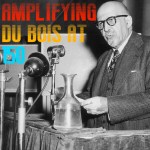 Inspired by the recent Black Perspectives “W.E.B. Du Bois @ 150” Online Forum, SO!’s “W.E.B. Du Bois at 150” amplifies the commemoration of the occasion of the 150th anniversary of Du Bois’s birth in 2018 by examining his all-too-often and all-too-long unacknowledged role in developing, furthering, challenging, and shaping what we now know as “sound studies.”
It has been an abundant decade-plus (!!!) since Alexander Weheliye’s Phonographies “link[ed] the formal structure of W.E.B. Du Bois’s The Souls of Black Folk to the contemporary mixing practices of DJs” (13) and we want to know how folks have thought about and listened with Du Bois in their work in the intervening years. How does Du Bois as DJ remix both the historiography and the contemporary praxis of sound studies? How does attention to Du Bois’s theories of race and sound encourage us to challenge the ways in which white supremacy has historically shaped American institutions, sensory orientations, and fields of study? What new futures emerge when we listen to Du Bois as a thinker and agent of sound?
Over the next two months, we will be sharing work that reimagines sound studies with Du Bois at the center. Pieces by Phillip Luke Sinitiere, Kristin Moriah, Aaron Carter-Ényì, Austin Richey, Julie Beth Napolin, and Vanessa Valdés, move us toward a decolonized understanding and history of sound studies, showing us how has Du Bois been urging us to attune ourselves to it. To start the series from the beginning, click here.
Readers, today’s post by Aaron Carter-Ényì delineates two central strands in Du Bois’s work that have proven key to what we now call sound studies–the historical and affective meanings that sound carries as well as its ability to travel great distances through time and space.
–Jennifer Lynn Stoever and Liana Silva, Eds.
I know little of music and can say nothing in technical phrase, but I know something of men, and knowing them, I know that these songs are the articulate message of the slave to the world. – W. E. B. Du Bois, The Souls of Black Folk (1903, p. 253)
W. E. B. Du Bois claimed to “know little of music,” yet his writings offer profound insights into aurality, foreshadowing the transdisciplinary of sound studies, by connecting language, music, sonic environments and aural communication. Du Bois published the souls of The Souls of Black Folk in 1903, less than a decade after becoming the first African American to receive a PhD from Harvard in 1895. In it, he addresses the color line, reflected in the policy of “separate but equal,” forming arguments that continue in Black Reconstruction in America. He also introduces themes that reappear in his later works including The World and Africa (1947), which formed the seeds of Afropolitanism and many modes of enquiry of Sound Studies. This short essay explores two concepts in Du Bois’s writings: that melodies may last longer than lyrics as cultural retentions; and, that drummed language may travel further than spoken language as communication.
By the time Du Bois published The Souls of Black Folk, what he termed the “Sorrow Songs” (alternatively Slave Songs or Spirituals) had entered the popular canon of American song. As incipits (or epigraphs) for each essay in the book, he entered the songs into a new literary and scholarly canon, ultimately changing the concept of what a book could be by fusing language and music in a new way. Even in a divided society following the U.S. government’s disinvestment in Reconstruction and the sharp uptick in lynching and other forms of racial terror, the “Negro folk-song” could not help but have a profound impact “as the most beautiful expression of human experience born this side the seas” (Souls XIV), particularly due to the efforts of Fisk’s Jubilee Singers. Du Bois’s choice to include musical transcriptions without lyrics at the opening of each essay in Souls reflects a view of melodies as having a life–and a value– of their own.

Du Bois paired a quote from “Childe Harold’s Pilgrimage ” by Lord Byron with a musical citation from the African American spiritual “The Great Camp Meeting” to open Chapter III, “Of Mr. Booker T. Washington and Others.”
Although Du Bois’s work quite clearly accounts for the development of what has usually been called the African American oral tradition, the concept of an oral tradition is credited to Harvard comparative literature scholars Milman Parry and Albert Lord, who popularized the term in American scholarship by establishing a binary theory of orality and literacy, that not only pitted the two against each other, but implied that they were hierarchical, evolutionary phases of “culture” (1960). This divide both widened and became more nuanced with Walter Ong’s recognition of “secondary orality” (1982), acknowledging that aspects of orality persist in literate societies.
But much earlier than these texts, Du Bois offers an alternate theory of how orality and literacy work, and even concepts similar to secondary orality, in the last essay of Souls, “XIV On the Sorrow Songs.” Notably, he describes his earliest experience with African music via a song that “travelled down” from his “grandfather’s grandmother”:
The songs are indeed the siftings of centuries; the music is far more ancient than the words, and in it we can trace here and there signs of development. My grandfather’s grand-mother was seized by an evil Dutch trader two centuries ago; and coming to the valleys of the Hudson and Housatonic, black, little, and lithe, she shivered and shrank in the harsh north winds, looked longingly at the hills, and often crooned a heathen melody to the child between her knees, thus:
The child sang it to his children and they to their children’s children, and so two hundred years it has travelled down to us and we sing it to our children, knowing as little as our fathers what its words may mean, but knowing well the meaning of its music (254).

Du Bois makes no mention of a spoken oral tradition throughout Souls. In fact, quite the contrary. In this passage, he implicitly argues it is not the meaning of the words, but the meaning of the music that survived the Trans-Atlantic Slave Trade. Instead of an “oral tradition”, Du Bois identifies four steps in the development of American Sorrow Songs: (1) African; (2) “Afro-American”; (3) blending of “Negro and Caucasian” (a creolization); and (4) songs of white America influenced by the Sorrow Songs (256). The search for continuity between African and American culture has been a quest for many, including African-born scholars such as Lazarus Ekwueme. It is clear that melody (both pitch and rhythm) is the most idiosyncratic element of a piece, more so than lyrics, and is the most durable when a people and their culture experience extreme duress. As language (and certainly the meaning of the language) can fade (or be violently submerged) in diaspora, melodies can often hold fast, and be held on to.
At an early date (1903), Du Bois already arrives at a point that is now a consensus: the Gullah-Geechee communities of the Sea Islands of South Carolina and Georgia have closely retained African practices, such as the ring shout.
Gullah-Geechee ring shout performed by McIntosh County Shouters (Carter-Ényì, Hood, Johnson, Jordan and Miller 2018)
Du Bois states that the Sea Island people are “touched and moulded less by the world about them than any others outside the Black Belt” (251–2). The Language You Cry In (1988), traces a Gullah song passed down back to its origins in Sierra Leone. Though separated by 200 years and 5000 miles, the melody was immediately recognizable to Baindu Jabati, a woman of the village, Senehum Ngola, even the lyrics were “strikingly similar.”

Sheet Music, “Old Folks At Home,” A project of the Digital Scriptorium Rare Book, Manuscript, and Special Collections Library, Duke University
The Gullah-Geechee are exceptional because of their linguistic retentions, documented by Lorenzo Dow Turner in his 1949 book. The preservation of linguistic features was possible because of relative isolation, but as Du Bois notes, this source of African music is fundamental to American music in steps (2), (3) and (4), of which he offers famous examples of each. It is the recognition of the crossing of the African and African-American influence across the racial divide into the music of white America, in songs such as Stephen Foster’s “Old Folks at Home” (more popularly known as “Swanee River”) that was the most controversial. Du Bois approaches this matter cautiously: “One might go further and find a fourth step in this development…” (256), but then goes full force: “a mass of music in which the novice may easily lose himself and never find the real Negro melodies” (257).
Racist musicologist George Pullen Jackson (1874-1953) fought hard against the position that white hymnody had been influenced by black spirituals for much of his career. In “White and Negro spirituals, their life span and kinship” (1944), he argued just the opposite, that black spirituals were derivative of white hymnody and conducted an early corpus study to prove it. William H. Tallmadge, in “The Black in Jackson’s White Spirituals” (1981), summarizes Jackson’s findings:
Jackson, after examining 562 white items and 892 black items, found only 116 pairs which he thought demonstrated tune similarities, and of these 116, only 70 pairs actually prove to have had a valid melodic relationship… These seventy items represent slightly less than eight percent of the 892 black spirituals (150).
Jackson could not find the empirical support for his claim to of primacy (perhaps supremacy) of white spirituals, even with some ample confirmation bias. In fact, his findings fit well into Du Bois’s account, particularly his identification of step 3 in the development of the Sorrow Songs: “blending of Negro music with the music heard in the foster land” (256). Essentially, it took a nearly a century for musicology to recognize what Du Bois laid out in 1903.
The aural tradition Du Bois describes, which includes various versions of songs and the steps of sorrow song development, is more sympathetic to Ngugi wa Thiong’o’s concept of “orature” than the Parry/Lord dichotomy. In “Notes towards a Performance Theory of Orature” (2007), Thiong’o points out that:
What is often arrested in writing is a particular version, a particular rendering, … as performed by a particular performers at a particular moment. Nature, then, in orature manifests itself as a web of connections of mutual dependence … in active communications within themselves and with others (5).
For example, the black and white spirituals with similar tunes in Jackson’s corpus both are and are not the same, which challenges the very notion of intellectual property (IP), and the flawed IP debate over spirituals that Jackson pursued. Even in a segregated society, under which racist laws separated the performers, a mutual dependence developed between black and white spirituals. Despite the affinity of the melodies and common heritage in the aural culture (and perhaps even common sources in either Africa or Europe), divisions were articulated in writing, through different hymnbooks and different words, once again supporting the veracity of Du Bois’s claim that the “music is far more ancient than the words.”

Waves on the Ghanaian Shore, Image by Flickr User Yenkassa (CC BY 2.0)
Later in his life, Du Bois’s attention turned more and more toward Africa. In The World and Africa (1947), he confronts colonialism and Eurocentric history, foreshadowing Afrocentrism and to some extent Afropolitanism. He also, very briefly, reprises his discussion of aurality, citing German musicologist and father of organology, Erich von Hornbostel, as affirmation of the virtues of both African and African American music from the 1928 article “African Negro Music”:
The African Negroes are uncommonly gifted for music-probably, on an average, more so, than the white race. This is clear not only from the high development of African music, especially as regards polyphony and rhythm, but a very curious fact, unparalleled, perhaps, in history, makes it even more evident; namely, the fact that the negro slaves in America and their descendants, abandoning their original musical style, have adapted themselves to that of their white masters and produced a new kind of folk-music in that style. Presumably no other people would have accomplished this. (In fact the plantation songs and spirituals, and also the blues and rag-times which have launched or helped to launch our modern dance-music, are the only remarkable kinds of music brought forth in America by immigrants (60).
Du Bois studied in Germany from 1892–94 before attending Harvard. According to Kenneth Barkin (2005), Du Bois’s “affection” for Imperial Germany has “remained a puzzle to historians” (285). Hornbostel too had a complicated relationship to Germany: though celebrated in his home country for much of his life, in 1933 he was forced into exile because his mother was Jewish; he died in 1935. The passage Du Bois cites from Hornbostel echoes some aspects of Souls XIV Sorrow Songs, particularly the centrality of the spirituals in American culture, but not all. In particular, “abandoning their original musical style … to that of their white masters” is incongruent with Du Bois’s earlier perspective. Though Hornbostel is clearly impressed with the musicality of black people(s), Hornbostel’s summary conclusions stated at the beginning of the same article do not mesh with Du Bois’s own (more insightful) work in Souls: “African and (modern) European music are constructed on entirely different principles, and therefore they cannot be fused into one, but only the one or the other can be used without compromise” (30).
Unfortunately, Du Bois does not contest Hornbostel with his narrative of continuity and “steps” of development from Souls. Du Bois recognized both the happenings and possibilities of creolization and syncretism in black culture of which Hornbostel only captures glimpses. Ultimately, despite a generally positive perspective on black music, Hornbostel’s position is one of not only continental, but racial, division, promoting segregation of musical practice as the only way. It is disconcerting that Du Bois cites this article and Hornbostel as a musical expert with its main argument when Du Bois identified the color line as the singular issue of the twentieth century.
In The World and Africa, Du Bois goal is a bit different: in the pursuit of repositioning Africa and moving towards both a corrected history and post-colonial future, there were stranger bedfellows than Hornbostel. A more pristine vision of recasting Africa and Africana aurality is found on the same page (99), in Du Bois’s mention of an astonishing form of music as communication, the talking drum: “The development of the drum language by intricate rhythms enabled the natives not only to lead in dance and ceremony, but to telegraph all over the continent with a swiftness and precision hardly rivaled by the electric telegraph” (99).
The recent intellectual current within African studies, Afropolitanism, is embodied in Du Bois’s juxtaposition of African tradition with modernity. A recent book on West African talking drums by Amanda Villepastour, Ancient Text Messages of the Yorùbá bàtá drum also draws an analogy to telecommunication. While Du Bois’s brief 1947 account is only a single sentence, Villepastour’s lengthy 2010 account confirms Du Bois conjecture was not a metaphor or empty comparison, the talking drum and telegraph share the same utility, and while we are keeping track, the talking drum came first and is a lot more efficient in terms of infrastructure.
Yorùbá talking drummers in Ọ̀yọ́, Nigeria (Carter-Ényì 2013)
For those unfamiliar with them, here are some rough calculations regarding how talking drums work. Singing or shouting is about 80 decibels (dB) at one meter. Drumming is over 100 dB at one meter. This 20 dB differential means that a speech surrogate (like a talking drum) could travel up to 10 times the distance under the same environmental conditions. With those intensities at the source, a loud voice could travel one kilometer before becoming inaudible (at around 20 dB), while a drum could reach 10 km, easily communicating with the next village.

Hausa Talking Drum, Image by African Studies Library BU (CC BY-NC 2.0)
Within a regional network of drummers that “speak” the same language—such as in the Yorùbá-speaking region of southwest Nigeria—long distance communication was possible, and much earlier than the telegraph. A recent study (2018) by Frank Seifert and his colleagues on Amazonian Bora drumming, “Reducing language to rhythm,” finds minute timing variations represent the placement of consonants suggesting there is detail in speech surrogacy, beyond the representation of lexical tone previously documented. Seifert’s findings suggest that the “precision” Du Bois described is exactly what talking drummers have (throughout the Global South). Now the “swiftness” part may have been a bit exaggerated (electric signals travel much faster than sound waves).
Du Bois’s practiced a transdisciplinary study of sound and understood Africa as Afropolitan long before most of the West. In addition to foreshadowing the interdisciplinary moves of sound studies—which also connects sound to speech to music and examines their coexistence—Du Bois’s thinking also prefigures the current intellectual (and urban-cultural) vogue of Afropolitanism, which has to some extent displaced the Pan-African movement that drew Du Bois to Ghana.In a 2016 interview, Achille Mbembe positions Afropolitanism as a way “in which Africans, or people of African origin, understand themselves as being part of the world rather than being apart.” Much like the African cultures he first encountered in melody in the nineteenth century and then heard firsthand as a contemporary when he moved to Ghana in 1961, Du Bois heard beyond Eurocentric disciplinary divides of music and language that served to portray African cultures as somehow always already outside of modernity, yet not the right color of “ancient.” Du Bois wholeheartedly believed music could change the narrative of Black life, history and culture, a message first crooned to him as a child between his grandmother’s knees, to which he never stopped listening.

Housatonic River, Great Barrington Massachusetts, W.E.B. Du Bois’s Home Town. Image by Flickr User Criana, (CC BY-NC-ND 2.0)
—
Featured Image: Brooklyn African Festival Drum, 2010, Image by Flickr User Serge de Gracia (CC BY-NC 2.0)
—
Aaron Carter-Ényì teaches music theory, class piano, and music appreciation in Morehouse’s Department of Music. He holds a PhD from Ohio State University (2016), was a Fulbright Scholar to Nigeria in 2013, and is a 2017 fellow of the American Council of Learned Societies (ACLS). Recent scholarship appears in Africa (Journal of the International African Institute), Ethnomusicology, Music Theory Online, Oxford Handbook of Singing and Tonal Aspects of Languages; or is forthcoming in Performance Research and Sounding Out! He is the director of the interdisciplinary Africana Digital Ethnography Project (ADEPt) and is currently developing the Video-EASE Toolbox and ATAVizM. During the summer, he is a STEAM instructor for federally-sponsored student enrichment programs including MSEIPand iSTEM for which he provides workshops and courses in the Morehouse Makerspace.
—
REWIND! . . .If you liked this post, you may also dig:
Music Meant to Make You Move: Considering the Aural Kinesthetic–Imani Kai Johnson
Black Mourning, Black Movement(s): Savion Glover’s Dance for Amiri Baraka –Kristin Moriah
Share this:


Current Top Posts





April 2021

January 2020

November 2019

October 2019

August 2019

April 2014

November 2017

March 2015

December 2017

October 2015
 Sounding Out!
Recent Comments