
What Feels Good to Me: Extra-Verbal Vocal Sounds and Sonic Pleasure in Black Femme Pop Music

The lyrics to Beyoncé’s 2008 song “Radio” treats listening pleasure as a thinly-veiled metaphor for sexual pleasure. For example, they describe how turning up a car stereo transforms it into a sex toy: “And the bassline be rattlin’ through my see-eat, ee-eats/Then that crazy feeling starts happeni-ing- i-ing OH!” Earlier in the song, the lyrics suggest that this is a way for the narrator to get off without arousing any attempts to police her sexuality: “You’re the only one that Papa allowed to hang out in my room/…And mama never freaked out when she heard it go boom.” Because her parents wouldn’t let her be alone in her bedroom with anyone or anything that they recognized as sexual, “Radio”’s narrator finds sexual pleasure in a practice that isn’t usually legible as sex. In her iconic essay “On A Lesbian Relationship With Music,” musicologist Suzanne Cusick argues that if we “suppose that sexuality isn’t necessarily linked to genital pleasure” and instead “a way of expressing and/or enacting relationships of intimacy through physical pleasure shared, accepted, or given” (70), we can understand the physical pleasures of listening to music, music making, and music performance as kinds of sexual pleasure.
Though Cusick’s piece overlooks the fact that sexual deviance has been, since the invention of the idea of sexuality in the late 19th century, thoroughly racialized, her argument can be a good jumping-off point for thinking about black women’s negotiations of post-feminist ideas of sexual respectability; it focuses our attention on musical sound as a technique for producing queer pleasures that bend the circuits connecting whiteness, cispatriarchal gender, and hetero/homonormative sexuality. In an earlier SO! Piece on post-feminism and post-feminist pop, I defined post-feminism as the view that “the problems liberal feminism identified are things in…our past.” Such problems include silencing, passivity, poor body image, and sexual objectification. I also argued that post-feminist pop used sonic markers of black sexuality as representations of the “past” that (mostly) white post-feminists and their allies have overcome. It does this, for example, by “tak[ing] a “ratchet” sound and translat[ing] it into very respectable, traditional R&B rhythmic terms.” In this two-part post, I want to approach this issue from another angle. I argue that black femme musicians use sounds to negotiate post-feminist norms about sexual respectability, norms that consistently present black sexuality as regressive and pre-feminist.
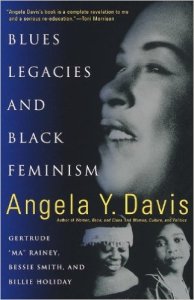 Black women musicians’ use of sound to negotiate gender norms and respectability politics is a centuries-old tradition. Angela Davis discusses the negotiations of Blues women in Blues Legacies & Black Feminism (1998), and Shana Redmond’s recent article “This Safer Space: Janelle Monae’s ‘Cold War’” reviews these traditions as they are relevant for black women pop musicians in the US. While there are many black femme musicians doing this work in queer subcultures and subgenres, I want to focus here on how this work appears within the Top 40, right alongside all these white post-feminist pop songs I talked about in my earlier post because such musical performances illustrate how black women negotiate hegemonic femininities in mainstream spaces.
As America’s post-identity white supremacist patriarchy conditionally and instrumentally includes people of color in privileged spaces, it demands “normal” gender and sexuality performances for the most legibly feminine women of color as the price of admission. As long as black women don’t express or evoke any ratchetness–any potential for blackness to destabilize cisbinary gender and hetero/homonormativity, to make gender and sexuality transitional–their expressions of sexuality and sexual agency fit with multi-racial white supremacist patriarchy.
It is in this complicated context that I situate Nicki Minaj’s (and in my next post Beyoncé’s and Missy Elliott’s) recent uses of sound and their bodies as instruments to generate sounds. If, as I argued in my previous post, the verbal and visual content of post-feminist pop songs and videos is thought to “politically” (i.e., formally, before the law) emancipate women while the sounds perform the ongoing work of white supremacist patriarchy, the songs I will discuss use sounds to perform alternative practices of emancipation. I’m arguing that white bourgeois post-feminism presents black women musicians with new variations on well-worn ideas and practices designed to oppress black women by placing them in racialized, gendered double-binds.
 For example, post-feminism transforms the well-worn virgin/whore dichotomy, which traditionally frames sexual respectability as a matter of chastity and purity (which, as Richard Dyer and others have argued, connotes racial whiteness), into a subject/object dichotomy. This dichotomy frames sexual respectability as a matter of agency and self-ownership (“good” women have agency over their sexuality; “bad” women are mere objects for others). As Cheryl Harris argues, ownership both discursively connotes and legally denotes racial whiteness. Combine the whiteness of self-ownership with well-established stereotypes about black women’s hypersexuality, and the post-feminist demand for sexual self-ownership puts black women in a catch-22: meeting the new post-feminist gender norm for femininity also means embodying old derogatory stereotypes.
I think of the three songs (“Anaconda,” “WTF,” and “Drunk in Love”) as adapting performance traditions to contemporary contexts. First, they are part of what both Ashton Crawley and Shakira Holt identify as the shouting tradition, which, as Holt explains, is a worship practice that “can include clapping, dancing, pacing, running, rocking, fainting, as well as using the voice in speaking, singing, laughing, weeping, yelling, and moaning.” She continues, arguing that “shouting…is also a binary-breaking performance which confounds—if only fleetingly—the divisions which have so often oppressed, menaced, and harmed them.” These vocal performances apply the shouting tradition’s combination of the choreographic and the sonic and binary-confounding tactics to queer listening and vocal performance strategies.
Francesca Royster identifies such strategies in both Michael Jackson’s work and her audition of it. According to Royster, Jackson’s use of non-verbal sounds produces an erotics that exceeds the cisheteronormative bounds of his songs’ lyrics. They were what allowed her, as a queer teenager, to identify with a love song that otherwise excluded her:
in the moments when he didn’t use words, ‘ch ch huhs,’ the ‘oohs,’ and the ‘hee hee hee hee hees’…I ignored the romantic stories of the lyrics and focused on the sounds, the timbre of his voice and the pauses in between. listening to those nonverbal moments–the murmured opening of “Don’t Stop Till You Get Enough,” or his sobbed breakdown at the end of “She’s Out of My Life,’ I discovered the erotic (117).
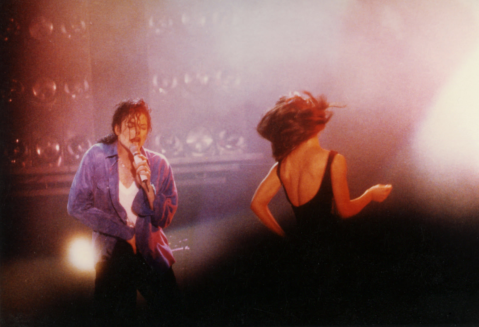
“Michael Jackson” by Flickr user Daniele Dalledonne, CC BY-SA 2.0
Royster references a black sexual politics in line with Audre Lorde’s notion of the erotic in “The Uses of the Erotic,” which is bodily pleasure informed by the implicit and explicit knowledges learned through lived experience on the margins of the “European-American male tradition” (54), and best expressed in the phrase “it feels right to me” (54). Lorde’s erotic is a script for knowing and feeling that doesn’t require us to adopt white supremacist gender and sexual identities to play along. Royster calls on this idea when she argues that Jackson’s non-verbal sounds–his use of timbre, rhythm, articulation, pitch–impart erotic experiences and gendered performances that can veer off the trite boy-meets-girl-boy-loses-girl stories in his lyrics. “Through his cries, whispers, groans, whines, and grunts, Jackson occupies a third space of gender, one that often undercuts his audience’s expectations of erotic identification” (119). Like shouting, “erotic” self-listening confounds several binaries designed specifically to oppress black women, including subject/object binaries and binary cisheterogender categories.
Nicki Minaj uses extra-verbal sounds as opportunities to feel her singing, rapping, vocalizing body as a source of what Holt calls “sonophilic” pleasure, pleasure that “provide[s] stimulation and identification in the listener” and invites the listener to sing (or shout) along. Minaj is praised for her self-possession when it comes to business or artistry, but such self-possession is condemned or erased entirely when discussing her performances of sexuality. As Treva B. Lindsey argues, “the frequency that Nicki works on is not the easiest frequency for us to wrestle with, because it’s about…whether we can actually tell the difference between self-objectification and self-gratification.’’ Though this frequency may be difficult to parse for ears tempered to rationalize post-feminist assumptions about subjectivity and gender, Minaj uses her signature wide sonic pallette to shift the conversation about subjectivity and gender to frequencies that rationalize alternative assumptions.
In her 2014 hit “Anaconda,” she makes a lot of noises: she laughs, snorts, trills her tongue, inhales with a low creaky sound in the back of her throat, percussively “chyeah”s from her diaphragm,among other sounds. The song’s coda finds her making most of the extraverbal sounds. This segment kicks off with her quasi-sarcastic cackle, which goes from her throat and chest up to resonate in her nasal and sinus cavities. She then ends her verse with a trademark “chyeah,” followed by another cackle. Then Minaj gives a gristly, creaky exhale and inhale, trilling her tongue and then finishing with a few more “chyeah”s. While these sounds do percussive and musical work within the song, we can’t discount the fact that they’re also, well…fun to make. They feel good, freeing even. And given the prominent role the enjoyment of one’s own and other women’s bodies plays in “Anaconda” and throughout Minaj’s ouevre, it makes sense that these sounds are, well, ways that she can go about feelin herself.
Listening to and feeling sonophilic pleasure in sounds she performs, Minaj both complicates post-feminism’s subject/object binaries and rescripts cishetero narratives about sexual pleasure. “Anaconda” flips the script on the misogyny of Sir Mix-a-Lot’s hit “Baby Got Back” by sampling the track and rearticulating cishertero male desire as Nicki’s own erotic. First, instead of accompanying a video about the male gaze, that bass hook now accompanies a video of Nicki’s pleasure in her femme body and the bodies of other black femmes, playing as she touches and admires other women working out with her. Second, Nicki re-scripts the bass line as a syllabification: “dun-da-da-dun-da-dun-da-dun-dun,” which keeps the pattern of accents on 1 and 4, while altering the melody’s pitch and rhythm.
Just as “Anaconda”’s lyrics re-script Mix-A-Lot’s male gaze, so do her sounds. If the original hook sonically orients listeners as cishetero “men” and “women,” Nicki’s vocal performance reorients listeners to create and experience bodily pleasure beyond the “legible” and the scripted. Though the lyrics are clearly about sexual pleasure, the sonic expression or representation of that pleasure–i.e., the performer’s pleasure in hearing/feeling herself make all these extraverbal sounds–makes it physically manifest in ways that aren’t conventionally understood as sexual or gendered. Because it veers off white ciseterogendered scripts about both gender and agency, Minaj’s performance of sonophilia is an instance of what L.H. Stallings calls hip hop’s “ratchet imagination.” This imagination is ignited by black women’s dance aesthetics, wherein “black women with various gender performances and sexual identities within the club, on stage and off, whose bodies and actions elicit new performances of black masculinity” renders both gender and subject/object binaries “transitional” (138).
Nicki isn’t the only black woman rapper to use extra-verbal vocal sounds to re-script gendered bodily pleasure. In my next post, I’ll look at Beyoncé and Missy Elliot’s use of extra-vocal sounds to stretch beyond post-feminism pop’s boundaries.
—
Featured image: screenshot from “Anaconda” music video
—
Robin James is Associate Professor of Philosophy at UNC Charlotte. She is author of two books: Resilience & Melancholy: pop music, feminism, and neoliberalism, published by Zer0 books last year, and The Conjectural Body: gender, race and the philosophy of music was published by Lexington Books in 2010. Her work on feminism, race, contemporary continental philosophy, pop music, and sound studies has appeared in The New Inquiry, Hypatia, differences, Contemporary Aesthetics, and the Journal of Popular Music Studies. She is also a digital sound artist and musician. She blogs at its-her-factory.com and is a regular contributor to Cyborgology.
—
 REWIND! . . .If you liked this post, you may also dig:
“I Love to Praise His Name”: Shouting as Feminine Disruption, Public Ecstasy, and Audio-Visual Pleasure–Shakira Holt
Music Meant to Make You Move: Considering the Aural Kinesthetic–Imani Kai Johnson
Something’s Got a Hold on Me: ‘Lingering Whispers’ of the Atlantic Slave Trade in Ghana–Sionne Neely
Share this:

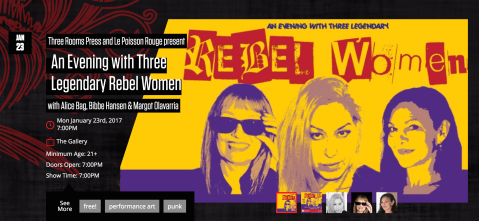
An Evening with Three Legendary Rebel Women at Le Poisson Rouge, January 27, 2017: Margot Olavarria, Bibbe Hansen, and Alice Bag
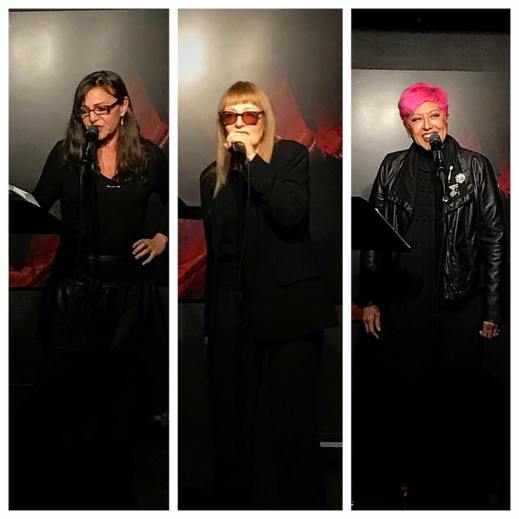
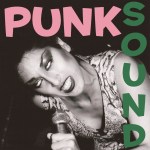
Image of Alice Bag used with her permission (thank you!)
For full intro and part one of the series click here. For part two, click here. For part three click here.
Our Punk Sound series implicitly argues that sound studies methodologies are better suited to understanding how punk works sonically than existing journalistic and academic conversations about musical genre, chord progressions, and/or genealogies of bands. Alexandra Vasquez’s sound-oriented work on Cuban music, for example, in Listening in Detail (2014) opens up necessary conversations about the “flashes, moments, sounds” in music that bear its meanings and its colonial, raced, classed, and gendered histories in material ways people can hear and feel. While retaining the specificity of Vasquez’s argument and the specific sonic archive bringing it forth, we too insist on “an ethical and intellectual obligation to the question: what do the musicians sound like” (12) and how do folks identifying with and through these musical sounds hear them?
In this series, we invite you to amplify varied historicized “details” of punk sound–its chunk-chunk-chunk skapunk riffs, screams, growls, group chants, driving rhythms, honking saxophones–hearing/feeling/touching these sounds in richly varied locations, times, places, and perspectives: as a pulsing bead of condensation dripping down the wall of The Smell in Downtown LA (#savethesmell), a drummer making her own time on tour, a drunk sitting too near the amp at a backyard party, a queer teenager in their bedroom being yelled at to “turn it down” and “act like a lady[or a man]”. . .and on and on. Today we feature Elizabeth Keenan, documenting an evening with three of punk’s legendary Rebel Women at a time of political crisis.
SOUND!
–Aaron SO! (Sounding Out!) + Jenny SO! (Sounding Out!)
This is not normal/let’s not pretend.
–Alice Bag, “Reign of Fear”
Since November 8, nothing has felt normal in the United States. Instead, every day brings new concerns about what the Trump administration might dismantle, destroy, or defund. The first two months have brought two attempts at an executive order barring immigrants to the US from predominantly Muslim countries and re-introduced the nation to the following cast of characters: a billionaire with no public education experience placed in charge of the Department of Education seeking to push a religious agenda; a man who once vowed to abolish the Department of Energy nominated to helm it; a white supremacist, Breitbart-editor consigliere; and a conspiracy-theorist National Security Advisor with suspicious ties to Russia.
This is not normal.
Let’s not pretend.
But in her song, “Reign of Fear,” Bag counters with defiance: “We’ll resist you/We won’t stand by.”
“Reign of Fear,” which Bag performed last at “Rebel Woman,” an event at (le) Poisson Rouge in New York City, encapsulated the evening’s message of resistance. Hosted by Three Rooms Press, “Rebel Women” featured readings from Margot Olavarria, Bibbe Hansen, and Alice Bag, all of whom have crafted careers that blend music and literary performance. Olavarria is the founding bass player for the Go-Go’s; she later played bass for post-punk experimental band Brian Brain, and holds a PhD in political science. Hansen, an actress, artist and musician, grew up in New York City’s art world. As a teen, she worked with Andy Warhol and played music with Jan Kerouac. Later, she co-founded the ironic Black Flag tribute band, Black Fag, with “terrorist drag artist” Vaginal Creme Davis (who also played with Alice Bag in Cholita). As lead singer and co-founder of the Bags, Alice Bag emerged as one of the most influential Chicana voices in the punk rock scene in Los Angeles in the 1970s (She later documented the women of this scene on her website). Since then, her musical career has included groundbreaking bands Castration Squad, Cholita, and Las Tres, as well as her self-titled solo debut in 2016. Her memoirs Violence Girl (2011) and Pipe Bomb for the Soul (2015) document her music and activism, from L.A. to Nicaragua.
“Rebel Women,” held just two days after the Women’s March on Washington, D.C.—and the satellite marches across the country and internationally—offered an opportunity to reflect on approaches to resistance, whether through music, words, or direct action. Although the Women’s March came under criticism for an initial lack of diversity, it became a protest led by activist women of color, with speakers and performers pushing back against the normalizing of misogyny from a pussy-grabbing president. Both Bag and Olavarria had attended the march in Washington, D.C.; many in the audience had marched there or in the crowd of 500,000 in New York City, which gave “Rebel Woman” a particularly urgent charge.

Image from Flickr user astoller (CC BY-NC-ND 2.0)
And our present moment calls for such urgency; among many other necessary actions, we need popular music scholars to rethink how resistance continues to be a productive idea for musicians and protesters, especially those with marginalized identities. In the past few months, “resistance” has experienced a resurgence in political circles. Many of the most popular posters at the Women’s march picked up on the idea of resistance, including one featuring Star Wars’ Princess Leia and the slogan, “A Woman’s Place Is in the Resistance.” #Resist has become a buzzword for organizing against the Trump administration, whether for women’s rights or against the administration’s racism, for health care or against various cabinet nominations. As a hashtag, #resist is remarkably open, allowing social media users to make connections between causes. This is what the performances of “Rebel Women” did so well for the audience at Le Poisson Rouge.
Calling an event “rebel women” positions Bag, Hansen, and Olavarria as “resistance” fighters. The title “Rebel Women” conjures Bikini Kill’s “Rebel Girl” and the punk-rock feminism of Riot Grrrl, a generation of feminism after Bag and Olivarria participated in the L.A. punk scene and nearly two decades after Hansen starred in a Warhol film based on her own life. Bag and Olavarria, first active as musicians during the 1980s, connected the present moment to the time when punk rock positioned itself against the policies of the Reagan administration. Situating their resistance in their Latina identities (Bag is Chicana, Olavarria is Chilean, both are Angelenos), they conveyed to the mostly white, mostly middle-class New York audience an urgent, intersectional politics. Hansen, who said she wasn’t “given the memo” to connect her reading to politics, read what she called a “time capsule.”
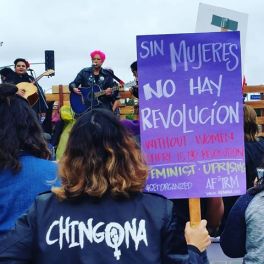
Alice Bag performing at the International Women’s March, January 21, 2017
The stark contrast between these performances brought up questions of power and privilege around what types of memoir are available to different types of women. Bag and Olivarria performed the intersectional oppressions that shaped their lives and connected them to politics, while Bibbe got to be “herself” (that is, unmarked, apolitical, and white). Was this a sign of a tacit understanding white women aren’t going to be as affected by Trump’s policies? (after all, white women elected Trump). Are women of color always expected to perform the emotional labor of connecting their oppressions to political policy, while white women can merely tell stories? Because it is exhausting for women of color to perform this emotional labor–and it can often be exploitative–its all the more important to recognize that Bag and Olivarria chose to do so at Le Poisson Rouge, as I am certain they constructed their performances to speak to this audience (to think otherwise would deny some incredibly smart women their agency).
With those differences in mind, “Rebel Women” underscored for me that intersectional feminism has much to offer in terms of reframing studies of resistance within popular music and is key to ensuring the field’s continued viability in the face of multiple, destructive Trump policies. The concept of intersectionality, developed by Kimberlé Crenshaw to describe the ways that multiple axes of identity—for example, gender, race, ethnicity, religion, or class—affect people in multi-dimensional ways. Crenshaw’s work stresses the importance of seeing intersectionality as an expression of structural power, not just an individual’s conception of their personal identity. Drawing on these intersections can help add complexity to how we understand “resistance” (or even #resistance).
While the study of resistance used to be common in popular music studies—especially in the 1990s—the framework rightly came under criticism as too binary, a position of counterculture vs. mainstream that worked well for glossing 1960s antiwar protests and punk rock, but too simplistic for exploring the nuances of the late-capitalist marketplace. As a theory that emerged from Marxist scholars and examined mostly close-knit, male-dominated subcultures (with formative texts such as Resistance Through Rituals and Subculture: the Meaning of Style), “resistance” was never ideal for grappling with networks organized from a diverse population. An intersectional view, however, understands that the “resistance” group is not evenly or equally affected by the policies of the dominant group; that multiple oppressions shape the forms of resistance available to individual actors; that people facing multiple oppressions also face heightened stakes when they engage in political protest; and that responding to the dominant group requires a commitment to others whose oppressions you may not share.
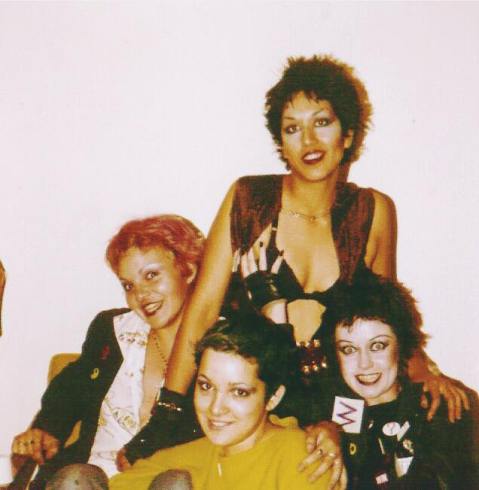
Archival Photo courtesy of Alice Bag, (from l-r) Margot Olavarria, Alice Bag, Jane Wiedlin, and Shannon Wilhelm
Olavarria’s performance, which opened the evening, illustrated intersectional resistance by interweaving work from the past and present. Instead of feeling piecemeal, each fragment signaled how structural power and resistance intersected in her life. In the first vignette, she described how, shortly after Trump received the Republican nomination, she ducked into a bar in Florida to escape the rain. A man next to her began to praise Trump. So did another. Finally, one turned to her, to ask what she thought of Trump’s policies. She responded: “’No habla Inglés. Yo soy Mexicana.’ I’m not really Mexican. I’m from Chile, known for poetry and protest. But today we are all Mexican, all Muslims, all immigrants.” Of course, we aren’t all Mexican, Muslims, or immigrants—but we can show thoughtful solidarity. Olavarria’s act of resistance worked because she effectively deployed her Latina identity to make a powerful intersectional point.
Intersectionality offers an important understanding, that not all moments are prime for resistance from every body in the same way. Women of color, for example, face different stakes and consequences than white women at the airport and at border crossings. In an excerpt from her entry in the musician’s guide Tour Smart, Olavarria recalled her band Brian Brain being pulled over by the US border patrol in the late 1980s. Dressed head-to-toe in thrift-store plaid in honor of their record label, Plaid Records, Olavarria didn’t look the part of a stowaway. But that didn’t stop the border guards from questioning her although she had a valid driver’s license, and her English bandmate’s visa had expired: “I was quizzed on civics. Then it was where did you go to high school? Who was your kindergarten teacher?” As the questioning grew more in depth, Olavarria “started to imagine working in Juarez in plaid attire.”
Olavarria’s story cannot be separated from Latinx identity, nor can they be separated from the politics of race, borders, and national identity in the United States. Instead, she illustrates that proposals such as Trump’s proposed “wall” have deep roots in anti-Mexican, anti-immigrant policies, and they show dark possibilities about the eagerness with which ICE embraced Trump’s “Muslim Ban.” Her story also emphasizes that, although our current moment is certainly an intensification of such harassment, deportation, and incarceration, women of color have faced these dangers in the U.S. for a very long time. What’s new, beyond Trump’s policies, is increased white feminist attention to these issues, an opportunity for both increased resistance and wary skepticism. Olavarria ended her segment with six suggestions for resistance reminding the audience that in these dark times, “walking around thinking we’re totally fucked will not change anything.” She certainly spoke to my struggle in that moment; the response in the room suggested I wasn’t alone.
Margot Olivarria’s Tips for Resistance:
- Wear your safety pin. It is appropriate that a punk fashion accessory has become the symbol of political dissidents. It may also come in handy when militarized police tear your clothes.
- Enjoy yourself. Walking around thinking we’re totally fucked will not change anything.
- If you have numb yourself, go ahead, as long as you don’t become addicted.
- Spread love. The only thing that will counter Trump’s hate is love.
- It may be that the only way we can say, “You’re fired!” to Trump is through the vote. Register as many progressive minded people as you can. Midterms will be crucial.
- If you see something, do something. Protest against all injustices we witness. Art mightier than the sword. Surround yourself with like-minded people and express outrage. As love Trumps hate, expression beats depression.
Hansen’s “time capsule” from 1964 described events leading to her starring in Andy Warhol’s film, Prison, based on her experiences in reform school. Hansen’s performance, told from behind her dark “reading sunglasses,” took on the tenor of a world-weary teenager.
She had run away from her parents—her father was Fluxus painter Al Hansen and her mother was poet and New York bon vivant Audrey Ostlin Hansen (who died at age 37 in 1968)—and was feeling stir-crazy at her friend Jeff’s apartment, because he only had “the same 40 books every hipster has.” So when her pal Janet Kerouac called with an invite of learning to cook spaghetti and taking acid for the first time, she jumped at the chance, even though she wasn’t sure about the acid part, because it was “too earnest.”
By ten that night, we’re rolling around, and spaghetti is everywhere. We’re dipping it in sauce, hurling it everywhere. We slither and roll across the floor like the first reptiles emerging from the primordial ooze. All the guys have hard-ons. I’m not really into orgies. They’re more like work, you know?
Hansen’s skill as an actor was on full display in her reading, as she vanished into her narration, capturing a unique combination of jadedness and enthusiasm. But every once in a while, a line like, “I may be a kid, but I’m also a freak,” would jump out. It was only toward the end of her reading, when Bibbe describes herself, still high, playing hopscotch with kids in the neighborhood that she reminds us: this is a child of twelve. The kids’ mom takes Bibbe in and gives her some cake, and she is astonished that this what normal parents do for kids.

Still from Bibbe Hansen’s screen test for Andy Warhol, 1964
The moment reveals the vulnerability of Bibbe, the runaway. She might have some agency in choosing to spend time with hipster boys and Jan Kerouac, but those come along with expectations of orgies and acid. It doesn’t leave much room for childhood, hopscotch, and cake. After this realization, Bibbe decides to call her father, who tells her, “I ain’t going to jail, so I guess you are.” In this powerlessness, Hansen found an upside: the day her father got her out of juvenile detention, he took her to lunch with Andy Warhol. Finding that upside does not mean that Hansen lacks self-awareness; instead, the moment read as one of acceptance. She cannot create a new girlhood for herself, just as she couldn’t escape her family by hiding with hipsters. “In the end,” she said, “you get what you get.”
Although Hansen’s reading felt disconnected from current politics, I heard her contribution to the evening as a moment of personal resistance. Hansen has often been defined by the men surrounding her: daughter Al Hansen, youngest of Andy Warhol’s Factory stars, mother of musician Beck. Instead of giving us Bibbe through her connections to her father, or to Warhol, she reframed her adolescent experiences so that they became side characters, opening up space for her unique, clear, adolescent voice, recast through a woman’s perspective.
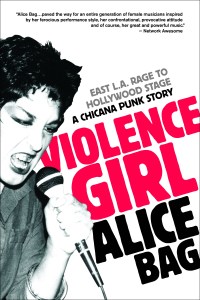 Alice Bag, singer of The Bags, finished out the night with combined spoken word and live musical performance. After playing in many bands since, Bag released her first solo album in 2016 on the independent punk label Don Giovanni Records. In the intervening years, she worked as an activist and teacher, both in the United States and in Central America. Her combination of readings from her memoirs and musical performance with Tanya Pearson evoked a lifetime of resistance. As the only performer to combine spoken word and live musical performance, Bag situated her songs in the readings she selected from her memoirs. Although the songs are relatively new, they drew on her rich experience with Latinx activism and education.
Her first excerpt, from Violence Girl, described the march for the National Chicano Moratorium on March 29, 1970, the largest anti-Vietnam protest by a minority group. Bag went to the march with her father. Until that moment, she said, “I had never realized I was part of a minority. Our enemies were not afraid to throw bottles at us, or shoot us.” The moment inspired a song that Bag performed, “White Justice.” Framed from a child’s perspective, “White Justice” explores the dawning realization that a march is not a parade, and that it may have dangerous consequences, even violence. At first filled with vivid colors of “blue skies/brown berets,” “green lawns,” and “yellow corn,” the mood turns when the police arrive, with “black gloves/blue collars/blood red/silver dollars,” a moment she connected to the present day: “Our struggle then was here at home/And it’s still going on.”
Bag encouraged the audience to sing along at the chorus of “White Justice”—and many members of the mostly white audience did. This eager participation stood in stark contrast to an incident I witnessed at the Women’s March in New York City, when a man tried to get a “Black Lives Matter” chant going during the New York City march and it was slow going.
 Bag’s next story, from Pipe Bomb for the Soul, illustrated that, while she was a member of an oppressed minority in the United States, she brought privilege with her as a teacher in Nicaragua. In her words, “I discovered a lot of things, mostly my own ignorance.” She returned to the United States and taught for over 20 years. Her next song, “Programmed,” expressed her frustration at the post-Leave No Child Behind state of education. At a certain point, she said, “The kids were asked to bubble in Scantrons. We need to teach kids to think for themselves, to value their heritage and experience.”
Finally, Bag ended with the song that began this blog post: “Reign of
Fear.” Inspired by the election, the song acknowledges both fear and
resistance. It is fear that elected Trump; it’s fear that now
motivates some of thethe resistance against him is a stance against
that fear. The fears that elected Trump are fears that treat rights as
a zero-sum game—that if women, or people of color, or queer people, or
Muslims, or Mexicans, or anyone else should gain rights or power, then
white men will lose theirs. In rejecting this view, Bag offers an
intersectional resistance in a punk song, noting “the future comes in
all colors and creeds.” Women of color have been leaders of the
resistance since Trump was elected, but they have also laid a
groundwork for intersectional feminist activism over decades of work.
This is not normal. Let’s not pretend.
But, in resistance lies hope.
In the small space below Le Poisson Rouge, Bag’s voice and Pearson’s guitar swelled to fill the room with that hope:
We reject your/Reign of fear. The future is female/the future is queer. Look out, man/’Cause the future is here.
—
Featured Image of Margot Olavarria, Bibbe Hansen, and Alice Bag by Christine Tottenham, Used here with permission of the Women of Rock Oral History Project.
—
Elizabeth K. Keenan completed her doctorate in ethnomusicology at Columbia University in 2008.She is currently reworking her academic work on popular music and feminism since 1990 into a book for normal humans. She has published in Women and Music, Journal of Popular Music Studies, Archivaria, and Current Musicology, as well as two chapters in Women Make Noise: Girl Bands from Motown to the Modern (2012). Her proudest moment is finally getting to interview Carrie Brownstein, for NYLON, more than ten years after she tried to interview Brownstein for her dissertation. She sometimes writes for the Chronicle of Higher Education’s Vitae website, and her occasional blogging can be found at badcoverversion.wordpress.com.
—

REWIND! . . .If you liked this post, you may also dig:
G.L.O.S.S., Hardcore, and the Righteous White Voice – Chris Chien
If La Llorona Was a Punk Rocker: Detonguing The Off-Key Caos and Screams of Alice Bag– Marlen Ríos-Hernández
Riot-Grrrl, Punk and the Tyranny of Technique – Tamra Lucid
SO! Amplifies: The Women in L.A. Punk Archive
Share this:


Current Top Posts





April 2021

January 2020

November 2019

October 2019

August 2019

April 2014

November 2017

March 2015

December 2017

October 2015
 Sounding Out!
Recent Comments