
Can’t Nobody Tell Me Nothin: Respectability and The Produced Voice in Lil Nas X’s “Old Town Road”
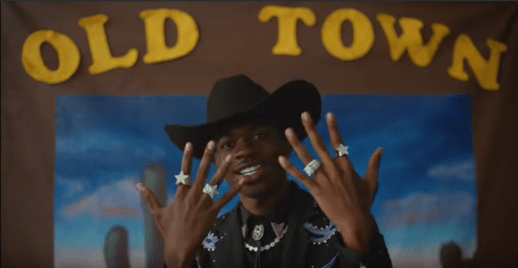
It’s been ten weeks now that we’ve all been kicking back in our Wranglers. allowing Lil Nas X’s infectious twang in “Old Town Road” to shower us in yeehaw goodness from its perch atop the Billboard Hot 100. Entrenched as it is on the pop chart, though, “Old Town Road”’s relationship to Billboard got off to a shaky start, first landing on the Hot Country Songs list only to be removed when the publication determined the hit “does not embrace enough elements of today’s country music to chart in its current version.” There’s a lot to unpack in a statement like that, and folks have been unpacking it quite consistently, especially in relation to notions of genre and race (in addition to Matthew Morrison’s recommended reads, I’d add Karl Hagstrom-Miller’s Segregating Sound, which traces the roots of segregated music markets). Using the context of that ongoing discussion about genre and race, I’m listening here to a specific moment in “Old Town Road”— the line “can’t nobody tell me nothin”—and the way it changes from the original version to the Billy Ray Cyrus remix. Lil Nas X uses the sound of his voice in this moment to savvily leverage his collaboration with a country music icon, and by doing so subtly drawing out the respectability politics underlying Billboard’s racialized genre categorization of his song.

Screenshot, “Lil Nas X – Old Town Road (Official Movie) ft. Billy Ray Cyrus”
After each of Lil Nas X’s two verses in the original “Old Town Road,” we hear the refrain “can’t nobody tell me nothin.” The song’s texture is fairly sparse throughout, but the refrains feature some added elements. The 808-style kick drum and rattling hihats continue to dominate the soundscape, but they yield just enough room for the banjo sample to come through more clearly than in the verse, and it plucks out a double-time rhythm in the refrain. The vocals change, too, as Lil Nas X performs a call-and-response with himself. The call, “can’t nobody tell me nothin,” is center channel, just as his voice has been throughout the verse, but the response, “can’t tell me nothin,” moves into the left and right speaker, a chorus of Lil Nas X answering the call. Listen closely to these vocals, and you’ll also hear some pitch correction. Colloquially known as “autotune,” this is an effect purposely pushed to extreme limits to produce garbled or robotic vocals and is a technique most often associated with contemporary hip hop and R&B. Here, it’s applied to this melodic refrain, most noticeably on “nothin” in the call and “can’t” in the response,
After Billboard removed the song from the Hot Country chart in late March, country star Billy Ray Cyrus tweeted his support for “Old Town Road,” and by early April, Lil Nas X had pulled him onto the remix that would come to dominate the Hot 100. The Cyrus remix is straightforward: Cyrus takes the opening chorus, then Lil Nas X’s original version plays through from the first verse to the last chorus, at which point Cyrus tacks on one more verse and then sings the hook in tandem with Lil Nas X to close the song. Well, it’s straightforward except that, while Lil Nas X’s material sounds otherwise unaltered from the original version, the pitch correction is smoothed out so that the garble from the previous version is gone.
In order to figure out what happened to the pitch correction from the first to second “Old Town Road,” I’m bringing in a conceptual framework I’ve been tinkering with the last couple of years: the produced voice. Within this framework, all recorded voices are produced in two specific ways: 1) everyone performs their bodies in relation to gender, race, ability, sex, and class norms, and 2) everyone who sings on record has their voice altered or affected with various levels of technology. To think about a produced voice is to think about how voices are shaped by recording technologies and social technologies at the same time. Listening to the multiple versions of “Old Town Road” draws my attention specifically to the always collaborative nature of produced voices.
In performativity terms—and here Judith Butler’s idea in “Performative Acts and Gender Constitution: An Essay in Phenomenology and Feminist Theory” that “one is not simply a body, but, in some very key sense, one does one’s body” (521) is crucial—a collaboratively produced voice is a little nebulous, as it’s not always clear who I’m collaborating with to produce my voice. Sometimes I can (shamefully, I assure you) recognize myself changing the way my voice sounds to fit into some sort of, say, gendered norm that my surroundings expect. As a white man operating in a white supremacist, cisheteropatriarchal society, the deeper my voice sounds, the more authority adheres to me. (Well, only to a point, but that’s another essay). Whether I consciously or subconsciously make my voice deeper, I am definitely involved in a collaboration, as the frequency of my voice is initiated in my body but dictated outside my body. Who I’m collaborating with is harder to establish – maybe it’s the people in the room, or maybe my produced voice and your listening ears (read Jennifer Stoever’s The Sonic Color Line for more on the listening ear) are all working in collaboration with notions of white masculine authority that have long-since been baked into society by teams of chefs whose names we didn’t record.

“Tools in a Recording Studio” by Flickr user Carol VanHook (CC BY-SA 2.0)
In studio production terms, a voice’s collaborators are often hard to name, too, but for different reasons. For most major label releases, we could ask who applied the effects that shaped the solo artist’s voice, and while there’s a specific answer to that question, I’m willing to bet that very few people know for sure. Even where we can track down the engineers, producers, and mix and master artists who worked on any given song, the division of labor is such that probably multiple people (some who aren’t credited anywhere as having worked on the song) adjusted the settings of those vocal effects at some point in the process, masking the details of the collaboration. In the end, we attribute the voice to a singular recording artist because that’s the person who initiated the sound and because the voice circulates in an individualistic, capitalist economy that requires a focal point for our consumption. But my point here is that collaboratively produced voices are messy, with so many actors—social or technological—playing a role in the final outcome that we lose track of all the moving pieces.
Not everyone is comfortable with this mess. For instance, a few years ago long-time David Bowie producer Tony Visconti, while lamenting the role of technology in contemporary studio recordings, mentioned Adele as a singer whose voice may not be as great as it is made to sound on record. Adele responded by requesting that Visconti suck her dick. And though the two seemed at odds with each other, they were being equally disingenuous: Visconti knows that every voice he’s produced has been manipulated in some way, and Adele, too, knows that her voice is run through a variety of effects and algorithms that make her sound as epically Adele as possible. Visconti and Adele align in their desire to sidestep the fundamental collaboration at play in recorded voices, keeping invisible the social and political norms that act on the voice, keeping inaudible the many technologies that shape the voice.
Propping up this Adele-Visconti exchange is a broader relationship between those who benefit from social gender/race scripts and those who benefit from masking technological collaboration. That is, Adele and Visconti both benefit, to varying degrees, from their white femininity and white masculinity, respectively; they fit the molds of race and gender respectability. Similarly, they both benefit from discourses surrounding respectable music and voice performance; they are imbued with singular talent by those discourses. And on the flipside of that relationship, where we find artists who have cultivated a failure to comport with the standards of a respectable singing voice, we’ll also find artists whose bodies don’t benefit from social gender/race scripts: especially Black and Brown artists—non-binary, women, and men. Here I’m using “failure” in the same sense Jack Halberstam does in The Queer Art of Failure, where failing is purposeful, subversive. To fail queerly isn’t to fall short of a standard you’re trying to meet; it’s to fall short of a standard you think is bullshit to begin with. This kind of failure would be a performance of non-conformity that draws attention to the ways that systemic flaws – whether in social codes or technological music collaborations – privilege ways of being and sounding that conform with white feminine and white masculine aesthetic standards. To fail to meet those standards is to call the standards into question.

So, because respectably collaborating a voice into existence involves masking the collaboration, failing to collaborate a voice into existence would involve exposing the process. This would open up the opportunity for us to hear a singer like Ma$e, who always sings and never sings well, as highlighting a part of the collaborative vocal process (namely pitch correction, either through training or processing the voice) by leaving it out. To listen to Ma$e in terms of failed collaboration is to notice which collaborators didn’t do their work. In Princess Nokia’s doubled and tripled and quadrupled voice, spread carefully across the stereo field, we hear a fully exposed collaboration that fails to even attempt to meet any standards of respectable singing voices. In the case of the countless trap artists whose voices come out garbled through the purposeful misapplication of pitch correction algorithms, we can hear the failure of collaboration in the clumsy or over-eager use of the technology. This performed pitch correction failure is the sound I started with, Lil Nas X on the original lines “can’t nobody tell me nothin.” It’s one of the few times we can hear a trap aesthetic in “Old Town Road,” outside of its instrumental.
In each of these instances, the failure to collaborate results in the failure to achieve a respectably produced voice: a voice that can sing on pitch, a voice that can sing on pitch live, a voice that is trained, a voice that is controlled, a voice that requires no intervention to be perceived as “good” or “beautiful” or “capable.” And when respectable vocal collaboration further empowers white femininity or white masculinity, failure to collaborate right can mean failing in a system that was never going to let you pass in the first place. Or failing in a system that applies nebulous genre standards that happen to keep a song fronted by a Black artist off the country charts but allow a remix of the same song to place a white country artist on the hip hop charts.
 The production shift on “can’t nobody tell me nothin” is subtle, but it brings the relationship between social race/gender scripts and technological musical collaboration into focus a bit. It isn’t hard to read “does not embrace enough elements of today’s country music” as “sounds too Black,” and enough people called bullshit on Billboard that the publication has had to explicitly deny that their decision had anything to do with race. Lil Nas X’s remix with Billy Ray Cyrus puts Billboard in a really tricky rhetorical position, though. Cyrus’s vocals—more pinched and nasally than Lil Nas X’s, with more vibrato on the hook (especially on “road” and “ride”), and framed without the hip hop-style drums for the first half of his verse—draw attention to the country elements already at play in the song and remove a good deal of doubt about whether “Old Town Road” broadly comports with the genre. But for Billboard to place the song back on the Country chart only after white Billy Ray Cyrus joined the show? Doing so would only intensify the belief that Billboard’s original decision was racially motivated. In order for Billboard to maintain its own colorblind respectability in this matter, in order to keep their name from being at the center of a controversy about race and genre, in order to avoid being the publication believed to still be divvying up genres primarily based on race in 2019, Billboard’s best move is to not move. Even when everyone else in the world knows “Old Town Road” is, among other things, a country song, Billboard’s country charts will chug along as if in a parallel universe where the song never existed.
 As Lil Nas X shifted Billboard into a rhetorical checkmate with the release of the Billy Ray Cyrus remix, he also shifted his voice into a more respectable rendition of “can’t nobody tell me nothin,” removing the extreme application of pitch correction effects. This seems the opposite of what we might expect. The Billy Ray Cyrus remix is defiant, thumbing its nose at Billboard for not recognizing the countryness of the tune to begin with. Why, in a defiant moment, would Lil Nas X become more respectable in his vocal production? I hear the smoothed-out remix vocals as a palimpsest, a writing-over that, in the traces of its editing, points to the fact that something has been changed, therefore never fully erasing the original’s over-affected refrain. These more respectable vocals seem to comport with Billboard’s expectations for what a country song should be, showing up in more acceptable garb to request admittance to the country chart, even as the new vocals smuggle in the memory of the original’s more roboticized lines.
While the original vocals failed to achieve respectability by exposing the recording technologies of collaboration, the remix vocals fail to achieve respectability by exposing the social technologies of collaboration, feigning compliance and daring its arbiter to fail it all the same. The change in “Old Town Road”’s vocals from original to remix, then, stacks collaborative exposures on top of one another as Lil Nas X reminds the industry gatekeepers that can’t nobody tell him nothin, indeed.
_
Featured image, and all images in this post: screenshots from “Lil Nas X – Old Town Road (Official Movie) ft. Billy Ray Cyrus” posted by YouTube user Lil Nas X
_
Justin aDams Burton is Assistant Professor of Music at Rider University. His research revolves around critical race and gender theory in hip hop and pop, and his book, Posthuman Rap, is available now. He is also co-editing the forthcoming (2018) Oxford Handbook of Hip Hop Music Studies. You can catch him at justindburton.com and on Twitter @j_adams_burton. His favorite rapper is one or two of the Fat Boys.
_
 REWIND! . . .If you liked this post, you may also dig:
Vocal Anguish, Disinformation, and the Politics of Eurovision 2016-Maria Sonevytsky
Cardi B: Bringing the Cold and Sexy to Hip Hop-Ashley Luthers
“To Unprotect and Subserve”: King Britt Samples the Sonic Archive of Police Violence-Alex Werth
Share this:

SO! Reads: Nicole Brittingham Furlonge’s Race Sounds: The Art of Listening in African American Literature

 Is literature truly a primarily visual entity? Do we only read books or are we actually actively “listening in print”(1)? These are the main questions that Nicole Brittingham Furlonge explores in Race Sounds: The Art of Listening in African American Literature (2018). As Black literature is often considered in terms of its attention to music, listening has therefore been limited to the musicality of stories, and many voices are left unheard. What Furlonge does in Race Sounds is go back to these unheard voices and focus our attention on them to see what we have been missing.
Furlonge wants to demonstrate how to “uncover the different ways of knowing that emerge from aural engagement” (3) such as exposed in Invisible Man, Their Eyes Were Watching God, and Sterling Brown’s “Ma Rainey.” She urges us to learn to “decode print differently” (4) by attuning the reader to the practice of listening, as well as to (black) sound(s) studies in more general terms, by referring to the essential scholars of the field: Tsitsi Jaji, Fred Moten, Kevin Quashie, Jennifer Stoever, and Alexander Weheliye – to name a few. Furlonge further “joins a collective effort to shift from a heavy emphasis on sounding to an attention to listening practices” (9). By redirecting the reader to listening practices, Furlonge leads us to reconsider our own “coexistence among humans.” (9)
 Furlonge, previously chair of the English Department at the Princeston Day School, and new Director of Teacher’s College’s Klingenstein for Independent School Leadership is not only an experienced scholar, but a teacher experiencing first hand what it means to listen: in a classroom and in society. Race Sounds is a five chapter book, moving from a consideration of “Literary Audiences” (chapter one), to the “Silence of Sound” (chapter two), to various forms of Listening (chapters three-five). Her fifth chapter, as well as her epilogue, have an especially interesting approach to Sound Studies through her lens as an educator. Not only does Furlonge have extensive classroom experience and administrative expertise in curriculum development, diversity issues, faculty development and issues regarding equity and access, but she is in a good position, as an independent scholar, to reflect on listening practices in and out of academia. It is quite exceptional to consider pedagogy in a critical text, as it observes education in the classroom and citizenship, in addition to her critical analysis.
By guiding her reader to listening in new modes throughout the book, Furlonge demonstrates how to “read in a multimodal way” (109) in order to learn to listen. This multimodal method includes an attention drawn beyond the book to “sonic literacy,” “aural pedagogies,” as well as the full sensory process of listening (from hearing, to vibrations, to sensory immersion of many kinds, and so on). She insists that, “while hearing is a physiological form of reception, listening is interpretive, situated, and reflective” (83), and this is ultimately what she presents in Race Sounds.
Furlonge aims at an audience of readers and listeners ready to deepen their understanding of the importance of sounds through the multisensory experiences that she proposes, especially as she describes her experience of “Aural Listening in the English Classroom.” She “aim[s] to amplify listening as a creative, aesthetic, and interpretative practice in ways that provoke robust motivations to develop our capacities to listen” (15) and manages to do just that by guiding her readers to consider sounds, voices, vibrations, silences, and historical listening, such as (re)reading Zora Neale Hurston’s Their Eyes Were Watching God in a new light, pointing to protagonist Phoebe’s listening throughout the novel.
Image by Flickr User Adrian Sampson, from a series of three art pieces engaged with Ralph Ellison’s Invisible Man (CC BY 2.0)
By close reading, or listening, to many canonic texts such as Their Eyes Were Watching God, The Chaneysville Incident, and Invisible Man, Furlonge performs an in-depth understanding of sound and what it means to “unmute words in print” (109). She renews the ways to interpret the texts by teaching her readers how to hear sonic literature. After situating the texts in the literature, she depicts what sounds and silences in the narratives tell the reader. For instance, in the first chapter, “Our Literary Audience,” Furlonge distances herself from the often-times asked question of “whether or not Janie realizes her voice over the course of [Their Eyes Were Watching God]” and thinks about “Phoebe’s hungry listening” (25) and what it adds to the conversation. Rather than analysing the story’s narrator yet again, Furlonge turns the reader’s attention towards her friend, the listener. The reader is presented with the importance of listening with an analysis of the “storyhearer” (60) and the work that they accomplish by listening in proper ways, which allows the speaker to develop a voice they know is heard. In this sense, “storyhearers” are used to critique and bring the listening back into stories. As Furlonge considers the body a “living archive” (63), the intake of sounds and its use and reiterations transport the stories and transform the listener into an archive that will allow the story to live on and be transported.
Race Sounds, therefore, brings to the discussion ideas of what it means to listen and one’s responsibility of listening properly and carrying the story within one’s self. “Historical listening” (82) further defines the importance of the audiences in engaging with sounds. As one’s listening, in becoming knowledge, develops this importance, as well as a civic responsibility, to bring the story where it needs to be. Furlonge wonders about the same question Peter Szendy asks, “Can one make a listening listened to? Can I transmit my listening, as unique as it is?” (102). Through reading of The Chaneysville Incident, she demonstrates the carrying of such stories through sound, “a sound that contains memories” (117), and its historical as well as civic importance.
Furlonge also brings new insight to Ralph Ellison’s Invisible Man, a novel often studied in African American Sound Studies, such as in Weheliye’s Phonographies, because of its use of the phonographand its attention to the use of music. However, Furlonge diverges from the usual exploration of Ellison’s narrator with his phonograph and insists on vibrations and the experience of “tactile listening” (55), or the materiality that comes with the listening experience. In shifting the conversation, Furlonge presents the physicality of sound and voices, and does so throughout Race Sounds. Redirecting the reader’s attention to how listening practices affects the novel’s narration, Furlonge aims for the reader to rethink their own listening practices in turn.

Teagle F. Bourge in Oren Jacoby’s adaptation of Ralph Ellison’s INVISIBLE MAN. At the Huntington Theatre Company Jan. 4 – Feb. 3, 2013. Photo: Michael Brosilow (Court Theatre production), (CC BY 2.0)
By directly addressing our way of being in the world, Furlonge creates a text that speaks to the reader, and cannot leave one indifferent. In her last chapter, a walkthrough of her class on listening, Furlonge plunges with the reader into a sense of meaning; everything that one has just read comes together into her classroom. The result of Furlonge’s observations guide the reader into finding a new listener within themselves. Before concluding her book, she describes:
While I hoped students would grow as listeners, I did not anticipate that their perceptions of themselves as readers and writers would also shift. […] Helping students learn to listen, to be attentive to others, and to be discerning of all the talk that comes their way can lead to enduring understandings about themselves and the ways in which they want to engage with and change their world. (118)
As optimistic and ambitious as this statement is, I believe Furlonge manages to teach exactly this to the reader of Race Sounds. By concretely applying in her classroom what she presents in this book, not only does she prove how her work furthers the conversation of Sound Studies, she demonstrates how it belongs in larger conversations about our society’s listening practices and the role of every person in it.

“Students travel around the world with books” image by Flickr User Garrison Casey, (CC BY 2.0)
Furlonge’s book intends to speak to anyone interested in their own listening practices. By being conscious of one’s own body as a “living archive,” it may allow a story to live on by listening properly to it. Finally, “we are unaware of the conversations we miss when we speak” (120) concludes the book on a reflection unto the self to be a better listener, in order to allow our surroundings to teach us to listen differently, and maybe hear things we have not heard before.
—
Featured Image: Quinn Dombrowski,(CC BY-SA 2.0)
—
Alexandrine Lacelle is mainly interested in Modernist literature, women’s writing, and Sound Studies (especially silences). She is pursuing her Master’s degree in English Literature at Queen’s University, where she will be starting her PhD in the fall of 2019, with a focus on the use of wordlessness and sounds in early 20th century literature by women. Originally from Montreal, she completed her BA in English Literature at Concordia University, where she was able to practice her background in French, English, and German.
—
 REWIND!…If you liked this post, you may also dig:
SO! Reads: Dolores Inés Casillas’s ¡Sounds of Belonging!–Monica De La Torre
SO! Reads: Roshanak Khesti’s Modernity’s Ear–Shayna Silverstein
SO! Reads: Kirstie Dorr’s On Site, In Sound: Performance Geographies in América Latina–Benjamin Bean
Share this:


Current Top Posts





April 2021

January 2020

November 2019

October 2019

August 2019

April 2014

November 2017

March 2015

December 2017

October 2015
 Sounding Out!
Recent Comments