
On the Lower Frequencies: Norman Corwin, Colorblindness, and the “Golden Age” of U.S. Radio
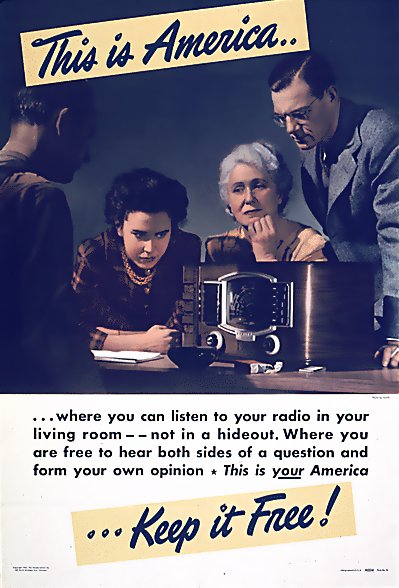
Editor’s Note: This is Liana, Managing Editor for Sounding Out!, introducing you to this special fall installment of our series “Tune Into the Past,” penned by our very own Editor-in-Chief and Guest Posts Editor, Jennifer Stoever-Ackerman. We at SO! have been waiting for months for Jennifer to share with us a brand-spanking new blog post! She’s back in action this month with a post that asks readers to listen to the cultural landscape that foregrounded Norman Corwin’s success as a radio writer and producer, inspired by her research on her book manuscript on the sonic color-line. In particular, Jennifer addresses the notion of colorblindness and its very real repercussions on radio artists and producers of color in the 1940s. Want to catch up on our series on Norman Corwin? Check out this summer’s posts by radio scholars Neil Verma, Shawn VanCour, and Alex Russo. If you’re all caught up, open your ears and your eyes then (to paraphrase Kurt Cobain). —LMS
—
DOI: https://doi.org/10.59350/zqa88-d9v21
Almost every day, I hear someone on the radio hailing America as the home of democracy. Yet almost every network is guilty of discrimination against the Negro performer. There are a few isolated cases of Negroes in broadcasting, but the lily-white policy is seldom violated.—Lena Horne, Chicago Defender 1940
The fine pieces in the “Tune in to the Past” series have thoughtfully considered the audible legacies of Norman Corwin: the “kaleidosonic” aesthetics that Neil Verma called the “Corwinesque,” the virtually seamless melding of artistic and commercial concerns that Shawn VanCour analyzed, and the echoes of Corwin remixed into WNYC’s Radiolab that Alexander Russo amplified. But the research I performed for my book manuscript, The Sonic Color-line: Race and the Cultural Politics of Listening, about the fraught relationship between race and 1940s radio, left me pondering the gaps and silences of Corwin’s soundscape. Radio’s “Golden Age” was also its most racially segregated: was the philosophy of “colorblindness” that Norman Corwin publicly espoused key to keeping it that way?
It’s not my goal to undermine Corwin’s work, but rather to enhance our understanding of it by embedding his broadcasts in the wider political, historical and sonic fields in which he was enmeshed. Just as Corwin’s sounded legacy left long-lasting traces in our media, so too have the silences and omissions fostered by the media executives, casting directors, union bosses, radio critics, and sonic auteurs of the “Golden Age.” If Corwin’s work is difficult to access save for far-flung archives and spotty collector’s catalogues, the exclusions of African-American producers, performers, and listeners are even harder to hear, in part because of his very insistence that radio’s microphones were colorblind. As the epigraph from Lena Horne testifies, the discourse of democracy is not mutually exclusive with segregation. In what follows, I discuss the intensely segregated history of the “Golden Age of Radio,” arguing that one of Corwin’s most far-reaching legacies may not have been set in motion by his virtuostic broadcasting, but rather by the World War II-era liberalism that shaped it.
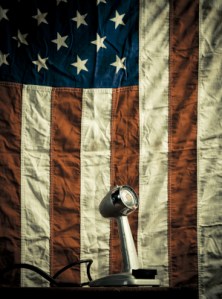
The apex of Corwin’s radio career coincided with a profound shift in America’s dominant racial formation, the beginnings of “colorblindness.” By colorblindness, I mean the belief that if individuals and institutions ignored skin color as a signifier and eliminating race as an official category of identity—particularly within governmental institutions—it would cease to matter in American life and all groups would have equitable access to the privileges, opportunities, and freedoms afforded by citizenship. The shift toward colorblindness—what Michele Hilmes calls America’s “wartime racial realignment” in Radio Voices—was predicated on creating a sense of unity that would inspire men across the color-line to sign up to fight what was dubbed a war to end racism and fascism, even as it raged on in their segregated hometowns. The Pittsburgh Courier’s Double V Campaign—Victory against fascism abroad and Victory against racism at home—addressed these ironies. Barbara Dianne Savage’s Broadcasting Freedom: Radio, War, and the Politics of Race details the suppression of many black newspapers on military bases due to the Double V Campaign, as well as the pressure it put on government radio programs to address race. However, she notes:
if black people had been forced to rely on radio as their primary means of communication about the failings of the federal government, they would have been on an impossible mission, since they were admitted to radio only as entertainers or as briefly invited guests expected to be on their best behavior (94).
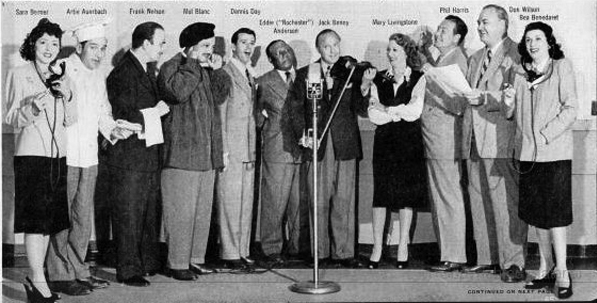
Despite high-profile protests in the black press, mainstream broadcasters constructed radio as an unmediated purveyor of equality and truth with increasing frequency during World War II—its “lofty aerials, symbols of freedom” according to New York Times radio critic Orrin Dunlap. In the case of Norman Corwin, he wrote a symptomatic (and nervy) editorial for Negro Digest in 1945 that depicted U.S. radio as a direct material and technological representation of colorblindness itself.
In “A Microphone. . . is. . . Color Blind”–what revealing ellipses!–Corwin assures black readers that “my feeling about Negroes in radio is that they belong as surely as the microphone.” This strange opening gambit compares black participation in radio to the mute technological presence of the microphone that, while absolutely central to broadcasting, is an object with no inherent agency. Unlike the proprietary, agenda-setting presence of whites in radio, a microphone amplifies the voices of others, while speaking not a word of its own. From his privileged vantage point, Corwin doesn’t quite realize how colorblindness enables him to use black people as tools.
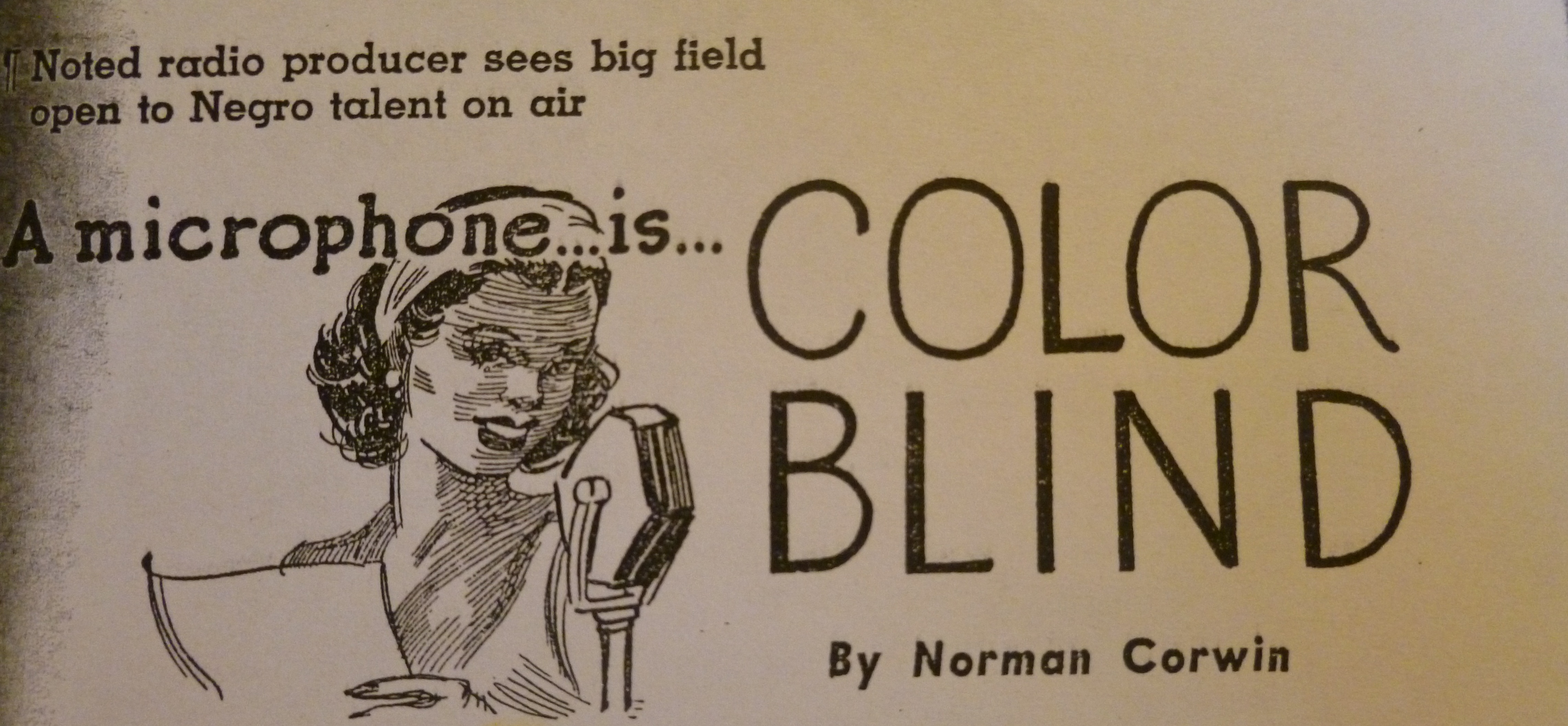
And, while Corwin’s title insists on the microphone’s colorblindness, his article suggests otherwise. Much of his description of what America is missing without black people’s radio presence has to do with aural racial difference: “I have found the same thing that makes Negroes supremely great artists in song makes them great in speech. The color and warmth conveyed in the performance of a Negro artist is directly communicable by air. The microphone is a faithful reporter and says exactly what it hears.” In addition to perpetuating the old stereotype of black people as natural performers, Corwin’s realist depiction of the microphone as a “faithful reporter” that “says exactly what it hears” covers up exactly how much black voices were sculpted for white consumption during this period in radio; as actor Johnny Lee (“Algonquin C. Calhoun” on Amos ‘n’ Andy) told UCLA graduate student researcher Estelle Edmerson in 1954: “I had to learn how to talk as white people believed Negroes talked. Most of the directors take it for granted that if you’re a Negro actor, you’ll do the part of a Negro automatically.”
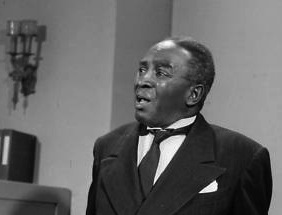
Whereas radio listeners were able to hear a wide range of white voices in a spectrum of roles—major and minor, comedic, dramatic, musical, informational—the sound and the content of black speech was circumscribed by the sonic color-line that marked it as “automatic,” essential, comedic, and potentially dangerous. Corwin’s use of the word “communicable” rather than “communicated,” for example, is a revealing flourish giving black sound a tinge of contagion and infectiousness. While ostensibly celebrating black voices, this passage simultaneously assures white listeners that they will still be able to unequivocally identify the race of any speaker over the “colorblind” airwaves and that this experience will be a pleasurable one for them. While the microphone may be color blind, it clearly is not color deaf.
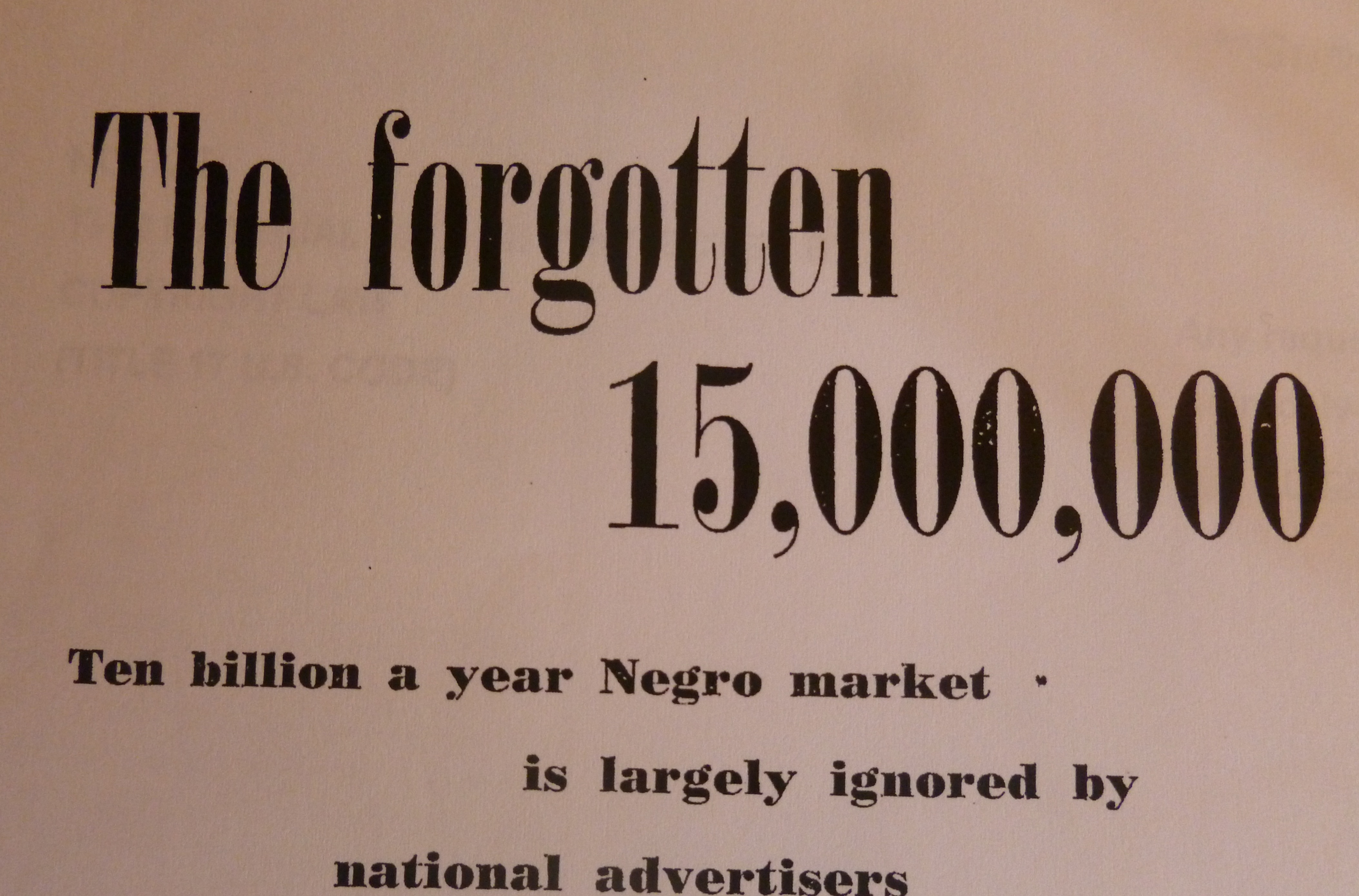
That Corwin assumes a white audience becomes more obvious with his assertion a few lines later that “I have found too few Negroes who have taken an interest in radio. I suspect it’s because they don’t know about it.” This statement is fairly incredible, considering that the Research Company of America published a study in the radio industry magazine Sponsor that placed African American radio ownership at 87%, just shy of the national figure of 90% (October 1949, 25). Sponsor dubbed black audiences “The Forgotten 15,000,000.”
In addition to being inaccurate, Corwin’s suggestion that African Americans had limited knowledge of radio performs one of the signature moves of colorblindness; it makes institutional barriers to access—lack of training, networks, and mentorship, as well as straight up discriminatory hiring practices—invisible by asserting that black people only need to work harder to succeed in the American media industry. Under colorblindness, the failure to achieve success equitable to white citizens falls squarely on the shoulders of those oppressed. It also willfully mutes the protest of many black actors—such as Butterfly McQueen—who refused to participate in the segregated industry and the agency of all the black listeners who turned the dial on shows distasteful to them, allowing the fantasy of a unified (white) America to remain a powerful referent.
By and large, Corwin’s article paints colorblindness as already achieved. In his estimation, it is up to black people themselves to take advantages of the opportunities he suggests already await them via the colorblind microphone: “My attitude is not unique among radio directors—at least not in the main centers of radio[. . . ],“Corwin insists, “there is less prejudice in this field than in any other. It exists unfortunately, but you can get a hearing.” For someone whose bread and butter was rhetorical flourish, Corwin’s use of passive sentence construction to discuss racial prejudice is significant—he naturalizes it as something that merely “exists,” tooling along without any specific historical agent performing the discriminatory and oppressive actions. Such omission lets the white gatekeepers of the 1940s radio industry off the hook for both the institutional and individual forms of discrimination that kept the industry largely, as Lena Horne phrased it, “lily-white.”
Radio’s profound whiteness was aural as well as visual. In Corwin’s colorblind America, a radio “hearing” comes at a heavy price for African Americans. Without commenting on educational segregation, Corwin proclaimed: “Negro schools should have in their curriculum courses in public speaking, radio, theater. There is no reason why there should not be Negro announcers. It is important to study diction so that distinction in speech cannot be noted.” While Corwin begins “A Microphone. . . is. . .Color blind” by arguing that black voices should continue to retain the racial markings that are legible (and pleasurable) to white listeners, he then suggests they must also simultaneously sound enough like the white voices surrounding them in order to be heard and accepted as fellow American citizens. Radio didn’t just passively reflect the sounds of American citizenship during this period–it actively constructed them on a foundation of exclusion and silencing.
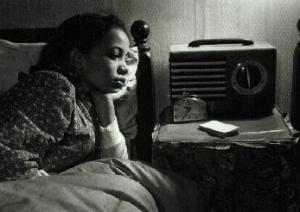
There remains, then, a profound disconnect between the full exercise of American citizenship, the idealized discourse of colorblind equality forwarded by government officials, media critics, and prominent broadcasters exemplified here by Corwin, and the actual representation of African Americans as radio producers, performers, and listeners during and after this period. At the same time as state-sponsored colorblind ideology rose to prominence during the war years, the U.S.’s airwaves became almost exclusively white. There were no black writers regularly employed by any national radio station during the 1940s and there was not a single black member of the Los Angeles Writer’s Guild. While black authors Langston Hughes and Carlton Moss wrote occasional scripts on one-shot contracts, they were about topics deemed of black interest by the networks. Black radio critic Joe Bostic—who would later become one of the nation’s first black radio sportscasters—described the limited openings for black radio performers:
publication last week of the most authoritative and comprehensive of the radio polls showed not a single Negro entertainer placing in the first ten of any branch of radio entertainment. Such a compilation outlines, in bold relief the disturbing fact that the Negro, long a leader in every phase of entertainment, is being excluded in this newest and most lucrative branch (People’s Voice, 1942).
Regular on-site broadcasts from nightspots that featured black performers all but vanished after 1940, meaning that the vast majority of black musical performances broadcast over the American radio networks were conditioned and mediated by white announcers and sponsors as well as the sounds of white-oriented programming that introduced and followed them.
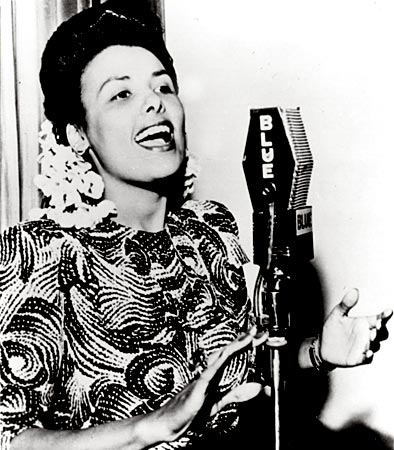
To be clear, I don’t blame Corwin individually for the ideology of colorblindness and the world it has wrought, but I do think it is important to consider his role as a cultural producer in the “Golden Age” of segregated radio, and as a power broker who helped shape the media landscape with which we now contend. While we commemorate his labors as a sonic artist with high journalistic standards who undoubtedly worked to “glorify the ‘common man,'” we also have to consider the institutionalized privilege that enabled him to claim this role as his own, as well as the many people silenced by him doing so, inadvertently or not. Tuning in to the past demands a vigilant ear attentive to the profound silences of exclusion: the traces of words muted, mangled, disciplined and unsaid, as well as the subterranean reverberations ghosting the triumphant tones of the “Golden Age,” a shadow broadcast, on the lower frequencies, of all the sounds that might have been.
—
Jennifer Stoeveris co-founder, Editor-in-Chief and Guest Posts Editor for Sounding Out! She is also Assistant Professor of English at Binghamton University and a former Fellow at the Society for the Humanities at Cornell University (2011-2012).
—
Share this:

Listening to the A. D. White House: Cornell’s Society for the Humanities’ Year in Review
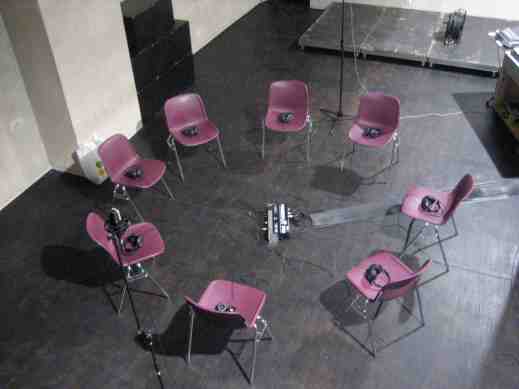

Today, Society for the Humanities Director Timothy Murray sings us back home with a meditation on the soundscapes of study at the A.D. White House this year, closing out our spring “Live from the SHC” series covering new research on “Sound: Culture, Theory, Practice, Politics.” The 2011-2012 Fellows have got to say goodbye for the summer–and sadly beyond–but we all hope that next years’ Fellows (2012-2013 Theme: Risk @ Humanities) enjoy all the good vibrations we will leave behind, and that you, Dear SO! readers, have enjoyed our broadcast! Our summer series, “Tuning In the Past,” on radio and legacy of broadcaster Norman Corwin, featuring Neil Verma, Shawn VanCour, and Alex Russo begins at the end of June. And, of course, every Monday in between and beyond, we’ll keep giving you something you can feel. –JS, Editor in Chief (and 2011-2012 SHC Fellow)
—
DOI: https://doi.org/10.59350/xfep8-syc96
Many thanks to Jennifer Stoever for hosting “Live from the SHC” on Sounding Out! What a fantastic experience it’s been to have Jennifer screening and tweaking Sounding Out! from her garret office overlooking the gardens behind the A.D. White House, the Cornell home of the Cornell’s Society for the Humanities. Readers of “Live from the SHC” have read various strains of this year’s focal theme, “Sound: Culture, Theory, Practice, Politics.” The aim of this year’s residential research project was to contemplate and analyze the resonance of historical and contemporary representations, movements, ideas, and negations of sound.
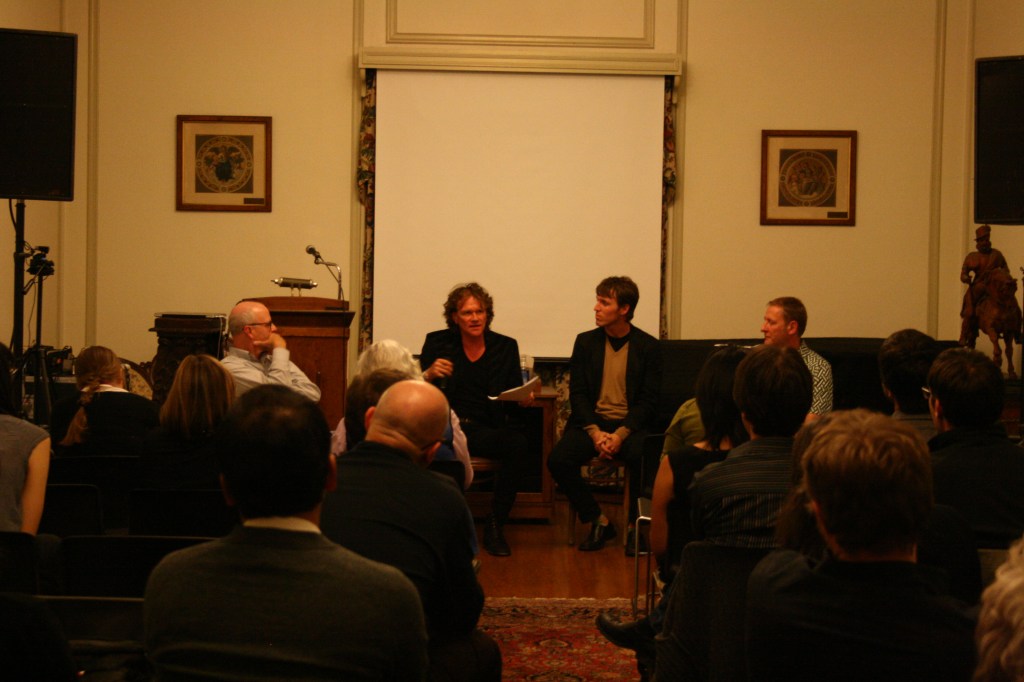
Open to study of the broadest cross-cultural range of contexts and media that cross the boundaries of time and space–from East and West/South and North–the Fellows’ research delved into the complex ways that sound abounds in visual, textual, and aural realms. From “voicing” to “listening,” sound shaped the framework of our critical and philosophical analyses of the body, affect, and social publics. Sound came to be appreciated for its shaping of the parameters of psycho-cultural imaginaries, social practice, religious ritual, and political regulation throughout history and across the globe. Just as sound differs in the global context of capitalism and cosmopolitanism, not to mention the specificities of ethnic difference and cultural diversity, “voice,” “hearing,” and “listening” frame the humanities disciplines in relation to their aesthetic properties and political ramifications.
The Fellows found themselves reflecting on several key issues. Which criteria differentiates natural from artificial sounds? Does sound challenge disciplinary distinctions between the visual and the oral/aural/tactile? Can the loud noises of industrial culture be distinguished from the synthetic sounds of electronic music, the stammerings of performance and the vibrations of philosophical manifestos? It should come as no surprise to followers of Sounding Out! that sound marks the passage of time, the correlation of the aural to the movement of the body in dance and performance, the sonic promise of cartographic projects of social movements and migrations, and the cultural and ethnic specificities of acoustic fields and rhythms in the age of sampling and mixing, not to mention the gender, racial, and ethnic import of voice and spoken narrative.
Adding vibrant texture to our year-long discussions were the three weeks spent in extended dialogue with the Society’s Senior Invited Fellows. Emily Thompson (The Soundscape of Modernity) charted the histories of the architectonic sounds of cinema houses as well as the untraceable wealth of the historical sounds of New York City as its peripheries morphed from country estate to urban zone. Brandon LaBelle came from Norway to take us on a journey of artistic imagination and phenomenological hopefulness as he cruised his writings on Acoustic Territories and Site Specific Sound while sampling the background noises of his multimedia installations. Then Norie Neumark, fresh off the release of VOICE: Vocal Aesthetics in Digital Arts and Media (co-edited with Ross Gibson and Theo Van Leewen), arrived from Australia to follow up on our 2003 online seminar on Sound Cultures. She reminded us of the deep history of sound studies down under, while focusing our attention on voicings and her own multimedia art practice that blends spoken narrative, synthetic noise, mouthed breath, and shocks in the ear. [The “Live From the SHC” logo is a piece from Neumark and Maria Miranda’s “Shock in the Ear”–ED].
.
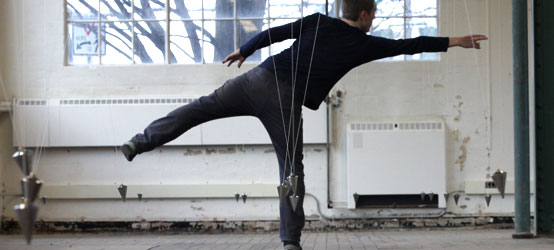
Various other visitors throughout the year included multimedia artists Mendi and Keith Obadike whose “not” Afrofuturism walked us through their exciting series of performance works,“Four Electric Ghosts,” Caitlin Marshall from Berkeley who brought cyborg speech to life with her prosthetic soundings, and renowned choreographer William Forsythe, whose four-hour choreography piece “Nowhere and Everywhere at the Same Time“–performed amidst amidst over 150 hanging pendulums–combined dance and environment as a means of physically manifesting the process of thought. Marjorie Garber from Harvard rode our acoustic wave to reflect on the future of the humanities while Norma Coates came down from Western Ontario to sensitize us to the mixes of pop sound and culture.
In listening back to the echoes of the year past, rather than here retracing the specific projects of our Fellows (you can consult the critical tales already Sound[ed] Out! by Damien Keane, Tom McEnaney, Nina Sun Eidsheim, Jonathan Skinner, Eric Lott, Jennifer Stoever, and Jeanette Jouili), I find myself sampling the sounds, noises, and glitches that provided unexpected reverbs for the academic writing happening behind closed office doors throughout the A. D. White House.
Sounds of glee, delight, and play first arrived on the scene at the end of August with gaggles of laughing and screaming kids running wild and climbing trees in the gardens, surrounded by bemused adults and envious dogs. Accompanying partners brought to the mix the diverse soundings of African film, suspicious packages, software beats, performance art, critical geography, and real estate hawking. No wonder the assembled Fellows strayed so readily, if not unconventionally, from the promised strictures of already exceptional research projects that brought to our weekly seminar table the street sounds of Egypt, Turkey, Korea, early modern Germany, contemporary Islam, American hip hop, contemporary art, circuit bending, gaming, German, Irish, U.S. and Latin American radio, voices of performers, animals, and posthumans, urban soundscapes, and, here making a loud call out to one Stoever-Ackerman, sonic color-lines.
Resounding throughout the year to give cadence and timbre to our serious ponderings were the spontaneous soundings that seemed always to give ample depth to the provocative interstices of intellectual life. There were the noises of glitch, circuit-bending, and Guitar Hero that stretched and extended the purpose of music and machinics. There were spontaneous voice lessons that turned anxious performers into wild choreographic objects. Singing above in the hidden alcoves–when not streaming through the high Victorian ceilings of the A. D. White House–were our flying mammal friends whose echolocation extended beyond the reach of our mere human ears. Then were the sudden noisy reminders of the vulnerability of our corporeal organs. Who could forget the reported imaginary of the crunch of human leg against car as two of our Fellows found themselves under assault from a crazed pizza delivery guy – luckily no lasting damage?
Our fellows will carry away the subliminal lacings of the lighter sounds of improvisation and camaraderie. There were the poundings of feet and slappings of bodies dancing late into the night after hours of laborious conferencing to the beats of DJs Marcus Boon, Art Jones, and Earmuffs.
.
At the end of the year, Fellows grooved to the beat of Tom McEnaney playing bass with The Vix Krater out at the Rongo in Trumansburg, NY (down the road from the home of Moog), before retreating to the bowels of the A. D. White House basement for another dusty, late night jam session with drums, synthesizer, guitars, bass, and various acoustics, led by the ultimate sound blogger herself, the guitar heroesse, Jenny S-A. [Well, I’m learning. So far I know E-Minor. It was Trevor that really broke my strings in! –ED].
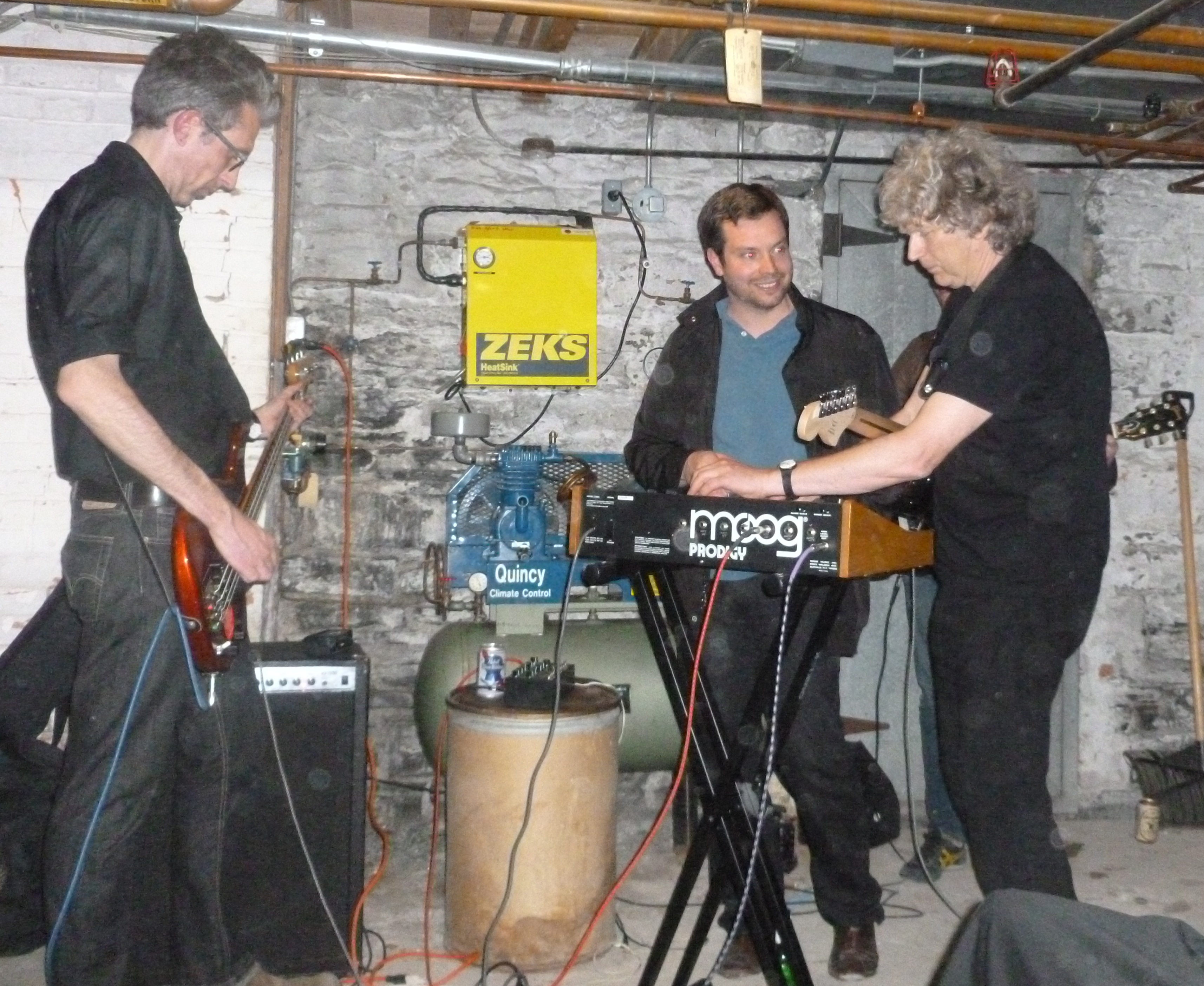
And, yes, there was always the accompaniment of the clinks of glasses and bottles bearing the liquid life blood of any noisy crew.
The French philososopher, Jean-Luc Nancy, reminds us in Listening (2007) that the shared space of noise and sound entails “a totality of referrals: from a sign to a thing, from a state of things to a quality, from a subject to another subject or to itself, all simultaneously. Sound is also made of referrals: it spreads in space, where it resounds while still resounding ‘in me'” (7). What resounded and referred this year at the Society for the Humanities was the very immaterial and inchoate touch of sound, which is a-live in intensity and force. But who would have imagined the intensity of the noise of referral that remained so constant throughout the year to envelop the solid academic work of our Fellows in the wilding vibrations of jouissance? Indeed, perhaps the best lesson of the year, at a moment when the humanities finds itself threatened and in transition by the supposed certainty of metric and assessment, is that the Society’s scholarship in sound was driven by the relentless noise of referral and the unpredictable delight of the commune.
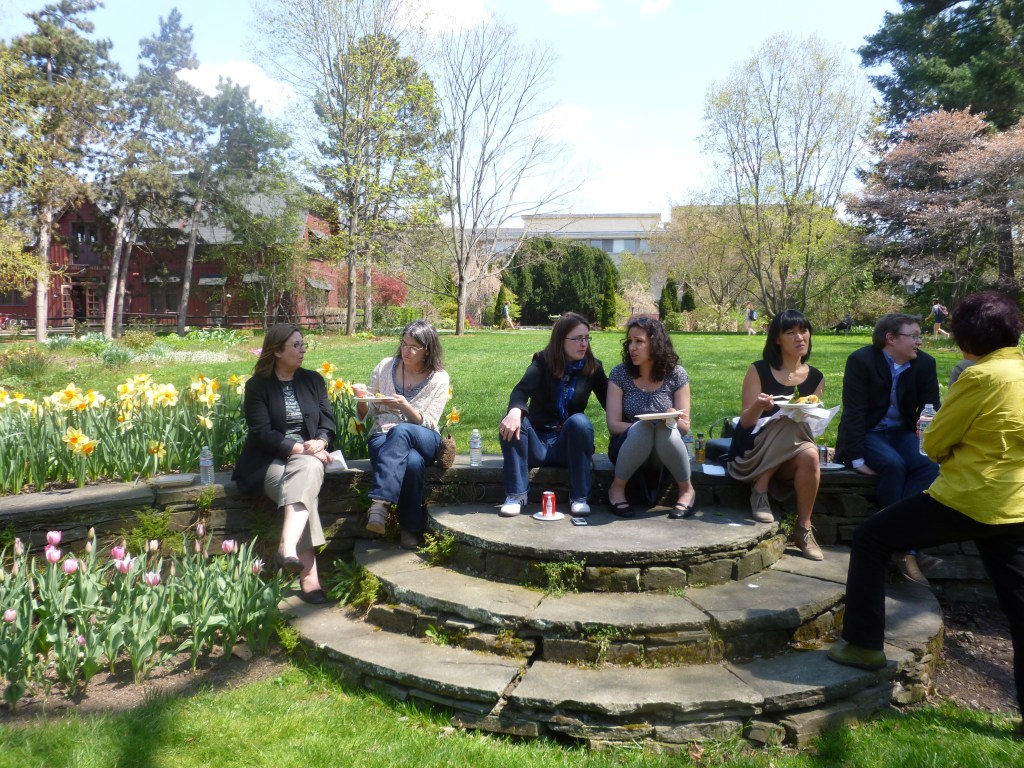
—
Featured Image Credit: Brandon La Belle, Duck Duck Goose Installation, Ausland, Berlin
—
Timothy Murray is Professor of Comparative Literature and English and Curator of the Rose Goldsen Archive of New Media Art. He is the Cornell Principal Investigator of the Central Humanities Corridor, generously supported by a grant from the Andrew W. Mellon Foundation, and he sits on the International Advisory Board of the Consortium of the Humanities Centers and Institutes (CHCI) and the Steering Committee of the Humanities, Arts, Science, and Technology Advanced Collaboratory (HASTAC). He is Co-Moderator of the –empyre- new media listserv and the author of Digital Baroque: New Media Art and Cinematic Folds (Minnesota 2008); Zonas de Contacto: el arte en CD-ROM (Centro de la imagen, 1999); Drama Trauma: Specters of Race and Sexuality in Performance, Video, Art (Routledge, 1997); Like a Film: Ideological Fantasy on Screen, Camera, and Canvas (Routledge, 1993); Theatrical Legitimation: Allegories of Genius in XVIIth-Century England and France (Oxford, 1987). He is editor of Mimesis, Masochism & Mime: The Politics of Theatricality in Contemporary French Thought (Michigan, 1997) and, with Alan Smith, Repossessions: Psychoanalysis and the Phantasms of Early-Modern Culture (Minnesota, 1997). His curatorial projects include CTHEORY MULTIMEDIA and Contact Zones: The Art of the CD-Rom.
—
Share this:




Current Top Posts





April 2021

January 2020

November 2019

October 2019

August 2019

April 2014

November 2017

March 2015

December 2017

October 2015


Recent Comments