
“In My Life”: Loving Queerly and Singing Across Generations
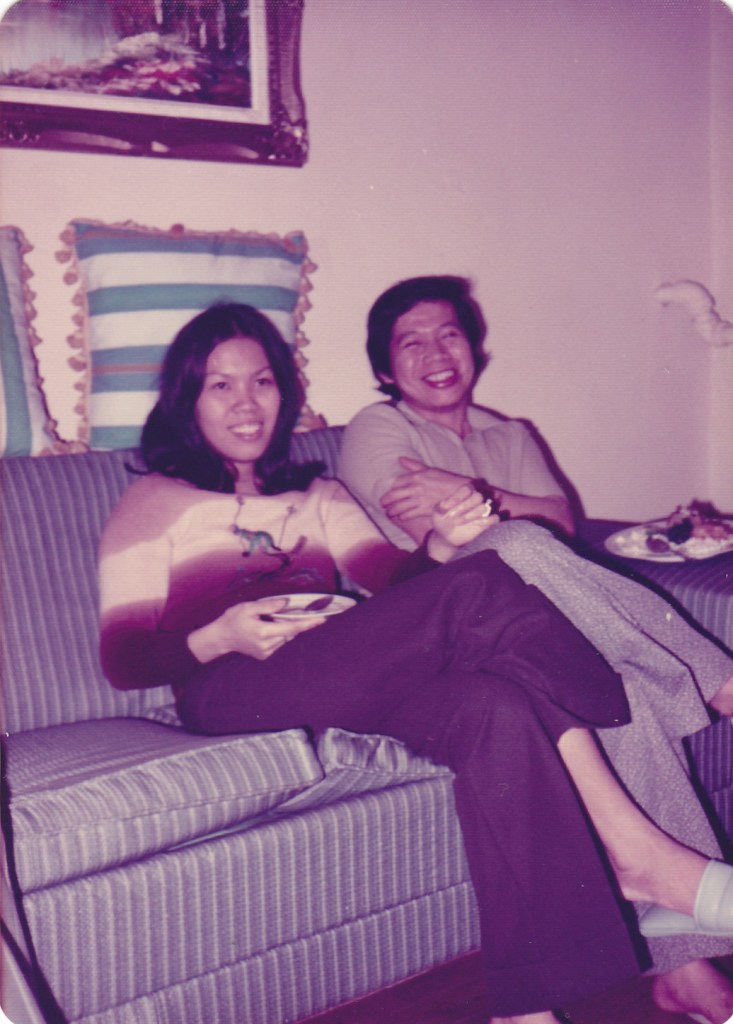
December 1975.
The cold winds staked their claim over Toronto, where my parents had recently arrived from the Philippines. They were underdressed and making their way down Parliament Street. Despite being warned of a shift in temperature, they were not expecting the brutal intensities of Canadian winter. I’m not sure how anyone anticipates the sharp sting of negative temperatures when they are arrivants used to tropical climates. Undeterred, my mother and father headed to a small Filipino grocer, hoping to encounter a semblance of domestic familiarity. Pressed against the biting winds, my mother abruptly stopped, looked at my father and said, “Tumutolo ang sipon” – you have a runny nose. To which my father replied, “Ikaw din” – you do too! They both started laughing and laughed again when they retold me this story 48 years later. When faced with the challenges of migrating to a new and very cold country, they managed to mine humour from a deep well of difficult circumstances. We had been listening to the song “In My Life” by the Beatles (Lennon & McCartney 1965). Something in its expression, melody, and feeling caused my parents to be transported to this small but important moment.
In her conversation with Christine Bacareza Balance, “‘Revolutions in Sound’: Keynote Duet” (2022) Alexandra T. Vazquez writes: “The popular…leaves so much room for engagement with sound artists (musicians without the gallery). None of them need theorists to argue for them, to argue for their mattering because to so many, they already do. How do they instead invite theorists to take part in something alongside them?” (12). I was never a big fan of the Beatles, but regardless of my opinions, they were popular. As a relentlessly oppositional teenager, I was put off by their mass popularity. As Vazquez suggests, despite one’s musical taste, songs are invitations, not scholarly conquests. The memory re-opened by my parents’ connection to “In My Life” was an invitation for me to take stock of the song’s affective and, for them, diasporic trajectories. As Balance (2022) suggests songs request us to “listen long so we hear where another is coming from” (15). For her, “long” describes temporality and commitment. To “listen long” implies that duration and attention are the pretext for empathic relations.
“In My Life” was released in 1965. My mother was fifteen years old when she first heard the song on the radio in a boarding house in Marbel, Philippines. One year later, on July 16, 1966 the Philippine Free Press would announce, “The Beatles Are Coming” (de Manila as cited by Robert Nery in “The Hero Takes a Walk” 2018). At that time, Ferdinand Marcos was the newly elected president of the Philippines, and Imelda Marcos was his First Lady. The Marcoses would later unleash an era of violent dictatorial power and impose Martial Law in 1972, escalating political suppression (Burns 2013). My mother recalls that the band’s first and only appearance in the Philippines was remembered by many less for their two scheduled concerts and more for their “snub” of Imelda. The Beatles were noticeably absent at a lunch reception they were expected to attend with the First Lady at the Presidential Palace. Their absence, attributed to a communication error between the concert promoter and the band’s manager, incited public disapproval and resulted in the sudden disappearance of their security escort and hotel and porter service. Unlike in other cities, the band was refused room service and was forced to carry their own luggage (Nery 2018).
What is striking about this moment is that it breaks from preoccupations with Filipinx desires for assimilation and mimicry of Western imperial projects. In Video Night in Kathmandu and Other Reports from the Not-So-Far East, British travel writer Pico Iyer (1988) famously stated that Filipinx people are the “[m]aster of every American gesture, conversant with every western song…the Filipino plays minstrel to the entire continent (153)” Turning against imperial scripts and the band’s documented disdain of “Mosquito City” and even worse, John Lennon’s comment that a return to the Philippines would require “an H-bomb,” the soured residues of their visit marks a queer rupture in Beatlemania. The public decried that Filipinx people deserved better from the band, capturing what Balance describes in Tropical Renditions: Making Musical Scenes in Filipino America (2016), as “disobedience” in that “disavows a belief in the promises of assimilation” (5). For me, Filipinx non-compliance textures the sonic substance of “In My Life.” While the shadow of the Marcoses cronyism and corruption is an inescapable footnote, it is the defiant voices of hotel employees, dismayed fans, and airport workers that insisted on the “ordinariness” (Wofner & Smeaton, 2003) of the Beatles that holds the song’s queer decibels.
There are places I’ll remember all my life, though some have changed. Some forever, not for better. Some have gone, and some remain.
“In My Life” (Lennon & McCartney 1965).
January 2018.
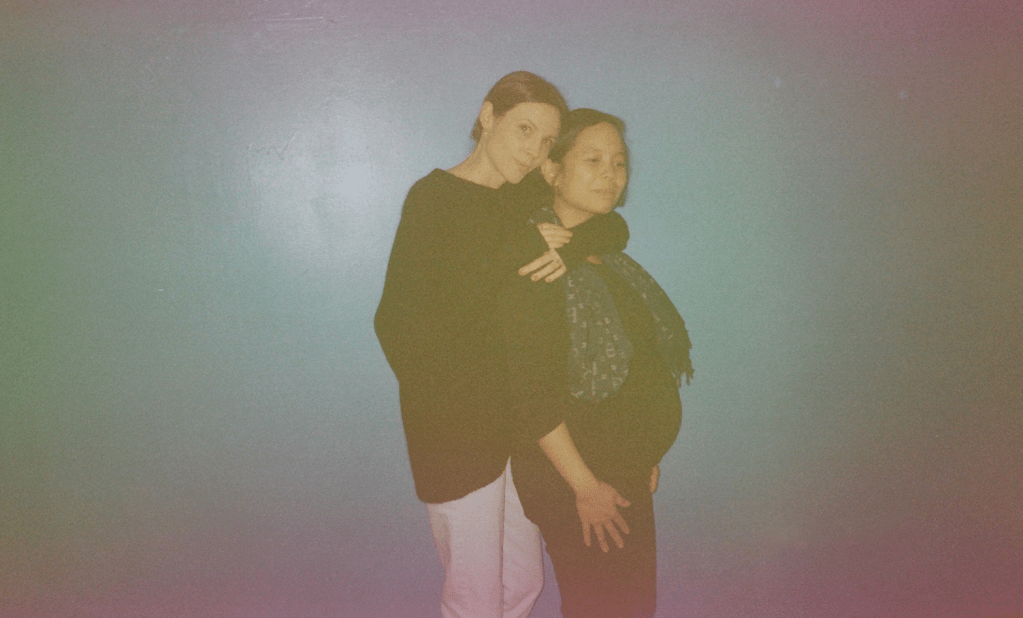
I am sitting on my couch watching a Toronto Raptors game. The television emits light that flickers through a large window that frames a bright winter moon. I am 41 weeks pregnant at this point (feeling similarly shaped and sized as the moon outside). My stubborn queer resistance to the Beatles somehow dissipated during my pregnancy, and the song “In My Life” made its way to me. I would quietly sing the song to my pregnant belly. Then, that January night, I felt a snap inside my body and a rush of water down my legs. I won’t go into much gratuitous detail other than to say that at 12:49 pm the next day, Asa Cy Dyer-Mecija was born at home.
And these memories lose their meaning when I think of love as something new.
“In My Life” (Lennon & McCartney 1965)
Sometimes, I needed to couch the queerness of pregnancy in words that were not mine. The distance between these words and the ones I had yet to find would help to structure my unfolding love for Asa. Here, queerness presented a modality of encounter with uncensored desires. Queerness is often theorized as a utopian impulse; the queerness of my pregnancy jostled both the hopes and fears brought up by the unknown terrain of parenting amidst heteronormativity. For me, “In My Life” is riven by sentimentality and nostalgia, but it also gave melody to a tender relationship with myself and my new role in the world. This was the sonic throughline to my parents, a queer inheritance of tension made from the hopes for kinder contexts amidst the limitations of harsh realities.
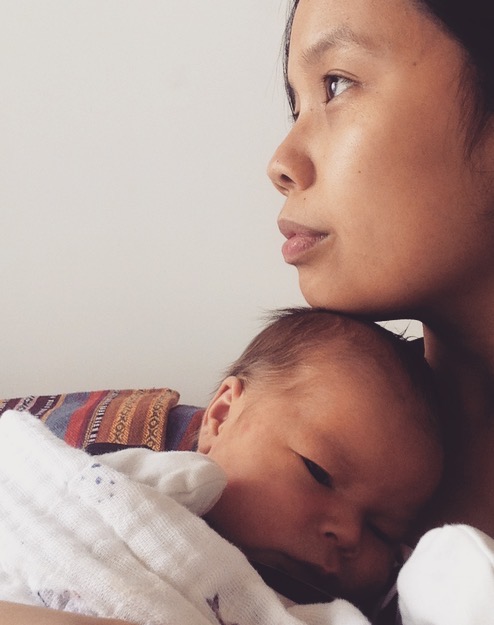
December 2022.
I was invited to perform as part of the Queer Songbook Orchestra’s holiday fundraiser. The Queer Songbook Orchestra is a chamber pop ensemble that hosts an annual concert focused on songs and stories about “chosen family and queer joy” (Queer Songbook n.d.). At that time, Asa was four years old. He is a child of the pandemic. He’s a kid with two moms, a present and kind donor, and is dearly loved by his Lolo and Lola, his grandparents, aunts, titas, uncles, cousins, kuya, ate, and his beautiful chosen family. My partner, Hannah, and I sometimes worry about how his world will be affected by reactions to the makeup of our family, but mostly, we know he’ll be sure he’s loved by many.
To me, the song “In My Life” offers a useful sonic response to homophobia. As a baby, after Asa’s baths, I would often wrap him in a towel, and while rocking him back and forth, I would sing these lyrics from the song: “Though I know I’ll never lose affection for people and things that went before, I know I’ll often stop and think about them. In my life, I love you more” (Lennon & McCartney 1965). To me, this statement is a queer ethos. We know that 2SLGBTQ+ people have necessarily and creatively reworked and reimagined the organization and expression of kinship. When family is so often bounded by what Julianne Pidduck calls “constraints of relationality” in “Queer Kinship and Ambivalence”(2008: 441), the lyrics “In my life, I love you more” are a call to action. More is a word used comparatively to insist that there is something greater, something more exists, something more is possible. I embrace the challenge to love more. My queerness urges me to love more, and parenting Asa does, too. On the evening of the performance, indexed by my parents’ struggles and our shared disdain for the chill of winter, Asa and I performed “In My Life” together. The video of our performance will remain a treasured sonic archive that I will return to often, and as Asa gets older, I hope it reminds him of how beautiful he’s always been.
—
Casey Mecija is an Assistant Professor in the Department of Communication & Media Studies at York University. Her current research examines sound as a mode of affective, psychic, and social representation, specifically in relation to diasporic experience. Drawing on sound studies, queer diaspora studies and Filipinx Studies, her research considers how sensorial encounters are enmeshed and disciplined by social and psychic conditions. In this work, she theorizes sounds made in and beyond Filipinx diaspora to make an argument about a “queer sound” that permeates diasporic sensibilities. She is also a musician and filmmaker whose work has received several accolades and has been presented internationally.
—

REWIND!…If you liked this post, you may also dig:
Blank Space and “Asymmetries of Childhood Innocence” –Casey Mecija
The Sound of What Becomes Possible: Language Politics and Jesse Chun’s 술래 SULLAE (2020) –Casey Mecija
The Cyborg’s Prosody, or Speech AI and the Displacement of Feeling–Dorothy Santos
Tape Hiss, Compression, and the Stubborn Materiality of Sonic Diaspora–Chris Chien
Xicanacimiento, Life-giving Sonics of Critical Consciousness—Esther Díaz Martín and Kristian E. Vasquez
Moonlight’s Orchestral Manoeuvers: A duet by Shakira Holt and Christopher Chien
Enacting Queer Listening, or When Anzaldúa Laughs–Maria Chaves Daza
Echoes in Transit: Loudly Waiting at the Paso del Norte Border Region—José Manuel Flores & Dolores Inés Casillas
The Queerness of Wham’s “Last Christmas”–Justin Burton
Could I Be Chicana Without Carlos Santana?–Wanda Alarcón
Share this:

Calling Out To (Anti)Liveness: Recording and the Question of Presence

Editor’s Note: Even though this is officially Osvaldo Oyola‘s final post as an SO! regular–his brilliant dissertation on Latino/a identity and collection cultures is calling–I refuse to say goodbye, perpetually leaving the door open for future encores. He has been a bold and steadfast contributor–peep his extensive back catalogue here–and we cannot thank him enough for bringing such a whipsmart presence to Sounding Out! over the years. Best of luck, OOO, our lighters are up for you!–J. Stoever-Ackerman, Editor-in-Chief
—
As several of my previous Sounding Out! Blog posts reveal, I am intrigued by the way popular music seeks to establish its authenticity to the listener. It seems that recorded popular music seeks out ways to overcome its lack of presence as compared to a live performance, where a unified and spontaneous sense of immediacy seems to automatically bestow the aura of the “authentic”—a uniqueness that, ironically, live reproducibility engenders. Throughout my time as a Sounding Out! regular, I have explored how authenticity may be conferred through artists affecting an accent as a form of musical style, comparing their songs to other “less authentic” forms of music through a call to nostalgia, or even by highlighting artificiality through use of auto-tune.
One of the ways that artists and producers get past a potential lack of authenticity when recording is through call outs to “liveness.” I am not referring to concert recordings (though there are ways that they can be used), but elements like counting off at the beginning of songs or introducing some change or movement in a song. There is no practical need to count off “One, two, three, four!” at the beginning of a recording of a song if it is being pieced together through multiple tracks and overdubs. These days a “click track” or adjustment post-recording can keep all the players in time even if not necessarily playing at once; even if a song is being recorded as a kind of studio jam, the count off could be edited out. It is an artifact of the creation, not a sign of creation itself. Instead, the counting can become an accepted and notable part of the song, like Sam the Sham and the Phaorahs performing “Wooly Bully,” giving it an orientation to time—the sense that all these musicians were present together and playing their instruments at once and needed this unique introduction to keep them all in tempo.
 Similarly, sometimes artists call out to other musicians, giving instructions when no instructions are needed, assuming that most popular music is recorded in multiple takes using multiple tracks. In Parade‘s “Mountains,” Prince commands the Revolution, “guitars and drums on the one!” when clearly they had rehearsed when putting together the song, and ostensibly knew when the drum and guitar breakdown was coming up. Prince, furthermore, joins artists as varied as the Grateful Dead and the Beastie Boys in mixing concert recordings with studio overdubs to capture a “live” sound on songs like “It’s Gonna Be a Beautiful Night” and “Alligator.” Even something as ubiquitous as guitar feedback is a transformation of an artifact of live performance into a sound available for use in recording—something that was purposefully avoided until John Lennon’s happy accident when in the studio to cut “I Feel Fine.” Until then, playing with feedback was a way to demonstrate performance skills through onstage vamping.
These varied calls to liveness provide a sense of authenticity to music made via the recording studio, denoting what I understand as the spontaneous sociability of music. Count-offs and studio shout-outs provide a sense of unified presence to a performance, especially if the performance has actually been constructed piecemeal and over time. This is something of a remnant of an old-fashioned notion that recorded music is measured in quality in comparison to live performance. It’s any idea that hung around both implicitly and explicitly long after bands started experimenting in the studio with effects that ranged from the difficult to the impossible to replicate on stage, and reinforced through recordings by performers who purposefully referenced their lauded live performances.
.
For example, James Brown’s “Get Up (I Feel Like Being a) Sex Machine” is built on this conceit. The entire song is a conversation, a call and response between James Brown and his band, the J.B.’s. From the opening line, Brown introduces the song as moment in time in which he is compelled to do his thing, but he demands both encouragement and cooperation from the band in order to achieve it. When Brown asks Bobby Byrd, “Bobby! Should I take ’em to the bridge?” we as listeners are invited to play along with the idea that it has suddenly came into his head to have the band play the bridge—as it might’ve happened (and thus been practiced) countless times in his legendary live shows. It suggests a form of spontaneity that the reality of recording would otherwise drain from the song. Sure, according to RJ Smith’s The One: The Life and Music of James Brown (2012), “Get Up” was recorded in only two takes–already fairly amazing–but the very nature of the song makes it sound like it was recorded in one, even if it had to be broken up into two sides of a 7-inch. That reality doesn’t matter—what matters when listening is the feeling that we, as listeners, are being allowed to partake in the capturing of what seems like one unique, and continuous, moment.
The question then arises: What about recorded music that does the opposite, that makes a point of highlighting its artificial construct—the impossibility of its spontaneous performance? While there are examples that date back at least to the 1960s, does this shift highlight a difference in aesthetic concerns by the pop music audience? If calls to “liveness” suggest a spontaneous sociability to music, what do the meta references to their songcraft suggest about what is important to music now?
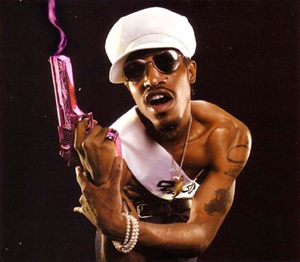
Andre 3000’s “Prototype” from 2003’s The Love Below includes chatter with his sound engineer.
The classic example is Ringo Starr’s bellow, “I GOT BLISTERS ON MY FINGERS!” at the end of the Beatles’ “Helter Skelter,” an exclamation made after umpteen takes of the song recorded on the same day, but there are more contemporary and even more obvious examples. Near the end of Outkast’s “Prototype,” (at 4:21) Andre 3000 can be heard talking to his sound engineer John Frye about the ad libs, “Hey, hey John! Are we recording our ad libs? Really? Were we recording just then? Let me hear that, that first one. . .” There is an interesting tension here between the spontaneity of an “ad lib” and listening back to pick the best one or further develop one when re-recording, and Andre in his role as producer decided to keep it in as part of the final product. The recording itself becomes part of the subject of the song as a kind of coda. The banter is actually a brilliant parallel to the content of the song, which undermines the typical “we’ll be together forever” love song trope for one that highlights the reality of serial monogamy common in American culture and lessons each relationship potentially provides us for the next. Rather than pretend that a romantic relationship is a unique and eternal thing, the song admits the work and changes involved, just as it admits that the seemingly special spontaneity of a song is developed through a process.
Of course, hip hop as a genre, with its frequent use of sampling, tends to make its recording process very evident. While it is possible to play samples “live” using a digital sampler or isolating sections on vinyl via the DJ as band member, the use of pre-recorded fragments means that rap music relies on the vocal dynamics of rap to carry the sense of spontaneity. Yet, in 1993’s “Higher Level,” KRS-One opens with a description of the time and place of the recording—“5 o’clock in the morning” at “D&D Studios,” establishing forever when and where and thus how the recording is happening. Five o’clock in the morning places the creation of the song with a context of working and rocking all through the night to get the album completed. The song may or may not have actually been recorded last, but its placement at the end of Return of the Boom Bap, gives it a sense of a last ditch effort to complete the collection of songs. The fact that “5 o’clock in the morning” is likely also among the cheapest available studio times potentially highlights budgetary concerns in the recording itself. This is a rare thing to include in recording, though the Brand New Heavies cap off the dissolution of their 1994 track “Fake” into pseudo-jazz-messing-around with one their members chiding, “a thousand dollar a day studio!” This is a different kind of call to authenticity, as a budgetary concern is an implicit to a “realness” defined by being non-commercial.
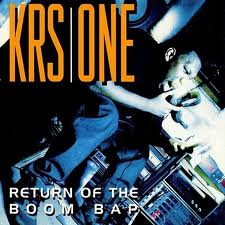 One of my all-time favorite examples is a few years older than “Higher Level”—“Nervous” by Boogie Down Production: “written, produced and directed by Blastmaster KRS-One,” which includes an attempt to explain how a song is put together on the “48-track board.” Instead of calling instructions to a band, KRS points out that DJ Doc is doing the mixing and instructs him to “break it down, Doc!” just before a beat breakdown (listen at around 1:40). He explains, “Now, here’s what we do on the 48-track board / We look around for the best possible break / And once we find it, we just BREAK,” and then the pre-recorded beat seems to obey his command, breaking down to just the bass drum and a sampled electric piano from Rhythm Heritage’s “The Sky’s the Limit.” Later, he says, “We find track seven, and break it down!” and the music shifts to just the bass guitar and some tinny synth high-hats.
.
So how does highlighting the recording circumstances, or just bringing attention to the fact that the song being listened to is a multiple-step process of recording and post-production benefit the song itself? Is it like I mentioned in my 2011 “Defense of Auto-Tune” post, that this kind of attention re-establishes authenticity by making its constructed nature transparent? I’d say yes, in part, but I also think that–through its violation of the expectation of seamlessness–the stray track or reference to recording within a song is a nod to a different kind of skillfulness. Exhortations such as “Take it to the Bridge” give an ironic nod to the extemporaneous to call attention to the diligent workmanship and dedication demanded by studio songcraft. Traditionally, live audiences may appreciate a flawless or nearly flawless performance and understand a masterful recovery from (and/or incorporation of) error as the signs of a good show, but, these moments that call attention to the recording studio situation claim there something to appreciate in the fact that Ringo Starr endured 18 takes of “Helter Skelter” until he had painful blisters, or that KRS-One and DJ Doc worked out the proper way to “feel around” the mixing board to make a grooving collage of sounds as disparate as the theme from “Rat Patrol” and WAR’s “Galaxy.”
KRS may have once admonished other MCs to “make sure live you is a dope rhyme-sayer,” but clearly he believes liveness—whether implicitly or explicitly—is not the only measure of musical ability. Rather, the highlighting of labor in the construction of a recording becomes its own kind of (anti-)vamping and demonstration of skill, and of a different kind of sociability in making music that these conversational snippets and references to other people in the studio make clear. This kind of attention to the group labor is especially important as various recording technologies become increasingly available to the wider public and allow for an isolated pursuit of recording music. Just as calls to liveness in recording engage the listener in ways that suggest participation as a live audience, calls to anti-liveness also engage the listener, but by bringing them across time and space into the studio to witness to a different form of great performance.
—
Osvaldo Oyola is a regular contributor to Sounding Out! and a PhD Candidate in English at Binghamton University working on his dissertation, “Collecting Identity: Popular Culture and Narratives of Afro-Latin Self in Transnational America.” He also regularly posts brief(ish) thoughts on music and comics on his blog, The Middle Spaces.
—
 REWIND! . . .If you liked this post, you may also dig:
Evoking the Object: Physicality in the Digital Age of Music–-Primus Luta
Experiments in Agent-based Sonic Composition–Andreas Pape
Musical Objects, Variability and Live Electronic Performance—Primus Luta
Share this:


Current Top Posts





April 2021

January 2020

November 2019

October 2019

August 2019

April 2014

November 2017

March 2015

December 2017

October 2015
 Sounding Out!
Recent Comments