
Heads: Reblurring The Lines

DOI: https://doi.org/10.59350/9337j-fxb80
I don’t intend to discuss the “Blurred Lines” case in this post. There are plenty of folk already committing thoughts on the ruling. While the circumstances of the recent Thicke/Williams/Gaye case are not explicitly about sampling, they are indicative of the direction sample/copyright litigation can go in the future. When samples from a composition infringe upon the copyrights for the song, it is dangerous territory. Rather than focus on those dangers however, I’d like to exemplify possibilities of a more open (and arguably the intended) interpretation of copyright laws, by doing something I should have done seven years ago – put out my project Heads (dropping on April 1st, 2015).
My position has not changed from previous writings on sample laws – transformative sampling produces original work. My intent here is to present an artist’s statement on Heads that illustrates how transformative sampling and derivatives of it require broader interpretation; they should be legally covered as original compositions.
I’ve kept Heads in the vaults since 2007 while continuing from its artistic direction, all the while doing little tinkerings to convince myself it wasn’t done yet (it was). I had been pursuing analog technologies I swore would be the finishing touches it needed, to convince myself it wasn’t ready yet (it was). Then I lost 4TB of files in a quadruple hard drive killer power surge. The last Heads masters were among the 500GB that survived.
The project was born in response to comments made by Wynton Marsalis, dismissing hip-hop and denying its connection to the legacy of black music.
It’s mostly sung in triplets. So what? And as for sampling, it just shows you that the drummer has been replaced by a loop. The drum – the central instrument in African-American music, the sound of freedom – has been replaced by a repetitive loop. What does that tell you about hip-hop’s respect for African-American tradition? – Wynton Marsalis
I was offended as both a hip-hop and jazz head, so I set out to produce a body of work that showed the artistic originality of sampling and tied the practice to black musical traditions.
Prior to the analog experiments, I was modeling a series of digital Open Sound Control (OSC) instruments based on the monome, starting with a sampler but expanding into drum machines synthesizers and other noise makers. Together I called them the Heads Instruments. 95% of the composition work on Heads began with these instruments, all of which were built around the concept of sampling.
The title Heads, comes from the musical head, which is a fundamental part of the jazz tradition. The head is the thematic phrase or group of phrasings that signify a song; heads can be comprised of melody, harmony and/or rhythm. Jazz musicians use the head as a foundation for improvisation, a traditional form including the alternating of head and solo improvisations . Often times in jazz, the head comes from popular songs re-envisioned through improvisation in a jazz context, such as John Coltrane’s famous refiguring of “My Favorite Things” from The Sound of Music. In addition to being covers, these versions are transformations of the original into a different musical context. The Heads Instruments were designed specifically as instruments that could perform a head in a transformative manner.
Hip-hop attacks itself. It has no merit, rhythmically, musically, lyrically. What is there to discuss? – Wynton Marsalis
Tony Wynn
I was a bit annoyed at Marsalis, just how much is illustrated by the opening track of Heads, “Tony Wynn,” eponymously named after the contemporary jazz saxophonist, who, like Marsalis, feels that hip hop is not music. In it a character berates his friend for bringing up Wynn’s position. On the surface the song talks trash, but musically it makes layers of references.
First, the song’s format (down to the title) is a nod to the Prince tune “Bob George.” In his song, Prince parodies a character berating a girlfriend for being with Bob George. The voice of the character in “Tony Wynn” and some of his comments come straight from Prince’s song, but the work as a whole is not a direct cover of “Bob George.”
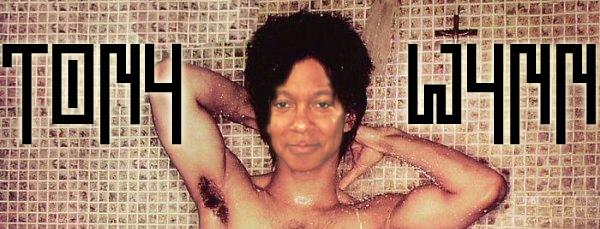
“Tony Wynn” is undeniably influenced by the Minneapolis sound, that eclectic late 1970s and early 80s scene that blend of funk, rock, and synthpop, but how the track arrives there is complicated. It does contain a Prince sample, but not from “Bob George.” The sample is played in a transformative manner, chopping a new riff different from the source material. It also includes a hit from another song, a sample of only one note, yet one identifiable as signature. The drums are ‘played’ in what could be described as the Minneapolis vibe. You can also hear a refrain that mimics yet another song. All of these sampled parts create a new head, to which I added instrumental embellishments with co-conspirator Dolphin on bass, synth, and the killer Prince-esque guitar solo.
The track represents a hodgepodge of Prince influences, but because those influences are so varied, none can be individually identified as the heart of “Tony Wynn.” Furthermore, at the bridge all of the samples get flipped on each other, some re-sampled and performed anew. Nothing can be pinned down as an infringement on technicalities, without taking into account the full context of the transformation. While “Tony Wynn” is heavily influenced by Prince, it is not a Prince song.
Rap Rap Rap
The second track on Heads,”Rap Rap Rap,” features Murda Miles and Killa Trane. I chose its title and head to reference the 1936 Louis Palma song “Sing Sing Sing,” made popular by the Benny Goodman Band. Coming out of the big band era, the song is closer to a traditionally composed Western standard, the heavy percussions however distinguish it. While you will find no samples of sound recordings from any version of “Sing Sing Sing” in “Rap Rap Rap,” it still represents the primary sample head used.
The opening percussive phrases are influenced by rhythmic hand games—an important but often overlooked precursor to hip hop discussed in Kyra Gaunt’s The Games Black Girls Play: Learning the Ropes from Double-Dutch to Hip-Hop. Here the rhythm sets the pace before charging into the head with a swing type of groove as the two featured artists, Murda Miles on trumpet and Killa Trane on sax, call out the head. What distinguishes these horns however, is that they are both sample based.
The song’s head is still based on “Sing Sing Sing,” but for the dueling horn parts the samples come from the recordings of Miles Davis and John. While Davis and Coltrane played together at a fair number of sessions, these samples come from two divergent sources from their individual catalogs. I chopped, tuned and arranged them for performance so that they could play in tune with the head.
The opening half of “Rap Rap Rap” sees both sticking to the head with little flourishes, but at the half way mark, the accompaniment changes to a distinct hip-hop beat still firmly rooted in the head. The two horns shift here as well, trading bars in a way that nods to both jazz and rap. The phrasing of the sample performance itself mimics a rapping cadence here, bridging the gap between the two traditions.
La Botella
The head for next track “La Botella” (The Bottle), uses a popular salsa motif as the head, accentuated by a son influenced percussive wall of sound. The percussions vary from live tracked percussions to percussion samples to percussive synthesis. I performed many of the percussive sounds utilizing the Heads Instruments sequencer, which lends itself to the slightly off—while still in the pocket—swing.
The format of this particular head allowed for an expanded arrangement, through which I nod to the Afro-Cuban influence in the African American tradition, from jazz to hard soul/funk to rock and roll. Son evolved from drumming traditions that have their own forms of the head. There is a duality in these two traditions that pairs a desire for tightness with a looseness in spirit, and this tension continues into musics influenced by them. The percussions on “La Botella” carry that duality. The collective drums sound as an instrument, while each individual drum can be aurally isolated.
The actual samples in the song come from vocal bits of The Fania All-Stars, but the true Fania mark I emulate on “La Botella” is the horn section. They sound nowhere near as good—let’s just get that out of the way—but the role they play comes directly from the feel of a classic Fania release. Could the horns actually be attributable to a single source? I doubt it, but more importantly, they operate only as a component of the song itself, placing this inspiration in a different musical context.
Sound Power
“Sound Power” fully embraces ‘sound’ as a fundamental musical object. Sounds in and of themselves can be understood as heads. The primary instrument I used on “Sound Power” is the sound generator of the 4|5 Ccls Heads Instrument. 4|5 Ccls is an arpeggiator modeled after John Coltrane’s sketches on the cycle of fifths. I tend to think of such sounds in relationship to the latter Coltrane years when he was using his instrument as a sound generator, clustering notes together and condensing melody.
Similarly, arpeggiators group notes into singular phrases which can be interpreted as heads. The head on “Sound Power” does not push the possibilities to the extreme, as Coltrane did; it remains constrained within a rhythmic framework. However, it shows the power of sound as fundamental. All of the drums, percussive elements, bass and harmonies flow from the head, accentuated by heavyweight vocal chops from the Heads Instrument scratch emulator.
Come Clean
The intro to “Come Clean” marks a turning point in the album. The first four tracks present are technical feats to illustrate the point. “Come Clean” doesn’t slack off. Musically this track is the closest to the “Blurred Lines” case; notably, other than the intro, it contains no sample. It’s head, however, comes from the Jeru the Damaja song “Come Clean” produced by DJ Premier. I did an extensive breakdown on the technical details of “Come Clean” on Avanturb a few years ago; my online installation shows how (and for how long) I have been contemplating this track. But to paraphrase the sample here, the true power of music is helping the listener realize the breadth of their own existence in this universe. My use of the song is very intentional, and I deliberately change its themes for the album.
For “Come Clean,” I worked with percussionists Zach and Claudia who studied in the Olatunji line of drumming. They noted the physical timing challenges getting used to the song’s unique head, but, once they locked in, the head held its own. That exemplifies the power of this means of composing – new original ideas which can push music’s possibilities.
As an artist, I advocate for the interpretation of copyright laws so that someone cannot sue because three notes of a song appear in one they own, or because a sound from the recording the record company convinced the artist to sign over to them for pennies was repitched and played into a melody. I know that arriving to music via these methods can push the traditions further, everything copyright laws were written to encourage. If we don’t change the way we think about copyright, the ability to create in this manner will be lost in litigation.
Heads comes out on April 1, 2015
—
Primus Luta is a husband and father of three. He is a writer and an artist exploring the intersection of technology and art, and their philosophical implications. He maintains his own AvantUrb site. Luta was a regular presenter for Rhythm Incursions. As an artist, he is a founding member of the collective Concrète Sound System. Recently Concréte released the second part of their Ultimate Break Beats series for Shocklee.
—

REWIND!…If you liked this post, you may also dig:
“SO! Reads: Jonathan Sterne’s MP3: The Meaning of a Format”-Aaron Trammell
“Remixing Girl Talk: The Poetics and Aesthetics of Mashups”-Aram Sinnreich
The Blue Notes of Sampling– Primus Luta
—
Share this:

A Brief Review of Australian Radio Art

DOI: https://doi.org/10.59350/p0mna-scq06
Welcome to the second part of Radio Art Reflections, a series on radio art that brings together the thoughts of three practitioners who have been researching the field from Canada, Australia and the UK.
In the first part Canadian sound and radio artist Anna Friz discussed how transmission art has shaped her practice and how it has become an important current within the expanded territory of radio art. Following this, musician and sound artist Colin Black reflects on the particularities of Australia’s radio art history, analyzing the effects of ongoing cutbacks at the Australian Broadcasting Corporation. Black fears a distinctive Australian soundscape-based radio art is in danger of being lost, while identifying a current renaissance in narrative based radio features which currently shape ABC radio output, and considers the potential of ABC’s new Creative Audio Unit.
– Guest Editor Magz Hall
—
As an artist growing up in rural Australia, I was hugely influenced by how state-owned radio engaged with sound-based practitioners. For decades, radio not only gave voice to some of the more exploratory artists and their works, it allowed artists and audiences from all over this vast continent to find a space in which experimental works could, with financial support, gestate, be realized and propelled onto a world stage, often receiving international acclaim for their distinctive perspective.
In recent years I have come back to those works as a PhD researcher, interviewing thirty five international practitioners, theorists and producers on Australian radio art thereby gaining a new appreciation of its particular aesthetic practices and approaches. This article draws on some of these interviews to highlight national and international perceptions about where Australian radio art has been, while also demonstrating its potential to influence a new generation of artists to explore beyond mainstream media formats.

THE LISTENING ROOM
While there are a few early examples of Australian radio art, consistant programming and commissioning of radio art effectively commenced in the 1980s with the formation of the ABC Arts Unit during 1984-85 and the acoustic arts programme The Listening Room, which aired from 1988 to 2003. Although long-decommissioned, The Listening Room was still one of a very few signposts that my interviewees cited when trying to understand the properties of Australian radio art. The Listening Room’s founding executive producer Andrew McLennan, who expanded the boundaries of ABC radio from 1976 onwards, had a clear take on the aesthetic framework of the show, stating in one internal ABC report (c1990) that the programme was a:
… venue for the exploration, the cross-pollination of radio forms. … you can hear new radio plays, audio essays, acoustic features, sound documentaries, new music, sound-scapes and sculptures, audio installations, acoustic art forms …
This approach was broader than that of other international radio art programs. Here is a quote from the formative executive producer of Deutschlandradio Kultur, Götz Naleppa, who took a much more “aesthetic” approach for his well-known Klangkunst programmes in Germany:
The difference to other radio-art-forms like radio-play is simple: sound-composition [a term Naleppa prefers to radio art] shares with them the same elements: sound, text (voice) and music. But in radio-play text (dialogue) is in the foreground and the other elements SERVE it (often in an illustrative way). And in (radio)sound-composition we have the same elements – but they are EQUAL, they are simply MATERIAL in the hands of the composer [Götz Naleppa, e-mail message to author July 28, 2005].
Of the two, The Listening Room clearly had a wider scope. Thus a number of ABC works, like On the Raft, All at Sea (by Robyn Ravlich and Russell Stapleton), placed the text in the foreground as the narrative is primarily driven by the use of spoken dialogue and the other elements are used to serve the text in a chiefly illustrative fashion. By definition Naleppa would call this a “radio-play” and not necessarily neues hörspiel or radio art, and definitely not a radio “sound-composition.”
.
Extract from On the Raft, All at Sea (2002) by Robyn Ravlich and Russell Stapleton (courtesy Robyn Ravlich and ABC Radio)

“AUSTRALIAN” RADIO ART
Alongside this inclusiveness of a wide scope of work, my research uncovered a range of other ideas about the identifiable properties of Australian radio art. Austrian Elisabeth Zimmerman claims that with Australian work there is “a certain tradition” that favours the “use of environmental sounds … but in a very composed way.” Andrew McLennan supports Zimmerman’s viewpoint and states: “it’s always hard to say and it is probably a bit of a cliché … [however he] often think[s] of it as quite environmentally driven.” Douglas Kahn, an American, is more skeptical, observing that “The Australian stuff was much broader range … I don’t think you can say that there was an Australian aesthetic because there were so many different artists that were brought in to do things.” Although later Kahn does state that a common thread heard in Australian work was its “really high quality production values … really nice complex mixes … people playing the mixing board like it was a piano in a really sophisticated way.” Kaye Mortley from her Australian French background describes Australian work as “radiophonic art, of various sorts, more experimental in nature, some produced by composers.” While not a composer, Australian Virginia Madsen supports Mortley’s viewpoint when she describes her own work as “experimental … it combines music, theatre performance, and documentary really.” The common theme that emerges from my research is the openness and commitment to experimentation that exists alongside a highly professional approach to the art form within Australian radio art culture.
My interviews also indicated that radio art plays a role in the perceived amorphous and multi-faceted notion of national identity, while confirming Kahn and Nicholas Zurbrugg’s earlier observations that radio art has critically contributed to the overall arts ecology in Australia. As a practitioner, I would also describe my own work as having an experimental approach that is influenced by the high quality production levels of programs like The Listening Room. While much of my work is environmentally driven, my artistic focus is to create multi-faceted, intimate aural geographies in which human imprint is present.
.
Extract from Alien In The Landscape (2007) by Colin Black (courtesy DeutschlandRadio Kultur). This extract features synchronous field recordings made by a Rodes NT4, X-Y configured stereo microphone and Fender Stratocaster with additional strings attached as pictured below.

THE CREATIVE AUDIO UNIT AND AUSTRALIAN RADIO TODAY
When The Listening Room was decommissioned in 2003, explorative radio was forced in two directions: ABC Radio National programmed some word-based works, while ABC Classic FM aired another set of works that Kate Dundas (Director of ABC Radio) has called “Shorter-form pieces, maybe perhaps down the sound-based acoustic end or radiophonic end of the spectrum.”Budgets were dramatically reduced and diverted, resulting in the effective abandonment of regular commissions and airtime for long-form sound-based works. In 2012 ABC management decommissioned book readings and Creative Instinct (a “feature program that reflects and explores the creative world”) and The Night Air (described as “aural equivalents of the avant-garde cut-up: a montage of interviews, location sound, music and found audio”). Moreover management oversaw the dismantling of the Airplay programme, which included “hour-long dramatic fictions [sic] experiment with form” effectively ending an 80-year tradition of Australian radio drama. In replacing these programmes, the Creative Audio Unit (CAU) was planned and American-style low budget radio production techniques for dramatic short stories (as championed at the 2012 ABC run Radio Beyond Radio conference) were put on the table as the future of radio.
In 2013 the ABC recruited a whole new team (who collectively had very little direct engagement with prior radio drama and The Listening Room production budgets and procedures), to setup, oversee and run the CAU. This transition was so atypical of past ABC changes that it raises questions as to whether this was an orchestrated act of cultural amnesia. It is perhaps not surprising that one of the major challenges this new team faces is the lack of resources, which impedes the magnitude of new works commissioned. This also raises questions as to how the previous budgets from Airplay, The Night Air and Creative Instinct have been reassigned. Another challenge is this unit’s extremely wide area of responsibility (that was previously spread across a number of ABC Units) ranging from radio drama and essays on the Radiotonic programme (effectively replacing the entire radio drama department) to what it claims to be a “portal into radio art, performance, soundscapes and composed audio features” on its Soundproof programme.
While Soundproof makes gestures to re-stimulate radio art activities in Australia, in sampling its first twenty episodes it becomes apparent that a very large percentage of airtime is heavily driven by the spoken dialogue narrative, more in line with radio drama or documentary. Furthermore, the episodes that contain the more interesting sound works seem to be frequently interrupted by extended contextual dialogue and therefore, for the most part, present only extracts or shorter form radio art works. Therefore, as a practitioner who runs the risk of being excluded from future CAU activities, I would nevertheless argue that for the most part, the CAU is doubling up on its focus on radio drama and documentary style productions and has not to date reached its goal of fully exploring and presenting sound rich radio art features, as it claims (please see Soundproof episode mp3 downloads dated between 11 May to 21 September 2014). Moreover, Soundproof is much more constrained, even backward-looking, when compared to its predecessors and is therefore aiming to attract a much less adventurous radio audience. More glaringly, the first twenty episodes lack a strong presence for new Australian works when compared to The Listening Room that broadcast sixty-four Australian works with a total duration of fifty hours in its first year of operation. As an inquisitive listener it seems that, to date, Soundproof has forgotten its own lineage without offering anything new or innovative and in doing so, has also forgotten audience members like myself in Australia and throughout the world.
I sometimes wonder what the conclusions from my research study would be if it were only focused on current practice. Would today’s Australian radio art still play a role in the perceived multi-faceted notion of Australian national identity? Would it still be perceived to have an experimental approach with high quality production levels that favour the use of environmental sounds? Is it still a critical contributor to the overall arts ecology in Australia? Audience members who have little prior knowledge of Australian radio art, may think so or may not conceive of its potential to do so. However, given sustained support, the space for experimentation and a clear inventive vision for the future, building on the legacy of past achievements, Australian radio art clearly has the potential to regain its status on a world stage.
—
Featured Image: Beastman mural on Brisbane Radio by Flickr User JAM Project
—
Dr Colin Black is an internationally acclaimed composer/sound artist having won the 2003 Prix Italia Award and achieving the final round selection in the 2010 and 2011 Prix Phonurgia Nova for his creative feature length works. As a result of this acclaim, Black has received multiple national and international commissions to create innovative long-form works for broadcast across major Australian and European networks. Black’s curator credits include, international festival/showcases of award winning Australian acoustic art and radio art at London’s Resonance104.4fm, Kunstradio (ÖRF, Austria) and Toronto’s New Adventures In Sound Art. In 2013 he also curated the Australian Broadcasting Corporation’s Sound Fix: Your Weekly Dose of Transmitted Audible Art series. He is a PhD graduate of the Sydney Conservatorium of Music where he was a recipient of the University of Sydney Postgraduate Awards Scholarship. More recently Black has been engaged as an academic lecturing at the University Technology, Sydney; moreover he has authored a number of conference papers and peer reviewed journal articles including “An Overview of Spatialised Broadcasting Experiments With a Focus on Radio Art Practices” in Organised Sound. Black is also the founding member of The International Radio Art (and Creative Audio for Trans-media) Research Group. For more information see: www.colinblack.com.au
—

REWIND! . . .If you liked this post, you may also dig:
Unsettled Listening — Randolph Jordan
Radio Ambulante: A Radio that Listens — Carolina Guerrero
Everything Sounds Podcast — Craig Shank
—
Share this:




Current Top Posts





April 2021

January 2020

November 2019

October 2019

August 2019

April 2014

November 2017

March 2015

December 2017

October 2015


Recent Comments