
The Blue Notes of Sampling

DOI: https://doi.org/10.59350/mc118-qfk05
This is article 2.0 in Sounding Out!‘s April Forum on “Sound and Technology.” Every Monday this month, you’ll be hearing new insights on this age-old pairing from the likes of Sounding Out! veterano Aaron Trammell along with new voices Andrew Salvati and Owen Marshall. These fast-forward folks will share their thinking about everything from Auto-tune to techie manifestos. So, turn on your quantizing for Sounding Out! and enjoy today’s supersonic in-depth look at sampling from from SO! Regular Writer Primus Luta. –JS, Editor-in-Chief
—
My favorite sample-based composition? No question about it: “Stroke of Death” by Ghostface and produced by The RZA.
.
Supposedly the story goes, RZA was playing records in the studio when he put on the Harlem Underground Band’s album. It is a go-to album in a sample-based composer collection, because of the open drum breaks. One such break appears in the cover of Bill Wither’s “Ain’t No Sunshine”, notably used by A Tribe Called Quest on “Everything is Fair.”
.
RZA, a known break beat head, listened as the song approached the open drums, when the unthinkable happened: a scratch in his copy of the record. Suddenly, right before the open drums dropped, the vinyl created its own loop, one that caught RZA’s ear. He recorded it right there and started crafting the beat.
This sample is the only source material for the track. RZA throws a slight turntable backspin in for emphasis, adding to the jarring feel that drives the beat. That backspin provides a pitch shift for the horn that dominates the sample, changing it from a single sound into a three-note melody. RZA also captures some of the open drums so that the track can breathe a bit before coming back to the jarring loop. As accidental as the discovery may have been, it is a very precisely arranged track, tailor-made for the attacking vocals of Ghostface, Solomon Childs, and the RZA himself.

“Stroke of Death” exemplifies how transformative sample-based composition can be. Other than by knowing the source material, the sample is hard to identify. You cannot figure out that the original composition is Wither’s “Ain’t No Sunshine” from the one note RZA sampled, especially considering the note has been manipulated into a three-note melody that appears nowhere in either rendition of the composition. It is sample based, yes, but also completely original.
Classifying a composition like this as a ‘happy accident’ downplays just how important the ear is in sample-based composition, particularly on the transformative end of the spectrum. J Dilla once said finding the mistakes in a record excited him and that it was often those mistakes he would try to capture in his production style. Working with vinyl as a source went a long way in that regard, as each piece of vinyl had the potential to have its own physical characteristics that affected what one heard. It’s hard to imagine “Stroke of Death” being inspired from a digital source. While digital files can have their own glitches, one that would create an internal loop on playback would be rare.
*****
There has been a change in the sound of sampling over the past few decades. It is subtle but still perceptible; one can hear it even if a person does not know what it is they are hearing. It is akin to the difference between hearing a blues man play and hearing a music student play the blues. They technically are both still the blues, but the music student misses all of the blue notes.
The ‘blue notes’ of the blues were those aspects of the music that could not be transcribed yet were directly related to how the song conveyed emotion. It might be the fact that the instrument was not fully in tune, or the way certain notes were bent but others were not, it could even be the way a finger hit the body of a guitar right after the string was strummed. It goes back farther than the blues and ultimately is not exclusive to the African American tradition from which the phrase derives; most folk music traditions around the world have parallels. “The Rite of Spring” can be understood as Stravinsky ‘sampling’ the blue notes of Transylvanian folk music. In many regards sample-based composing is a modern folk tradition, so it should come as no surprise that it has its own blue notes.
The sample-based composition work of today is still sampling, but much of it lacks the blue notes that helped define the golden era of the art. I attribute this discrepancy to the evolution of technology over the last two decades. Many of the things that could be understood as the blue notes of sampling were merely ways around the limits of the technology. In the same way, the blue notes of most folk music happened when the emotion went beyond the standards of the instrument (or alternately the limits imposed upon it by the literal analysis of western theory). By looking at how the technology has evolved we can see how blue notes of sampling are being lost as key limitations are being overcome by “advances.”
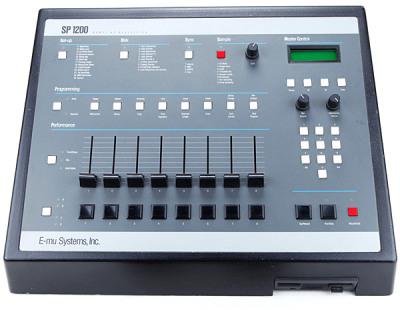
First, let’s consider the E-Mu SP-1200, which is still thought to be the most definitive sounding sampler for hip-hop styled sample-based compositions, particularly related to drums. The primary reason for this is its low-resolution sampling and conversion rates. For the SP-1200 the Analog to Digital (A/D) and Digital to Analog (D/A) converters were 12-bit at a sample rate of 26.04 kHz (CD quality is 16-bit 44.1 kHz). No matter what quality the source material, there would be a loss in quality once it was sampled into and played out of the SP-1200. This loss proved desirable for drum sounds particularly when combined with the analog filtering available in the unit, giving them a grit that reflected the environments from which the music was emerging.

On top of this, individual samples could only be 2.5 seconds long, with a total available sample time of only 10 seconds. While the sample and conversion rates directly affected the sound of the samples, the time limits drove the way that composers sampled. Instead of finding loops, beatmakers focused on individual sounds or phrases, using the sequencer to arrange those elements into loops. There were workarounds for the sample time constraints; for example, playing a 33-rpm record at 45 rpm to sample, then pitching it back down post sampling was a quick way to increase the sample time. Doing this would further reduce the sample rate, but again, that could be sonically appealing.
An under appreciated limitation of the SP-1200 however, was the visual feedback for editing samples. The display of the SP-1200 was completely alpha numeric; there were no visual representations of the sample other than numbers that were controlled by the faders on the interface. The composer had to find the start and end points of the sample solely by ear. Two producers might edit the exact same kick drum with start times 100 samples (a fraction of a millisecond) apart. Were one of the composers to have recorded the kick at 45 rpm and pitched it down, the actual resolution for the start and end times would be different. When played in a sequence, these 100 samples affect the groove, contributing directly to the feel of the composition. The timing of when the sample starts playback is combined with the quantization setting and the swing percentage of the sequencer. That difference of 100 samples in the edit further offsets the trigger times, which even with quantization turned off fit into the 24 parts per quarter grid limitations of the machine.
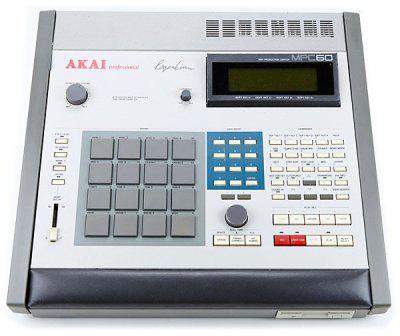
Akai’s MPC-60 was the next evolution in sampling technology. It raised the sample and conversion rates to 16-bit and 40 kHz. Sample time increased to a total of 13.1 seconds (upgradable to 26.2). Sequencing resolution increased to 96 parts per quarter. Gone was the crunch of the SP-1200, but the precision went up both in sampling and in sequencing. The main trademark of the MPC series was the swing and groove that came to Akai from Roger Linn’s Linn Drum. For years shrouded in mystery and considered a myth by many, in truth there was a timing difference that Linn says was achieved by delaying certain notes by samples. Combined with the greater PPQ resolution in unquantized mode, even with more precision than the SP-1200, the MPC lent itself to capturing user variation.
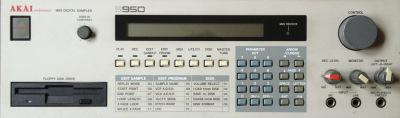
Despite these technological advances, sample time and editing limitations, combined with the fact that the higher resolution sampling lacked the character of the SP-1200, kept the MPC from being the complete package sample composers desired. For this reason it was often paired with Akai’s S-950 rack sampler. The S-950 was a 12-bit sampler but had a variable sample rate between 7.5 kHz and 40 kHz. The stock memory could hold 750 KB of samples which at the lowest sample rate could garner upwards of 60 seconds of sampling and at the higher sample rates around 10 seconds. This was expandable to up to 2.5 MB of sample memory.
.
The editing capabilities made the S-950 such a powerful sampler. Being able to create internal sample loops, key map samples to a keyboard, modify envelopes for playback, and take advantage of early time stretching (which would come of age with the S-1000)—not to mention the filter on the unit—helped take sampling deeper into the sound design territory. This again increased the variable possibilities from composer to composer even when working from the same source material. Often combined with the MPC for sequencing, composers had the ultimate sample-based composition workstation.
Today, there are literally no limitations for sampling. Perhaps the subtlest advances have developed the precision with which samples can be edited. With these advances, the biggest shift has been the reduction of the reliance on ears. Recycle was an early software program that started to replace the ears in the editing process. With Recycle an audio file could be loaded, and the software would chop the sample into component parts by searching for the transients. Utilizing Recycle on the same source, it was more likely two different composers could arrive at a kick sample that was truncated identically.
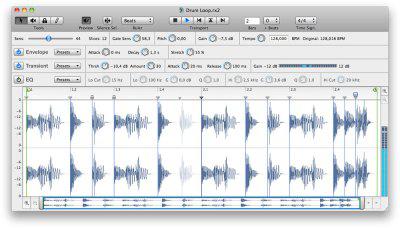
Another factor has been the waveform visualization of samples for editing. Some earlier hardware samplers featured the waveform display for truncating samples, but the graphic resolution within the computer made this even more precise. By looking at the waveform you are able to edit samples at the point where a waveform crosses the middle point between the negative and positive side of the signal, known as the zero-crossing. The advantage of zero-crossing sampling is that it prevents errors that happen when playback goes from either side of the zero point to another point in one sample, which can make the edit point audible because of the break in the waveform. The end result of zero-crossing edited samples is a seamlessness that makes samples sound like they naturally fit into a sequence without audible errors. In many audio applications snap-to settings mean that edits automatically snap to zero-crossing—no ears needed to get a “perfect” sounding sample.
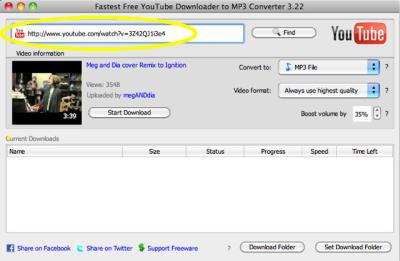
It is interesting to note that with digital files it’s not about recording the sample, but editing it out of the original file. It is much different from having to put the turntable on 45 rpm to fit a sample into 2.5 seconds. Another differentiation between digital sample sources is the quality of the files, whether original digital files (CD quality or higher), lossless compression (FLAC), lossy compressed (MP3, AAC) or the least desirable though most accessible, transcoded (lossy compression recompressed such as YouTube rips). These all result in a different degradation of quality than the SP-1200. Where the SP-1200’s downsampling often led to fatter sounds, these forms of compression trend toward thinner-sounding samples.
.
Some producers have created their own sound using thinned out samples with the same level of sonic intent as The RZA’s on “Stroke of Death.” The lo-fi aesthetic is often an attempt to capture a sound to parallel the golden era of hardware-based sampling. Some software-based samplers by example will have an SP-1200 emulation button that reduces bit rates to 12-bit. Most of software sequencers have groove templates that allow for the sequencers to emulate grooves like the MPC timing.
Perhaps the most important part of the sample-based composition process however, cannot be emulated: the ear. The ear in this case is not so much about the identification of the hot sample. Decades of history should tell us that the hot sample is truly a dime a dozen. It takes a keen composer’s ear to hear how to manipulate those sounds into something uniquely theirs. Being able to listen for that and then create that unique sound—utilizing whatever tools— that is the blue note of sampling. And there is simply no way to automate that process.
—
Featured image: “Blue note inverted” by Flickr user Tim, CC BY-ND 2.0
—
Primus Luta is a husband and father of three. He is a writer and an artist exploring the intersection of technology and art, and their philosophical implications. He maintains his own AvantUrb site. Luta was a regular presenter for Rhythm Incursions. As an artist, he is a founding member of the collective Concrète Sound System, which spun off into a record label for the exploratory realms of sound in 2012. Recently Concréte released the second part of their Ultimate Break Beats series for Shocklee.
—

REWIND!…If you liked this post, you may also dig:
“SO! Reads: Jonathan Sterne’s MP3: The Meaning of a Format”-Aaron Trammell
“Remixing Girl Talk: The Poetics and Aesthetics of Mashups”-Aram Sinnreich
“Sound as Art as Anti-environment”-Steven Hammer
—
Share this:

Fear of a Black (In The) Suburb

DOI: https://doi.org/10.59350/bttmg-00f54
Editor’s Note: This month Sounding Out! is thrilled to bring you a collection of posts that will change the way you hear cities. The Sounds of the City series will prompt readers to think through ideas about urban space and sound. Are cities as noisy as we think they are? Why are cities described as “loud”? Who makes these decisions about nomenclature and why?
We kicked things off two weeks ago with my critical reading of sound in Lorraine Hansberry’s A Raisin in the Sun, a play about African Americans in Chicago that still rings/stings true today. Guest writer Linda O’ Keeffe took readers last week on a soundwalk of Smithfield Square in Dublin, Ireland and specifically of the Smithfield Horse Fair, in order to illustrate how urban renewal disrupts city soundscapes and how sound reclaims those spaces. Next week CFP winner Lilian Radovac will share with us a photoessay on the sound installation Megaphóne in Montreal.
Today’s post comes from regular writer Regina Bradley whose post reminds us of the recent verdict of the Michael Dunn case, the “loud music case” when he shot 17-year-old Jordan Davis at a gas station. She discusses the dichotomy of urban and suburban in the context of sound (noisy versus quiet) and hip hop.
Edited on Feb 17, 2014 at 9:35 am EST: the first published version of this post did not acknowledge Nina Sun Eidsheim as the coiner of the phrase “sonic blackness.” We have added a reference in the post to recognize the work Eidsheim has done in theorizing this concept.–Managing Editor Liana M. Silva-Ford
***
In a recent Chase credit card commercial a white woman pulls up to a gas station and pumps gas into her minivan while blasting loud music. Her windows rattle and the toys of her children vibrate to the beat. After pumping gas, the woman hops into her car, puts on a pair of shades, and bounces to the beat like a “cool mom.” In the context of the commercial, the white suburban mother is not threatening. The commercial reminds me that Jordan Davis’ life ended at a gas station in Jacksonville, Florida. His loud hip hop music was not cool; in fact, he and the music are perceived to be threatening.
The woman in the Chase commercial borrows what is instantly recognizable as sonic black (masculine) cool. Nina Sun Eidsheim, in her article “Marian Anderson and ‘Sonic Blackness’ in American Opera”, theorizes sonic blackness as the racialization of sounds that listeners perceive to be coming from a black body. Borrowing from her concept, I extend sonic blackness as the sound that are perceived as black that enter spaces where physical blackness could be readily refused. Of particular interest for this essay is the connection between black mobility, urban space, and sound. I focus particularly on hip hop as a mobile form of sonic blackness whose origins are based in the city. Hip hop reinforces conceptualizations of contemporary blackness as urban. In this context, sonic blackness collapses the absolute binaries in which blacks are frequently forced to exist, i.e. urban and rural, working class and middle class, silence and noise. Yet when it is situated in hip hop, sonic blackness can also be considered a disruption of suburbia, a dominant trope of white privilege at the end of the 20th century. Using examples from the contemporary cartoon show The Boondocks, I posit that the show’s use of hip hop underscores how the white suburban soundscape is constructed in contrast to black urban sounds.

America’s popular imagination portrays the suburbs as white, middle class, and quiet. Constructions of the suburbs in recent history have not strayed far from the idealistic neighborhoods of the 1950s and 1960s portrayed in shows like Leave It to Beaver. Take for example the inclusion of gated communities as the upper echelon of suburbs and white privilege seen in The Real Housewives of Orange County (which opens with the viewer ‘walking through’ opened gates into the Orange County community). I’d like to emphasize the connection between whiteness and quiet, as privilege in these types of spaces is present but often not visible or audible. Suburbs are the result of urban industrialism, anxiety of close association with an increasing minority community, and the need to sustain a romantic ideal of the American dream. A suburb’s physical parameter is a middle-class manifestation of manicured lawns, gates, and homeowner associations. At the level of sound, the suburbs’ class privilege is represented as the hum of lawn mowers, chirping birds, and screeching breaks of school buses. As Steve Macek points out in Urban Nightmares: The Media, The Right, And The Moral Panic Over The City, suburban sensibilities cling to an idealistic notion of a physically and sonically constructed white ambivalence to racial and class anxieties associated with cities. Any dysfunction associated with whiteness is quietly tucked away from public view.
White suburbia sustains its desirability because it is a physically and sonically segregated space. Yet white suburbia is also the site of black Americans’ most recent migratory efforts. In ways that northern cities signified opportunity for blacks in the early 20th century, the ideals of racial progress and class in the late 20th century have shifted to U.S. suburbs. Thoughts of the middle class in the black imagination amplify the suburb as a utopic space because of its initial lack of access. The suburb becomes the mountaintop of racial access and privilege.

Consider the premise for Lorraine Hansberry’s 1959 play A Raisin in the Sun. Hansberry examines in the play the high stakes of home ownership in a ‘good neighborhood.’ The Lee family leaves the Southside for the opportunity at a better life and more space for their growing family. As Liana Silva-Ford pointed in her discussion of A Raisin in the Sun two weeks ago, the Lee family’s decision to move into the Clybourn Park neighborhood disrupts the suburb as a space of white privilege and annotates the cusp of the emerging Civil Rights Movement. Additionally, visual demonstrations of black protest that reach suburban areas are annotated by sonic markers of struggle i.e. the sound of attacking guard dogs, police officers screaming at protestors, spraying fire hoses, and screams and moans of black bodies under attack. The audio-visual representation of the struggle of integration collapses the notions of white suburbia as a site of ‘perfect peace.’ The above referenced sonic markers also destabilize classifications of black trauma as restricted to urban spaces like the inner city, which is believed to embody blacks’ realities.

Where Hansberry’s interrogation of space and access in Raisin in the Sun is an initial foray into constructions of white privilege vis-à-vis suburban communities, Aaron McGruder’s 21st century suburban space of The Boondocks pivots on the romanticized ideas of blacks in middle class spaces derived from the 1950s and 1960s. The show introduces viewers to patriarch Robert (Grandad Freeman) and his two grandsons, Huey and Riley Freeman, who have left the south side of Chicago for the white suburb of Woodcrest. McGruder incorporates sonic markers of race and class that collapse suburbs as white only spaces. Aside from lighthearted lounge music style piano riffs during dialogues that indicate whiteness, McGruder incorporates sonic elements of hip hop that interrupt white suburbia. Elements of sonic registers of hip hop, like heavy bass kicks and songs like “Booty Butt Cheeks” or “Thuggin’ Love,” disrupt the quiet of the Woodcrest community.
The clash of hip hop’s loudness with Woodcrest’s quiet demeanor is best demonstrated in the episodes “The Story of Thugnificent” and “The Block is Hot.” In “The Story of Thugnificent,” rapper Thugnificent decides to move to Woodcrest. His presence is heard before it is seen, a caravan of cars with bass systems playing “Booty Butt Cheeks” before he actually appears on screen. Thugnificent’s arrival is striking as he introduces hip hop as a literal and sonically disruptive element of black working class cultural expression. The disruption is celebrated, however, because of Thugnificent’s allure as a rapper. He gets a pass that Grandad Freeman questions because he sees Thugnificient as a threat to what he perceives to be as a delicate existence of his blackness in a white community.
Grandad Freeman’s vehement opposition to embrace “the homie” Thugnificent destabilizes notions of policing as a one-sided scare tactic by whites. Yet to repel Thugnificent’s physical and sonic presence, Grandad resorts to hip hop and records a diss record that demands Thugnificent to leave Woodcrest. The diss record parodies the sonic notes of a rap battle: Grandad starts the track with ramblings of “yeah” and “uh.” Where these terms are used in a rap battle to try to “catch the beat,” Grandad’s use of these words is an offset attempt to try to find something to say. The result of Grandad and Thugnificent’s rap battle on wax is a rise in physical violence against senior citizens in Woodcrest. The awkwardness of Grandad’s diss track parallels not only a generational dismissal of hip hop as an outlet of protest but the sonic awkwardness of hip hop being the voice of protest for a suburban space.

In the episode “Block is Hot,” a nod to rapper Lil Wayne’s same titled track (although he nor the song are mentioned anywhere in the show), Huey Freeman blasts rap group Public Enemy’s pro-black and anti-police brutality anthem “Fight the Power” to remind his neighborhood he is a black nationalist. He is also dressed in a black hoodie and black timberland boots. Huey is undeniably hip hop in a privileged white space. Huey’s physical apparel, a nod to the Black Panther party and the hip hop fashion affinity for wearing the color black is amplified by “Fight the Power.” Huey’s posturing can also be read as a homage to Radio Raheem from Spike Lee’s 1989 film Do the Right Thing because like Radio Raheem, Huey lugs around a large boombox to play “Fight the Power.” Particularly striking is the overlap of the urban hip hop masculinity Raheem signifies with Huey’s own hip hop posturing in Woodcrest. While Raheem remains in the ‘hood, Huey doubly signifies hip hop’s migration from the city into suburban areas as well as his own migration to Woodcrest from Chicago. Huey uses hip hop as a site of social-political resistance and as a way to remain attached to his urban roots. Blasting “Fight the Power” shows how Huey remains conscious of white privilege in Woodcrest. He recognizes the need to identify black agency – even if it is only emphasized through sound – while reflecting on the “new” suburb as a racially ambiguous space.
The most jarring use of sound to reflect on the racial politics of the new suburb is the shooting of Uncle Ruckus by police officers. The ricochet of the bullets can be heard against cars and other inanimate objects but the bullets miss their target, Ruckus. The gun shots mark an interruption of the suburban soundscape. Gun shots, sonic signifiers of power, death, and trauma, are also markers of black violence as an urban phenomenon. However, negotiations of power shift to speak to reclamation of white privilege in sonic and physical spaces . The gun shots inflicted upon black bodies in suburban spaces could also be read as a subversion of gun shots heard in hip hop. While the sound of a firing gun in the hip hop imagination is expected and acceptable, gun shots in white suburbia are disruptive and displaced because they contest its appearance as a quiet and respectable space. Further, the sonic significance of the bullets riddling everything around Ruckus is the messiness of the hit-or-miss surveillance of black bodies, particularly black men, as necessary in privileged white spaces.

The policing of black bodies in suburban spaces, especially over the past two years, begs the question of how suburban soundscapes serve as backdrops of 21st century racial anxieties and whiteness. The centrality of sound in the deaths of Trayvon Martin, Renisha McBride, Jordan Davis, and Jonathan Ferrell,– i.e. 911 tapes and banging on house doors – is critical in identifying race and space. Sonic markers of racial anxiety in their deaths devastatingly reemphasize the connection of race and sound in white privilege spaces. For example, Davis’ killer Michael Dunn stated to his girlfriend that he “hate[d] that thug music.” Unlike the suburban mom in the Chase commercial, Dunn is threatened by the sonic blackness and hypermasculinity associated with loud [hip hop] music. The negative connotations of hip hop as “thug music” and Davis’ mere presence as a young black man trigger a devastating response to the disruption of white privileged space.
As I work through my visceral response to Michael Dunn’s not guilty verdict for the actual slaughter of Jordan Davis, I think about the frivolity of the suburban mom in the Chase commercial and her enjoyment of loud music. The overlap of her whiteness, gender, and status as a suburbanite protect her from any inclinations of being a menace. She uses loud music as a sense of liberation – a premise for the Chase Freedom card being promoted in the commercial. Unlike Chase’s suburban mom, Jordan Davis’ use of loud music is not freeing – it contextualizes him in a rigid space of hypermasculinity and pathology that is all too often associated with hip hop culture. As I discuss previously, the traumas associated with black bodies that cannot be literally articulated take place in nonliteral spaces like sound. Utilizing sound is particularly useful in situating blackness in privileged white spaces like suburbs that displace their agency and significance because of racial anxieties associated with space and class.
—
Regina Bradley recently completed her PhD at Florida State University in African American Literature. Her dissertation is titled “Race to Post: White Hegemonic Capitalism and Black Empowerment in 21st Century Black Popular Culture and Literature.” She is a regular writer for Sounding Out!
—
Featured image: “Dead End in the Burbs” by Flickr user Vox Efx, CC BY 2.0
—
REWIND!…If you liked this post, you may also dig:
“Death Wish Mixtape: Sounding Trayvon Martin’s Death”-Regina Bradley
“From Illegitimate to Illmatic: On Tiger Mothers, Ethnoburbs, and Playing the Violin While Dreaming of Nas”-Christie Zwahlen
“Sound Off! // Comment Klatsch #7: #RachelJeantel asks: Are you Listening?”
—
Share this:




Current Top Posts





April 2021

January 2020

November 2019

October 2019

August 2019

April 2014

November 2017

March 2015

December 2017

October 2015


Recent Comments