
Of Resilience and Men: How Bieber, Skrillex, and Diplo Play with Gender in “Where Are Ü Now”

DOI: https://doi.org/10.59350/bt0ja-9ey61
Justin Bieber caught me off guard last year. There I was, minding my own business, listening to a pop station, and this breathy little thing, this delicate vocal wrapped in a halo of shimmering effects starts piping through my car. I didn’t even realize it was him at first; it had been so long since I’d heard a new Bieber song. And I had no clue the production was from Skrillex and Diplo (from their 2015 Skrillex and Diplo Present Jack Ü), which is why I was probably also not ready for the drop, that moment when the song’s tension releases and I’m suddenly gliding across a syncopated bass synth while Bieber’s vocals are pinched into a dolphin call. Somehow, two of the most notoriously unsubtle producers and the posterboy for “too much, too soon” had snuck up on me with “Where Are Ü Now” (WAÜN).

WAÜN’s drop from nowhere isn’t brand new. Subtle soars and understated drops are officially A Thing. More importantly, they do work beyond the sonic aesthetic. In this case, I want to listen to WAÜN in the context of Bieber’s performance of gender, specifically with an ear toward the way Skrillex and Diplo mix elements from dancepop’s 2015 toolkit to produce a track that plays on feminine tropes, which articulate a kind of masculinity. Listening to WAÜN alongside Robin James’s Resilience & Melancholy (2015) amplifies the male privilege at play in WAÜN. James calls attention to the way drops can sonify feminine resilience, and WAÜN’s surprise drop toys with that resilience in a thoroughly heteromasculine way. I’ll first set up how drops usually work, then read James in the context of Bieber’s gender performance as heard in WAÜN.
Drops, at their most basic, are climactic moments when a song’s full instrumental measure hits (hence “drop”), often after some key elements of the instrumental have been removed so that the climax can sound more intense. At that broad level, any genre can employ a drop of some sort. EDM and dancepop drops—the kind that most directly inform the music of Skrillex, Diplo, and Bieber—are bass-heavy and typically follow a soar that intensifies volume, texture, rhythm, and/or pitch: you soar to a sonic plateau or a cliff, and with a “YEEEEEES!!!!!” coast on some wobbly goodness to the next verse.
The pre-chorus soar in the Messengers/Sir Nolan/Kuk Harrell-produced “All Around the World” from Bieber’s 2012 Believe is a solid example. In the video below, the soar starts at 0:45, the chorus enters at 1:00, and the drop lands at 1:15. It’s textbook: the instrumental is stripped back and filtered, and in the opening moments, we hear a descending bass glide. A filter does what its name suggests–it filters out a prescribed set of frequencies so that we only hear a certain range, and in this case it’s the low end that comes through. The effect makes the synths sound like they’re pulsating through water, and the higher frequency overtones take on a shimmery quality. Over the course of the 8-measure soar, the higher frequency range is brought into earshot, and then, on the second half of the eighth measure…nothing. This nothingness is integral to James’s central argument in Resilience & Melancholy: nothingness intensifies what follows. In these eight measures, we’ve glided down to the low end only to soar up up up until all that’s left is Bieber’s voice, confident, nasally, with just a touch of autotune as he sings the titular line that will take us to the chorus. That chorus bangs harder because of the soar to oblivion before it.
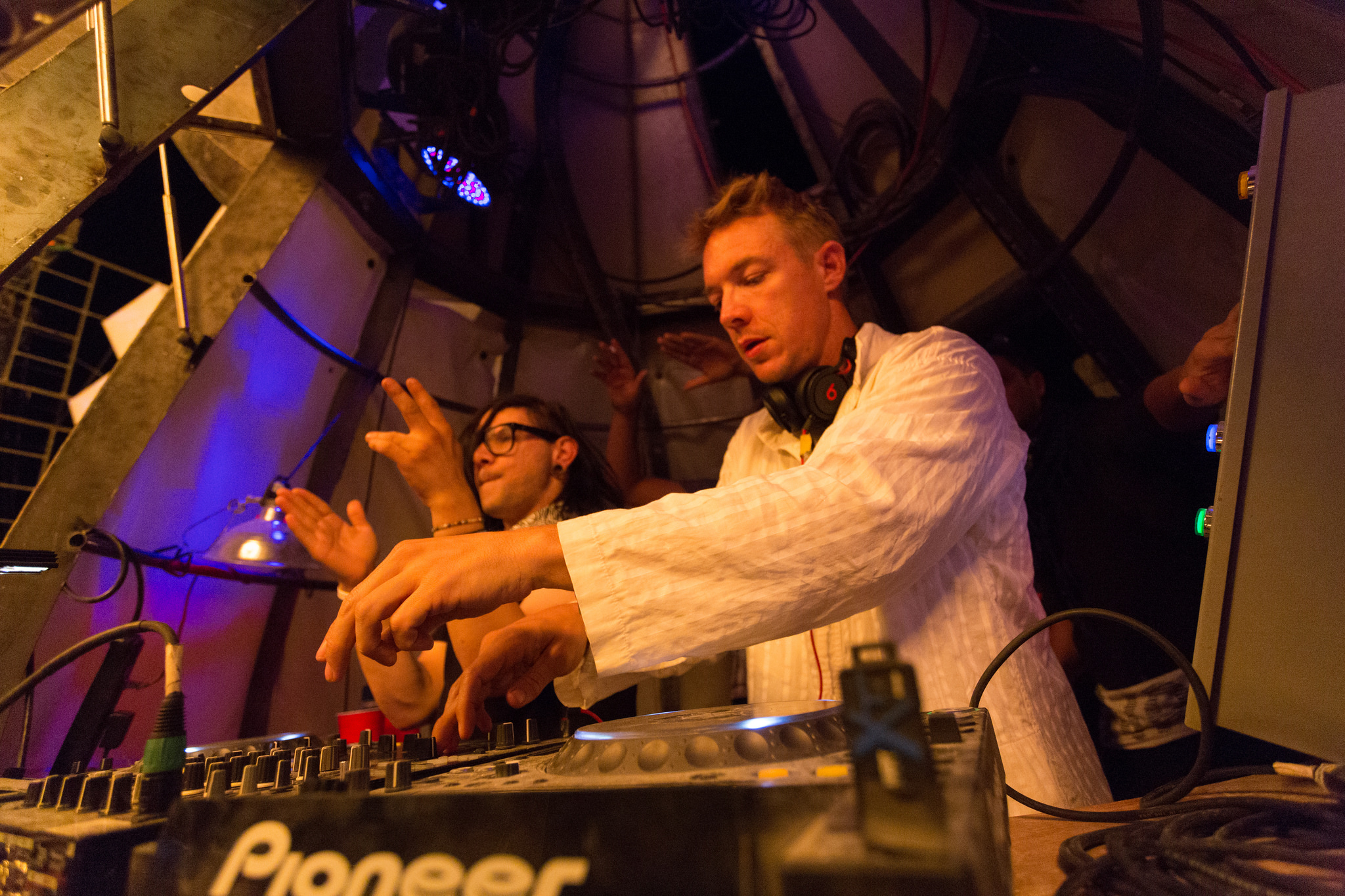
WAÜN’s drop lands at 1:09. For full context, start from the beginning and listen for the soar. (If you also need to stare dreamily into Bieber’s eyes, then by all means.)
There’s not really a soar there. No intensifying volume, texture, rhythm, pitch. The not-soar (starting at 0:48) is even a weird length, clocking in at 12 measures after an 8-measure intro and 16-measure verse have established a multiples-of-8 structural rhythm; even if we were expecting a drop, it comes four measures early. The clearest sign we get that a drop is imminent is that moment where the instrumental reduces to a quiet hiss for two measures as Bieber sings “Where are you now?” That hiss is the structural equivalent of the nothingness we hear just before “All Around the World”’s chorus, and with no traditional soar before it, we have just enough time to think “Oh shit, are they gonna….?” before we’re off, clutching tight to Justin Bieber as we ride a dolphin through the more tender parts of Skrillex’s and Diplo’s musical oceans.
Until that nothingness, this could just as easily be one of those heartfelt Bieber tunes where he reaches to the high end of his range for a chorus full of feels. That Bieber? He’s incredibly self-assured, bearing his soul because he’s certain you’ll love him. The bait-and-switch of WAÜN’s soarless drop highlights Bieber’s insecurity in this song—he’s just dolphin calls and “Where are you now”s—by creating expectations for a different persona.
So what we have here is an atypical drop, a drop that calls attention to itself by behaving differently than we expect it to, a drop that’s a study in understatement–all courtesy of three of dancepop’s resident maximalists.
Atypical soars and drops aren’t new, as producers will always toy with musical conventions as a way to disrupt expectations. Skrillex’s own “Scary Monsters and Nice Sprites” (2010) includes a pre-drop that doesn’t soar at all. In 2015, two big acts in the dance scene, Disclosure and The Chemical Brothers, released singles that don’t soar right, either. Disclosure, whose big 2013 hit “Latch” soared rather traditionally into Sam Smith’s chorus, is coyer on “Bang That” and “Jaded.” “Bang That” includes three separate 8-measure phrases (at 0:30, 0:45, and 1:01, respectively, in the linked video) that never take off, finally settling into a descending bass line (starting at 1:09) that just repeats a rhythmic motif, running out the clock on the final four measures before the chorus. “Jaded,” at the other end of the spectrum, includes only a 4-measure pre-chorus (1:18-1:27) that seems to be sweeping upward like a traditional soar, then roller coasters down and back up over the final two measures. The instability of this soar/not-soar is punctuated with an additional eighth note tacked onto the end of the fourth measure, throwing the chorus off-kilter. The Chemical Brothers employ a similar roller coaster sweep in “Sometimes I Feel So Deserted” that marks out an even eight measures (0:58-1:13) without either intensifying rhythmically or pushing to a pitch ceiling at the drop.
These soars and drops stand out precisely because, like WAÜN’s, they aren’t the norm. To help theorize WAÜN’s not-soar, I want to think with Robin James, whose Resilience & Melancholy hears soars and drops in the context of contemporary race and gender politics. James situates soars and drops as the sonic equivalent of resilience–a performance of feminine overcoming that ultimately only strengthens the white supremacist capitalist patriarchy that inflicts the damage that is being surmounted. In other words, women can only attempt to overcome through the damage that white supremacist capitalist patriarchy inflicts upon them. Sonically, the soar is an accrual of damage that is spectacularly (and profitably) overcome in the drop, the music that resiliently endures on the other side of nothingness. Melancholy, on the other hand, is failed resilience, a handling of damage that does not directly profit white supremacist patriarchy and that could sound any number of ways, including like a non-traditional soar. While admittedly these soars and drops aren’t always about gender politics, R&M opens space for us to think about gender and soars/drops together.
I don’t think WAÜN’s non-soar/drop is resilient or melancholic, but I do think it’s helpful to think of it as being about resilience and melancholy. This is where Bieber’s performance of masculinity comes into play. From his earliest poofy-headed, babyfaced performances, Biebs has done a modified bro thing: his heart’s on his sleeve, but mostly as a strategy for sexual conquest. “All Around the World,” again, is exemplary. In the lyrics, Bieber uses his worldly experiences to woo a potential lover, who he also negs, keeping himself in a position of power as someone who knows more, has seen more, and is willing to accept this woman despite her obvious flaws.

In WAÜN, though, I hear his performance of masculinity complicated further, as he tries out a number of more feminized tropes all at once. Lyrically, Bieber is the scorned lover who claims to have done all the care work in his relationship. Visually, he’s the pop icon whose body is ogled, scrutinized, and marked. Vocally, he receives the pitch-shift treatment that has most recently been associated with DJ Snake’s production of diva vocals (think “You Know You Like It” and “Lean On”). He also sings in a breathy style that James has elsewhere noted mimics Ellie Goulding’s vocals. Musically, Skrillex and Diplo give him the soar/drop construction to undergird his pain, a musical technique that most often signifies feminine resilience.
What bubbles up is a heteromasculine play on resilience and melancholy. Skrillex and Diplo liquidate the soar until all that’s left is a nothing-hiss before the drop. In the context of the other feminized tropes Bieber is messing with in WAÜN, this failed soar could feel melancholic, a refusal to spectacularly overcome. Overcome what, though? Bieber gets to sound resilient or melancholic without ever experiencing damage. That’s his male privilege. James points out that one of the most violent outcomes of resilience discourse is the re-enforcement of damage. If resilience is the way women become legible and profitable, then the damage inflicted by ablist white cisheteropatriarchy becomes a necessity, something that must be endured to gain access to power and resources. This is the lynchpin of James’s critique: resilience is a harmful discourse because it ultimately benefits the system it purports to overcome. Melancholy turns resilience logic on its head by refusing to treat damage as something an individual is responsible for overcoming. WAÜN, though, erases damage altogether in its initial drop. WAÜN’s feminized tropes ultimately highlight instead of unsettle Bieber’s performance of hetero-masculinity: what’s more man-ly than accessing power and resources without the threat of institutional violence?
Importantly, these feminized tropes don’t undermine Bieber’s heteromasculine performance; rather, they only seem to add nuance to the slightly bro-ier [that’s a word] Bieber performance we’ve become accustomed to. That’s what I mean when I say WAÜN is about resilience and melancholy; Skrillex and Diplo use the markers of queer or feminine overcoming and failed overcoming to re-construct Bieber’s masculinity, to toss some more ingredients into his manly mix, and the not-soar is a big component of that. Skrillex and Diplo tap into this soar experimentation, then drop it into the middle of a slightly more gender-fluid Bieber.
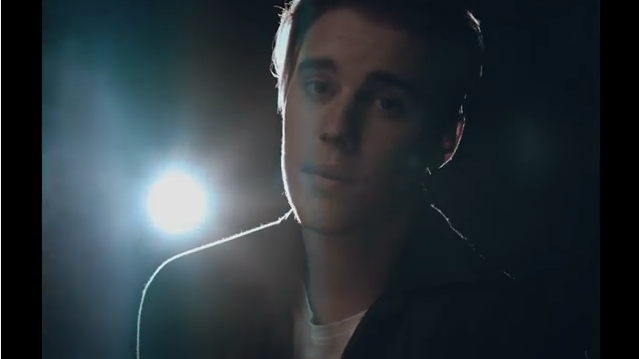
WAÜN’s high water mark is a few months behind us at this point, but Bieber remains hotter than ever, with “What Do You Mean?,” “Sorry” (another Skrillex production credit), and “Love Yourself” still dominating US and UK charts. Several more singles from Purpose (including two more Skrillex collaborations) are poised to do the same in 2016. Each of these singles extends some of the same tropes Bieber, Skrillex, and Diplo explore in WAÜN—breathy vocals, misunderstood and mistreated pop icon, resilience and contrition and care in the face of a failed relationship—and I hear WAÜN’s initial drop as the sonic moment that preps Bieber’s return to the pop charts. He wades back into the mainstream with a more complex performance of heteromasculinity and reaps the profits that come with it.
—
Justin D Burton is Assistant Professor of Music at Rider University, and a regular writer at Sounding Out!. His research revolves around critical race and gender theory in hip hop and pop, and his current book project is called Posthuman Pop. He is co-editor with Ali Colleen Neff of the Journal of Popular Music Studies 27:4, “Sounding Global Southernness,” and with Jason Lee Oakes of the Oxford Handbook of Hip Hop Music Studies (2017). You can catch him at justindburton.com and on Twitter @justindburton. His favorite rapper is Right Said Fred.
—

REWIND!…If you liked this post, you may also dig:
Vocal Gender and the Gendered Soundscape: At the Intersection of Gender Studies and Sound Studies — Christine Ehrick
They Do Not All Sound Alike: Sampling Kathleen Cleaver, Assata Shakur, and Angela Davis — Tara Betts
Tomahawk Chopped and Screwed: The Indeterminacy of Listening–Justin Burton
—
Share this:

Straight Outta Compton . . .Via New York

DOI: https://doi.org/10.59350/440bb-mrr46
Sounding Race in Rap Songs explores the production of musical identity in hip hop’s first two decades as a commercial genre. Although I don’t ignore lyrics or visual imagery, my main purpose is to analyze rap music as music, to understand how specific artistic decisions contribute to racial meaning in particular songs. My methods revolve around the study of how producers manipulate breakbeats, also commonly known as “breaks.” Initially understood as short, percussion-heavy passages that appear in many songs recorded in the 1960s and 1970s, breaks have been central to hip hop from the music’s earliest days in the South Bronx when DJs began isolating and looping them on their turntables to the delight of dancers. Since then, producers have tried out new approaches to working with breakbeats: hiring studio musicians to re-record them; programming drum machines to imitate them; and using sampling-sequencing technology to capture and rearrange them.
Throughout the book, I describe how producers use breaks and give rise to musical-racial codes that can be manipulated to project a variety of identities and attitudes. The following excerpt from the third chapter of Sounding Race, explains how the style of beat making popularized by the New York-based Bomb Squad (Public Enemy’s production team) provided a blueprint for pioneering west coast gangsta rap group N.W.A’s depiction of Compton, California. By layering multiple loops into a dense, cacophonous mix, N.W.A transposed Public Enemy’s “too black, too strong” sound onto the world of Los Angeles’s postindustrial streets.
N.W.A and its former members have been in the news recently thanks to the biopic Straight Outta Compton. Yet one aspect of the group’s development downplayed in the film is the way that its members formulated their identities in relation to east coast rap. In the mid-1980s, New York was the undisputed center of the industry, and its influence on L.A.-based acts is easy to see and hear. Ice Cube’s first group C.I.A. ( Cru’ In Action) used a nasal, hocket style approach to rapping cribbed directly from the Beastie Boys 1986 album License to Ill. And the cover of N.W.A’s first album N.W.A and the Posse, features numerous group members posing with the giant clock necklaces made famous by Public Enemy’s Flavor Flav. In similar fashion, the beat Dr. Dre produced for “Straight Outta Compton” (the title track to their breakout 1988 album) followed the Bomb Squad’s potent formula for signifying militant blackness. —Loren Kajikawa
—
The following is an excerpt from Chapter Three “‘Let Me Ride’: Gangsta Rap’s Drive Into The Popular Mainstream,” of Loren’s Kajikawa’s Sounding Race in Rap Songs, with thanks to The University of California Press. Any notes have been included in the text to conform to Sounding Out!‘s style sheet.
We [Public Enemy] were in Vegas and they [N.W.A.] were on tour with us, and I had just got the vinyl in. That’s what this is all about. Because Run-DMC and LL Cool J gave me energy. And if our energy happened to be transferred to N.W.A., then that’s what this whole thing is for.” Chuck D as quoted in Brian Coleman, Check The Technique: Liner Notes For Hip-Hop Junkies (New York: Villard Books, 2007), 354.
According to Chuck D, Public Enemy’s musical style directly influenced Dre, and he recalls giving the first two copies of It Takes a Nation of Millions To Hold Us Back to Dr. Dre and Eazy-E prior to the album’s official release. The recorded evidence supports Chuck D’s recollection. For many of the tracks on Straight Outta Compton, Dr. Dre seems to have borrowed from the “loops on top of loops” style of Public Enemy’s Bomb Squad.
In fact, when Ice Cube left N.W.A. in 1989, he hoped that Dre would continue to make beats for his solo project. When this proved impossible due to Dre’s contractual obligations to N.W.A., Ice Cube began collaborating with the Public Enemy’s Bomb Squad, which served as the production unit for his album Amerikkka’s Most Wanted (1990). N.W.A.’s breakthrough was finding a way to put a distinctive spin on these influences, and the artistic strategy that they arrived at for their first Ruthless Records release was designed to put themselves on the map—both literally and figuratively.
Rather than shout out the multiplicity of neighborhoods where their members were actually from (as they had done in “Panic Zone”), N.W.A. chose to center their identity around Dr. Dre and Eazy-E’s hometown of Compton, California. The sound of Compton as Dr. Dre imagined it, however, drew on musical practices and artistic decisions similar to those found in Public Enemy’s “Rebel Without a Pause.” To construct the rhythmic foundation of “Straight Outta Compton,” Dre looped the breakbeat from The Winstons’ “Amen Brother” (1969), one of the most sampled beats in hip hop, that also served as the foundation for dozens of songs in the UK’s “jungle” (aka “drum and bass”) genre.

Like other heavily sampled breaks from this era, the one-measure loop features a syncopated interlocking of snare and bass hits that is reminiscent of James Brown’s “Funky Drummer (featuring Clyde Stubblefield’s famous beat). As if he were following the Bomb Squad’s exact formula, Dr. Dre layered a drum machine (Roland TR-808) over this break.

The 808 was programmed to add its characteristic bass boom to the first two drum kicks of the “Amen” loop, and to tick off a 16-count hi-hat pulse with a closing hi-hat clasp on the downbeat of every other measure. The “Amen” break and the two hi-hat parts, provide the rhythmic foundation around which Dr. Dre places numerous other repeating sounds. Two other ingredients stand out in this beat: a guitar ostinato and a low drone on what sounds like a baritone sax or trombone (or perhaps a downwardly pitched sample of another instrument). The guitar ostinato, which plays straight eighth-notes on E-flat except for a one step descent to D-flat on the “and” of every fourth beat, churns out tight 1-measure units of sound.

The horn drone (also on E-flat) has a raw, muddled quality, and casts an ominous cloud over the track.
By combining these layers with the dense percussion track, Dre created a tightly packed funk groove with many sonic similarities to Public Enemy’s Bomb Squad. Like “Rebel Without a Pause,” the track to “Straight Outta Compton” features tight 1-measure loops stacked on top of one another to create a thick and intense groove.

Except for the drone, most of the elements in the track have a punchy feel, full of rhythmic stabs and staccato attacks, including the automatic gunfire that Dre samples to follow Ice Cube’s reference to an AK-47 assault rifle. Due to the “noisiness” of the beat, the way sonic space seems filled to maximum capacity, the members of N.W.A.—similar to Public Enemy’s Chuck D and Flavor Flav—practically yell their verses, as if they must raise their voices in order to be heard over the cacophony. Even before the actual words to “Straight Outta Compton” are digested, the sound of the track and the group’s vocals evoke the palpable tension of imminent conflict, which reinforces the theme of violent confrontation in the song’s lyrics. For the chorus of “Straight Outta Compton,” Dr. Dre strings together a series of samples with rapid-fire precision. The sound of screeching car tires from Davy DMX’s “One for the Treble” is followed by turntable scratching; the scratching leads directly to a choppy sample of the words “City of Compton” from Ronnie Hudson’s “Westcoast Poplock,” which is then followed by more scratching. The whole chain of musical events is deployed over the breakbeat from Funkadelic’s “You’ll Like It Too,” which Dr. Dre splices into the beat just for the chorus. The rapid cutting from one sample to the next exemplifies the “rupture” Tricia Rose identifies as fundamental to hip hop’s post-industrial aesthetic in Black Noise: Rap Music and Black Culture in Contemporary America (39).
Thus, the music and lyrics for “Straight Outta Compton” depict the city as a place of extremes, where things happen fast and change is sudden and complete. It is a place where one is either equipped to deal or left behind. In this way, Dr. Dre exploited the spatial characteristics encoded in Public Enemy’s music to depict Compton as place. The sonic characteristics that animated Public Enemy’s militant blackness were rerouted and effectively transposed onto N.W.A.’s depiction of Los Angeles gangstas.
—
Loren Kajikawa has served on the faculty at the University of Oregon’s School of Music and Dance since 2009. His main area of research and teaching is American music of the twentieth and twenty-first centuries, and he offers a variety of courses in music history, ethnomusicology, and musicology. Kajikawa’s writings have appeared in American Music, Black Music Research Journal, ECHO: a music-centered journal, Journal of the Society for American Music,and Popular Music and Society, among others. His recent book Sounding Race in Rap Songs (University of California, 2015) explores the relationship between rap music’s backing tracks and racial representation.
—
REWIND! . . .If you liked this post, you may also dig:
“‘I’m on my New York s**t’: Jean Grae’s Sonic Claims on the City”––Liana Silva
Love and Hip Hop: (Re)Gendering The Debate Over Hip Hop Studies–Travis Gosa
Caterpillars and Concrete Roses in a Mad City: Kendrick Lamar’s “Mortal Man” Interview with Tupac Shakur–Regina Bradley
—
Share this:




Current Top Posts





April 2021

January 2020

November 2019

October 2019

August 2019

April 2014

November 2017

March 2015

December 2017

October 2015


Recent Comments