
“You’re. . .#noangel. . . either”: Uneasy Politics and Dissonant Sonics in Beyoncé’s “No Angel”
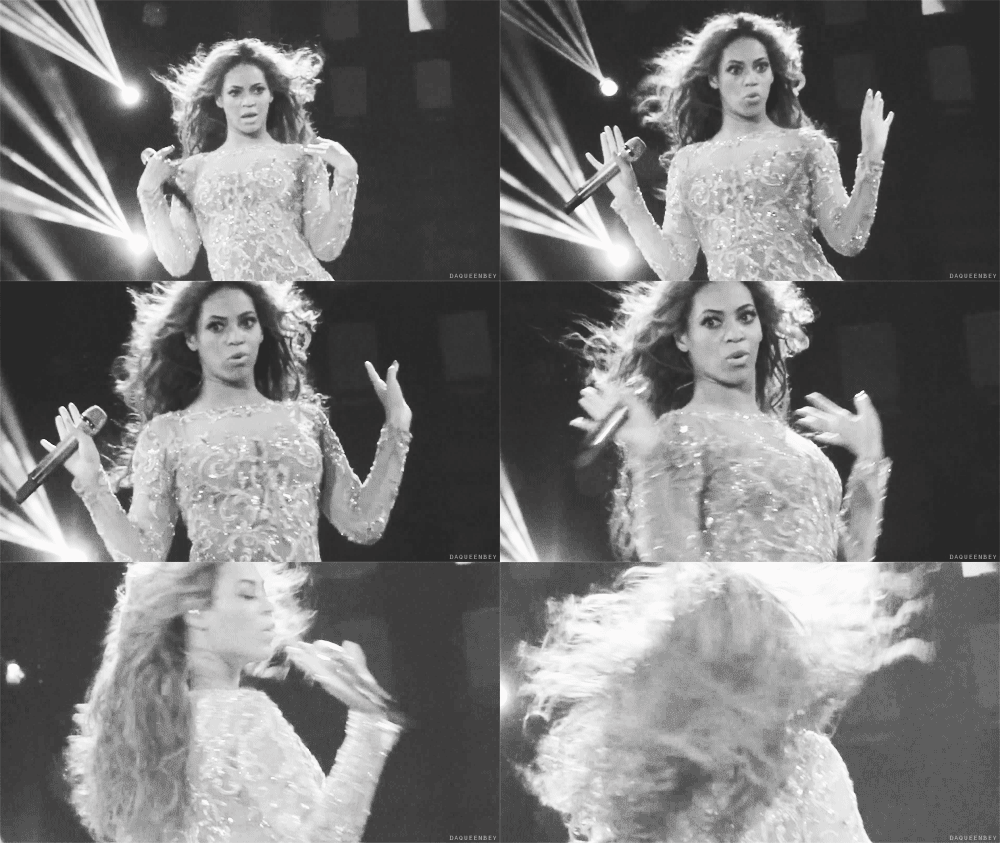

This September, Sounding Out! challenged a #flawless group of scholars and critics to give Beyoncé Knowles-Carter a close listen, re-examining the complex relationship between her audio and visuals and amplifying what goes unheard, even as her every move–whether on MTV or in that damn elevator–faces intense scrutiny. In the coming Mondays, you will hear from Priscilla Peña Ovalle (English, University of Oregon), Liana Silva (Editor, Women in Higher Education, Managing Editor, Sounding Out!), Regina Bradley (writer, scholar, and freelance researcher of African American Life and Culture), and Madison Moore (Research Associate in the Department of English at King’s College, University of London and author of How to Be Beyoncé). Today, we #wakeuplikethis with Kevin Allred (Women and Gender Studies, Rutgers), who refuses to let us fast forward past the understated and discomfiting video track “No Angel.”–Editor-in-Chief Jennifer Stoever
—
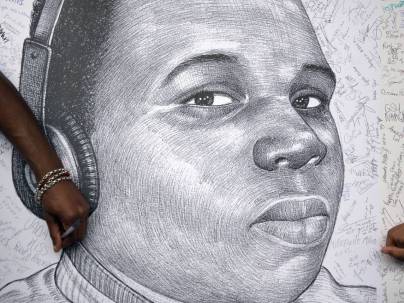
Michael Brown, an unarmed black teenager, was shot to death by white police officer Darren Wilson in Ferguson, Missouri on August 9, 2014, for no apparent reason [see author’s note below]. While the fact that the death of unarmed black men (and women and trans people) at the hands of those in power is, sadly, no unique occurrence, as Melissa Harris-Perry – among countless others – have pointed out, Brown’s death has sparked nation-wide outrage and protests about police brutality, racial injustice, and severely decreased resources for impoverished communities.
In the New York Times’ reportage on Brown’s death, reporter John Eligon found it appropriate to characterize the teenager as “no angel,” as if any amount of alleged wrongdoing or possible character flaws on Brown’s part somehow justified his murder. Both Eligon and the Times were called out on social media and in traditional publications such as the Atlantic, and, while the press quickly apologized, the phrase’s familiar interpellation of victims – especially when they are people of color – as “no angels” lingered: a journalistic gaze born of sympathy with white authority that invalidates an individual’s life, tarnishes their memory, and even rewrites histories.

A powerful counter discourse challenges these racist narratives, however; one we can hear in the dissonant sonics of Beyoncé Knowles-Carter’s “No Angel,” a song that anticipates–and adamantly refutes–the racist notion that people who live, and quite possibly die as Michael Brown did, are anything but valuable.
Released almost 9 months before Brown was killed, Beyoncé’s “No Angel” cannot explicitly be called a response, but the ghosts of black men–living and dead, unfairly judged and mistreated–haunt the entire song. “No Angel” begins with a slow-burning 4-count beat; a low, synthesized, slightly off-kilter kick drum sets the tone for the song while an eerily-lilting high-pitched synthetic warbling noise simultaneously pours out of the speakers. The sound, reminiscent of feedback, drifts between pitches for four painstakingly slow measures before Beyoncé’s vocals kick in. When they do, what we hear is unusual. Her voice reverberates in a breathy, almost too-high falsetto that sounds nothing like the soaring powerhouse vocals of “Halo” or “I Was Here;” nothing like the precise, punctuated staccato of “Single Ladies” or “Run The World (Girls);” and certainly nothing like any of the other songs on BEYONCÉ. Sonic and musical contradictions abound. Neither the kind of impressive falsetto showing a wide range, nor necessarily immediately pleasing to the ear, Beyoncé’s voice is forced. . .and it haunts. Further, the vocals seem to cut the time signature of the song in half, effectively doubling its pace. Its tempo, cadence and vocal dynamics signal “No Angel” as a very different kind of Beyoncé song, one forwarding a sonic and political statement over radio-readiness.
Admittedly, “No Angel” was not initially one of my favorite songs on Beyoncé’s new album. In fact, when teaching this song, most of my students – even the hardcore Beyoncé fans – admit sheepishly to skipping through it because of a feeling of discomfort mainly related to Beyoncé’s vocal delivery. But after a few listens, something clicks: “No Angel” is not supposed to be pleasant, easy listening, but rather it jars and unsettles, just like the impact of news of another unarmed black person killed by white police. We are neither supposed to immediately identify with the audio of “No Angel,” nor possibly even like it.
All about dissonance, the song’s innovation fuels itself with inconsistency and contradiction. Vocally speaking, there are incongruities between the highs and the lows (the bass and the treble or the bass and the soprano), and the abrupt shifts in pacing—the slow pace both in opposition to and contained within the faster pace of the song. Even the stretched and breathy falsetto Beyoncé puts on for most of the song strikes a dissonant chord. Simply put, dissonance is tension, and neither the sonic nor the political tension ends here.
.
Here’s the thing: we know Beyoncé’s voice doesn’t usually sound like it does on “No Angel.” It is a conscious manipulation. And when coupled with the refrain:
You’re no angel either baby
her voice even becomes a kind of accusation. If Michael Brown is “no angel;” if Beyoncé herself, as the singer and also as a black woman in a racist U.S. society, is also initially “no angel” then, Eligon in the NYT as Brown’s accuser and, by extension, we as the listeners, become “no angel either.” What’s more, Beyoncé ‘s delivery is so deliberately overdone that she can be heard taking deep breaths in between each word of the chorus – something most singers would attempt to hide. Beyoncé chooses instead to push it to the forefront of the recording, audibly projecting each word toward the listener; in effect, slapping us in the face with each syllable, driving that message/accusation straight home.
However, while this forum may be dedicated to the sonic qualities of Beyoncé’s work, I don’t believe we can completely divorce the sonic from the visual for “No Angel,” or anything on BEYONCÉ, as it was specifically marketed and publicized as audio and visual album. BEYONCÉ visual music experience is nothing knew to Beyoncé herself. As far back as Dangerously In Love, Beyoncé forwarded her belief “that harmonies are colors” on an interlude toward the end of the album. For her latest album, she went so far as to strike an exclusive deal with iTunes in which the album was only available as a complete package for the first week of its release – singles could not be purchased separately nor without videos (and vice versa). It would be a disservice to ignore the visual depiction of “No Angel,” directed by @LilInternet and its synaesthetic fusion of sound and sight.

Image by Flickr User Princess Mousy Cards
Just as the sonic qualities of the song provoke discomfort, unexpected imagery confronts the eye. First, the video is quite simply not about Beyoncé. She is rarely shown. Instead, Houston street culture and its struggles and poverty, represented largely through the faces of people of color, takes center stage. The video features mainly black men, although there are some images of black women throughout; a stark moment showing black women– raced and sexualized as “no angels”–working as strippers reveals an industry driven not by the agency/desire of the strippers themselves, but rather by the failures of capitalism that often offer few profitable choices to poor women other than sex work (as evidenced in the highlighting money shots/literal shots of money). But the video celebrates the lives of all theses alleged non-angels by showing small moments of happiness – a father smiling with his son; young boys flashing the peace sign with their fingers; sweet glances between lovers, community members proud to show off their jewelry and cars for the camera–redirecting the viewer’s attention to the structural inequality framing many of the images, provoking more voyeuristic viewers to reflect on their own responsibility and complicity in the systems that create poverty and segregation in the first place. Simultaneously, members of the Houston community–as well as diasporic Houstonians–can see themselves represented, even celebrated in the video, as opposed to the usual cinematic vilification and denigration of these very same bodies as “no angels.” Many Houston hop-hop legends appear in the video as well: Bun B, Scarface, Willie D, Z-Ro, and of course Beyoncé herself.

Still from “No Angel” video
When the camera does linger on Beyoncé, it juxtaposes her iconic image–associated with the wealth and power of her celebrity status–with everyday people of her Houston hometown, including its most impoverished. Beyoncé, the residents, and the city itself stare the viewer down – actively challenging us to see both life and death, both living people and memorials to those, such as Michael Brown, who have died too young. The dissonant tension between life and death, encapsulated in Beyoncé’s voice and the video’s mirroring visuals: the high and the low; the rich and the poor; and the fraught gap in between.
Beyoncé tries to bridge this gap, both visually, through her self-representation in Houston, and sonically, particularly the moment when the refrain “you’re no angel, either. . .baby” finishes and she swings her voice down out of falsetto, into her more powerful full-out throat voice. It is assuredly no coincidence that during those moments she repeats the word “no,” over and over again. With that “no,” she objects to mainstream news vilification, anticipating and objecting to Michael Brown’s characterization as “no angel.” Her voice shifts from the high-falsetto – a sound serving the dual purpose of exposing the above dissonance AND acting as a caress to black communities in Houston, and Ferguson, and on and on – and moves into the heavy throat-voiced complaint and objection. “No, you will not treat my people this way. No, you will not treat ANY people this way,” her sound testifies. And, for viewers not represented in the video, that “you” is them–and she means that realization to feel uncomfortable. Beyoncé’s vocal dissonance and visual images force a confrontation with this accusation: it is not Michael Brown and those represented and celebrated in the video who are “no angels,” but the rest of us who fall short.
So, if we are “no angels, either” what do we do about it? Do we skip the track? Do we sit in front of our computer with the visual evidence of the failure of the American Dream staring us down as we groove to Beyoncé’s vocals? Do we turn off the news coverage in Ferguson, MO and pretend it’s not happening? Beyoncé’s voice provokes these uncomfortable questions and more: What does inequality sound like? What does hope and/or resolution/reparation sound like? Are they the same sound? This is a Beyoncé more in line with artists such as Nina Simone, who famously used her voice to express political critique, and not always in the most “pleasant” ways. “No Angel” is Beyoncé’s audio-visual “Strange Fruit,” positioning her alongside some of the most political and innovative protest singers of our time.
—
Author’s Note: At the time of Brown’s death, I had already been submitted this article. Due to the eerie coincidence between Beyoncé’s song “No Angel” and Eligon’s characterization of Michael Brown in the New York Times noted during the review process, I reworked the article to bring the two into conversation – which, in fact, they always were, even though I didn’t know it at the time.
—
Kevin Allred is a musician, activist, and teacher, currently at Rutgers University, where he teaches a signature course he created: “Politicizing Beyoncé.” He lives in Brooklyn, NY with his boyfriend and two elderly dachshunds. Join the Politicizing Beyoncé community at www.facebook.com/politicizingbeyonce. You can also find Kevin at www.kevinallredmusic.com and www.politicizingbeyonce.com.
—
 REWIND!…If you liked this post, check out:
The (Magic) Upper Room: Sonic Pleasure Politics in Southern Hip Hop–Regina Bradley
Freedom Back: Sounding Black Feminist History, Courtesy the Artists–Tavia Nyong’o
“HOW YOU SOUND??”: The Poet’s Voice, Aura, and the Challenge of Listening to Poetry— John Hyland
Share this:

Karaoke and Ventriloquism: Echoes and Divergences
This piece is co-authored by Sarah Kessler and Karen Tongson.
Scholarship rarely happens in isolation, despite quantitative demands in the humanities for “single-authored” works. Instead, intimacies of different shapes and configurations, transpiring in spaces as variegated as “the institution,” cocktail bars, cars, and even boudoirs, have profound effects on how we think, and on what we eventually write. However, academics have very few forms beyond the citation, the footnote, or even the acknowledgment, through which to admit our debts, recognize our inspirations, and lay bare the narcissisms of our small differences.
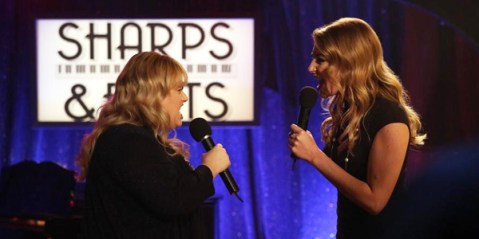
Our current areas of research—karaoke for Karen, ventriloquism for Sarah—traverse what may appear to be a narrow terrain of sound studies currently focused on “voice” or “the voice.” And yet the strains of sound studies that draw us to these topics do not exclusively concern themselves with the tropes or techniques of voice and vocalization that karaoke and ventriloquism conjure. Though voice presents itself as the most basic and fundamental connection between these two concepts and practices, we are each more invested in exploring karaoke and ventriloquism as actual sound technologies, as well as technologies of power. As you will read below, ventriloquism, for all its associations with archaism and mysticism in certain historical contexts, is also depicted as a technology and technique of deception, statecraft, and power. Meanwhile, karaoke, for all its associations with the expressive and participatory potential of amateur vocalization is also, crucially, a technological apparatus, whose media archaeology bears the traces of intercolonial conflicts, negotiations, and aftermaths. Finally, we are also both interested in the ways in which these sound technologies and techniques have been transformed into critical, intellectual, and affective methodologies, especially since they’ve both been harnessed as broader cultural metaphors for judgments at once moral and aesthetic.
 .
.
Over an obscenely caloric breakfast, we devised several questions touching upon some keywords and concepts we believe are applicable to both karaoke and ventriloquism, two topics that undermine notions of authorship, source, and origin. In our respective writing about these two subjects, we’ve both occasionally (or more than occasionally) been besieged by the anxiety that our work is melding together into some indeterminate blob. To put it another way: like any other lesbionic duo resisting the “urge to merge” (as so many other queers have warned against), we’ve arrived at that moment in our intimate and intellectual relationship where we’ve decided to sort out whose socks are whose. Somewhat ironically, then, we wrote this post together to establish some of the crucial differences between karaoke and ventriloquism.
The following “ventrilokeal” dialogue shows, from a conceptual standpoint, where some of the boundaries between karaoke and ventriloquism harden, while others remain porous.
We each provide separate answers, engaging the other person’s answer when appropriate. Feel free to supplement some of our questions in the comments section, addressing either or both of us. And thanks for indulging.
***
1) How do both karaoke and ventriloquism—as terms, metaphors, and practices—conjure and/or reframe our understandings of originality and derivation?
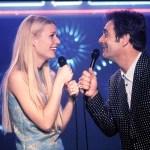
 KT: Karaoke, at least in my mind, has become the prevailing metaphor for derivation in the contemporary moment. Whenever the term is tossed about casually as a cultural metaphor, with little regard to the geographical contexts, modes of performance or the technologies that underlie its current practice, “karaoke” functions as a kind of shorthand for “the unoriginal,” the debased copy, the amateur reenactment. Novelist Dubravka Ugresic’s long essay on “Karaoke Culture” (2011) provides a perfect example of these applications of “karaoke.” And yet, karaoke in the U.S. in the last 15 years or so has also been construed as something that unlocks the creative and expressive potential of beleaguered, repressed or emotionally stunted individuals, usually men (see Lost in Translation, the forgotten Huey Lewis and Gwyneth Paltrow vehicle, Duets, and a recent pair of books I actually quite like, Brian Raftery’s Don’t Stop Believin’: How Karaoke Conquered the World and Changed My Life and Rob Sheffield’s Turn Around Bright Eyes: The Rituals of Love and Karaoke). Of course, it will take all of Empty Orchestra (my working book title), to answer this question properly, but one of the principles guiding my own account of karaoke as a metaphor for copies and reenactments (in addition to my exploration of its material practices and technological history), is that derivation and mimicry have always been a key concern of—and a point of intersection between—queer theory, aesthetics, critical race studies, and (post)-colonial studies.
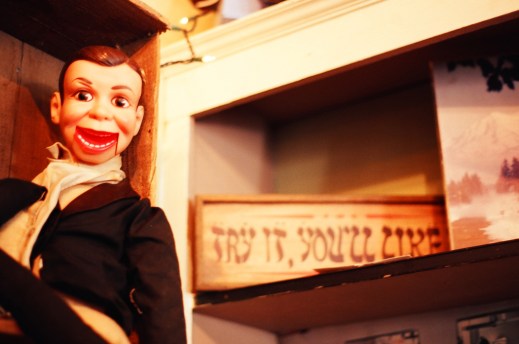
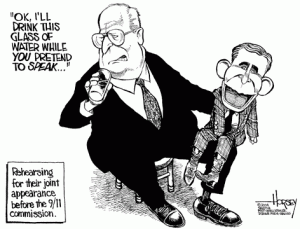 SK: When ventriloquism is employed as a metaphor in popular cultural contexts, it’s also often used to connote a lack of originality. The term tends to describe (and to fantasize) a situation in which one individual acts as the communications medium—usually the speaking or singing vessel—for words, songs, and other ideological formulations that originate or originated with someone else. So, in contrast to the mass copying and amateurism invoked by “karaoke,” “ventriloquism” suggests an unoriginality that can, and that must, be traced back to a discrete body and distinct point of origin. Think, for example, of George “Dubya” Bush and Dick Cheney, who were often represented as a ventriloquial duo. Political cartoons depicted Dubya as Cheney’s open-mouthed dummy, perched on the knee of his puppet master, the “actual” leader of the free world. Here, ventriloquism was used to image a scenario wherein the man who seemed to be in power was both secretly and openly manipulated by another man, who was the true source of power. In this case, unoriginality on Bush’s part connoted originality on Cheney’s, whereas in the case of the Beyoncé lip-synch scandal (more on this below), unoriginality signified very differently. Generally speaking, however, “ventriloquism” implies that a deceptive act has occurred, one that masks the origin of its own workings. It signals the veiling and subsequent exposure of a powerful apparatus. This apparatus is usually vocal in nature, the voice’s historical connections to power being well documented. In his Western cultural history of ventriloquism, Dumbstruck (2001), for example, Steven Connor traces the form back to Greco-Roman oracular myths in which divine prophecy is primarily accessible as a voice, transmitted through the mediating body of a priestess.
 Contemporary ventriloquists like the British performer Nina Conti often claim to be surprised by what their dummies say, which suggests that, far from being an omnipotent machinator, the ventriloquist is a bifurcated entity—one whose practice places her beside herself, in conversation with herself (or, as others have noted, with her unconscious). My recent work argues for bifurcation as a workable antidote to the tired, either/or question of originality vs. derivation to which popular cultural forms are repetitively subjected.
2) The terms “karaoke” and “ventriloquism” are both frequently employed in adjudicatory ways. As Karen has pointed out elsewhere, “karaoke” is often used in reality TV contexts (American Idol, The Voice) as a negative judgment of performance quality, i.e. “that performance was shit—mere karaoke.” “Ventriloquism,” for its part, is often used to connote a deviousness or deception that disqualifies a performance (think folks condemning Beyoncé post-lip-synched inauguration performance). What are the differences between “karaoke” and “ventriloquism” as judgments?
 KT: I actually think that one of the primary differences between these two terms as judgments, and perhaps more simply as just terms, is that “karaoke” condemns the person performing it, or performing something in “the style of” karaoke (i.e. derivatively, as a copycat, as a mere echo of the “original”), as a lightweight. Pulling off a feat of ventriloquism seems like a heavier, more sinister, and more complex operation of power, at least as I’ve heard you explain it, and as you describe it viz. Bush/Cheney above. Karaoke as a performance practice also lacks ventriloquism’s gravitas and requisite skill, insofar as ventriloquism is an archaic-seeming art form. Karaoke is the opposite of serious or sinister: it’s laughable, buffoonish, and absurd. It’s all surface and no depth. Ventriloquism, at least as I’ve heard you describe it to me on many occasions, in different situations, seems more layered. This is not to say, however, that I actually believe that karaoke is lightweight, or only about surfaces, but as a term of adjudication, it can’t really break free from those associations to mean anything more.
SK: Yes, as you say above, “karaoke” as judgment indicates amateurism and insubstantiality, whereas “ventriloquism” suggests a more menacing, or at least a more complicated, operation. And when one actually does karaoke, one can’t even conceal one’s appropriation—it’s part and parcel of the practice. A ventriloquist, on the other hand, hides herself in plain sight: the greater the attention focused on her dummy, the less it matters that—as the audience well knows—she’s the one talking. This is called “misdirection”: if the eyes are on the dummy, the ears will follow, and the dummy will appear to speak even if he doesn’t have his own microphone.
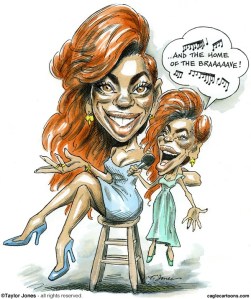 The interesting thing about the liberal accusation that Bush was Cheney’s ventriloquist dummy was that, though the image of Cheney as evil puppetmaster was sinister, it still served a reassuring function, in that it allowed for the continuation of the idea that there was a source, or origin, of power, period. As opposed, let’s say, to a more Foucauldian understanding of power as dispersed, not traceable to an isolated sovereign body. In contrast, when Beyoncé allegedly lip-synced, but in fact sang over, her own recording of the National Anthem at the 2013 presidential inauguration, her performance—which, as many have pointed out, was not unusual by pop industry standards—was framed as ventriloquism in order to cast doubt on her legitimacy as a live performer, i.e. as a performer whose voice could “stand up” in non-studio conditions (which are still, and ironically, just as much mediated as studio conditions). These ventriloquial scenarios are, it should go without saying, gendered and racialized: Bush-Cheney as ventriloquism emasculated Bush while restoring power to Cheney’s white, male, visibly disabled body; Beyoncé-Beyoncé as ventriloquism rather unsuccessfully attempted to pit Bey against herself (mediated, recorded Beyoncé vs. live Beyoncé) in order to devalue her corporeal body and frame her as unworthy of (national) subjectivity.
3) Both karaoke and ventriloquism are mass, but not mainstream, cultural practices. Karaoke is a mass cultural activity, but one that still carries with it the frisson of doing something slightly risqué (hence its frequent overlap with inebriation). Ventriloquism, while not being a cultural activity practiced by the masses, is a mass-mediated and mass-consumed cultural form, despite the aura of Vaudevillian anachronism (and/or pathology) it persistently conveys. How might we account for the “mass but not mainstream” quality of both practices?
 KT: I actually have to credit Zhou Xun and Francesca Tarocco, co-authors of an ambitious book, Karaoke: The Global Phenomenon (2007) with the “mass vs. mainstream” formulation. At this point, karaoke is globally ubiquitous, thanks to the many delivery systems that have evolved from the first karaoke and sing-along machines from Japan and the Philippines. There’s actually a popular app called Sing!, which enables you to perform karaoke and compete against anyone in the world. Meanwhile, YouTube is replete with karaoke videos to perform and practice with (some KJs, or “karaoke jockeys,” use YouTube as their primary interface), as well as with videos of people from all walks of life performing karaoke in various bars or at family functions in the home or elsewhere. These days, practically every sitcom on primetime TV stages a requisite “karaoke outing,” that usually leads to disastrous, if hilarious consequences for its characters.
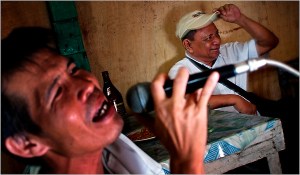 And yet karaoke as a mass practice can’t quite broach the mainstream, because of its various “abject” associations with immigrant communities, aspirational everymen longing to be idols, isolate geeks who only interact with the outside world through their computers, drunkards, gaggles of girls group-singing to Madonna, queens bereft of the piano bar’s liveness, slumming with an electronic delivery system for their show tunes, and other such “sad” spectacles. Once someone excels at karaoke—at singing someone else’s song so well that they transform it in some way—we are apt to think they actually exceed karaoke, and leave behind the form, much in the same way that, as you suggest in your opening comments, a good dummy eclipses its ventriloquist. When (in the words of many an Idol judge), someone makes someone else’s song “their own,” we enter into the territory of the cover, the reboot, the repurposed. The failure of the form to transcend its own limitations, even if it serves as the vehicle for many to otherwise achieve transcendence in myriad ways, is what keeps karaoke abject and not quite ready for mainstream acceptance.
SK: In the U.S., there’s a genre of white, masculine ventriloquism that’s currently extremely popular. This genre is typified by U.S. ventriloquism’s two biggest guns, Terry Fator and Jeff Dunham, who, following in the footsteps of Edgar Bergen, brought their ventriloquism to television to increase the art’s spread. Fator won America’s Got Talent in 2007 and now gives nightly performances at The Mirage in Vegas, where he has a theater named after him. He’s made hundreds of millions this way. Dunham has a strong presence on Comedy Central and is also one of the top-grossing U.S. standup acts. Both vents are especially popular with “Heartland” audiences, and both have casts of gendered and racialized puppets to whom they, as white male ventriloquists, play the straight man. Dunham, in particular, takes an unapologetic stance towards his own redneck identity, which permits him to criticize and recuperate this identity in one fell swoop. For instance, Dunham’s “white-trash trailer-park” dummy Bubba J drinks a surfeit of beer and is of low, if any, intelligence, but he remains benign in comparison to the rest of Dunham’s cast of characters, which includes Achmed the Dead Terrorist (a bin Laden caricature) and José Jalapeño on a Stick (use your imagination). Fator and Dunham’s ventriloquism evokes the practice’s historical connections and overlaps with minstrelsy, consolidating a fragile white masculinity in the process.
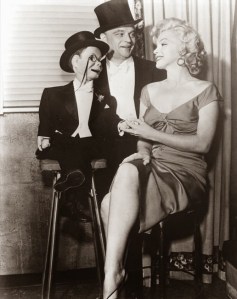 This culturally bounded reading of contemporary ventriloquism’s mass popularity directly resonates with your reading of karaoke as a practice with “abject” associations that is accordingly repurposed to “unlock the creative and expressive potential of beleaguered, repressed or emotionally stunted individuals, usually men.” While ventriloquism is difficult to perform well, vent instruction manuals always stress that, with practice, anyone can ventriloquize. One of the reasons that the practice isn’t mainstream is that it’s associated with a perverse desire, even a need, to speak through someone else in lieu of being able to speak “for oneself.” Edgar Bergen was always said to be shy with women, and to woo them through his brash, confident alterego Charlie McCarthy. And in his autobiography, Who’s the Dummy Now? (2008), Terry Fator (or his ghostwriter) writes about how his father found his ventriloquism perverse, and how he literally closeted his dummy as a result. Ventriloquism is too blatant a form of triangulation to be normal, and is thus coded as deviant, a perversion of heterosexuality’s direct, unmediated operation. Hence Fator’s book title, which aggressively restores authority to the formerly emasculated ventriloquist.

4) As the previous question suggests, and as prominent scholars of ventriloquism have also suggested, ventriloquism is ever anachronistic. Karaoke, too, is suffused by a sense of belatedness, reflected in nostalgic, hits-driven karaoke song choices and/or by the practice’s enduring connection to seemingly obsolete technological forms like laser discs. In what ways is each form out of time, or behind the times, and, alternatively, why do these forms appear as such even as they continue to exist in time?
 KT: As I mentioned above, karaoke’s purported abjection in the U.S. is, in many ways, a consequence of its association with the immigrant communities from Asia who imported the practice, as well as karaoke technologies, to the west coast as early as the mid-1970s. In that sense, karaoke functioned as a vehicle of nostalgia for those in the diaspora who longed to connect with memories of “home” through certain musical repertoires, even if some of those repertoires were actually already comprised of American pop hits folks grew to love when they were still “back home” (e.g. songs by the Carpenters, or any of the Johns—Elton, Olivia Newton, Denver). I haven’t quite worked it all out yet, but there is a certain circular temporality to karaoke. I have a hunch that the form is Romantic insofar as it is, at once, about the moment and its “spontaneous overflow of powerful feelings,” yet prone to saturating those powerful feelings with the “passionate recollection of youth.” There’s also something anticipatory and performative about karaoke, insofar as it has the capacity to do what it purports to articulate. I wrote something about this from a personal perspective in a piece about my favorite L.A. karaoke bar, the Smog Cutter. As the question above remarks, karaoke also feels belated, or emblematic of a particular era, because of the visual peripherals that accompany some song catalogues, especially those released on laser disc in the late 1980s and early-to-mid-1990s (i.e. the videos comprised of b-roll, and oblique narrative re-imaginings of certain songs). I can’t get into all of it here, but my plan is to devote a chapter to the karaoke video—from its production history (of which Brian Raftery offers an excellent preliminary account), to its repurposing in contemporary queer performance art.
 SK: I’m still working on understanding ventriloquism’s anachronism—why it continues to appear, or to feel, outmoded despite its present popularity—besides the obvious fact that its contemporary iterations evoke Vaudevillian performance. Nina Conti, who has, like Fator and Dunham, distributed her ventriloquism across multiple media platforms, makes many jokes about this. Her puppet Monk, who sounds like a muffled Sean Connery trapped in a fuzzy, simian body, will often deride her for practicing such a “dead art,” and Conti’s documentary, Her Master’s Voice (2012), theorizes the ventriloquist dummy as a “bereaved object” that loses its voice repeatedly, and finally for good. Conti’s film, however, argues with its own assertion by reanimating the dummies of a dead ventriloquist with new voices, a process that could theoretically continue ad infinitum. Steven Connor argues that present-day “revivals” of ventriloquism like Conti’s are always “necromantic,” conjuring the form’s prehistory while at the same time referencing “newer” media like film (which, according to Rick Altman (c. 1980) and Michel Chion (c. 1982) is itself a form of ventriloquism). Writes Connor, “Whether because it is scandalously or mysteriously archaic, or uncannily premonitory, ventriloquism is always anachronistic, never quite on time.” And Mladen Dolar tells us that the voice itself is ventriloquial, leading to the extrapolation that ventriloquism literalizes or visualizes what the voice has always already done.
I tend to think of ventriloquism as temporally bifurcated. A ventriloquist has to exist in both the future and the past to make her practice work. She has to anticipate what’s going to be said next while remembering what’s just been said, and she has to keep her lips still while moving her tongue—acts that circumvent linearity and synchronization. In saying this I’m not arguing for ventriloquism as a “resistant cultural practice”; rather, I’m simply pointing out the temporal perversion to which the art lends itself.
***

Reflecting upon this conversation on karaoke and ventriloquism—a conversation that is, of course, ongoing—it has become even more apparent to us that both forms are sound technologies struggling against obsolescence, even as they are so frequently imagined as possible gateways to some human “truth” or “essence” precisely because of their associations with the voice. Though vocalization and vocality are reflexively associated with both forms, we hope we’ve been able to underscore some of the ways in which their powerful associations with “voice” naturalize, and to a certain extent also neutralize, the technical elements of each practice. We appreciate the opportunity to make some key distinctions, and to sound some of these issues out, here on the SO! Blog. Many thanks to Jennifer Stoever and Liana M. Silva for their generous editorial input. Like Conti’s bereaved puppets, who lose their voices only to be invested with new ones, we now relinquish ours—for the time being.
SK & KT
—
Featured Image by Flickr User Sam Grover
—
Sarah Kessler is a Ph.D. candidate in Comparative Literature at the University of California, Irvine, where she is writing a dissertation on ventriloquism in contemporary British and U.S. popular culture. She received an M.A. in Modern Studies from the University of Wisconsin-Milwaukee in 2008. Kessler’s writing on art, film, and media has appeared in artforum.com, the Brooklyn Rail, In These Times, and Public Books, among other publications, and she has held editorial positions at Triple Canopy and Afterall: A Journal of Art, Context and Enquiry. She is currently completing an article on the documentary work of ventriloquist Nina Conti.
Karen Tongson is Associate Professor of English and Gender Studies at the University of Southern California, and the author of Relocations: Queer Suburban Imaginaries (NYU Press, 2011). Her work has appeared in numerous venues in print and online, including Social Text, GLQ, Nineteenth-Century Literature, and Novel: A Forum on Fiction. She is currently the series editor for Postmillennial Pop at NYU Press, and just completed a multi-year term as co-editor-in-chief of the Journal of Popular Music Studies. Her current book project, Empty Orchestra: Karaoke. Critical. Apparatus. critiques prevailing paradigms of imitation in contemporary aesthetics and critical theory, while offering a genealogy of karaoke technologies, techniques, and desires.
—
REWIND!…If you liked this post, you may also dig:
“Hearing Queerly: NBC’s ‘The Voice’”-Karen Tongson
“Head Games?: The Strategic View of Liveness and Performance”-Andreas Duus Pape
“New Wave Saved My Life*”-Wanda Alarcon
Share this:


Current Top Posts





April 2021

January 2020

November 2019

October 2019

August 2019

April 2014

November 2017

March 2015

December 2017

October 2015
 Sounding Out!
Recent Comments