
Wingsong: Restricting Sound Access to Spotted Owl Recordings

I am not a board games person, yet I always seem to find myself surrounded by them. Such was the case one August evening in 2023, during a round of the bird-watching-inspired game, Wingspan. Released in 2019 by Stonemaier Games, designer Elizabeth Hargrave’s creation is credited with a dramatic shift in the board game industry. The game received an unparalleled number of awards, including the prestigious 2019 Kennerspiel des Jahres (Connoisseur Game of the Year), and an unheard of seven categories of the Golden Geek Awards, including Best Board Game of the Year and Best Family Board Game of the Year. In addition to causing shifts in typical board game topic, artistry, and demographic, Wingspan has led many board game fans to engage with the natural world in new ways, even inspiring many to become avid birders.
Following the game’s rise to popularity, developer Marcus Nerger released an app, Wingsong which allows players to scan each of the beautifully illustrated cards and play a recording of the associated bird’s song. On the evening in question, the unexpected occurred when I scanned the Spotted Owl (Strix occidentalis) card and received a message that read:
Playback of this birds[sic] song is restricted.
Of course, I had to know more. Although the board game was originally designed using information from the Cornell Lab of Ornithology’s eBird.org website, Wingsong derives its recordings from another free database, xeno-canto.org. A quick search of the website revealed the following statement:
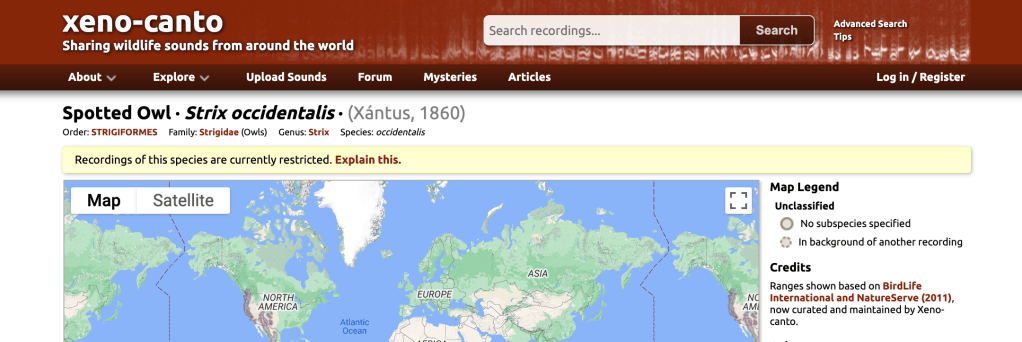
Some species are under extreme pressure due to trapping or harassment. The open availability of high-quality recordings of these species can make the problems even worse. For this reason, streaming and downloading of these recordings is disabled. Recordists are still free to share them on xeno-canto, but they will have to approve access to these recordings.
Though Xeno-Canto does not give specific details about each recording, the Wingspan card offers a clue in italics at the bottom: “Habitat for these birds was a topic in logging fights in the Pacific Northwest region of the US.”
The unexpected incursion of such politics into a board game is startling, especially given the limited information in the initial message. As such, the restriction of Spotted Owl recordings on Xeno Canto, and by extension Wingsong, suggests complicated issues relating to the ownership and distribution of sound, censorship, and conservation.
Spotted Owl Recordings
The status of the Spotted Owl was a major issue of public debate in Oregon of the 1980s and 90s, where I grew up. As Dr. Rocky Gutiérrez, the “godfather” of Spotted Owl research, wrote in an article for The Journal of Raptor Research, “Conservation conflicts are always between people – not between people and animals” (2020, 338). In this case, concerns about the impacts of logging in old-growth forests, thought to be the primary habitat of the Spotted Owl, pitted loggers and the timber industry against conservationists. On both sides, national entities like the Sierra Club and the Western Timber Association helped turn a regional management issue into one with implications for forest protection, wildlife conservation, and economic development across the nation. Forty years later, it is still a hot button issue for scientists, industry, and the government, now with added complications of fire control, climate change, and competing species like the Barred Owl (Strix varia).
Xeno-Canto uses a Creative Commons license, meaning that users can access and apply to a wide variety of projects without explicit permission of the recordist, but it also offers tools for contacting other users. I wrote to two recordists who uploaded Spotted Owl calls to Xeno Canto: Lance Benner and Richard Webster, both recording in southern areas where the Spotted Owl’s conservation status is slightly less dire than in Oregon. Benner is a scientist at the NASA Jet Propulsion Laboratory at the California Institute of Technology, whose recordings have been used in scientific research projects, at nature centers, in phone apps, and notably, in a Canadian TV show. Benner told me via email that he agrees with Xeno-Canto’s restriction on the Spotted Owl recordings to the public, writing
I used to play spotted owl recordings when leading owl trips but I don’t any more now that the birds have been classified as “sensitive.” There have also been multiple attempts to add the California Spotted Owls to the endangered species list, so if I find them, I’m not sharing the information the way I used to….
Webster, on the other hand, offered a slightly different perspective:
There are enough recordings in the public domain that restricting XC’s recordings probably will not make a difference. However, some populations of Spotted Owl are threatened, and abuse is quite possible…
As Webster points out, numerous recordings of Spotted Owls are readily available, including via The Cornell Lab of Ornitology’s Voices of North American Owls and other audio field guides. The concern with such recordings, Gutiérrez told me over Zoom, is that anti-Spotted Owl activists might use the recordings to “call in” Spotted Owls – essentially a form of audio catfishing historically used in activities like duck hunting. In the case of Spotted Owls, the concern is that activists might deliberately harm the birds. However, it can also be a dangerous practice when used by birders who simply want to get a closer look: birds may abandon their nests, leaving chicks vulnerable and unprotected.
From a sound studies perspective, “calling in” underscores questions of avian personhood. Rachel Mundy contends that audio field guides are structured by people in ways that highlight animal musicianship. Yet when we consider the practice of “calling in,” it becomes clear that birdsong recordings are not only designed for human ears, but also avian ones.

Nonetheless, while birds are considered intelligent enough to recognize a call from their own species, they are not believed to be able to identify the difference between a recording and a live performance. The bird’s sensorium is short-circuited by the audio recording, tricking it into thinking a mate is nearby. Not only does this recall the interspecies history of the RCA Victor label His Master’s Voice, it highlights distinctly human anxieties about the role of recording and its ability to dissimulate. Restricting access to such recordings, then, revives deep-seated ethical questions that require a nuanced application.
Whether or not Spotted Owls are able to differentiate between a recorded call or the call of a live mate it is likely to be of decreasing concern, however: Gutiérrez suggests that Northern Spotted Owl populations are so small that anyone attempting to call one in would be unlikely to actually find one.
Immersion, Conservation, Reflection
App developer Marcus Nerger conceptualizes Wingsong as part of an immersive augmented reality experience, one that situates the game player in a more realistic soundworld. In the world of board games, parallels might be drawn to audio playlists used in tabletop role playing games like Dungeons and Dragons, or to the immersive soundscape design used in video games.
Via Zoom, Nerger and I discussed the importance of sound in bird identification, which is arguably more significant than vision given birds’ general fearfulness of humans, branch cover, and the physical distance bird and observer – a separation underscored by the pervasive use of technologies like binoculars. Wingsong is not simply immersive because it connects the player to the real bird species, but because the experience of birding relies as much on hearing as it does on sight.
However, the Spotted Owl restriction message provides a provocative interruption to the immersive bird song experience provided by Wingsong. It is a jarring contrast to the benign experience of listening to recorded bird song, reminding the player of both the artifice of game play and the consequences of environmental actions. It suggests that the birds in the game are not hyper realistic Pokémon to be simply collected, but rather living animals embedded in environmental and political histories. The lack of information provided in the “restricted” message leaves the player wanting more – and subsequently, with a bit of searching, unearthing the mechanics behind the app, the politics of bird song recording, and finally, the specific histories of the species contained there, the ghost in the machine irrevocably unveiled.
—
Featured Image: by author
—
Julianne Graper (she/her) is an Assistant Professor in Ethnomusicology at Indiana University Bloomington. Her work focuses on human-animal relationality through sound in Austin, TX and elsewhere. Graper’s writing can be found in Sound Studies; MUSICultures; forthcoming in The European Journal of American Studies and in the edited collections Sounds, Ecologies, Musics (2023); Behind the Mask: Vernacular Culture in the Time of COVID (2023); and Songs of Social Protest (2018). Her translation of Alejandro Vera’s The Sweet Penance of Music (2020) received the Robert M. Stevenson award from the American Musicological Society.
—

REWIND! . . .If you liked this post, you may also dig:
Animal Renderings: The Library of Natural Sounds — Jonathan Skinner
Sounding Out! Podcast #34: Sonia Li’s “Whale” — Sonia Li
Catastrophic Listening—China Blue
Learning to Listen Beyond Our Ears: Reflecting Upon World Listening Day–Owen Marshall
Botanical Rhythms: A Field Guide to Plant Music–Carlo Petrão
The Better to Hear You With, My Dear: Size and the Acoustic World--Seth Horovitz
The Screech Within Speech–-Dominic Pettman
Share this:

“In My Life”: Loving Queerly and Singing Across Generations

December 1975.
The cold winds staked their claim over Toronto, where my parents had recently arrived from the Philippines. They were underdressed and making their way down Parliament Street. Despite being warned of a shift in temperature, they were not expecting the brutal intensities of Canadian winter. I’m not sure how anyone anticipates the sharp sting of negative temperatures when they are arrivants used to tropical climates. Undeterred, my mother and father headed to a small Filipino grocer, hoping to encounter a semblance of domestic familiarity. Pressed against the biting winds, my mother abruptly stopped, looked at my father and said, “Tumutolo ang sipon” – you have a runny nose. To which my father replied, “Ikaw din” – you do too! They both started laughing and laughed again when they retold me this story 48 years later. When faced with the challenges of migrating to a new and very cold country, they managed to mine humour from a deep well of difficult circumstances. We had been listening to the song “In My Life” by the Beatles (Lennon & McCartney 1965). Something in its expression, melody, and feeling caused my parents to be transported to this small but important moment.
In her conversation with Christine Bacareza Balance, “‘Revolutions in Sound’: Keynote Duet” (2022) Alexandra T. Vazquez writes: “The popular…leaves so much room for engagement with sound artists (musicians without the gallery). None of them need theorists to argue for them, to argue for their mattering because to so many, they already do. How do they instead invite theorists to take part in something alongside them?” (12). I was never a big fan of the Beatles, but regardless of my opinions, they were popular. As a relentlessly oppositional teenager, I was put off by their mass popularity. As Vazquez suggests, despite one’s musical taste, songs are invitations, not scholarly conquests. The memory re-opened by my parents’ connection to “In My Life” was an invitation for me to take stock of the song’s affective and, for them, diasporic trajectories. As Balance (2022) suggests songs request us to “listen long so we hear where another is coming from” (15). For her, “long” describes temporality and commitment. To “listen long” implies that duration and attention are the pretext for empathic relations.
“In My Life” was released in 1965. My mother was fifteen years old when she first heard the song on the radio in a boarding house in Marbel, Philippines. One year later, on July 16, 1966 the Philippine Free Press would announce, “The Beatles Are Coming” (de Manila as cited by Robert Nery in “The Hero Takes a Walk” 2018). At that time, Ferdinand Marcos was the newly elected president of the Philippines, and Imelda Marcos was his First Lady. The Marcoses would later unleash an era of violent dictatorial power and impose Martial Law in 1972, escalating political suppression (Burns 2013). My mother recalls that the band’s first and only appearance in the Philippines was remembered by many less for their two scheduled concerts and more for their “snub” of Imelda. The Beatles were noticeably absent at a lunch reception they were expected to attend with the First Lady at the Presidential Palace. Their absence, attributed to a communication error between the concert promoter and the band’s manager, incited public disapproval and resulted in the sudden disappearance of their security escort and hotel and porter service. Unlike in other cities, the band was refused room service and was forced to carry their own luggage (Nery 2018).
What is striking about this moment is that it breaks from preoccupations with Filipinx desires for assimilation and mimicry of Western imperial projects. In Video Night in Kathmandu and Other Reports from the Not-So-Far East, British travel writer Pico Iyer (1988) famously stated that Filipinx people are the “[m]aster of every American gesture, conversant with every western song…the Filipino plays minstrel to the entire continent (153)” Turning against imperial scripts and the band’s documented disdain of “Mosquito City” and even worse, John Lennon’s comment that a return to the Philippines would require “an H-bomb,” the soured residues of their visit marks a queer rupture in Beatlemania. The public decried that Filipinx people deserved better from the band, capturing what Balance describes in Tropical Renditions: Making Musical Scenes in Filipino America (2016), as “disobedience” in that “disavows a belief in the promises of assimilation” (5). For me, Filipinx non-compliance textures the sonic substance of “In My Life.” While the shadow of the Marcoses cronyism and corruption is an inescapable footnote, it is the defiant voices of hotel employees, dismayed fans, and airport workers that insisted on the “ordinariness” (Wofner & Smeaton, 2003) of the Beatles that holds the song’s queer decibels.
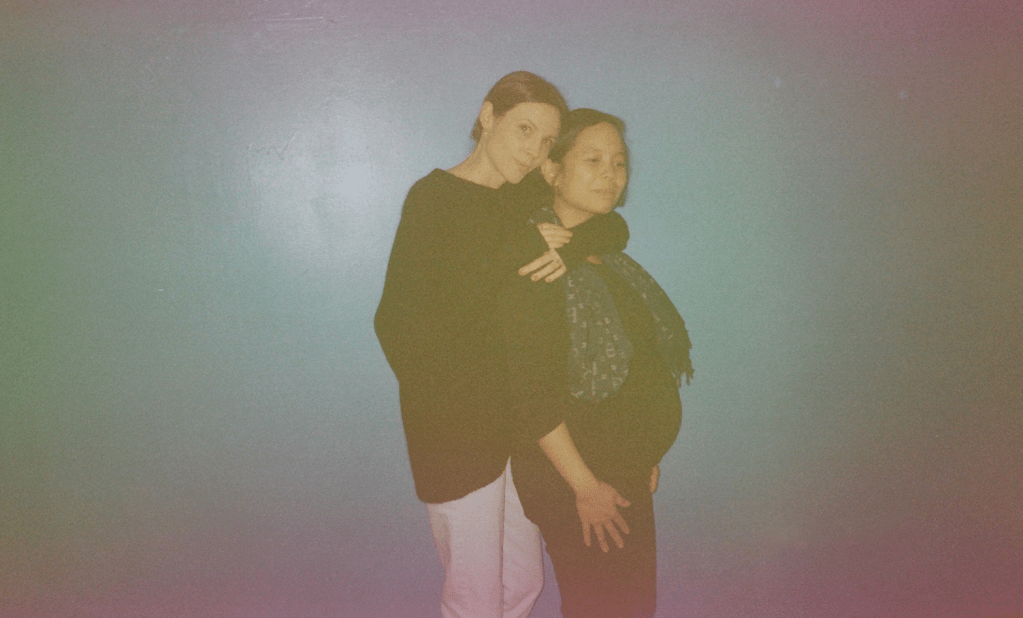
There are places I’ll remember all my life, though some have changed. Some forever, not for better. Some have gone, and some remain.
“In My Life” (Lennon & McCartney 1965).
January 2018.
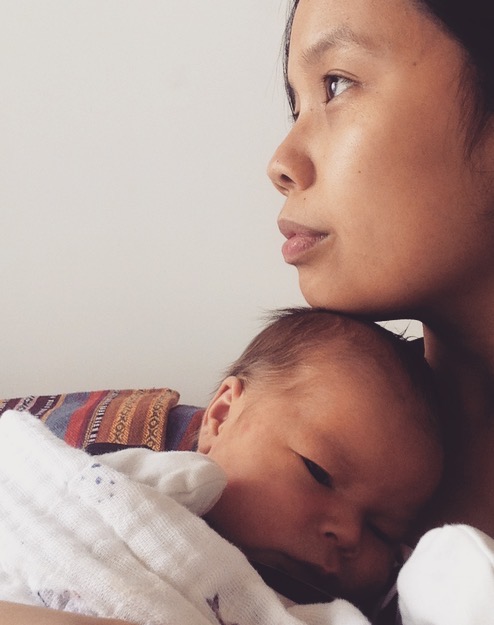
I am sitting on my couch watching a Toronto Raptors game. The television emits light that flickers through a large window that frames a bright winter moon. I am 41 weeks pregnant at this point (feeling similarly shaped and sized as the moon outside). My stubborn queer resistance to the Beatles somehow dissipated during my pregnancy, and the song “In My Life” made its way to me. I would quietly sing the song to my pregnant belly. Then, that January night, I felt a snap inside my body and a rush of water down my legs. I won’t go into much gratuitous detail other than to say that at 12:49 pm the next day, Asa Cy Dyer-Mecija was born at home.
And these memories lose their meaning when I think of love as something new.
“In My Life” (Lennon & McCartney 1965)
Sometimes, I needed to couch the queerness of pregnancy in words that were not mine. The distance between these words and the ones I had yet to find would help to structure my unfolding love for Asa. Here, queerness presented a modality of encounter with uncensored desires. Queerness is often theorized as a utopian impulse; the queerness of my pregnancy jostled both the hopes and fears brought up by the unknown terrain of parenting amidst heteronormativity. For me, “In My Life” is riven by sentimentality and nostalgia, but it also gave melody to a tender relationship with myself and my new role in the world. This was the sonic throughline to my parents, a queer inheritance of tension made from the hopes for kinder contexts amidst the limitations of harsh realities.
December 2022.
I was invited to perform as part of the Queer Songbook Orchestra’s holiday fundraiser. The Queer Songbook Orchestra is a chamber pop ensemble that hosts an annual concert focused on songs and stories about “chosen family and queer joy” (Queer Songbook n.d.). At that time, Asa was four years old. He is a child of the pandemic. He’s a kid with two moms, a present and kind donor, and is dearly loved by his Lolo and Lola, his grandparents, aunts, titas, uncles, cousins, kuya, ate, and his beautiful chosen family. My partner, Hannah, and I sometimes worry about how his world will be affected by reactions to the makeup of our family, but mostly, we know he’ll be sure he’s loved by many.
To me, the song “In My Life” offers a useful sonic response to homophobia. As a baby, after Asa’s baths, I would often wrap him in a towel, and while rocking him back and forth, I would sing these lyrics from the song: “Though I know I’ll never lose affection for people and things that went before, I know I’ll often stop and think about them. In my life, I love you more” (Lennon & McCartney 1965). To me, this statement is a queer ethos. We know that 2SLGBTQ+ people have necessarily and creatively reworked and reimagined the organization and expression of kinship. When family is so often bounded by what Julianne Pidduck calls “constraints of relationality” in “Queer Kinship and Ambivalence”(2008: 441), the lyrics “In my life, I love you more” are a call to action. More is a word used comparatively to insist that there is something greater, something more exists, something more is possible. I embrace the challenge to love more. My queerness urges me to love more, and parenting Asa does, too. On the evening of the performance, indexed by my parents’ struggles and our shared disdain for the chill of winter, Asa and I performed “In My Life” together. The video of our performance will remain a treasured sonic archive that I will return to often, and as Asa gets older, I hope it reminds him of how beautiful he’s always been.
—
Casey Mecija is an Assistant Professor in the Department of Communication & Media Studies at York University. Her current research examines sound as a mode of affective, psychic, and social representation, specifically in relation to diasporic experience. Drawing on sound studies, queer diaspora studies and Filipinx Studies, her research considers how sensorial encounters are enmeshed and disciplined by social and psychic conditions. In this work, she theorizes sounds made in and beyond Filipinx diaspora to make an argument about a “queer sound” that permeates diasporic sensibilities. She is also a musician and filmmaker whose work has received several accolades and has been presented internationally.
—

REWIND!…If you liked this post, you may also dig:
Blank Space and “Asymmetries of Childhood Innocence” –Casey Mecija
The Sound of What Becomes Possible: Language Politics and Jesse Chun’s 술래 SULLAE (2020) –Casey Mecija
The Cyborg’s Prosody, or Speech AI and the Displacement of Feeling–Dorothy Santos
Tape Hiss, Compression, and the Stubborn Materiality of Sonic Diaspora–Chris Chien
Xicanacimiento, Life-giving Sonics of Critical Consciousness—Esther Díaz Martín and Kristian E. Vasquez
Moonlight’s Orchestral Manoeuvers: A duet by Shakira Holt and Christopher Chien
Enacting Queer Listening, or When Anzaldúa Laughs–Maria Chaves Daza
Echoes in Transit: Loudly Waiting at the Paso del Norte Border Region—José Manuel Flores & Dolores Inés Casillas
The Queerness of Wham’s “Last Christmas”–Justin Burton
Could I Be Chicana Without Carlos Santana?–Wanda Alarcón
Share this:


Current Top Posts





April 2021

January 2020

November 2019

October 2019

August 2019

April 2014

November 2017

March 2015

December 2017

October 2015
 Sounding Out!
Recent Comments