
“In My Life”: Loving Queerly and Singing Across Generations
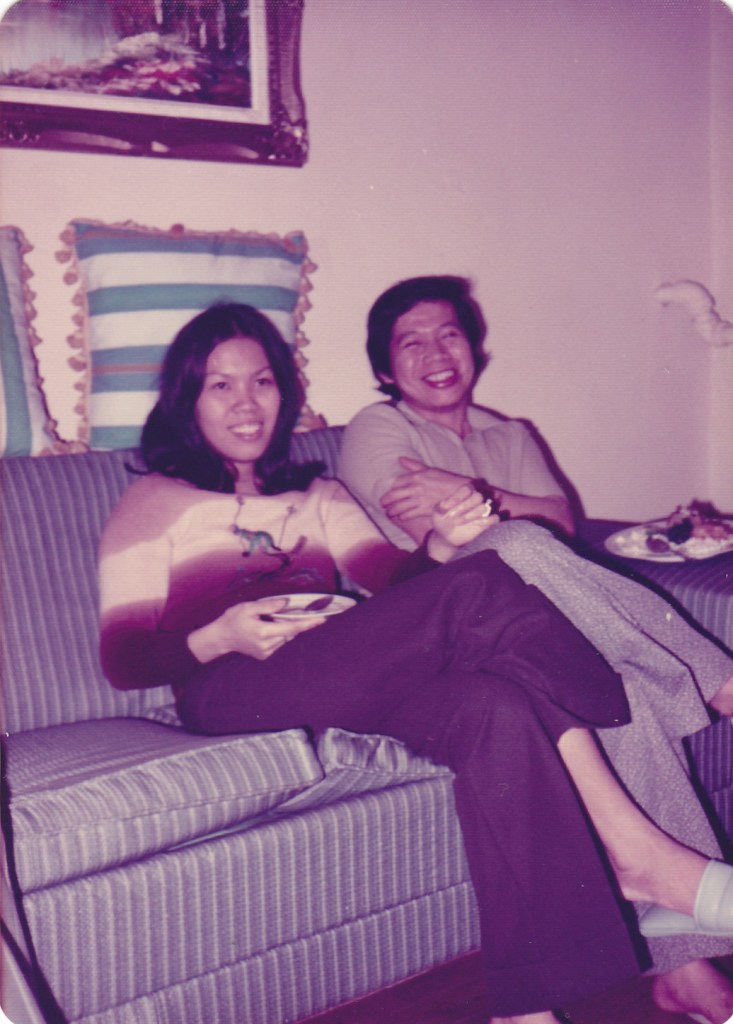
December 1975.
The cold winds staked their claim over Toronto, where my parents had recently arrived from the Philippines. They were underdressed and making their way down Parliament Street. Despite being warned of a shift in temperature, they were not expecting the brutal intensities of Canadian winter. I’m not sure how anyone anticipates the sharp sting of negative temperatures when they are arrivants used to tropical climates. Undeterred, my mother and father headed to a small Filipino grocer, hoping to encounter a semblance of domestic familiarity. Pressed against the biting winds, my mother abruptly stopped, looked at my father and said, “Tumutolo ang sipon” – you have a runny nose. To which my father replied, “Ikaw din” – you do too! They both started laughing and laughed again when they retold me this story 48 years later. When faced with the challenges of migrating to a new and very cold country, they managed to mine humour from a deep well of difficult circumstances. We had been listening to the song “In My Life” by the Beatles (Lennon & McCartney 1965). Something in its expression, melody, and feeling caused my parents to be transported to this small but important moment.
In her conversation with Christine Bacareza Balance, “‘Revolutions in Sound’: Keynote Duet” (2022) Alexandra T. Vazquez writes: “The popular…leaves so much room for engagement with sound artists (musicians without the gallery). None of them need theorists to argue for them, to argue for their mattering because to so many, they already do. How do they instead invite theorists to take part in something alongside them?” (12). I was never a big fan of the Beatles, but regardless of my opinions, they were popular. As a relentlessly oppositional teenager, I was put off by their mass popularity. As Vazquez suggests, despite one’s musical taste, songs are invitations, not scholarly conquests. The memory re-opened by my parents’ connection to “In My Life” was an invitation for me to take stock of the song’s affective and, for them, diasporic trajectories. As Balance (2022) suggests songs request us to “listen long so we hear where another is coming from” (15). For her, “long” describes temporality and commitment. To “listen long” implies that duration and attention are the pretext for empathic relations.
“In My Life” was released in 1965. My mother was fifteen years old when she first heard the song on the radio in a boarding house in Marbel, Philippines. One year later, on July 16, 1966 the Philippine Free Press would announce, “The Beatles Are Coming” (de Manila as cited by Robert Nery in “The Hero Takes a Walk” 2018). At that time, Ferdinand Marcos was the newly elected president of the Philippines, and Imelda Marcos was his First Lady. The Marcoses would later unleash an era of violent dictatorial power and impose Martial Law in 1972, escalating political suppression (Burns 2013). My mother recalls that the band’s first and only appearance in the Philippines was remembered by many less for their two scheduled concerts and more for their “snub” of Imelda. The Beatles were noticeably absent at a lunch reception they were expected to attend with the First Lady at the Presidential Palace. Their absence, attributed to a communication error between the concert promoter and the band’s manager, incited public disapproval and resulted in the sudden disappearance of their security escort and hotel and porter service. Unlike in other cities, the band was refused room service and was forced to carry their own luggage (Nery 2018).
What is striking about this moment is that it breaks from preoccupations with Filipinx desires for assimilation and mimicry of Western imperial projects. In Video Night in Kathmandu and Other Reports from the Not-So-Far East, British travel writer Pico Iyer (1988) famously stated that Filipinx people are the “[m]aster of every American gesture, conversant with every western song…the Filipino plays minstrel to the entire continent (153)” Turning against imperial scripts and the band’s documented disdain of “Mosquito City” and even worse, John Lennon’s comment that a return to the Philippines would require “an H-bomb,” the soured residues of their visit marks a queer rupture in Beatlemania. The public decried that Filipinx people deserved better from the band, capturing what Balance describes in Tropical Renditions: Making Musical Scenes in Filipino America (2016), as “disobedience” in that “disavows a belief in the promises of assimilation” (5). For me, Filipinx non-compliance textures the sonic substance of “In My Life.” While the shadow of the Marcoses cronyism and corruption is an inescapable footnote, it is the defiant voices of hotel employees, dismayed fans, and airport workers that insisted on the “ordinariness” (Wofner & Smeaton, 2003) of the Beatles that holds the song’s queer decibels.
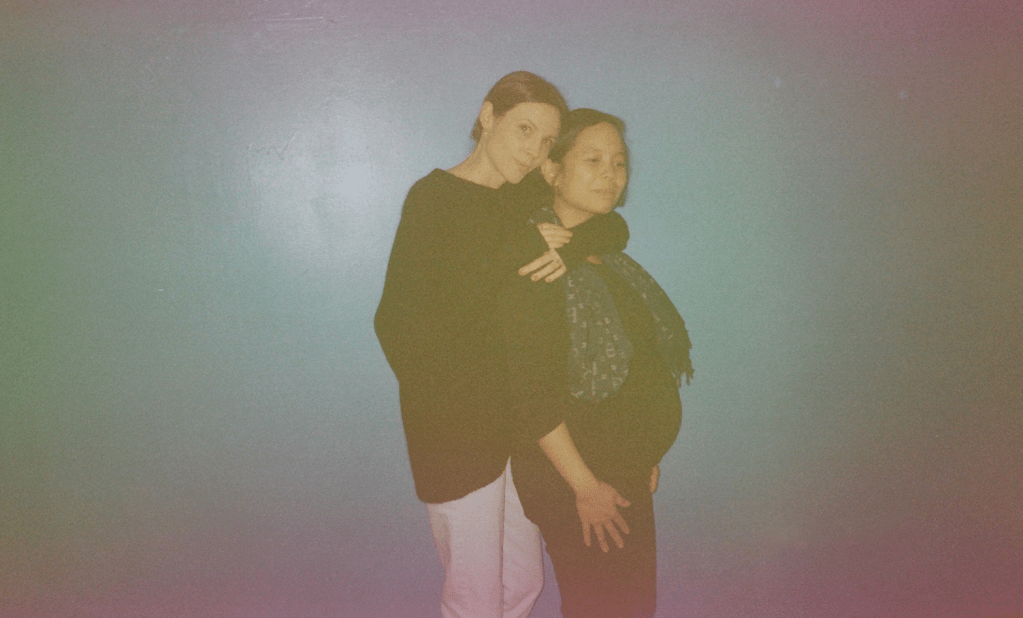
There are places I’ll remember all my life, though some have changed. Some forever, not for better. Some have gone, and some remain.
“In My Life” (Lennon & McCartney 1965).
January 2018.
I am sitting on my couch watching a Toronto Raptors game. The television emits light that flickers through a large window that frames a bright winter moon. I am 41 weeks pregnant at this point (feeling similarly shaped and sized as the moon outside). My stubborn queer resistance to the Beatles somehow dissipated during my pregnancy, and the song “In My Life” made its way to me. I would quietly sing the song to my pregnant belly. Then, that January night, I felt a snap inside my body and a rush of water down my legs. I won’t go into much gratuitous detail other than to say that at 12:49 pm the next day, Asa Cy Dyer-Mecija was born at home.
And these memories lose their meaning when I think of love as something new.
“In My Life” (Lennon & McCartney 1965)
Sometimes, I needed to couch the queerness of pregnancy in words that were not mine. The distance between these words and the ones I had yet to find would help to structure my unfolding love for Asa. Here, queerness presented a modality of encounter with uncensored desires. Queerness is often theorized as a utopian impulse; the queerness of my pregnancy jostled both the hopes and fears brought up by the unknown terrain of parenting amidst heteronormativity. For me, “In My Life” is riven by sentimentality and nostalgia, but it also gave melody to a tender relationship with myself and my new role in the world. This was the sonic throughline to my parents, a queer inheritance of tension made from the hopes for kinder contexts amidst the limitations of harsh realities.
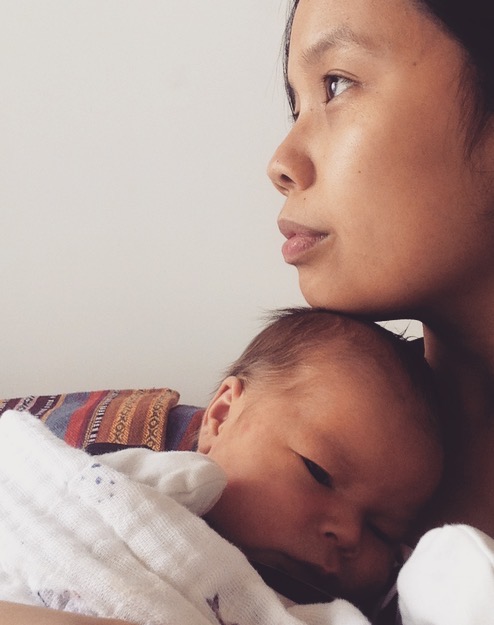
December 2022.
I was invited to perform as part of the Queer Songbook Orchestra’s holiday fundraiser. The Queer Songbook Orchestra is a chamber pop ensemble that hosts an annual concert focused on songs and stories about “chosen family and queer joy” (Queer Songbook n.d.). At that time, Asa was four years old. He is a child of the pandemic. He’s a kid with two moms, a present and kind donor, and is dearly loved by his Lolo and Lola, his grandparents, aunts, titas, uncles, cousins, kuya, ate, and his beautiful chosen family. My partner, Hannah, and I sometimes worry about how his world will be affected by reactions to the makeup of our family, but mostly, we know he’ll be sure he’s loved by many.
To me, the song “In My Life” offers a useful sonic response to homophobia. As a baby, after Asa’s baths, I would often wrap him in a towel, and while rocking him back and forth, I would sing these lyrics from the song: “Though I know I’ll never lose affection for people and things that went before, I know I’ll often stop and think about them. In my life, I love you more” (Lennon & McCartney 1965). To me, this statement is a queer ethos. We know that 2SLGBTQ+ people have necessarily and creatively reworked and reimagined the organization and expression of kinship. When family is so often bounded by what Julianne Pidduck calls “constraints of relationality” in “Queer Kinship and Ambivalence”(2008: 441), the lyrics “In my life, I love you more” are a call to action. More is a word used comparatively to insist that there is something greater, something more exists, something more is possible. I embrace the challenge to love more. My queerness urges me to love more, and parenting Asa does, too. On the evening of the performance, indexed by my parents’ struggles and our shared disdain for the chill of winter, Asa and I performed “In My Life” together. The video of our performance will remain a treasured sonic archive that I will return to often, and as Asa gets older, I hope it reminds him of how beautiful he’s always been.
—
Casey Mecija is an Assistant Professor in the Department of Communication & Media Studies at York University. Her current research examines sound as a mode of affective, psychic, and social representation, specifically in relation to diasporic experience. Drawing on sound studies, queer diaspora studies and Filipinx Studies, her research considers how sensorial encounters are enmeshed and disciplined by social and psychic conditions. In this work, she theorizes sounds made in and beyond Filipinx diaspora to make an argument about a “queer sound” that permeates diasporic sensibilities. She is also a musician and filmmaker whose work has received several accolades and has been presented internationally.
—

REWIND!…If you liked this post, you may also dig:
Blank Space and “Asymmetries of Childhood Innocence” –Casey Mecija
The Sound of What Becomes Possible: Language Politics and Jesse Chun’s 술래 SULLAE (2020) –Casey Mecija
The Cyborg’s Prosody, or Speech AI and the Displacement of Feeling–Dorothy Santos
Tape Hiss, Compression, and the Stubborn Materiality of Sonic Diaspora–Chris Chien
Xicanacimiento, Life-giving Sonics of Critical Consciousness—Esther Díaz Martín and Kristian E. Vasquez
Moonlight’s Orchestral Manoeuvers: A duet by Shakira Holt and Christopher Chien
Enacting Queer Listening, or When Anzaldúa Laughs–Maria Chaves Daza
Echoes in Transit: Loudly Waiting at the Paso del Norte Border Region—José Manuel Flores & Dolores Inés Casillas
The Queerness of Wham’s “Last Christmas”–Justin Burton
Could I Be Chicana Without Carlos Santana?–Wanda Alarcón
Share this:

Unapologetic Paisa Chingona-ness: Listening to Fans’ Sonic Identities


For the full intro to the series by Michelle Habell-Pallan, click here.
The forum’s inspiring research by scholars/practioners Wanda Alarcón, Yessica Garcia Hernandez, Marlen Rios-Hernandez, Susana Sepulveda, and Iris C. Viveros Avendaño, understands music in its local, translocal and transnational context, and insists upon open new scholarly imaginaries. . .
Current times require us to bridge intersectional, decolonial, and gender analysis. Music, and our relationship to it, has much to reveal about how power operates within a context of inequality. And it will teach us how to get through this moment. –MHP
—

Que Buena Epoca Instagram Post (reposted by El Original)
I am a self-identified Paisa, a Paisa Girl from Playa Larga – my home – in the Eastside of Long Beach, California. The term paisa/s is slang for paisanos (homies) and it references someone who takes pride in listening, dancing, and attending nightclubs where Banda music, corridos, and norteños are performed. I am part of a generation that has been referenced as the Chalinillos; youth with an urban gangsta aesthetic that was influenced by Chalino Sanchez, The Riveras, Saul Viera, Adan Sanchez, Los Dos Grandes, Tigrillo Palma, Los Amos; later came the Alterado, Progressivo (DEL) and now people like El Fantasma, Lenin Ramirez, Alta Consigna, Grupo Codiciado, Jesus Mendoza, and Los Perdidos de Sinaloa.
As they say, “Fierro Parriente!” “Andamos al Millon,” “Pa que vayan y digan” and “Puro Pa Delante!”
In the mid 2000s, besides partying hard in the paisa nightclub music scene, I also partied with several paisa party crews in Long Beach. The songs, “Las Malandrinas,” “Parrandera,” “Rebelde, y Atrevida,” and “Mi Vida Loca” by Jenni Rivera were my anthems. These songs described the music scene we were a part of, and how we situated ourselves within a male-dominated subculture. “La Malandrinas” for instance says that we make a lot of noise, we drink, ask for corridos at clubs (a masculine tradition) and do not care about what people say about us.
Thus, Jenni’s participation in this music genre was important because she created paisa sonic identities for the women in this subculture. “Sonic identities”, is a term that I use to describe the process fans engage in when they use a song to create a nickname and identity for themselves. This is a common practice among party crews and fan clubs. For instance, the nickname that I gave myself was “La Yaquesita” which is a title of a song. My participation in this nightlife shapes my analysis of this subculture. The gender dynamics and negotiations I had to engage with in this space made me an unapologetic feminist (although I did not call myself that at the time) who was fierce and defended herself but who—despite the slut shaming—approached this nightlife through a sex-positive attitude. Our attitude was “Fuck Haters!” and having this mentality was liberating. So, it makes sense that now I write about haters –or what Jonathan Gray calls anti-fans. I am interested in analyzing sonic haterism and how it tries to police Latina women-centered and sex-positive spaces like fan clubs and paisa party crews.

Las Malandrinas de Long Beach, 2008
In my dissertation entitled, “Boobs and Booze: Jenni Rivera, the Erotics of Transnational Fandom and Sonic Pedagogies,” the intertwined themes of sound and home emerges via a loud shout-out of my hometown that sounds like “Playa Larga, Baby” or a louder shout out that says “Son Ovarios de Playa Larga, Chaooowww, Baby.” Similar to “Fuck Haters!,” the latter shout-out implies a particular attitude and feminisms rooted in unapologetic paisa chingona-ness. Paisa Chingona-ness is the sonic condition, the rebellious and intoxicating state of being a chingona “rancherota.” Chicana feminists such as Sandra Cisneros and Josefina Lopez have defined and theorized being a chingona in multiple ways. In her poem titled “Chingona,” Lopez for instance defines a chingona as a sex-positive Chicana who refuses to be slut-shamed for owning her fat body, sexuality (literally she loves to be on top), and agency. There are overlaps with how Lopez, Jenni and her fans practice being chingonas; however, the added layer with Paisa Chingona-ness is that Jenni’s music and fandom shapes the way they embody it.
Activist and Writer, Raul Alcaraz Ochoa, has written a piece titled “Jenni Rivera y los 9 Puntos del Feminismo Chingona” here he acknowledges that Chingona Feminism is rooted in the barrio, the hood and is born from within and in response to a machista context, where the priority is always given to men. According to Ochoa, Chingona Feminism is also born from race oppression and class-struggle. Ochoa states that Jenni “dice lo que piensa sin pelos en la lengua, te agrede si eres injusto porque su lengua es una bala que te deja con los huevos estrellados.” My work shows how chingona feminism is also practiced and embraced among fans. I expand on Ochoa’s analysis to think through Paisa Chingona-ness which asks us to listen to the “details” that Chingonas make when they are surrounded by each other.
Heard through my experiences, identifications, and stance toward the world, it makes sense why home manifests itself in the approach that I use to study popular music: that of fandom, that prioritizes fans and their approach to what I call sonic pedagogies. Which is a concept that was inspired by scholars such as Deborah Vargas, Alicia Schmidt Camacho, Jillian Hernandez, Anya Wallace, Gloria Anzaldúa, and Martha Gonzalez. These scholars write about the power of music as “sung theory,” the power of music to create “sonic imaginaries,” or inspire teachings between the artists and the listener, that oftentimes creates “an erotic of feminist solidarity.”
For me, sonic pedagogies is a concept that centers the fan and what John Fiske has called their “textual, enunciative, and semiotic productivity.” Sonic pedagogies allows me to think about the affective and corporeal fan-to-fan teachings that are inspired even when the artist is dead and yet their legacy and conocimientos are being used to teach fans to understand each other. Sonic Pedagogies centers the practice that Lawrence Grossberg explains when he states, that fans give “authority to that which he or she invests in, letting the object of such investments speak for and as him or herself” (59).

A J-unit’s Altar: Andrea’s Jenni Collection, photo taken by author, 2015
Listening to sonic pedagogies asks us to write about music from a different perspective, from the perspective of its fans. Oftentimes we listen and write about music from the perspective, the voice, the body, and lyrics of the artist. But what if we start from their re-interpretation of a song in a YouTube video for instance? What if we start from a fan shout-out during a concert? What if we start from the conversations that emerge when fans talk about their favorite songs to non-fans? What if we make anti-fans our starting point to understand an artist or a music genre? Analyzing music in this way allows us to hear the multiple sonic layers that a song and music in general inspires.
I am also a filmmaker, so the way I understand sound and the reception of music is inspired by how I edit sound for a film. When we edit film, we layer the sound, we usually have at least three layers of sound: the interview (main story and Track 1), music (Track 2), and background noise (Track 3). However, sometimes you can have up to 20 sonic tracks layered at once and, actually, is how I have experienced fandom. There’s a song that we usually are listening to because we identify with it (Track 2), then we add our own conocimiento to the song (Track 1), that conocimiento or what many times turns into “archisme” provokes background noise of solidarity (Track 3), either to show the other fan that you understand, acknowledge, and relate to what they are sharing. Fans ask us to listen to the study of music from a perspective of “love” (Duffet), “magic” (Guy) and “erotics.”
Scholars in the field of fan studies such as Daniel Cavicchi have defined fandom as “not some particular thing one has or does. Fandom is a process of being; it is the way one is” (59 ). Alexandra Vasquez, in particular, reminds us of the importance of “listening to details” when thinking about fandom, music and performance. Sonic Pedagogies requires that I listen to the “details” of audience members, fans, and anti-fans that tell me about how Chicana/ Mexicana/Latina women resist structures of governmentality by questioning gender norms, and traditional ideas about sexuality. In Listening on Detail, Vasquez explains that details are “interruptions that catch your ear, musical tic that stubbornly refuse to go away. They are things you might first dismiss as idiosyncrasies. They are…saludos, refusals, lyrics, arrangements, sounds, grants, gestures, bends in voice” (19). In my work, Jenni chants, removal of clothing, mobile recordings, posters, fliers, fan shirts, and sing alongs, are the details that allows me to examine Jenni Rivera.
For instance, I analyze the deschichadera “removal of bra” ritual that both Jenni and her fans engaged in during concerts. I am fascinated by the deschichadera ritual and Jenni’s concerts in general because these fans are constantly redefining home, embodying Cherrie Moraga’s feminist praxis of “making familia from scratch” (58).
Thus for fans, home is found in the affective, erotic, collective, and intimate aspects of music reception and its sociality. Home is found in fan clubs, fan gatherings, tribute events, living room, and the travels of bumping music in the car. Listening to the details of fans allows me to view audience responses to Jenni’s performance part of Jenni’s own presentation and music, not separate from them. Engaging music through fans allows me to see that songs, concerts, and albums do not end when the music stops.

J-units in Mexicali celebrating Jenni’s Birthday, 2017
In “Boobs & Booze,” home also appears in murals, particularly their visual representations of Mexican music. In the vein of Deborah Paredes’s study of Selenidad, I write about the visual politics of Jenni’s remembering, particularly Jenni Rivera Memorial Park, dedicated by the city of Long Beach in 2015. Home appears in the fashion that we decide to dress our bodies in, especially the femme challinillo aesthetic, and homegirl/Pachuca/partygirl look that Jenni performed on stage. We also find home in the memories we make when we listen to a particular song. So for me, listening to” Mi Vida Loca” for instance always bring me back to Long Beach, the barrio that has shaped me as a chingona feminist, scholar, and artivist.
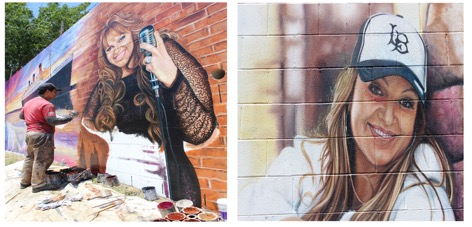
Sergio Ramirez working on the Jenni Rivera Mural (2015) photo taken by author.
Home is the music that we take with us, the music and sounds that we carry in our backs when we enter white or middle-class dominated spaces where our paisa music is not acknowledged or it is even looked down upon and critiqued for being “too Mexican,” “too chunti,” “too low.” Home and sound makes me think of how people of color co-exist with each other sonically. In the EastSide of Long Beach, for instance, home and sound is black and brown relations, tensions, and solidarity. Home and sound is acknowledging that both corridos, hip-hop, and G-Funk relationally, has formed paisas. I mean, I also get an adrenaline rush when I hear Snoop Dog, Warren G, Nate Dogg, O.T Genasis, and Ladies of Beach City referencing their roots to Long Beach, as Snoop says, “it’s an Eastside thang.”
The recent example of Playa Larga’s black and brown sonic solidarity is Snoop Dog’s recent Instagram video listening to Jenni’s music. Watching two Playa Larga finest artists being fans of each other, despite the differences in music genre, language, and spatial politics (East vs. West) is powerful, it tells us that we listen to each other even when they try to put us against each other. In this video, Snoop Dogg embodies the “We have each other” solidarity with which Gaye Theresa Johnson ends Spaces of Conflict, Sounds of Solidarity: Music, Race, and Spatial Entitlement in Los Angeles (189).
Rip jenni rivera- sweet lady n a beautiful voice she will b missed we were supposed to do a song together Im so sad!
— Snoop Dogg (@SnoopDogg) December 10, 2012
Listening to Chingona-ness pushes me to theorize a new framework for anti-fandom, one that centers race, class, sexuality, and is not only about an artist’s music– or what Gray calls the “text” – but also about their bodies and the bodies of the fans, their ontologies, and existence. Focusing particularly on Jenni and her fans allows me to think about gender, sexuality, class, pleasure, music reception in relation to anti-immigrant sentiments, war on drugs, war on poverty, and the war on Latina reproduction and fatness. Jenni as a case study allows me to explore how unapologetic paisa chingona-ness triggers anti-fans, exposes what I am calling agitations and their “agitated responses.” Agitated responses refers to the hater comments that anti-fans (or non-fans) make towards Jenni, (and there are many), while agitation is the carnal disgust that anti-fans display when they police the behavior of Jenni and her fans. In this anti-fandom framework, agitation is the disaffection – the visceral aggression or enmity – that people who hate Jenni and her fans express when they write, say, or gesture agitated responses towards them, a form of sonic haterism.
I entered academia to theorize my home and write the paisa girl epistemology since there is little literature written on our sonic identities, and to show how sonic haterism, in conversation with fandom, allows me to understand the historical, social, and cultural realities working-class Latinas face. Here is how Jenni Rivera once expressed this same intersection in the song “Mi Vida Loca,” which asks listeners to hear what Paisa Chingona-ness sounds like in Playa Larga, her sonic home, and mine too.
—
Featured Image: Paisa Party Crews in Long Beach, The Myspace Days , courtesy of author
—
Yessica Garcia Hernandez is a doctoral candidate and filmmaker in the Department of Ethnic Studies at the University of California San Diego. Her scholarship bridges fan studies, sound studies, women of color feminisms, fat studies, girl studies, and sexuality/porn studies to think about intergenerational fans of Mexican regional music. Yessica earned her B.A. in Chicanx Studies from University of California, Riverside and an M.A. in Chicanx and Latinx Studies at California State University Los Angeles. She has published in the Journal of Popular Music, New American Notes Online, Imagining America, Journal of Ethnomusicology, and the Chicana/Latina Studies Journal. Her dissertation entitled, “Boobs and Booze: Jenni Rivera, the Erotics of Transnational Fandom, and Sonic Pedagogies” examines the ways in which Jenni Rivera fans reimagine age, gender, sexuality, motherhood, and class by listening to her music, engaging in fandom, and participating in web communities. She explores the social element of their gatherings, both inside and outside the concert space, and probe how these moments foreground transmissions of Latina power. Yessica’s broader research interests includes paisa party crews, Banda Sinaloense, Contestaciones, and Gordibuena/BBW erotics. She is a co-founder and member of the Rebel Quinceañera Collective, a project that utilizes art, music, photography, creative writing, filmmaking, and charlas to activate spaces for self-expression and radical education by and for youth of color in San Diego.
—
 REWIND! . . .If you liked this post, you may also dig:
Deep Listening as Philogynoir: Playlists, Black Girl Idiom, and Love –Shakira Holt
Listening (Loudly) to Spanish-language Radio—Dolores Inés Casillas
Feeling Through the Keen and Grind: Team Dresch’s Personal Best –Gretchen Jude
New Wave Saved My Life—Wanda Alarcón
Share this:


Current Top Posts





April 2021

January 2020

November 2019

October 2019

August 2019

April 2014

November 2017

March 2015

December 2017

October 2015
 Sounding Out!
Recent Comments