
Riot Grrrl, Punk and the Tyranny of Technique

DOI: https://doi.org/10.59350/n5c86-2q829
For full intro and part one of the series click here. For part two, click here.
Our Punk Sound series implicitly argues that sound studies methodologies are better suited to understanding how punk works sonically than existing journalistic and academic conversations about musical genre, chord progressions, and/or genealogies of bands. Alexandra Vasquez’s sound-oriented work on Cuban music, for example, in Listening in Detail (2014) opens up necessary conversations about the “flashes, moments, sounds” in music that bear its meanings and its colonial, raced, classed, and gendered histories in material ways people can hear and feel. While retaining the specificity of Vasquez’s argument and the specific sonic archive bringing it forth, we too insist on “an ethical and intellectual obligation to the question: what do the musicians sound like” (12) and how do folks identifying with and through these musical sounds hear them?
In this series, we invite you to amplify varied historicized “details” of punk sound–its chunk-chunk-chunk skapunk riffs, screams, growls, group chants, driving rhythms, honking saxophones–hearing/feeling/touching these sounds in richly varied locations, times, places, and perspectives: as a pulsing bead of condensation dripping down the wall of The Smell in Downtown LA (#savethesmell), a drummer making her own time on tour, a drunk sitting too near the amp at a backyard party, a queer teenager in their bedroom being yelled at to “turn it down” and “act like a lady[or a man]”. . .and on and on. Today’s essay is by Tamra Lucid. Here, Tamra offers her thoughts on how both technique and expression reinforce a gendered understanding of music. When punk sound plays with extremes, how can artists who feel trapped by these polemics resist?
SOUND!
–Aaron SO! (Sounding Out!) + Jenny SO! (Sounding Out!)
—
“Don’t touch that!” a virtuoso guitarist had once told me when as a kid I reached for his guitar. The same phrase would later be delivered by a punk guitarist at a gig where I offered to replace a string broken during his performance. As noted in the book Girls Rock , women are often told not to touch these sacred instruments (18). I remember thinking that guitar was as complex as a car engine and as dangerous as a circular saw. Technique and theory are meant to liberate musicians (so that their dexterity can follow wherever imagination and inspiration may lead), but when experiencing gender discrimination from instructors and fellow instrumentalists, technique and theory can seem antagonistic. In this essay I show how the elite and virtuoso focus on technique and theory has catalyzed punk musicians to cultivate the raw, expressive, qualities of punk sound. Yet, paradoxically, I point out how movements toward a raw and visceral sound constitute a cage of their own, alienating an equally radical and virtuoso community of women in the punk scene. How do these sonic contours in the 1990s riot grrrl scene tell a story about injustice and community building through sound?
Theory and technique become a cage when they are used by sexist cliques, such as the heavy metal scene, which sought to maintain hegemony over local scenes and resources. For the gatekeepers, there are many benefits to this form of discrimination–women are encouraged to act as doting fans rather than joining bands. As a teenager I saw many young women told by male musicians that their only permissible roles were those of sex object or fan. Early in my musical career when I put out an ad searching for band mates some male musicians would call just to laugh at me.
In the late 1980s and early 1990s when canons of punk tone and composition ironically became defined by an athletics-like dedication to speed, precision and endurance, riot grrrl bands were criticized for their primitive skills. However, by removing the barriers to self-expression that this emphasis on technique and theory created, many people, not only female or female identified, were empowered to create music similar to performance art. As Liam S. Ruin of the Columbia, South Carolina hardcore band Shirley Temple of Doom (1993-1996) said in an interview I conducted with them for this essay: “I still think emphasis on technique is gross and ableist and boring and obvious.”
In this time of sonic reform, some scenes came to prize sincerity over skill. Here, a new canon of theory and technique evolved–another cage. Some related to the riot grrrl scene found themselves accepted by their community while receiving praise for abandoning a commitment to simplicity. For example Associated Newspapers News North West previewed a gig by Sleater Kinney in Manchester, UK by describing them as “too musically competent to be a Riot Grrrl band.” Likewise, the female hardcore bands Girl Jesus and Free Verse (though politically aligned with riot grrrl) found little support in a scene that viewed them as a threat. It was as if the language of technique and theory was the language of oppressors, and using it implied submission to the status quo. The directness of purpose which had liberated so many artists, became a new kind of cage for others.
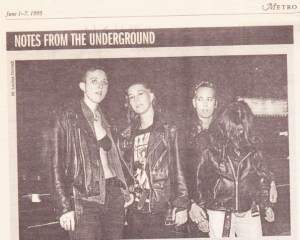
As a roadie for Girl Jesus, I witnessed the immediate dismissal (including groans of disappointment) they suffered when confronting male bands at gigs many times. Despite these jeers I also saw the way their ferocious music and performance, anchored by guitarist Gina Rush’s use of middle eastern scales, Shell Davina’s unique and unusual drumming style, and Grit Maldonado’s flamenco-like bass lines, reduced many male bands to discouraged silence and listless performances. I remember thinking that riot grrrl, or what was left of it in 1993, would welcome such a powerful example of female creativity. The feeling of competence I felt as Girl Jesus approached each gig with confidence in their music and technology helped me to reinvent myself, encouraging me to graduate quickly from roadie to musician.
Gina Rush carefully chose her amps and had them modded by an expert. Shell used a vintage drum-kit that would make any collector drool. But these distinctions were rejected by the riot grrrl audience who found them elitist and classist. Though Girl Jesus was a band of working class lesbians they were treated the same way as male bands in the scene. As Shell reported in an article entitled “Queercore: Ready to Face the Market” by Brent Atwood in the May 6, 1995 issue of Billboard Magazine: “As a female band, we expected a strong network of women in music to stick together. Instead we found a lot of competition.” She also pointed out: “We’ve had more club owners be sexist to us than homophobic.” Despite their embrace of technology and technique, two domains that code as masculine, Girl Jesus nurtured into existence two of the more popular riot grrrl bands in mid-90’s Los Angeles, Patsy and my own band Lucid Nation, which began by rehearsing in Girl Jesus’s garage using their equipment. The name of Girl Jesus’s first cassette demo succinctly captured the problem: “Afraid of Our Own.”

A similar trajectory was found by the all female hardcore band Free Verse, whose first record “Access Denied” was released by the indie label Brain Floss Records. Free Verse began in Lawrence, Kansas in 1995 and in 1998 relocated to Seattle. Lucid Nation toured nationally with Free Verse in the summer of 1998. The experience was similar to what I observed as a roadie for Girl Jesus. Male bands who looked down upon female musicians with disdain were stunned by their display of skill and ferocity. However, when we played in Olympia, Washington, the riot grrrl community cowered against the back wall, clearly uncomfortable. On the road we smiled ruefully over the irony of masculinist male bands becoming fans while female fans who shared our politics turned their backs. This created a conundrum for Free Verse. Although they were able to deliver a feminist message to scenes and individuals who were hostile to feminism, they could not enjoy the community of like minded women who identified as riot grrrl.
Over time, Free Verse earned enough respect that they were able to open for leading bands from a variety of scenes. From Hardcore bands like The Blood Brothers to indie stars like Sleater Kinney. From queer core bands like The Need and The Butchies to riot grrrl supergroup The Cold Cold Hearts. Though Free Verse were chosen to participate in the Northwest Coalition For Human Dignity’s anti-racism tour October 2002, a tour sponsored by Ms. magazine and featured in ROCKRGRL magazine, the band was never able to achieve the following or recognition of the bands they shared bills with, information about them is hard to find on the internet today.
Liam S. Ruin, now one of the guiding lights of the new Riot Grrrl Intersectional movement, provides a more intimate look at how the pressures of technique and theory influenced Shirley Temple of Doom: “Not really any RG [riot grrrl] activity in Columbia SC. Um, Slant 6 played there once. Our scene was extremely nuclear. We played with our friend’s bands, The Trema, Erector Set, Guyana Punch Line. We were pretty much all in each other’s bands or dating each other or whatever. Making it up as we went along. Jessica saw me in the halls at school wearing a Pearl Jam shirt and told me ‘you’re way too cool to be listening to shitty bands.’ She made me a mix cd that was mostly D.C. Emo and Hardcore but it had Bratmobile, Bikini Kill and L7, too. Then she lent me her bass. I practiced with Joy Division and Heavens To Betsy covers till I could play along. We started a band with her boyfriend. Half of our band were really into Straight Edge H/C and the other half were into Huggy Bear, Fugazi, NOU, etc.”

Shirley Temple of Doom, despite reflecting a riot grrrl like platform in their lyrics received little attention from the riot grrrl community. Eventually the band collapsed due to internal tensions regarding technique–as if the rhetoric of extremes around technique and expression had become an expertly baited, misogynist trap. As Liam informed me: “The guys in the band were very technical and pushed me to play more technical bass lines but honestly, I get bored with proficiency. I’ve heard what guitars are supposed to sound like. I wanna hear what they’re not supposed to sound like. We split because of ideological differences. I got really into visceral bass-feels and wanted to sound like a disaster, and they wanted to be on Victory Records.”
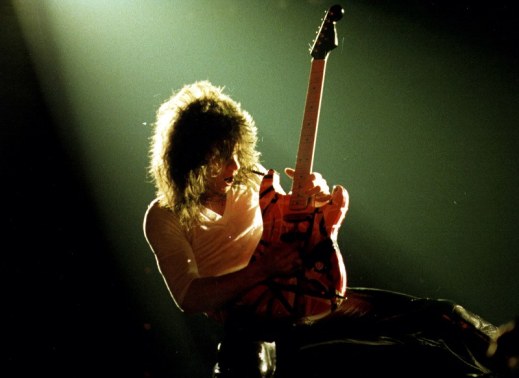
How did the cage of technique and expression, evolve in a style of music that advanced freedom as its guiding praxis? Early on, rock musicians were considered unskilled when compared to classical, jazz and country musicians. Later, virtuosity became central to rock music as bands like Yes, Led Zeppelin, and Pink Floyd, sought radical sounds to accommodate an aesthetic cultivated by Cannabis and LSD. As What’s That Sound? An Introduction to Rock and It’s History puts it: “Rock musicians now had a responsibility to create sophisticated music using whatever means were available.” Soon after this turn to virtuosity, guitarists like Eddie Van Halen became the Paganinis of their time, displaying jaw-dropping finger speed and impressive knowledge of scales and musical theory.
Later, punk rock crashed the party. First in the hands of the MC5 and The Stooges, and then the New York Dolls, The Ramones, the Sex Pistols and many other bands, rock music turned again towards primitive and cathartic sincerity. Musical virtuosity was literally spit upon. The Ramones famously told The Clash that they needn’t worry about improving their musicianship before playing live because “as you’ll see tonight, we suck.” Ferocity replaced dexterity. Nihilistic and cathartic lyrics displaced idealistic flights of fancy. Punk quickly developed its own criteria to indicate mastery of the genre. Bands like Fugazi and F.Y.P. typified a performance style that required frenetic motion while preserving the lockstep rhythm and hand speed, if not the musical knowledge and experimentation, of the earlier virtuosos. Then riot grrrl arrived, freeing a generation of punk women who were uncomfortable with the athletic performance style of these bands. For example, one of L.A.’s favorite riot grrrl bands Crown for Athena would perform at times with one member of the band sitting on the stage singing while clinging to the pant leg of another who stood immobile and emotionless. Frenetic performance and blazing chord speed was no longer a requirement for legitimacy on the punk stage.
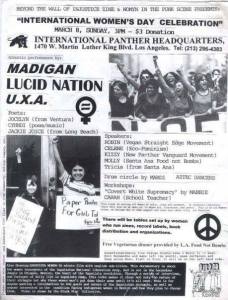
Riot grrrl liberated me from the odious trial of confronting sexist music teachers, store clerks, booking agents, and record companies. I learned from the movement that I could get by with simple barre chords. I could use cheap and borrowed gear and I didn’t have to worry about great tone. One of the bands I admired, Foxfire, a band of female high school students from Los Angeles, used an oven pan instead of a snare drum. Riot grrrl bands emphasized community by booking shows with each other and with activist groups like Food Not Bombs. We made our own labels to distribute each other’s records. When Lucid Nation opened for Bikini Kill at Terraza Jamay in Montebello, Kathleen Hanna took tickets at the door.
As my musical skills developed I found myself feeling restricted by the aesthetics of riot grrrl. Beginning with Lucid Nation’s DNA record (2000) we began exploring cliches of what we called “butt rock,” now more popularly known as classic rock. While we attempted to master the techniques of classic rock our intent was to deconstruct them by introducing unexpected twists of sound (like chaotic analog synth and noise pedals) and lyrics containing feminist perspectives. At this point, we had moved on to other scenes, for example, the melange of Peace Punks, Black Panthers, and riot grrrls at Koo’s Cafe in Santa Ana, CA. We played hemp rallies and non-riot grrrl political events like fundraisers for Big Mountain and other Native American causes.
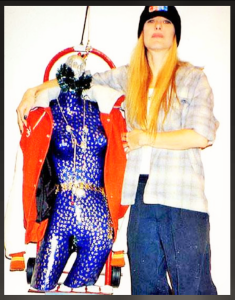
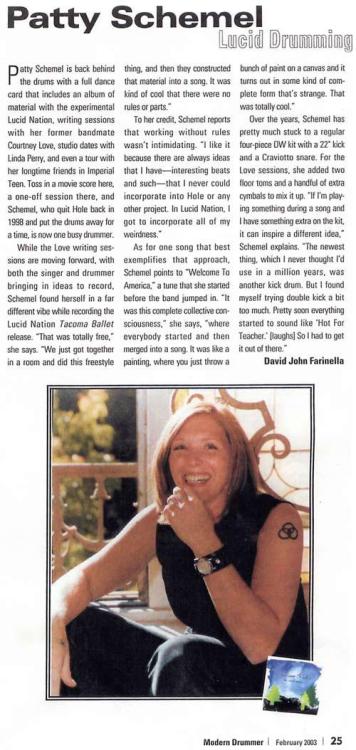
Eventually I developed a fascination with improvisation inspired by freestyle rap and augmented by the writing of Gertrude Stein and the recordings of Jack Kerouac. By the time our most successful album was released, the improvised Tacoma Ballet (2002), I prized musicianship and encouraged experienced collaborators, like Patty Schemel of Hole on drums and Greta Brinkman of Moby’s live band on bass, to bring to bear the breadth and depth of their musical knowledge. I was delighted that Rick King of Guitar Maniacs in Tacoma allowed us to use his highly valuable collectible gear such as a 1967 Gibson Flying V and an array of legendary vintage pedals when we recorded the album. I was proud when Patty said in an interview about Tacoma Ballet: “…there are always ideas that I have–interesting beats and such–that I could never incorporate into Hole or any other project. In Lucid Nation I got to incorporate all my weirdness.” Though Tacoma Ballet made it to #1 on the New Music Weekly Chart of College and Secondary Market Radio Stations in December 2002 it received very little attention in riot grrrl circles. I found myself silenced again, not by advocates of technique, but by a community who valued raw expression.
Of course, in 2002 riot grrrl was less popular than it had been a decade before–it mostly consisted of isolated zine writers and bands. Still, those who remained in the scene ignored Tacoma Ballet despite its success. When I asked them why, they explained that although they admired our work and the songs spoke to their experience, our band just wasn’t riot grrrl. I was told that the skills and awareness of musical history displayed on the record were too self conscious, that I had become ambitious, or as more than one zine writer said, I had sold out. Since I made no money on that record despite the attention it got, and we couldn’t tour behind it since the music was improvised, I found it hard to understand how such a purely artistic lark could be viewed as selling out. I didn’t sell out, my increased respect for theory and technique just felt wrong when viewed from the perspective of the riot grrrl canon.

While new music hardware and software have helped level the field in ways that were not possible in the 90’s, the cage of expression and technique continues to govern a new world of highly individuated scenes. EDM continues to fetishize the drop. Live performers need no longer be concerned about vocal pitch or knowledge of vocal harmony. Hardware like the Digitech VLFX, available on Amazon for under $200, corrects pitch and provides easy and automatic harmony vocals. In this device, music’s ability to create unexpectedly cathartic experiences has been diminished, while the simple mimicry of technique has been elevated.
Perhaps new regimes of data are to blame. Specific canons of theory and technique function as points of data that help define marketing audiences. After all, bands often succeed by conforming to the sonic norms of their given scene. For this reason, there is a tension between conservation and innovation. An artist must conserve as much of their scene’s identity as possible while finding subtle ways to innovate. Today, anyone can share their music on the internet regardless of traditional criteria. Despite this, a desire for acceptance and success continues to pressure musicians into accepting limitations to their creativity like technique and expression.
–
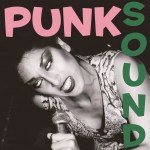
Cover image is of Tamra Lucid and by TheInfinite314 @Wikimedia Commons CC BY-SA.
—
Tamra Lucid is an executive producer of Viva Cuba Libre: Rap is War the award winning documentary about Cuban hip hop legends Los Aldeanos, a producer of Edward James Olmos Presents Exile Nation: The Plastic People, and associate producer of The Gits documentary. Writing from her riot grrrl zines was reprinted in A Girl’s Guide To Taking Over The World: The Zine Revolution by Karen Green and Tristan Taormino,and in Hilary Carlip and Francesca Lia Block’s Zine Scene. Tamra blogs for Exterminating Angel Press and for Reality Sandwich where her most recent project has been a series of interviews with water protectors and filmmakers at Standing Rock. She’s a founding member and primary singer of Lucid Nation.
–

REWIND! . . .If you liked this post, you may also dig:
Listening to Punk’s Spirit in its Pre-, Proto- and Post- Formations – Yetta Howard
Feeling Through the Keen and Grind: Team Dresch’s Personal Best – Gretchen Jude
SO! Amplifies: Indie Preserves – Norie Guthrie and Scott Carlson
—
Share this:

Vocal Deformance and Performative Speech, or In Different Voices!

**This post was co-authored by Marit J. MacArthur and Lee M. Miller
DOI: https://doi.org/10.59350/4rwp5-a5452
Like it or not, we are now accustomed to contemporary pop vocalists manipulating their voices using Autotune and other tools or effects for pitch correction. We may exult in it, and congratulate ourselves on our sophisticated appreciation of the options available to the contemporary vocalist. In another mood, we may scream for low-fi and acoustic music, feel cynical about the possibility that we might ever hear an unmediated voice, live or recorded (if we ever did), and/or laugh off the notion of authenticity in performance entirely. Of course, rather than tricking the audience or trying to sound somehow “better” than they are, many performers manipulate their voices to pose questions about the nature of performance—Reggie Watts and Anna Deavere Smith come readily to mind—and to test essentialist assumptions about and perceptions of voice and sound.
Watts, in an exemplary 2012 TED Talk, plays with the different sorts of authority and affect conveyed by, among other voices: upper-class-British-absurd-explanatory, affectively-meaningful-nonsense-foreign-language, and caz-hip-hop-introducing-a-song-chat. Inhabiting and playing with different voices, he amuses listeners into recognizing how much intonation—the rise and fall of pitch—and other acoustic features affect our perception of a speaker’s voice, and how much we expect people to speak in ways that match our assumptions about their identities.

We cannot all be so talented at vocal imitation, however. And in sound, voice and performance studies concerned with speech, machine-assisted manipulation of vocal recordings—which we term “vocal deformance”—is much less common than in the creative industries. A playful approach to vocal deformance, as a critical and creative practice, has much to teach us about our perceptions of speech in general, and performative speech in particular. Too often, when we use archival poetry recordings in our teaching, they may reify an idea that students are often loathe to relinquish: a poem is a finished art object, weighted with authorial intention and biographical significance, with one possible interpretation (the instructor’s). When we play a single canonical recording of T.S. Eliot reading The Waste Land in 1946, for instance, his particular intonation, together with assumptions that he was a stuffy, overeducated, repressed snob, can foreclose the possibility of a fresh encounter with the many voices of the poem and a multitude of interpretations.
Using vocal deformance in the classroom and in our own research and scholarship, we can unsettle overdetermined readings of poems, essentialist assumptions about the poets who speak them and questions of poetic authority, and recover the crucial oral components of poetry. Below we offer some examples of vocal deformance of poetry readings, and consider the potential and limits of this technique for teaching and research with recordings of performative speech. As John Hyland wrote in Sounding Out! in 2014, “The act of listening to recorded poetry … poses particular analytic challenges, which become more complex when the politics of identity are brought to bear on … questions of voice and poetry.” Among these challenges are essentialist assumptions, both about identity and recording medium, which are difficult to avoid when we listen. Hyland concludes that, when we listen to recordings, “the poet’s voice falsely takes on an authoritative ‘aura,’ as Walter Benjamin used that word”; one way to counter to this is to listen to the same poem read by the poet at different points in their career, in different contexts, as Hyland does with three recordings of Amiri Baraka’s “Black Dada Nihilismus.” Another approach is to play with recordings.
***

***
The concept of deformance dates to a 1999 essay by Jerome McGann and Lisa Samuels. They take inspiration from Emily Dickinson, who sometimes liked to read poems backward, for the potential insights of reading against the form, scrambling the original sequence, and so on. According to McGann and Samuels, Dickinson’s
critical model is performative, not intellectual [. . . ]. it is anti-theoretical: not because it is opposed to theory (i.e., speculative thought), but because it places theory in a subordinated relation to practice. Deformative moves reinvestigate the terms … [of] critical commentary [, with] dramatic exposure of subjectivity as a live and highly informative option of interpretive commentary, if not indeed one of its essential features. [our italics]
Too often in the literature class room, the subjectivity of interpretation is something of a problem. While we might initially encourage a somewhat fluffy reader-response discussion of a poem, eventually we might also worry that students are simply wandering too far from it, following their own random associations with a phrase or metaphor, without learning to parse the rich intricacy of the whole poem. One effect of vocal deformance is that it makes space for the playful response, and also keeps bringing students back to the telling phrase, to the words of the poem, imagining what difference it makes if they are said in different ways, trying on different interpretations, as it were.
While vocal deformance can be applied to any performative speech, it particularly lends itself to poetry recordings. Poetry is, of course, an oral form with a fraught relationship between text and performance, and poetry reading styles are often perceived to be highly conventional, so that we feel we are listening to a Poem rather than a particular poem. From a literary and performance studies perspective, what could be more tiredly familiar than a canonical recording of a canonical poem by a canonical poet in a conventional style of poetry reading that deadens the audience to the charms and nuances of that poem? And how can we do something productive and interesting with the (sometimes extremely) idiosyncratic subjectivity of student responses to canonical texts?
As an interpretive practice, vocal deformance opens up new possibilities for testing assumptions about performance, poetic authority and gender, and, potentially, about race, class, education, region, and canonicity. Is The Waste Land (1922) the deadly serious poem that many readers often take it to be, partly because it is presented to them as an immensely influential Modernist monolith? How does T.S. Eliot’s seemingly grim reading of it, and our perception of his style, contribute to such an interpretation of the poem? After all, the working title of the poem was “He Do the Police in Different Voices,” from Charles Dickens’s Our Mutual Friend (1864-65), and it includes many different voices or speakers, from the clairvoyant Madame Sosistris to Tiresias. What better way to defamiliarize and exploit the authority of the poem than to deform Eliot’s authoritative reading voice?
How do we respond to the now-canonical voice of Eliot reading the opening lines of The Waste Land, “April is the cruellest month, breeding / lilacs out of the dead land”?
.
Okay. Now what if we raise his pitch? Is he suddenly his own great-aunt? What does the same lament mean, spoken by a voice that sounds like an elderly woman?
.
And if we leave his pitch alone, but speed up his speaking rate, does he suddenly sound like an old-school radio announcer, the poem a deranged weather forecast?
.

In terms of digital humanities research, a refreshing aspect of vocal deformance is that it avoids some of the easy and misleading reassurances of the empirical move. It’s not that it only clarifies what we thought we were hearing (as visualizing intonation through pitch contours can), but that it encourages multiplicity in listening.
Vocal deformance is essentially a playful strategy for defamiliarization that reminds us, in many ways, of the subjective, creative, even arbitrary nature of interpretation. In this, it has clear affinities with the OULIPO movement (which Dickinson’s practice of reading backwards presages). It may help us imagine, create and respond to alternative sequences and versions of recorded canonical texts—and to any apparently stable, singular performance of a text. The art of the glitch is one deformative practice, with the goal countering screen essentialism, the unreflective assumption that a digital artefact is immutable, stable and coherent. For an example of glitching photographs, see Trevor Owens’s “Glitching Files for Understanding: Avoiding Screen Essentialism in Three Easy Steps,” and Michael Kramer’s blog post about using audio deformance in a digital folk music history seminar at Northwestern University, “Distorting History to Make It More Accurate,” which demonstrates some potential insights gained by glitching newspaper images, photographs and music (Bob Dylan’s “Tangled Up in Blue”). John Melillo and Johanna Skibsrud’s “Two Sides for Wallace Stevens,” on Harvard’s Woodberry Poetry Room site, also offers a beguiling example of audio deformance.
Most deformative practices work with text and image, however, and the few that manipulate recordings introduce noise, skipped phrases, repetition, etc., usually without changing the acoustic features of the voice. It is well worth applying deformance more often to speech, not only in linguistics and the neurobiology of speech perception, but in humanistic study of performative speech because our perception of speech is nothing if not subjective, not to say mysterious, for two reasons.
First, our expectations of what we will hear influence what we do hear, from simple sounds to complex language comprehension. Often these expectations, which can be visual, auditory, cultural, etc., have been naturalized by the listener over time as unconscious reactions. Though many have anecdotal experience of this phenomenon (see an example about a black student, a white teacher, and a black student-teacher disagreeing on what the student said in a 2012 Sounding Out! piece by Christina Sharpe), it is has been demonstrated in many experiments as well. For instance, our perception of foreign-accented speech changes rapidly as we hear a few sentences and calibrate our internal expectations, as shown by Clarke and Garret’s 2004 study “Rapid Adaptation to Foreign-accented English.” And, according to Richard Warren’s “Perceptural Restoration of Missing Speech Sounds” (1970), “when natural speech is interrupted by noisy gaps like a cough or a slammed door, we unknowingly “fill in” the noise, vividly hearing speech sounds that do not exist acoustically. This phenomenon arises both from linguistic expectations as well as our deep familiarity with basic speech acoustics, as shown in Shahin, Bishop, and Miller’s “Neural mechanisms for illusory filling-in of degraded speech.” Similarly, in an illusion called the McGurk effect—noted by Harry McGurk and John MacDonald in 1976—just seeing a talker’s lip movements changes the perception of speech sounds categorically, say from “buck” to “duck.”
Though much of this reshaping of our acoustic perception happens unconsciously, we can also profoundly alter what we hear through selective attention. Particularly in everyday acoustic environments, we hear speech better when we expect it, and when it matches our specific expectations: from a given location, from a certain talker or type of talker, at a certain pitch, and so on (See “Speech Recognition in Adverse Conditions: A Review” by Mattys, Davis, et al. 2012). Perceptual filters fundamentally constrain our experience: if we attend to a talker in one ear, we may not even realize when a second talker in the other ear switches from English to German, as Cherry concluded in “Some Experiments on the Recognition of Speech” in 1953. Social and cultural knowledge also changes what we hear. Listening to someone whom a listener visually perceives as a “non-native speaker” can make speech sound not only more “accented” (see Donald Rubin’s “Nonlanguage Factors Affecting S Judgments of Nonnative English-Speaking Teaching Assistants” from 1992)—what we might call a subjective quality—but, as Molly Babel and Jamie Russell found in 2015’s “Expectations and Speech Intelligibility,” it can also trigger speech processing reactions that make the speech less intelligible to the listener making visual judgments regarding accented speech.

Given what we know about the brain, the fact that expectations affect perception—of recorded voices reading poems, in this case—should not come as a surprise. A growing consensus holds that the brain’s job is not merely to represent the world; rather it strives to predict the world, make inferences about it, and correct those expectations whenever a mismatch is detected (see Knill and Pouget’s “The Bayesian brain: the role of uncertainty in neural coding and computation” [2004] and Karl Friston’s 2010 “The free-energy principle: a unified brain theory?”) In somewhat familiar environments and situations (pretty much everything after infancy), predictive inference is far more efficient than continually rendering the perceptual world de novo. This means that vocal deformance—particularly when it manipulates a known voice, as with canonical poets, or a familiar way of speaking, as with conventional poetry reading styles—waves a red flag at the brain. Change wakes up the quiescent, habitual brain to something new and potentially informative, because the voice does not fit our expectations for what the person would or should sound like. Listen to Reggie Watts!
This effect can also operate inversely; that is, if we do not expect someone to have a particular voice, we may adjust the stories we tell ourselves about our perceptions, to better match our expectations. In musicology, we might think of Nina Eidsheim’s article on the racialized reception of opera singer Marian Anderson, the first African American to sing at New York’s Metropolitan Opera:
the timbre of her voice has routinely (if often admiringly) been characterized as ‘black,’ … [despite] classical music’s minimal indulgence of individual style … this distinction [has] to be based on an assumption that the black body is intrinsically different from the white body and that even when emitting a timbre recognized as classical, the resonance of a singer’s black body is evident (3, 4).
Certainly, as Jennifer Stoever writes, “listening [is] an interpretive site where racial difference is coded, produced, and policed” (62). The same is true of gender difference and many other identity markers and cultural factors related to authority and authenticity. As Shai Burstyn notes in the article “In Quest of the Period Ear,” about attempts to imagine how contemporary audiences experienced medieval music, “culture plays a highly significant—though not exclusive—role in shaping the cognitive skills of its members” (695). If it is remarkably difficult to escape our stereotypical expectations and perceptions of what a person’s voice “should” sound like, that is partly because our brain uses such expectations to make predictions about our sonic experience. We cannot overcome our expectations through good will alone, and engaging with these issues in the classroom, which can be challenging, also provides an opportunity to help students think critically about essentialism and voice, for those moments when a student in the back of the room mutters in surprise that Langston Hughes “doesn’t sound black,” or exclaims that Walt Whitman “doesn’t sound gay.” Though it is not designed to assess stereotyping in speech perception, the Harvard implicit bias test is a good way to engage students in questions of cultural bias and perception [also, see “So You Flunked a Racism Test. Now What?”].
Furthermore, our affective responses to acoustic, non-verbal qualities of speech matter tremendously to our interpretation of verbal semantics, of the meaning of the words spoken. According to voice perception research in Foundations of Voice Studies: An Interdisciplinary Approach to Voice Production and Perception by Jody Kreiman and Diana Sidtis, when we listen to speech, “[s]ome authors … have claimed that normal adults usually believe the tone of voice rather than the words…. For example, the contrast in ‘I feel just fine’ spoken in a tense, tentative tone might be politely ignored, while, ‘I’m not angry’ spoken in hot anger would not” (304). The teacher’s boring tone of voice on the Peanuts cartoon makes the point.
In other words, we pick up on the affective meaning of a speaker’s tone of voice, and weigh it against the semantic meaning of the words spoken. While Kreiman and Sidtis argue that tone cannot be reduced to intonation patterns, “the fundamental frequency of the human voice [pitch] … heads the list of important cues for emotional meanings” (311). Pitch manipulation, then, changes the affective meaning of speech. Tone of voice is also influenced by other acoustic features, including speaking rate or tempo, and rhythm. In poetry recordings, the poet’s tone of voice influences the listener’s interpretation of a poem.
Two fundamental intonation patterns are rising or falling pitch. In American English, relatively high or relatively low pitch at the end of an utterance, compared to the beginning and middle, seems to carry distinct meanings, as demonstrated by Janet Pierrehumbert and Julia Hirschberg. They developed the ToBI (Tones and Break Indices) system for marking the prosody or intonation of speech. Rising intonation can make any utterance sound like a question, whether it is one or not. A relatively high pitch at the end of an utterance—called a high boundary tone—can make the speaker sound less confident or assertive, and more open to other’s opinions. Rising intonation implies that more is to come, that the utterance is not conclusive or concluded, that it should be understood in connection to the next utterance, and sometimes, that the speaker seeks the listener’s agreement before proceeding.
Uptalk, notably practiced among Generation Xers and now millennials, sounds conciliatory, agreeable and open, on the one hand, and lacking in confidence and authority, on the other—depending on the listener and the context. Marybeth Seitz-Brown argues that criticizing uptalk “implies that if women just spoke like men, our ideas would be valuable … [and] sexist listeners would magically understand us, and we would be taken seriously. But the problem is not with feminized qualities, of speech or otherwise, the problem is that our culture pathologizes feminine traits as something to be ashamed of or apologize for.”
Conversely, women can be criticized when they sound too much like men; see “Why Do So Many People Hate the Sound of Hillary Clinton’s Voice?” Falling intonation—and ending an utterance on a relatively low pitch, or a low boundary tone, implies conclusion, closure and confidence. The utterance, such intonation implies, finishes the argument (if there is one), does not seek the listener’s agreement or opinion, and suggests that this utterance can be understood on its own, without connection to subsequent utterances. Donald Trump, for example, is fond of falling intonation and low boundary tones (for a parody of masculine confident declarative intonation, have a listen at Troy McClure from The Simpsons.)
Of course, not all women use uptalk, and not all men use falling intonation with low boundary tones. In American culture, for better or worse, low boundary tones do seem to carry a tone of authority. And in poetry reading as well. Eliot’s original, and now canonical, reading of the opening line of The Waste Land, “April is the cruellest month,” uses falling intonation, so that it sounds like a confident assertion, with a low boundary tone on “month.”

.
“[B]reeding / lilacs out of the dead land” sounds like a steady, inevitable process, ending on a slightly higher relative pitch, implying that there is more to come, and that the phrase should be understood in connection to the next line, “mixing / Memory and desire, stirring / Dull roots with spring rain.”
What is so compelling and seemingly authoritative about Eliot’s reading style? In some basic sense, the falling intonation of the first phrase does it. Why does it strike many contemporary listeners as pompous? How might we undercut the seeming authority of the Eliotic voice? Make him do uptalk. Here we have simply inverted his intonation.
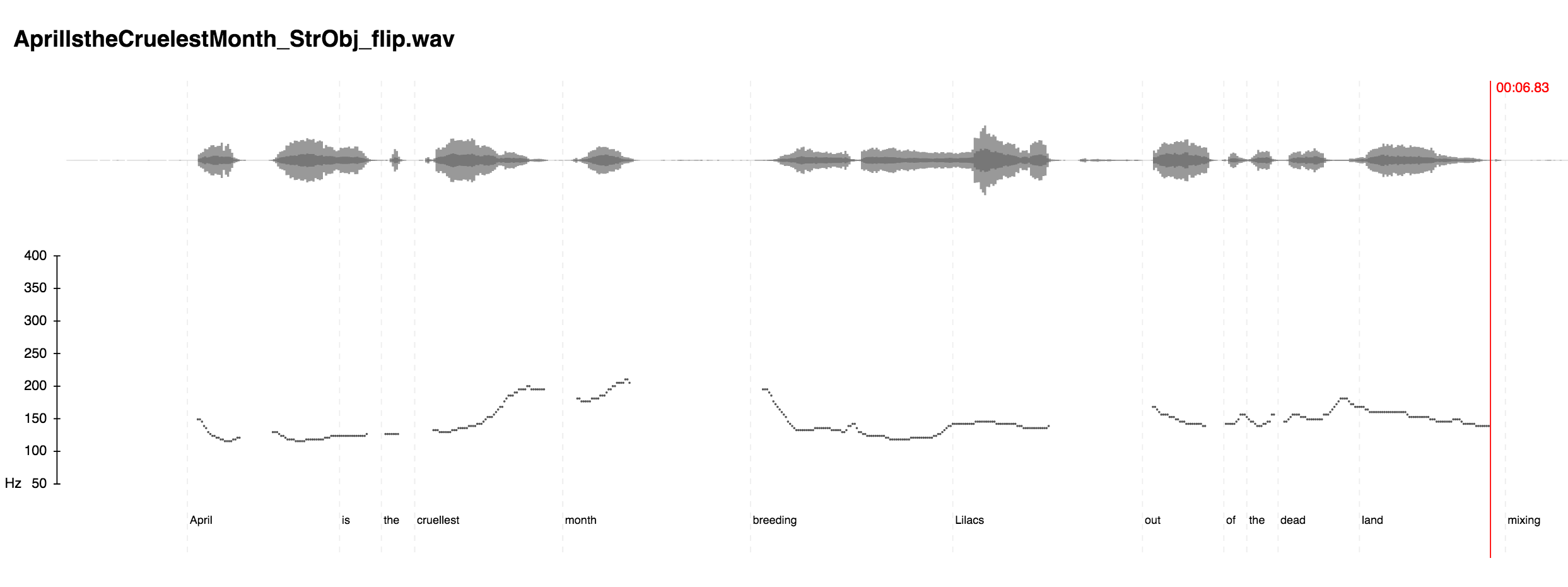
.
Suddenly he sounds doubtful. The opening line becomes a question—“April is the cruellest month[?]”—instead of a confident statement. Suddenly, Eliot himself expresses the skepticism or confusion many an undergraduate has felt—before we encountered this poem, did we not assume that spring, the return of life and fertility, is a cheerful escape from winter? And his deformed recital of “breeding / Lilacs out the dead land” suddenly sounds more like an agonized complaint, expressing the painful, reluctant awakening of desire in one who had found the dull sleep of winter comforting. Inverting the typical poetic authority of falling intonation into uptalk may embolden readers to entertain very different readings of the poem’s opening.
The editors of Poetry Archive had hopes of stimulating listeners of The Waste Land when they made available a 1935 recording of the poem, claiming: “Whilst the sound quality is understandably not so good, the recording is fascinating for Eliot’s faster, more energetic rendition. Listening to this urgent interpretation blows the dust of this iconic poem and helps us encounter it afresh.” However, if the fundamental falling intonation pattern of Eliot’s reading style doesn’t change—and overall, it doesn’t, between the 1935 and 1946 recordings—his voice may remain, for listeners, an aloof poetic authority.

Falling intonation with low boundary tones, then, is a fundental tone of poetic authority. Listen to Adrienne Rich reading from her poem, “What Kind of Times Are These” (1995), which leads the reader to a place “between two stands of trees … near … [where] the persecuted / … disappeared into the shadows.” She insists, “this isn’t a Russian poem, this is not somewhere else but here,” and concludes, “to have you listen at all it’s necessary / to talk about trees.”

.
She sounds like she means it. Rich has to write poems about nature, her tone implies, to wake people up to the political horrors of the American past and present. Poetry as a form, in pastoral guise, allows her to sneak in political content, potentially grabbing the attention of people who might only listen to poetry if they think it is safely, simply about nature. (Click here to hear the entire poem, starting at 4:01.)
When we invert her intonation, turning it into uptalk, she sounds as if she is questioning the wisdom of this approach, and/or chiding her listeners for making her take it. In this case, uptalk exerts a different kind of authority, the challenging question.

.
Is it ethical to manipulate the intonation and other vocal qualities on poetry recordings, for the purposes of teaching and research? Obviously it would not be, if we were to present the manipulated recordings as the authentic voice of a poet. And all peoples have the right to protect culturally sensitive recordings, such as sacred songs, music, dances and prayers; see “Native American Intellectual Property Issues.” Otherwise, potential conflicts are similar to those with sampling in the music industry (See Kembrew McLeod and Peter DiCola’s Creative License: The Law and Culture of Digital Sampling [2011]). Vocal deformance, however, can help remind us that no single reading of a poem, by the poet or someone else, is the ultimately authoritative one.
In teaching writing, we (the authors) sometimes ask our students to explore alternative methods of presenting the same material. This can be as simple as writing the same sentence, the thesis for instance, in three different ways, or it can involve a different format. Write a poem, record oneself reading it, then try to represent it with a collage of images. Turn a 2,000-word essay into a 250-word presentation with verbal and sonic components. An instructive trick with the opening line of W.H. Auden’s “Musée des Beaux Arts” (1940): “About suffering they were never wrong, the Old Masters.” They were never wrong, the Old Masters, about suffering. The Old Masters were never wrong about suffering. Each version of the opening creates a subtly different emphasis, on suffering versus the wisdom of the Old Masters.
Too often, we lock ourselves into one approach, and cannot imagine an alternative. Locked into one approach, too often we cannot imagine an alternative. Alternatives we cannot imagine, if we lock into one approach too quickly. Writing three different opening paragraphs to the same essay, or rearranging the lines of the poem, stimulates our imagination and our critical faculties because it dramatizes different possibilities, possibilities that offer a different emphasis. And when we play with the pitch, intonation and speaking rate of a poem, this can change the tone as dramatically, from a challenge to confession, or an assertion into doubt.
In the classroom, poet Harryette Mullen is often popular with students, both for her poems on the page and for her expressive reading style, while students can sometimes resist recordings by Adrienne Rich (saying that she sounds lecture-y) and Louise Glück (saying that she sounds bored by her own poems), even as they are engaged by the poems on the page.
When Mullen reads “Present Tense” (2002)—a beguiling comical poem, loosely about the grammatical present and the speaker’s and the world’s present circumstances —what is it about her contrastive intonation that sounds expressive? She ends her opening phrases, “Now that my ears are connected to a random answer machine” with rising intonation and high boundary tones. This draws the reader on: keep listening, the statement’s not finished.

.
When we flip the intonation pattern, so that each utterance ends on a relatively low pitch, she sounds more conventional, a poetic authority declaring observations, confident and closed off.

.
Another tone of poetic authority approaches pure monotony. It was practiced by Alfred Lord Tennyson, Irish modernist poet W.B. Yeats and, perhaps through Yeats’s influence, by American poets such as Yvor Winters. Note how similar they sound here. Winters reads the opening of his poem “The Journey” (1931), moving into a Yeatsian monotone after the title and location of Snake River Country, “I now remembered slowly how I came[.]”

.
Here is Yeats reading the opening of “The Lake Isle of Innisfree”: “I will arise and go now, and go to Innisfree[.]”

.
All we have to do to turn Winters into Yeats is raise his pitch a bit:

.
Monotone performance is—at least acoustically—quite uninformative for the brain. Early parts of the auditory brain rapidly adapt or habituate to a wide array of regularities such as pitch and temporal pattern, and they only signal when the pattern changes, as noted in “Early selective-attention effect on evoked potential reinterpreted” (Näätänen, Gaillard et al., 1978). But expectations can work differently across speech’s descriptive dimensions. When speech is usually vivid, as in a direct quotation (“He said ‘I’m leaving now”), higher-level voice-processing areas in the right temporal lobe actually work harder to process (unexpectedly) monotone quotes, according to Yao, Belin, et al.’s “Brain ‘talks over’ boring quotes: top-down activation of voice-selective areas while listening to monotonous direct speech quotations” (2012). In other words, sameness of pitch often means the brain must work harder to grasp meaning.
Interestingly, David Hadbawnik relates in Sounding Out! his disappointment with the productions of three audio recordings of three poetic specimens from Middle English created with SPARSAR, because “they produced monotone outputs that fail to account for prosody.” Vocal deformance might allow him to try to approximate Middle English prosody with the specimens.
MacArthur has written elsewhere about “poet voice,” which she also calls “monotonous incantation.” But how close are contemporary canonical poets to actual monotone, compared to Tennyson and Yeats? Here is Glück, whose reading style is often mentioned as an example of Poet Voice, reading the third stanza of “The Wild Iris” (1992): “It is terrible to survive / as consciousness / buried in the dark earth”:

.
Not much manipulation is required to make it purely monotone, which may account for some students saying she sounds bored by her own poems—though they do not say that about Yeats. They say Yeats’s voice makes them feel like they are in church.
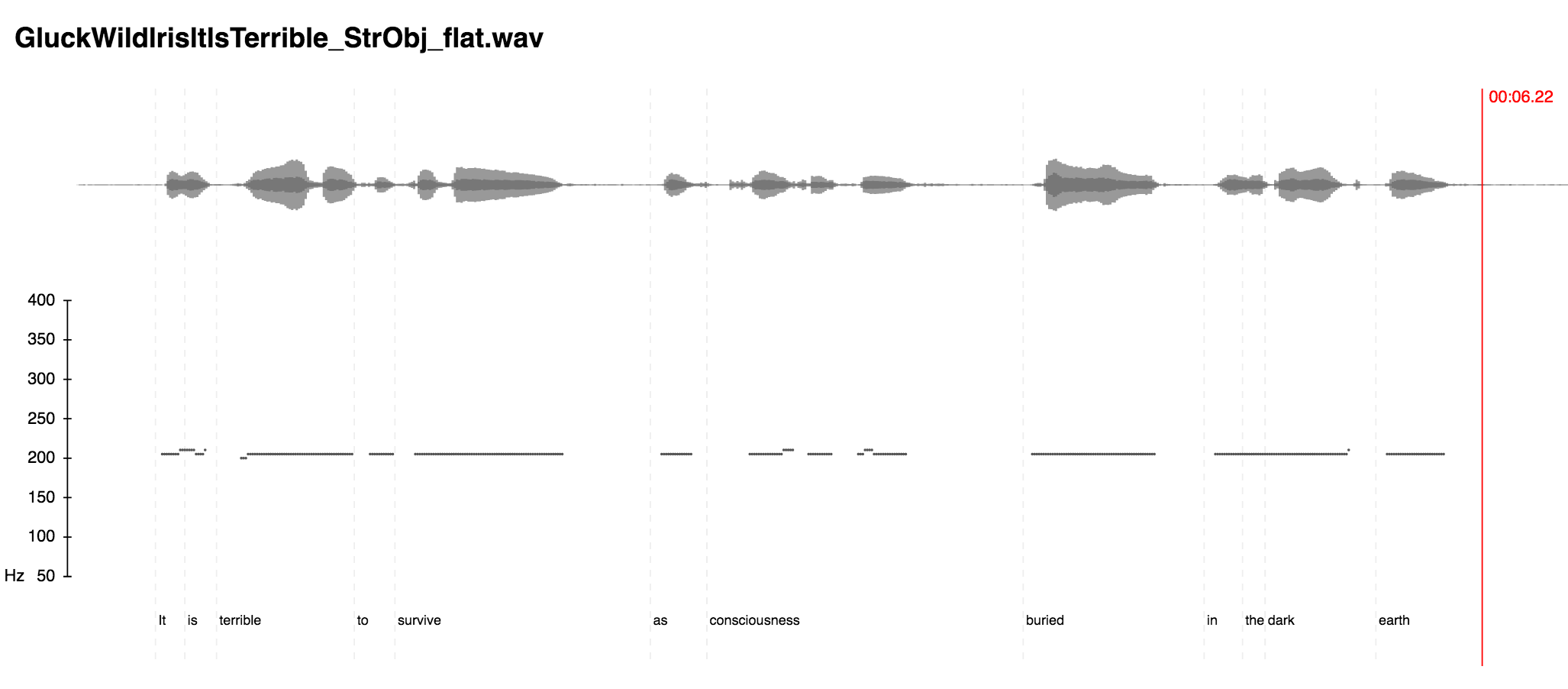
.
Ideally, Glück’s manner of reading her poem should not prevent students from appreciating it. While in other contexts we may defend women’s use of uptalk, it also seems fair to raise the point that academic poetry reading can seem to discourage the expression of affect. (See Donald Hall’s well-known polemic, “The Poetry Reading: Public Performance / Private Art” (1985) and David Groff’s “The Peril of the Poetry Reading: Page Versus Performance” [2005].) Vocal deformance, among other strategies, might help students perceive as much drama in Glück’s poems as they do in Mullen’s—and find as much as poetic authority in both poets’ voices as they do in Yeats’s churchy one. Here, we’ve manipulated Glück’s voice to sound more like Mullen’s style of reading, with a wider pitch range and rising intonation and high boundary tones.

.
If we want to explore alternatives to conventional modes of reading poetry, as many do, directly deforming the acoustic qualities of canonical recordings is an excellent way to defamiliarize performance conventions. Ideally, it can help us listen to alternate versions of the history of poetic performance and to different, unimagined possibilities in the present. Given the extraordinary vitality of spoken word and slam poetry outside the academy, it would be a missed opportunity to suppress varied reading styles in the classroom. At the same time, it would be a great shame to leave behind canonical American poetry when the poets’ reading styles fail to appeal to students.
Finally, if we want to liberate students from the anti-performative tendencies of academic culture, resist essentialist readings of poems according to our assumptions about the identities of the poets who wrote them, and dramatize the idea that there are many ways to read a poem, vocal deformance can help, alongside other strategies. As Yvon Bonenfant wrote in a 2014 Sounding Out! piece, “we are mostly neurotic, or otherwise hung up on, what kinds of sounds we make, where and when.”
Instead, let’s play in different voices.
—
NOTE: To illustrate vocal deformance, we used Straight, a state-of-the-art open-source voice synthesis program developed by Hideki Kawahara at Wakayama University in Japan, with the Advanced Telecommunications Research Institute and the Auditory Brain Project. We also used Drift, an open-source pitch-tracking tool that uses an algorithm developed by Byung Suk Lee and Dan Ellis, implemented by Robert Ochshorn and Max Hawkins with support from MacArthur’s ACLS Digital Innovations Fellowship in 2015-16, to visualize intonation with pitch contours.
—
Marit J. MacArthur is associate professor of English at California State University, Bakersfield, and a research associate in Cinema and Digital Media at the University of California, Davis.
Lee M. Miller is associate professor of Neurobiology, Physiology, & Behavior at the University of California, Davis, and technical director of the Center for Mind and Brain.
—
Featured Image: Cropped and Enlarged version of Bill Smith’s “Voice Glitch,” Attribution 2.0 Generic (CC BY 2.0)
—
REWIND! . . .If you liked this post, you may also dig:
A Listening Mind: Sound Learning in a Literature Classroom–Nicole Furlonge
Audio Culture Studies: Scaffolding a Sequence of Assignments–Jentery Sayers
“HOW YOU SOUND??”: The Poet’s Voice, Aura, and the Challenge of Listening to Poetry–John Hyland
Hearing the Tenor of the Vendler/Dove Conversation: Race, Listening, and the “Noise” of Texts–Christina Sharpe
—
Share this:




Current Top Posts



April 2021

January 2020
November 2019

October 2019

August 2019

April 2014

November 2017

March 2015
December 2017

October 2015


Recent Comments