
Evoking the Object: Physicality in the Digital Age of Music

In our current relationship with technology, we bring our bodies, but our minds rule–Linda Stone, “Conscious Computing”
DOI: https://doi.org/10.59350/52w8z-60015
I begin with an epigraph from Linda Stone, who coined the phrase ‘continuous partial attention’ to describe our mental state in the digital age. The passive cousin of multi-tasking, continuous partial attention is a reaction to our constantly connected lifestyles in which everything is happening right now and where value is increasingly equated with our ability to digest it all. Almost everything we do has the potential to be interrupted, be it by an email, a text or a tweet; often we will give only partial attention to any one thing in anticipation of the next thing that will require our attention. In this internal fight for mental attention, listening to music has been seriously impacted.
The digital era has seen more music releases than ever before. Unfortunately, the massive influx of quantity is by no means a measure of how we are engaging with said music. iPhones and similar devices, for which music players have become mere features, enable listening to become a thing of partial attention. From allowing the shuffle or random modes to choose music selections for you, or even streaming music algorithms to calculate things you might like, to listening while playing Angry Birds or reading your Twitter stream, less commitment is made to the act of listening, and as such only a portion of our working memory is committed to the experience. Without working memory actively processing musical information, it is less likely to be stored for the long term, particularly if other information is continuously vying for space and attention.
These days video games sell better than music. Despite being a digital product, games are able to instill memories (even of the music) into one’s consciousness, because the game interface allows our sensory memories to work together in an active manner with the medium. Iconic memory stores visual cues from the game, echoic memory takes the audible cues from the game and the haptic memory is engaged in controlling game play. There is only so much more which can be done while playing a video game. If something were to interrupt game play, the game would be paused to address the new information rather than giving it partial attention. This is quite different from music which plays a background role in so much of our lives even when we are actively putting music on we tend to only engage it with partial attention.
When I began thinking about turning Concrète Sound System into a record label, one of my main goals was to create works that could engage the audience in active musical experiences that could create long term memories. I felt that as important as the music would be, it would take something material to create these memories, a physical product more evocative of earlier moments in recording history than the CD, its most recent gasp. I wondered if, by creatively evoking the physical object, the listener could be engaged in an active manner that would enable the memory of music and its power to persist through the everyday waves of digital noise.
The first mass duplicated audio medium was the Gold Moulded Edison Cylinder at the turn of the twentieth century. Imagine two cylinder copies of one of these recording today, as musical objects. Each of them would have over a hundred years of physical history. From the wear of the cases to the condition of the wax based on the temperature in which they were stored, each of these cylinders would be unique musical objects, with completely different histories, despite having the same origin. It is reasonable to assume that if the cylinders were played today on the same playback device, despite the fact that the compositions and performances are exactly the same, the differences between the recordings would be audible.
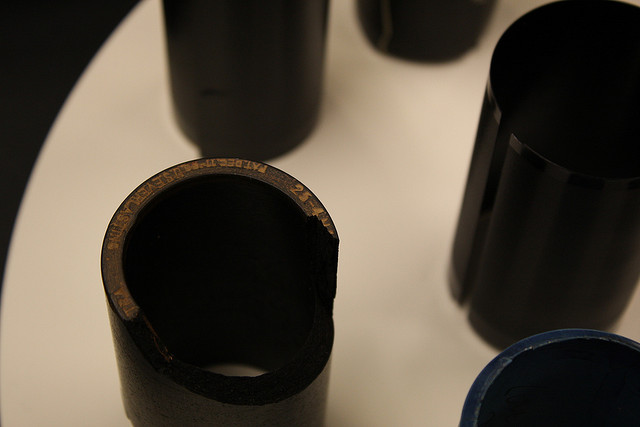
Even without a century of history, there would likely be audible differences between the cylinders. If one cylinder was the first copy made, and another the 150th –master cylinders of Gold Moulded Edison Cylinders could only produce 150 copies reliably–the physical wear in the process of reproduction would leave its own imprint, making each of those copies distinct musical objects. In the analog world, as the technology improved the differences between copies decreased substantially. Cassettes were manufactured in batches of ten to hundreds of thousands without audible differences. But even in circulations so high, over time each of those analog copies took on their own identity and collected their own memories.
The listener as an active agent contributed to the development of these unique musical objects. After a purchase, any number of variables played into the ritual of the first experience of the music. Was there a way to listen upon walking out of the store? Were there liner notes or lyric sheets inside? Would you read those prior to listening or as you listen? Where would you listen? Through headphones? The listening chair in front of the hi-fi stereo? Or on the boombox with some friends? All of these possibilities shaped memories as musical objects that defined the music consumption culture of the past.
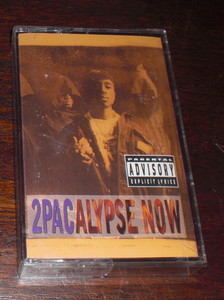
For example, I bought the debut 2Pac album 2Pacalypse Now on cassette the day it was released. I loved the album so much I kept it in regular rotation in my Walkman for months until finally the tape popped. Rather than go out and buy a new copy I decided to perform a surgery. It was in a screwless reel case which meant I couldn’t just open it up to retrieve the ends of the tape trapped inside, but rather had to crack the reel case open and transplant the reels into a new body. So, my copy of the 2Pacalypse Now cassette is now inside of a clear reel holder with no visual markings. It also has a piece of tape that was used to splice it back together, which makes an audible warp when played back. I can pretty much be sure that there is no other copy of 2Pacalypse which sounds exactly like mine. While this probably detracts from the resale value of the cassette (not that I’d sell it), it is imbued with a personal history that is priceless.
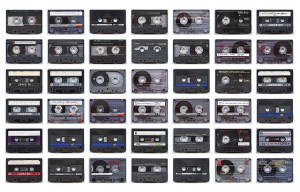
Cassettes, in particular, played a significant role in the attachment of physical memories to music beyond the recordings they held. They gave birth to the mixtape. The taper community was born from personal tape recorders that allowed concert-goers to record performances they attended, and, prior to the rise of peer to peer sharing online, these communities were trading tapes internationally via regular postal mail. European jazz and rock concerts were finding their way back to the states and South Bronx hip-hop performances were traveling with the military in Asia. All of these instances required a physical commitment with which came memories that inherently became their own musical objects.
Needless to say the nature of musical exchange has changed with the rise of the digital age of music. This is not to say that memories as musical objects have gone away, but they are being taken for granted as the objects lose their physicality. I remember going to The Wiz on 96th Street with $10 to spend on music. I spent at least ten minutes trying to decide between Sid and B-Tonn and Arabian Prince. I ended up with Arabian Prince and have regretted it since I got home and listened that day, as I never found Sid and B-Tonn for sale again. Today I could download both in the time it took me to walk to the train station. After skimming through the first few songs of Arabian Prince I could decide it was not for me and drag drop it in the trash where the memory of it would disappear with the files. No matter how I felt about the music then, the memory of it is a permanent fixture in my mind because of the physical actions it took to listen.
The first release for Concrète Sound System, Schrödinger’s Cassette, tackled this issue head on by presenting the audience with its own paradox, an update of physicist Erwin Schrödinger’s famous Thought Experiment, where the ultimate fate of the cassette inside is left up to the individual. Schrödinger’s Cassette sought to take listeners out of digital modes of consumption by using an analog medium to evoke the physical. The cassette release trend has been growing over the last few years, almost in parallel to the rise of the digital music and speaking to the need to separate music from our digital lives and to a desire to work harder for it. At the minimum, listening to a cassette requires having a cassette player, and acquiring one these days takes commitment. Unlike digital media, listeners cannot instantly skip a song on a cassette or put a favorite on repeat. It takes physical manipulation of the medium to move through its songs and doing so is a time investment. All these limitations make the cassette a medium that is best for linear listening, from beginning to end (unless you physically cut, rearrange, and splice it yourself).
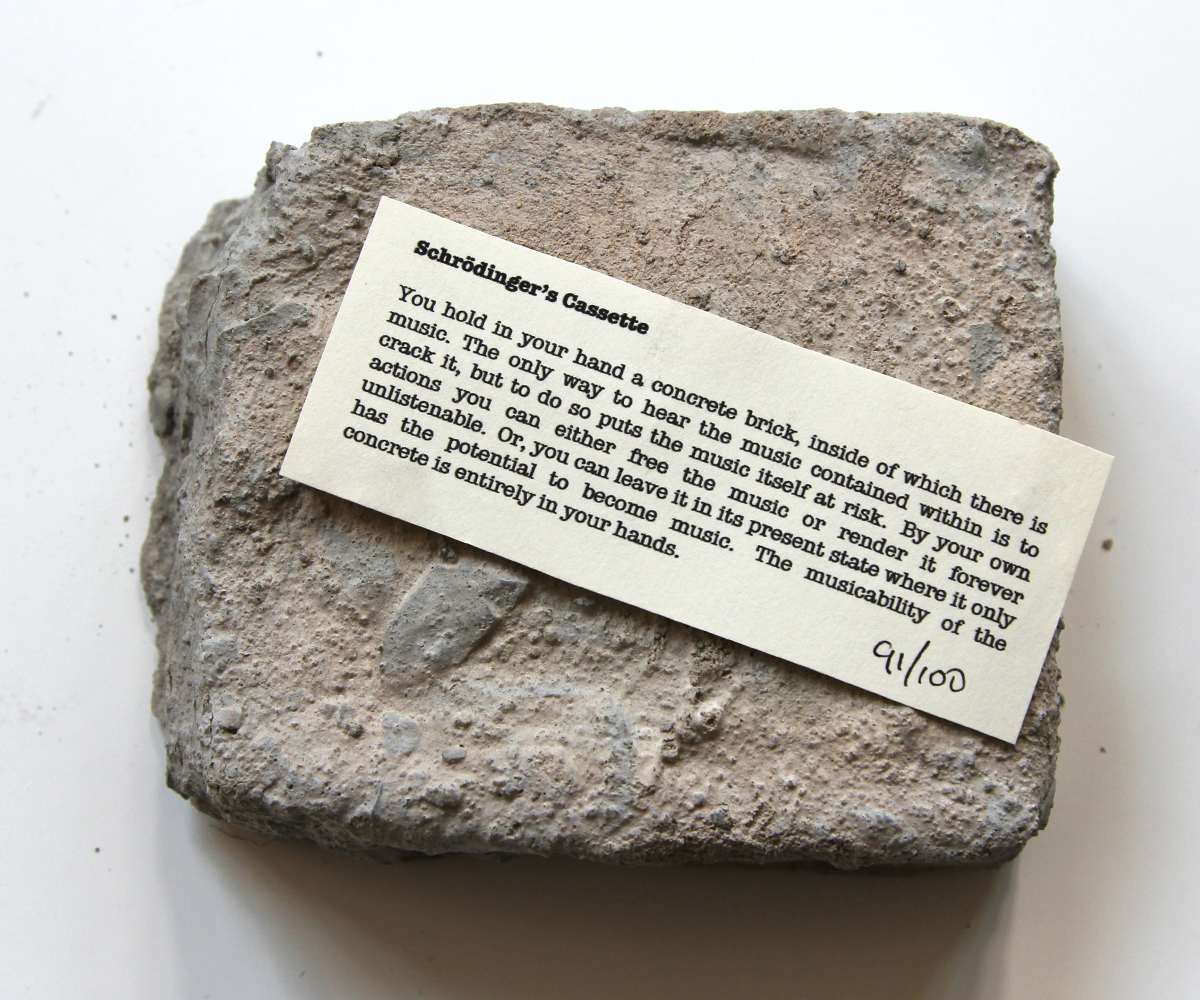
Schrödinger’s Cassette took the required commitment a step further by encasing the cassette itself in industrial grade concrete. This required the user to actively crack the concrete (or the french concrète meaning ‘real’, from which the label derives its name) in order to listen to the music. The paradox is that, depending on the listener’s method for cracking, harm could be done to the cassette that might render it ‘unlistenable’. Upon receiving one of these pieces, the listener holds in their hands a musical object which they must physically act upon in order to create an unrepeatable musical event. Schrödinger’s Cassette has a look, a sound (if shaken you can hear the cassette reels), a feel, a smell, and a taste as well (though I wouldn’t advise it). All of the senses can be actively focused on the object and, as such, the whole of one’s working memory is engaged in the discernment of the object’s musical contents.
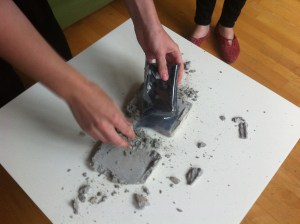
For many, Schrödinger’s Cassette was taken as a work of art and left uncracked. The Wire magazine successfully cracked one edition open, revealing a portion of the musical contents on their regular radio program. For those that decided not to crack it, digital versions were made available so that they could listen, though this option was only made available after the listener spent some time with their physical object. In this way, the music from the project, a compilation called Between the Cracks, was directly connected to physical memories spurred by a material presence.
Triggering active memory during the consumption of music through physical objects need not be this complex. Old medium such as vinyl and cassette releases inherently have the physical properties required without the concrete or much else. Perhaps for this reason they show new signs of life despite the rise of digital. No matter how much our reality is augmented by our digital lives, we still inhabit those bodies that we bring with us, and, as far as the memories those bodies carry with them go, physicality rules.
—
Featured Image: Wax Cylinders in the Library of Congress, Image by Flickr User Photo Phiend
—
Primus Luta is a husband and father of three. He is a writer and an artist exploring the intersection of technology and art, and their philosophical implications. He is a regular guest contributor to theCreate Digital Music website, and maintains his own AvantUrb site. Luta is a regular presenter for the Rhythm Incursions Podcast series with his monthly showRIPL. As an artist, he is a founding member of the live electronic music collectiveConcrète Sound System, which spun off into a record label for the exploratory realms of sound in 2012.
—
Share this:

On Donuts, Sandwiches and Beattapes: Listening for J Dilla Six Years On

DOI: https://doi.org/10.59350/yns4n-b5v12
It has been six years this week since the passing of James “J Dilla” Yancey, considered by many in hip-hop as the quintessential producer’s producer. Over the course of his career the Detroit-born beatmaker garnered production credits with artists ranging from The Pharcyde to Janet Jackson. Since his passing there has been a substantial amount of posthumous output, including a Yancey Boys album with his brother Illa J, Ruff Draft, The Shining and Jay Stay Paid. There have also been the tons of unofficial releases by artists using material from his beattapes without prior permission. An unofficial discography of projects ‘featuring’ Dilla’s work could eclipse his official one.
Dilla’s beattapes, which he shared amongst friends and associates via CDs, eventually traveled the globe via message boards years prior to his passing. His legacy became what it is, at least in part, due to the reach of these CDs, but unfortunately it has also made monetizing the work after his passing a difficult task. There were early issues between Dilla’s family and the legal estate, but for the last couple of years there has been a process established which allows for the use of tracks from his vaults. They are currently set to release The Rebirth of Detroit, which boasts unheard Dilla beats featuring the Detroit artists he came up with:
In addition to posthumous releases under Dilla’s name the estate also licenses tracks for projects by other artists. With over 4000 tracks in their possession, it stands to reason there will be plenty more Dilla in the future. Yet still there is a sense that ‘new Dilla’ will never be new again, as in the future we will only be able to look at Dilla’s past. How would his process as an artist have grown? Surely whatever he was doing before he passed sounds nothing like what he would be doing in 2012.
Fortunately, the creativity of Dilla lives on through his influence on others. In the years since his passing, that influence has gone beyond hip-hop into jazz, indie rock, classical, and electronic music; some might argue Dilla’s influence has spawned new styles or even genres of music . The LA beat scene was seemingly born in homage to him; with its off kilter drums and wild sample chops, it extends beyond the initial influence, projecting into the future a lineage which will forever trace back to Dilla. Another of those lineages takes Dilla to perhaps the least likely place for a hip-hop producer: late-night television, through the figure of Ahmir “?uestlove” Thompson of The Roots.
At the end of the 90s until around 2001, Dilla was a member of The Soulquarians creative team that produced albums for Erykah Badu, D’Angelo, Common, and Bilal:
During this time Dilla worked closely with drummer, producer, and founding member of The Roots ?uestlove. There was a musical bond established over countless studio hours which allowed for a fusion of styles between them that carried Yancey from his Jay Dee period into his J Dilla period, and which ?uestlove continues to carry to this day.
Since Dilla’s passing, ?uest has been an instrumental voice in keeping Dilla’s legacy alive. He regularly DJ’s events celebrating Dilla’s work. On all of The Roots albums except for the most recent one, there have been musical dedications to Dilla. It is when ?uest goes into the studio with The Roots, however, that the living continuation of their musical fusion can be found.
The studio is where ?uest spends a lot of his time, rehearsing The Roots for their role as the house band on the Late Night with Jimmy Fallon show; ?uest records the sessions to listen back before and after the show. On Late Night The Roots play new songs in front of a live audience five nights a week. These songs only air for ten to twenty seconds going in and out of commercials. If you run to grab something from the refrigerator you might miss them. Or, coming back you might find your head nodding to them. Not only are they original works (other than walk on music for show guests, and musical performances), they are an insight into the creative process which shaped both ?uest and Dilla.
?uest names the tracks Sandwiches, a nod to his former collaborator’s Donuts. Donuts was the last official project that Dilla worked on, quite literally on his death bed, and is considered his instrumental opus. It opened up the notion of the short-form instrumental hip-hop work, which traces its own lineage to the history of beattapes. Today, a beattape is a collection of hip-hop instrumentals released as a product through distribution channels (free or paid). In the beginning however, beattapes were physical cassette tapes (and later CD-Rs) passed around from hand to hand. Tracks from beattapes were snippets of beats often recorded right after they were made so the producer could listen to them again outside of the studio setting. They were passed amongst friends and eventually within the industry as a means of selling the producer’s beats.
Early beattapes were not meant for public consumption or as cohesive projects. It’s important to remember that at the time you didn’t finish productions in a home or project studio. Artists, labels, producers etc. would listen to a beattape and select tracks to be purchased for a project. If a beat was bought, the producer would meet the artist in a large studio with an engineer, which is where the beat went into production. The beattape at the time was not considered a final anything, but a sketch of what could become a production.
In addition, beattapes had a secondary purpose as a measure of skill and technique. They became a format for rehearsal and practice. Where a traditional instrumentalist may practice chord changes on their instrument, a beat maker makes beats and records them for easy playback later. For example, a producer could decide to sample the same record as another producer to show how they would use the sample differently. There would be no intent to turn such a track into a full fledged song (though it could happen), instead it would be recorded so they could play it back to a friend or even the producer who originally used the sample for bragging rights.
Dilla was an active participant in this trade. His beat CDs became his calling card particularly for the techniques displayed on them. Donuts was his expansion of that beattape format. Rather than a display of short rough sketches that serve as indications of productions to come, Dilla produced intricate and layered flaunts of technique compacted into short sketches.
The most recognized technique from Donuts is the chop. The chop comes out of the stab line of techniques. A stab is a single instrumental hit played on a sampler. On the MPC line of samplers (which Dilla was famous for using), stabs could be spread across trigger pads pitch shifted chromatically allowing melodic sequences to be played using a single stab. The chop takes that a step further by using multiple samples from the same source (chops) to replace the chromatic stabs, and play melodically. What Dilla displayed on Donuts however, is not merely the chop but the variety of techniques available by which a producer can chop. Working outside the limitations of loops and stabs, new techniques like drum and instrument isolation, de-quantization, vocal stabs and more come at you, one layered technique after the other.
Many of these techniques have been canonized today, but some quality has been lost with that normalization. With de-quantization by example, overuse has practically rendered the technique cliché because its depth was reduced by its definition. De-quantization translates to simply turning off the preference in software programs or hardware beat machines that align all sound triggers to the grid of the tempo and time signature. That definition speaks nothing to what Dilla actually did with that preference off, which was impose his own humanized sense of timing onto the de-quantized patterns of the machine.
Of those that followed Dilla, most got the de-quantization part but missed his sense of time. While de-quantization has shown influence, outside of the ‘stock Dilla’ pattern, his sense of timing has been continued by only a few. At the top of that list is ?uestlove, as he is as responsible for the development of that sense of timing as Dilla is his own. The root of that development can be found in the The Soulquarians period, which can be marked as the time both artists came into their own by working together. That they would come together at all was quite serendipitous, as no player has a better sense of timing than a drummer. It was the mutual sense of timing between Dilla and ?uest that worked to produce the amazing material that resulted.
In The Soulquarians studio sessions ?uest and Dilla created a feedback loop between the drum machine and the drums. This pushed their sense of time as they fused a sonic texture for their drums, which can be heard between their productions. There is a shuffling urgency with a tick of hats between pulses that lead one into the other; the snare or clap crisp, never aggressively cracking, the kick big but not over dominant. It is sequence-based music turned into grooves that maintain the variable constraints of the sequence. They each took these elements with them in their post Soulquarians work, and after Dilla’s passing, you can frequently hear ?uest calling back to those days through his music.
Take a Sandwich like “Gross Understatement.” At the onset a drum loop with a prominent clap is layered into the snare on alternate hits, while a keyboard moves through presets until an organ sound is found. The bass noodles patiently until, with a chord, they meet. When ?uest comes in it takes a couple of bars of him pushing the drums to get everyone else to fall in on his time, but once it hits he can’t control himself, letting out a holler, “something flew out the gate.” What follows is three minutes of magic as the band jams to a grove that is the perfect cross between Dilla and ?uest.
Gross Understatement (G minor) #Sandwich 1397
Up until November 2011, by ?uest’s count, The Roots had created almost 1800 Sandwiches. He has released a stream of Sandwiches through his Swift FM account (the page is currently down until the site relaunches). By his own admission though, all of the Sandwiches aren’t as good as “Gross Understatement.” Out of the 2 to 23 they record each day, he says only about 1 in 19 are bangers. At 94 out of 1800 it isn’t a bad count, enough for nine albums. The only format in these tracks exist however, is as they appear on Late Night, on ?uest’s harddrive and whatever Sandwiches he decides to share. What would a studio project of this material sound like? As big of an audience as they receive on Late Nite, Sandwiches are buried in the mix of television things where it’s not easy to give them the musical attention they deserve. Perhaps in the future an official release of a project from this line will emerge. In the meantime catch them on NBC when you can and stay tuned to ?uest’s social stream.
—
Primus Luta is a husband and father of two (maybe three by the time this goes up). He is a writer and an artist exploring the intersection of technology and art, and their philosophical implications. He is a regular guest contributor to the Create Digital Music website, and maintains his own AvantUrb site. Luta is a regular presenter for the Rhythm Incursions Podcast series with his monthly show RIPL. As an artist he is a founding member of the live electronic music collective Concrète Sound System, which spins off into a record label for the exploratory realms of sound in 2012. Luta is currently working on completing his first book, BeatGenealogy: A History of the Electronic Beat From WWII to Now.
—
Share this:




Current Top Posts





April 2021

January 2020

November 2019

October 2019

August 2019

April 2014

November 2017

March 2015

December 2017

October 2015


Recent Comments