
One Nation Under a Groove?: Music, Sonic Borders, and the Politics of Vibration

Welcome to week three of our February Forum on “Sonic Borders,” a collaboration with the IASPM-US blog in connection with this year’s IASPM-US conference on Liminality and Borderlands, held in Austin, Texas from February 28 to March 3, 2013. The “Sonic Borders” forum is a Virtual Roundtable cross-blog entity that will feature six Sounding Out! writers posting on Mondays through February 25, and four writers from IASPM-US, posting on Wednesdays starting February 6th and ending February 27th. For an encore of weeks one and two of the forum, click here. And now, get up and get ready for Marcus Boon, because there’s no parking on the dance floor at Sounding Out!–JS
—
DOI: https://doi.org/10.59350/ahkcg-50055
What borders remain when it comes to thinking about sound today? The field of sound studies has exploded in so many far-flung directions in the last few years. However, I argue that what is still somewhat off limits in the field is a consideration of the ontological status of sound: in other words, what it means to understand our own being in the world as a sonic phenomenon. Out of attempts to approach this sonic ontology, comes the realization that there are prohibitions, perhaps universal ones, on thinking about sound in this way, and from that emerges what I call the politics of vibration.
For those, such as myself, who have grown up as a part of sonic subcultures, it is not difficult to ponder sonic ontologies, for the simple reason that many of the most intense and powerful experiences we have had have occurred on dance floors or at clubs, as DJs, musicians, clubbers and/or listeners. I still remember the moment of first hearing Funkadelic’s “One Nation Under a Groove” blasting through the speakers at a Pop Group gig at the Electric Ballroom in London in the late 1970s: tumbling polyrhythms, polyphony, polysexuality, polyeverything. The feeling was: “wow, the universe contains this! And it contains other people who know what it is!” And contrary to the warnings of Slavoj Zizek concerning the “autistic jouissance” to be found at the limits of language, here we all were: high; the histories of Afrodiasporic displacement and solidarity echoing off the walls; our own implication in those histories illuminated; flickering between utopia and shame.
To quote Eric Satie: “When I was young they told me: You’ll see when you’re fifty. I’m fifty. I’ve seen nothing.” Me too. But I’ve heard a lot and I still experience that same power of sound in more or less the same way. If anything, sound’s power is more intense and surprising, each time it appears. Partly because I have learned how to be a social being through sound—how to love and be loved—enabling me to be more open to its impact than I was as an awkward youth. It makes me sad the way in Canada and elsewhere in el Norte people seem to lessen their involvement in the more intense aspects of sound cultures as they hit 30 or 40. It makes me sad that my four-year-old son rarely gets to hear a real sound system. I look for music at carnivals, weddings, community centers, on the beach. . .anywhere that those age barriers are ignored. Even as a DJ, I increasingly look for new or different kinds of publicness than that of club or dancehall.
Still, I do wonder. Was the movement into sonic subcultures that my generation (and those that followed) made–especially in the UK where music (and intoxicants, and immigration) were one of the few escape routes from the brutalities of Thatcherism–a mistake, precisely because we accepted as ontological, a structure that in fact was smoothly integrated into the operations of late capitalism? From the Factory and Paradise Garage to Berghain or Ministry of Sound. . . how will history look on the era of the mega-club?
Although one could argue that the Internet put an end to the idea of subculture, since it breaks down the locality and secrecy around which particular subcultural communities grow, in fact what seems to be happening is an acceleration in the generation and dissolution of subcultural formations. Hip-hop has adapted very quickly to the internet. The cassettes or CD-Rs sold out of DJ Screw’s record store in Houston, Texas, for example, morph into the world of online mixtapes, Youtube clips and Twitter battles; the gray market availability of samples sounds a lacuna of time, appearing for a day on a hosting site rather than flying below the radar in some particular geographical location. At the same time, sonic subcultures are expanding around the world. If Jacques Attali was right that sound is prophetic, then #idlenomore was announced by Ottawa Native dubstep crew A Tribe Called Red; Tahrir Square by Chaabi and North African hip-hop.
In his book 1989, Joshua Clover describes popular music in the period of neo-liberal globalization as the sound of ideological containment. It’s true that popular music is full of ontological claims about sound, of music that celebrates setting us free. . .but which fails to actually do so. A quote from Ray Brassier just came up on my Twitter feed:

If true, this would suggest that the intensity of moments of sonic jouissance does not necessarily mean anything in terms of ontology or the truth about what’s Real. It could be entirely delusional.
All of which might be true. We might come to realize that, to put it in Heideggerian terms, we’ve been thrown into this, and that maybe there’s not much difference between being thrown and being played. But somehow I think people on dancefloors already know this. The dramas of seduction, commitment and loss are at the core of disco, and many other kinds of popular music too. To quote the disco classic “Lost in Music” by Sister Sledge (later covered by post-punks The Fall):
We’re lost in music; caught in a trap.
No turning back. We’re lost in music.
We’re lost in music. Feel so alive.
I quit my nine-to-five. We’re lost in music.
Other examples are not lacking.
Perhaps sound and music border on a vibrational ontology, rather than being truly the core of one. This is why, as Michael Taussig, Jayna Brown, and others have suggested, they can be concerned with healing. Perhaps any practice that is meaningful — and sonic subcultures are certainly a matter of practice, as Julian Henriques indicates in his book Sonic Bodies — must necessarily work at the boundary of a space that it can never entirely inhabit as a practice, but which it can push one towards, and also receive one from. The anticipation, fear, desire before one goes out, for example, but also the blinding daylight, the sensation of cool air on exposed skin when one leaves a dancehall or a party.
Sound studies has not truly begin to explore these moments of exposure to and abjection from the vibrational core of sound. No doubt, Steve Goodman performed heroic work in Sonic Warfare—which sets out a proposal for a vibrational ontology in the midst of the commodification and militarization of the sonic —as have various explorations of the phenomenology of sound, such as those in Salome Voegelin‘s Listening to Noise and Silence. Yet in both cases, a full consideration of sonic ontology is in the end foreclosed. In Goodman’s case by Sonic Warfare’s emphasis on the militaristic applications of sound and vibration that are appropriated by sonic art and subcultures, which gives the violence of sound and vibration something like ontological status, while the aesthetic and cultural “uses” of the same have only a secondary, somewhat parasitic status. Conversely, in Voegelin’s work, an emphasis on the phenomenological rendering of the moment or event of sonic relationship forecloses a broader investigation of sonic ontology, because it “brackets” (to use Husserl‘s term) considerations beyond that of the subject-object relationship. In both cases, the sonic thing in itself, or indeed an ontology of vibration, risks being lost.
The recent turn to the speculative and to realism in philosophy has yet to make an impact in sound studies, despite the fact that the object of sound presents a provocative and very intimate entry point to that problematic. One of the more intriguing and improbable hypotheses emerging from the speculative realist movement is that of Quentin Meillassoux, who, in After Finitude, makes an argument that speculative knowledge of the real, unmediated by correlation with the Kantian subject, is possible through mathematics. It is roughly Alain Badiou‘s thesis in Being and Event too. As much as music is clearly about the contingency of sonic experience, there are strong arguments, going back to Pythagoras and beyond, about the relation of music to mathematics. Natural harmonics, rhythm: the elements of music express mathematical relationships. I am not interested in reducing music to a kind of vulgar scientism. But what if when we listen to music, we are exposed to a mathematical ontology and at the same time, the contingency of an unprecedented event? What if music is speculatively real? The word “speculative” here would refer not to philosophical propositions, but to the uncanny movement across subject/object individual/collective borders that the sonic matrix offers when “we” listen to “it.” Music not as the source of a speculative discourse on the real, but a speculative practice in which order and contingency meet.

Genres, styles form around places of cohesion, of transport, of passage. Not an instrumental mathematics (though it can be that too), but a speculative one that seeks out locations of collective affect, of resonance between micro and macro spheres. It matters little whether a specific knowledge of mathematics is invoked here, since many traditional musics find their way to structures that, according to scholars such Alain Danielou, already express mathematical relationships. And in this way, music and musicians can be said to participate in a sonic ontology.
Reluctantly perhaps. Ready or not. The question remains: how many institutional, historical, disciplinary, intellectual, social and political barriers remain in order that a cultural artifact like “One Nation Under a Groove” can be considered to have ontological significance? That is what I mean by the politics of vibration, and in terms of borders, it’s an important set of borders for researchers in sound studies to consider.
Much of my current work focuses on tropes of abjection in recent hip-hop and RnB music, notably that of Odd Future members Tyler, the Creator and Frank Ocean, artists like Azealia Banks, and a new generation of queer rap MCs emerging out of New York City such as Zebra Katz, Le1f and Cakes Da Killa. All of their work is bracingly obscene, funny, violent. . .a tumbling deck of cards of performances of gender, race, sexuality, class and more. Of course, cursing to a beat is nothing particularly new, but the way in which these artists multiply and collapse identities to an ever more minimal, humming beat perhaps is.
Katz’s remarkable “Ima Read” and its equally remarkable video is a case in point. Although Katz occasionally claims dryly that the song is “pro education,” the “reading” in question mostly refers to the drag queen balls of the Harlem ballroom/voguing scene of the late 1980s/early 1990s, where to read meant to verbally trash, i.e. abject, someone at a ball. The song is rapped by male and female voices, crisply denouncing a “bitch” who they are going to “take to college.” The violence of the song is ironic, as much a marker of queer community and Eros as of sexual difference, of racial and trans-racial solidarity as much as racialized violence. It is performed over a minimal beat with a humming, in-your-face bass drum that is the only recognizable tonal element.
Why make the leap to talking about ontology in discussing this admittedly awesome Youtube clip? Both Judith Butler’s famous elaboration of the performativity of gender, one of the bases of queer theory, and Katz and friends play with taboos concerning gender, sexuality and race in contemporary hip-hop emerge from that moment of the ballroom scene.
But what if Butler’s emphasis on performance actually covered up or abjected the ontological nature of experiments at the balls? Perhaps we need to rethink why the ultimate ball anthem is Cheryl Lynn’s “Got To Be Real.” What is sonic ‘realness’? In restoring the sonic dimension to the ballroom scene, and learning, from Zebra Katz, to face that constitutive abjection that Kristeva amongst others has pointed us towards, we can begin to feel for ourselves what a vibrational ontology is.
—
My thanks to Catherine Christer Hennix, Steven Shaviro, Kevin Rogers and Ken McLeod for conversations that helped me in thinking this through, and to Jennifer Stoever-Ackerman for luminous remix skills.
—
Featured Image by Flickr User depinniped
—
Marcus Boon is associate professor of English at York University in Toronto, and was a Fellow at Cornell’s Society for the Humanities in 2011-12. He is the author of The Road of Excess: A History of Writers on Drugs (Harvard UP, 2002) and In Praise of Copying (Harvard UP, 2010). He writes about contemporary music for The Wire. He is currently co-editing a book on Buddhism and critical theory, and a new edition of William S. Burroughs and Brion Gysin’s The Third Mind. He is also working on a book entitled The Politics of Vibration.
—
Share this:

Decolonizing the Radio: Africa Abroad in the Age of Independence
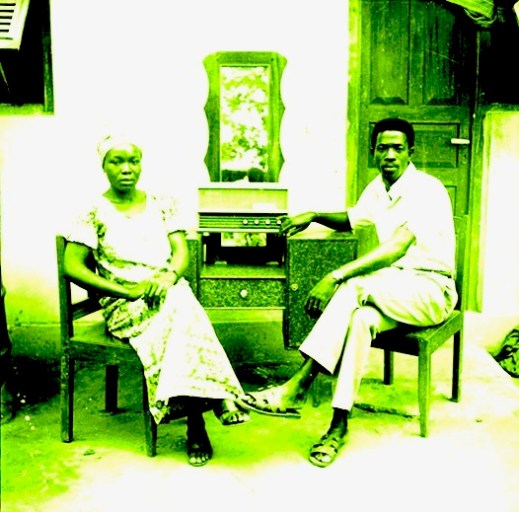
DOI: https://doi.org/10.59350/zftxe-5m206
I never meant to write about radio. Film, video, music, the Internet, television even– but radio had not made a dent in my scholarship or teaching, for embarrassing reasons: it seemed nostalgic even to think about it. It was a residual technology, obsolete even at mid-century, I thought.
And then I stumbled onto the transcripts of “Africa Abroad,” part of The Transcription Centre archives at The Harry Ransom Center.
I was doing research on African American playwright Adrienne Kennedy when two of the fantastic staff at the HRC (Molly Schwartzburg, now Curator at the UVA Special Collections Library, and archivist Gabby Redwine) shared their working African Collections finding aid with me. The description of The Transcription Centre caught my eye, as a radio and public media presence across Africa and the metropolitan diaspora at mid-20th century, whose work included the short variety radio program Africa Abroad (1962-1965) as well as Arts festivals and other cultural events based in London and headed by a former BBC employee. Africa Abroad, a variety show dedicated to the music, art, theatre, literature, and politics of Africa and the African diaspora, offers a compelling glimpse at Independence-Era Africa and some of the technologies that made it, briefly, the center of contemporary diaspora politics.
The transcripts of Africa Abroad document the progressive hope that theorists like Frantz Fanon had for the revolutionary potential of radio in the hands of the (semi)proletariat with cheap access to both production and distribution networks. The background materials on the Centre document its inception as the brainchild of the Congress for Cultural Freedom, a CIA-funded effort to fund anti-communist, pro-democracy sentiment on the continent (a continent who was also being wooed by Russia and China at the time). Africa Abroad then stands as an attempt to rethink the relationship between politics and culture in a difficult, compromised time, self-consciously negotiating the media and mediated trade on Africa as a place and Africa as an international symbol. The radio program takes this moment of African celebrity and finds in it not teleology but proliferation, and a self-aware critique of ‘Africa’ and its public image as it is employed by the diaspora.
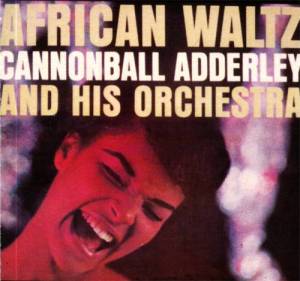
By the second installment of Africa Abroad on the 26th of April, 1962, what becomes the standard format of the programming emerges, one that begins to place culture as the center of diaspora identity—and politics. There is usually a musical lead—by the 4th installment to become the same “signature tune,” “African Waltz” by Canonball Adderley)—after an announcement of the location (London) and organization of the broadcast. The music and the site identification augurs the emphasis on the multiple and conflicting sites of the black diaspora that are performed within each episode and across the radio series as it continues, starting with an invocation of “Mother Africa”; in this particular episode, James Baldwin calls for the revision of the “American Negro” breaking free of representational binds via “the rise of Africa in world affairs,” then moving to a commentary on a Max Roach jazz piece by Nigerian Aminu Abdullahi that emphasizes the role of pan-African politics in Jazz music, then to a review of Ezekiel (later Es’Kia) Mphahlele’s book The African Image from a Nigerian literature Ph.D. in London, finally leading to a brief interview with Robert Resha, “one of the leaders for the ANC [African National Congress] which has been banned in South Africa, on the eve of his leaving London for a tour of African countries.” This eclectic mix becomes Africa Abroad’s signature format, and its particular concerns—that of the keen recognition that the world’s eyes are on Africa anew during this period of independence, and that Africa is starting to work as a symbolic geography of hope for African America as well as Caribbean emigres to Britain—are also those that inform the rest of its run.
While the range of listeners for Africa Abroad is still hazy—transcripts and recordings were made available across the continent, but there is no record of where they landed or when or if they aired—the way that even its material presence in London acted as a hub for political, literary, and cultural figures from Africa and the diaspora winds up as another meaningful site of contradiction. The programs’ circulation of major literary and cultural figures began to construct and map the canon of African authors we recognize today as the “fathers” of the African renaissance. That gendering is specific as it reflects the kind of access to travel, education, promotion, and connection that was required to be a recurring part of Africa Abroad’s brief run—with a limited number of women being sent to London for education in the time period, and even fewer representing those in privileged political exile. Though what amounts to a handful of women are interviewed on the program, rarely are women writers and thinkers featured beyond actresses. Such representation helped to solidfy a generation of African writers and politics that were defined by the questions of an elite, masculine imagination around what the continent, and art from the continent, should or could be—and this vision of diaspora art and politics circulated via the radio.
In other words, Africa Abroad was produced through and as a representation of the new celebrity of the continent, with the radio program serving as the ideal format to showcase and interrogate the global phenomenon of African Independence and as a harbinger of the postcolonial struggle for its resources that would ensue. As independence struggles adopt and adapt new technologies into forms of “combat,” to use Fanon’s terms from “This is the Voice of Algeria,” radio moves from strictly a medium of the colonizer to a tool, “a system of information, . . . a bearer of language, hence of message” (73). But it is also already “obsolete” by 1962 as a residual cultural form in the Western metropole, taken over in the mainstream by television. Hence, like the flexible political strategies of the Cold War that relied on more than just force, radio at this moment becomes both a tool of cultural revolution (and new-found global relevance) and one of stealth colonial influence. As a program rooted in the West but disseminated across and produced by African continental interests, “Africa Abroad” maintains the complex, contradictory desire of communication post World War II that media communications could both connect us all in a progressive intimacy or hail us into, effectively, sheep. Africa Abroad sounds out this tension in form and in content, through the radio.
As the range of scholars I’ve thankfully met post my encounter with radio attest to, this significant, one might say descendent, moment in radio history is constantly weighted by race, gender, and empire. Ivy Wilson is working on sound and the Transcription Centre on the actual recordings of Africa Abroad. Judy Coffin is mapping the complex work that radio did in the careers of Fanon, Simone de Beauvoir, and other intellectuals of the mid-century. Emily Bloom is tracing BBC radio alongside modernism’s literary pathways. This interdisciplinary community of scholars I’ve discovered alongside of radio signifies the important work being done to think through the possibilities for this medium after its dominant rise and into its political and cultural repurposing in the age of the Cold War—outside of the mainstream center at the same time that it serves to support and traverse new geographic and cultural fronts.
—
Featured Image: original from a BBC collection of images from the Ivory Coast, 1960s
—
Samantha Pinto is an Assistant Professor of English at Georgetown University. She is the author of Difficult Diasporas: The Transnational Feminist Aesthetic of the Black Atlantic (forthcoming from NYU Press) and is working on a new project on early black celebrity and human rights discourse. This research on radio is part of an in-process series of articles on institutional failure in the African Diaspora, Women’s Studies, and other critical sites of progressive political desire.
Share this:




Current Top Posts





April 2021

January 2020

November 2019

October 2019

August 2019

April 2014

November 2017

March 2015

December 2017

October 2015


Recent Comments