
SO! Reads: Alexis McGee’s From Blues To Beyoncé: A Century of Black Women’s Generational Sonic Rhetorics

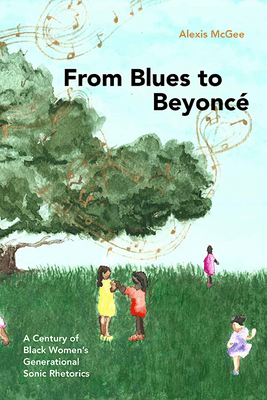
From Blues To Beyoncé: A Century of Black Women’s Generational Sonic Rhetorics (SUNY Press, 2024) by Alexis McGee explores Black women’s creative labor and cultural production. The book offers a searing critique of both record industry exploitation and sound studies’ white gaze. By focusing on quotidian engagement with sound, McGee speaks simultaneously to linguists, rhetoricians, and ethnomusicologists, demonstrating how each discipline has overlooked Black women’s fundamental contributions to our understanding of language and cultural expression. This is not merely an additive project seeking inclusion within existing frameworks, but rather a fundamental reconceptualization of how we study Black women’s sounds.
McGee, currently Associate Professor at the University of British Columbia’s School of Journalism, Writing, and Media, mobilizes her training in linguistics, rhetoric, and composition to analyze everyday communicative practices and generational knowledge systems passed down between Black women. McGee joins other recent texts such as Earl Brooks’s On Rhetoric and Black Music (2024) in critical conversations around “sonic rhetoric.” In From Blues to Beyoncé, McGee theorizes sonic rhetoric as a collection of cultural technologies for storytelling that “act as methods of communicating knowledge that can be used to persuade or inform (younger) generations about topics like survival, liberation, and care” (6). Examining artists from the 19th, 20th, and 21st centuries through personal experience, archival material, biographies, interviews, and popular media, McGee demonstrates the critical necessity of taking seriously the generational cultural knowledge embedded in Black women’s creative practices within an anti-Black and misogynist world.
At its core, the book introduces “sonic sharecropping” as a term that illuminates the lopsided relationship between Black women creatives (tenants), their sonic and musical creations (crops), and wealthier, more powerful recording industry players (landlords, music labels, copyright holders). The sharecropping metaphor reveals how the music industry extracts value from Black women’s cultural labor while denying them ownership and fair compensation. McGee further develops the concept of “audibility of advice” to name the intergenerational mentorship and fugitive pedagogy that Black women practice as they navigate this exploitative system—showing how even the transmission of survival knowledge between generations becomes entangled in the same structures designed to profit from Black women’s creative work.
The book’s chapters traverse an impressive range of cultural moments. Opening with Cardi B’s attempted trademark of “okurrr,” McGee demonstrates how legal and social structures systematically prevent Black women from securing intellectual property rights over cultural innovations that white industry executives appropriate without restriction.
This contemporary case illuminates sonic sharecropping: Black women are expected to create cultural property that record labels then own and sell back to them. McGee then traces these dynamics historically, analyzing business practices of major labels like Atlantic Records. By drawing parallels between sharecropping contracts and recording agreements, the analysis reveals how the music industry has historically relied on discretionary ethical conduct by executives rather than equitable contractual structures, perpetuating exploitative relationships reminiscent of post-Reconstruction economic arrangements.
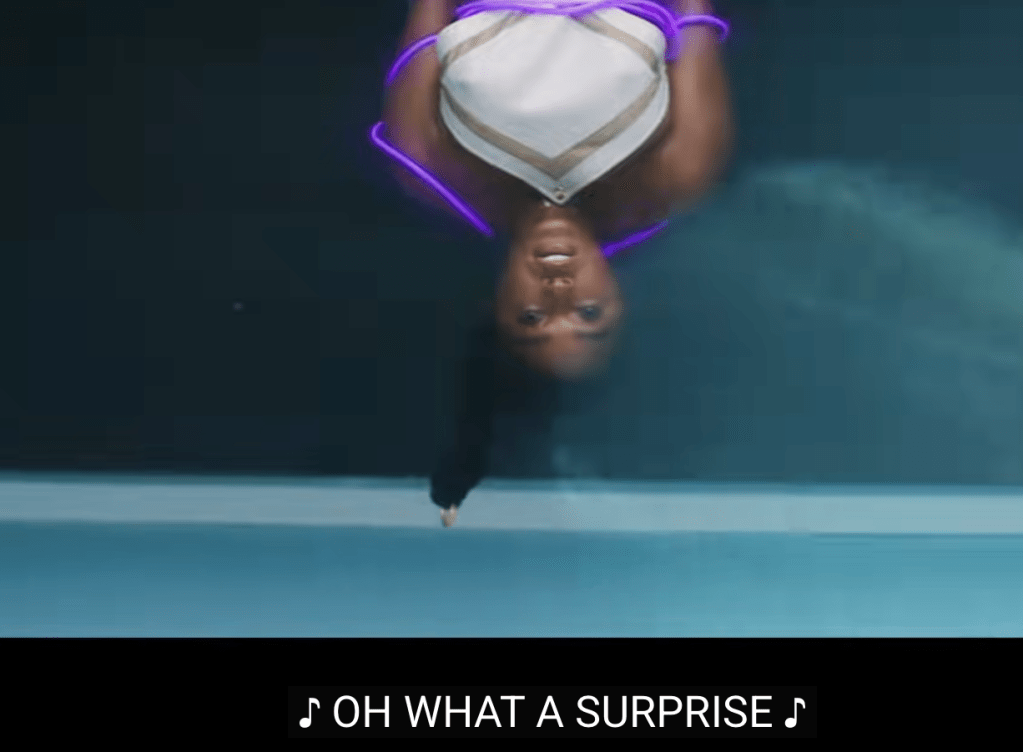
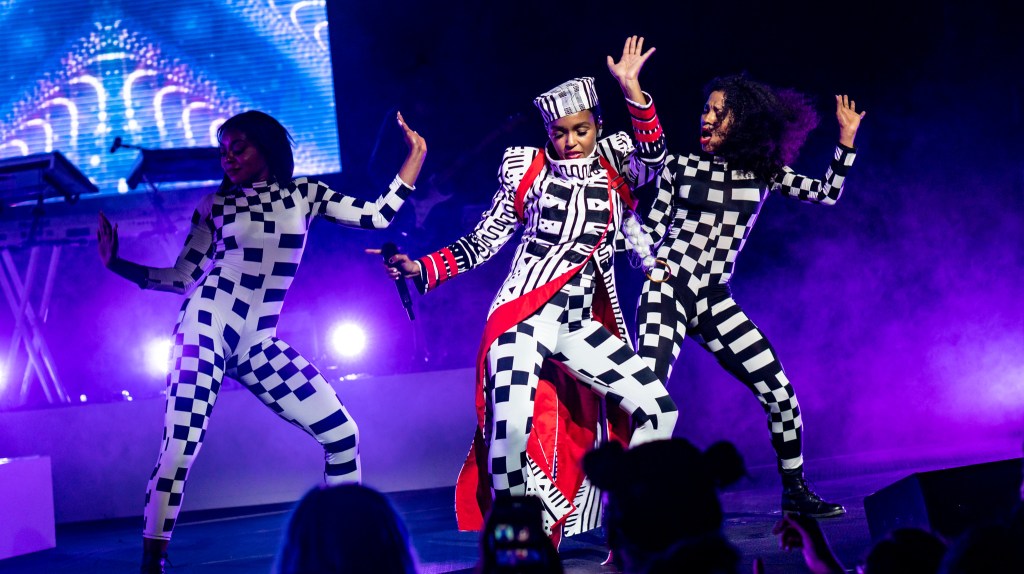
In what is perhaps the book’s most compelling chapter, McGee examines successive performances of “Strange Fruit,” tracing how Nina Simone and later artists like Missy Elliott and Janelle Monáe have reinterpreted Billie Holiday’s haunting meditation on lynching.
McGee builds on Amiri Baraka’s concept of the “changing same”, to show that antiblackness persists throughout time though it changes form. McGee demonstrates how Black women performers resist being treated as interchangeable vessels for Black cultural expression. Rather than presenting generic renditions, each artist asserts her distinctive voice and perspective that reiterates the enduring violence perpetuated against Black bodies.
Each performance carries its own rhetorical power while participating in “sankofarration,” a neologism from artist, writer, and media studies professor John Jennings that combines “sankofa” (a West African concept symbolizing learning from the past to move forward) with “narration” to describe a rhetorical worldview premised on understanding time as cyclical rather than linear. Sankofarration positions past and future as interconnected forces that actively shape the present. Crucially, McGee connects Lawrence Beitler’s commercial sale of lynching photographs (depicting the hanged bodies of Thomas Shipp and Abram Smith) to the visual and sonic rhetorical devices in these musical works. Through this framework, Black women artists transform historical trauma into ongoing political commentary and visions for future liberation. Black women’s creative work, she argues, consistently foregrounds documented histories of racial violence alongside the willful ignorance that upholds white supremacy and patriarchy. By listening critically to Black women’s sonic rhetorics, we can access pathways toward collective liberation.
Despite the book’s title, McGee’s engagement with Beyoncé focuses narrowly on the lemon-to-lemonade metaphor in the album, Lemonade. Her analysis of other Black women artists, however, anticipated critiques later directed at Cowboy Carter, highlighting a double standard: as a Black woman, Beyoncé faces moral scrutiny for engaging with country music—positioned as both capitalist enterprise and white cultural property—while white and male artists have participated in the same commercial structures for centuries without comparable ethical condemnation.
This defense raises the book’s most provocative question, one McGee gestures toward but leaves unresolved: if the inequitable standards applied to Black women artists are symptoms of a fundamentally exploitative system, what would liberation from that system actually entail? Does it require dismantling existing structures of cultural ownership and profit, or can it be achieved through expanded access and recognition within them?
While McGee does not directly engage Matthew Morrison’s recent work Blacksound: Making Race and Popular Music in the United States, her analysis clearly converses with his examination of how Black cultural products have been reproduced for white consumption, particularly through the ongoing afterlives of blackface minstrelsy. McGee’s focus on Black women specifically adds crucial gender analysis to ongoing scholarly conversations about racial capitalism and cultural appropriation.
McGee acknowledges that capitalism itself, rather than Black women’s participation in it, constitutes the fundamental problem. However, the analysis stops short of fully theorizing alternatives to existing structures of Western sound production and commodification. Readers familiar with Sylvia Wynter’s insistence on distinguishing the map from the territory, or Audre Lorde’s warning that “the master’s tools will never dismantle the master’s house,” may desire more sustained engagement with radical alternatives and additional tool building necessary for Black liberation from existing antiblack social and political structures. What might Black women’s sonic practices look like in anticapitalist frameworks of collective ownership and exchange? How might Black femme and queer performances expand or complicate these intergenerational transmissions of knowledge? How might Black women’s intergenerational knowledge systems point toward alternative epistemologies that refuse the terms of racial capitalism altogether?
This theoretical restraint appears strategic rather than accidental. From Blues to Beyoncé navigates carefully between colleagues unfamiliar with Black feminist and womanist theory, who require accessible entry points, and specialists seeking new takes on traversing multiple disciplines at once. In threading this needle, McGee prioritizes disciplinary bridge-building before radical dismantling of capitalist structures and academic knowledge production systems.
These limitations notwithstanding, the book represents an essential contribution to multiple fields. It insists that scholars of sound studies, rhetoric, and Black feminist thought must engage one another—that these conversations can no longer proceed in isolation. Methodologically, it offers both theoretical sophistication and practical analytical tools, making it intellectually substantive for non-specialists while providing specialists a compelling model for interdisciplinary synthesis. Most importantly, McGee demonstrates that we cannot understand American culture, sound, or rhetoric without recognizing Black women’s voices as foundational rather than supplementary.
This book transforms its disciplines by interrogating their foundational assumptions, asking us not simply to include Black women in sound studies, but to recognize how their systematic exclusion has rendered the entire field epistemologically incomplete. In raising these questions, even without fully resolving them, McGee provides both rigorous foundation and invitation to continue the work.
—
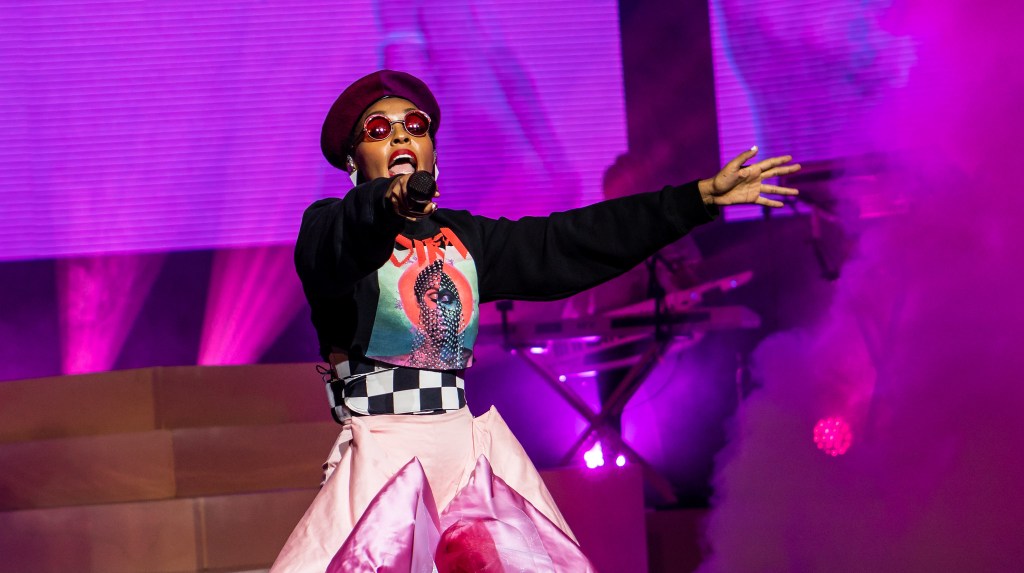
Featured Image: Janelle Monae on the Dirty Computer Tour at Madison Square Garden in 2018 by Flickr User Raph_PH. License: CC BY 2.0
—
Joe Zavaan Johnson (he/they) is a multi-instrumentalist, arts educator, and Black music researcher. Currently an Ethnomusicology Ph.D. Candidate at Indiana University-Bloomington, he examines the Black banjo renaissance through Black studies, human geography, folklore, and ethnomusicology. Johnson frequently collaborates with grassroots organizations focused on coalition building, community healing, and cultural reparations, bridging scholarship with community-engaged practice. His forthcoming dissertation, Black Banjo Bodylands: Recovering an African American Instrument, explores the relationship between Black people, lands, and banjos as ancestral technology.
—

REWIND!…If you liked this post, check out:
SO! Reads: Marisol Negrón’s Made in NuYoRico: Fania Records, Latin Music, and Salsa’s Nuyorican Meanings –Vanessa Valdés
SO! Reads: Justin Eckstein’s Sound Tactics: Auditory Power in Political Protests––Jonathan Stone
“I’m on my New York s**t”: Jean Grae’s Sonic Claims on the City--Liana Silva
Love and Hip Hop: (Re)Gendering The Debate Over Hip Hop Studies--Travis Gosa
My Music and My Message is Powerful: It Shouldn’t Be Florence Price or “Nothing”-Samantha Ege
I Been On: BaddieBey and Beyoncé’s Sonic Masculinity — Regina Bradley
Cardi B: Bringing the Cold and Sexy to Hip Hop–Ashley Luthers
Share this:

Listening to Digitized “Ratatas” or “No Sabo Kids”

This series listens to the political, gendered, queer(ed), racial engagements and class entanglements involved in proclaiming out loud: La-TIN-x. ChI-ca-NA. La-TI-ne. ChI-ca-n-@. Xi-can-x. Funded by an Andrew W. Mellon Foundation as part of the Crossing Latinidades Humanities Research Initiative, the Latinx Sound Cultures Studies Working Group critically considers the role of sound and listening in our formation as political subjects. Through both a comparative and cross-regional lens, we invite Latinx Sound Scholars to join us as we dialogue about our place within the larger fields of Chicanx/Latinx Studies and Sound Studies. We are delighted to publish our initial musings with Sounding Out!, a forum that has long prioritized sound from a queered, racial, working-class and “always-from-below” epistemological standpoint. —Ed. Dolores Inés Casillas
—
This post is co-authored by Sara Veronica Hinojos and Eliana Buenrostro
Cardi B eloquently reminds us that our español, as US Latinxs, might seem “muy ratata;” an apt phrase, heard lyrically within her music, used here to characterize inventive, communicative Spanglish word play. Yet, the proliferation of hashtags used to shame and silence second and later generations of Latinx kids runs counter to Cardi B’s ratata blessings.
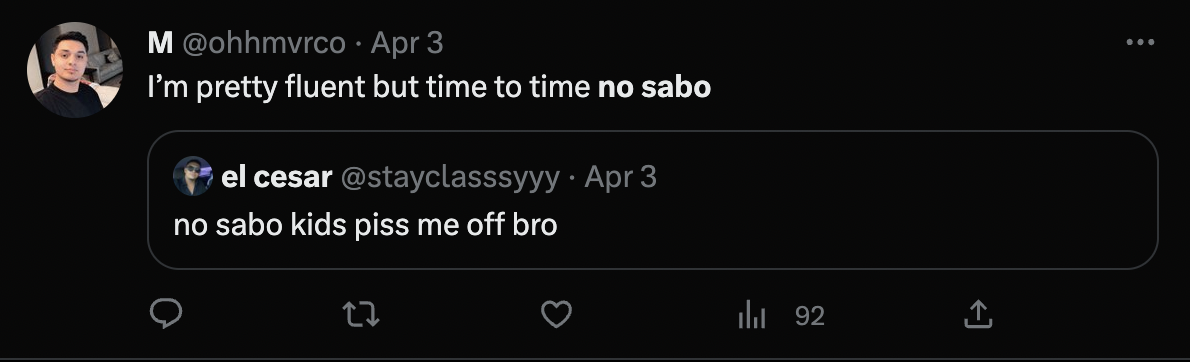
The hashtags #nosabokid #nosabokids #nosabokidsbelike #nosabokidsorry #iamanosabokid represents a collective acknowledgment of Gloria Anzaldúa’s “linguistic terrorism.” Featured on NBC News, Locatora Radio, the Los Angeles Times and, surely, referenced within familial discussions, #nosabo has brought, once again, to the fore the coupling and, we fiercely argue, the need to decouple language (“proficiency”) from that of Latinx identities. The phrase “no sabo” – a non-standard Spanish conjugation of the phrase “no sé” for “I don’t know” – has become a stand-in as both a linguistic (bad) sign of Americanization and/or a (good) marker of ethnic, bicultural pride.
Anzaldúa has long warned us that, “[e]ven our own people, other Spanish speakers nos quieren poner candados en la boca [want to put locks on our mouths]” (1999, 76). In many ways, the “no sabo” label silences or “locks” one’s mouth. The institutional attempts to Americanize Spanish-speaking individuals constitute a form of violence that has led to the erosion of Spanish spoken among Mexican and Latino families in the United States. Today, children of immigrants are ridiculed for speaking “broken” Spanish, yet, for decades Mexicans raised in the United States experienced harsh consequences and blatant discrimination for speaking Spanish in public; this racism continues today.
As scholars of Latinx listening, these social media posts can be incredibly frustrating. They remind us of the sad reality that many Latinx people do not know their own history or better yet futures. Anzaldúa would describe the intraethnic linguistic policing as, “peleando con nuestra propia sombra” (fighting with our own shadow) (1999, 76); it’s both unproductive and self-inflicting. Poet Michele Serros describes her experiences being policed in her 1993 poem “Mi Problema”:
Eyebrows raise
My sincerity isn’t good enough
when I request:
“Hable mas despacio por favor.”
My skin is brown
just like theirs,
but now I’m unworthy of the color
‘cause I don’t speak Spanish
the way I should.
Then they laugh and talk about
mi problema
in the language I stumble over [. . .]
–Opening stanza of “Mi Problema” from Chicana Falsa
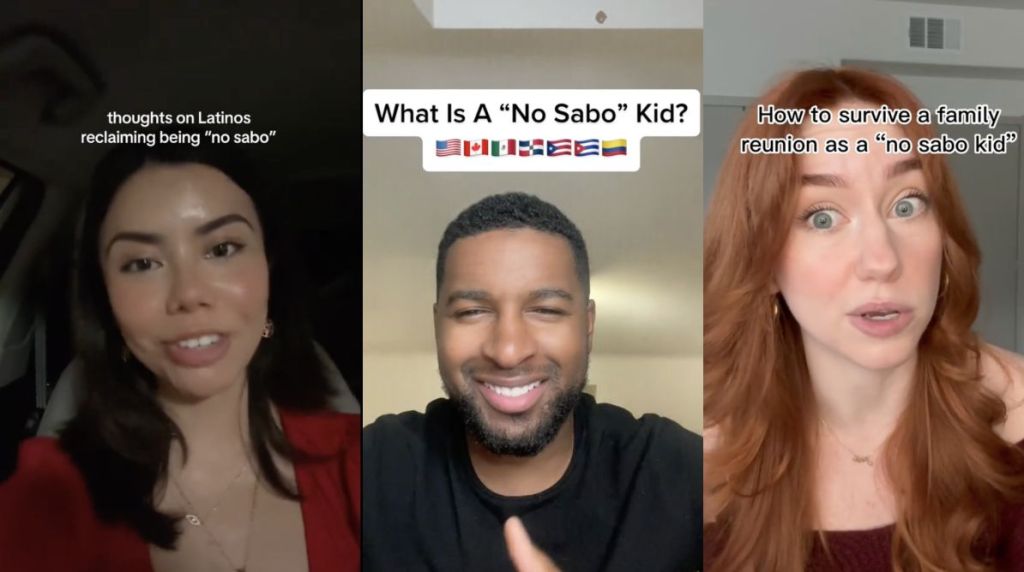
Applied to speakers (mostly kids) whose Spanish is identified as grammatically wrong or heard with an Anglicized accent, “no sabo” hashtags can encourage people to police each other’s tongues. Social media videos even show parents testing their children’s Spanish. When a child cannot remember or (mis)pronounces a Spanish word, or worse, uses a Spanglish iteration, they are disparagingly called “no sabo kids” (Stransky et al. 2023). Other posts reveal Latinx users’ fear of having and raising a “no sabo kid” or not wanting to date a “no sabo kid.”
Lastly, other posts proudly admit to being a “no sabo kid.” The latest series of “no sabo kids” hashtags are also unapologetic declarations that their language does not define the totality of their being or experiences.
Indeed, speaking Anglicized Spanish as Latinx can surface feelings of embarrassment, disappointment, and mockery from presumed “perfect” Spanish speakers or self-appointed “real” Spanish-English bilinguals. Televised instances of Latin Americans chastising the Spanish spoke of Latinx speakers or the public praise thrown at Ben Affleck for his spoken Spanish in comparison to the public side eyes given to wife, Bronx-raised, Jennifer Lopez are both hyper-mediated instances of #nosabokids.
White people might be praised for learning Spanish – no matter how Anglicized their accent – yet Latinx people whose Spanish is detected as Anglicized, are (racially whitewashed) “no sabo kids” (Urciuoli 2013). And yes, the use of the word “kids” alone infantilizes the speaker as some social media posts point to both children and adults as “no sabo.”
Irrespective of the proficiency in English or Spanish, Latinx individuals share experiences of being corrected in educational settings, at home, or online. The misuse of verb conjugation, such as using “sabo” instead of “sé,” is a developmental challenge encountered even by Spanish-speaking children who are learning solely Spanish. In other words, it is not an exclusive practice among Spanish-English bilingual speakers, despite what social media posts insist. The public discourse that some Latinx social media users are battling is what Jonathan Rosa calls “looking like a language” and, in this case, not “sounding like a race” (Rosa 2019).
Speaking, listening, and living “muy ratata” with inventive modes of Spanish and English in the U.S. is clearly heard as threatening. For instance, knowledge of another language has always challenged monolingual conservative speakers. Bilingual speakers and listeners routinely teach us how to resignify language practices and ultimately, the meaning of being a “no sabo kid.” (Or how Nancy Morales argues about Los Jornaleros del Norte and Radio Ambulante in the ways they offer new forms of belonging by understanding themselves and respecting each other.)
Entrepreneurs with Chicana and Latina feminist identities are modeling refashioned ways of belonging. For example, Los Angeles-based brand Hija de tu Madre created t-shirts and crewneck sweatshirts with the words “no sabo” to counter the ridicule heard and circulated within social media and to loudly claim a racial, linguistic identity that has nothing to do with shame. Similarly, the card game “Yo Sabo,” founded by a first generation college student of Mexican descent, Carlos Torres, looks for ways to improve his Spanish and simultaneously creates another way to connect with immigrant family members. Labels like “no sabo ” that are intended to categorize people in harmful ways are being repurposed to build community.
The podcast Locatora Radio: A Radiophonic Novela released an episode on April 12, 2023, Capítulo 160: No Sabo Kids, detailing historical reasons why Latinx ethnicities have structurally been banned from learning and speaking Spanish. Perhaps most importantly, Locatora Radio shares with listeners lengthy listener-recorded testimonios.
They provide diverse personal reasons for identifying as a “no sabo kid.” One listener, Paula, is a transracial adoptee whose first language was Spanish. However, because of forced family separation and the foster care system in Virginia, she “lost” her Spanish. Paula was enrolled in Spanish language classes throughout her formal schooling and accepts that her reclaiming of culture and language is a lifelong process. The use of verbal testimonios, a format that makes it possible for podcast listeners to listen to fellow listeners, moves away from posts above that wag their digital finger at “no sabo kids” and instead gives them a space to speak for themselves.
The intense personal and communal fear of losing aspects of culture or language makes it difficult to understand how shifts in language practices and accents are important new forms of belonging as Latinx in the U.S. If we cannot accept our own linguistic diversity, how do we expect others to listen to us?
—
Featured Image: A selection of TikTok #nosabo memes from @marlene.ramir, @yospanishofficial, and @saianana
—
Sara Veronica Hinojos is an Assistant Professor of Media Studies at Queens College, CUNY. Her research focuses on representation of Chicanx and Latinx within popular film and television with an emphasis on gender, race, language politics, and humor studies. She is currently working on a book manuscript that investigates the racial function of linguistic “accents” within media, called: GWAT?!: Chicanx Mediated Race, Gender, and “Accents” in the US.
Eliana Buenrostro is a Ph.D. student at the University of California, Riverside in the Department of Ethnic Studies. She received her master’s in Latin American and Latino Studies from the University of Illinois at Chicago. Her research examines the criminalization, immigration, and deportation of Chicanes and Latines through the lens of music and other forms of cultural production. She is a recipient of the Crossing Latinidades Mellon Fellowship.
—
—

REWIND!…If you liked this post, you may also dig:
Ronca Realness: Voices that Sound the Sucia Body—Cloe Gentile Reyes
From Spanish to English to Spanish: How Shakira’s VMA Performance Showcases the New Moment in Latin Music “Crossover”—Petra Rivera-Rideau and Vanessa Díaz
Echoes in Transit: Loudly Waiting at the Paso del Norte Border Region—José Manuel Flores & Dolores Inés Casillas
Xicanacimiento, Life-giving Sonics of Critical Consciousness—Esther Díaz Martín and Kristian E. Vasquez
“Don’t Be Self-Conchas”: Listening to Mexican Styled Phonetics in Popular Culture*–Sara Hinijos and Inés Casillas
Share this:


Current Top Posts





April 2021

January 2020

November 2019

October 2019

August 2019

April 2014

November 2017

March 2015

December 2017

October 2015
 Sounding Out!
Recent Comments