
Listening to Digitized “Ratatas” or “No Sabo Kids”

This series listens to the political, gendered, queer(ed), racial engagements and class entanglements involved in proclaiming out loud: La-TIN-x. ChI-ca-NA. La-TI-ne. ChI-ca-n-@. Xi-can-x. Funded by an Andrew W. Mellon Foundation as part of the Crossing Latinidades Humanities Research Initiative, the Latinx Sound Cultures Studies Working Group critically considers the role of sound and listening in our formation as political subjects. Through both a comparative and cross-regional lens, we invite Latinx Sound Scholars to join us as we dialogue about our place within the larger fields of Chicanx/Latinx Studies and Sound Studies. We are delighted to publish our initial musings with Sounding Out!, a forum that has long prioritized sound from a queered, racial, working-class and “always-from-below” epistemological standpoint. —Ed. Dolores Inés Casillas
—
This post is co-authored by Sara Veronica Hinojos and Eliana Buenrostro
Cardi B eloquently reminds us that our español, as US Latinxs, might seem “muy ratata;” an apt phrase, heard lyrically within her music, used here to characterize inventive, communicative Spanglish word play. Yet, the proliferation of hashtags used to shame and silence second and later generations of Latinx kids runs counter to Cardi B’s ratata blessings.
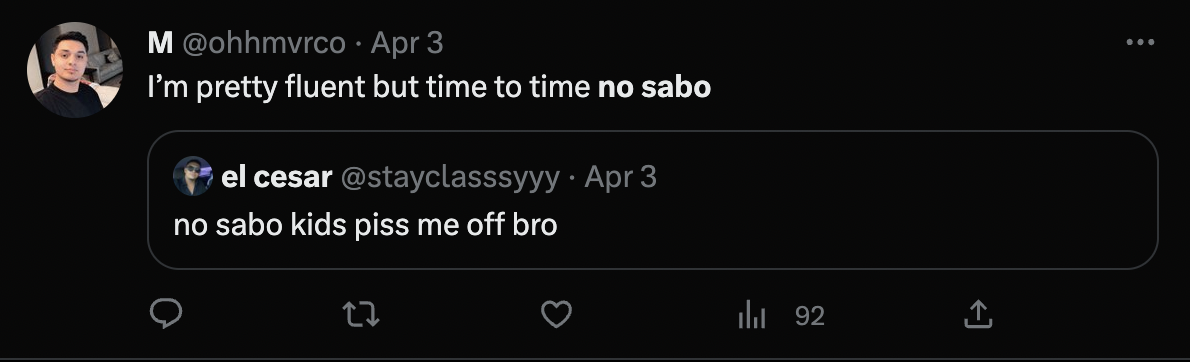
The hashtags #nosabokid #nosabokids #nosabokidsbelike #nosabokidsorry #iamanosabokid represents a collective acknowledgment of Gloria Anzaldúa’s “linguistic terrorism.” Featured on NBC News, Locatora Radio, the Los Angeles Times and, surely, referenced within familial discussions, #nosabo has brought, once again, to the fore the coupling and, we fiercely argue, the need to decouple language (“proficiency”) from that of Latinx identities. The phrase “no sabo” – a non-standard Spanish conjugation of the phrase “no sé” for “I don’t know” – has become a stand-in as both a linguistic (bad) sign of Americanization and/or a (good) marker of ethnic, bicultural pride.
Anzaldúa has long warned us that, “[e]ven our own people, other Spanish speakers nos quieren poner candados en la boca [want to put locks on our mouths]” (1999, 76). In many ways, the “no sabo” label silences or “locks” one’s mouth. The institutional attempts to Americanize Spanish-speaking individuals constitute a form of violence that has led to the erosion of Spanish spoken among Mexican and Latino families in the United States. Today, children of immigrants are ridiculed for speaking “broken” Spanish, yet, for decades Mexicans raised in the United States experienced harsh consequences and blatant discrimination for speaking Spanish in public; this racism continues today.
As scholars of Latinx listening, these social media posts can be incredibly frustrating. They remind us of the sad reality that many Latinx people do not know their own history or better yet futures. Anzaldúa would describe the intraethnic linguistic policing as, “peleando con nuestra propia sombra” (fighting with our own shadow) (1999, 76); it’s both unproductive and self-inflicting. Poet Michele Serros describes her experiences being policed in her 1993 poem “Mi Problema”:
Eyebrows raise
My sincerity isn’t good enough
when I request:
“Hable mas despacio por favor.”
My skin is brown
just like theirs,
but now I’m unworthy of the color
‘cause I don’t speak Spanish
the way I should.
Then they laugh and talk about
mi problema
in the language I stumble over [. . .]
–Opening stanza of “Mi Problema” from Chicana Falsa
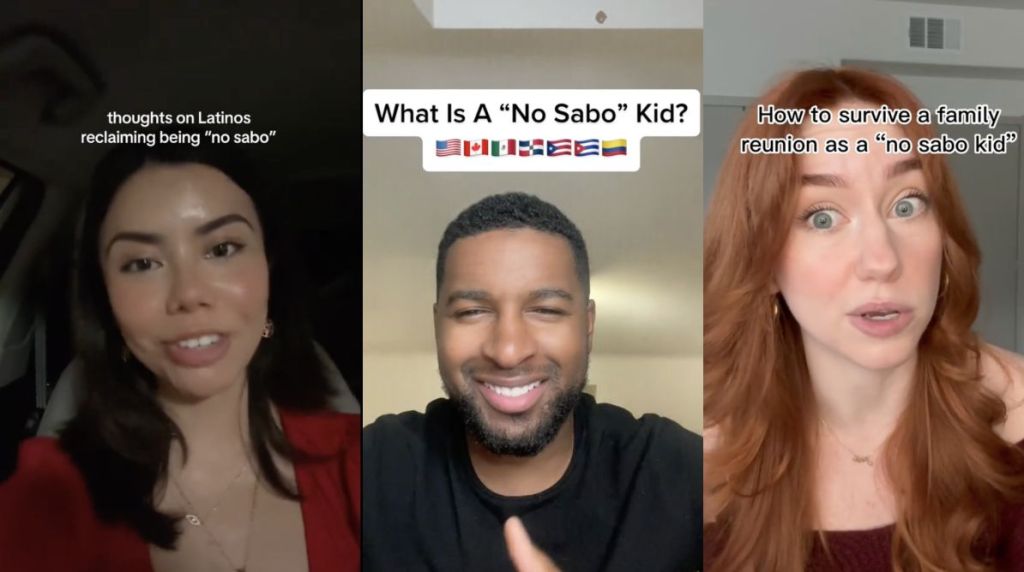
Applied to speakers (mostly kids) whose Spanish is identified as grammatically wrong or heard with an Anglicized accent, “no sabo” hashtags can encourage people to police each other’s tongues. Social media videos even show parents testing their children’s Spanish. When a child cannot remember or (mis)pronounces a Spanish word, or worse, uses a Spanglish iteration, they are disparagingly called “no sabo kids” (Stransky et al. 2023). Other posts reveal Latinx users’ fear of having and raising a “no sabo kid” or not wanting to date a “no sabo kid.”
Lastly, other posts proudly admit to being a “no sabo kid.” The latest series of “no sabo kids” hashtags are also unapologetic declarations that their language does not define the totality of their being or experiences.
Indeed, speaking Anglicized Spanish as Latinx can surface feelings of embarrassment, disappointment, and mockery from presumed “perfect” Spanish speakers or self-appointed “real” Spanish-English bilinguals. Televised instances of Latin Americans chastising the Spanish spoke of Latinx speakers or the public praise thrown at Ben Affleck for his spoken Spanish in comparison to the public side eyes given to wife, Bronx-raised, Jennifer Lopez are both hyper-mediated instances of #nosabokids.
White people might be praised for learning Spanish – no matter how Anglicized their accent – yet Latinx people whose Spanish is detected as Anglicized, are (racially whitewashed) “no sabo kids” (Urciuoli 2013). And yes, the use of the word “kids” alone infantilizes the speaker as some social media posts point to both children and adults as “no sabo.”
Irrespective of the proficiency in English or Spanish, Latinx individuals share experiences of being corrected in educational settings, at home, or online. The misuse of verb conjugation, such as using “sabo” instead of “sé,” is a developmental challenge encountered even by Spanish-speaking children who are learning solely Spanish. In other words, it is not an exclusive practice among Spanish-English bilingual speakers, despite what social media posts insist. The public discourse that some Latinx social media users are battling is what Jonathan Rosa calls “looking like a language” and, in this case, not “sounding like a race” (Rosa 2019).
Speaking, listening, and living “muy ratata” with inventive modes of Spanish and English in the U.S. is clearly heard as threatening. For instance, knowledge of another language has always challenged monolingual conservative speakers. Bilingual speakers and listeners routinely teach us how to resignify language practices and ultimately, the meaning of being a “no sabo kid.” (Or how Nancy Morales argues about Los Jornaleros del Norte and Radio Ambulante in the ways they offer new forms of belonging by understanding themselves and respecting each other.)
Entrepreneurs with Chicana and Latina feminist identities are modeling refashioned ways of belonging. For example, Los Angeles-based brand Hija de tu Madre created t-shirts and crewneck sweatshirts with the words “no sabo” to counter the ridicule heard and circulated within social media and to loudly claim a racial, linguistic identity that has nothing to do with shame. Similarly, the card game “Yo Sabo,” founded by a first generation college student of Mexican descent, Carlos Torres, looks for ways to improve his Spanish and simultaneously creates another way to connect with immigrant family members. Labels like “no sabo ” that are intended to categorize people in harmful ways are being repurposed to build community.
The podcast Locatora Radio: A Radiophonic Novela released an episode on April 12, 2023, Capítulo 160: No Sabo Kids, detailing historical reasons why Latinx ethnicities have structurally been banned from learning and speaking Spanish. Perhaps most importantly, Locatora Radio shares with listeners lengthy listener-recorded testimonios.
They provide diverse personal reasons for identifying as a “no sabo kid.” One listener, Paula, is a transracial adoptee whose first language was Spanish. However, because of forced family separation and the foster care system in Virginia, she “lost” her Spanish. Paula was enrolled in Spanish language classes throughout her formal schooling and accepts that her reclaiming of culture and language is a lifelong process. The use of verbal testimonios, a format that makes it possible for podcast listeners to listen to fellow listeners, moves away from posts above that wag their digital finger at “no sabo kids” and instead gives them a space to speak for themselves.
The intense personal and communal fear of losing aspects of culture or language makes it difficult to understand how shifts in language practices and accents are important new forms of belonging as Latinx in the U.S. If we cannot accept our own linguistic diversity, how do we expect others to listen to us?
—
Featured Image: A selection of TikTok #nosabo memes from @marlene.ramir, @yospanishofficial, and @saianana
—
Sara Veronica Hinojos is an Assistant Professor of Media Studies at Queens College, CUNY. Her research focuses on representation of Chicanx and Latinx within popular film and television with an emphasis on gender, race, language politics, and humor studies. She is currently working on a book manuscript that investigates the racial function of linguistic “accents” within media, called: GWAT?!: Chicanx Mediated Race, Gender, and “Accents” in the US.
Eliana Buenrostro is a Ph.D. student at the University of California, Riverside in the Department of Ethnic Studies. She received her master’s in Latin American and Latino Studies from the University of Illinois at Chicago. Her research examines the criminalization, immigration, and deportation of Chicanes and Latines through the lens of music and other forms of cultural production. She is a recipient of the Crossing Latinidades Mellon Fellowship.
—
—

REWIND!…If you liked this post, you may also dig:
Ronca Realness: Voices that Sound the Sucia Body—Cloe Gentile Reyes
From Spanish to English to Spanish: How Shakira’s VMA Performance Showcases the New Moment in Latin Music “Crossover”—Petra Rivera-Rideau and Vanessa Díaz
Echoes in Transit: Loudly Waiting at the Paso del Norte Border Region—José Manuel Flores & Dolores Inés Casillas
Xicanacimiento, Life-giving Sonics of Critical Consciousness—Esther Díaz Martín and Kristian E. Vasquez
“Don’t Be Self-Conchas”: Listening to Mexican Styled Phonetics in Popular Culture*–Sara Hinijos and Inés Casillas
Share this:

Echoes in Transit: Loudly Waiting at the Paso del Norte Border Region
This series listens to the political, gendered, queer(ed), racial engagements and class entanglements involved in proclaiming out loud: La-TIN-x. ChI-ca-NA. La-TI-ne. ChI-ca-n-@. Xi-can-x. Funded by an Andrew W. Mellon Foundation as part of the Crossing Latinidades Humanities Research Initiative, the Latinx Sound Cultures Studies Working Group critically considers the role of sound and listening in our formation as political subjects. Through both a comparative and cross-regional lens, we invite Latinx Sound Scholars to join us as we dialogue about our place within the larger fields of Chicanx/Latinx Studies and Sound Studies. We are delighted to publish our initial musings with Sounding Out!, a forum that has long prioritized sound from a queered, racial, working-class and “always-from-below” epistemological standpoint. —Ed. Dolores Inés Casillas
—
This post is co-authored by José Manuel Flores & Dolores Inés Casillas
A borderland is a vague and undetermined place created by the emotional residue of an unnatural boundary. It is in a constant state of transition.
Gloria Anzaldúa (1999)
Ciudad Juárez es número uno/
y la frontera más fabulosa y bella del mundo
Juan Gabriel (lyric to “Juárez es el #1” – 1984)
—
Geographically, the Paso del Norte (PdN) region includes the city of El Paso, Texas, Ciudad Juárez, Mexico, as well as neighboring cities in the state of New Mexico (see map). U.S. citizens live and play in Juárez, and those in Juárez (Juarenses), live and work in El Paso with families extended on both sides; continually moving back and forth. Yet, this broader region has long been plagued with sensationalizing headlines, both in the U.S. and in Mexico, that cast violent and limiting portrayals of these borderland communities. Recognized as sister cities, El Paso and Ciudad Juárez are seen less as close-knit siblings and more like distant cousins with Juárez routinely referred to undesirably as the little sister or ugly sister in comparison to El Paso. Indeed these hierarchical north/south (first world/not-quite-first-world) distinctions are products of histories of colonialism, unequal trade policies, and racial capitalist systems galvanized by immigrant detention camps (a tenant of the Immigration Industrial Complex). Within larger conversations about border cities, both Tijuana (San Diego) and Reynosa (McAllen) are recognized as the “primary” border cities due to their larger population size, transnational capital, and industrious reputations.
Two decades ago, Josh Kun’s concept of the “aural border” invited scholars to consider the US/Mexico border as a “field of sound, a terrain of musicality and music-making, of melodic convergence and dissonant clashing” (2000). Kun’s writings over the years have roused generations of sound scholars to listen to borders, border crossings, border communities and how they reverberate their economic, social, and migrant conditions. This essay intentionally moves away from Kun’s (beloved) border city of Tijuana and towards a less-referenced US/Mexico border city: Ciudad Juárez, Mexico. Here, 1,201 kilometers east of Tijuana, we offer an opportunity to listen to Juárez’s everyday bustling of migratory life through the digital sound repository, the Border Soundscapes Project.
Sound structures our social, cultural, and political relations, and as Tom Western reminds us succinctly: “sounds have politics” (2020). Indeed, Juárez’s soundscapes are microcosms of economic, immigration and border enforcement policies as the city’s migratory composition changes depending on the latest economic crisis in the global south. “Whether intentional or unintentional,” Sarah Barns insists “urban soundscapes are by-products of both active design strategies as well as infrastructure and socio-economic organization” (2014). In essence, listening to migrants within Juárez, along with those planning to traverse Ciudad Juárez (to el norte), shapes our multiethnic and multiracial understandings of Latinidad.
Field audio recordings of public life including nuanced linguistic expressions, comprise a rich sonic site that best demonstrates Juárez’s daily sounds of transit. This Project benefits tremendously from José Manuel Flores’s attentive ear, raised as a borderlander himself, and a seasoned crosser of the bridges linking Juárez and El Paso. Flores created this Project in 2018, the same year, Ciudad Juárez became a prominent make-shift, temporary “home” for groups of migrants – currently a majority of Venezuelan-nationals with previous waves of Cubanos and Salvadoreños. Within Juárez, these migrant caravans initially settled on the primary Paso del Norte bridge and later to nearby main border bridges. Migrants have felt comfortable settling in this arid city of approximately 1.5 million people, while others consider Juárez more of a “waiting room” before setting their sights on securing political asylum in the United States. Either way, Juárez becomes part of both their journey and resettlement.
Below are five instances where we listen to migrants in Juárez.
Track 1: Migrants in Ciudad Juarez: “Te traigo un manguito”
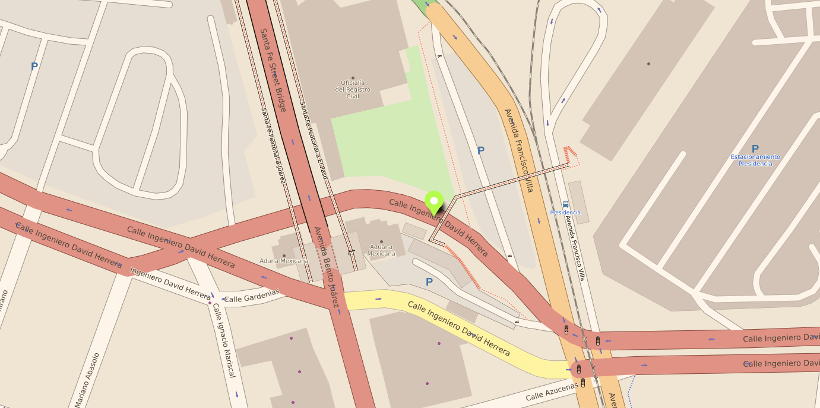
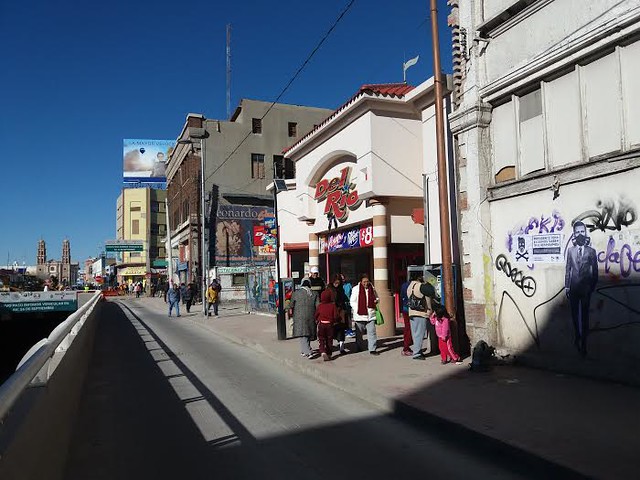
Near the Paso del Nte. International Bridge, in Juárez, on Avenida Juárez, a downtown street where people begin to line up to cross the border. Cars are heard passing. A Venezuelan man wants to rest on this hot day yet his friend cajoles him to get ready to work. He promises his resting friend un mangito o agua (a mango or water) as soon as he’s up and ready to tackle some work.
Track #2: Migrants in Ciudad Juarez: “Cualquier bendición que le sale a tu corazón es buena”
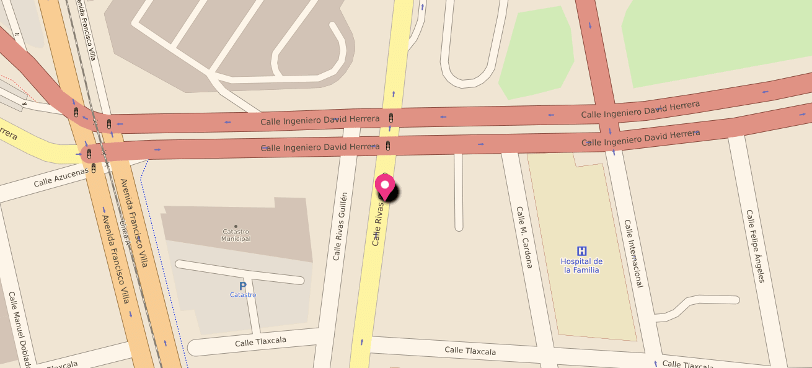
Near Juárez’s Migration’s national institute and Presidencia Municipal de Ciudad Juárez, an older woman cleans car windshields during traffic stops. As she cleans, she is heard laughing while conversing and doling out bendiciones (blessings) to those who gave her work. She’s assumed to be Venezuelan yet her use of the word “carnal” –a Mexican phrase to say brother – indicates that she’s been in Juárez for sometime.
Track #3: Migrants in Ciudad Juarez: “El Escandalo”
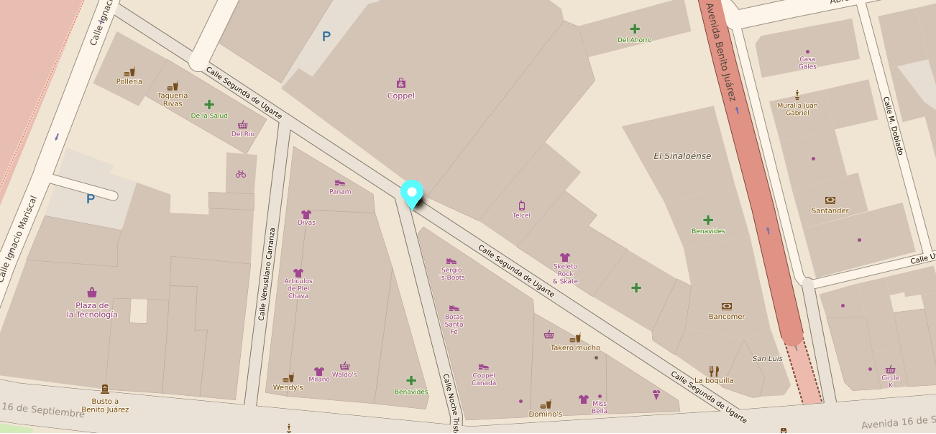
Local news highlights the influx of migrant caravans in promising tones. In an interview for local and national media in Mexico, Mr. José Luis Cruzalta, Cuban migrant, comments that: “no hay que ir para el lado de allá (EE.UU.), aquí se vive igual o mejor que del lado de allá, menos sacrificio, sin meterte en problemas, aquí no hay problemas de ningún tipo.”
“you don’t have to go there (USA), here you live the same or better than on that side, less sacrifice, without getting into trouble, there are no problems of any kind here, they can stay here.”
He later sends assurances that there is enough work for everyone and that only a willingness and desire to work is required, that nothing else.
Track #4: Migrants in Ciudad Juarez: “Rincon Cubano”
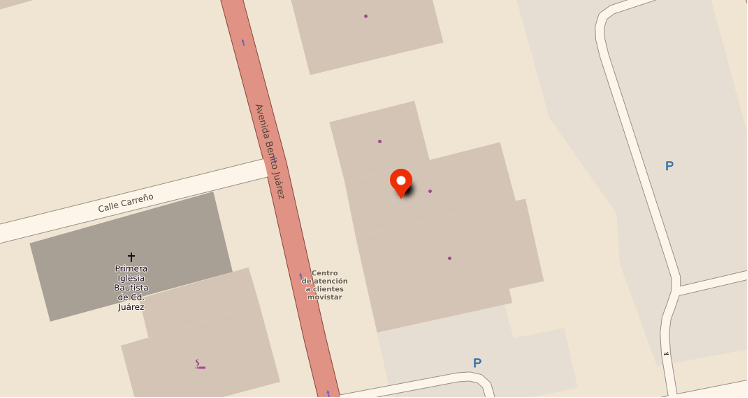
A group of Cuban migrants started a small Creole street food business offering “frituras de maíz” and Cuban “tamales.” The sound space of the downtown of Ciudad Juárez is nourished by the voices of a group of Cubans proclaiming Cuban Corn, “Maíz Cubano”. These contemporary Cuban criers conjure the city’s sonic memories of previous food vendors. Flores remembers fondly as a child the shouting of “Caldo de Oso” (Bear Broth) for sale and the fear that he’d find a grizzly bear in his soup.
Track #5: Migrants In Ciudad Juarez: Haitians Talking in La Taquería
The small restaurant,”La Taqueria,” in downtown Juárez has undergone ethnic transformations. A few years ago it used to be a place known for traditional Cuban food –el rincón cubano–, nowadays it is a place recognized for its tasty, Venezuelan food. Caribbean music attracts some Haitian migrants to this place, inside the restaurant there are some families eating and having a restful moment. Outside the place, there are some Haitian families moving through the city carrying their luggage.
Bonus Track and Outro
The Border Soundscapes Project offers an acoustic ecology of this region through a site that acts as part-archive, part-map, and perhaps even, part-love-song, à la the late singer Juan Gabriel, a globally famous Juaranese who dedicated six songs to his beloved home city.
The Border Soundscapes Project invites listeners to hear for yourself why Juan Gabriel characterized Juárez as the most beautiful borderland in the world. His lyrics fiercely defended Juárez, and decades later, the Border Soundscapes Projects demonstrates how Juarez, the “little sister,” dignifies their migrant communities, in the critical context of Gloría Anzaldúa’s conceptions of borders as vague, “unnatural boundaries” crafted by the “emotional residue” of two other siblings: colonialism and capitalism.
Inspired by the written musings of Valeria Luiselli (2019), the Border Soundscapes Project also functions as an “inventory of echoes,” where sounds are not simply recovered or used within a larger catalog project. Instead, sounds are considered “present in the time of recording and that, when we listen to them, remind us of the ones that are lost” (p. 141), and we would add, in transit. Most importantly, echoes cannot be placed on static, visual representations of standard “maps.” In offering audio snippets of Juárez’s public life, sound becomes a different migrant-led “scale of analysis” (DeLeon 2016); a type of audio counter-mapping of the U.S./Mexico border that lends itself uniquely to sound.
—
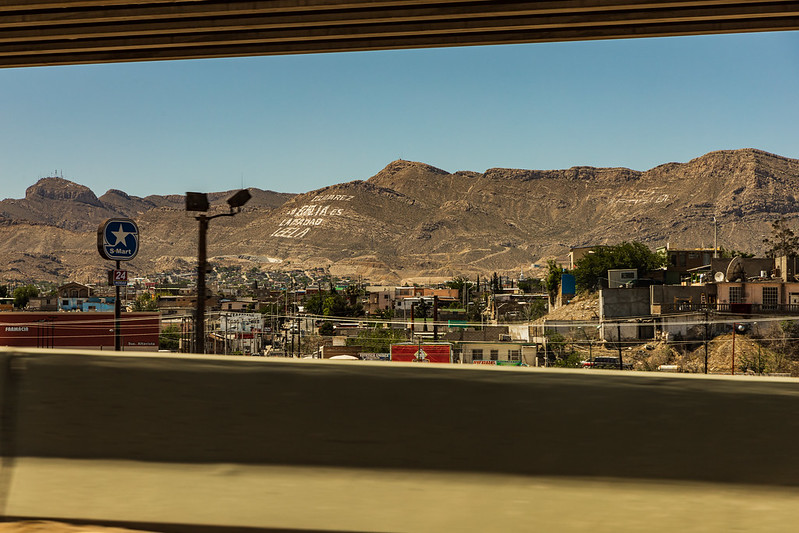
Featured Image by Flickr User Simon Foot, “Ciudad Juárez, from El Paso, Texas” (CC BY-NC-ND 2.0)
—
José Manuel Flores is a Ph.D. student in the Rhetoric and Composition Program at The University of Texas at El Paso. He holds an MA in Studies and Creative Processes in Art and Design. He considers that the sounds that arise between the Juarez and El Paso border are relevant because they contribute to the historical heritage of the region. That is why his interest as a researcher focuses on Sound Studies, specifically in the intersection between Soundscapes and philosophy from a disciplinary posture of rhetoric.
Dolores Inés Casillas is Professor of Chicana and Chicano Studies and Director of the Chicano Studies Institute (CSI) at the University of California, Santa Barbara. She is author of Sounds of Belonging: U.S. Spanish-language Radio and Public Advocacy (2014), which received two book prizes, and co-editor of the Companion to Latina/o Media Studies (2016) and Feeling It: Language, Race and Affect in Latinx Youth Learning (2018).
—
REWIND!…If you liked this post, you may also dig:
Xicanacimiento, Life-giving Sonics of Critical Consciousness—Esther Díaz Martín and Kristian E. Vasquez
Ronca Realness: Voices that Sound the Sucia Body—Cloe Gentile Reyes
SO! READS: Melissa Mora Hidalgo’s Mozlandia: Morrissey Fans in the Borderlands–Nabeel Zuberi
Your Voice is (Not) Your Passport–Michelle Pfeiffer
Óyeme Voz: U.S. Latin@ & Immigrant Communities Re-Sound Citizenship and Belonging-Nancy Morales
“Don’t Be Self-Conchas”: Listening to Mexican Styled Phonetics in Popular Culture*–Sara Hinijos and Inés Casillas
“Listening to the Border: ‘”2487″: Giving Voice in Diaspora’ and the Sound Art of Luz María Sánchez”-D. Ines Casillas
Share this:


Current Top Posts





April 2021

January 2020

November 2019

October 2019

August 2019

April 2014

November 2017

March 2015

December 2017

October 2015
 Sounding Out!
Recent Comments