
Echoes in Transit: Loudly Waiting at the Paso del Norte Border Region

This series listens to the political, gendered, queer(ed), racial engagements and class entanglements involved in proclaiming out loud: La-TIN-x. ChI-ca-NA. La-TI-ne. ChI-ca-n-@. Xi-can-x. Funded by an Andrew W. Mellon Foundation as part of the Crossing Latinidades Humanities Research Initiative, the Latinx Sound Cultures Studies Working Group critically considers the role of sound and listening in our formation as political subjects. Through both a comparative and cross-regional lens, we invite Latinx Sound Scholars to join us as we dialogue about our place within the larger fields of Chicanx/Latinx Studies and Sound Studies. We are delighted to publish our initial musings with Sounding Out!, a forum that has long prioritized sound from a queered, racial, working-class and “always-from-below” epistemological standpoint. —Ed. Dolores Inés Casillas
—
This post is co-authored by José Manuel Flores & Dolores Inés Casillas
A borderland is a vague and undetermined place created by the emotional residue of an unnatural boundary. It is in a constant state of transition.
Gloria Anzaldúa (1999)
Ciudad Juárez es número uno/
y la frontera más fabulosa y bella del mundo
Juan Gabriel (lyric to “Juárez es el #1” – 1984)
—
Geographically, the Paso del Norte (PdN) region includes the city of El Paso, Texas, Ciudad Juárez, Mexico, as well as neighboring cities in the state of New Mexico (see map). U.S. citizens live and play in Juárez, and those in Juárez (Juarenses), live and work in El Paso with families extended on both sides; continually moving back and forth. Yet, this broader region has long been plagued with sensationalizing headlines, both in the U.S. and in Mexico, that cast violent and limiting portrayals of these borderland communities. Recognized as sister cities, El Paso and Ciudad Juárez are seen less as close-knit siblings and more like distant cousins with Juárez routinely referred to undesirably as the little sister or ugly sister in comparison to El Paso. Indeed these hierarchical north/south (first world/not-quite-first-world) distinctions are products of histories of colonialism, unequal trade policies, and racial capitalist systems galvanized by immigrant detention camps (a tenant of the Immigration Industrial Complex). Within larger conversations about border cities, both Tijuana (San Diego) and Reynosa (McAllen) are recognized as the “primary” border cities due to their larger population size, transnational capital, and industrious reputations.
Two decades ago, Josh Kun’s concept of the “aural border” invited scholars to consider the US/Mexico border as a “field of sound, a terrain of musicality and music-making, of melodic convergence and dissonant clashing” (2000). Kun’s writings over the years have roused generations of sound scholars to listen to borders, border crossings, border communities and how they reverberate their economic, social, and migrant conditions. This essay intentionally moves away from Kun’s (beloved) border city of Tijuana and towards a less-referenced US/Mexico border city: Ciudad Juárez, Mexico. Here, 1,201 kilometers east of Tijuana, we offer an opportunity to listen to Juárez’s everyday bustling of migratory life through the digital sound repository, the Border Soundscapes Project.
Sound structures our social, cultural, and political relations, and as Tom Western reminds us succinctly: “sounds have politics” (2020). Indeed, Juárez’s soundscapes are microcosms of economic, immigration and border enforcement policies as the city’s migratory composition changes depending on the latest economic crisis in the global south. “Whether intentional or unintentional,” Sarah Barns insists “urban soundscapes are by-products of both active design strategies as well as infrastructure and socio-economic organization” (2014). In essence, listening to migrants within Juárez, along with those planning to traverse Ciudad Juárez (to el norte), shapes our multiethnic and multiracial understandings of Latinidad.
Field audio recordings of public life including nuanced linguistic expressions, comprise a rich sonic site that best demonstrates Juárez’s daily sounds of transit. This Project benefits tremendously from José Manuel Flores’s attentive ear, raised as a borderlander himself, and a seasoned crosser of the bridges linking Juárez and El Paso. Flores created this Project in 2018, the same year, Ciudad Juárez became a prominent make-shift, temporary “home” for groups of migrants – currently a majority of Venezuelan-nationals with previous waves of Cubanos and Salvadoreños. Within Juárez, these migrant caravans initially settled on the primary Paso del Norte bridge and later to nearby main border bridges. Migrants have felt comfortable settling in this arid city of approximately 1.5 million people, while others consider Juárez more of a “waiting room” before setting their sights on securing political asylum in the United States. Either way, Juárez becomes part of both their journey and resettlement.
Below are five instances where we listen to migrants in Juárez.
Track 1: Migrants in Ciudad Juarez: “Te traigo un manguito”
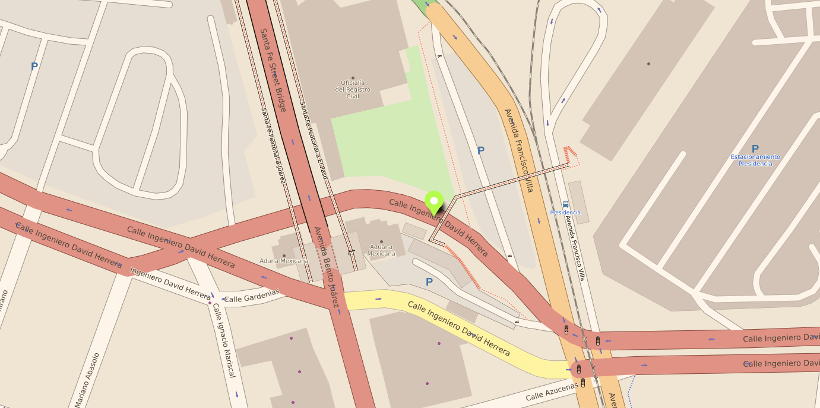
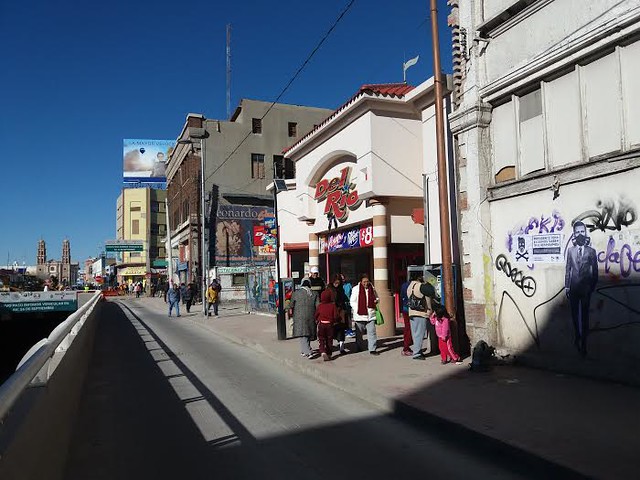
Near the Paso del Nte. International Bridge, in Juárez, on Avenida Juárez, a downtown street where people begin to line up to cross the border. Cars are heard passing. A Venezuelan man wants to rest on this hot day yet his friend cajoles him to get ready to work. He promises his resting friend un mangito o agua (a mango or water) as soon as he’s up and ready to tackle some work.
Track #2: Migrants in Ciudad Juarez: “Cualquier bendición que le sale a tu corazón es buena”
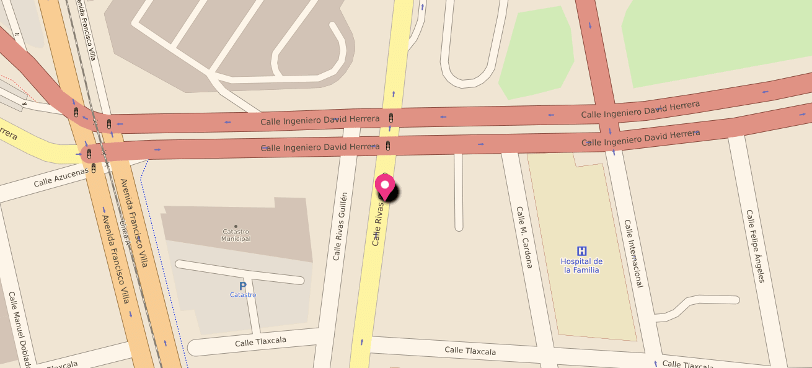
Near Juárez’s Migration’s national institute and Presidencia Municipal de Ciudad Juárez, an older woman cleans car windshields during traffic stops. As she cleans, she is heard laughing while conversing and doling out bendiciones (blessings) to those who gave her work. She’s assumed to be Venezuelan yet her use of the word “carnal” –a Mexican phrase to say brother – indicates that she’s been in Juárez for sometime.
Track #3: Migrants in Ciudad Juarez: “El Escandalo”
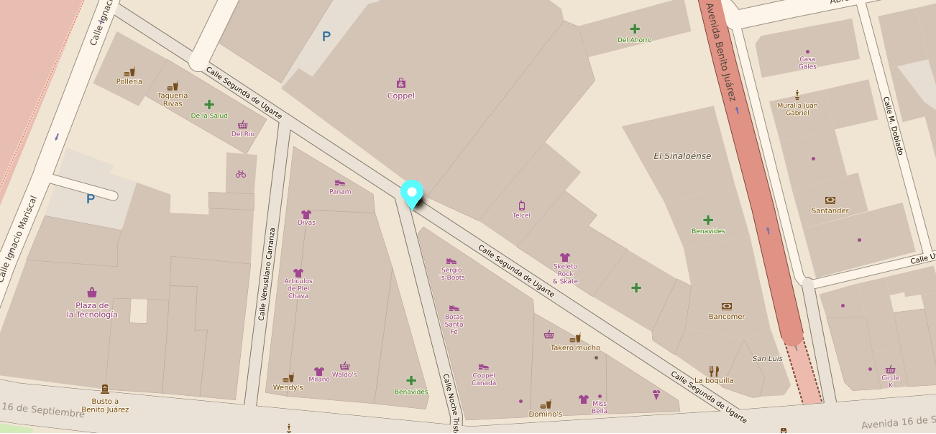
Local news highlights the influx of migrant caravans in promising tones. In an interview for local and national media in Mexico, Mr. José Luis Cruzalta, Cuban migrant, comments that: “no hay que ir para el lado de allá (EE.UU.), aquí se vive igual o mejor que del lado de allá, menos sacrificio, sin meterte en problemas, aquí no hay problemas de ningún tipo.”
“you don’t have to go there (USA), here you live the same or better than on that side, less sacrifice, without getting into trouble, there are no problems of any kind here, they can stay here.”
He later sends assurances that there is enough work for everyone and that only a willingness and desire to work is required, that nothing else.
Track #4: Migrants in Ciudad Juarez: “Rincon Cubano”
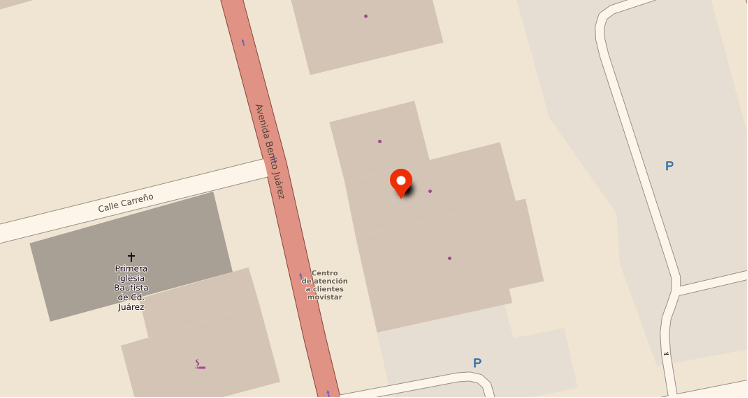
A group of Cuban migrants started a small Creole street food business offering “frituras de maíz” and Cuban “tamales.” The sound space of the downtown of Ciudad Juárez is nourished by the voices of a group of Cubans proclaiming Cuban Corn, “Maíz Cubano”. These contemporary Cuban criers conjure the city’s sonic memories of previous food vendors. Flores remembers fondly as a child the shouting of “Caldo de Oso” (Bear Broth) for sale and the fear that he’d find a grizzly bear in his soup.
Track #5: Migrants In Ciudad Juarez: Haitians Talking in La Taquería
The small restaurant,”La Taqueria,” in downtown Juárez has undergone ethnic transformations. A few years ago it used to be a place known for traditional Cuban food –el rincón cubano–, nowadays it is a place recognized for its tasty, Venezuelan food. Caribbean music attracts some Haitian migrants to this place, inside the restaurant there are some families eating and having a restful moment. Outside the place, there are some Haitian families moving through the city carrying their luggage.
Bonus Track and Outro
The Border Soundscapes Project offers an acoustic ecology of this region through a site that acts as part-archive, part-map, and perhaps even, part-love-song, à la the late singer Juan Gabriel, a globally famous Juaranese who dedicated six songs to his beloved home city.
The Border Soundscapes Project invites listeners to hear for yourself why Juan Gabriel characterized Juárez as the most beautiful borderland in the world. His lyrics fiercely defended Juárez, and decades later, the Border Soundscapes Projects demonstrates how Juarez, the “little sister,” dignifies their migrant communities, in the critical context of Gloría Anzaldúa’s conceptions of borders as vague, “unnatural boundaries” crafted by the “emotional residue” of two other siblings: colonialism and capitalism.
Inspired by the written musings of Valeria Luiselli (2019), the Border Soundscapes Project also functions as an “inventory of echoes,” where sounds are not simply recovered or used within a larger catalog project. Instead, sounds are considered “present in the time of recording and that, when we listen to them, remind us of the ones that are lost” (p. 141), and we would add, in transit. Most importantly, echoes cannot be placed on static, visual representations of standard “maps.” In offering audio snippets of Juárez’s public life, sound becomes a different migrant-led “scale of analysis” (DeLeon 2016); a type of audio counter-mapping of the U.S./Mexico border that lends itself uniquely to sound.
—
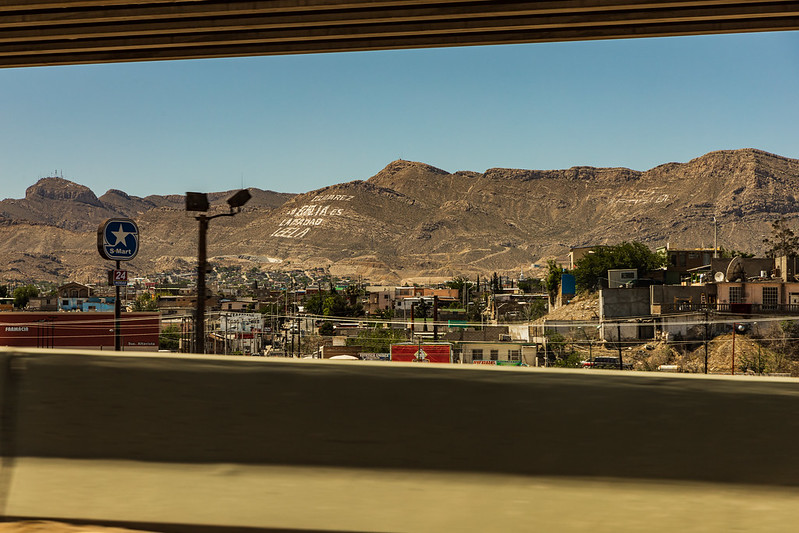
Featured Image by Flickr User Simon Foot, “Ciudad Juárez, from El Paso, Texas” (CC BY-NC-ND 2.0)
—
José Manuel Flores is a Ph.D. student in the Rhetoric and Composition Program at The University of Texas at El Paso. He holds an MA in Studies and Creative Processes in Art and Design. He considers that the sounds that arise between the Juarez and El Paso border are relevant because they contribute to the historical heritage of the region. That is why his interest as a researcher focuses on Sound Studies, specifically in the intersection between Soundscapes and philosophy from a disciplinary posture of rhetoric.
Dolores Inés Casillas is Professor of Chicana and Chicano Studies and Director of the Chicano Studies Institute (CSI) at the University of California, Santa Barbara. She is author of Sounds of Belonging: U.S. Spanish-language Radio and Public Advocacy (2014), which received two book prizes, and co-editor of the Companion to Latina/o Media Studies (2016) and Feeling It: Language, Race and Affect in Latinx Youth Learning (2018).
—

REWIND!…If you liked this post, you may also dig:
Xicanacimiento, Life-giving Sonics of Critical Consciousness—Esther Díaz Martín and Kristian E. Vasquez
Ronca Realness: Voices that Sound the Sucia Body—Cloe Gentile Reyes
SO! READS: Melissa Mora Hidalgo’s Mozlandia: Morrissey Fans in the Borderlands–Nabeel Zuberi
Your Voice is (Not) Your Passport–Michelle Pfeiffer
Óyeme Voz: U.S. Latin@ & Immigrant Communities Re-Sound Citizenship and Belonging-Nancy Morales
“Don’t Be Self-Conchas”: Listening to Mexican Styled Phonetics in Popular Culture*–Sara Hinijos and Inés Casillas
“Listening to the Border: ‘”2487″: Giving Voice in Diaspora’ and the Sound Art of Luz María Sánchez”-D. Ines Casillas
Share this:

“So Jao”: Sound, Death and the Postcolonial Politics of Cinematic Adaptation in Vishal Bhardwaj’s “Haider” (2014)

The beginning of this year witnessed a significant reportage on films inspired by the Kashmir conflict in India, occasioned by the release of Vivek Agnihotri’s The Kashmir Files on March 11, 2022. The polarized reaction to the film, which single-mindedly focuses on the exodus of Kashmiri pandits from the valley and the violence they were subjected to at the hands of their Muslim counterparts, makes visible the complexity of the understanding of Kashmir’s political history in contemporary India. While Agnihotri’s film, whose propagandist agenda in favor of the state won approvals from the ruling political party in India, Vishal Bhardwaj’s 2014 film Haider, despite its extremely sensitive and responsible treatment of the problem of militancy in Kashmir was targeted for passing over the plight of Kashmiri pandits. But eight years after its release, Haider, which won five National Awards in 2015, still wields the power to move its audience regardless of their religious and communal bearings through its portrayal of a terrible human tragedy in the wake of Kashmir militancy in the 1990s.
Bharadwaj’s Haider completes his trilogy of cinematic adaptations of Shakespearian tragedies: Macbeth, Othello, and Hamlet translate as Maqbool (2004), Omkara (2006), and Haider (2014) respectively, in their Bollywood avatars. Bhardwaj, in his unique style, imports the original tragic plots into an identifiable and contemporary Indian context, through the assimilation of the plot material with the personal life stories he tells in his films. The plot of Haider centers around the disappearance and death of Haider’s father, which exposes the dark menagerie of political corruption and murders that Haider’s uncle is embroiled in. The pursuit of this traumatic truth sets the stage for Haider’s alienation from his mother and the motherland.
Integral to Bhardwaj’s style is the use of music in a typical Bollywood blockbuster formula, with song and dance sequences interrupting the linearity of cinematic storytelling. While certain film adaptations of Shakespeare operate simply as vehicles for the transmissions of ideology, Graham Holderness argues in “Radical Potentiality and Institutional Closure” (published in Political Shakespeare: New Essays in Cultural Materialism), others “block, deflect or otherwise work on ideology in order partially to disclose its mechanisms.” Holderness evaluates the possibility of the film form to be a radical medium to challenge dominant ideologies or value systems. Analyzing Akira Kurosawa’s film adaptation of Macbeth—Throne of Blood (1957)–he argues in favor of the film’s dynamism to be able to liberate the original text.
Holderness’ reading of Kurosawa raises important questions for the postcolonial film importing from the English literary canon to speak uniquely to a postcolonial audience. In Bhardwaj’s undertaking, this import is singularly anchored and strengthened in a powerful musical idiom. Instead of containing the meanings of the original text, Bhardwaj’s Haider expands and pluralizes the levels of signification that Hamlet produces. By making the stock Hamlet plot be the medium for staging the tragic history of Kashmir, Bhardwaj’s film is a direct address, on one level, to the former imperial master discourse. On a more immediate and radical level, the film hits back very strategically at the Indian state and the numerous killings that have been sanctioned in the name of controlling terrorism in the recent past. In this capacity, the film liberates the textual Hamlet, making its echoes reverberate in a new sound and a new linguistic register.
Through a strategic integration of dance and music–both diegetic (within the frame of the film) and non-diegetic (for the audience’s listening only)– Bhardwaj’s film not only succeeds in delivering its radical political message to a popular film audience, it also speaks back to the former imperial discourse. Non-musical sounds are also key to Haider (2014) as a careful sonic anchoring of the story. The abstract potential of musical and non-musical sounds open up new horizons of meaning in the film, exceeding the confines of the original verbal register of the literary text. The loud, blaring and constant sound of the army car’s horn, for example, signals the death of Hilal in the beginning scenes of the film triggering the tragic plot. The unsettling tones of despair, melancholia and death which open the film remain a haunting and pervasive presence throughout.
“Jhelum” the song that sings the lament of Hilal’s tragic loss, invokes the river that passes through the valley. The song describes the elemental quality of the river into whose womb-like depths Hilal’s body receded till it was posthumously discovered by villagers. The fading melancholic melody of the song seems to suggest the slow disintegration of Haider’s sanity, as he is seen staring into blankness in several shots as well as attempting to merge with the river in an act of suicide. The opening sounds evoke a song that comes later in the narrative, “Bismil,” that stands in place of the play within a play sequence in Hamlet and expands the affective reach of the themes of death, love and betrayal.
One of the most intriguing moments in the film is the musical rendition of the gravedigger scene, an archetypal commentary on human mortality in Shakespeare’s Hamlet. Performed by three old men in a snow-covered graveyard in conspicuously tired voices, the song “So Jao” (“Sleep!”) has a deceptively bare and sparse quality. The song opens with the rough, scratching of the gravedigger’s shovel scraping the cold hard ground, a sound that becomes the acoustic base for the bizarre lullaby-like deathsong. The choppy, staccato-like rhythmic impact of the metal on the resistant icy ground announcing “the final rest” is executed with a disturbing sonic clarity and certitude. This gritty foreground sound is supported by the reverberating sound of the rubab that transports the tune from an immediate closed verse recitation into an expanded musical interlude, as the vocals echo “Arey ao na…!” (O come…!) stretching the last syllable into a dying, falling note. “So Jao“‘s loaded simplicity dispassionately delivers this bare truth: that all life is inevitably moving towards its end, or as Freud says in Beyond the Pleasure Principle (1922) towards its inanimate origin.
While the men who perform “So Jao” are past their prime in life, they are far from being incidental characters in the film as they are in Shakespeare. They are woven into the narrative as militants who protect Haider and do not hesitate to wield heavy duty weapons when the time comes. It comes as no surprise that they are digging their own graves, even as the seriousness and fear of death are subsumed in the larger political cause they serve in the plot. The sound of the shovel overlaps with Gazala’s first phone call to Roohdaar, the embodied ghost who brings Hamlet’s father’s message to the son (the Urdu word rooh literally translates as soul or spirit), signifying an ominous anticipation in the narrative at this point. The grave, as the song says, is ultimately where you sleep your longest sleep. The scene is one of the three men lying supine each in his own hole, with one in the center housing the little boy who enters the frame perkily dancing into the gray and barren scene. His sprint-like entry walk carrying bread and sustenance for the gravediggers, the well-choreographed lifting of his body to the beat of the song heightened just very slightly by the clinking bell sound once every four beats is an unsettling reminder of the happy ignorance that we immerse ourselves in being simultaneously aware and oblivious of the inevitable imminent end. These stark juxtapositions in the gravedigger’s song works as a telling sonic metaphor for the state of hopelessness, confusion and despair that has historically assailed Kashmir for many, many decades. The song is also a commentary on the futility of violence instigated in the name of religion, when man must ultimately surrender to one common fate, one common remainder.

Haider’s presence in the graveyard song introduces the inevitable vectors of vengeance and death that awaits his fate following the knowledge of the truth of his father’s institutional murder. The further breakdown of his psyche and the increasing dissociation from his world is dramatized brilliantly in the song “Bismil” that publicly calls out Khurram on his crime (1.44.59). The song marries the allegorical with folk costumes, and incorporates exaggerated and physically intense dance steps to impose the serious weight and inescapable gravity of the accusation of murder that Haider ascribes to Khurram. The song and dance sequence are staged as a public performance, one that happens a few scenes before in the film too, when Haider is seen surrounded by a crowd in a new avatar with shaved head and grown beard (1.25.53). This distinct change in appearance along with the masques he uses later in Ghazala’s wedding (1.40.51) and the “Bismil” song are markers of Haider’s increasing dissociation from his absurd reality—one that he can only make sense of as a character in a play. Khurram’s crimes are not separate from the questionable workings of the Indian state, and Bhardwaj does a good job tapping into the folk idiom and the song-and-dance format to critique what Haider calls the state’s “chutzpah” (pronounced tʃəʊzpə, not ˈho͝otspə), the infamous Armed Forces Special Powers Act (AFSPA). The alteration of the first syllable is possibly to bring in an echo of a popular north Indian abuse word to take a jab at the impunity enjoyed by state officials for the crimes committed on the Kashmiri people.
Haider remains a brave directorial undertaking not only aesthetically but also politically, given that the issue of Kashmir’s independence (azadi) is still a burning issue in India 27 years since 1995, the year in which Haider is set, and 8 years since the film’s release. Bharadwaj’s self-composed music in the film is not simply a placeholder for the dazzling verbal exchanges of Shakespeare’s Hamlet. The music in Haider magnifies and intensifies the local mood of the scenes where they feature. This function is not only limited to the background soundtrack which, in its haunting atmospheric quality, renders a hollow despair and anguished hopelessness throughout. The songs additionally step in to carry the expression beyond the register of words and visuals to render a poetic and sonic intensity to the film, making it more memorable and impactful to a wider audience. In Haider, the formula of the Bollywood blockbuster film is effective not only as good entertainment, but also as a means to tie the story together in a haunting soundscape which refuses to fade long after the film ends.
Featured image: screen capture from Haider created by SO!
—
Abhipsa Chakraborty is a PhD candidate in the English Department at SUNY Buffalo. She holds a BA, MA and MPhil from the Department of English, University of Delhi, and has worked as an Assistant Professor (Ad-hoc) at University of Delhi. Her research interests include Modernism, Sound Studies, Digital Humanities, and South Asian cultures. She is a trained vocalist in Hindustani Classical Music and hopes to integrate her musical knowledge with her academic research on aurality and narrative styles in 20th-century novels.
—

REWIND! . . .If you liked this post, you may also dig:
“Gendered Soundscapes of India, an Introduction“–Monika Mehta and Praseeda Gopinath
“Out of Sync: Gendered Location Sound Work in Bollywood“—Priya Jaikumar
Sonic Connections: Listening for Indigenous Landscapes in Kent Mackenzie’s The Exiles–Laura Sachiko Fugikawa
Share this:


Current Top Posts





April 2021

January 2020

November 2019

October 2019

August 2019

April 2014

November 2017

March 2015

December 2017

October 2015
 Sounding Out!
Recent Comments