
SO! Amplifies: Nameless Sound

DOI: https://doi.org/10.59350/k0be4-s6s31
SO! Amplifies. . .a highly-curated, rolling mini-post series by which we editors hip you to cultural makers and organizations doing work we really really dig. You’re welcome!
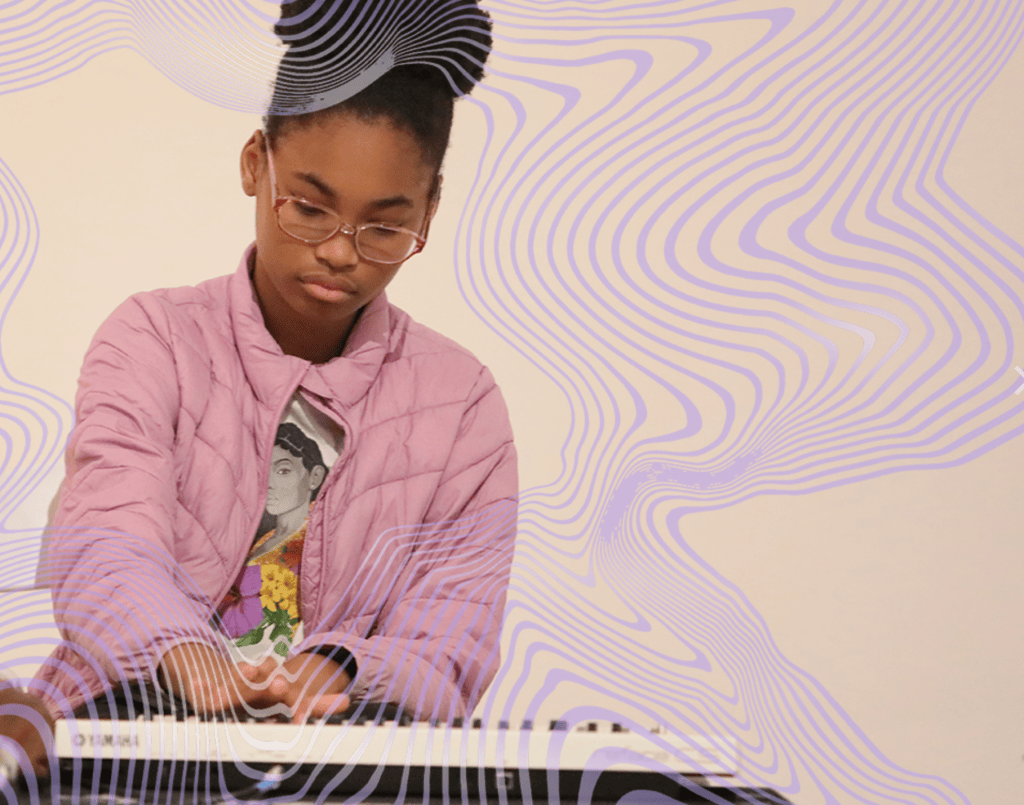
Nameless Sound is a Houston institution, currently celebrating 25 years of bringing free experiences of experimental music making to the local community. The organization, founded by trombone player/composer/improviser David Dove, started out as a small workshop in improvisation for teenagers at the MECA (Multicultural Education and Counseling through the Arts), an arts community center in Houston’s 6th Ward. Dove realized through musical practice with his students that the opportunity for creativity was often missing in traditional musical education and that improvisation was, for him, the most immediate and inclusive way to collaboratively engage young people in creative music making. Despite widely varying musical expertise, the students were able to able to meaningfully collaborate with one another. Beginners were captivated and engaged, while students with more musical education were challenged and ready to experiment. Shortly after this realization, Dove became part of the Advisory Board of Diverse Works, an arts organization in Houston’s museum district, he began organizing concerts with leading experimental musicians, inviting them to lead sessions of his kids’ workshop at MECA.
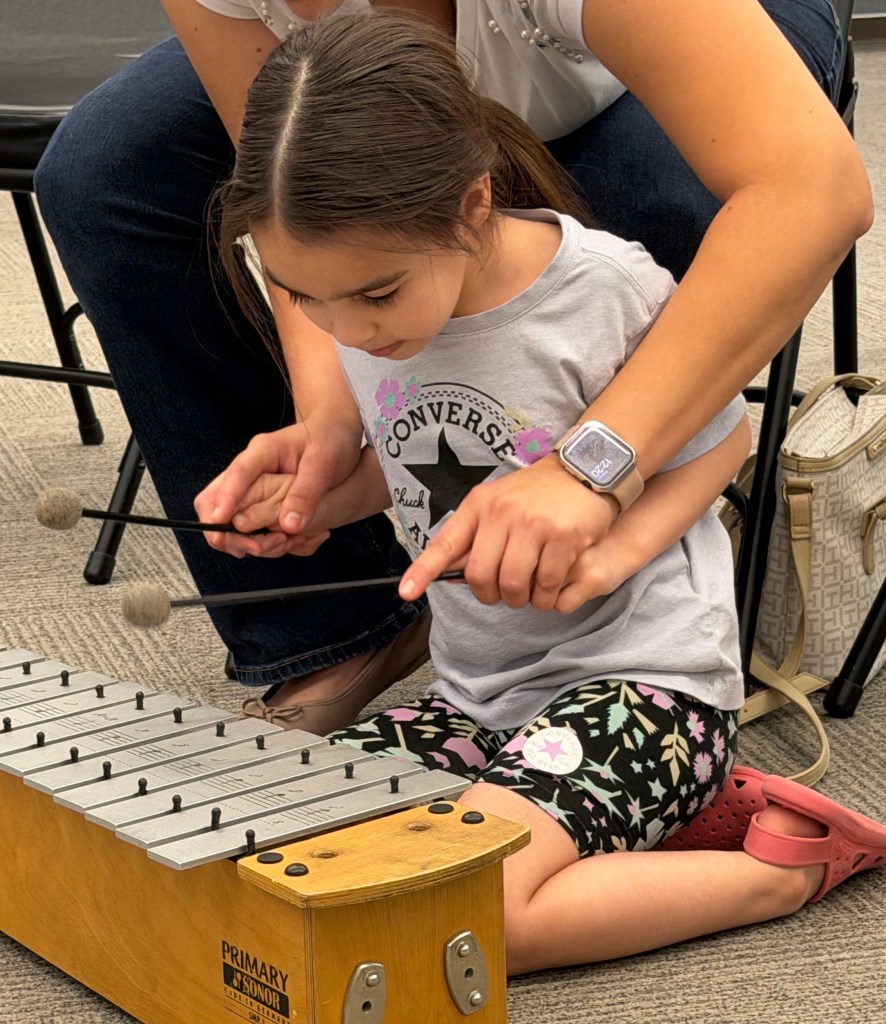
It was Houston’s own Pauline Oliveros who encouraged Dove to formalize this residency model–experimental musicians come to town, give a public performance followed by a community workshop for young people–that would become the blueprint for Nameless Sound’s work today. The organization actually began as a branch of the Pauline Oliveros Foundation in 2001 (and would come to be called the Deep Listening Institute Houston when Oliveros’s organization took on that name). That year they brought 9 artists to Houston and started a ongoing campaign of improvisation workshops in public schools (known then as The Houston Tour).
In 2005 Jo Ann Williams, art therapist and founder of ArtBridge Houston, invited DLI Houston to start giving workshops for children in some Houston homeless shelters. This was an important turning point for DLI Houston. It widened the age group that the organization worked with. It began a practice of facilitating workshops for people who previously had no experience playing music at all. Perhaps most importantly, Nameless Sound began to witness the potential for social-emotional learning in the improvisational process, and they began to understand how a secure framework for creative music making could also provide a safe-space for emotional vulnerability.
In 2006, with the blessing of Oliveros, DLI Houston broke off from its parent organization and became Nameless Sound, a fully independent 501(c)3 non-profit. Over the past 20 years, Nameless Sound has continued to evolve. Its concert series has become known for a diverse range of international artists who represent the most important and influential names in the music, as well as the emerging cutting-edge.
The series features commissions and world-premieres, as well as special projects that entail collaborations between visiting artists and local musicians. Site-specific events in some of Houston’s most interesting art environments often bring in visiting audiences from outside of the city. Visiting artists have included Susie Ibarra, Damon Smith, Keiji Haino, Louis Moholo, Maja Ratkje, Cooper-Moore, Matana Roberts, and Hamid Drake. Occasional interventions bring ears to seemingly unlikely public listening spaces. And one of our ongoing projects outside of Houston brings audiences to The Hill of James Magee, an art installation on private land in the West Texas Chihuahuan Desert.
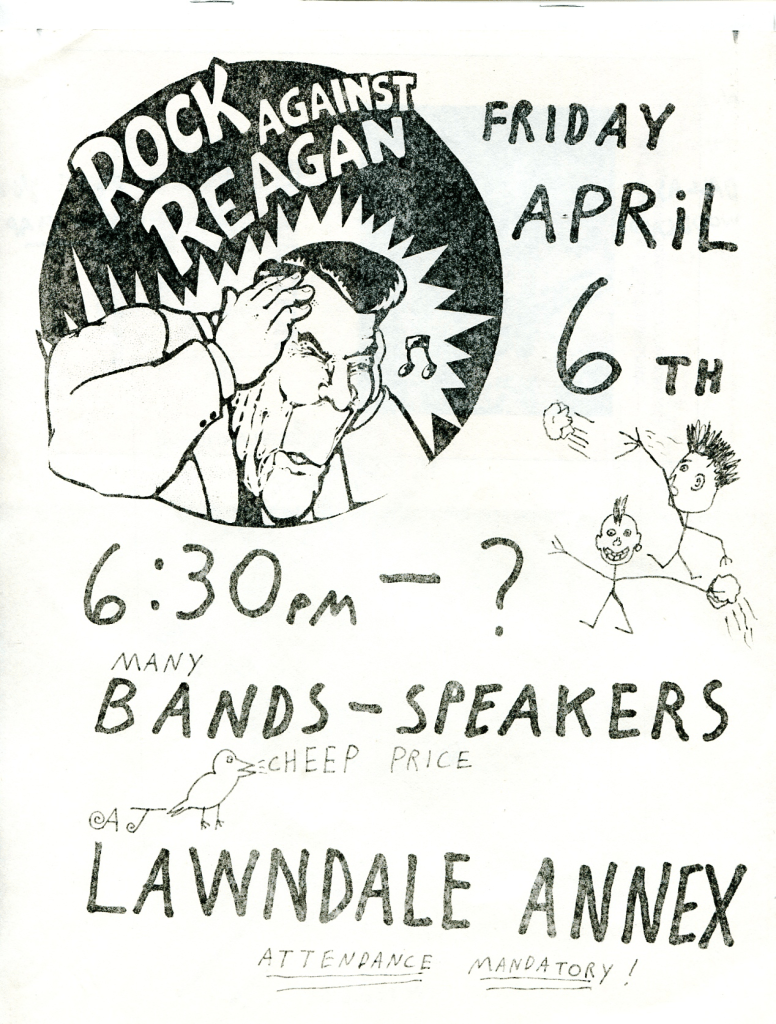
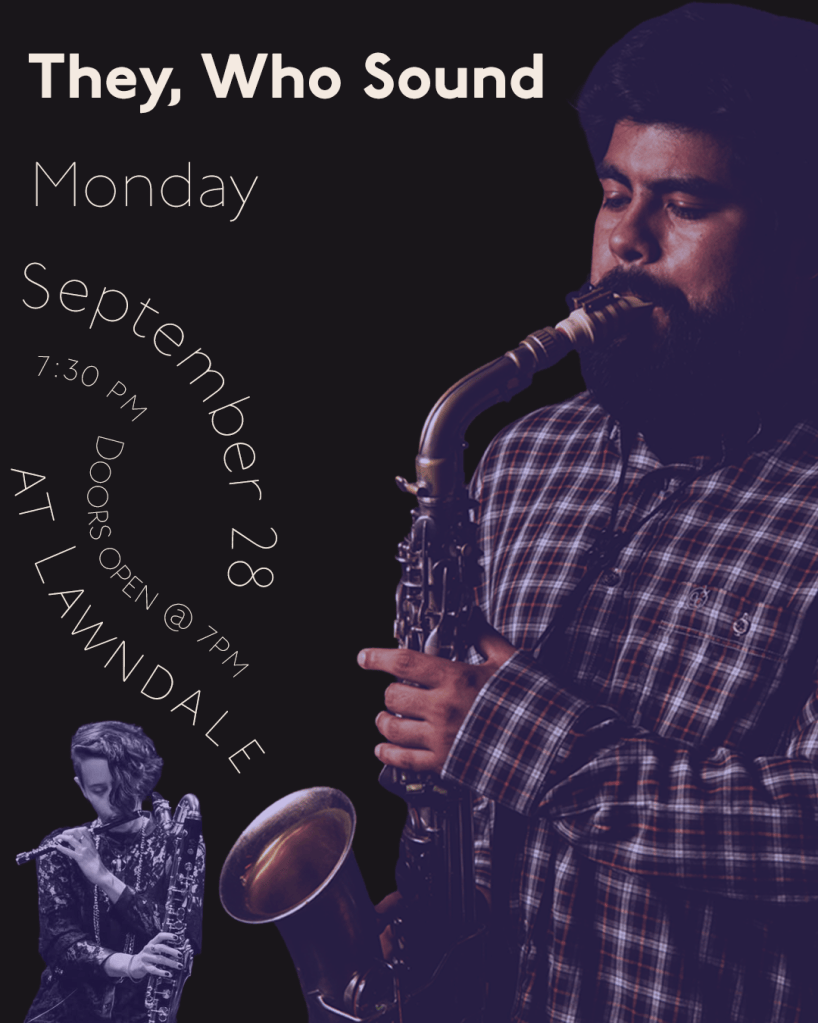
One of Nameless Sound’s most popular interventions is They, Who Sound, which started out as a series of casual sessions at local Houston bars. After some challenges and changes in location, Nameless Sound officially took on They, Who Sound in 2018 as a weekly series of concerts in partnership with Lawndale Art Center. For Lawndale, the series represented something of a return to roots, as in the 1980’s, Lawndale’s original location was the site for some of the most memorable experimental music and underground rock events in Houston. Sun Ra, Anthony Braxton, Pauline Oliveros, Cecil Taylor and the Art Ensemble of Chicago all performed there, as did Black Flag, The Minutemen and the Replacements.
For Nameless Sound, They Who Sound was an opportunity to provide a stage and shed light on Houston’s diverse, vibrant, and unique experimental music scene. It has endured as a meeting place for Houston listeners and experimental musicians, and as a lab for new developments. In response to the COVID-19 pandemic and quarantine, Nameless Sound contined to innovate and serve the community, creating They, Who Sound Special Delivery. For a small fee, anyone can schedule a They, Who Sound musician to come to their home and perform a 10 minute piece of experimental music from a safe distance.
They, Who Sound continues in concert with the Lawndale Art Center every Monday from 7:30 to 9:30pm (Doors open at 7pm). Coming up September 28th, 2026 Nameless Sound will host Emily Beisel/Lisa Cameron & Laura Dykes/Kodey Saldaña/Thomas Swindell. For videos of past performances and to subscribe to receive future updates, you can check out Nameless Sound’s Youtube Page or follow on Vimeo.
Nameless Sound remains committed to a vision of personal and community evolution supported by the practices of creative music. Creative music improvisation provides a unique opportunity to cultivate group awareness, self-awareness and healthy vulnerability, with potential outcomes of knowledge exchange, creative work, play and healing. The skills developed through musical improvisation emphasize listening, creativity, spontaneity, dialogue and self-expression. There are free ongoing workshops through September 2026 and more to be announced.
Other upcoming events for Nameless Sound to close out 2026:
- October 10, 3 – 5 pm, Dimensions Variable at Moody Center for the Arts, Rice University. Laura Dykes and Aryn Ward on/with Nanibah Chacon’s Where Two Rivers Meet. As part of The Moody Center’s Dimensions Variable series, in conjunction with the exhibition Radiant Geometries: Vectors of Knowledge from the Indigenous Americas
- November 12, 7–8 p.m, Vitalized Vitalized at Menil. : The Nameless Sound Ensemble creates and performs scores based on works by Terry Winters. Presented in conjunction with the exhibition Terry Winters: Vitalized Geometry, This program takes place in the main building, located at 1533 Sul Ross Street. As always, Menil programs are free and open to all.
Nameless Sound is currently in Fall Fundraising mode, with an anonymous donor matching every gift up to 8,000 dollars through FRIDAY, September 25, 2026 Here’s to 25 more years of Nameless Sound with ongoing support from local and global sound communities!

—

REWIND! . . .If you liked this post, you may also dig:
SO! Amplifies: Immigrants Wake America Podcast and the Work of Engaged Digital Humanities
SO! Amplifies: Die Jim Crow Record Label
SO! Amplifies: Wu Tsang’s Anthem (2021)
SO! Amplifies: Carleton Gholz and the Detroit Sound Conservancy
—
Share this:

The Sounds of Obsession: Subtle Menace in the Music of Yash Chopra’s “Darr”
DOI: https://doi.org/10.59350/d7npv-9gn02
The classic Hindi film, Darr (1993), directed by Yash Chopra, is the story of the stalker Rahul, played by Shah Rukh Khan, wreaking havoc on the lives of the innocent lovers, Kiran and Sunil (played by Juhi Chawla and Sunny Deol respectively). As Rahul stalks Kiran, declaring his love for her, the audience is shown a window into the derangement of his psyche: the loss of his mother at a young age, unsent love letters during college, a shrine filled with pictures of Kiran, carving her name into his chest with a knife. His obsessive love turns to violence toward Sunil, and the lovers try to evade his sinister advances as Rahul chases them across the planet.
Originally advertised as “a violent love story” on its movie poster, the film largely follows the conventions of 1990s Bollywood, but Chopra and screenwriter, Honey Irani, create distortions of genre expectation through Shah Rukh Khan’s character. One of said genre conventions is the inclusion of original song sequences, composed by Pt. Shivkumar Sharma and Pt. Hariprasad Chaurasia (as the duo “Shiv-Hari”), with lyrics by Anand Bakshi. Despite their non-threatening surface exteriors, various musical devices combine with the filmmaking to give the songs a layer of menace that elevate them above the standard fare of contemporaneous Hindi film music. This creates a multi-tiered listening dynamic wherein the pleasant becomes grotesque in context.
The songs of Darr have become classics in the world of ’90s Bollywood film songs. But, behind the catchiness and fulfillment of industry expectation lies a multi-layered psycho-drama created by the songs’ interactions with Darr’s story and characters. This interaction exists not solely in lyrical concerns but also in the subtle musical gestures crafted by the minds of Shiv-Hari. At a surface level, listening to the film’s soundtrack is enjoyable; there are catchy melodies, lush orchestrations, and timeless performances by now-legendary singers. However, the deeper one listens with an analytical focus, the more disturbing, intriguing, and artistically edifying the songs become.
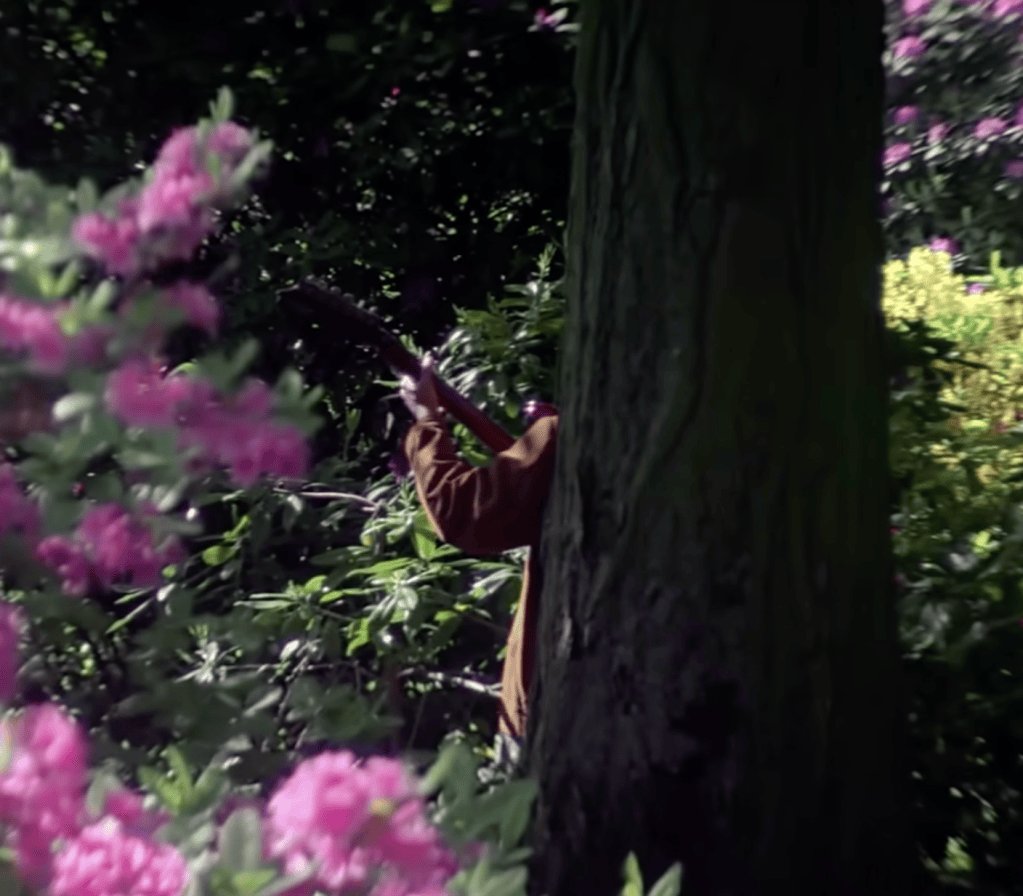
While the film begins with an idyllic, romantic tone, the music soon introduces an element of the sinister. After a brief introductory scene of Kiran, who is seen alone reading a letter from her fiance Sunil (although Yash Chopra already hints at Rahul’s presence in this scene), we find her with her friends at their school. We hear “Kiran, I love you” announced through the school’s public address. The music of “Jaadu Teri Nazar” (roughly “Your look is magic”) then begins diegetically, sung by Shah Rukh Khan’s Rahul (unbeknownst to Kiran).
By today’s standards, the early lyrics contain a definite romantic red flag in the lines “Tu haan kar, ya naa kar / Tu hai meri Kiran” (“whether you say yes or no, you are mine Kiran”), but in the world of early 1990’s Bollywood, this type of courtship is nothing out of the ordinary. However, Shiv-Hari’s orchestration implies something more sinister, ending the song with a repetition of the line “tu hai meri Kiran” with aggressive orchestral chords.
The actual nature of the song and truly the thesis statement of the entire film is then revealed. Kiran is seen on a train which enters a tunnel and becomes pitch black. We hear a voiceover say the words “Pyaar jab had se guzar jaae to pooja ban jaata hai, aur pooja bhatak jaae to junoon” (“when love crosses a boundary it becomes worship, and when worship goes astray it becomes obsession”). Upon emerging from the tunnel, “Jaadu Teri Nazar” begins again non-diegetically featuring more obviously sinister lyrics, such as “bekhabar meri taqdeer hai tu / tu kisi aur ki ho na jaana / kuch bhi kar jaaonga main deewaana” (“unaware, you are my destiny / don’t you become someone else’s / I am crazy and will do anything”). With this, “Jaadu Teri Nazar” becomes a cipher for the film’s stated theme of love turning into obsession.
Another thematically important part of Darr‘s soundtrack that directly connects to “Jaadu Teri Nazar” is an instrumental track labeled “Obsession (Dance Music)” on the film’s commercial soundtrack release. After proceeding to terrorize the lives of Kiran and Sunil in various episodic scenes, we see Rahul in his apartment, playing the melody of “Jaadu Teri Nazar” on his harmonica. Chopra then cuts to a fantasy sequence scored by “Obsession (Dance Music).” We see Kiran dancing in a shapeless void, assumedly in Rahul’s imagination.
Shiv-Hari’s music starts out calmly, almost entirely with percussion instruments. The fervor of the percussion increases, as does the intensity of Kiran’s dance and the rate of cuts in the visuals. Frenzied imagery and intense music combine to reflect Rahul’s increasingly spiraling self-control. Kiran’s titillating movements to the music in Rahul’s mind further showcase his derangement. The inclusion of the melodic material of “Jaadu Teri Nazar” in “Obsession (Dance Music)” helps to create the idea in the listener’s mind that this melody represents Rahul’s obsession over Kiran. After a brief guitar interlude, the music grows to a climax characterized by wordless choir singing and crashing percussion. At its highest dramatic point, the men in the choir sing the same melody as the line “tu hai meri Kiran” from “Jaadu Teri Nazar” three times before the music ends with Kiran standing in the rain with open arms.
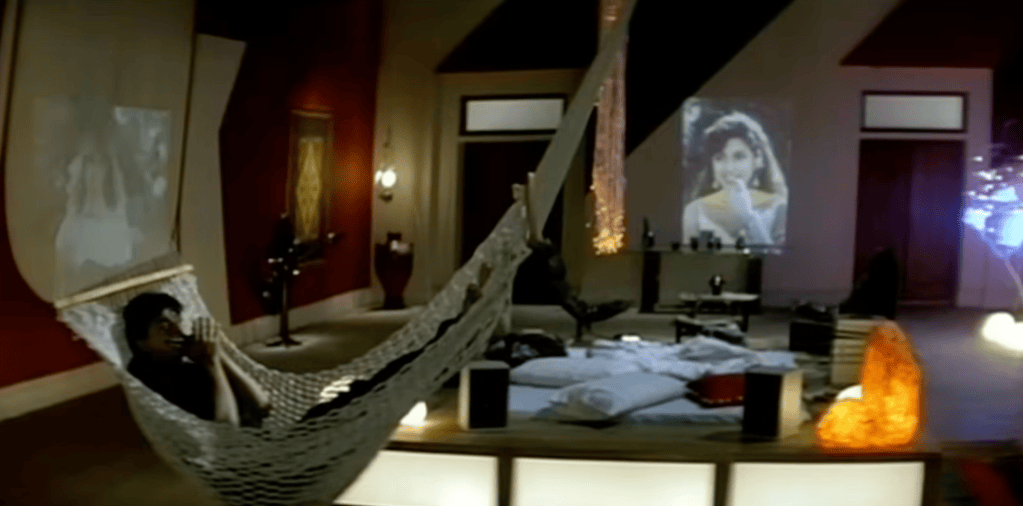
Yash Chopra zooms in towards Kiran as the sound of Rahul’s harmonica playing “Jaadu Teri Nazar” intercedes into the audio of the film, signaling the end of Rahul’s fantasy. Screenwriter Honey Irani’s choice of the harmonica for Rahul’s instrument further clarifies his character. Its sound is tied to classic cinematic images of loneliness. The 1975 Hindi film, Sholay, sees Amitabh Bachchan’s character Jai playing the harmonica while observing Radha (Jaya Bachchan). In Sholay, Radha is a widow—for her to remarry would be a social taboo. Jai’s circumstances have forced him into a life of crime for survival—his playing the harmonica while simultaneously falling into a love that is doomed from the start is paralleled in a contorted way in Darr‘s Rahul. Sholay is one of, if not the most, famous film in the history of Indian cinema—such a comparison would likely occur to contemporary viewers of Darr. This association is triggered sonically through the harmonica’s strained timbre. The instrument even at a physical level could represent Rahul’s frame of mind: it is a rare instrument where one has to both exhale and inhale in order to produce sound. The song “Tu Mere Saamne” echoes this action as it features Rahul heavily breathing in and out at a menacing cadence.
“Tu Mere Saamne,” the final song in the film, sees a dangerous evolution in Rahul’s obsession. It occurs after Sunil and Kiran steal away to Switzerland for their honeymoon, where Rahul finds them and befriends them, as they have never seen his face. His now face-to-face intervention in their lives triggers another fantasy of Kiran in his mind. Despite being a love song on its surface, Shiv-Hari begin the song with forceful orchestral bombast and men’s chorus (which precede the aforementioned heavy breathing), akin to the ending of “Jaadu Teri Nazar” and parts of “Obsession (Dance Music).” Anand Bakshi’s lyrics draw parallels between Rahul and Sunil. “Tu Mere Saamne” (“You are in front of me”) is eerily close to the first words heard in the entire film: Sunil’s words in Kiran’s mind as she reads the love letter he had sent to her (“Jaan, main tumse door hoon. Lekin, tum mere saamne ho.” This translates to “Love, I am far from you. But you are in front of me.”). Sunil’s love is true, but Rahul’s love has crossed the threshold.
Rahul’s early fantasy of Kiran picturized in “Obsession (Dance Music)” did not include Rahul in her presence. This new fantasy changes that dynamic. The line “Tujhko dekhoon ke pyaar karoon” (“Should I gaze at you or make love to you?”) is intermingled with lyrics indicating disbelief yet confirmation that Kiran is now his possession. “Jaadu Teri Nazar” stated “Tu hai meri, Kiran”–simply “You are mine.” The iteration of this sentiment in “Tu Mere Saamne” reaches a point of completion with the line “Tu meri ho gayi”–literally, “You have become mine.” The mukhda (a term that translates literally to “face” that refers to the initial memorable portion of a song) finishes with the line “Kaise main aitbaar karoon” (“How can I trust [this reality]?”). Udit Narayan’s vocals, as well as the contour of the melody line, are fairly simple, unadorned, reflecting the single-minded arrested development at play in Rahul’s psyche (the same could be said for Narayan’s vocals in “Jaadu Teri Nazar”).
Lata Mangeshkar’s vocals in the next stanza overlap with the ending of Udit Narayan’s stanza with considerable echo effects added. This adds to the dream-like, imagined quality of the song—Rahul’s brain at the height of delusion. Mangeshkar’s vocals are shallow with an almost child-like lilt, fitting the simplistic melody. Shiv-Hari composed a tune paralleling the simplistic logic at play with Rahul’s derangement. The Kiran that sings in the song is a cheap imitation—a tulpa in Rahul’s mind. His imagined Kiran sings “Toot gayi tootke main choor ho gayi / Teri zid se majboor ho gayi / Tera jaadu chal gaya…” (“I am broken, I am shattered / Your persistence has compelled me / Your magic has worked”)—a twisted and delusional perspective on romance befitting a murderous stalker.

The danceable, but somewhat menacing instrumental interludes of the song also connect with the earlier sequence set to “Obsession (Dance Music).” The use of a prominent clarinet solo, an uncommon occurrence in Bollywood film songs, adds to the phantasmagorical quality of the song by introducing a foreign timbre. The visual is that of a strange liminal space, a place with no coherent scenery but with raining rose petals. Rahul plays piano as Kiran writhes suggestively. This particular visual shows that Rahul has now placed himself next to her in his own fantasy as opposed to just seeing her. He is no longer simply declaring that she is his—she has become his.
(The following two paragraphs contains significant spoilers)
Throughout the finale of the film, where Rahul is found out and killed by Sunil, Shiv-Hari’s background score is dominated by a particular theme that had been first introduced earlier, always connected to Rahul’s fixation with Kiran. It is characterized by two notes constituting a rising major sixth interval which morphs into a rising perfect fifth interval before deteriorating into a winding chromatic melody that eventually loses intelligibility. The first mentioned interval, the major sixth, traditionally has a romantic quality, especially at its iterated tempo in Darr–a soaring, almost Wagnerian yearning. The second interval, the perfect fifth, is acoustically at rest. But, with the pitch level at which it is presented in relation to the earlier major sixth, it is contorted–it implies a different musical key, an incompatibility. This particular interval happens to be the same as the beginning of “Jaadu Teri Nazar.” This theme’s association with Rahul indicates its mirroring of his emotional incapacity. What he views as love, in this case represented by the major sixth, becomes contorted into his obsession with Kiran, the perfect fifth that connects to “Jaadu Teri Nazar.”
The melody that succeeds these two intervals is simultaneously chaotic and tragic—chaotic in light of his murderous actions, tragic as Rahul’s final end symbolizes a human life wasted on mental derangement. At the end of the film, Shiv-Hari use the theme to paint this tragedy, iterating it twice, first with a subdued muted trumpet, then with a wordless female chorus, as Rahul utters his last words. Yash Chopra reiterates the overarching theme of the entire film one more time by playing an a cappella version of “Jaadu Teri Nazar” over one final shot of Rahul’s lifeless body.
Both the songs and background score of Darr showcase an approach to soundtracking wherein the sonic content not only operates in close coordination with the mood and atmosphere of the film, but with the characters, storyline, themes, and intrinsic reference points orchestrated by Yash Chopra and his crew. Shiv-Hari’s music is not simply color and vibe, but multi-faceted content that rewards close listening just as repeat viewings of the film can illuminate the finer nuances of the plot. It is music that contains a sub-surface circuitry that, even when the listener is unaware of its complexities, creates a richer artistic statement than music that has a similar surface (a similar color and vibe) without the same profound approach to its unseen infrastructure. Shiv-Hari’s soundtrack’s rich subterrain integrating with and projecting onto the visual and narrative elements of Darr creates a rare cinematic totality.
—
Featured Image: Still from “Jaadu Teri Nazar” by SO!
—
Zane Merritt is a composer, guitarist, teacher, and scholar. He holds a PhD in music composition from the University at Buffalo (SUNY). His recent activities include designing and teaching a course on Bollywood and its music, collaborations with Nepali poets, setting their recitations to original music, and releasing a classical guitar album that places arrangements of Indian film music alongside the western classical canon.
—
REWIND! . . .If you liked this post, you may also dig:
“Gendered Soundscapes of India, an Introduction“–Monika Mehta and Praseeda Gopinath
The Queer Sound of the Dandiya Queen, Falguni Pathak–-Pavitra Sundar
“Out of Sync: Gendered Location Sound Work in Bollywood“—Priya Jaikumar
“So Jao”: Sound, Death and the Postcolonial Politics of Cinematic Adaptation in Vishal Bhardwaj’s “Haider” (2014)—Abhipsa Chakraborty
Share this:




Current Top Posts





April 2021

January 2020

November 2019

October 2019

August 2019

April 2014

November 2017

March 2015

December 2017

October 2015


Recent Comments