
SO! Amplifies: Feminatronic

SO! Amplifies. . .a highly-curated, rolling mini-post series by which we editors hip you to cultural makers and organizations doing work we really really dig. You’re welcome!
—
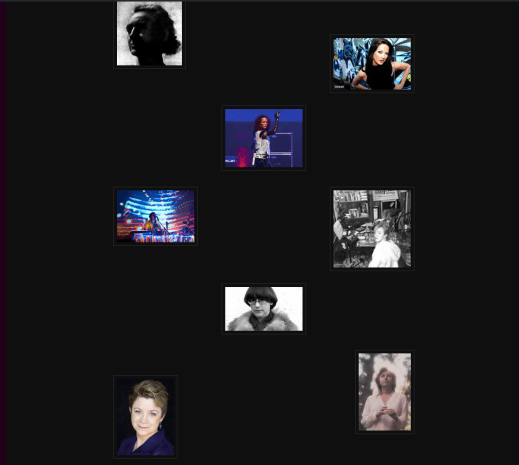
FEMINATRONIC began with a simple idea : link with other women who were–and are–creating electronic music, particularly in the Ambient / Space community and then spur each other on by being part of an all-female electronic artist podcast.
I quickly realised that there were more women creating electronic music out in the aether than I had known—and I was shocked by the lack of visibility on my part. If I didn’t know these artists—someone who follows the scene closely–how was our music getting to listeners? especially with the lack of wider publicity?
After a short while, I quickly concluded that this perceived invisibility occurred in all genres of electronic music creation by women. At best, the electronic music scene is fractured and comprised of a myriad of genres. Across the Internet, playlists are heavily geared towards male artists. As an electronic musician myself, who just happens to be female, working in isolation from many other artists and genres meant I wasn’t really aware of the great female electronic artists out in the world. I had a feeling that there were others like me quietly creating music, soundscapes and sonic art, beavering away using a huge plethora of electronic means to create music, a sound, installations and a voice for themselves but they were unknowns to me and to a wider audience. Provoked by my sense of isolation and invisibility, I set up the website Feminatronic to get word out that there were and are, women from all genres of electronic music making, creating music in a variety of interesting ways.
.
The site’s main aim is to highlight and promote women who create music and sound via electronic processes. My definition of “electronic music” has evolved from the original synth studio based electronic music to include sound art, installations, field recordings, noise, classical, electroacoustic and everything in-between. I designed Feminatronic as an inclusive site that would appeal to those interested in a huge range of genres, from Ambient and Space to Field Recording, DJing and EDM to Sound Installation and Experimental. The site features an A-Z catalogue of electronic artists who identify as female, as well as women behind the scenes, the producers, sound designers, and engineers who help make music possible.
In addition to keeping up the catalogue, Feminatronic shines a spotlight on as much electronic music, artists, news, events and sites as possible, via the website and social media (Twitter handle: @feminatronic; Feminatronic is also on Soundcloud, Facebook, and 8tracks). I believe strongly in collaboration through curation; therefore Feminatronic frequently reblogs articles and reviews from other sites, creating a chain reaction of posts and tweets that increases visibility and widens the audience for artists and the forums that feature them.
.
Despite all the creativity that I have uncovered since beginning my work, only a fraction of female electronic artists ever get their heads above the parapet and get huge coverage, or even minimal props. Since beginning this site in 2013, I have discovered for myself so much talent and much of it remains well under the radar. Such continued omission gave me the idea to begin an ongoing series of posts called “Today’s Discovery,” a very effective way to give publicity to new releases, back catalogues, and artists both new and established. This series also creates more space for genres that don’t often get a wider audience and to challenge the perception of so-called “women’s music.”
One of Feminatronic’s most popular features is our “Sunday Mixes.” These are monthly playlists based on a theme that intertwine poetry and electronic music. This project allowed me to combine two things that I love and to explore the music of poetry and the poetics of sound, while introducing new listeners to electronic music and new readers to poetry. Past mixes explored themes such as “Voices,” “Forests,” and “The Moon.”
Alongside sites such as Pink Noises, Female Pressure, Her Noise, and Her Beats, Feminatronic is a small but vital cog in a growing movement to shed light on artists who create music and sound via electronic processes, artists who just happen to be women and who deserve to be seen and heard. My work is a voyage of discovery and as such, the site remains an on-going evolving project perennially under construction.

—
 REWIND!…If you liked this post, you may also dig:
Aural Guidings: The Scores of Ana Carvalho and Live Video’s Relation to Sound–Maile Colbert
SO! Amplifies: Mega Ran and Sammus, The Rappers With Arm Cannons Tour–Enongo Lumumba-Kasongo
SO! Amplifies: Mendi+Keith Obadike and Sounding Race in America–Mendi + Keith Obadike
Share this:

Deaf Latin@ Performance: Listening with the Third Ear

 This is the fourth and final post in Sounding Out!’s 4th annual July forum on listening in observation of World Listening Day on July 18th, 2015. World Listening Day is a time to think about the impacts we have on our auditory environments and, in turn, their effects on us. For Sounding Out! World Listening Day necessitates discussions of the politics of listening and listening, and, as Trevor Boffone prescribes, a much wider and more corporeal understanding of the practice that goes beyond an emphasis on the ear and even on sound itself. –Editor-in-Chief JS
—
As Kent, a Deaf man, stands on stage in Tamales de Puerco, signing his story of struggling and growing up in a hearing family, the only aural sounds in the theater come from the audience: the sounds of crying. Performed in English, Spanish, and American Sign Language (ASL), Tamales offers a glimpse into the seldom seen realities of life as a single mother to a Deaf child as it intersects with Latinidad. The play presents the story of Norma, a young mother who confronts her abusive husband and challenges a country that rejects and oppresses her as an undocumented immigrant. She overcomes the hardships of being Latina, undocumented, and having a Deaf child (Mauricio) without any support from her husband, her mother, and local and state institutions. Ultimately, Norma must negotiate cultural citizenship and notions of belonging to the Deaf Latin@ community so that her son can have more opportunities. The play uses—and calls attention to—silence as an essential building block in the process of constructing, remixing, and performing the complexities of Latin@ identity.

Listening to the silences in Latin@ theatre performance offers crucial insight into how the Latin@ population and Latinidad fit into the fabric of the United States in the 21st Century, as Marci R. McMahon notes in “Soundscapes of Narco Silence.” In Tamales, the staging of Deafness creates a particular kind of silence that promotes new listening strategies. What I find most compelling is how Deafness on stage–and the particular silences Deafness can create–opens up a space for what Steph Ceraso calls “multimodal listening,” listening as a full-bodied event not solely linked to the ears, but rather connected to “bodies, affects, behaviors, design, space, and aesthetics.” Calling attention to the body as it does, the silences in the play give weight to Kent’s story and affects the viewer beyond the limits of voiced acting by encouraging spectators to concentrate on the actors’ physical emotions and how actors’ bodies work to transmit messages without verbal cues. I argue Tamales promotes multimodal listening by forcing spectators to use their “Third Ear”—a mode of listening across domains of silence, sound, and the moving body—as a device to understand a seemingly silent world.
To do this, I engage with the playscript and recordings of the 2013 production of Mercedes Floresislas’s Tamales de Puerco at CASA 0101 Theater under Edward Padilla’s direction. While Floresislas’s script raised many complex issues surrounding the Deaf Latin@ community, Padilla’s staging focused on the intersections of Deafness and Latinidad by foregrounding the use of silence in the production. [Note: I use the capitalized versions of Deaf and Deafness. A standard dictionary definition of “deaf” represents one who is partially or unable to hear (deaf and hearing impaired are essentially interchangeable). Deaf with a capital D, however, refers to the community that self-identifies as belonging to the Deaf culture. Deafness, therefore, is a sign of health and prognosis of well-being among sign language dependent hearing-impaired people. Likewise, hearing versus Hearing represents a similar biological/cultural binary.]
In Hearing Difference: The Third Ear in Experimental, Deaf, and Multicultural Theater, one of the few studies to devote critical attention to Deaf theater as it relates to multicultural experience and identity, Kanta Kochhar-Lindgren introduces the “Third Ear,” a useful term that facilitates focusing one’s attention on the performative forms of expression. Blending sensory, spatial, and visual elements generates a Third Ear that acts as a “Deaf-gain,” a hybrid mode of hearing and coming to know the world. When specific senses are lost, the mind becomes dynamic in such a way that continues to allow affected individuals to actively engage with their surroundings, with their community. Deaf people, therefore, do not lack a vital sense, but rather they gain a new sense—one typically inaccessible to hearing individuals– that enables them to successfully navigate their surroundings. Kochhar-Lindgren’s work focuses attention on the “sense” of performance and the different movements that work together to form speech sensed by the “Third Ear.” For audience members, learning to perceive the mixing of forms together as communication is fundamental to understanding the messages presented on stage; inevitably, the Third Ear promotes auditory silence yet it establishes that a lack of sound does not necessarily correspond with a lack of understanding. By removing all sound, silence gains power.

The evocation of the Third Ear separates Tamales from the majority of Latin@ theater productions grounded in aural languages such as English, Spanish, and Spanglish. Deafness is seldom represented onstage in any type of theater, aside from revivals of William Gibson’s The Miracle Worker and Mark Medoff’s Children of a Lesser God, more contemporary works such as Suzan Zeder’s Ware Trilogy and Bruce Norris’s Clybourne Park, and the work of Deaf West Theatre in Hollywood, whose most recent production, Spring Awakening received rave reviews and will move Broadway in September 2015. The work of Deaf West has been of particular interest to Sound Studies scholars for its unique contributions to the American Theatre. In Cara Cardinale’s 2012 SO! post, she discusses Deaf West’s production of Tennessee Williams’ A Streetcar Named Desire in which the roles were reversed. The production’s interpreters were for the hearing audience and, thus, sign language took center stage. Yet, all of these more well-known works focus on Anglo experiences, neglecting the specific intersectional challenges that Deaf people of color face such as limited access to state-funded resources such as counseling services, educational inequality and the achievement gap, not to mention that the majority of Deaf Latin@s do not have parents who can sign with them (re: effectively communicate).
The Third Ear, as evoked in Tamales, seems especially suited for representing Latin@ Deafness onstage and evoking a concomitant visceral understanding in audiences. Floresislas’s writing and Padilla’s direction work together to strategically allow audience members to develop a Third Ear at key moments in the play, enabling them to fill silences they might have otherwise perceived as gaps. Entering Tamales’ silent world not only compels hearing audiences to recognize their supposed privilege, but pushes toward a deeper understanding of the relativity of hearing-as-privilege. In a Deaf world, hearing is not a privilege, but rather one of many ways to come to know the world. In this regard, Tamales reiterates Liana Silva’s argument that “deafness complicates what it means to listen” by calling attention to the many non-auditory signals that are vital to the act.
 In addition, Tamales deliberately fosters moments of uncomfortable silences that are one of the production’s strengths. For example, silence plays a key role in an early scene in which Norma decides to leave her abusive husband, Reynaldo. In this violent episode–either by a deafening blow or disassociation–everything in her world goes silent. While Reynaldo yells at her and throws things around the house, his voice fades out. However, as Norma sits in silence, she becomes better able to navigate her abusive marriage. Norma hears the silence. Her hypervigilance increases her ability to identify potential threat(s) and, ultimately, she takes her son and flees from the situation. While Norma taps into her Third Ear on stage, the audience also enters a silent world in which they must seek alternative methods to actively engage with the production. By “losing” their hearing along with Norma, the audience must pay a different kind of attention to her to gain an understanding of the scene.
Along with recognizing certain hearing privileges, listening with the Third Ear both connects and separates the audience. For instance, in the scene in which Norma attends an AA meeting for Deaf people, Padilla’s direction activates the Third Ear by removing sound from the stage. In the original playscript, Floresislas wanted Kent’s monologue to include a voice-over, but during rehearsals, Padilla saw the potential to foreground the silence in this scene (and throughout the piece, as well); his direction transformed the staging from an aural scene to a silent one. Listening with the Third Ear enables the audience to blend sensory and visual hearing in order to understand the emotional depth of the action transpiring on stage. As Kent stands in silence, signing his story about the difficulties of connecting with his hearing father, many in the audience were audibly moved. During Kent’s monologue, the actor remained silent while supertitles revealed his speech:
Yesterday, my father had a heart attack and I got called to his bedside at the hospital. I had not seen him for almost 15 years! I had never had a conversation with my father; yes, he was hearing and I was his only deaf child. (…) I always believed by dad hated me; nothing I did was ever good enough. He was always watching me and looking angry for everything I ever did or asked. I actually wished he’d ignore me like the rest of the family! (15)

Particularly gripping, this scene acts as a crucial building block in the necessity of creating opportunities for her son that drives Norma’s story forward, not to mention that it calls attention to the fact that reading isn’t necessarily a silent act. Kent’s story reveals much to a hearing audience who may be unfamiliar with the Deaf Latin@ community. Kent’s experience is typical of Deaf Latin@s, only 20% of whom have parents that can sign. It compels an understanding of the reasons why Norma learns ASL and pushes for a better life for her son. She does not want him to be in the same position that Kent finds himself in. And, she does not want to have the regret of having never learned to communicate with him. Kent continues:
Yesterday, he looked frail; he was paralyzed on one side. When he saw me, he moved his hand like this (brushes his left hand up the center of his chest then points at). At first, I didn’t understand what he was doing. But when he did it again, I understood. He said, “I’m proud of you.” Then he signed “I love you.” (…) My niece told me he had been learning ASL for the last 3 months because he wanted to tell me how sorry he was for not being able to talk to me. My dad didn’t hate me; he hated himself for not being able to talk to me! (…) But yesterday, I also had my first and last conversation with my dad he signed for me! That…makes me feel very proud! (15-16)
As Kent stands in silence, his emotional journey is given life through his hands and body. Interestingly, the silences enacted onstage by Tamales actually create sound, amplifying the sobbing that emanates from the audience in both its auditory and visual manifestations. The way in which silence allows the audiences’ sonic reactions to become part of the play itself suggests that how—and why–the audience responds may actually be more important than the performance itself. How much are the sobs about the heartbreaking nature of Kent’s story and how much of it is recognizing one’s own privileges? How much of it is the audience connecting with the story? How much of it is about seeing themselves represented? And how does silence amplify “listening” to Kent’s story?
.

.
While not exhaustive, my reading of Tamales widens the conversation about the intricacies of Deaf Latin@ performance. The 2013 production of Tamales best hints at the possibilities of Latin@ performance in Boyle Heights and how community-based theater companies such as CASA 0101 can work to provide more access to Deaf people, thus forging both an inclusive community and theater company. More plays featuring Deaf characters, incorporating Deaf actors, and Deaf dramatists are needed, something Floresislas is already exploring. Still, much research remains as to how Deaf Latinidad is heard and how this identity fits into a performance framework. Through multimodal listening, Tamales urges spectators to leave the theater considering how they may or may not alter their actions to better benefit underprivileged and underrepresented communities such as the Latin@ Deaf community. Quite frankly, Tamales opens the “eyes and ears” of audiences. Now is the time to listen to Deaf Latinidad. What will we choose to hear in the silence?
—
Still Images from Tamales de Puerco, permission courtesy of CASA 0101 Theatre. Featured Image: Olin Tonatiuh and Cristal Gonzalez in “Tamales De Puerco.” Photo by Ed Krieger.
—
Trevor Boffone is a Houston-based scholar, educator, dramaturge, and producer. He is a co-founder of Amaranto Productions and a member of the Latina/o Theatre Commons Steering Committee. Trevor is a doctoral candidate in the Department of Hispanic Studies at the University of Houston where he holds a Graduate Certificate in Women’s, Gender, & Sexuality Studies. His dissertation, Performing Eastside Latinidad: Josefina López and Theater for Social Change in Boyle Heights, is a study of theater and performance in East Los Angeles, focusing primarily on Josefina López’s role as a playwright, mentor, and community leader. He has published and presented original research on Chicana Feminist Teatro, the body in performance, Deaf Latinidad, Queer Latinidad, as well as the theater of Adelina Anthony, Nilo Cruz, Virginia Grise, Josefina López, Cherríe Moraga, Monica Palacios, and Carmen Peláez. Trevor recently served as a Research Fellow at LLILAS Benson Latin American Studies and Collections at the University of Texas at Austin for his project Bridging Women in Mexican-American Theater from Villalongín to Tafolla (1848-2014).
Share this:




Current Top Posts





April 2021

January 2020

November 2019

October 2019

August 2019

April 2014

November 2017

March 2015

December 2017

October 2015
 Sounding Out!
Recent Comments