
Evoking the Object: Physicality in the Digital Age of Music

In our current relationship with technology, we bring our bodies, but our minds rule–Linda Stone, “Conscious Computing”
DOI: https://doi.org/10.59350/52w8z-60015
I begin with an epigraph from Linda Stone, who coined the phrase ‘continuous partial attention’ to describe our mental state in the digital age. The passive cousin of multi-tasking, continuous partial attention is a reaction to our constantly connected lifestyles in which everything is happening right now and where value is increasingly equated with our ability to digest it all. Almost everything we do has the potential to be interrupted, be it by an email, a text or a tweet; often we will give only partial attention to any one thing in anticipation of the next thing that will require our attention. In this internal fight for mental attention, listening to music has been seriously impacted.
The digital era has seen more music releases than ever before. Unfortunately, the massive influx of quantity is by no means a measure of how we are engaging with said music. iPhones and similar devices, for which music players have become mere features, enable listening to become a thing of partial attention. From allowing the shuffle or random modes to choose music selections for you, or even streaming music algorithms to calculate things you might like, to listening while playing Angry Birds or reading your Twitter stream, less commitment is made to the act of listening, and as such only a portion of our working memory is committed to the experience. Without working memory actively processing musical information, it is less likely to be stored for the long term, particularly if other information is continuously vying for space and attention.
These days video games sell better than music. Despite being a digital product, games are able to instill memories (even of the music) into one’s consciousness, because the game interface allows our sensory memories to work together in an active manner with the medium. Iconic memory stores visual cues from the game, echoic memory takes the audible cues from the game and the haptic memory is engaged in controlling game play. There is only so much more which can be done while playing a video game. If something were to interrupt game play, the game would be paused to address the new information rather than giving it partial attention. This is quite different from music which plays a background role in so much of our lives even when we are actively putting music on we tend to only engage it with partial attention.
When I began thinking about turning Concrète Sound System into a record label, one of my main goals was to create works that could engage the audience in active musical experiences that could create long term memories. I felt that as important as the music would be, it would take something material to create these memories, a physical product more evocative of earlier moments in recording history than the CD, its most recent gasp. I wondered if, by creatively evoking the physical object, the listener could be engaged in an active manner that would enable the memory of music and its power to persist through the everyday waves of digital noise.
The first mass duplicated audio medium was the Gold Moulded Edison Cylinder at the turn of the twentieth century. Imagine two cylinder copies of one of these recording today, as musical objects. Each of them would have over a hundred years of physical history. From the wear of the cases to the condition of the wax based on the temperature in which they were stored, each of these cylinders would be unique musical objects, with completely different histories, despite having the same origin. It is reasonable to assume that if the cylinders were played today on the same playback device, despite the fact that the compositions and performances are exactly the same, the differences between the recordings would be audible.
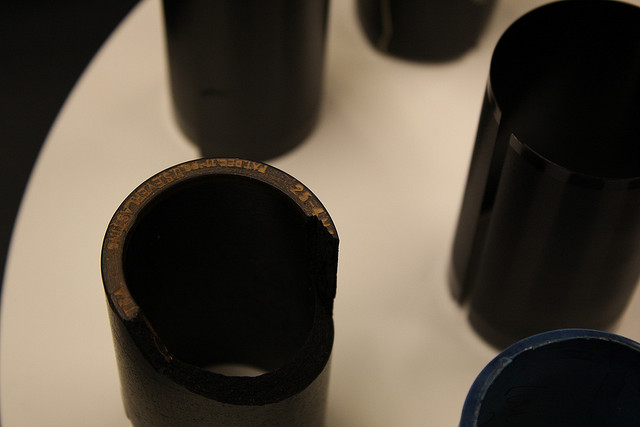
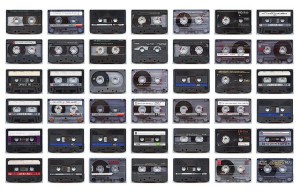
Even without a century of history, there would likely be audible differences between the cylinders. If one cylinder was the first copy made, and another the 150th –master cylinders of Gold Moulded Edison Cylinders could only produce 150 copies reliably–the physical wear in the process of reproduction would leave its own imprint, making each of those copies distinct musical objects. In the analog world, as the technology improved the differences between copies decreased substantially. Cassettes were manufactured in batches of ten to hundreds of thousands without audible differences. But even in circulations so high, over time each of those analog copies took on their own identity and collected their own memories.
The listener as an active agent contributed to the development of these unique musical objects. After a purchase, any number of variables played into the ritual of the first experience of the music. Was there a way to listen upon walking out of the store? Were there liner notes or lyric sheets inside? Would you read those prior to listening or as you listen? Where would you listen? Through headphones? The listening chair in front of the hi-fi stereo? Or on the boombox with some friends? All of these possibilities shaped memories as musical objects that defined the music consumption culture of the past.
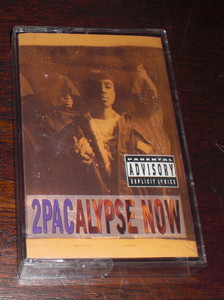
For example, I bought the debut 2Pac album 2Pacalypse Now on cassette the day it was released. I loved the album so much I kept it in regular rotation in my Walkman for months until finally the tape popped. Rather than go out and buy a new copy I decided to perform a surgery. It was in a screwless reel case which meant I couldn’t just open it up to retrieve the ends of the tape trapped inside, but rather had to crack the reel case open and transplant the reels into a new body. So, my copy of the 2Pacalypse Now cassette is now inside of a clear reel holder with no visual markings. It also has a piece of tape that was used to splice it back together, which makes an audible warp when played back. I can pretty much be sure that there is no other copy of 2Pacalypse which sounds exactly like mine. While this probably detracts from the resale value of the cassette (not that I’d sell it), it is imbued with a personal history that is priceless.
Cassettes, in particular, played a significant role in the attachment of physical memories to music beyond the recordings they held. They gave birth to the mixtape. The taper community was born from personal tape recorders that allowed concert-goers to record performances they attended, and, prior to the rise of peer to peer sharing online, these communities were trading tapes internationally via regular postal mail. European jazz and rock concerts were finding their way back to the states and South Bronx hip-hop performances were traveling with the military in Asia. All of these instances required a physical commitment with which came memories that inherently became their own musical objects.
Needless to say the nature of musical exchange has changed with the rise of the digital age of music. This is not to say that memories as musical objects have gone away, but they are being taken for granted as the objects lose their physicality. I remember going to The Wiz on 96th Street with $10 to spend on music. I spent at least ten minutes trying to decide between Sid and B-Tonn and Arabian Prince. I ended up with Arabian Prince and have regretted it since I got home and listened that day, as I never found Sid and B-Tonn for sale again. Today I could download both in the time it took me to walk to the train station. After skimming through the first few songs of Arabian Prince I could decide it was not for me and drag drop it in the trash where the memory of it would disappear with the files. No matter how I felt about the music then, the memory of it is a permanent fixture in my mind because of the physical actions it took to listen.
The first release for Concrète Sound System, Schrödinger’s Cassette, tackled this issue head on by presenting the audience with its own paradox, an update of physicist Erwin Schrödinger’s famous Thought Experiment, where the ultimate fate of the cassette inside is left up to the individual. Schrödinger’s Cassette sought to take listeners out of digital modes of consumption by using an analog medium to evoke the physical. The cassette release trend has been growing over the last few years, almost in parallel to the rise of the digital music and speaking to the need to separate music from our digital lives and to a desire to work harder for it. At the minimum, listening to a cassette requires having a cassette player, and acquiring one these days takes commitment. Unlike digital media, listeners cannot instantly skip a song on a cassette or put a favorite on repeat. It takes physical manipulation of the medium to move through its songs and doing so is a time investment. All these limitations make the cassette a medium that is best for linear listening, from beginning to end (unless you physically cut, rearrange, and splice it yourself).
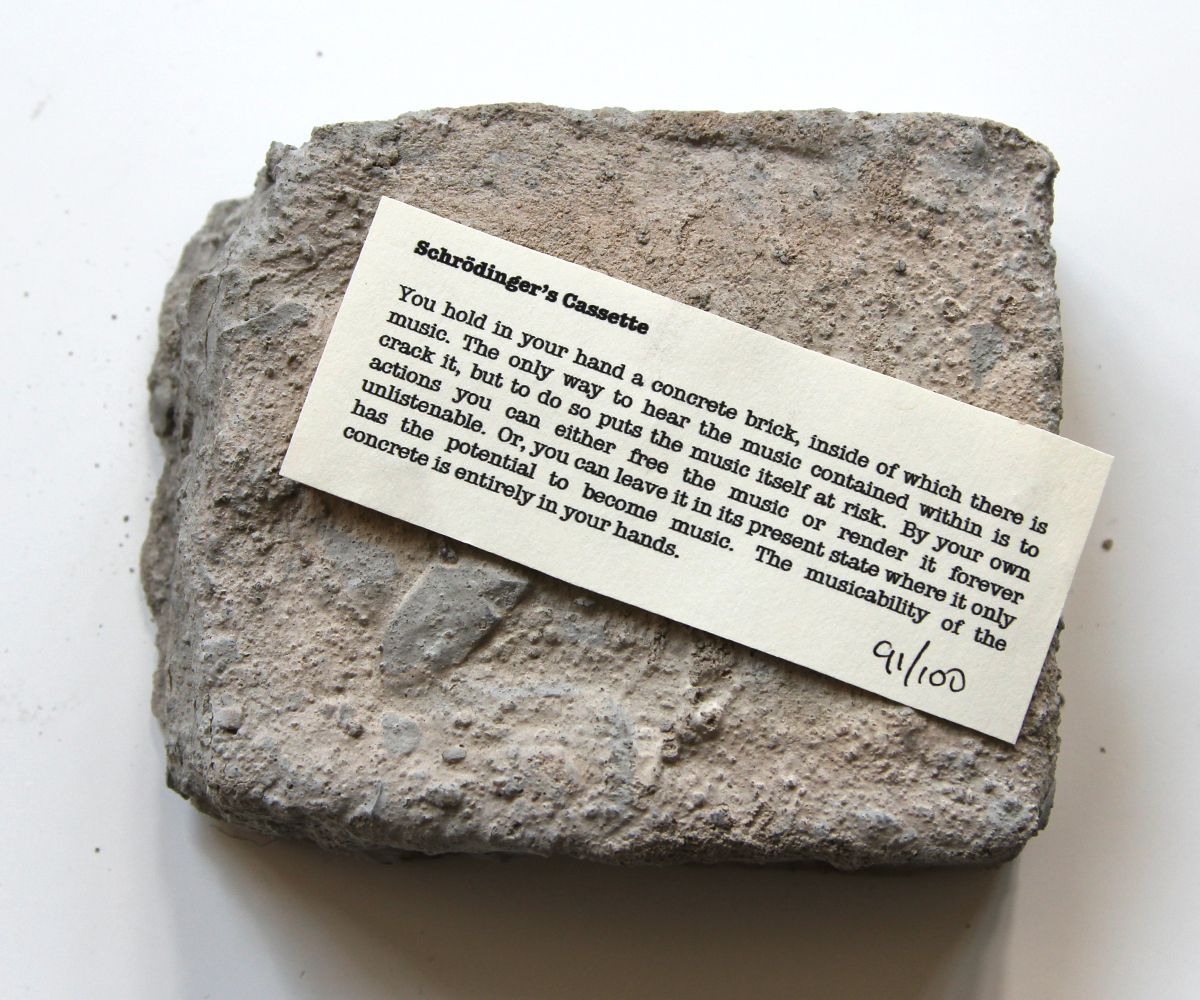
Schrödinger’s Cassette took the required commitment a step further by encasing the cassette itself in industrial grade concrete. This required the user to actively crack the concrete (or the french concrète meaning ‘real’, from which the label derives its name) in order to listen to the music. The paradox is that, depending on the listener’s method for cracking, harm could be done to the cassette that might render it ‘unlistenable’. Upon receiving one of these pieces, the listener holds in their hands a musical object which they must physically act upon in order to create an unrepeatable musical event. Schrödinger’s Cassette has a look, a sound (if shaken you can hear the cassette reels), a feel, a smell, and a taste as well (though I wouldn’t advise it). All of the senses can be actively focused on the object and, as such, the whole of one’s working memory is engaged in the discernment of the object’s musical contents.
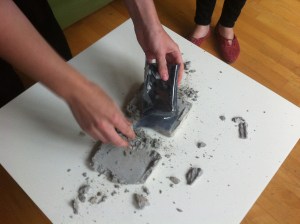
For many, Schrödinger’s Cassette was taken as a work of art and left uncracked. The Wire magazine successfully cracked one edition open, revealing a portion of the musical contents on their regular radio program. For those that decided not to crack it, digital versions were made available so that they could listen, though this option was only made available after the listener spent some time with their physical object. In this way, the music from the project, a compilation called Between the Cracks, was directly connected to physical memories spurred by a material presence.
Triggering active memory during the consumption of music through physical objects need not be this complex. Old medium such as vinyl and cassette releases inherently have the physical properties required without the concrete or much else. Perhaps for this reason they show new signs of life despite the rise of digital. No matter how much our reality is augmented by our digital lives, we still inhabit those bodies that we bring with us, and, as far as the memories those bodies carry with them go, physicality rules.
—
Featured Image: Wax Cylinders in the Library of Congress, Image by Flickr User Photo Phiend
—
Primus Luta is a husband and father of three. He is a writer and an artist exploring the intersection of technology and art, and their philosophical implications. He is a regular guest contributor to theCreate Digital Music website, and maintains his own AvantUrb site. Luta is a regular presenter for the Rhythm Incursions Podcast series with his monthly showRIPL. As an artist, he is a founding member of the live electronic music collectiveConcrète Sound System, which spun off into a record label for the exploratory realms of sound in 2012.
—
Share this:

The Sounds of Writing and Learning
Welcome back to Sounding Out!‘s fall forum on “Sound and Pedagogy.” Developed to explore the relationship between sound and learning, this forum blends the thinking of our editors (Liana Silva), recruited guests (D. Travers Scott), and one of the winners of our recent Call For Posts (Jentery Sayers) to explore how listening impacts the writing process, the teachable moment, and the syllabus (and vice versa). Sharpen your pencils and/or give your typing fingers a good stretch, because today’s offering from Liana Silva asks you to exercise unexpected writing muscles—your tongue, mouth, and vocal chords! If you need a make-up assignment for last week’s post by D. Travers Scott, “Listening to #Occupy in the Classroom,” click here. And don’t forget–same class time next week!–JS, Editor in Chief
—
DOI: https://doi.org/10.59350/cer6q-stk88
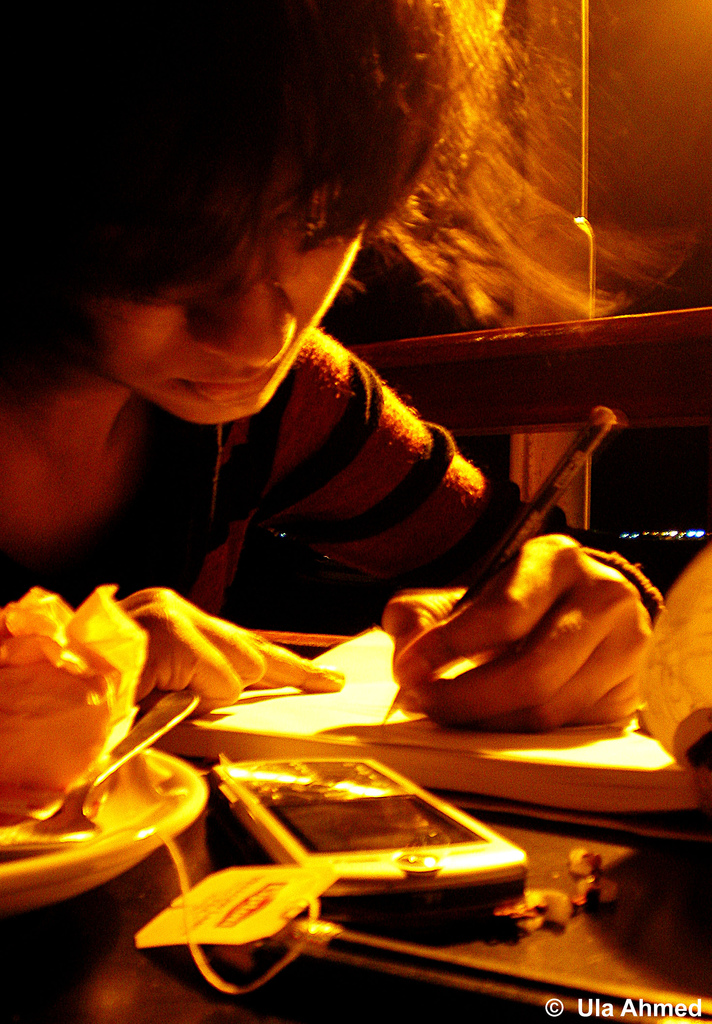
When I started this draft, I sat in an office that is not mine, next to an old, whirring Westclox Dialite electric clock. When I write, I usually pop my headphones on and blast my “Writing” playlist on my iPhone. But that day, I was soothed by the sounds of a whirring clock and the air blasting through a wall vent. On another day I worked on my draft while I listened to sports talk radio, a big part of my morning routine; toward the end of the drafting process I shared this blog post with a writing consultant at the writing center where I work.
For me, writing is always connected to sound. Sound inhabits the spaces where I write, either in the shape of music, typing, or voices. These sounds are never far from my writing process. In fact, something so small as the typing of the keys as I write this can be construed as the soundtrack to my writing. Sounding Out! guest blogger and author Bridget Hoida made a case for how sound is part of the texts she reads and how she weaves sound into her own writing; in my case, I can’t think of writing without sound. It is my soundtrack/sound track, in the sense that sound is the track on which I lay my writing process, like the lines of a ruled notebook.

However, many writers and educators tend to think of writing as a solitary, lonely, quiet endeavor. Last month, at an orientation where I was speaking, I heard someone refer to the “quiet activity of writing and learning.” As I looked around me, stunned, I seemed to be the only one surprised at this assertion. Although it is a common perception, as a writer, ex-writing instructor, and writing center staff member, this did not make sense to me. Both writing and learning, for me, are connected to sound, whether it was listening to music while editing or talking through my ideas during class discussion. If, to paraphrase Brandon Labelle in Acoustic Territories, places configure what sounds are deemed acceptable and unacceptable, do schools configure what are the appropriate sounds of learning?
I approach this question about the sounds of learning from the angle of my work at the writing center. For years I taught first-year composition, and later on in my academic career I started working at a writing center (where I currently work). At the Writing Center we are surrounded by the sounds of writing and learning. A student will walk up to one of our locations and meet with a writing consultant. They will discuss the writer’s text, in the case that the writer brings a draft. After this discussion, the consultant will read the writer’s text aloud, a practice that all of our writing consultants must adhere to. The text comes alive in the voice of the consultant; the good, the bad, and the ugly are made audible, concrete in the voice of the consultant. This enables both parties to hear the paper, but also to listen to the paper and, ideally, understand it better. The consultant and the writer then talk about what works, what doesn’t, what could be improved and how. Learning takes place through a conversation. It is at the writing center where writing and learning processes are no longer silent, but actually audible. The value for a writer of hearing their text aloud is not new; in 1967, Anthony Tovatt and Ebert L. Miller did a three-year study on how listening to their writing helped high-school writers improve their writing skills (see their article “The Sound of Writing”). My concern is how learning is coded as silent, despite evidence to the contrary.
I wonder about the implications of describing learning and writing as “silent” processes. Silence already has a domesticating quality: it is portrayed as the gift of the restrainted, of the eloquent, of the elite, and these ideas about silence and noise emerge from 19th Century ideas about respectability and middle-class values. As an example, American Studies scholar Daniel Cavicchi states in Listening and Longing: Music Lovers in the Age of Barnum,
“In fact, both in the North and the South, genteel people came to value the quietude of silent reading and listening as a form of ‘productive leisure’ that was explicitly opposed to the louder, more boisterous pastimes of slaves, immigrants, and workers. As in the days when European colonists and Native Americans struggled to understand each other’s sound worlds, aural difference now became a wedge that allowed those in power to place certain groups figuratively and literally outside the bounds of civilization” (52).
Ideas of learning as silent are coded in broader discourse about silence (or, to use Cavicchi’s more accurate terminology, quietude) and noise, about what is respectable and what is not. How do these common connotations of quietude as dignified and sound/noise as unpleasant carry over to descriptions of of learning? It is possible that society has normalized these types of learning (the “silent” types) as of a higher caliber, and schools have a major part in that: reading to one’s self in silence, filling out exam questions and not talking to anyone, typing in a quiet library at a computer station fit for only one. Even a lecture dignifies silence, in a way: students sit down and listen to what the teacher/professor has to say while they digest, quietly, what is being taught. In opposition, the sounds of learning can be associated to the sounds of collaboration, as it were: tutorials, consultations, advising sessions, discussion sections, movie viewings. Although talking is not the only way to collaborate in order to learn, I posit that these learning activities that are usually non-silent fall prey to hierarchies of sound and silence.

These hierarchies of sound and silence tell listeners that the learning activities that are portrayed as silent are more legitimate than those that are portrayed as boisterous, loud, animated—in other words, activities producing sound. In fact, it doesn’t have to be either/or. The fact that they are set in opposition to themselves is in itself problematic. Isolating sound from the learning process acts as a way of emphasizing writing as the main component of learning. Jody Shipka in “Sound Engineering: Toward a Theory of Multimodal Soundness” describes how writing is thought of as “the communication of scholarly, rigorous arguments or ideas, something more often associated with the production of linear, print-based texts” (356, emphasis in original). This dichotomy of rigor versus play can be portrayed also as visuality (as embodied in the written text) versus aurality. The writing center can be the place where these ideas are tested, in the sense that it is a location of collaborative learning where some learn by writing and others benefit from talk while others benefit from listening. By privileging quietude and solitude as the ideal modes for learning, we miss out on other important vehicles for learning, such as sound.
***
If I started this post with the whirring of the Westclox clock, how did I end this post? I ended it on a busy Sunday evening, while my daughter slept and my boyfriend talked on the phone. I finished it with the chatter of the air conditioner, the clack of baseballs against bats coming from the living room, and the click click click of the keyboard keeping me company.
—
Liana M. Silva is co-founder and Managing Editor of Sounding Out!
—
Share this:




Current Top Posts





April 2021

January 2020

November 2019

October 2019

August 2019

April 2014

November 2017

March 2015

December 2017

October 2015


Recent Comments