
SO! Reads: Alexis McGee’s From Blues To Beyoncé: A Century of Black Women’s Generational Sonic Rhetorics
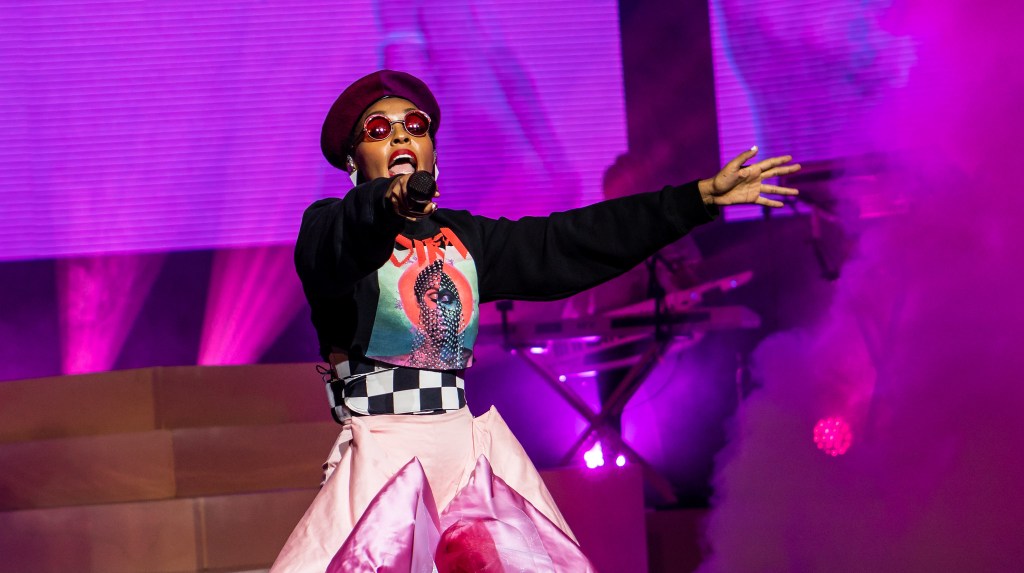

From Blues To Beyoncé: A Century of Black Women’s Generational Sonic Rhetorics (SUNY Press, 2024) by Alexis McGee explores Black women’s creative labor and cultural production. The book offers a searing critique of both record industry exploitation and sound studies’ white gaze. By focusing on quotidian engagement with sound, McGee speaks simultaneously to linguists, rhetoricians, and ethnomusicologists, demonstrating how each discipline has overlooked Black women’s fundamental contributions to our understanding of language and cultural expression. This is not merely an additive project seeking inclusion within existing frameworks, but rather a fundamental reconceptualization of how we study Black women’s sounds.
McGee, currently Associate Professor at the University of British Columbia’s School of Journalism, Writing, and Media, mobilizes her training in linguistics, rhetoric, and composition to analyze everyday communicative practices and generational knowledge systems passed down between Black women. McGee joins other recent texts such as Earl Brooks’s On Rhetoric and Black Music (2024) in critical conversations around “sonic rhetoric.” In From Blues to Beyoncé, McGee theorizes sonic rhetoric as a collection of cultural technologies for storytelling that “act as methods of communicating knowledge that can be used to persuade or inform (younger) generations about topics like survival, liberation, and care” (6). Examining artists from the 19th, 20th, and 21st centuries through personal experience, archival material, biographies, interviews, and popular media, McGee demonstrates the critical necessity of taking seriously the generational cultural knowledge embedded in Black women’s creative practices within an anti-Black and misogynist world.
At its core, the book introduces “sonic sharecropping” as a term that illuminates the lopsided relationship between Black women creatives (tenants), their sonic and musical creations (crops), and wealthier, more powerful recording industry players (landlords, music labels, copyright holders). The sharecropping metaphor reveals how the music industry extracts value from Black women’s cultural labor while denying them ownership and fair compensation. McGee further develops the concept of “audibility of advice” to name the intergenerational mentorship and fugitive pedagogy that Black women practice as they navigate this exploitative system—showing how even the transmission of survival knowledge between generations becomes entangled in the same structures designed to profit from Black women’s creative work.
The book’s chapters traverse an impressive range of cultural moments. Opening with Cardi B’s attempted trademark of “okurrr,” McGee demonstrates how legal and social structures systematically prevent Black women from securing intellectual property rights over cultural innovations that white industry executives appropriate without restriction.
This contemporary case illuminates sonic sharecropping: Black women are expected to create cultural property that record labels then own and sell back to them. McGee then traces these dynamics historically, analyzing business practices of major labels like Atlantic Records. By drawing parallels between sharecropping contracts and recording agreements, the analysis reveals how the music industry has historically relied on discretionary ethical conduct by executives rather than equitable contractual structures, perpetuating exploitative relationships reminiscent of post-Reconstruction economic arrangements.
In what is perhaps the book’s most compelling chapter, McGee examines successive performances of “Strange Fruit,” tracing how Nina Simone and later artists like Missy Elliott and Janelle Monáe have reinterpreted Billie Holiday’s haunting meditation on lynching.
McGee builds on Amiri Baraka’s concept of the “changing same”, to show that antiblackness persists throughout time though it changes form. McGee demonstrates how Black women performers resist being treated as interchangeable vessels for Black cultural expression. Rather than presenting generic renditions, each artist asserts her distinctive voice and perspective that reiterates the enduring violence perpetuated against Black bodies.
Each performance carries its own rhetorical power while participating in “sankofarration,” a neologism from artist, writer, and media studies professor John Jennings that combines “sankofa” (a West African concept symbolizing learning from the past to move forward) with “narration” to describe a rhetorical worldview premised on understanding time as cyclical rather than linear. Sankofarration positions past and future as interconnected forces that actively shape the present. Crucially, McGee connects Lawrence Beitler’s commercial sale of lynching photographs (depicting the hanged bodies of Thomas Shipp and Abram Smith) to the visual and sonic rhetorical devices in these musical works. Through this framework, Black women artists transform historical trauma into ongoing political commentary and visions for future liberation. Black women’s creative work, she argues, consistently foregrounds documented histories of racial violence alongside the willful ignorance that upholds white supremacy and patriarchy. By listening critically to Black women’s sonic rhetorics, we can access pathways toward collective liberation.
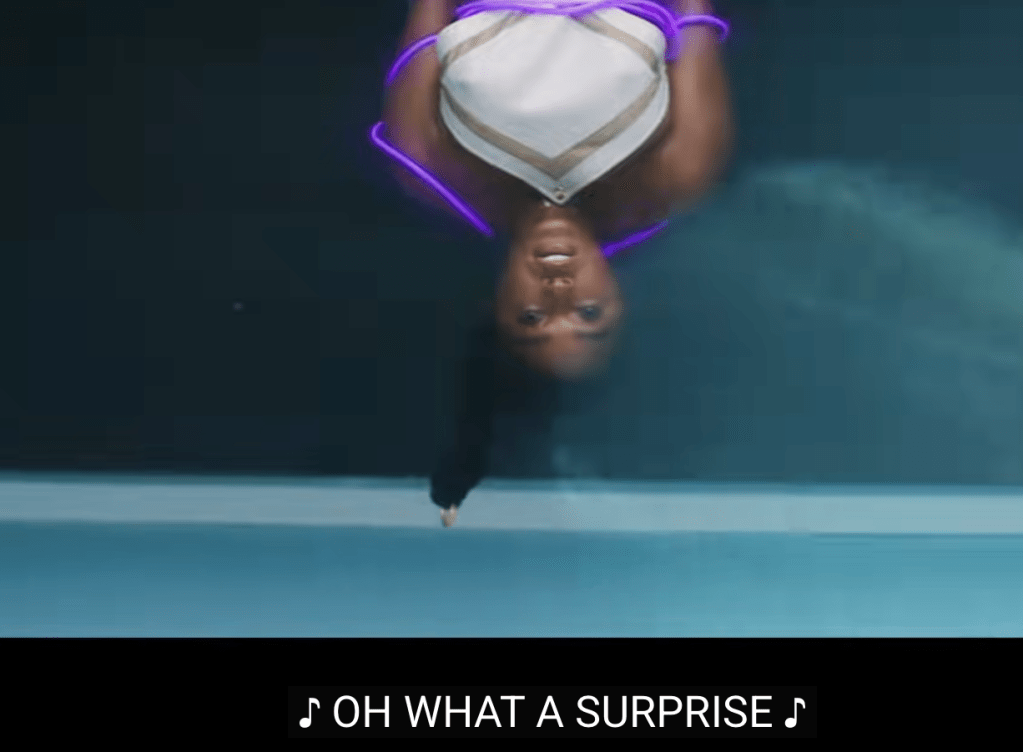
Despite the book’s title, McGee’s engagement with Beyoncé focuses narrowly on the lemon-to-lemonade metaphor in the album, Lemonade. Her analysis of other Black women artists, however, anticipated critiques later directed at Cowboy Carter, highlighting a double standard: as a Black woman, Beyoncé faces moral scrutiny for engaging with country music—positioned as both capitalist enterprise and white cultural property—while white and male artists have participated in the same commercial structures for centuries without comparable ethical condemnation.
This defense raises the book’s most provocative question, one McGee gestures toward but leaves unresolved: if the inequitable standards applied to Black women artists are symptoms of a fundamentally exploitative system, what would liberation from that system actually entail? Does it require dismantling existing structures of cultural ownership and profit, or can it be achieved through expanded access and recognition within them?
While McGee does not directly engage Matthew Morrison’s recent work Blacksound: Making Race and Popular Music in the United States, her analysis clearly converses with his examination of how Black cultural products have been reproduced for white consumption, particularly through the ongoing afterlives of blackface minstrelsy. McGee’s focus on Black women specifically adds crucial gender analysis to ongoing scholarly conversations about racial capitalism and cultural appropriation.
McGee acknowledges that capitalism itself, rather than Black women’s participation in it, constitutes the fundamental problem. However, the analysis stops short of fully theorizing alternatives to existing structures of Western sound production and commodification. Readers familiar with Sylvia Wynter’s insistence on distinguishing the map from the territory, or Audre Lorde’s warning that “the master’s tools will never dismantle the master’s house,” may desire more sustained engagement with radical alternatives and additional tool building necessary for Black liberation from existing antiblack social and political structures. What might Black women’s sonic practices look like in anticapitalist frameworks of collective ownership and exchange? How might Black femme and queer performances expand or complicate these intergenerational transmissions of knowledge? How might Black women’s intergenerational knowledge systems point toward alternative epistemologies that refuse the terms of racial capitalism altogether?
This theoretical restraint appears strategic rather than accidental. From Blues to Beyoncé navigates carefully between colleagues unfamiliar with Black feminist and womanist theory, who require accessible entry points, and specialists seeking new takes on traversing multiple disciplines at once. In threading this needle, McGee prioritizes disciplinary bridge-building before radical dismantling of capitalist structures and academic knowledge production systems.
These limitations notwithstanding, the book represents an essential contribution to multiple fields. It insists that scholars of sound studies, rhetoric, and Black feminist thought must engage one another—that these conversations can no longer proceed in isolation. Methodologically, it offers both theoretical sophistication and practical analytical tools, making it intellectually substantive for non-specialists while providing specialists a compelling model for interdisciplinary synthesis. Most importantly, McGee demonstrates that we cannot understand American culture, sound, or rhetoric without recognizing Black women’s voices as foundational rather than supplementary.
This book transforms its disciplines by interrogating their foundational assumptions, asking us not simply to include Black women in sound studies, but to recognize how their systematic exclusion has rendered the entire field epistemologically incomplete. In raising these questions, even without fully resolving them, McGee provides both rigorous foundation and invitation to continue the work.
—
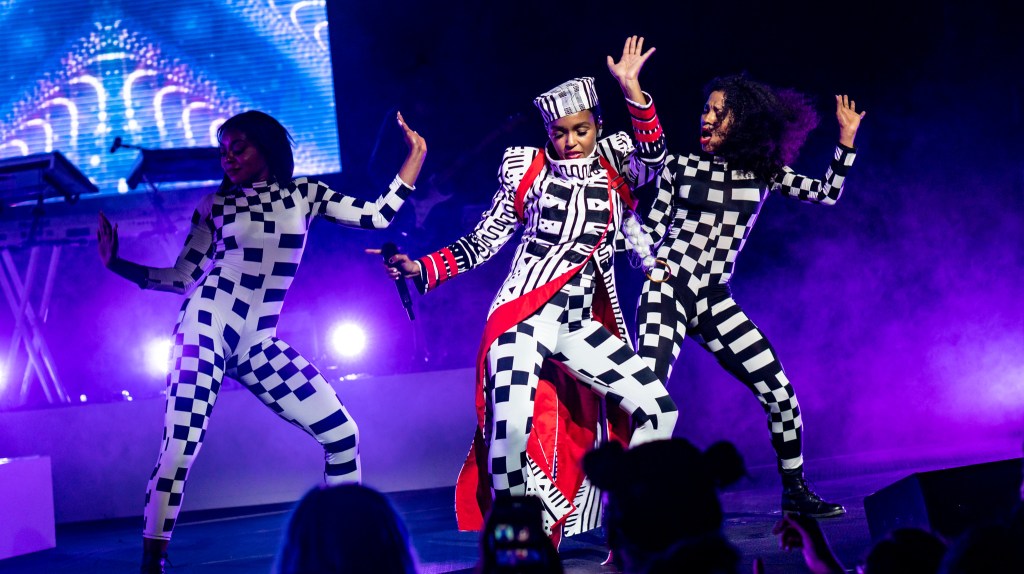
Featured Image: Janelle Monae on the Dirty Computer Tour at Madison Square Garden in 2018 by Flickr User Raph_PH. License: CC BY 2.0
—
Joe Zavaan Johnson (he/they) is a multi-instrumentalist, arts educator, and Black music researcher. Currently an Ethnomusicology Ph.D. Candidate at Indiana University-Bloomington, he examines the Black banjo renaissance through Black studies, human geography, folklore, and ethnomusicology. Johnson frequently collaborates with grassroots organizations focused on coalition building, community healing, and cultural reparations, bridging scholarship with community-engaged practice. His forthcoming dissertation, Black Banjo Bodylands: Recovering an African American Instrument, explores the relationship between Black people, lands, and banjos as ancestral technology.
—

REWIND!…If you liked this post, check out:
SO! Reads: Marisol Negrón’s Made in NuYoRico: Fania Records, Latin Music, and Salsa’s Nuyorican Meanings –Vanessa Valdés
SO! Reads: Justin Eckstein’s Sound Tactics: Auditory Power in Political Protests––Jonathan Stone
“I’m on my New York s**t”: Jean Grae’s Sonic Claims on the City--Liana Silva
Love and Hip Hop: (Re)Gendering The Debate Over Hip Hop Studies--Travis Gosa
My Music and My Message is Powerful: It Shouldn’t Be Florence Price or “Nothing”-Samantha Ege
I Been On: BaddieBey and Beyoncé’s Sonic Masculinity — Regina Bradley
Cardi B: Bringing the Cold and Sexy to Hip Hop–Ashley Luthers
Share this:

SO! Reads: Justin Eckstein’s Sound Tactics: Auditory Power in Political Protests
Justin Eckstein’s Sound Tactics: Auditory Power in Political Protests (Penn State University Press) is a book “about the sounds made by those seeking change” (5). It situates these sounds within a broader inquiry into rhetoric as sonic event and sonic action—forms of practice that are collective, embodied, and necessarily relational. It also addresses a long-standing question shared by many of us in rhetorical studies: Where did the sound go? And specifically, in a field that had centered at least half of its disciplinary identity around the oral/aural phenomena of speech, why did the study of sound and rhetoric require the rise of sound studies as a distinct field before it could regain traction?
Eckstein confronts this silence with urgency and clarity, offering a compelling case for how sound operates not just as a sensory experience but as a rhetorical force in public life. By analyzing protest environments where sound is both a tactic and a terrain of struggle, Sound Tactics reinvigorates our understanding of rhetoric’s embodied, affective, and spatial dimensions. What’s more, it serves as an important reminder that sound has always played an important role in studies of speech communication.
Rhetoric emerged in the Western tradition as the study and practice of persuasive speech. From Aristotle through his Greek predecessors and Roman successors, theorists recognized that democratic life required not just the ability to speak, but the ability to persuade. They developed taxonomies of effective strategies—structures, tropes, stylistic devices, and techniques—that citizens were expected to master if they hoped to argue convincingly in court, deliberate in the assembly, or perform in ceremonial life.
We’ve inherited this rhetorical tradition, though, as Eckstein notes early in Sound Tactics, in the academy it eventually splintered into two fields: one that continued to study rhetoric as speech, and another that focused on rhetoric as a writing practice. But somewhere along the way, even rhetoricians with a primary interest in speech moved toward textual representation of speech, rather than the embodied, oral/aural, sonic event that make up speech acts (see pgs 49-50).
Sound Tactics corrects this oversight first by broadening what counts as a “speech act”—not only individual enunciations, but also collective, coordinated noise. Eckstein then offers updated terminology and analytical tools for studying a wide range of sonic rhetorics. The book presents three chapter-length case studies that demonstrate these tools in action.
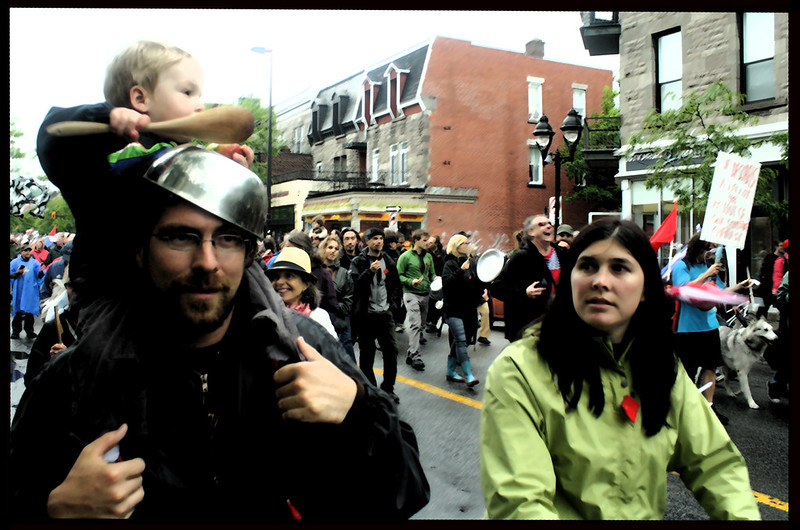
The first examines the digital soundbite or “cut-out” from X González’s protest speech following the school shooting at Marjory Stoneman Douglas High School in Parkland, Florida. The second focuses on the rhythmic, call-and-response “heckling” by HU Resist during their occupation of a Howard University building in protest of a financial aid scandal. The third analyzes the noisy “Casseroles” retaliatory protests in Québec, where demonstrators banged pots and pans in response to Bill 78’s attempts to curtail public protest.
A full recounting of the book’s case studies isn’t possible here, but they are worth highlighting—not only for the issues Eckstein brings to light, but for how clearly they showcase his analytical tools and methods in action. These methods, in my estimation, are the book’s most significant contribution to rhetorical studies and to scholars more broadly interested in sound analysis.
Eckstein’s analytical focus is on what he calls the “sound tactic,” which is “the sound (adjective) use of sound (noun) in the act of demanding” (2). Soundness in this double sense is both effective and affective at the sensory level. It is rhetoric that both does and is sound work—and soundness can only be so within a particular social context. For Eckstein, soundness is “a holistic assessment of whether an argument is good or good for something” (14). Sound tactics, then, utilize a carefully curated set of rhetorical tools to accomplish specific argumentative ends within a particular social collective or audience capable of phronesis or sound practical judgement (16). Unsound tactics occur when sound ceases to resonate due to social disconnection and breakage within a sonic pathway (see Eckstein’s conclusion, where he analyzes Canadian COVID-19 protests that began with long-haul truck drivers, but lost soundness once it was detached from its original context and co-opted by the far right).

Just as rhetorical studies has benefitted from the influence of sound studies, Eckstein brings rhetorical methods to sound studies. He argues that rhetoric offers a grounding corrective to what he calls “the universalization of technical reason” or “the tendency to focus on the what for so long that we forget to attend to the why” (29). Following Robin James’s The Sonic Episteme: Acoustic Resonance, Neoliberalism, and Biopolitics, he argues that sound studies work can objectify and thus reify sound qua sound, whereas rhetoric’s speaker/audience orientation instead foregrounds sound as crafted composition—shaped by circumstance, structured by power, and animated by human agency. Eckstein finds in sound studies the terminology for such work, drawing together terms such as acousmatics, waveform, immediacy, immersion, and intensity to aid his rhetorical approach. Each name an aspect of the sonic ecology.
Rhetoricians often speak of the “rhetorical situation” or the circumstances that create the opportunity or exigence for rhetorical action and help to define the relationship between rhetor and audience. While the rhetorical action itself is typically concrete and recognizable, the situation itself—which is always in motion—is more difficult to pin down. “Acousmatics” names a similar phenomenon within a sonic landscape. Noise becomes signal as auditors recognize and respond to particular kinds of sound—a process that requires cultural knowledge, attention, and the proverbial ear to hear. A sound’s origins within that situation may be difficult to parse. Acousmastics accounts for sound’s situatedness (or situation-ness) within a diffuse media landscape where listeners discern signal-through-noise, and bring it together causally as a sound body, giving it shape, direction, and purchase. As such a “sound body” has a presence and power that a single auditor may not possess.

Eckstein defines “sound body” as “our imaginative response to auditory cues, painting vivid, often meaningful narratives when the source remains unseen or unknown” (10). And while the sound body is “unbounded,” it “conveys the immediacy, proximity, and urgency typically associated with a physical presence (12). Thus, a sound body (unlike the human bodies it contains) is unseen, but nonetheless contained within rhetorical situations, constitutive of the ways that power, agency, and constraint are distributed within a given rhetorical context. Eckstein’s sound body is thus distinct from recent work exploring the “vocal body” by Dolores Inés Casillas, Sebastian Ferrada, and Sara Hinojos in “The ‘Accent’ on Modern Family: Listening to Vocal Representations of the Latina Body” (2018, 63), though it might be nuanced and extended through engagement with the latter. A focus on the vocal body brings renewed attention to the materialities of the voice—“a person’s speech, such as perceived accent(s), intonation, speaking volume, and word choice” and thus to sonic elements of race, gender, and sexuality. These elements might have been more explicitly addressed and explored in Eckstein’s case studies.
Eckstein uses these terms to help us understand the rhetorical complexities of social movements in our contemporary, digital world—movements that extend beyond the traditional public square into the diverse forms of activism made possible by the digital’s multiplicities. In that framework he offers the “waveform” as a guiding theoretical concept, useful for discerning the sound tactics of social movements. A waveform—the digital, visual representation of a sonic artifact—provides a model for understanding how sound takes shape, circulates, and exerts force. Waveforms also obscure a sound’s originating source and thus act acousmastically.
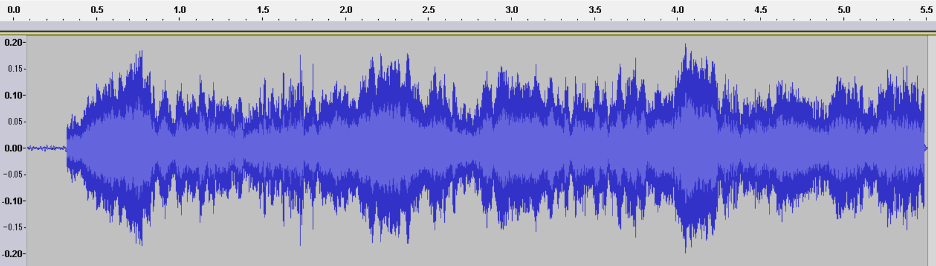
“[A] waveform is a visual representation of sound that measures vibration along three coordinates: amplitude, frequency, and time” (50). Eckstein draws on the waveform’s “crystallization” of a sonic moment as a metaphor to show sound’s transportability, reproducibility, and flexibility as a media object, and then develops a set of analytical tools for rhetorical analysis that match these coordinates: immediacy, immersion, and intensity. As he describes:
Immediacy involves the relationship between the time of a vibration’s start and end. In any perception of sound, there can be many different sounds starting and stopping, giving the potential for many other points of identification. Immersion encompasses vibration’s capacity to reverberate in space and impart a temporal signature that helps locate someone in an area; think of the difference between an echo in a canyon and the roar of a crowd when you’re in a stadium. Finally, intensity describes the pressure put on a listener to act. Intensity provides the feelings that underwrite the force to compel another to act. Each of these features and the corresponding impact of this experience offer rhetorical intervention potential for social movements. (51)
This toolset is, in my estimation, the book’s most cogent contribution for those working with or interested in sonic rhetorics. Eckstein’s case studies—which elucidate moments of resistance to both broad and incidental social problems—offer clear examples of how these interrelated aspects of the waveform might be brought to bear in the analysis of sound when utilized in both individual and collective acts of social resistance.
To highlight just one example from Eckstein’s three detailed case studies, consider the rhetorical use of immediacy in the chapter titled “The Cut-Out and the Parkland Kid.” The analysis centers on a speech delivered by X González, a survivor of the February 14, 2018, Marjory Stoneman Douglas High School shooting in Parkland, Florida. Speaking at a gun control rally in Ft. Lauderdale six weeks after the tragedy, González employed the “cut-out,” a sound tactic that punctuated their testimony with silence.
Embed from Getty Images.
As the final speaker, González reflected on the students lost that day—students who would no longer know the day-to-day pleasures of friendship, education, and the promise of adulthood. The “cut-out” came directly after these remembrances: an extended silence that unsettled the expectations of a live audience disrupting the immediacy of such an event. As the crowd sat waiting, González remained resolute until finally breaking the silence: “Since the time that I came out here, it has been six minutes and twenty seconds […] The shooter has ceased shooting and will soon abandon his rifle, blend in with the students as they escape, and walk free for an hour before arrest” (69–70).
As Eckstein explains, González “needed a way to express how terrifying it was to hide while not knowing what was happening to their friends during a school shooting” (61). By timing the silence to match the duration of the shooting, the focus shifted from the speech itself to an embodied sense of time—an imaginary waveform of sorts that placed the audience inside the terror through what Eckstein calls “durational immediacy.” In this way, silence operated as a medium of memory, binding audience and victims together through shared exposure to the horrors wrought over a short period of time.
…
Sound Tactics is a must-read for those interested in a better understanding of sound’s rhetorical power—and especially how sonic means aid social movements. In conclusion, I would mention one minor limitation of Eckstein’s approach. As much as I appreciated his acknowledgement of sound’s absence from the Communication side of rhetoric, such a proclamation might have benefited from a more careful accounting of sound-related works in rhetorical studies writ large over the last few decades. Without that fuller context, readers may conclude that rhetorical studies has—with a few exceptions—not been engaged with sound. To be fair, the space and focus of Sound Tactics likely did not permit an extended literature review. There is thus an opportunity here to connect Eckstein’s important intervention with the work of other rhetoricians who have also been advancing sound studies.
I am including here a link to a robust (if incomplete) bibliography of sound-related scholarship that I and several colleagues have been compiling, one that reaches across Communication and Writing disciplines and beyond.
—
Featured Image: Family at the CLASSE (Coalition large de l’ASSÉ ) Demonstration in Montreal, Day 111 in 2012 by Flicker User scottmontreal CC BY-NC 2.0
—
Jonathan W. Stone is Associate Professor of Writing and Rhetoric at the University of Utah, where he also serves as Director of First-Year Writing. Stone studies writing and rhetoric as emergent from—and constitutive of—the mythologies that accompany notions of technological advance, with particular attention to sensory experience. His current research examines how the persisting mythos of the American Southwest shapes contemporary and historical efforts related to environmental protection, Indigenous sovereignty, and racial justice, with a focus on how these dynamics are felt, heard, and lived. This work informs a book project in progress, tentatively titled A Sense of Home.
Stone has long been engaged in research that theorizes the rhetorical affordances of sound. He has published on recorded sound’s influence in historical, cultural, and vernacular contexts, including folksongs, popular music, religious podcasts, and radio programs. His open-source, NEH-supported book, Listening to the Lomax Archive, was published in 2021 by the University of Michigan Press and investigates the sonic archive John and Alan Lomax created for the Library of Congress during the Great Depression. Stone is also co-editor, with Steph Ceraso, of the forthcoming collection Sensory Rhetorics: Sensation, Persuasion, and the Politics of Feeling (Penn State U Press), to be published in January 2026.
—
REWIND!…If you liked this post, check out:
SO! Reads: Marisol Negrón’s Made in NuYoRico: Fania Records, Latin Music, and Salsa’s Nuyorican Meanings –Vanessa Valdés
Quebec’s #casseroles: on participation, percussion and protest–-Jonathan Sterne
SO! Reads: Steph Ceraso’s Sounding Composition: Multimodal Pedagogies for Embodied Listening-–Airek Beauchamp
Faithful Listening: Notes Toward a Latinx Listening Methodology––Wanda Alarcón, Dolores Inés Casillas, Esther Díaz Martín, Sara Veronica Hinojos, and Cloe Gentile Reyes
The Sounds of Equality: Reciting Resilience, Singing Revolutions–Mukesh Kulriya
SO! Reads: Todd Craig’s “K for the Way”: DJ Rhetoric and Literacy for 21st Century Writing Studies—DeVaughn Harris
Share this:


Current Top Posts





April 2021

January 2020

November 2019

October 2019

August 2019

April 2014

November 2017

March 2015

December 2017

October 2015
 Sounding Out!
Recent Comments