
Echoes in Transit: Loudly Waiting at the Paso del Norte Border Region

This series listens to the political, gendered, queer(ed), racial engagements and class entanglements involved in proclaiming out loud: La-TIN-x. ChI-ca-NA. La-TI-ne. ChI-ca-n-@. Xi-can-x. Funded by an Andrew W. Mellon Foundation as part of the Crossing Latinidades Humanities Research Initiative, the Latinx Sound Cultures Studies Working Group critically considers the role of sound and listening in our formation as political subjects. Through both a comparative and cross-regional lens, we invite Latinx Sound Scholars to join us as we dialogue about our place within the larger fields of Chicanx/Latinx Studies and Sound Studies. We are delighted to publish our initial musings with Sounding Out!, a forum that has long prioritized sound from a queered, racial, working-class and “always-from-below” epistemological standpoint. —Ed. Dolores Inés Casillas
—
This post is co-authored by José Manuel Flores & Dolores Inés Casillas
DOI: https://doi.org/10.59350/00ja9-f8m67
A borderland is a vague and undetermined place created by the emotional residue of an unnatural boundary. It is in a constant state of transition.
Gloria Anzaldúa (1999)
Ciudad Juárez es número uno/
y la frontera más fabulosa y bella del mundo
Juan Gabriel (lyric to “Juárez es el #1” – 1984)
—
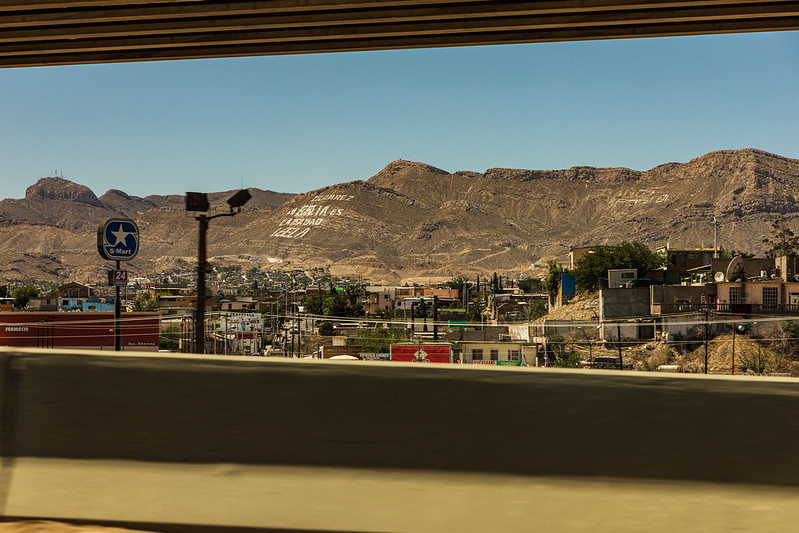
Geographically, the Paso del Norte (PdN) region includes the city of El Paso, Texas, Ciudad Juárez, Mexico, as well as neighboring cities in the state of New Mexico (see map). U.S. citizens live and play in Juárez, and those in Juárez (Juarenses), live and work in El Paso with families extended on both sides; continually moving back and forth. Yet, this broader region has long been plagued with sensationalizing headlines, both in the U.S. and in Mexico, that cast violent and limiting portrayals of these borderland communities. Recognized as sister cities, El Paso and Ciudad Juárez are seen less as close-knit siblings and more like distant cousins with Juárez routinely referred to undesirably as the little sister or ugly sister in comparison to El Paso. Indeed these hierarchical north/south (first world/not-quite-first-world) distinctions are products of histories of colonialism, unequal trade policies, and racial capitalist systems galvanized by immigrant detention camps (a tenant of the Immigration Industrial Complex). Within larger conversations about border cities, both Tijuana (San Diego) and Reynosa (McAllen) are recognized as the “primary” border cities due to their larger population size, transnational capital, and industrious reputations.
Two decades ago, Josh Kun’s concept of the “aural border” invited scholars to consider the US/Mexico border as a “field of sound, a terrain of musicality and music-making, of melodic convergence and dissonant clashing” (2000). Kun’s writings over the years have roused generations of sound scholars to listen to borders, border crossings, border communities and how they reverberate their economic, social, and migrant conditions. This essay intentionally moves away from Kun’s (beloved) border city of Tijuana and towards a less-referenced US/Mexico border city: Ciudad Juárez, Mexico. Here, 1,201 kilometers east of Tijuana, we offer an opportunity to listen to Juárez’s everyday bustling of migratory life through the digital sound repository, the Border Soundscapes Project.
Sound structures our social, cultural, and political relations, and as Tom Western reminds us succinctly: “sounds have politics” (2020). Indeed, Juárez’s soundscapes are microcosms of economic, immigration and border enforcement policies as the city’s migratory composition changes depending on the latest economic crisis in the global south. “Whether intentional or unintentional,” Sarah Barns insists “urban soundscapes are by-products of both active design strategies as well as infrastructure and socio-economic organization” (2014). In essence, listening to migrants within Juárez, along with those planning to traverse Ciudad Juárez (to el norte), shapes our multiethnic and multiracial understandings of Latinidad.
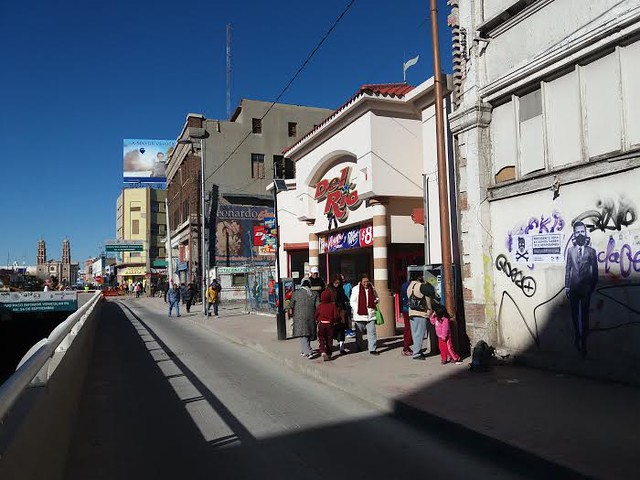
Field audio recordings of public life including nuanced linguistic expressions, comprise a rich sonic site that best demonstrates Juárez’s daily sounds of transit. This Project benefits tremendously from José Manuel Flores’s attentive ear, raised as a borderlander himself, and a seasoned crosser of the bridges linking Juárez and El Paso. Flores created this Project in 2018, the same year, Ciudad Juárez became a prominent make-shift, temporary “home” for groups of migrants – currently a majority of Venezuelan-nationals with previous waves of Cubanos and Salvadoreños. Within Juárez, these migrant caravans initially settled on the primary Paso del Norte bridge and later to nearby main border bridges. Migrants have felt comfortable settling in this arid city of approximately 1.5 million people, while others consider Juárez more of a “waiting room” before setting their sights on securing political asylum in the United States. Either way, Juárez becomes part of both their journey and resettlement.
Below are five instances where we listen to migrants in Juárez.
Track 1: Migrants in Ciudad Juarez: “Te traigo un manguito”
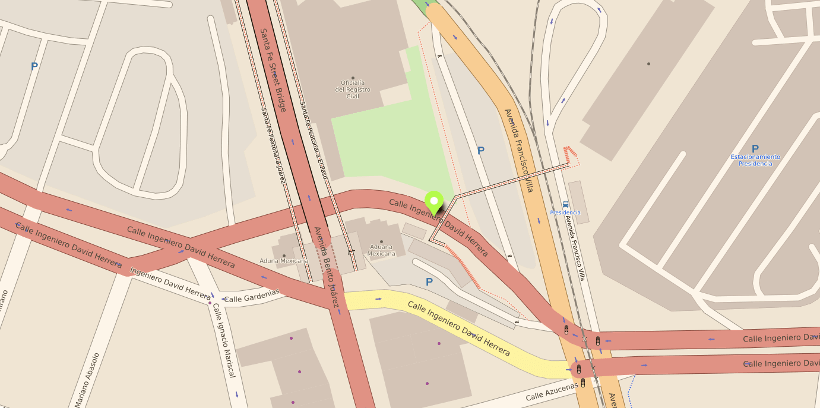
Near the Paso del Nte. International Bridge, in Juárez, on Avenida Juárez, a downtown street where people begin to line up to cross the border. Cars are heard passing. A Venezuelan man wants to rest on this hot day yet his friend cajoles him to get ready to work. He promises his resting friend un mangito o agua (a mango or water) as soon as he’s up and ready to tackle some work.
Track #2: Migrants in Ciudad Juarez: “Cualquier bendición que le sale a tu corazón es buena”
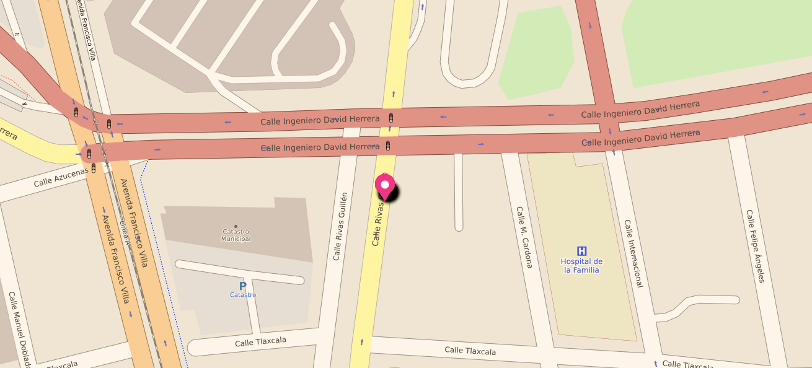
Near Juárez’s Migration’s national institute and Presidencia Municipal de Ciudad Juárez, an older woman cleans car windshields during traffic stops. As she cleans, she is heard laughing while conversing and doling out bendiciones (blessings) to those who gave her work. She’s assumed to be Venezuelan yet her use of the word “carnal” –a Mexican phrase to say brother – indicates that she’s been in Juárez for sometime.
Track #3: Migrants in Ciudad Juarez: “El Escandalo”
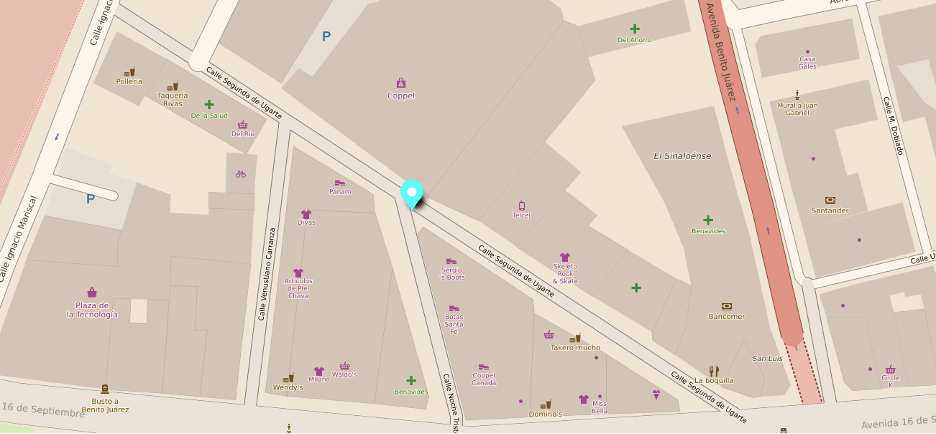
Local news highlights the influx of migrant caravans in promising tones. In an interview for local and national media in Mexico, Mr. José Luis Cruzalta, Cuban migrant, comments that: “no hay que ir para el lado de allá (EE.UU.), aquí se vive igual o mejor que del lado de allá, menos sacrificio, sin meterte en problemas, aquí no hay problemas de ningún tipo.”
“you don’t have to go there (USA), here you live the same or better than on that side, less sacrifice, without getting into trouble, there are no problems of any kind here, they can stay here.”
He later sends assurances that there is enough work for everyone and that only a willingness and desire to work is required, that nothing else.
Track #4: Migrants in Ciudad Juarez: “Rincon Cubano”
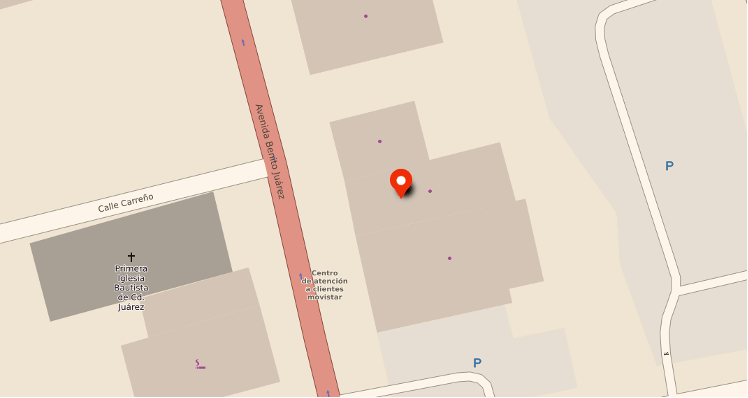
A group of Cuban migrants started a small Creole street food business offering “frituras de maíz” and Cuban “tamales.” The sound space of the downtown of Ciudad Juárez is nourished by the voices of a group of Cubans proclaiming Cuban Corn, “Maíz Cubano”. These contemporary Cuban criers conjure the city’s sonic memories of previous food vendors. Flores remembers fondly as a child the shouting of “Caldo de Oso” (Bear Broth) for sale and the fear that he’d find a grizzly bear in his soup.
Track #5: Migrants In Ciudad Juarez: Haitians Talking in La Taquería
The small restaurant,”La Taqueria,” in downtown Juárez has undergone ethnic transformations. A few years ago it used to be a place known for traditional Cuban food –el rincón cubano–, nowadays it is a place recognized for its tasty, Venezuelan food. Caribbean music attracts some Haitian migrants to this place, inside the restaurant there are some families eating and having a restful moment. Outside the place, there are some Haitian families moving through the city carrying their luggage.
Bonus Track and Outro
The Border Soundscapes Project offers an acoustic ecology of this region through a site that acts as part-archive, part-map, and perhaps even, part-love-song, à la the late singer Juan Gabriel, a globally famous Juaranese who dedicated six songs to his beloved home city.
The Border Soundscapes Project invites listeners to hear for yourself why Juan Gabriel characterized Juárez as the most beautiful borderland in the world. His lyrics fiercely defended Juárez, and decades later, the Border Soundscapes Projects demonstrates how Juarez, the “little sister,” dignifies their migrant communities, in the critical context of Gloría Anzaldúa’s conceptions of borders as vague, “unnatural boundaries” crafted by the “emotional residue” of two other siblings: colonialism and capitalism.
Inspired by the written musings of Valeria Luiselli (2019), the Border Soundscapes Project also functions as an “inventory of echoes,” where sounds are not simply recovered or used within a larger catalog project. Instead, sounds are considered “present in the time of recording and that, when we listen to them, remind us of the ones that are lost” (p. 141), and we would add, in transit. Most importantly, echoes cannot be placed on static, visual representations of standard “maps.” In offering audio snippets of Juárez’s public life, sound becomes a different migrant-led “scale of analysis” (DeLeon 2016); a type of audio counter-mapping of the U.S./Mexico border that lends itself uniquely to sound.
—
Featured Image by Flickr User Simon Foot, “Ciudad Juárez, from El Paso, Texas” (CC BY-NC-ND 2.0)
—
José Manuel Flores is a Ph.D. student in the Rhetoric and Composition Program at The University of Texas at El Paso. He holds an MA in Studies and Creative Processes in Art and Design. He considers that the sounds that arise between the Juarez and El Paso border are relevant because they contribute to the historical heritage of the region. That is why his interest as a researcher focuses on Sound Studies, specifically in the intersection between Soundscapes and philosophy from a disciplinary posture of rhetoric.
Dolores Inés Casillas is Professor of Chicana and Chicano Studies and Director of the Chicano Studies Institute (CSI) at the University of California, Santa Barbara. She is author of Sounds of Belonging: U.S. Spanish-language Radio and Public Advocacy (2014), which received two book prizes, and co-editor of the Companion to Latina/o Media Studies (2016) and Feeling It: Language, Race and Affect in Latinx Youth Learning (2018).
—

REWIND!…If you liked this post, you may also dig:
Xicanacimiento, Life-giving Sonics of Critical Consciousness—Esther Díaz Martín and Kristian E. Vasquez
Ronca Realness: Voices that Sound the Sucia Body—Cloe Gentile Reyes
SO! READS: Melissa Mora Hidalgo’s Mozlandia: Morrissey Fans in the Borderlands–Nabeel Zuberi
Your Voice is (Not) Your Passport–Michelle Pfeiffer
Óyeme Voz: U.S. Latin@ & Immigrant Communities Re-Sound Citizenship and Belonging-Nancy Morales
“Don’t Be Self-Conchas”: Listening to Mexican Styled Phonetics in Popular Culture*–Sara Hinijos and Inés Casillas
“Listening to the Border: ‘”2487″: Giving Voice in Diaspora’ and the Sound Art of Luz María Sánchez”-D. Ines Casillas
—
Share this:

Voice as Ecology: Voice Donation, Materiality, Identity

DOI: https://doi.org/10.59350/ehj00-cem02
I first heard about voice donation while listening to “Being Siri,” an experimental audio piece about Erin Anderson donating her voice to Boston-based voice donation company, VocaliD. Like a digital blood bank of sorts, VocaliD provides a platform for donating one’s voice via digital audio recordings. These recordings are used to help technicians create a custom digital voice for a voiceless individual, providing an alternative to the predominately white, male, mechanical-sounding assistive technologies used by people who cannot vocalize for themselves (think Stephen Hawking). VocaliD manufactures voices that better match a person’s race, gender, ethnicity, age, and unique personality. To me, VocaliD encapsulates the promise, complexity, and problematic nature of our current speech AI landscape and serves as an example of why we need to think critically about sound technologies, even when they appear to be wholly beneficial.
Given the extreme lack of sonic diversity in vocal assistive technologies, VocaliD provides a critically important service. But a closer look at both the rhetoric used by the organization and the material process involved in voice donation also amplifies the limits of overly simplistic, human-centric conceptions of voice. For instance, VocaliD rhetorically frames their service by persistently linking voice to humanity—to self, authenticity, individuality. Consider the following statements made by Rupal Patel, CEO and founder of VocaliD, in which she emphasizes the need for voice donation technology:
“Here’s a way for us to acknowledge these individuals as unique human beings.” (Fast Company)
“I was talking to [a] girl we made a voice for. She told me that people are finally seeing her for who she really is.” (Medieros)
These are just a few examples from a larger discourse that reinforces the connection between voice and humanity. VocaliD’s repeated claims that their unique vocal identities humanize individuals imply that one is not fully human unless one’s voice sounds human. This rhetoric positions voiceless individuals as less than human (at least until they pay for a customized human-sounding voice).
VocaliD’s conflation of voice and humanity makes me wonder about the meaning of “human” in this context. For example, notions of humanity have been historically associated with Western whiteness—and deployed as a means of separating or distinguishing white people from Others—as Alexander Weheliye points out. Though VocaliD’s mission is to diversify manufactured voices, is a “human-sounding” voice still construed as a white voice? Does sounding human mean sounding white? Even if there is a bank of sonically diverse voices to choose from, does racial bias show up in the pacing, phrasing, or inflection caused by the vocal technology?

I am also disturbed by the rhetoric of humanity and individuality used by VocaliD because the company adopts the same rhetoric to describe the AI voices they sell to brands for media and smart products. Here’s an example of this rhetoric from the VocaliD AI website: “When you need a voice that resonates, evokes audience empathy, and sounds like you, rather than your competitors, VocaliD’s AI-powered vocal persona is the solution. Your voice — always on, where you need it when you need it.” Using similar rhetorical strategies to describe both voiceless people and products is dehumanizing. And yet, having a more diverse AI vocal mediascape, especially in terms of race, is crucially important since voice-activated machines and products are designed largely by white men who end up reinforcing the sonic color line.
Interestingly, the processes VocaliD uses to create a custom voice reveal that these voices are not, in fact, unique markers of humanity or individuality. It’s hard to find a detailed account of how VocaliD voices are made due to the company’s patents, but here are the basics: VocaliD does not transfer a donated voice directly to a voiceless person’s assistive technology. VocaliD technicians instead blend and digitally manipulate the donated voice with recordings of the noises a voiceless person can make (a laugh, a hum) to create a distinct new voice for the recipient. In other words, donated voices are skillful remixes that wouldn’t be possible without extracting vocal data and manipulating it with digital tools. Despite perpetuating narratives about voice, humanity, and authenticity, VocaliD’s creative blending of vocal material reveals that donated voices are the result of compositional processes that involve much more than people.
Further, considering VocaliD voices from a material rather than human-centric perspective amplifies something important about voices in general. All voices are composed of and grounded in an ecology. That is, voices emerge and are developed through a mixture of: (1) biological makeup (or technological makeup in the case of machines with voices); (2) specific environments and contexts (geography may determine the kind of accents humans have; AI voices have distinct sounds for their brands); (3) technologies (phones, computers, digital recorders and editors, software, and assistive technologies preserve, circulate, and amplify voices); and (4) others (humans often emulate the vocal patterns of the people they interact with most; many machine voices also sound like other machine voices). Put simply, all voices are intentionally and unintentionally composed over time—shaped by ever-changing bodily (and/or technological) states and engagements with the world. Voices are dynamic compositions by nature. Examining voice from a material standpoint shows that voices are not static markers of humanity; voices are responsive and malleable because they are the result of a complex ecology that involves much more than a “unique” human being.
However, focusing solely on the material aspects of vocality leaves out people’s lived experiences of voice. And based on online videos of VocaliD recipients—like Delaney, a seventeen-year-old with cerebral palsy—VocaliD voices seem to live up to the company’s hype. Delaney appears delighted by her new voice, stating: “I was so excited to get my own voice. I used to have a computer voice and now I sound like a girl. I like that. And I talk more.” Delaney’s teachers also discuss how her new voice completely changed her demeanor. Whereas before Delaney was reluctant to use her assistive technology to speak, her new voice gives her confidence and a stronger sense of identity. As her teacher explains in the video, “she is really engaged in groups, she wants to share her answers, she’s excited to talk with friends. It’s been really nice to see.” For Delaney, a VocaliD voice represents a newfound sense of agency.
It’s important to recognize this video is not necessarily representative of every VocaliD recipient’s experience, or even Delaney’s full experience. As Meryl Alper notes in Giving Voice, these types of news stories “portray technology as allowing individuals to ‘overcome’ their disability as an individual limitation, and are intended to be uplifting and inspirational for able-bodied audiences” (27). While we should be wary of the technological determinism in the video, observing Delaney use her VocaliD voice—and listening to the emotional responses of her mom and teachers—makes it difficult to deny that donated voices make a positive impact. For me, this video also gets at a larger truth about humans and voice: the ways we hear and understand our own voices, and the ways others interpret the sounds of our voices, matter a great deal. Voices are integral to our identities—to the ways we understand and think about ourselves and others—and the sounds of our voices have social and material consequences, as the SO! Gendered Voices Forum illustrates so clearly.

It’s worth repeating that VocaliD’s mission to diversify synthetic voices is incredibly important, especially given the restrictive vocal options available to voiceless individuals. It’s also necessary to acknowledge the company has limitations that end up reproducing the structural inequities it tries to address. As Alper observes, “In order to become a speech donor, one must have three to four hours of spare time to record their speech, access to a steady and strong Internet connection, and a quiet location in which to record” (162-63). With these obstacles to donating one’s voice in mind, it’s not surprising that all the VocaliD recipient videos I could find feature white people. Donating one’s voice is much easier for middle to upper class white people who have access to privacy, Internet, and leisure time.
This brief examination of VocaliD raises questions about what a more equitable future for vocal technologies might look/sound like. Though I don’t have the answer, I believe that to understand the fullness of voice, we can’t look at it from a single perspective. We need to account for the entire vocal ecology: the material (biological, technological, financial, etc.) conditions from which a voice emerges or is performed, and individual speakers’ understanding of their culture, race, ethnicity, gender, class, ability, sexuality, etc. An ecological approach to voice involves collaborating with people and their vocal needs and desires—something VocaliD models already. But it also involves accounting for material realities: How might we make the barriers preventing a more diverse voice ecosystem less difficult to navigate—especially for underrepresented groups? In short, we must treat voice holistically. Voices are more than people, more than technologies, more than contexts, more than sounds. Understanding voice means acknowledging the interconnectedness of these things and how that interconnectedness enables or precludes vocal possibilities.
—
Featured image: 366-350 You can’t shut me up, Jennifer Moo, CC BY-ND
—
Steph Ceraso is an associate professor of digital writing and rhetoric at the University of Virginia. Her 2018 book, Sounding Composition: Multimodal Pedagogies for Embodied Listening, proposes an expansive approach to teaching with sound in the composition classroom. She also published a digital book in 2019 called Sound Never Tasted So Good: ‘Teaching’ Sensory Rhetorics—an exploration of writing, sound, rhetoric, and food. She is currently working on a book project that examines sonic forms of invention in various contexts.
—

REWIND! . . .If you liked this post, you may also dig:
What is a Voice?–Alexis Deighton MacIntyre
Mr. and Mrs. Talking Machine: The Euphonia, the Phonograph, and the Gendering of Nineteenth Century Mechanical Speech – J. Martin Vest
Only the Sound Itself?: Early Radio, Education, and Archives of “No-Sound”–Amanda Keeler
Share this:




Current Top Posts




April 2021

January 2020

November 2019

October 2019

August 2019

April 2014

November 2017

March 2015
December 2017

October 2015


Recent Comments