
Sonic Homes: The Sonic/Racial Intimacy of Black and Brown Banda Music in Southern California


This series listens to the political, gendered, queer(ed), racial engagements and class entanglements involved in proclaiming out loud: La-TIN-x. ChI-ca-NA. La-TI-ne. ChI-ca-n-@. Xi-can-x. Funded by an Andrew W. Mellon Foundation as part of the Crossing Latinidades Humanities Research Initiative, the Latinx Sound Cultures Studies Working Group critically considers the role of sound and listening in our formation as political subjects. Through both a comparative and cross-regional lens, we invite Latinx Sound Scholars to join us as we dialogue about our place within the larger fields of Chicanx/Latinx Studies and Sound Studies. We are delighted to publish our initial musings with Sounding Out!, a forum that has long prioritized sound from a queered, racial, working-class and “always-from-below” epistemological standpoint. —Ed. Dolores Inés Casillas
—
No tengo nada de sangre de Mexico. Soy afro americano.
(I have no Mexican blood. I am African American.)
El Compa Negro (Ryhan Lowery)
The grain is the body in the singing voice, in the writing hand, in the performing limb.
Roland Barthes (The Grain of the Voice,1971)
***This post is co-authored by Sara Veronica Hinojos and Alex Mireles
Sarah La Morena (Sarah the Black woman), or Sarah Palafox, was adopted and raised by a Mexican family in Mexico. At the age of five, she moved to Riverside, California, a predominantly Mexican city an hour east of Compton. Palafox started singing as a way to express the racism she faced as a child in Southern California, feeling caught between her Black appearance and her Mexican sound. She found her voice in church, a nurturing environment where she could be herself, surrounded by her family’s love. She gained attention with a viral video of her rendition of Jenni Rivera’s “Que Me Vas a Dar.” Palafox delivers each note with profound emotion and precision, leaving even the accompanying mariachi violinist in awe.
Similarly, El Compa Negro (The Black Friend/Homie) or Rhyan Lowery heard the sounds of banda coming from his neighbor’s backyard in Compton; a historically Black-populated city with a current Mexican majority. Lowery couldn’t shake the song out of his head and learned the song’s Spanish-language lyrics. Like Palafox, videos of him singing in Spanish during high school made him a viral sensation. “They called me ‘el compa negro’ (…) All I heard was ‘blah blah blah negro or negro’ and I wasn’t having it until they explained to me what it meant. And I was like ‘ok, cool’.”
The sonic stylings of El Compa Negro and Sarah La Morena within the banda genre enable transcultural connections beyond the pan-Chicano-Mexican-Central American popularity of tecnobanda and la quebradita. The 1990s banda craze, writes George Lipsitz “challenged traditional categories of citizenship and culture on both sides of the US-Mexico border.” Banda music might sound like it was established south of the border, but multicultural listeners and dancers continue to influence its vibrations. Pop stars like Snoop Dogg, Shakira, Bad Bunny, and Karol G have released (tokenized) songs with Mexican-tinged, banda-recognizable beats. Yet, both El Compa and Sarah demonstrate a form of musical Black/Brown, working-class intimacy. Their respective musics are much less about a pop star (duet) kind of solidarity and much more about a deep knowing, a sensibility among working-class cultures and othered people that resonates through the aesthetics of sound. As Karen Tongson writes in Relocations: Queer Suburban Imaginaries, about her experience of “queer, brown, immigrant musical discovery” in Riverside, the hometown she shares with Sarah La Morena: “It is the music that inspires us to ask questions” (26).
Certainly, US Mexican immigrant culture does not have the same (mainstream) cultural caché as African American culture, unless somehow softened or filtered. Jalapeños get “de-spicifed“; pre-made Día de Los Muertos altares are now at Wal-Mart, and huipiles are available as fast-fashioned “peasant blouse;” filtering out their Mexican-indigenous origins. Thus, classics like “La Yaquesita” and originals like “Yo Soy Compton” heard through the grain of Black voices affirm the possibilities of U.S. Mexican belonging or what D. Travers Scott characterizes as a form of “intimate intersubjectivities;” rooted in long-established Black/Brown co-existences across the borderlands and city barrios. Turning the volume up on these artists serves an important counterpoint to Latino anti-Black racism.
Their voices, blending with brass and tambora, embody a Black-Brown sonic and symbolic solidarity, or spatial entitlement. As theorized by Gaye Theresa Johnson in Spaces of Conflict, Sounds of Solidarity, innovative applications of technology, creativity, and space foster new collectives which, even when “unheard” by historians, assert social citizenship and pave the way for new working-class political futures. In the contested neighborhoods of greater Los Angeles, Black and Brown communities are often pitted against one another through processes of containment and confinement leading to competitions for jobs, housing, status, and political power. Yet, they share the experiences of labor exploitation, housing segregation, and cultural vilification. Filmed in the intimate settings of backyards, the viral videos underscore Black/Brown hood/barrio soundscapes as multi-generational, familial, and culturally hybrid. Home is where shared class, racial, and gender politics are negotiated and resolved.
Asserting Black identity and the choice to perform in Spanish creates a unique visual and auditory experience within the Mexican-dominant world of banda. In fact, in 2024, Lowery made history as the first Spanish-language artist signed by Death Row Records, a label known primarily for hip hop. The lively rhythms of banda – oompah-oompah-oompah – offers both banda and hip hop listeners a new orientation to discern the racial-cultural politics of broader Los Angeles.
Like the mid-century Haitian-Mexican bolero singer Antonia del Carmen Peregrino Álvarez, alias “Toña La Negra,” the added tags “Negro” and “la Morena” signals Black singers’ recognition of the meaning(s) of their racial difference within the transnational Mexican music scene. The auditory discomfort that their vocal grain might cause is named and thus recognized as the persistent colorism of listeners at large. Lowery describes his initial unease with the given “Compa Negro” nickname. “My Mexican friends always tell me ‘Hey, compa negro, you’re Mexican, man. God just left you in the oven a little too long.’” The harassment came from both Black peers and Mexicans alike, for liking banda, dating Latinas, or dressing “like a Mexican.” “They would say, ‘You hate being Black. Self-hate. Self-hate. I’m like man it ain’t that I self-hate, it’s just that I embrace something. I took the time to have an open mind and study something, you know?” His way of being made sense in the context of a Compton teenage experience. “Becoming Mexican” by way of musical/cultural engagement surpassed skin tone-deep and nationalist differences.
Or, as Mexican ranchera singer Chavela Vargas–born in Costa Rica–famously asserted, “Mexicans are born wherever the hell they want!” Try listening to Juan Gabriel’s “Amor Eterno” to find out. Black creatives like Evander, Vaquera Canela, and Terry Turner are just a few more examples of Black mexicanidad. Yessica Garcia Hernandez reminds us that Black and Brown sonic solidarities have been the driving pulse of US popular music. She argues, “Home and sound is acknowledging that both corridos, hip-hop, and G-funk relationally, has formed paisas.”
El Compa Negro’s “Verde es Vida,” a tribute to California’s weed culture, lowriders, and corridos, booms loudly. The song begins with an accordion playing reggae rhythms, soon interrupted by percussion, guitars, and El Compa’s fast-paced verses. About a minute in, the accordion slows the tempo with a few reggae notes before the vocals return, reintroducing the corrido rhythm: “Hoy andamos en LA bien tranquilitos. En el lowrider escuchando corridos.” The reggae-corrido fusion ends with the familiar “pom pom pom pom!” of the drums, typical of banda and corrido finales, as the accordion plays its last note. Through Lowery’s reggae corrido, we hear his “sonic home” rooted in Black and Brown Los Angeles.
—
Featured Image: still from Sarah La Morena’s “La Llorona” (2020)
—
Sara Veronica Hinojos is an Assistant Professor of Media Studies and on the advisory board for Latin American and Latino Studies at Queens College, CUNY. Her research focuses on representations of Chicanx and Latinx within popular film and television with an emphasis on gender, race, language politics, and humor studies. She is currently working on a book manuscript that investigates the racial function of linguistic “accents” within media, called: GWAT?!: Chicanx Mediated Race, Gender, and “Accents” in the US.
Alex Mireles is a PhD student in the Department of Feminist Studies at UC Santa Barbara. She writes on Latinx identity and queerness, labor, and global capitalism through aesthetic movements in fashion, beauty, media, and visual cultures. Her dissertation explores the queer potential and world-making capabilities of Chicanx popular culture through Mexican regional music, social media, queer nightlife, and film.
—

REWIND!…If you liked this post, you may also dig:
Boom! Boom! Boom!: Banda, Dissident Vibrations, and Sonic Gentrification in Mazatlán—Kristie Valdez-Guillen
Listening to MAGA Politics within US/Mexico’s Lucha Libre –Esther Díaz Martín and Rebeca Rivas
Ronca Realness: Voices that Sound the Sucia Body—Cloe Gentile Reyes
Echoes in Transit: Loudly Waiting at the Paso del Norte Border Region—José Manuel Flores & Dolores Inés Casillas
Sounding Out! Podcast #28: Off the 60: A Mix-Tape Dedication to Los Angeles–Jennifer Stoever
Share this:

Teaching Soundwalks in a Course on Gentrification, Black Music, and Corporate America

On May 5, 2018, the C-ville Weekly, a newspaper based out of Charlottesville, Virginia, published an article titled “Sex, drugs and rock ’n’ roll: new apartment complex promises at least one of those.” The headline referred to the complex being built at 600 West Main St. in Charlottesville. The complex has since been completed and studio bedrooms currently cost more than $1000 a month. As the C-ville Weekly headline shows, the developers were using the term and connotations of “rock ’n’ roll” to sell exclusive – and in many ways unaffordable – housing.
After reading this headline, I began to develop an idea for a summer course at my institution, the University of Virginia (UVA). I ultimately titled that course “Black Music and Corporate America” which I offered online during the summer of 2021 (syllabus available for download via the link above). Although the course discussed varied content – from the multi-ethnic, multi-racial, and multi-gendered histories of rock and roll to the endorsement of conspicuous forms of consumption in hip hop – I wanted to spend one unit focusing on the interrelationship between music, corporate America, and gentrification. I strove to solidify this connection by assigning two related articles. The first article, by geographer and sociologist Brandi Thomson Summers, argues that black residents in Washington D.C. adopt go-go music as a form of reclamation aesthetics to combat their city’s increasingly rampant gentrification. In the second article, ethnomusicologist Allie Martin conducts a soundwalk of D.C.’s Shaw District to forefront the experience of a black woman in the city and help displace white hearing as the default standard of interpreting sound (see Sounding Out!’s Soundwalking While POC series from Fall 2019). These two articles served as a foundation for one of the assignments the students had to complete in class: conducting a soundwalk of their own in which they had to walk around a field site of their choosing and think critically about the sounds they were hearing.
Throughout the summer sessions, students completed three main assignments related to the course topic. They had to think about marketing themselves and thus wrote a cover letter for a job or internship they were interested in pursuing in the future. We also, as a class, sent a suggestion to literary scholar John Patrick Leary, who has created a list of “keywords of capitalism:” buzzwords that get adopted in corporate lingo; we suggested “rockstar” as a term and offered him a brief explanation why:
Students also had to conduct a soundwalk. I asked them to model it after Martin’s and to also take into consideration Summers’ arguments about gentrification, white policing of black sound, and a community’s response to attempts to silence their music and culture.

The soundwalks I received merit sharing with readers of Sounding Out for three primary reasons: 1) The assignment benefited from the online format, especially since students could conduct soundwalks in Charlottesville as well as in their homes across the country. 2) the students made compelling arguments that deserve recognition. 2) the students brought up issues that teachers interested in assigning soundwalks in the future might want to preemptively address.
Students who walked around Charlottesville focused mostly on The Corner, the portion of the city where most of UVA’s student body eats, shops, and drinks. As one student noted, during the regular semester, hundreds of students populating The Corner on any given day during the semester can silence out – literally – the concerns of the homeless and the panhandlers who make the area their home. However, over the summer, Charlottesville’s Corner becomes significantly less populated and, as this student noted, much more silent. As a result of this silence, pedestrians might be much more attuned to Charlottesville’s rampant inequality. This student, over the course of their summer soundwalk on The Corner, came to a radical conclusion: while communities might need moratoriums on evictions, or moratoriums on construction, maybe Charlottesville needs a moratorium on student noise as well.

In addition to focusing on inequality, many students’ soundwalks pointed out discrepancies between what they saw and what they heard while on their soundwalks. Another student writing about The Corner noted how, as a transfer student, the music that they heard emanating from a barbershop helped make them feel at home in Charlottesville. Businesses on The Corner have historically not been entirely welcoming to people of color. Additionally, most pedestrians and patrons of The Corner are white. However, this student remarked how comfortable they felt on The Corner because they could hear one of their favorite artists, Moneybagg Yo, playing from the sound system of the barbershop they were going to visit. Long before they could visually see the business, the soundscape let this student know they were welcome. In this way, this barbershop helped create a sense of community in a similar way that the broadcasting of go-go music from Shaw’s many businesses helps create in Washington D.C.
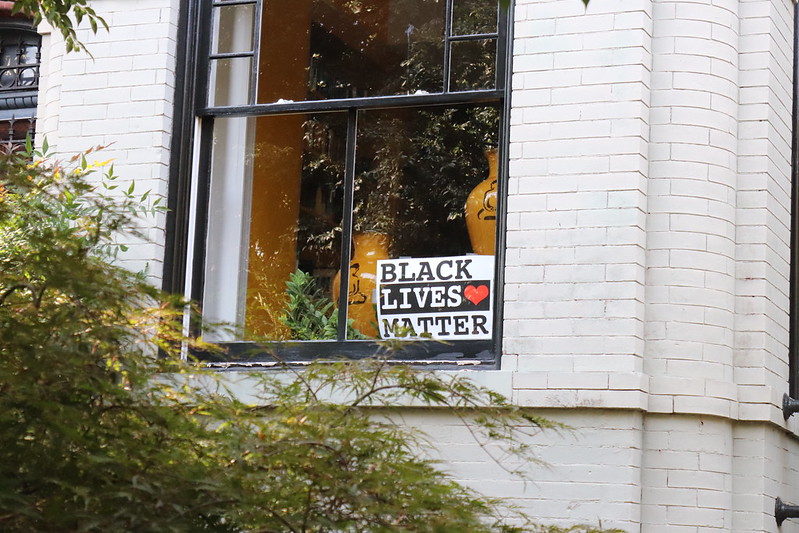
Another student focused specifically on the contradictions between the activism they “saw” demonstrated in their upper-class Boston suburb and the activism they “heard” while walking around their neighborhood. This student noted that residents of their neighborhood strove to create an inclusive atmosphere by putting up “Black Lives Matters” and “Immigrants Welcome” yard signs. However, they also cited Jennifer Lynn Stoever’s work – who we read in class – and noted the presence of what Stoever calls the “sonic color line.” As this students’ own field recordings of their neighborhood illuminated, most residents of this neighborhood valued silence. Harlemites during the 1940s and 1950s, as Stoever writes, certainly appreciated restful nights, but her scholarship also demonstrates how dominant narratives constructed black communities as “noisy,” “chaotic,” and “dangerous,” and white ones as “silent,” “efficient,” and “disciplined.” Although residents in this Boston suburb think of themselves as progressive and demonstrate their liberalism through visual signifiers such as yard signs, this student concluded that they still live in a community that privileges certain (silent) soundscapes. In doing so, such communities continue to perpetuate the sonic color line.
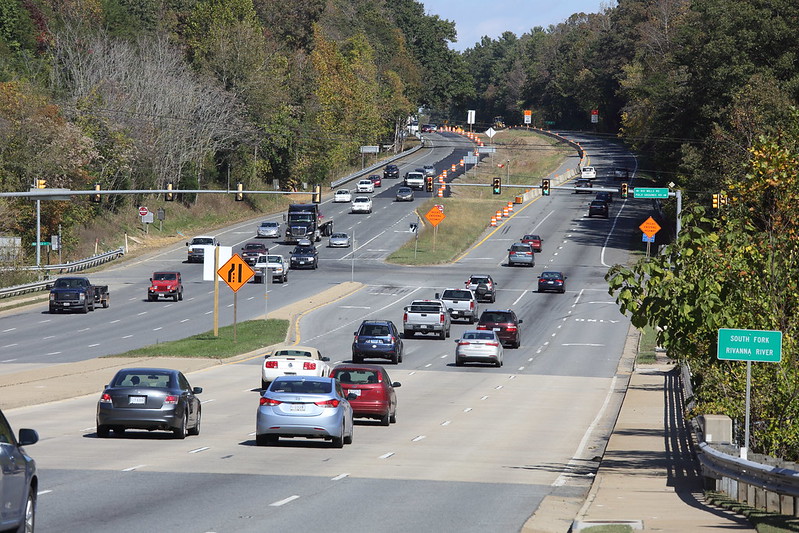
Admittedly, several students living in America’s suburbs struggled to conceive of the sounds they heard as worthy of discussion. For instance, the sounds of cars made frequent appearances in their writing but were often dismissed as inconsequential. Instead, students lamented that they were not experiencing a vibrant public sphere that resembled the setting of Spike Lee’s 1989 film, Do the Right Thing (a film we watched together in class), as if that representation wasn’t a very particular historicized and localized representation. On an individual basis, I tried to get students to think more critically about the sounds of cars in their neighborhood. We read about the role of automobile in the development of G-Funk during the early 1990s as well as the death of Jordan Davis, who was murdered in his car for playing rap too loudly. However, neither article resonated with students’ experience on their soundwalks since they were simply hearing cars passing by their houses or driving down the street. Most of the time, they could not tell what type of music was being listened to at all inside the car nor could they hear it emanate onto the street.
Therefore, teachers, depending on the living conditions of their students, might want to preemptively include discussions of car culture within American society. After all, more than go-go music broadcasted from storefronts, or second line parades, or music playing from boomboxes, or the noise of nature, (my) students typically hear cars in their day-to-day life. As a result, teachers assigning soundwalks may want to talk about the role of highway construction and the automobile industry on suburbanization and white flight. Discussions of automobiles within the context of environmental racism might also be useful for students to consider. Steph Ceraso’s Sounding Composition also discusses the immense time and energy corporations have devoted to car sounds and soundscapes within cars, buffering occupants from car noise as well as that of the neighborhoods outside.
In addition, I found that students need a more robust historical understanding of suburbanization in the United States, particularly alongside an understanding of their own racial and ethnic histories. Some students living African American suburbs could have benefited from some contextualization about when and how they came to be. Talking about suburbanization in general, the development of White suburban liberalism in the 1970s and 1980s would have helped the student living in a Boston suburb make more sense of the politics of their neighborhood. Karen Tongson’s Relocations also provides context for shifts in America’s suburban landscape after sweeping changes in immigration law in 1965, as well as a rethinking of expressions of sexuality in the suburbs. These are just some topics I wish I had focused on more to help prepare my students for their soundwalks.
Future teachers may feel inclined to refer to the conclusions my students came to, as well as the literature I wish I had included in course, as they think about assigning soundwalks in their own classes. Both my students and I appreciated the soundwalk assignment and its invitations to listen differently. Teaching soundwalks in a course focusing on “Black music and marketing strategy” prompted my own necessary meditation as a non-Black scholar working in this field. Guided by Loren Kajikawa’s new research on “Music, Hip Hop and the Challenge of Significant Difference” that examines how the popularity of courses on black music help subsidize a university’s classical music offerings, I want to incorporate future discussions of Black music as sonic diversity marketing in contemporary higher ed, both at the microlevel of scholarship and the macro- institutional level, which remains far from equitable despite ongoing challenges to its status quo. For students, the soundwalks–in their words–allowed them to learn about themselves and think differently about the area in which they live. They also become more attuned to their surroundings–questioning what makes a neighborhood and for whom?–and how different cultures use their voices where they live, necessary skills for our moment that will help us envision a world beyond it.
—
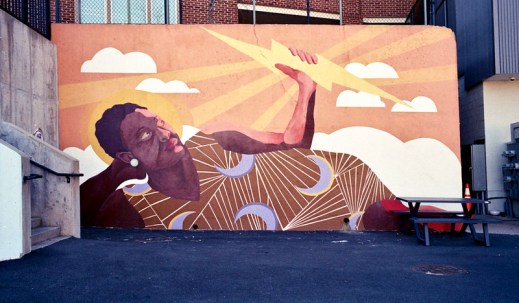
Featured Image: Wall Mural right next to Bowerbird Bakeshop in Charlottesville, VA, image by Tom Mills, (CC BY-SA 2.0)
—
Rami Toubia Stucky is a PhD candidate at the University of Virginia and scholar of the music of the African diaspora, music of the Americas, commercial culture, intercultural exchange, and music and migration. Sometimes he composes/arranges jazz music and plays drums. He is currently writing a dissertation on the arrival of Brazilian bossa nova to the United States during the 1960s. He runs a personal and professional website dedicated mostly to talking about the songs his sister likes.
—

REWIND!…If you liked this post, you may also dig all this good stuff about sound studies pedagogy! Good luck with Fall semester, folks!:
The Sounds of Anti-Anti-Essentialism: Listening to Black Consciousness in the Classroom- Carter Mathes
Making His Story Their Story: Teaching Hamilton at a Minority-serving Institution–Erika Gisela Abad
Deejaying her Listening: Learning through Life Stories of Human Rights Violations– Emmanuelle Sonntag and Bronwen Low
Audio Culture Studies: Scaffolding a Sequence of Assignments– Jentery Sayers
Deep Listening as Philogynoir: Playlists, Black Girl Idiom, and Love–Shakira Holt
“Toward A Civically Engaged Sound Studies, or ReSounding Binghamton”–Jennifer Lynn Stoever
“Heavy Airplay, All Day with No Chorus”: Classroom Sonic Consciousness in the Playlist Project—Todd Craig
SO! Podcast #79: Behind the Podcast: deconstructing scenes from AFRI0550, African American Health Activism – Nic John Ramos and Laura Garbes
Listening to #Occupy in the Classroom–D. Travers Scott
SO! Podcast #71: Everyday Sounds of Resilience and Being: Black Joy at School–Walter Gershon
Sounding Out! Podcast #13: Sounding Shakespeare in S(e)oul– Brooke Carlson
A Listening Mind: Sound Learning in a Literature Classroom–Nicole Brittingham Furlonge
My Voice, or On Not Staying Quiet–Kaitlyn Liu
(Re)Locating Soundscapes of Schooling: Learning to Listen to Children’s Lifeworlds–Cassie J. Brownell
If You Can Hear My Voice: A Beginner’s Guide to Teaching–Caroline Pinkston
Mukbang Cooks, Chews, and Heals – David Lee
SO! Podcast #80: Refugee Realities Miniseries–Steph Ceraso
Share this:


Current Top Posts





April 2021

January 2020

November 2019

October 2019

August 2019

April 2014

November 2017

March 2015

December 2017

October 2015
 Sounding Out!
Recent Comments